Influencer Contracts by Industry: What to Include, What to Skip
The five clauses that get skipped and what each one costs, what changes by industry, and what you can safely leave out.
Most creator deals go wrong in the same five places, and none of them are the fee.
The fee is the part everyone negotiates carefully, because it is the part everyone understands. The clauses below are the ones that get skipped in the interest of moving fast, and each one has a specific way of becoming expensive later.
This is practical guidance from commercial practice, not legal advice. Have a lawyer review anything you plan to use repeatedly.
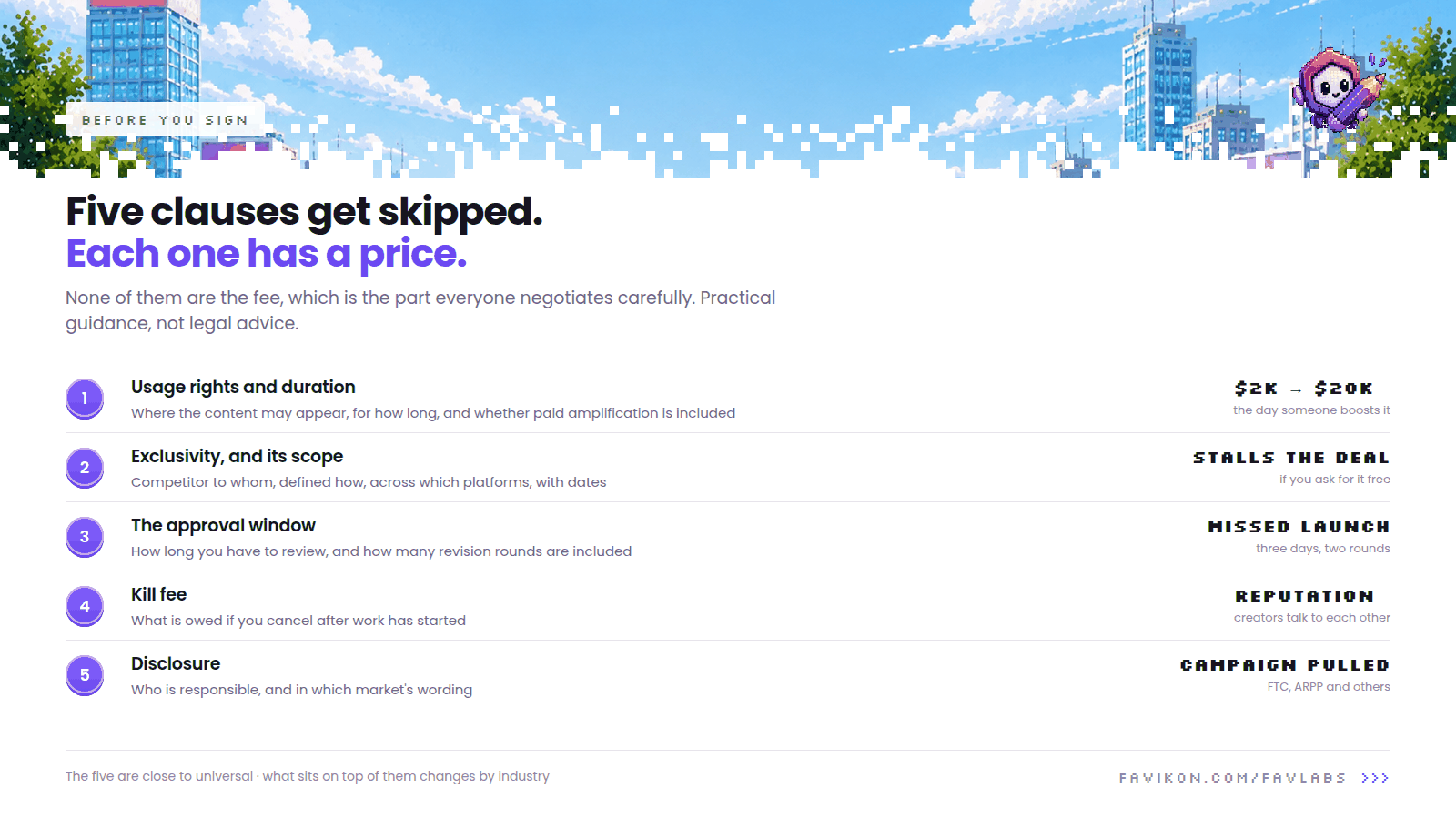
The five clauses people forget
1. Usage rights and duration
The single most expensive omission in creator contracts. A post fee buys a post on the creator's channel. It does not automatically buy the right to run that content as a paid ad, put it on your website, or use it in a sales deck.
Specify three things: where the content can appear, for how long, and whether paid amplification is included. A $2,000 post whose usage rights were never agreed becomes a $20,000 conversation the day someone in performance marketing decides to boost it.
2. Exclusivity, and its actual scope
"No competitors for three months" sounds clear and is not. Competitor to whom? Defined how? Across which platforms?
Write the category in plain words, name the specific brands if you can, and state the window with dates. And price it, because exclusivity has a real cost to a creator: you are asking them to turn down revenue. Asking for it free is how negotiations stall.
3. The approval window
Two numbers: how long you have to review a draft, and how many rounds of revision are included. Without them, one side believes approval is instant and the other believes revisions are infinite, and the campaign date arrives before either discovers the disagreement.
Three business days and two rounds is a normal, workable default.
4. Kill fee
What happens if you cancel after the creator has started work. A percentage tied to a stage, for example 50% once a draft is delivered, is fairer than silence, and it costs nothing to agree when everyone is optimistic.
It also makes you a better client to work with, which matters more than it sounds in a market where creators talk to each other.
5. Disclosure
Not optional, and not the creator's problem alone. Paid partnerships must be disclosed clearly and up front. In the US the FTC sets the standard, in France the ARPP and the influencer law do, and other markets have their own.
Put the requirement in the contract, state who is responsible for it, and never ask a creator to bury it. A campaign that gets pulled for undisclosed advertising costs far more than the disclosure would have.
What changes by industry
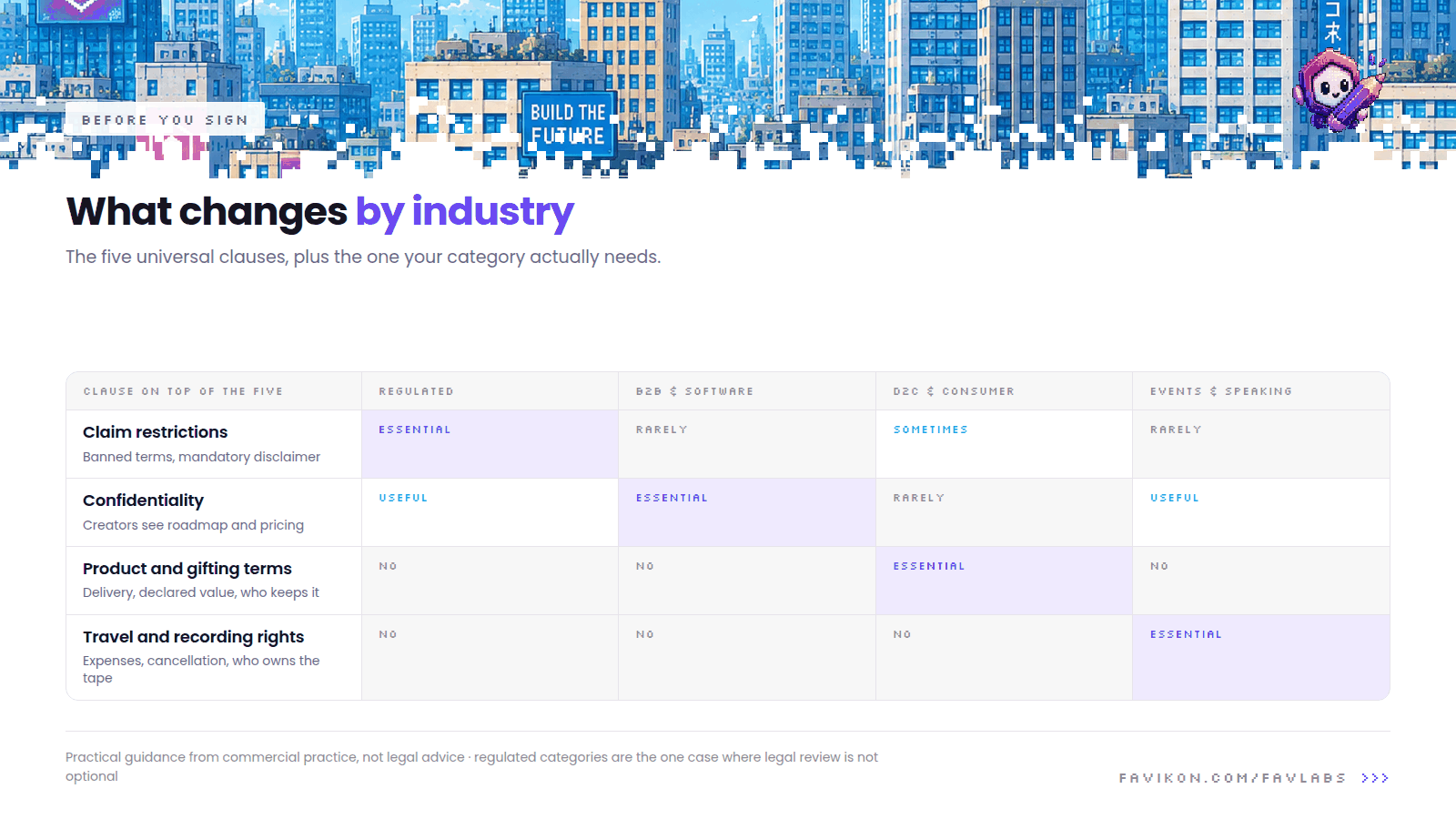
The five above are close to universal. What sits on top of them varies, and matching the contract to the category is what separates a template from a usable document.
- Regulated categories such as finance, health and supplements need claim restrictions, a list of terms that cannot be used, and often a mandatory disclaimer. This is the one category where the legal review is not optional.
- Alcohol and age-restricted products need audience age composition thresholds written into the agreement, not just checked once before signing.
- B2B and software rarely needs claim restrictions but very often needs confidentiality, because creators see roadmap and pricing that is not public.
- Consumer goods and D2C need product delivery terms, gifting value declared for tax purposes, and a clear statement of whether the creator keeps the product.
- Events and speaking need travel, expenses, cancellation and recording rights, which is a completely different set of concerns from a feed post.
What you can safely skip
Contracts get bloated because nobody wants to be the person who removed a clause. A few are usually dead weight for a single-post partnership:
- Full IP assignment. You rarely need to own the content outright. A defined licence is cheaper, faster to agree, and gets you everything you actually use.
- Performance guarantees. A creator cannot promise reach they do not control. Asking for it either gets refused or gets agreed by someone who will not be able to honour it.
- Elaborate non-competes beyond the campaign window. Often unenforceable, always resented, and rarely worth what it costs in goodwill.
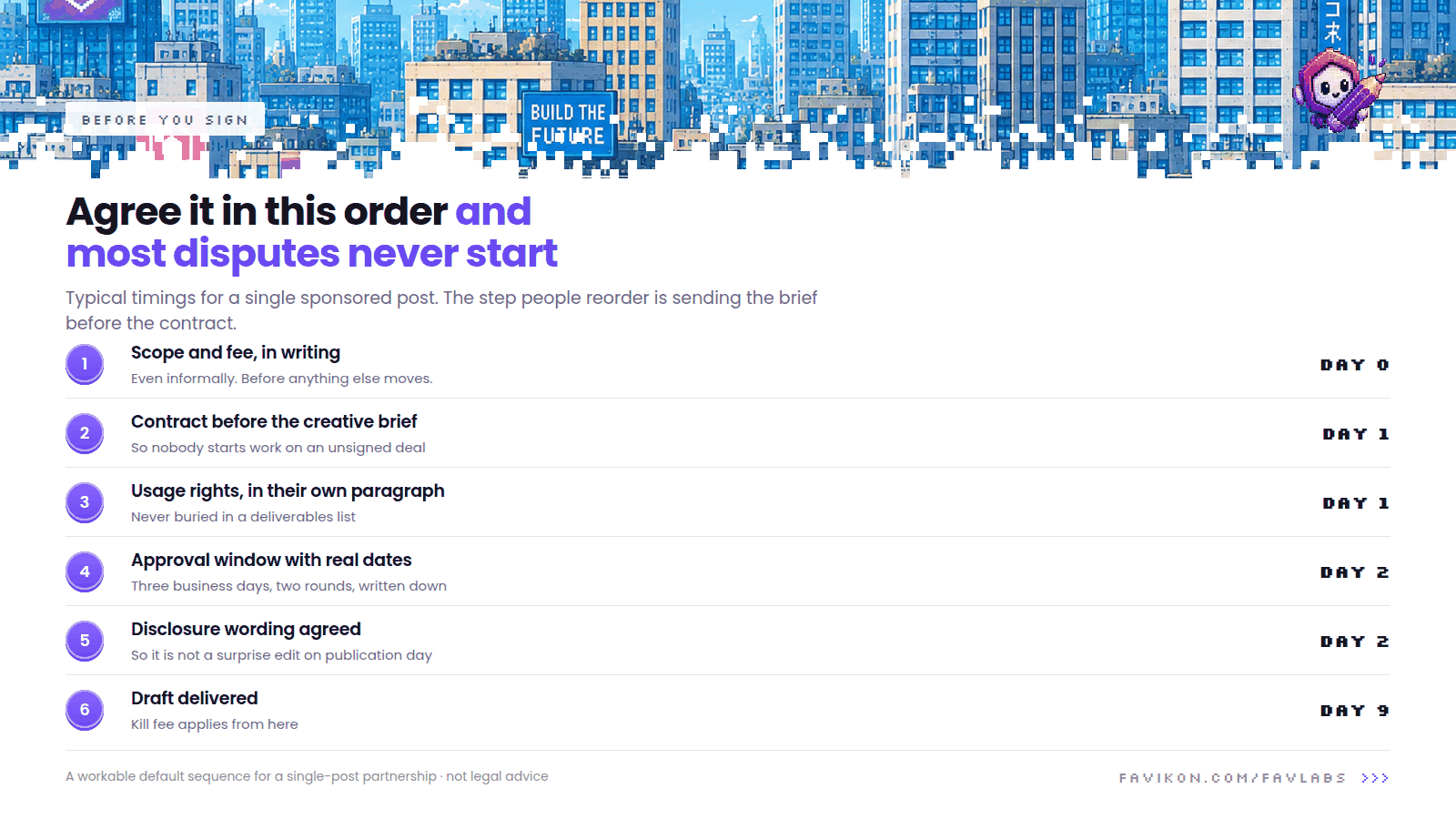
The sequence that avoids most disputes
- Agree scope and fee in writing before anything else, even informally.
- Send the contract before the creative brief, so nobody starts work on an unsigned deal.
- Confirm usage rights explicitly, in their own paragraph, not buried in a deliverables list.
- Set the approval window with real dates.
- Agree disclosure wording up front so it is not a surprise edit on publication day.
Draft it in minutes
The skill takes your category, market, deliverables and budget, and produces a contract draft with the clauses above already structured, in the register your legal team expects to read. It is a starting document, not a replacement for review, and it removes the part of the job that was never a good use of anyone's afternoon.
Others Tools