LinkedIn Engagement Pods: Do They Still Work in 2026?
LinkedIn engagement pods promise more likes and comments, but do they still work in 2026? Learn how LinkedIn detects fake engagement, how pods can hurt your Favikon Score, and what you can do instead to build real engagement and grow your presence.

LinkedIn Engagement Pods: Do They Still Work in 2026?
"Are LinkedIn pods still worth it?" is one of those questions that keeps coming back, on Reddit, in LinkedIn comments and in creator group chats. A year ago the honest answer was "it depends". In 2026 the answer is a lot clearer, because LinkedIn has said exactly what it thinks of them, and what it does when it finds one.
Here's what engagement pods are, what LinkedIn changed between August 2025 and March 2026, and what a pod does to your Favikon Score. If you hire creators, there's also a short guide to spotting one.
The short answer Pods can still push up the number of comments on a post. But LinkedIn now says pods are "not allowed", limits the reach of posts it thinks were boosted, hides automated comments, and can restrict accounts or remove people from programs like Top Voices. On the Favikon Score, a pod lowers your authenticity factor, which can cost you several tiers.
What is an engagement pod?
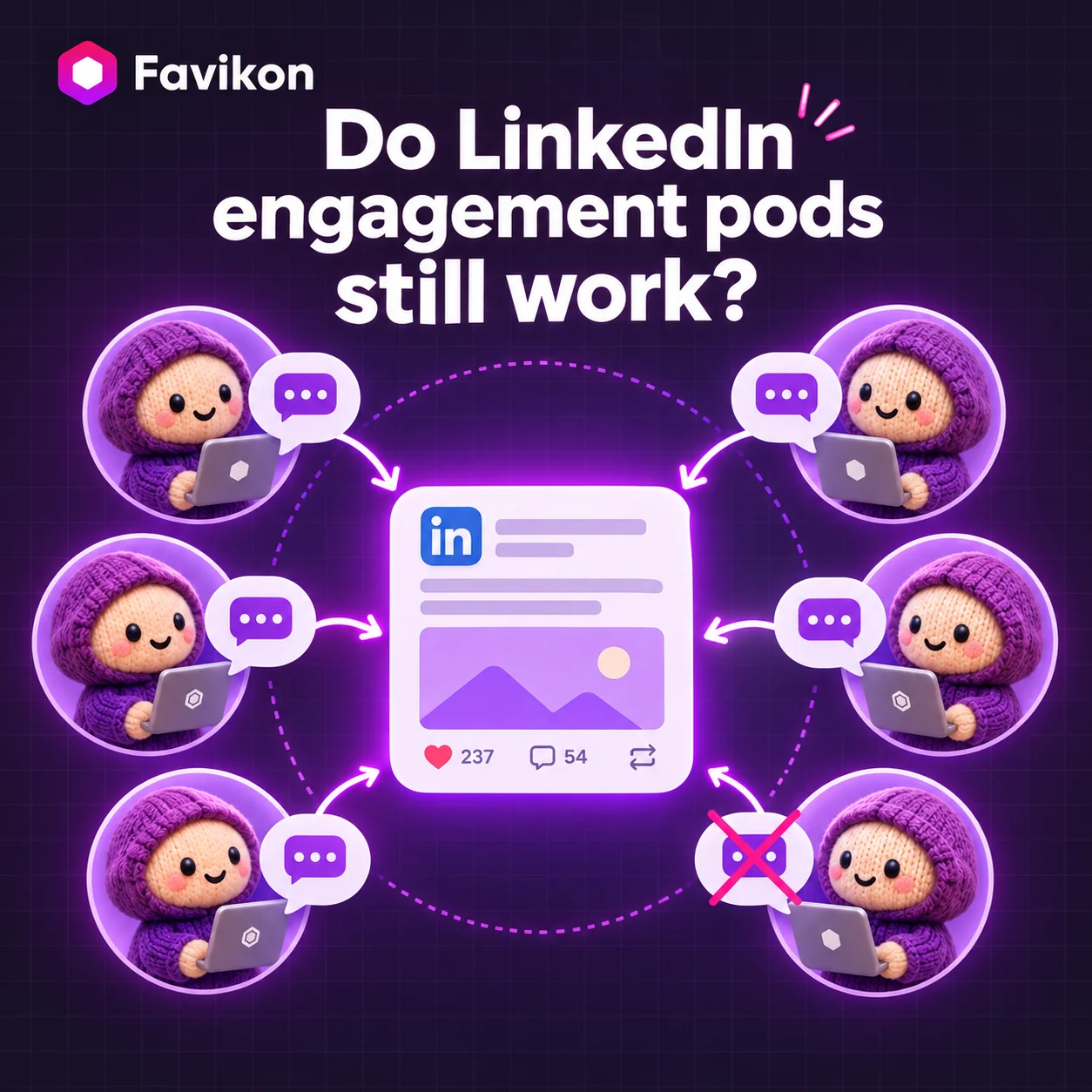
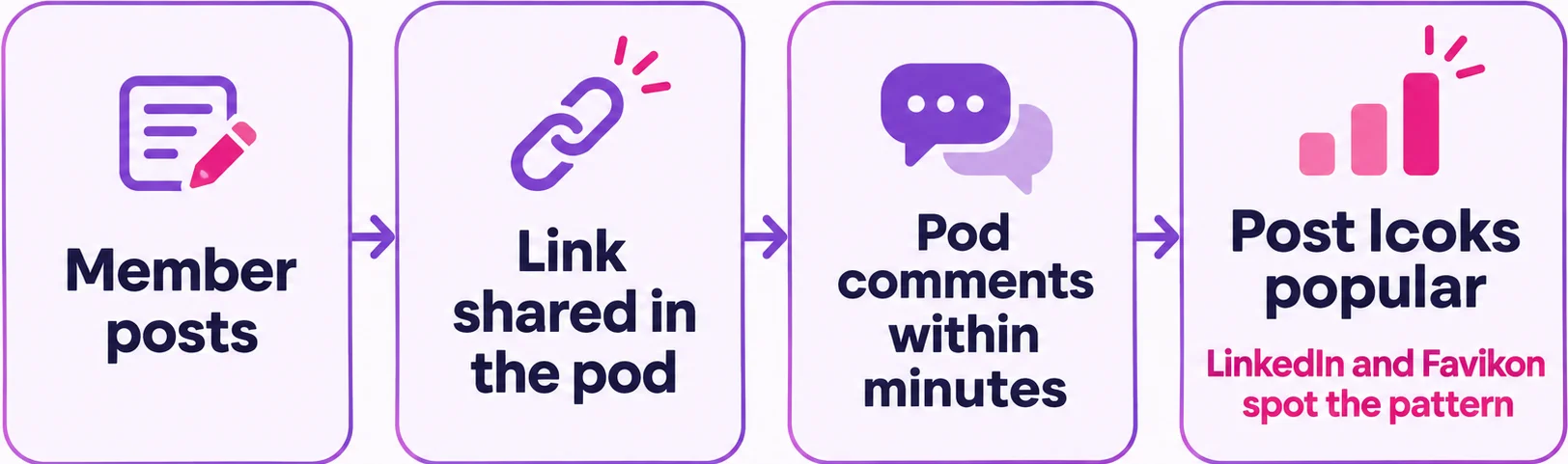
An engagement pod is a group of people who agree to like and comment on each other's posts, usually within minutes of them going live. The idea is that early engagement tells LinkedIn's feed a post is worth showing to more people.
Pods come in two kinds:
• Manual pods: a WhatsApp, Slack or Telegram group where members drop their post link and everyone else goes and comments.
• Automated pods: browser extensions and third-party tools that like and comment for you, automatically, on every post from the group.
Either way, the result looks the same from the outside: the same few dozen names under every post, arriving fast, often with short, generic comments like "Great insights, thanks for sharing!"
What LinkedIn has said and done
LinkedIn has been tightening the rules for over a year:
In that March 2026 update, LinkedIn listed what it does when it finds pod activity:
• Less reach for posts it thinks were artificially boosted, sometimes while it's still checking
• Hidden comments: automated comments can be dropped from "Most Relevant", and sometimes hidden from people outside your network
• Removed groups that show pod behaviour
• Warnings to members whose activity suggests they're in a pod, including possible removal from programs like Top Voices
• Account restrictions for people involved
LinkedIn hasn't published numbers on how many pods it has caught. But it no longer leaves any doubt about where it stands.
What a pod does to your Favikon Score
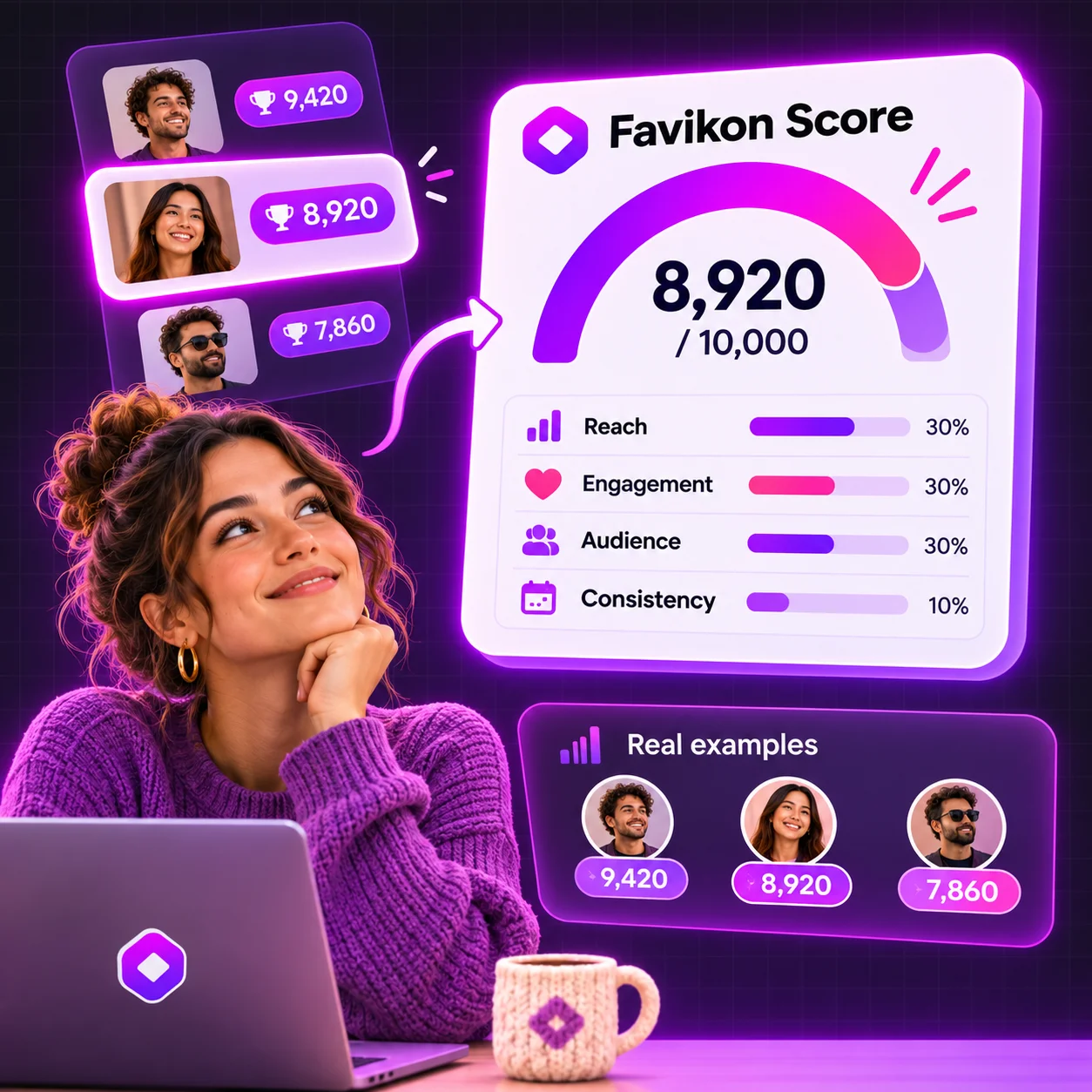
LinkedIn decides how far your posts travel. Favikon scores how well you're actually doing as a creator, and that score is what brands see when they're looking for people to work with. Since our November 2026 update, the Favikon Score on LinkedIn includes an authenticity factor that looks for exactly the patterns pods leave behind. (Here's how the Favikon Score works, if you want the full formula.)
Three of its checks hit pods directly:
• Regular commenters: people who commented on at least half of your previous 9 posts. The first 5% of comments from regulars are free. After that, each percent costs 1 point up to 20%, then 2 points per percent above that. Up to −45.
• Templated comments: copy-paste lines. A template from a regular commenter counts in full, which is exactly what pod comments tend to be. Up to −30.
• Comment floods: far more comments than reactions, arriving fast, mostly from regulars, while you barely reply. −3 per flagged post, up to −15.
There's a knock-on effect too. AI-style writing only costs points when something else backs it up, and regular commenters count as that backup. So a pod can also switch on the AI-writing penalty for creators who use AI to draft their posts.
A worked example
Take a sample LinkedIn creator. Their posts get about 120 comments each, and they belong to a 30-person pod whose members comment on every post. Twenty of those 30 pod comments are one-line templates.
Regular commenters. 30 of 120 comments come from regulars: 25%. The first 5% is free, 5% to 20% costs 15 points, and the last 5% costs 2 points each, so 10 more. That's −25.
Templated comments. 20 templates from regulars, out of 120 comments, is about 17%. Templates from regulars count in full: −17.
Their typical post now scores 100 − 25 − 17 = 58 on the checks. That's in the Mixed band, and it turns into an authenticity factor of ×0.77: a 23% cut.
Now the same creator without the pod, with a few templated comments from strangers like everyone gets: their checks come out around 92, the High band, for a factor of ×1.14, a 14% boost.
Same creator, same followers, same base. The pod costs them three tiers.
The extra 30 comments do add a little to their Engagement score. But on a post with a few hundred interactions, 30 comments barely move a percentile. They don't come close to making up a 23% cut.
How to spot an engagement pod
If you're vetting a LinkedIn creator before paying them, open their last five or six posts and look for these signs:
1. The same names, every time. The first 10 or 20 comments come from the same people on every post.
2. Everything arrives at once. A burst of comments in the first few minutes, then very little.
3. Comments that could go anywhere. "Great insights!", "So true!", "Thanks for sharing!" with nothing specific to the post.
4. More comments than reactions. A post with 80 comments and 60 likes is unusual.
5. No conversation. The creator rarely replies, and the commenters never talk to each other.
6. A closed circle. Click on a few commenters: they're all commenting on each other's posts too.
One of these on its own doesn't prove much. Big creators attract plenty of one-line comments from strangers. Three or four together is a pattern.
You can skip the manual check: the Authenticity tab on any LinkedIn profile in Favikon creator analytics shows how many comments come from regulars, how many are templates, and whether any posts were flagged for comment floods.
Check any LinkedIn creator's authenticity.
What works instead
Pods promise a shortcut to the one thing that actually helps: people who genuinely want to talk about your posts. You can build that without the risk.
1. Ask questions people can answer. "Thoughts?" gets you "Great post!". "What's the one tool you'd never give up?" gets you real answers, and real answers start threads.
2. Reply properly. A reply that adds something turns one comment into a conversation. Conversations count for more on the Favikon Score's audience quality, which looks at whether commenters talk with you and with each other.
3. Comment on other people's posts, for real. Thoughtful comments on posts in your field are how most creators find their first engaged readers. Do it because you have something to add, not to collect a favour.
4. Post regularly. Consistency is 10% of the Favikon Score, and it maxes out at 25 posts in 90 days, about two a week. Regular posting also gives people a reason to come back.
5. Collaborate in the open. Co-written posts, joint lives and guest appearances bring you a new audience that chose to be there.
If you want to know when your audience is most likely to see you, we looked at that in the best time to post on LinkedIn.
What about Instagram and TikTok pods?
Pods aren't only a LinkedIn thing. Instagram pods, usually run through Telegram groups, have been around for years. The signs are the same: the same accounts on every post, generic comments, a burst of activity right after posting.
Favikon's comment checks started on LinkedIn and are rolling out to the other networks. If you're vetting Instagram creators in the meantime, our guide on how to check for fake followers covers what to look for.
Frequently asked questions
What is an engagement pod on LinkedIn?
A group of people who agree to like and comment on each other's posts, usually right after they go live, to make the posts look more popular. Pods run manually through group chats, or automatically through browser extensions and third-party tools.
Do LinkedIn engagement pods still work?
They can still add comments to a post, but LinkedIn now says pods are "not allowed". It limits the reach of posts it thinks were artificially boosted, hides automated comments and can restrict the accounts involved. On the Favikon Score, a pod lowers your authenticity factor.
Are engagement pods against LinkedIn's rules?
Yes. In March 2026, LinkedIn called pods a form of inauthentic activity that "erodes trust and is not allowed on LinkedIn". Automated comments posted with a browser extension, script or third-party tool are also not allowed.
Can LinkedIn tell if I'm in a pod?
LinkedIn says it uses technology and human review to spot artificially boosted posts, and it removes groups that show pod behaviour. It also contacts members whose activity suggests they're in a pod.
How does Favikon detect engagement pods?
On LinkedIn, the authenticity checks look for regular commenters (people who comment on at least half of your recent posts), templated comments and bursts of fast comments. Each one lowers your authenticity factor, which multiplies your whole Favikon Score. Here's how the Favikon Score works.
Is it a pod if my friends comment on my posts?
Not by itself. Friends and colleagues commenting now and then is normal. Our regular-commenter check only starts counting after 5% of your comments, and it looks for the same people on at least half of your recent posts.
Pods buy you comments. They don't buy you an audience, and on LinkedIn they now cost you reach and score. If you want to see how real engagement stacks up, browse the LinkedIn leaderboards or try Favikon for free.
Others articles