Types of Influencers: Nano to Mega (With Real Data)
From nano to mega influencers, explore the five influencer types, their follower ranges, and why different sources define them differently. Using real Favikon data from LinkedIn, Instagram, and TikTok, discover how creator size compares across platforms and why follower count doesn't tell the whole story.

Types of Influencers: Nano to Mega, and Why Follower Count Is Only Half the Story
Ask a marketer what kind of creator they're looking for and you'll usually get a size: "a few micro-influencers", "one big macro name". Follower count is the industry's shorthand, and it's useful. It tells you roughly what a creator costs and how far a post can travel.
But it's only half the picture. The ranges change depending on who you ask, and when we looked at the 200 best-performing creators on LinkedIn, Instagram and TikTok, "micro" turned out to mean something very different on each.
Here are the five types of influencers, the follower ranges behind them, and what those ranges leave out.
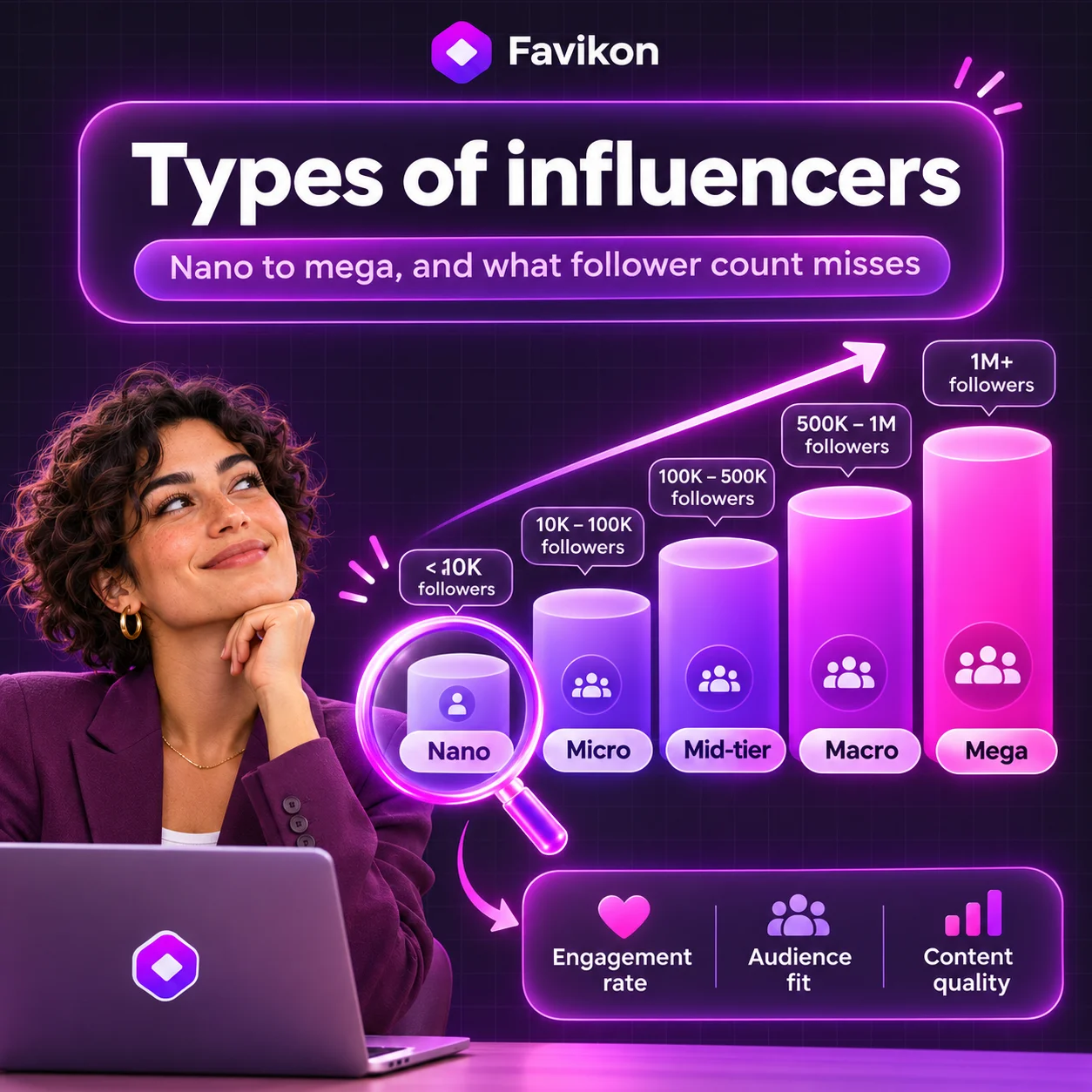
The short answer Influencers are usually grouped into five types by follower count: nano (1K–10K), micro (10K–100K), mid-tier (100K–500K), macro (500K–1M) and mega (1M+). Some sources use four types and skip mid-tier. The exact cut-offs vary, so treat them as rough guides.
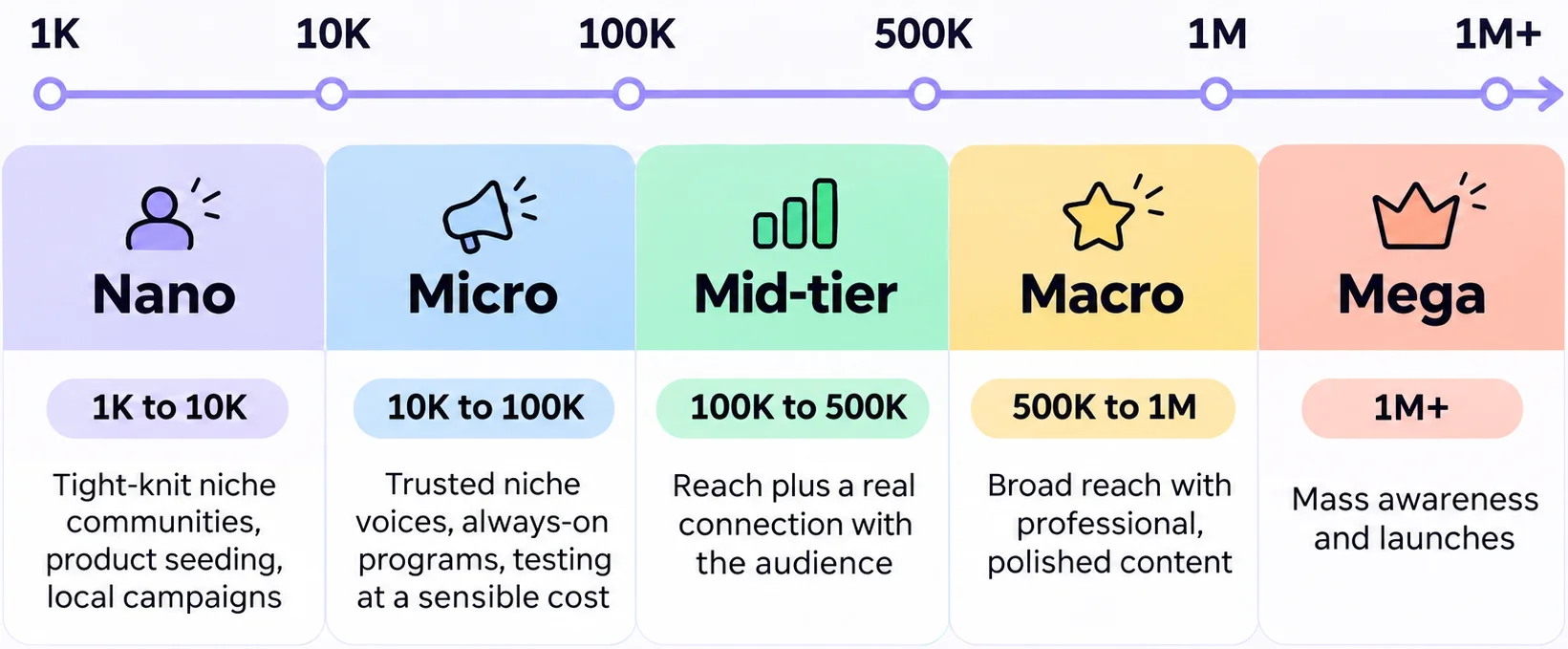
The five types of influencers by follower count
Nano influencers (1K to 10K followers)
Nano influencers are often everyday people, or specialists in a narrow field: a local baker, a nurse who posts about night shifts, a developer who writes about one framework. Their audiences are small enough that they usually know their regulars by name, and they reply to comments themselves.
They tend to be the most affordable type to work with, and many are happy to be paid in product. The trade-off is reach: you'll need a lot of them to move the needle, and managing dozens of small partnerships takes time.
Micro influencers (10K to 100K followers)
Micro influencers have built a real following around a topic, and people follow them for that topic. That focus is what makes them popular with brands: if your product fits their niche, their audience is likely to care.
Fees are still manageable, which makes micro influencers a common choice for always-on programs and for testing a message before investing in bigger names.
Mid-tier influencers (100K to 500K followers)
Mid-tier influencers often create content professionally, sometimes with a manager. They offer meaningful reach while still feeling close to their audience. Not every guide uses this tier; some fold it into micro or macro.
Macro influencers (500K to 1M followers)
Macro influencers have broad reach and polished, professional content. They usually work through an agency or a manager and charge professional rates. They're a good fit when you need a campaign to reach well beyond one niche.
Mega influencers (1M+ followers)
Mega influencers include celebrities, athletes and the biggest online creators. One post can reach millions of people, which makes them a fit for launches and mass awareness. They're also the most expensive, and the connection with each follower is usually looser.
Why the ranges don't match
There's no official definition of a micro or macro influencer, and the guides that rank highest on Google don't agree with each other:
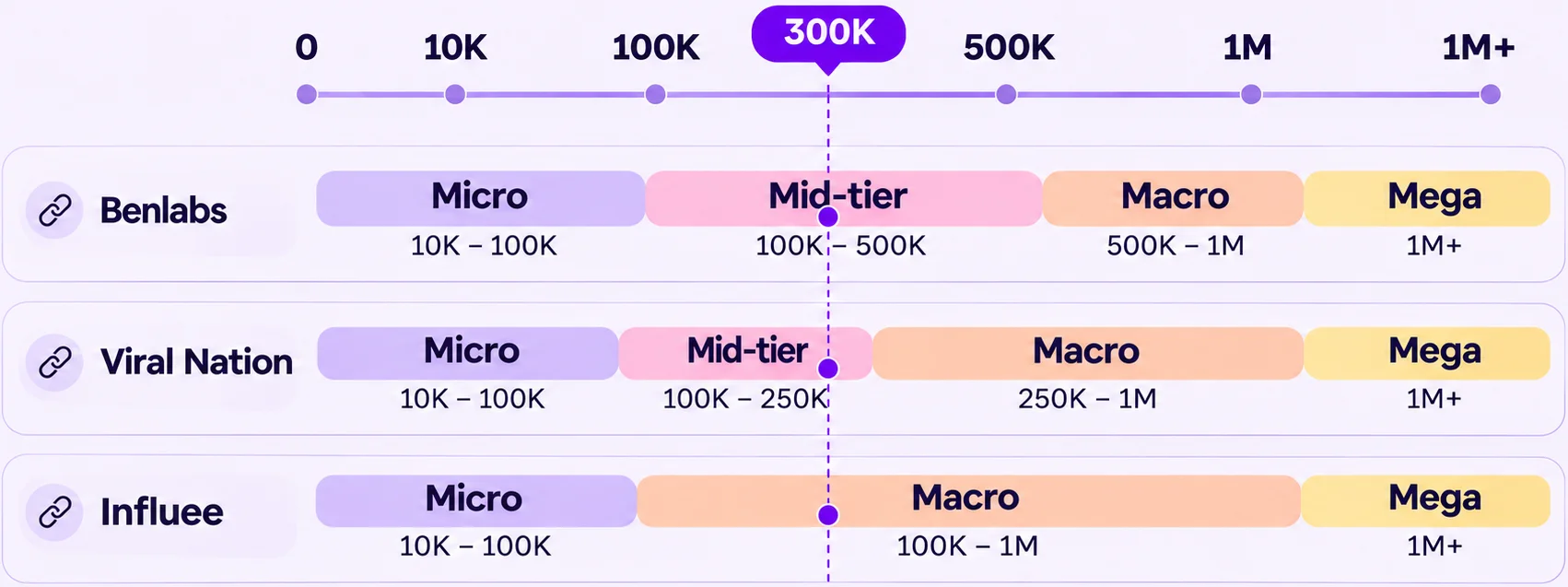
Everyone agrees on nano and micro. After 100K, it depends who you ask. A creator with 300K followers is mid-tier by one definition and macro by the other two.
So when someone asks for "macro influencers", ask what they mean in numbers before you build a shortlist.
Other ways to classify influencers
Follower count is the most common way to group creators, but not the only one. You'll also see influencers grouped by:
• Platform: LinkedIn creators, TikTokers, YouTubers, Instagrammers and so on. Each platform rewards different formats and attracts different audiences.
• Niche: beauty, finance, B2B, gaming, parenting, travel. For most campaigns, the niche matters more than the size.
• Who they are: celebrities, industry experts and thought leaders, professional creators, and employees who post about their work.
• How they work with brands: one-off sponsored posts, long-term ambassadors, affiliates paid on sales, and UGC creators who make content for a brand's own channels.
What follower count misses: the top 200 creators on three networks
To see how much follower count really tells you, we looked at Favikon's worldwide leaderboards: the highest-scoring creators on LinkedIn, Instagram and TikTok. All of them are Tier 1, the top of our scale. Then we counted how many followers each one has.
Favikon leaderboards, all countries and niches, November 4, 2026.
Three things stand out:
• On LinkedIn, size is no barrier. One in eight of the top creators is a micro influencer, and the smallest has under 40,000 followers. Almost three-quarters have fewer than 500K.
• On TikTok, the top is a mega-only club. Every one of the top 200 has more than a million followers, and the smallest has 1.4 million.
• Instagram sits in between. Three in four of its top creators are mega influencers, but a few hundred-thousand-follower accounts still make the cut.
So the same label means different things on different platforms. A 50K creator is "micro" everywhere, but on LinkedIn they can sit among the best performers on the platform, while on TikTok they'd be a long way from it.
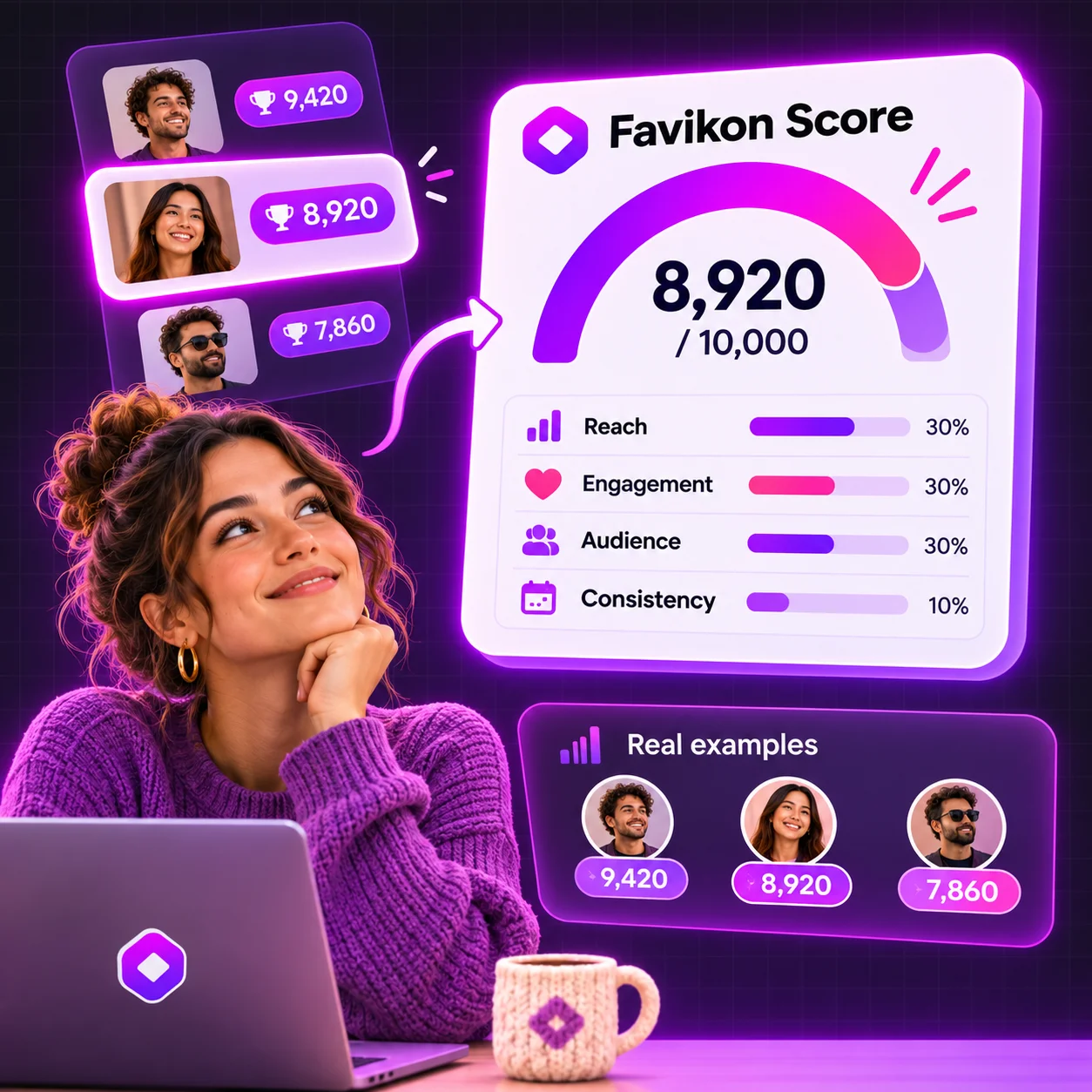
That's because our score doesn't rank creators by size alone. Audience counts for 30%. Reach, engagement and how often you post make up the rest, and each is compared with everyone else on the same network.
Favikon tiers: grading performance, not size
Favikon sorts every creator into one of 10 tiers based on their Favikon Score. Follower count feeds into the score, but it's only one of four parts.
Take a sample creator with 250K followers on TikTok. Depending on whose definition you use, that's a mid-tier or a macro influencer. But if their videos get few views and they rarely post, they can land in Tier 9. Meanwhile, a 40K LinkedIn creator who posts every week to an engaged audience can be Tier 1.
If you want the full formula, with every weight and a worked example, it's all in How the Favikon Score works.
How to choose the right type of influencer
1. Start with the goal. For awareness or a launch, reach matters most, so bigger creators make sense. For trust and sales inside a niche, several smaller creators often work better than one big name.
2. Pick the platform before the size. As the data shows, "micro" means one thing on LinkedIn and another on TikTok. Decide where your audience is first, then decide how big a creator you need there.
3. Look past the follower count. Check median views per post, engagement and how often they post. A creator's Favikon Score and tier combine all three with their audience size.
4. Check the audience is real. Before you pay anyone, look for copy-paste comments, the same people commenting on every post and sudden follower spikes. Our guide on how to spot fake followers walks through it.
5. Mix sizes. Many campaigns pair one or two larger creators for reach with a group of micro and nano creators for depth.
Find creators by tier, niche and country.
Frequently asked questions
What are the 5 types of influencers?
Nano (1K to 10K followers), micro (10K to 100K), mid-tier (100K to 500K), macro (500K to 1M) and mega (1M+). Some guides use only four types and drop mid-tier.
What are the 4 types of influencers?
When people say four types, they usually mean nano, micro, macro and mega, with macro covering everything from 100K to 1M followers.
What is a micro influencer?
A creator with roughly 10,000 to 100,000 followers who has built an audience around a specific topic. It's the one range almost every source agrees on.
What is a nano influencer?
A creator with roughly 1,000 to 10,000 followers. Nano influencers usually have small, close-knit audiences and are the most affordable to work with.
What is a macro influencer?
A creator with a large following, usually 500,000 to 1 million. Some sources start the range at 100K or 250K, so check which definition someone is using.
What's the difference between micro and macro influencers?
Size and focus. Micro influencers (10K to 100K) tend to have niche audiences and lower fees. Macro influencers (500K to 1M) offer much wider reach and professional content, at professional rates.
How many followers do you need to be an influencer?
There's no official minimum. Most classifications start at 1,000 followers. On Favikon, every account on a scored network gets a score, with no follower minimum.
What are influencer tiers?
Tiers group creators by size or performance. Follower-based tiers run from nano to mega. Favikon's 10 tiers are based on the Favikon Score, which combines reach, engagement, audience size and posting consistency. Here's how the Favikon Score works.
Follower count tells you how big a creator is. It doesn't tell you how well they're doing. To see both, browse the Favikon leaderboards by network, niche and country, or try Favikon for free.
Others articles