Arnon Grunberg: Literature with a spine
Arnon Grunberg writes like a scalpel. Sharp, curious, and unafraid of heat. His feed blends essays, bookish nods, and pointed notes on identity politics, antisemitism, and migration. You come for the prose and stay for the argument.
1. Who he is
Arnon Grunberg is a Dutch novelist, columnist, and cultural commentator known for testing ideas in public. He has published award-winning literature and essays while keeping a steady presence in national debate. On LinkedIn he treats the timeline as an open notebook, posting short reflections, longer articles, and snapshots from his reading desk. Recent pieces examine antisemitism in European politics, the Gaza tragedy, and leadership culture in Dutch institutions. He quotes Thomas Mann one day and dissects parliamentary motions the next. Grunberg positions himself as a writer who builds arguments, not camps.
2. A Network of Heavyweights
His circle mixes editors, academics, policymakers, and cultural leaders across the Netherlands and Europe. Media platforms and literary journals pick up his arguments and extend their reach. Intellectuals and journalists engage in threaded discussions rather than drive-by praise. The network validates both his craft and his public voice.
3. Why people listen
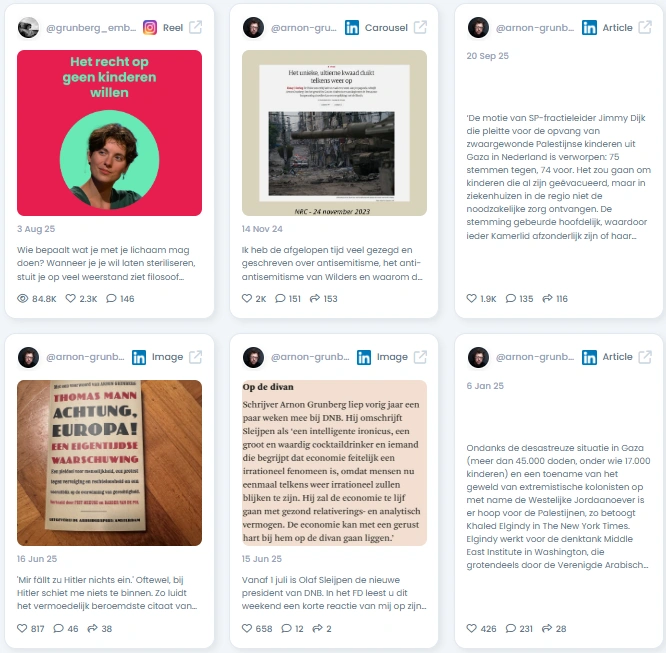
He writes clearly and thinks in public. Posts start with a concrete scene or quote, then move toward principle. He invites disagreement and answers it with sources, not slogans. The tone is civil, skeptical, and occasionally wry which keeps tough topics readable.
4. Authenticity that resonates
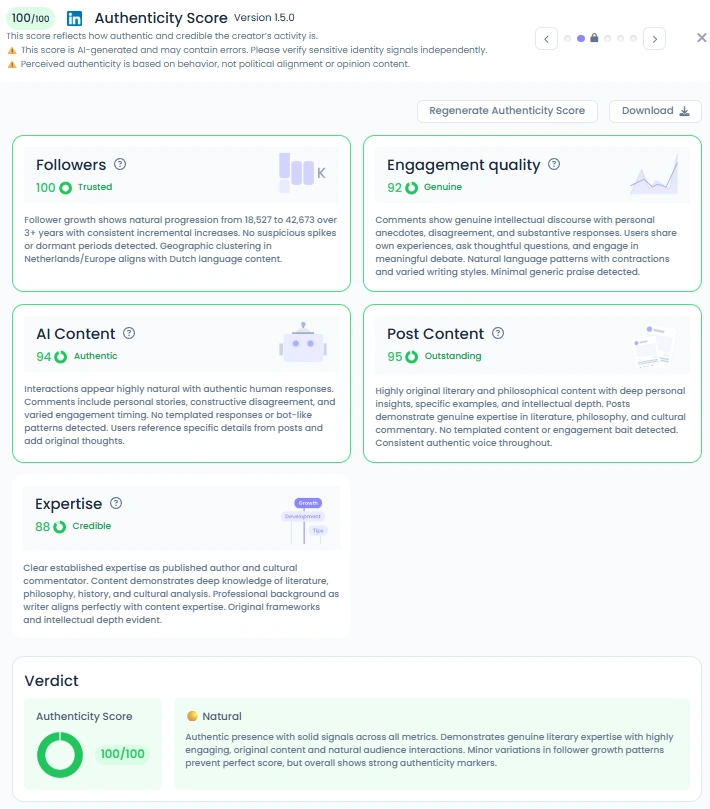
Favikon rates his presence at 100/100. Engagement quality 92 shows genuine debate with personal anecdotes and questions. AI Content 94 confirms an organic human voice with varied timing and no templates. Post Content 95 reflects original literary insight and philosophical depth. Expertise 88 aligns his commentary with a long record as a published author.
5. Numbers that back it up
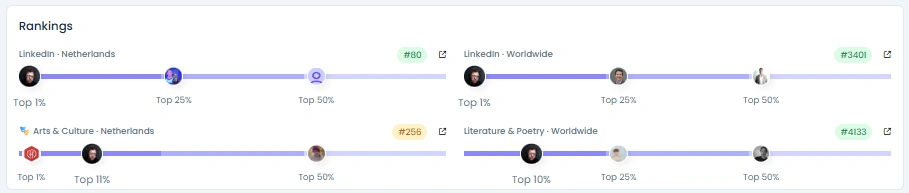
His audience grew from 18,527 to 42,673 over three plus years with smooth, trustworthy progression. Influence Score is 5 totaling 6,939 points. He ranks in the top 1% on LinkedIn in the Netherlands and retains a top 10% footprint in Literature and Poetry worldwide. Articles and reels consistently draw thousands of reactions and long comment threads.
6. Collaborations that matter
Grunberg’s ideas travel through newspapers, cultural institutes, and literary stages. He appears in dialogue with historians and economists, and his articles are cited in policy discussions. Book posts spark reading lists while media columns carry his arguments beyond literary circles. The crossover keeps his work present with both readers and decision-makers.
7. Why brands should partner with Arnon Grunberg
Work with Arnon if you need thought leadership with real backbone.
- Keynote or fireside on free inquiry, identity politics, and the role of culture
- Op-ed series or newsletter columns that frame complex issues for professional audiences
- Moderated debates or salon evenings that bring executives and scholars to the same table
- Creative collaborations with publishers, museums, or think tanks to turn ideas into programs
8. What causes he defends

Grunberg’s signal cause is Free Speech. He argues for room to test unpopular ideas and to separate people from positions. Posts challenge simplification around conflict, nationalism, and antisemitism while urging precise language and empathy. He defends the writer’s right to doubt and the reader’s right to question. The goal is a public square where argument beats outrage.
9. Why Arnon Grunberg is relevant in 2026
In an algorithmic era, nuance is rare and valuable. Leaders must parse identity, migration, and geopolitics with care. Grunberg offers tools for thinking, not just takes. His blend of literature and civic argument helps organizations communicate with clarity and conscience.
Conclusion: Write to think
Arnon Grunberg proves that good writing is public service. He slows the scroll, asks better questions, and refuses easy frames. Brands and institutions that value rigor will find a sharp, fair partner. Follow him to sharpen language and, with it, judgment.
.png)
Others articles
.webp)
.png)