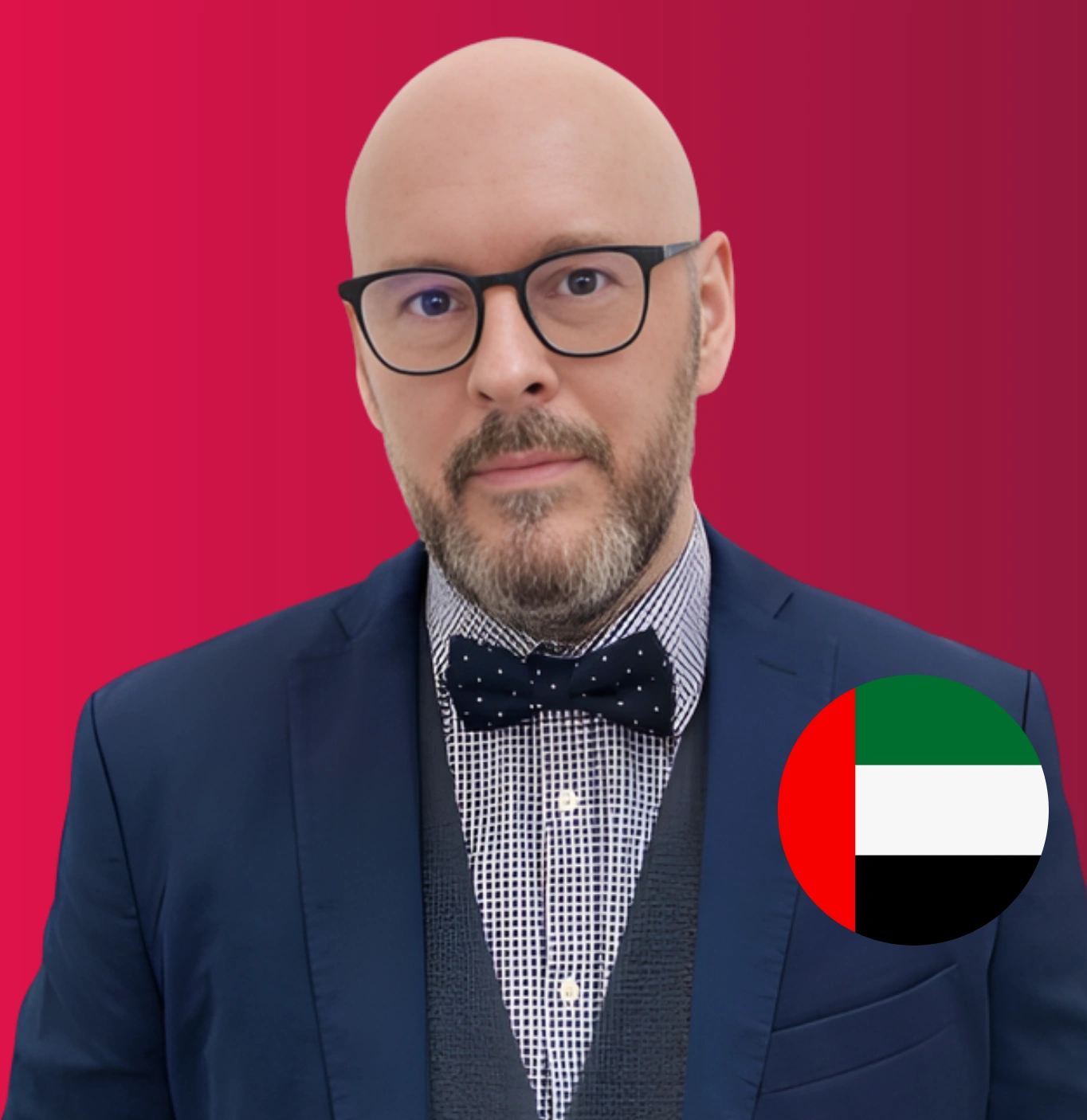
Scott Armstrong: Making workplace wellbeing real, not just talk
Scott Armstrong builds communities and products that put mental health at work front and center. He speaks from experience as a founder and advocate, with a clear focus on practical change. His posts feel warm, honest, and useful. People follow because he turns big ideas into usable programs.
1. Who he is
Scott is the founder of mentl.space and a visible advocate for workplace mental health across the UAE and beyond. He has built mentl into a hub for resources, events, and partnerships that help organisations support employees. His work blends community organising, program delivery, and public-facing advocacy to change how companies approach wellbeing. Scott frequently appears at conferences, runs industry awards, and publishes insights that combine research with human stories. That mix of practical delivery and sector leadership makes him a trusted connector between employers, clinicians, and policy makers.
2. A Network of Heavyweights
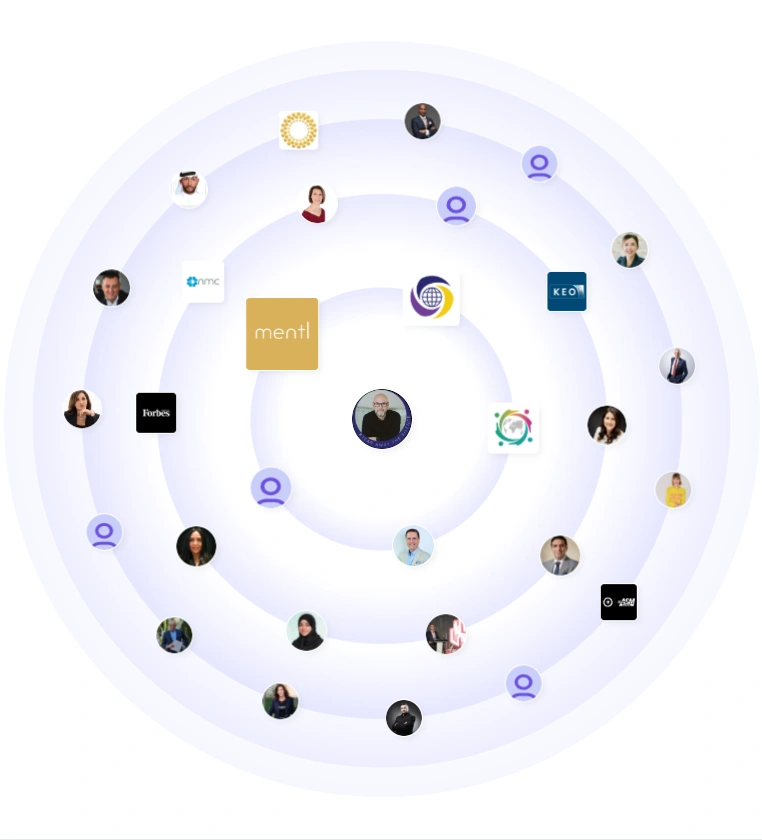
Scott’s network includes health providers, corporate partners, NGOs, and regional wellbeing experts. Mentl features as a hub alongside organisations and media that focus on workplace health. He engages with healthcare leaders, community builders, and regional initiatives, giving him reach into both private and public sectors. These ties help scale programs and bring credibility to workplace wellbeing conversations.
3. Why people listen
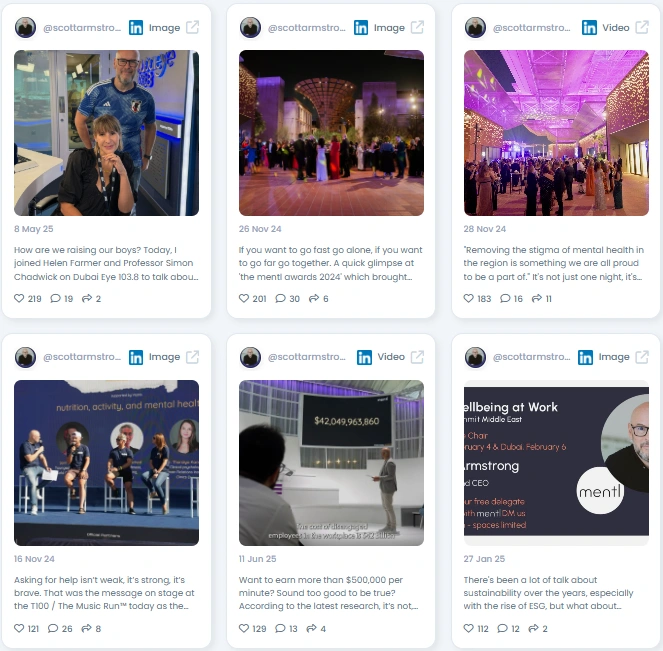
Scott writes with the clarity of someone who has run programs and heard real employee stories. His updates balance data points with personal anecdotes and event highlights. He explains why certain interventions work and where organisations commonly miss the mark. That practical honesty makes his guidance easy to implement and widely shared.
4. Authenticity that resonates
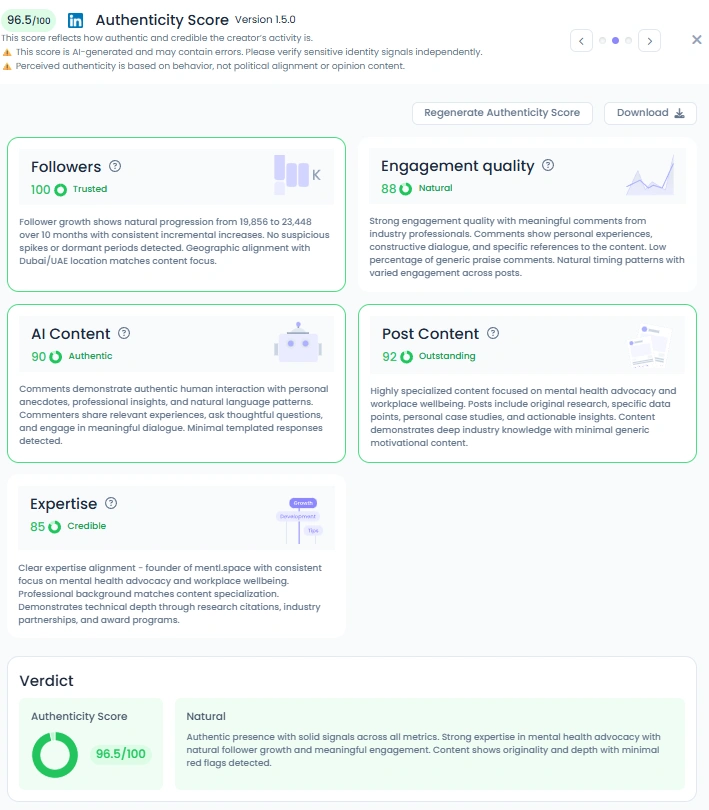
Favikon rates Scott 96.5/100 for authenticity and his feed reflects that score. His posts include event photos, candid reflections, and real case studies from mentl initiatives. Comments show constructive dialogue from practitioners and partners, not generic praise. That consistent, human presence makes his profile feel both credible and approachable.
5. Numbers that back it up
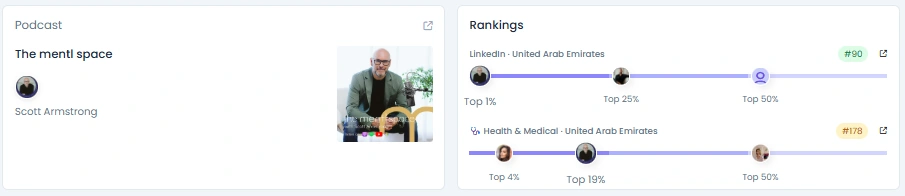
Scott’s follower base grew from about 19,856 to 23,448 over ten months, showing steady, organic interest. His influence score is around 5,898 points, and he ranks in the Top 1% in the UAE for LinkedIn creators. Engagement quality metrics are strong, with meaningful comments and repeated interactions from sector professionals. Those numbers back up a profile that converts attention into dialogue and collaboration.
6. Collaborations that matter
Scott partners with healthcare organisations, corporates, event platforms, and media to amplify workplace wellbeing programs. His collaborations typically focus on program design, training, awards, and public awareness campaigns. These partnerships help translate evidence into workplace practice and raise the visibility of mental health issues at scale.
7. Why brands should partner with Scott Armstrong
Scott is a strong partner for organisations that want authentic, operational mental health programs and credible storytelling.
- Co-created wellbeing programs or pilot rollouts for employees
- Executive workshops on building psychologically safe workplaces
- Sponsored content and case studies demonstrating measurable wellbeing outcomes
- Event partnerships, awards sponsorships, or thought leadership series
8. What causes he defends

Scott champions Mental Health Advocacy, Workplace Wellbeing, and Diversity & Inclusion. He focuses on making support accessible in corporate settings and on normalising conversations about mental health. Through mentl events, awards, and partnerships he highlights practical steps employers can take, from training to tailored employee programs. His advocacy combines public awareness with tangible program delivery.
9. Why Scott Armstrong is relevant in 2026
As organisations invest more in employee wellbeing and mental health becomes a board-level priority, Scott’s mix of program experience and public advocacy will be invaluable. He understands how to align clinical practice, corporate policy, and cultural change. That makes him a go-to voice for companies seeking to move beyond token gestures to meaningful mental health outcomes.
Conclusion: Building Workplaces That Care
Scott Armstrong turns wellbeing rhetoric into action. He combines community energy, program expertise, and honest storytelling to help organisations support their people. For businesses that want credible, practical, and scalable mental health solutions, Scott offers both the know-how and the networks to make change happen. His influence comes from doing the work and inviting others to join it.
.png)
Others articles
.webp)
.png)