HubSpot Influencer Marketing Case Study: How HubSpot Works With LinkedIn Creators
HubSpot uses LinkedIn creators to connect with B2B audiences through trusted voices, expert content, and industry conversations. This case study breaks down its approach and the lessons brands can apply to their own influencer campaigns.

HubSpot Influencer Marketing Case Study: How HubSpot Works With LinkedIn Creators
What 158 sponsored LinkedIn posts teach us about B2B influencer marketing
Key Takeaways: 6 Lessons From HubSpot's Creator Program
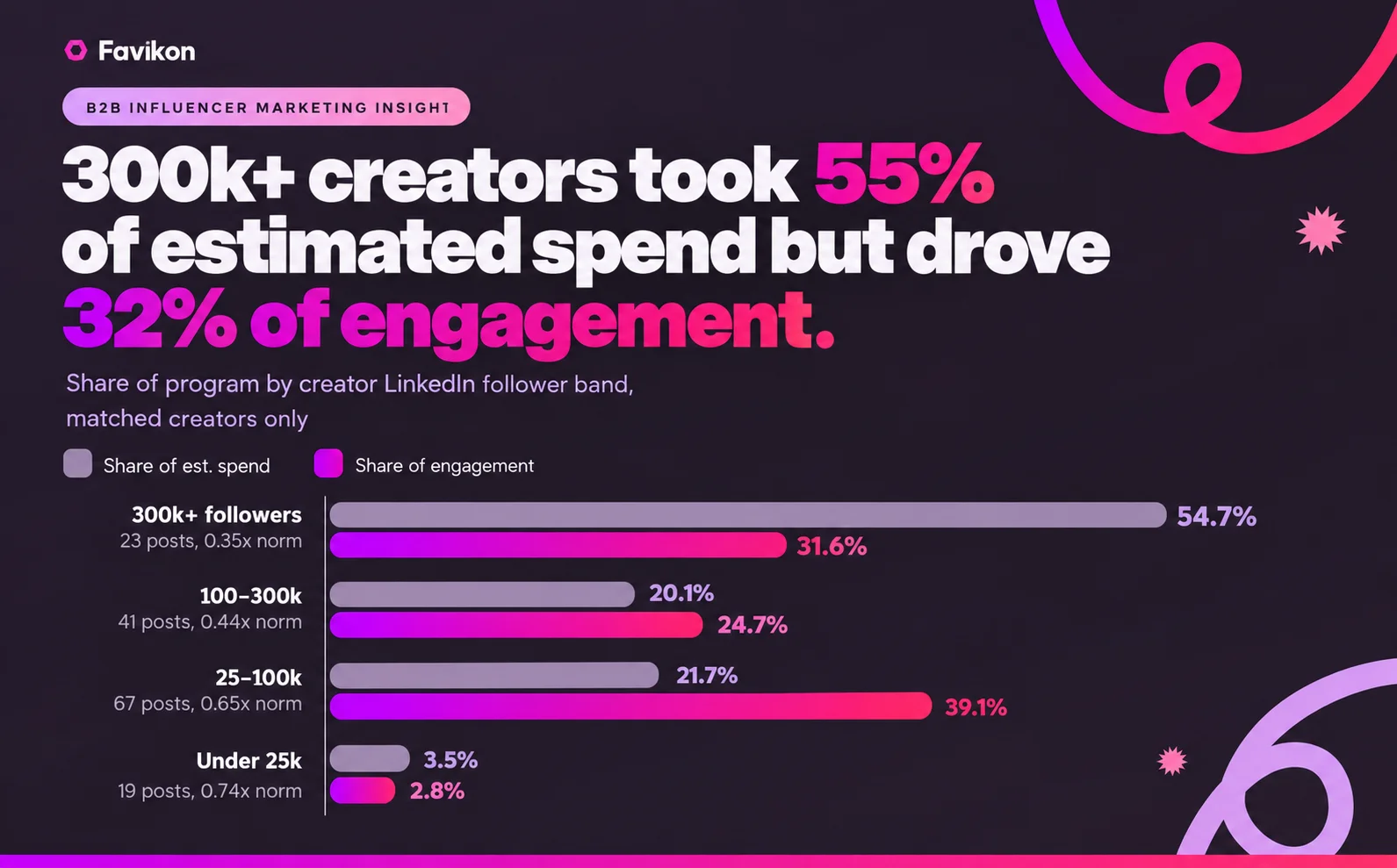
- Favor mid-tier creators. Creators with 300k+ followers took 55% of the estimated spend but drove just 32% of engagement. Creators with 25–100k followers drove about 39% on 22% of the spend.
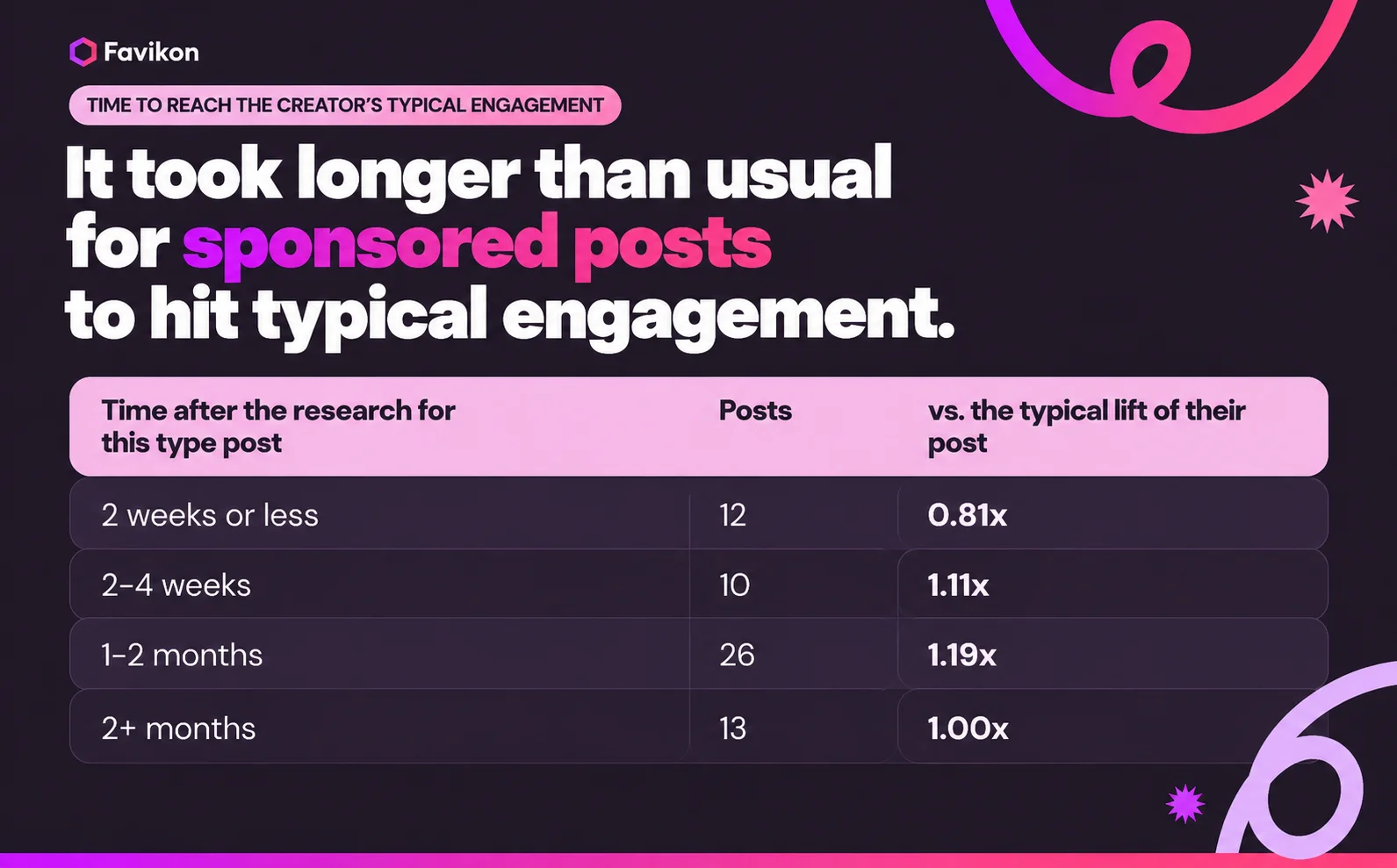
- Rebook creators, but never repeat the brief. Sponsored posts within two weeks of a creator's last one underperformed. About a month apart is the sweet spot.
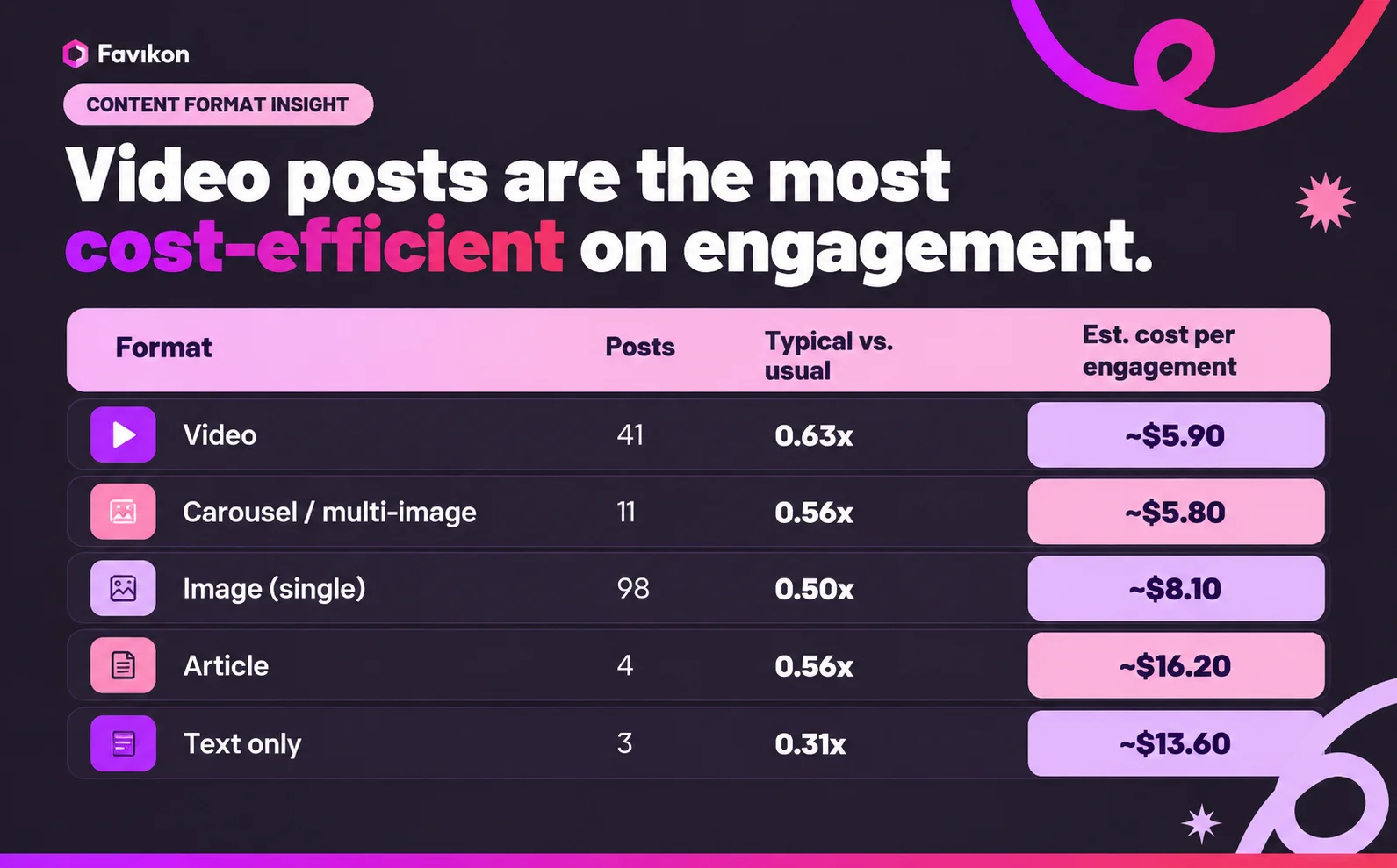
- Put personality first. Video (0.63x) and carousels (0.56x) edged out single images (0.50x), and posts showing the creator's face stood out.
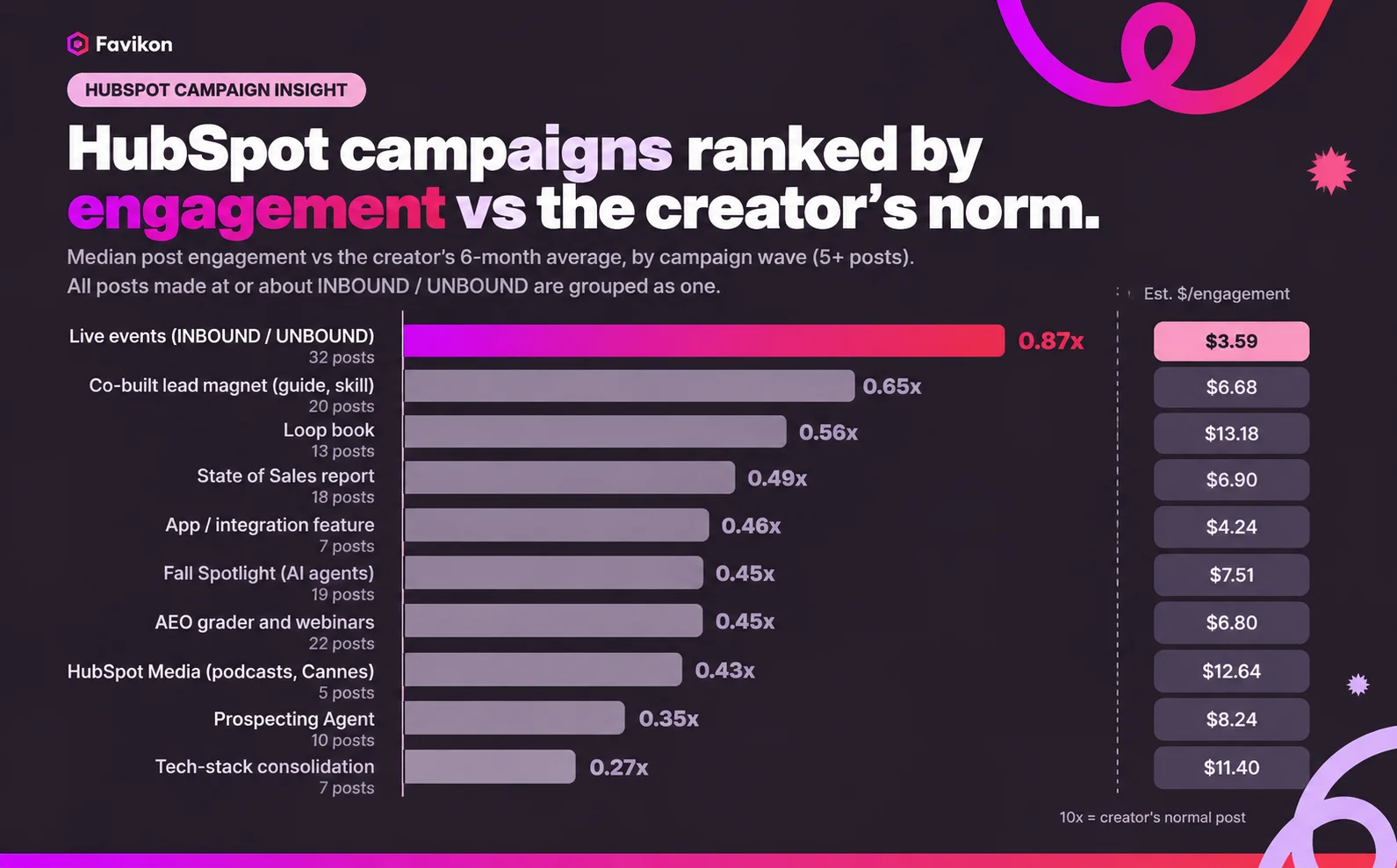
- Bring event energy to everyday posts. Live event coverage was the strongest campaign type (0.87x) at the lowest estimated cost per engagement ($3.59).
- Co-build resources that add real value. Guides and templates made with creators were the next best topic (0.65x), ahead of every product campaign.
- Weave the product in, don't tack it on. The posts that drove real interaction with HubSpot's tools made the product part of the story.
Interested in running your own analysis?
Download the full dataset here →
Creator investment is scaling across all industries, but to some brands, it still remains an elusive game that only some can win. I want to change that by creating comprehensive case studies on the biggest players in the industry and getting to the meat of what works and what doesn’t for creator marketing campaigns. This week, we’ll be taking a look at HubSpot’s #HubSpotMediaPartner program.
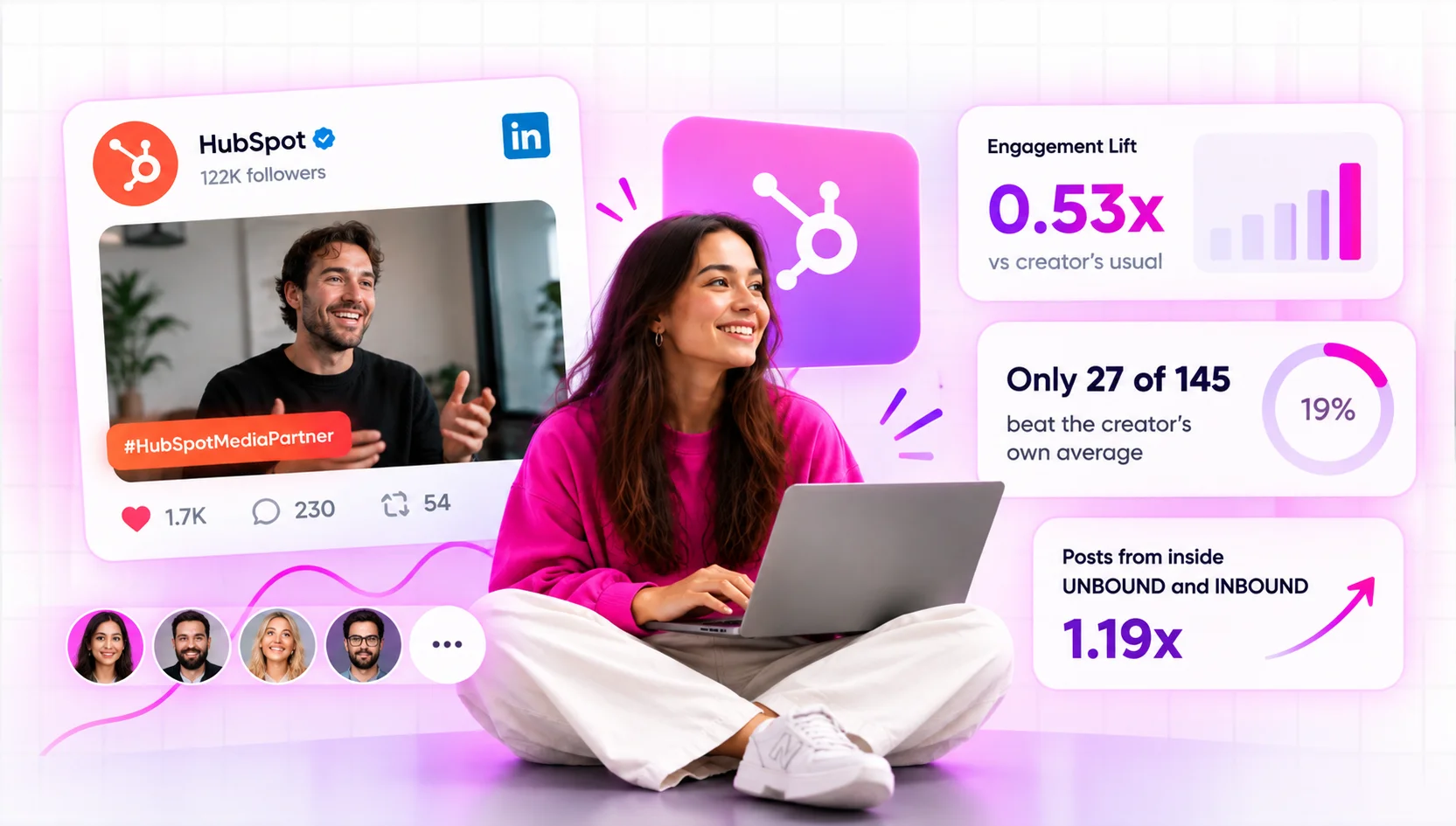
HubSpot is a Boston-based tech company aimed at making sales and marketing easier for professionals around the world. They offer many tools to do so, but at its core, HubSpot is a CRM platform. Today, we’ll be looking specifically at their #HubSpotMediaPartner program which was launched on LinkedIn in April 2025. It has seen 158 public posts on the platform from 62 creators to date. I quickly discovered something shocking: compared to the creators’ regular posts, sponsored posts only received 0.53x the creators’ usual engagement. Behind this underperformance is a story that I want to dig into today. As I walk you through my findings, we can uncover what performed well and where there is room for improvement for HubSpot. Even though today we will focus on HubSpot, these lessons can be applied to take any B2B creator campaign on LinkedIn from good to great.
1. Why Mid-Tier LinkedIn Creators Outperform Top-Tier Influencers
I think a common misconception brands have is that they need to spend a ton of money to book the hugest creator out there. What I uncovered by sorting through this HubSpot data was that larger creators with 300k+ followers made up 55% of the spend from the program, but only 32% of the engagement. Maybe surprisingly, the creators with 25k to 100k followers made up 39% of the engagement on just 22% of the spend from HubSpot. A likely reason for this outperformance from the underdogs: smaller creators feel more relatable, so a recommendation from them reads like advice from a peer, not an ad.
2. Rebook LinkedIn Creators, but Never Repeat the Brief
Of the 62 creators included in the program, 18 posted three or more times. Creating a relationship between the brand and the influencer can be incredibly valuable, but it has to be done right. Audiences can be easily fatigued if creators drill them on the same topics repeatedly. The creators who did the best rotated the topics they discussed and kept sponsored posts at least one month apart from each other. After about a month between posts, extra waiting made no meaningful difference in post performance, so I’d diagnose the month separation as the sweet spot to avoid sponsorship fatigue.
Sidenote on picking your roster of influencers: it goes without saying, but don't keep paying for a bad fit. One influencer in the program posted six times for HubSpot and never cracked a third of his usual engagement (0.27x, 0.11x, 0.09x, 0.11x, 0.19x, 0.30x). If the creator's audience isn't vibing with the product, there's no use directing more resources at a partnership that isn't landing.
The partners who stayed strong across their posts had three things in common: mid-size audiences, a voice that was clearly their own, and a fresh angle every time. Lindsay Stathakis is an amazing example of combining these three weapons to maximize meaningful engagement. She made three posts in partnership with HubSpot which averaged 0.98x her usual engagement, nearly double the program's 0.53x. Considering the average lift of the entire program, Lindsay is a strong player to model after.
When you look at her three HubSpot posts, each one does a different job. Her first post discusses a tool that helps startups nail down their valuation, her second moves on to HubSpot's annual State of Sales report, and her third post finishes with the Loop book, a resource for marketers. Besides the fresh topics which target different ICPs, her style also bolsters the quality of her series of posts. The first two posts are dynamic videos captioned in a lowercase, diary-style.
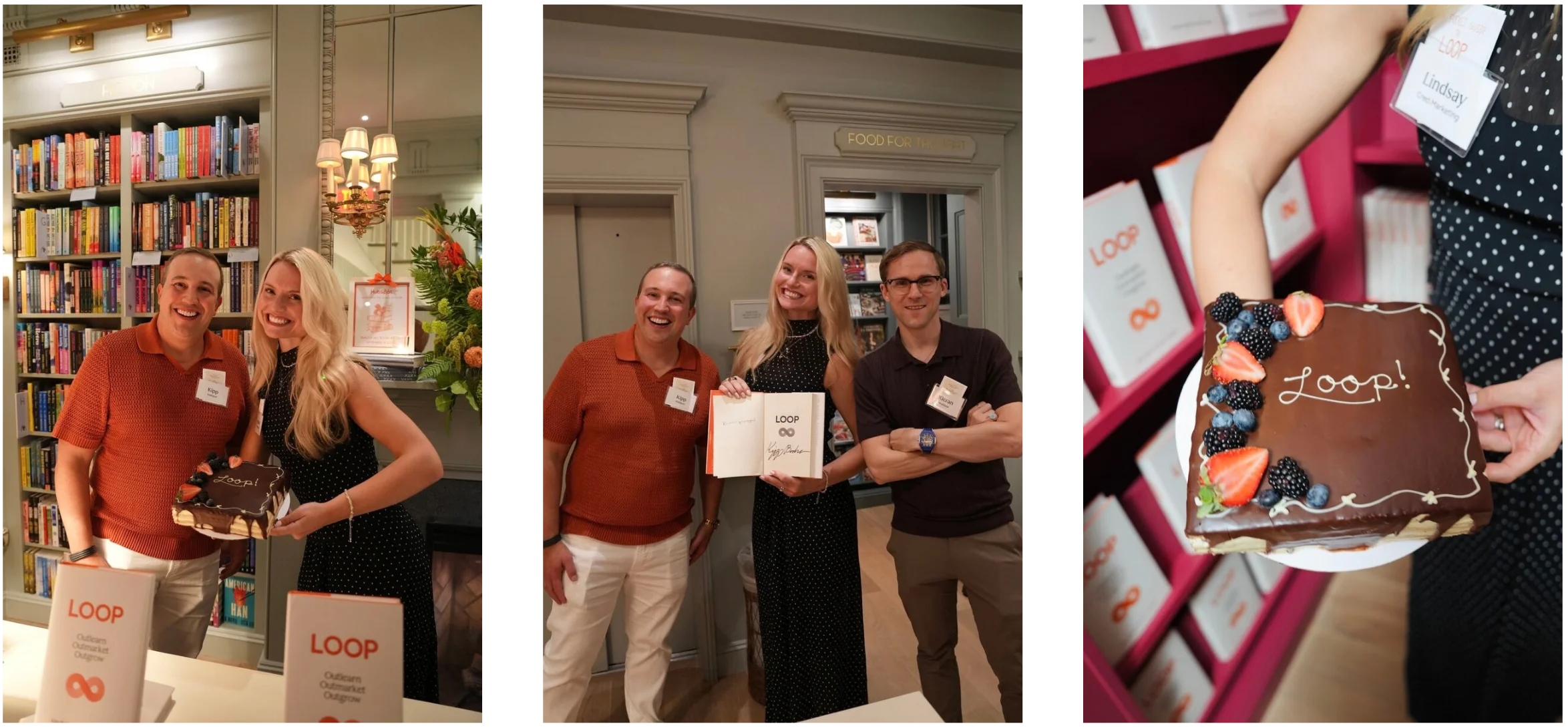
Her last post was also her best performance (1.30x). It leads with a funny hook, "Did I fly to Boston to give the CMO of HubSpot a Boston Creme Pie cake?? Uhhh yeah.", and then ties that personality back to why marketers need the Loop book. Across all three, we see that she was creating value for her followers despite each post being a promotion. She stayed relatable, and she used video and storytelling to make the partnership feel like her own content.
3. Put Personality First: The Best Formats for Sponsored LinkedIn Posts
Across my research on this program, I found content like Lindsay's to perform especially well. When creators put themselves in the post, whether by showing their face on video, writing in their natural voice, or sharing a real moment like flying to Boston with a cake, their audiences responded as if it were any other non-sponsored post. In HubSpot's program, video and carousels were slightly stronger than single images, earning 0.63x and 0.56x the creator's usual engagement versus 0.50x, at a lower estimated cost per engagement. From my own review of the top posts, the ones that showed the creator's face stood out too. The takeaway for brands is simple: don't ask creators to hide behind the product. Their personality is the reason people follow them in the first place, and it's what keeps a sponsored post from feeling like an ad.
4. Bring Live Event Energy to Everyday B2B Creator Content
Event coverage was the strongest campaign type in HubSpot's program. Posts made at or about UNBOUND and INBOUND earned 0.87x the creator's usual engagement, well ahead of every product campaign (0.27x–0.65x), and at the lowest estimated cost per engagement in the program, $3.59. I'm not saying you need to throw a million-dollar conference every week. In fact, these posts are less likely to drive conversions, since they rarely have a call to action and mostly announce that the creator is at the event. The brand awareness and goodwill brought in by events is still extremely valuable while less tangible compared to product promotion posts. That distinction is important, but there is something to learn from the incredible results of the event coverage: goodwill is valuable in the long run and we should be thinking about how we can replicate the energy of events on not-so-flashy days.
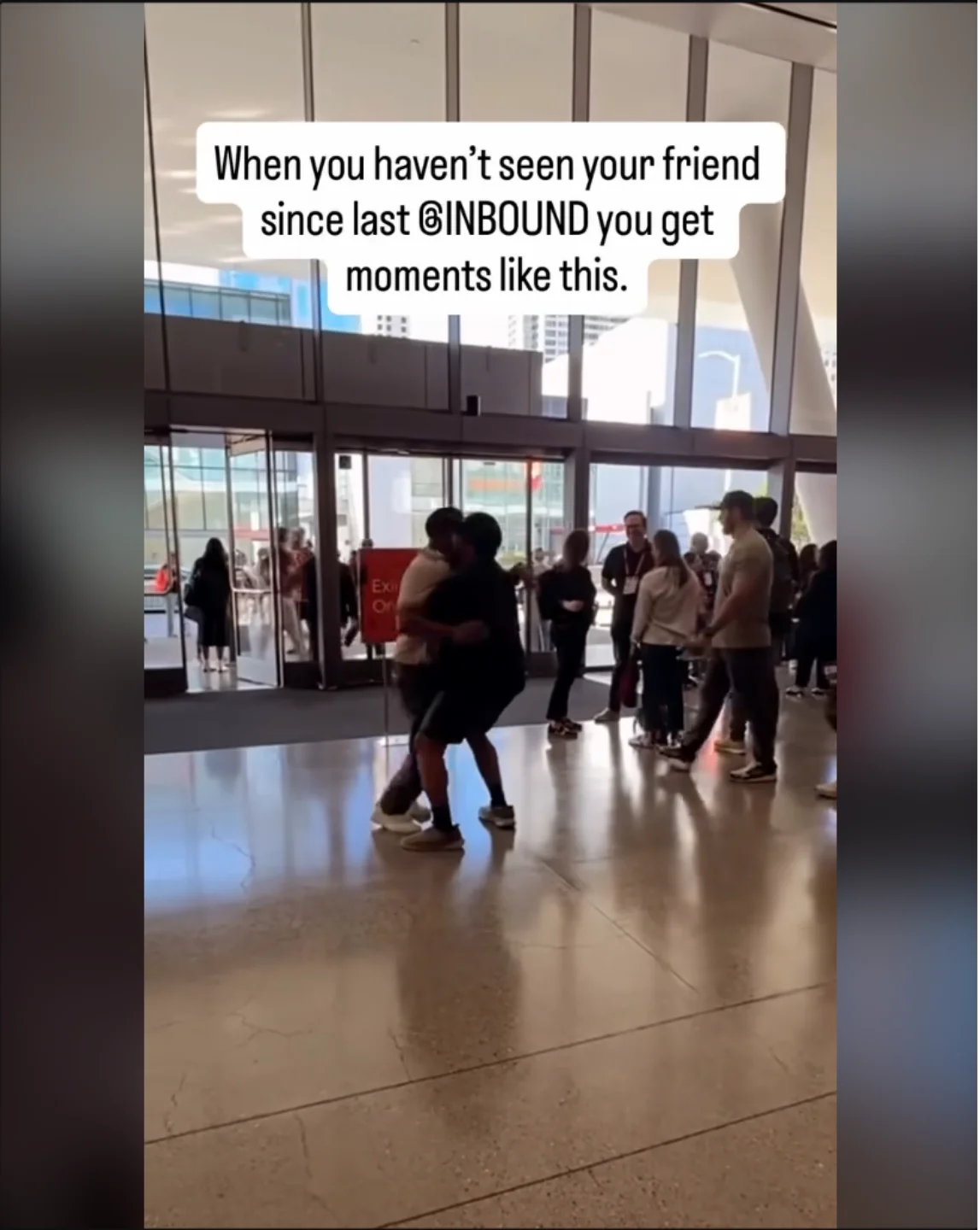
The best posts were full of personality and genuine human moments. The top five posts in this category all had a visual component with the creator's face included. My personal favorite was Troy Sandidge's reunion at INBOUND, where a HubSpot friend he hadn't seen in a year greeted him so enthusiastically that he ended up airborne ("Next time I'll wear a parachute"). When your brand is part of these magical, personal moments, it earns a kind of trust no product pitch can buy, and that's where the real power of creator marketing is unlocked.
On the flip side, the event posts that fell flat were the ones that could have been written by anyone in the audience: photos of the stage and bland recaps of long keynotes. Followers don't need a summary of the keynote. They want to see what the event looked like through the creator's eyes and what connections they were making during the conference.
5. Co-Build Lead Magnets With Influencers That Add Real Value
Below event coverage, co-built lead magnets were the most engaging topic for HubSpot's creators. Guides, templates and tools made with the creator held 0.65x of their usual engagement, ahead of every product campaign. This insight is all about understanding your audience’s pain points and creating resources that add value to their work day. It's also where HubSpot shines: building real relationships between creators and the brand.
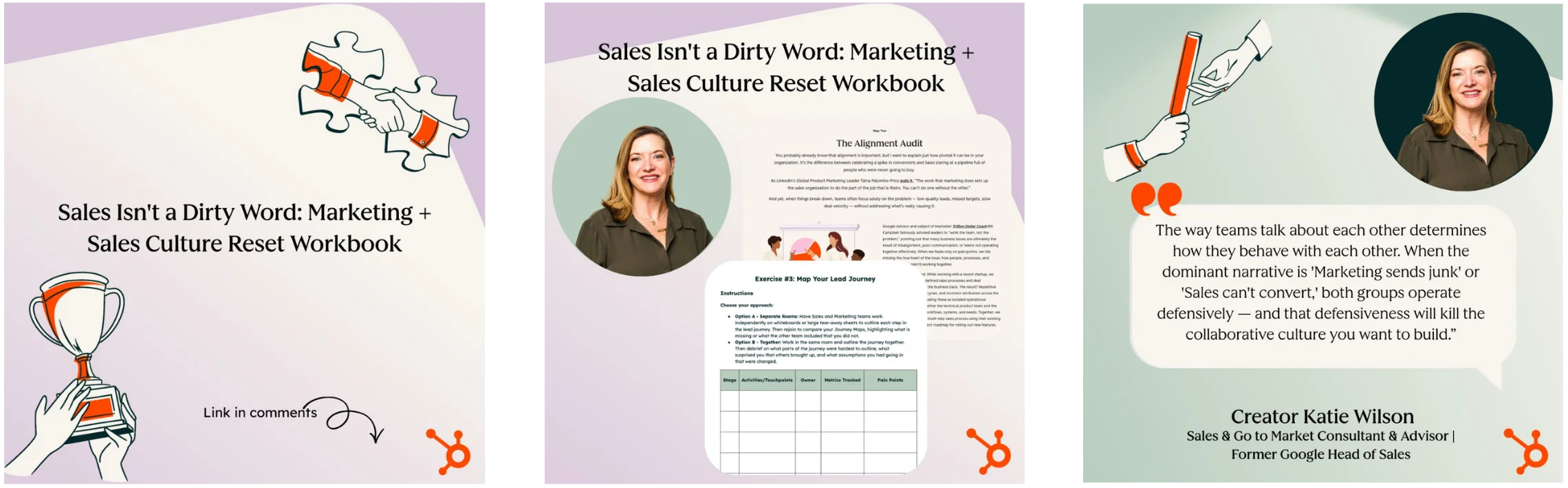
The post that stands out the most to me is Katie Wilson's workbook launch. She follows a near-foolproof formula that drove 4.6x her usual engagement. First, she names the pain point: the silos and constant friction between sales and marketing teams ("Marketing is sending us junk that doesn't convert"). Then she establishes her credibility and authenticity as a former Head of Sales at Google who actually uses the method she's recommending, the same alignment process she runs in multi-day off-sites with her own clients. Lastly, the visual is a straightforward carousel with satisfying colors, imagery that symbolizes teamwork, and a format that lets you interact with the content itself. Katie frames herself as an essential part of the solution rather than just the messenger, and that kind of personal branding is exactly what makes a sponsored post attractive.
6. Weave the Product Into Sponsored Posts, Don’t Tack It On
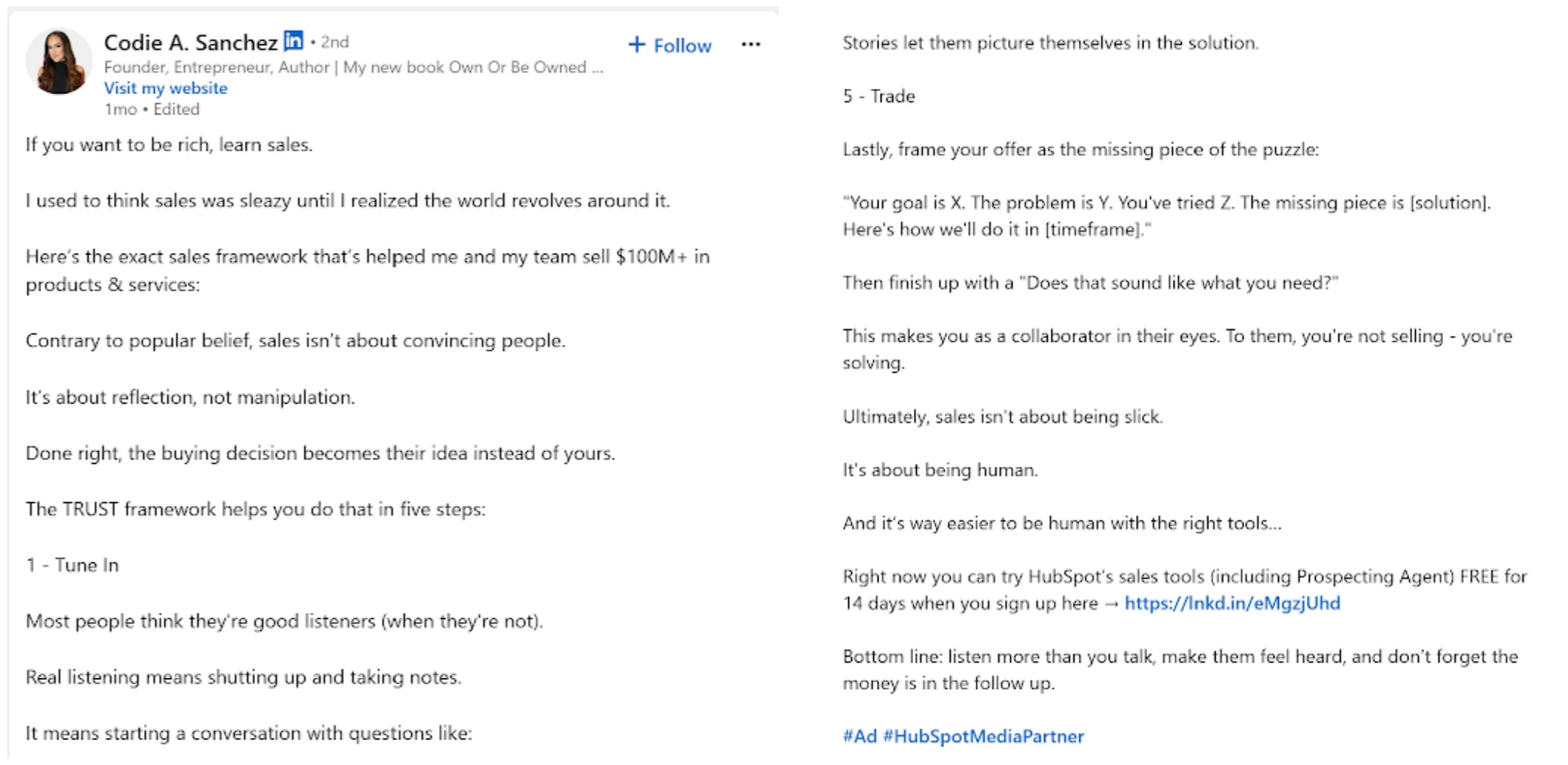
This is an insight that I was able to find by hand when I took a closer look at the highest performing posts. When you look at the numbers, both Codie and Scott’s posts have great engagement and seem like great exposure for HubSpot: both earned more than 1.25x their usual engagement, measured against their personal 6-month average. But a distinction can be made in the formatting of the posts that drastically separates their impact. Codie’s post leads with a strong hook “If you want to be rich learn sales” and then she pivots interestingly saying she never believed this. The post served almost like a philosophical rumination of what sales is and can be, but the issue here is that the HubSpot link felt like an add-on to the post's real topic, and the comments reflected that. While a well engaged post, this choice in formatting resulted in comments unrelated to the product entirely. An opportunity was missed here to weave the product into the post.
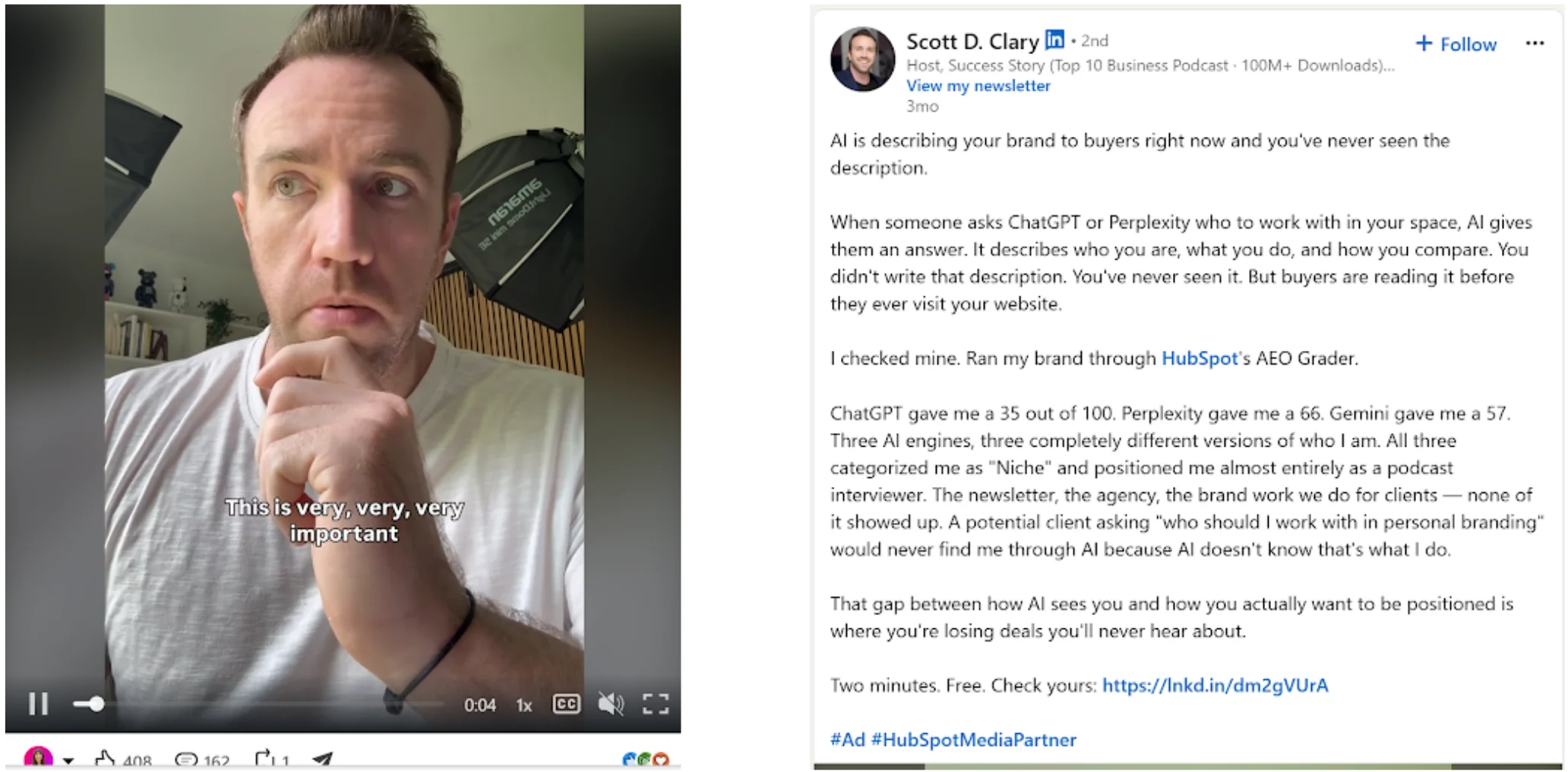
Conversely, a post in the data set that did this excellently was Scott D. Clary’s post on AEO. The post also leads with an exciting hook that clinches the reader’s attention: “AI is describing your brand to buyers right now and you've never seen the description.” Here, Scott presents a new-age problem that some people might not even know about, but by the time the post is halfway through, he poses a solution and includes the HubSpot link. In this case, the tool he is promoting is an AEO grader which gives you a score for how optimized your company’s online presence is to show up in AI searches. I realized the quality of the post goes beyond the healthy lift when I took a look at the comments. Most of the 162 comments begin with “I just realized” and conclude with confirmation that the user clicked on the link and used a HubSpot tool. The high interaction with the product itself in this post can be attributed to Scott’s ability to weave the product into the story the post was telling.
What This Means for Your Next Creator Campaign
HubSpot's creator program shows both the promise and the pitfalls of B2B creator marketing on LinkedIn. On average, sponsored posts earned about half the engagement of a creator's regular content, but the best posts closed that gap entirely. What separated them wasn't budget or follower count. It was fit, personality, and value. Mid-size creators outperformed the biggest names, and creators who showed up as themselves, shared real moments, and gave their audience something genuinely useful turned a sponsorship into content people wanted to engage with. Format played a part too: video and carousels edged out single images, posts that showed the creator's face stood out, and the strongest posts wove the product into the story instead of tacking it on at the end. The lesson for any brand isn't to spend more or post more. It's to choose the right creators, give them room to be themselves, and make your product part of the story they're already telling.
Methodology: How We Pulled the Data
We found all public #HubSpotMediaPartner posts on LinkedIn through Google, 158 posts from 62 creators, and matched 57 of the creators to their Favikon profiles. Each post's engagement was compared with the creator's six-month average: 1.0x means a typical post for that creator. Group results use the median, and costs are Favikon market estimates, not HubSpot's actual fees. The data covers public posts as of October 4, 2026, and shows engagement only, not clicks or revenue.
Download the full dataset here →
Others articles