Influencer Relationship Management Guide for B2B Teams
What is influencer relationship management, and does your B2B team need it? This guide explains how IRM works, why long-term creator relationships matter, when dedicated software makes sense, and how to build a scalable process.

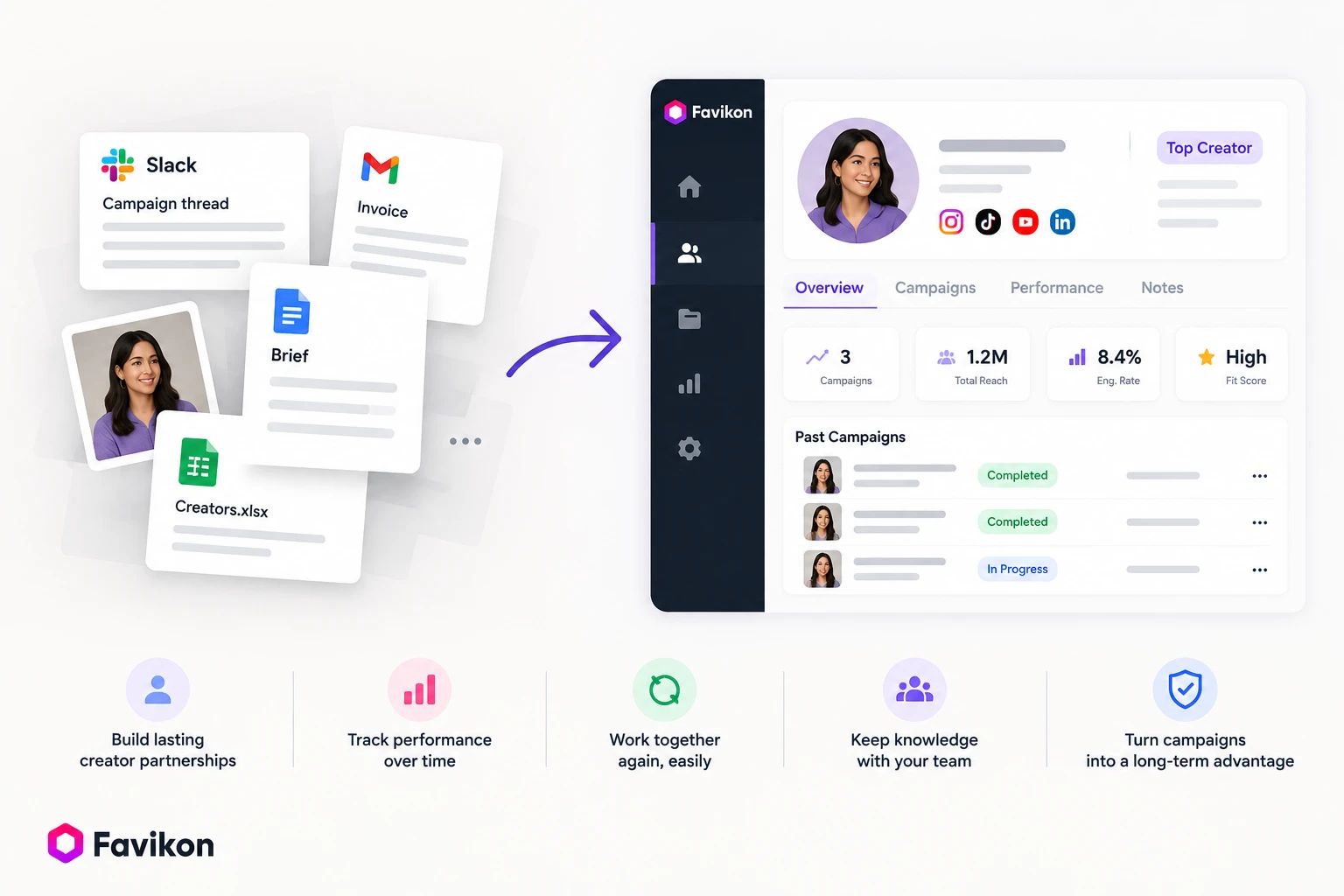
You wrapped a campaign last month with a creator who actually delivered. The creator delivered solid content, hit the numbers, and caused zero drama. A colleague now asks if you want to work with them again. You check your records. There's an invoice, a brief, and a Slack thread that's been archived, and that's the whole record. Scale that to 30 creators and a team of three, and the spreadsheet falls apart fast.
That's the gap influencer relationship management closes. IRM isn't a new concept or a software category you need to buy into. It's a practice. The decision to treat creator partnerships as something that compounds over time rather than resets after every campaign.
TL;DR: Influencer Relationship Management
- Influencer relationship management (IRM) is the ongoing practice of building, tracking, and maintaining creator relationships across multiple campaigns.
- In IRM, creator partnerships retain value across campaigns rather than resetting after each brief.
- IRM, influencer CRM, and a creator database are three different things: IRM is the practice, the CRM is the software feature that enables it, and the database is where you find creators.
- The moment creator relationships live in one person's head rather than a shared system, the program is at risk, regardless of roster size.
- If you're managing repeat creators in a spreadsheet with no performance history per creator, that's a signal that a proper IRM process is overdue.
- Favikon's influencer CRM covers discovery, outreach, and campaign tracking in one place. Start a free 7-day trial, no credit card required.
What Is Influencer Relationship Management?
Influencer relationship management is the ongoing process of building, tracking, and maintaining creator partnerships across multiple campaigns, from first outreach through long-term rebooking. It borrows from sales CRM thinking, sometimes called influencer relations management in adjacent teams, and applies the same logic that keeps client relationships organized to the creators a brand works with repeatedly.
A creator database tells you who exists and whether their audience fits your brief. IRM is what comes after: tracking who responded, what rate was agreed, what they actually delivered, and whether it makes sense to bring them back.
Think about what this looks like in practice. You run a campaign with a creator who performs well, the content lands, and you'd work with them again. Three months later, a new brief comes up.
Without IRM, you're checking old Slack messages to find the agreed rate, re-explaining the brand guidelines, and starting the trust conversation from scratch. With IRM, that history is already there, attached to the creator's record, visible to whoever picks up the brief.
That's also how it differs from influencer CRM as a concept. IRM is the practice. The CRM is the tool that makes it repeatable once a roster outgrows a spreadsheet.
Influencer Relationship Management vs. Running One-Off Campaigns
Campaign-first programs find creators for a launch, run the deliverable, pay the invoice, and move on. No record carries forward. The next time someone mentions a creator's name, the team starts over: re-checking their numbers, negotiating a rate that was already negotiated, and rebuilding a working relationship that was already partly there.
Relationship-first programs compound. The creator already knows the brand voice, the brief gets shorter each time, and the content gets sharper because there's less guesswork on both sides. There's also something the audience sees that you can't manufacture any other way.
A creator who mentions your brand once reads as paid. A creator who's been showing up for your brand over six months reads as someone who actually uses it. That's what shifts an audience's reading of a creator's recommendation from paid to preferred, and it comes only from continuity.
Why Influencer Relationship Management Matters
Brands that treat creator relationships as ongoing partnerships rather than one-time transactions see better content, lower per-campaign costs, and more credible audience signals over time. The returns improve because the creator knows the brand better, the brief gets shorter, and the audience stops reading it as a sponsored post.
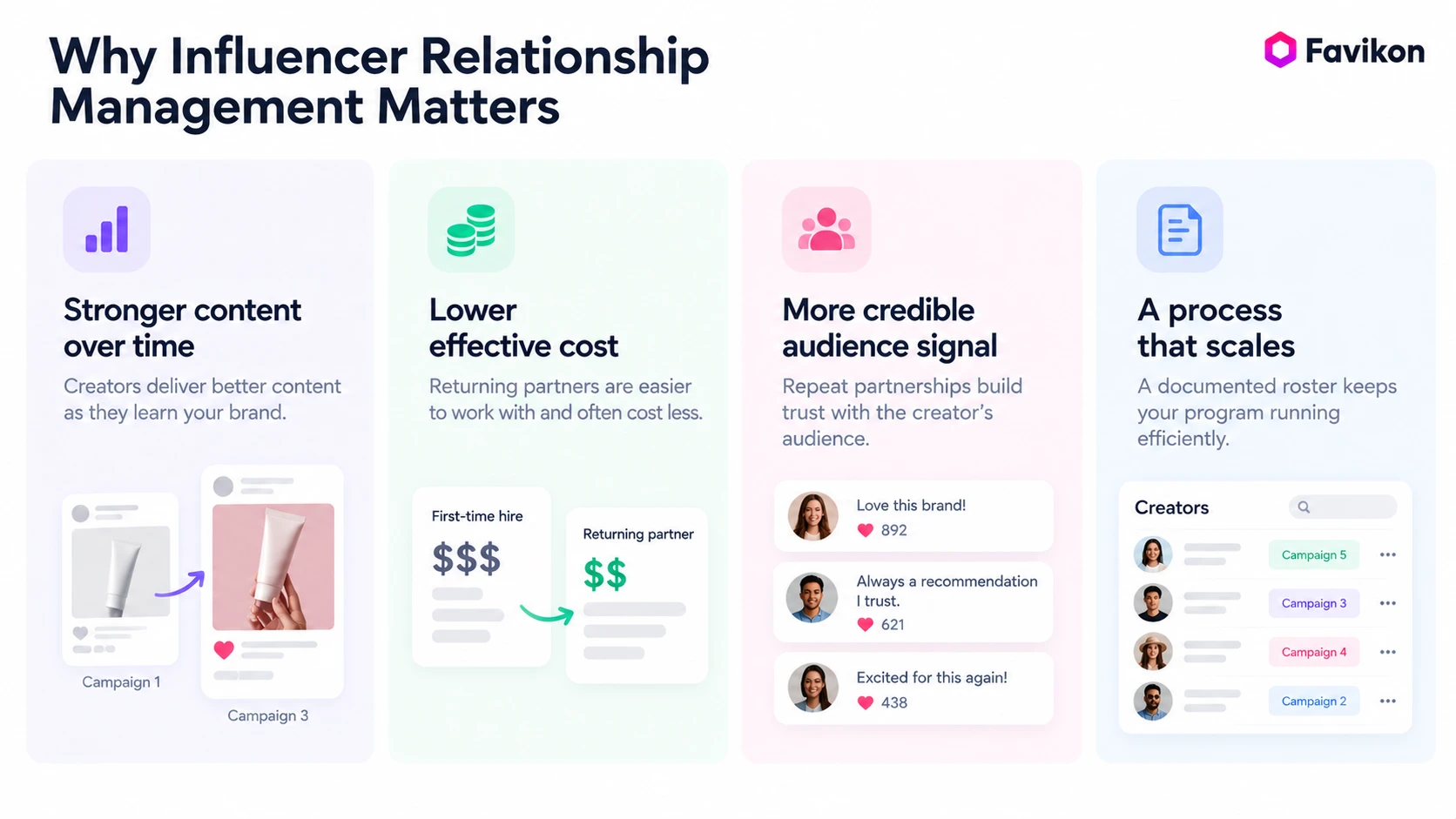
Here's where that difference shows up in practice:
● Stronger content over time: A creator who's worked with a brand before stops guessing at what lands. The content on campaign three is almost always sharper than what landed on campaign one because the creator is drawing on real feedback rather than assumptions. That quality improvement shows up in performance.
● Lower effective cost: First-time hires cost more to negotiate than returning partners who've already delivered. A creator with a track record of results and a brand that pays on time and briefs clearly tend to settle into a standing rate that benefits both sides.
● More credible audience signal: Repeat partnerships build audience trust in a way a single sponsored post can't. The credibility compounds each time the creator shows up for the brand. That shift tends to change how audiences read a recommendation, and it only comes from repeated partnerships.
● A process that scales: A documented roster with tracked performance history is what keeps a program running once it passes a handful of creators. Without it, institutional knowledge lives in one person's inbox and leaves the company when that person does.
The Core Elements of Influencer Relationship Management
IRM has five components, and most programs struggle not because they're missing a tool but because they're skipping at least one of these steps. Each one feeds into the next.
Here's how each element works in practice:
- Discovery and vetting: Audience fit, engagement quality, and brand alignment matter more than raw follower count. A tightly niched micro-creator will usually outperform a much larger account with scattered engagement.
- Outreach and onboarding: A clear first brief covers deliverables, usage rights, timeline, revision rounds, and communication protocols, so the mechanics are settled before any work starts. Handle this well in campaign one, and you'll never need the mid-project clarification conversation that makes a brand look disorganized.
- Communication and nurturing: Staying in contact between campaigns is the part most teams skip, but it doesn't have to be much. A note after a video that performs well, a heads-up before a launch, or a question about what they found to work is enough.
- Performance tracking: Engagement, conversions, and relationship signals like response rate and rebooking frequency all matter. Reach alone tells you almost nothing once a program grows past a handful of creators. Skip this step, and rebooking decisions are based on memory rather than results, which means the wrong creators cycle back in.
- Payment and compliance: Paying on time is a retention tool, and late payment is one of the fastest ways to lose a creator worth keeping. Keeping usage rights and disclosure requirements documented protects the brand when those questions come up, and they always do.
Tiering Influencer Relationships
Not every creator on a roster warrants the same investment. A tiering structure keeps any influencer relationship management program consistent as the roster grows without complicating the system as a whole. The underlying logic is simple. A creator earns a higher tier by performing.
Here's a starting structure most teams can adapt to their roster:
The ambassador tier is a two-way commitment. Brands that give top creators early access and ask for their opinions before a launch tend to receive more creative investment in return. Treat it as a real designation with actual privileges.
Common Influencer Relationship Management Mistakes
Most IRM programs don't fail on strategy. They fail on habits that are easy to miss when the roster is small and obvious once it isn't. These four come up consistently:
- Going quiet between campaigns: Brands that only reach out when they have a brief read as a client, not a partner. Creators with options gravitate toward brands that stayed warm between activations. A check-in after a video performs well costs almost nothing and makes the next "yes" easier to get.
- Rebooking on memory instead of data: Without a performance record, the creators who make the most noise often get rebooked over the ones who quietly delivered. Score each collaboration on content quality, delivery, and campaign outcomes before any rebooking decision gets made.
- Leaving usage rights vague: Usage rights only become urgent when a brand wants to reuse content, and by then it's too late to negotiate cleanly. Usage rights, exclusivity terms, and content lifespan belong in every initial agreement, not in a follow-up conversation after the work is done.
- Treating every creator as interchangeable: A nano-creator with a tight niche audience and a macro-creator with broad reach need different briefs, timelines, and expectations. Lump them into the same outreach template and the good ones notice. Segment by tier before building briefs and adjust deliverable scope, lead time, and rate accordingly.
Do You Need Dedicated Influencer Relationship Management Software?
Most teams don't need a dedicated influencer relationship management SaaS platform. What they actually need is a campaign platform that stores creator history so nothing gets lost between activations. Dedicated IRM software starts to earn its cost when a program is running across multiple team members or markets simultaneously, and the real problem is cross-team visibility.
There is no universal threshold, but here is a practical way to assess where most programs land. Team structure matters as much as roster size.
IRM only pays off if a team runs campaigns regularly. A brand doing one creator activation per quarter doesn't need a system for this. A team running rolling campaigns across platforms and markets almost certainly does.
How Favikon Handles Influencer Relationship Management
Favikon's influencer CRM keeps conversations, shortlists, and campaign status in one place rather than scattered across email threads and separate tools. When a team member picks up a brief someone else started, the full history is already there. Who was contacted, what was agreed, and how the previous campaign performed.
That's what the tiering structure and the mistake list above are actually pointing toward. Documented history at the creator level turns rebooking from a memory exercise into a data decision. A roster of 80 creators doesn't need 80 separate spreadsheets or one very attentive person to hold it all in their head.
One honest limitation worth knowing before you start a trial. Favikon doesn't handle creator payments yet. The platform covers discovery across 10M+ creator profiles on 9 social channels and 600+ AI niche categories, with an Authority Score and Authenticity Score on every profile, plus campaign management and relationship tracking in one place. Payment workflows still run through whatever system a team already uses. Core starts at $199/month (or $159/month billed annually), with a Pro plan at $299/month (or $239/month billed annually).
Pick the Process That Fits Where You Are
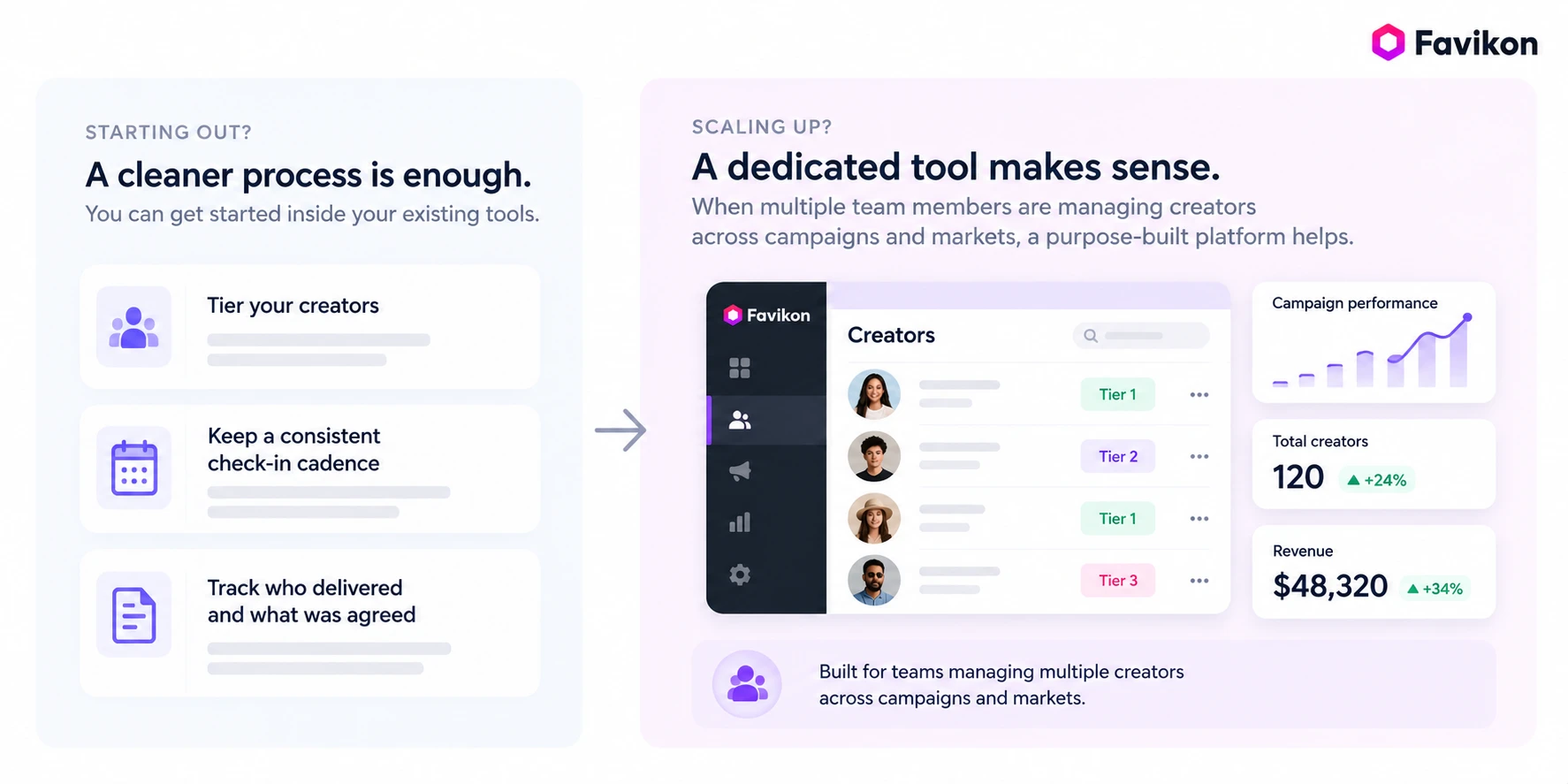
IRM doesn't require a dedicated platform to get started. Most programs can begin with a cleaner process inside whatever tool they're already using, with a tiering structure, a consistent check-in cadence between campaigns, and a record of who delivered and what was agreed.
The tool question comes down to scale. If one person manages all your creator relationships, the CRM built into your campaign platform is probably enough. If multiple team members are touching the same creators across campaigns and markets, that's the point to look at something purpose-built. Favikon's 7-day trial requires no credit card.
Frequently Asked Questions
What Is the Difference Between Influencer Relationship Management and Influencer Marketing?
Influencer relationship management is the ongoing practice of nurturing creator partnerships across multiple campaigns, while influencer marketing covers individual campaign execution. IRM compounds over time, so a creator's history carries into the next brief. Influencer marketing resets after every campaign, with no record built between them.
Is Influencer Relationship Management the Same as Influencer CRM?
Yes, influencer relationship management and influencer CRM refer to the same underlying idea. A CRM is the software feature that stores creator contact history, briefs, and past performance, and IRM is the practice that software supports. Teams use both terms interchangeably when talking about managing repeat creator relationships.
Do Small Teams Need Influencer Relationship Management Software?
It depends more on team structure than on roster size. A small roster can usually be tracked inside whatever campaign platform the team already uses. Dedicated IRM software starts to earn its cost once a program spans multiple team members who manage the same creator relationships, regardless of the exact roster size.
What Are the Core Elements of Influencer Relationship Management?
The core elements of influencer relationship management are discovery and vetting, outreach and onboarding, ongoing communication between campaigns, performance tracking, and payment and compliance. Most programs don't fail on strategy. They fail because at least one of these five steps is consistently skipped, and it's almost always the communication between activations.
How Do You Measure Influencer Relationship Management Success?
Measuring influencer relationship management success means tracking relationship signals alongside campaign outcomes. Response rate and rebooking frequency tell you as much as reach and conversions. A creator who rebooks consistently and delivers sharper work each time is a stronger long-term asset than a high-reach hire treated as a one-time vendor.
What Is the Biggest Mistake in Influencer Relationship Management?
The biggest mistake in influencer relationship management is going quiet between campaigns. Brands that only reach out when a brief is ready read as clients rather than partners. The best creators have options, so if you disappear for months, they'll be less available and less motivated when you return with another task.
What Tools Support Influencer Relationship Management?
Any influencer relationship management (IRM) tool worth using starts with a basic CRM to store creator history, which is sufficient for smaller programs. For teams managing larger rosters across markets or multiple team members, Favikon's influencer relationship management tools cover discovery across 10M+ profiles on 9 social channels, with outreach, campaign tracking, and relationship history in one place.
Others articles