9 B2B Influencer Marketing Trends For 2026
We asked leading B2B influencer marketers to share their trend predictions for 2026. Here’s what you need to know.

B2B Influencer Marketing Trends For 2026
Many B2B brands ran their first influencer marketing campaign ever in 2025, and the industry is quickly evolving.
We asked leading B2B influencer marketers about their trend predictions for 2026, and these were the nine most commonly mentioned trends.
#1: Product and Creator Launches
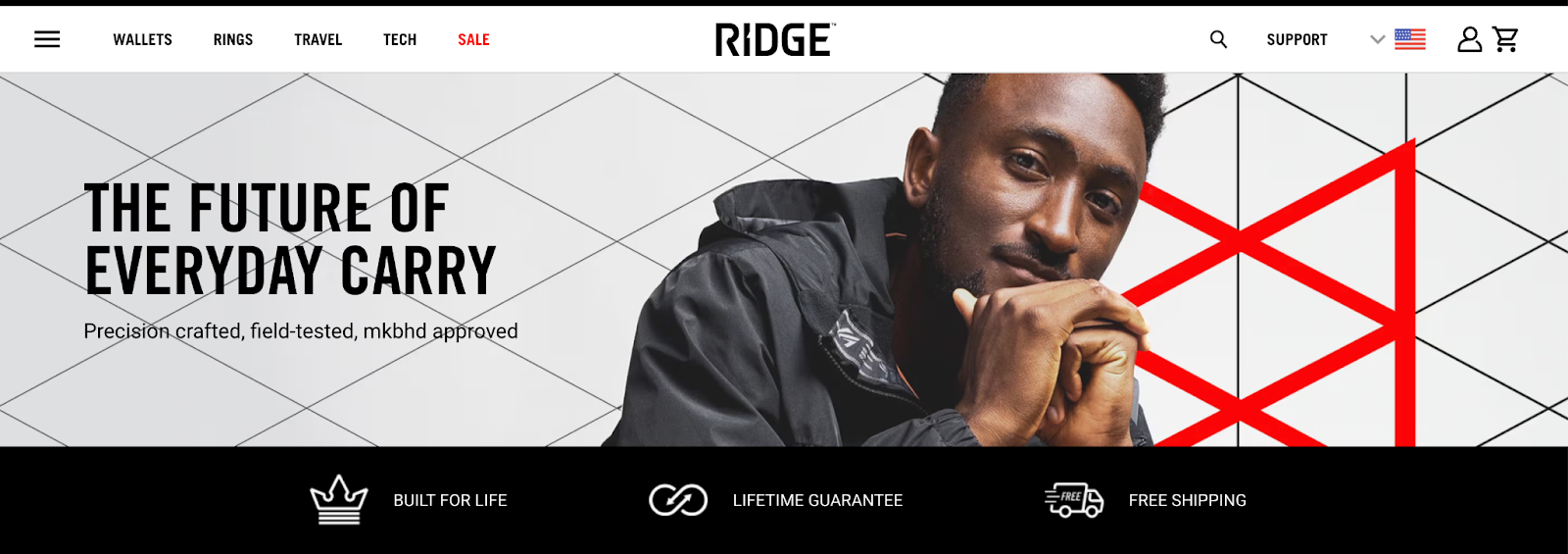
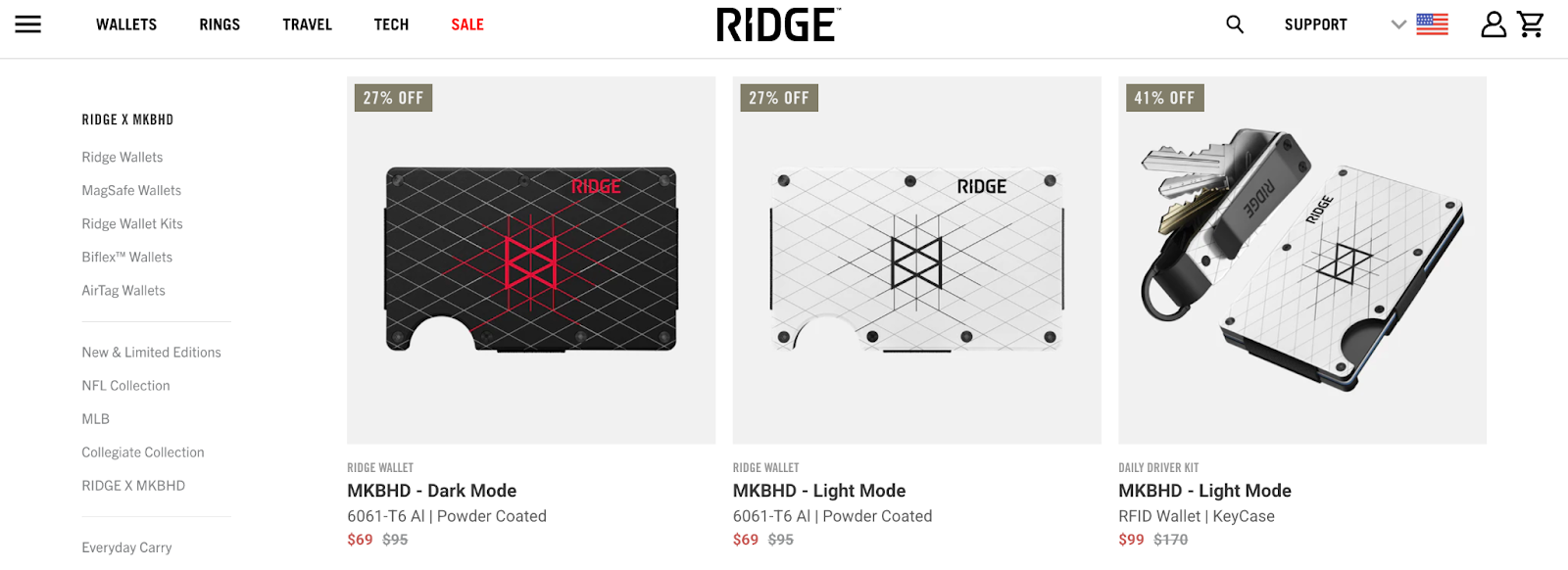
In DTC, many brands collaborate with influencers for product launches. For example, MKBHD partnered with Ridge to launch his own collection of gear:
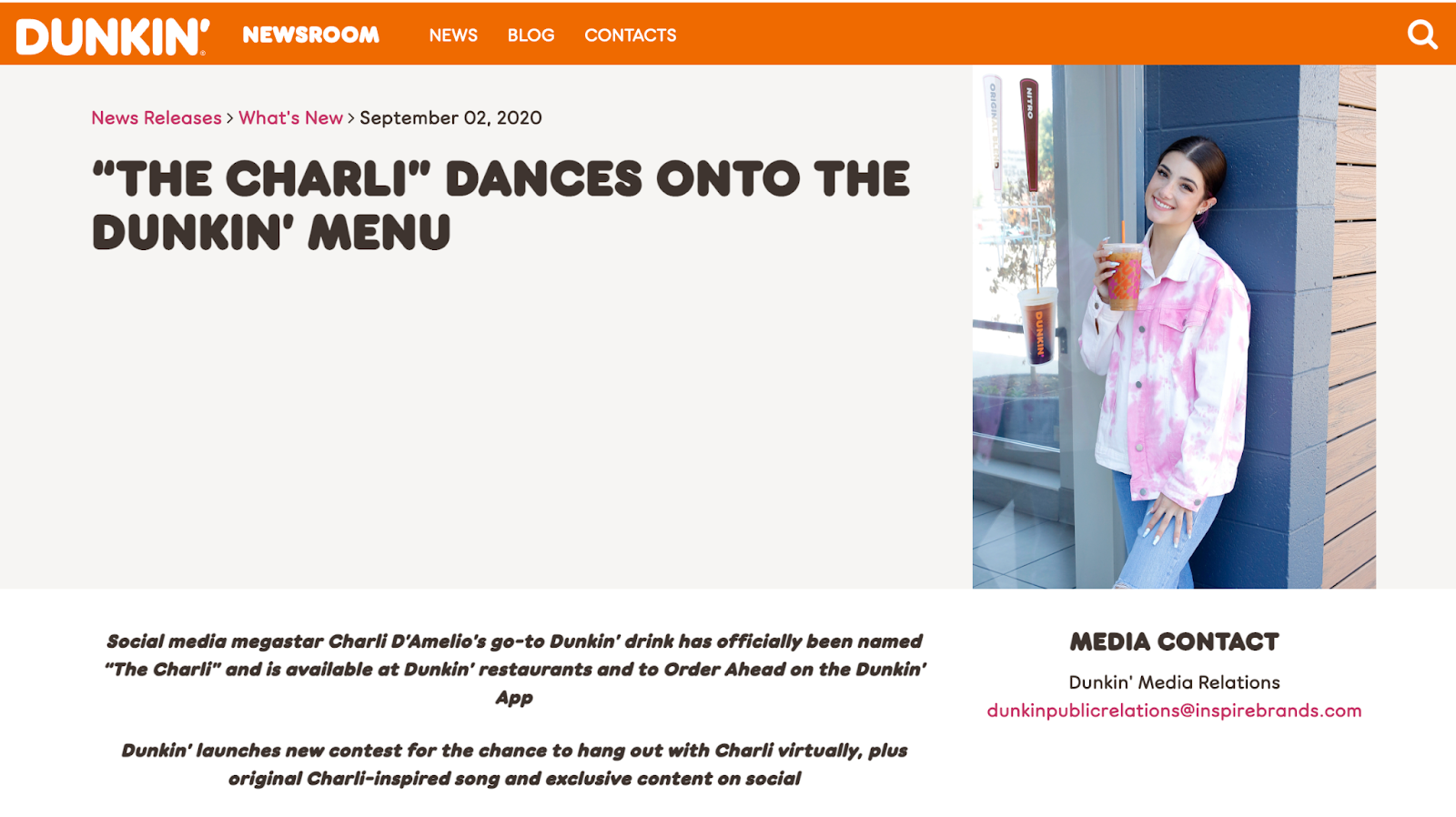
Similarly, Dunkin Donuts collaborated with TikTok star Charli D’Amelio to launch an exclusive drink called “The Charli”:
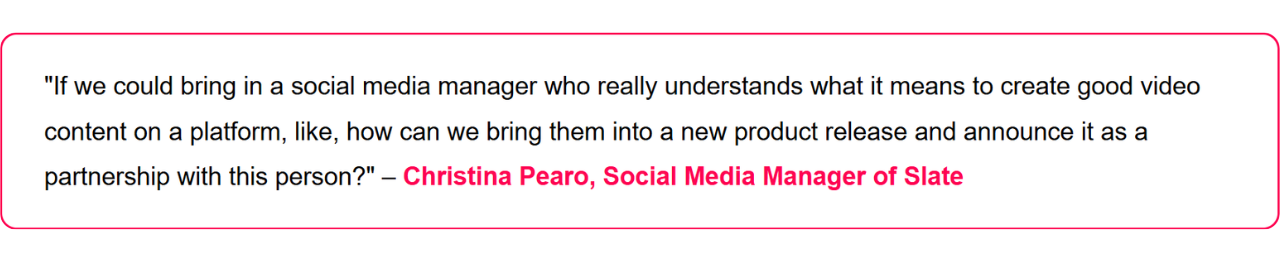
In 2026, Chritisina Pearo of Slate predicts that B2B brands will also begin to collaborate closely with creators to launch product features and offerings together:
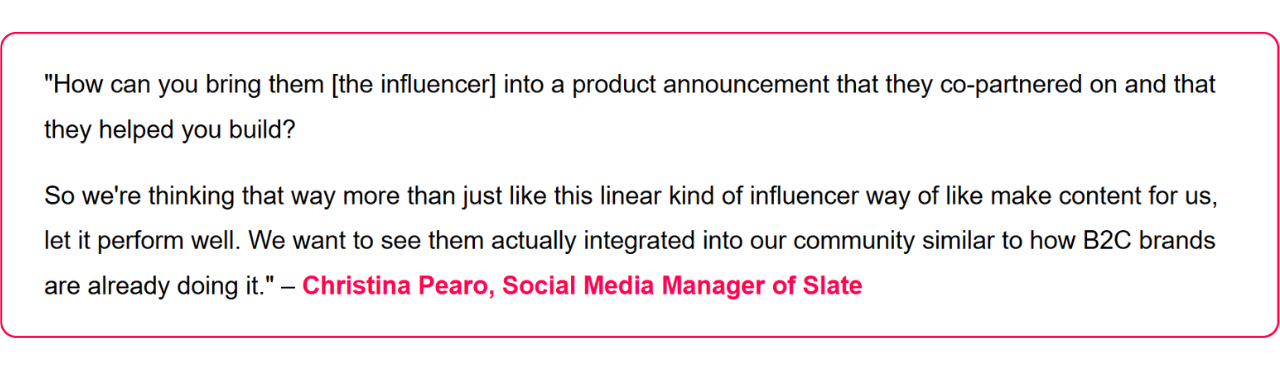
She admitted that releasing a product feature with a creator is a little more challenging in B2B than in B2C, but here’s an example they’re considering at Slate (a video editing platform for social media managers).
#2: Edutainment Content Continues to Rise
When asked about the top performing content from 2025, most influencer marketers agreed that comedic skit content was by far the most impactful.
To give you an idea of what skit content looks like, here’s an example of a post from Storylane:
The key to making comedic skits effective is to demonstrate a real pain point your product solves in a humorous manner.
Additionally, some B2B brands are partnering with meme accounts to gain visibility among their prospects. Assuming the meme is relevant to your ICP, it can be an effective way to get their attention.
“There are people who are partnering with like meme accounts instead of individual creators.
For example, if you're like a sales team, there are sales meme accounts that are partnering with these brands.
So we are slowly starting to think about that and what that could look like in terms of edutainment because meme accounts are easily shareable. [They’re] so fun to look at and quickly hit your ICP's attention like right away.” – Christina Pearo, Social Media at Slate
Nicole Ponce from Semrush also added that they’re currently doing partnerships with meme accounts.
“We buy meme pages a lot and they're often owned by creators. So you should ask your creators. A lot of them also own meme papers and you can usually add them on for pretty cheap.”
We've done a lot of that and it has been one of like, I think one of ours that was the organic (zero boost) and it hit like 3 million, almost 4. million. And it was just all organic, which was wild.” – Nicole Ponce, Head of Influencer Marketing at Semrush
#3: Community Integration
Instead of simply promoting the content, an influencer marketing trend in 2026 is creators partnering with brands to build community.
For example, Christina Pearo from Slate said that they collaborate with influencers to ask questions and build community relationships with one another in a more formal capacity.

For example, Slate has a Slack community for social media managers, and they do weekly webinars with influencers to bring more people into the community and ensure the content itself is engaging.
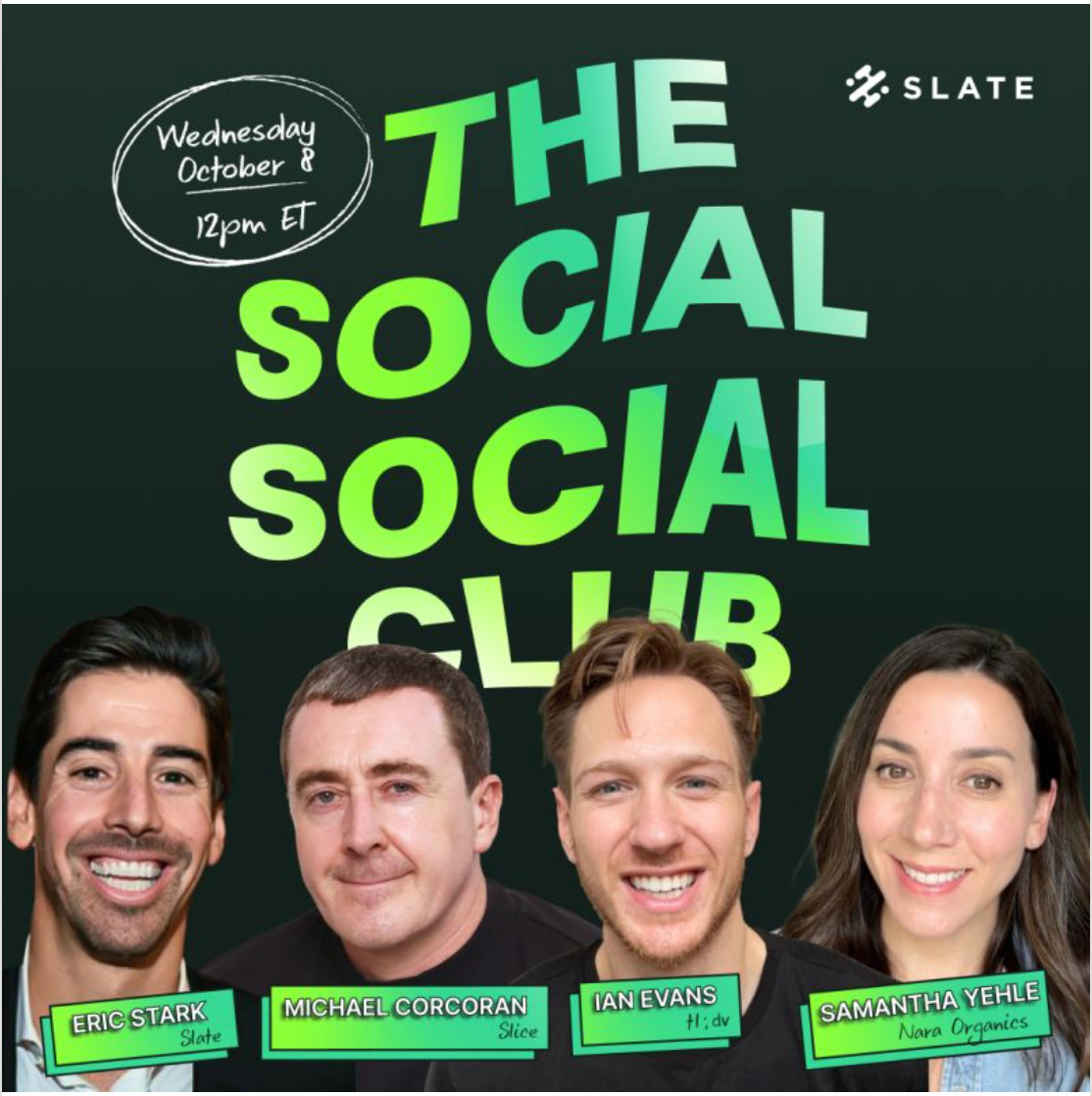
Consider how you can build a community (whether through Slack, a Reddit discussion, or another platform) and then integrate influencers into that community.
#4: LLM and SEO Importance
Ahrefs recently did a study analyzing the factors that correlate with brand appearance in AI overviews, and brand mentions across the web was the most important factor.

Fortunately, influencer marketing can help improve LLM visibility.
In fact, Igor Gorbenko of Ahrefs shared that the Ahrefs product most frequently cited by LLMs also happens to be the product that they promote in influencer campaigns.

However, LLM visibility isn't the only way influencer marketing can aid your brand's discoverability.
It can also help your brand rank on YouTube and in Google Search.
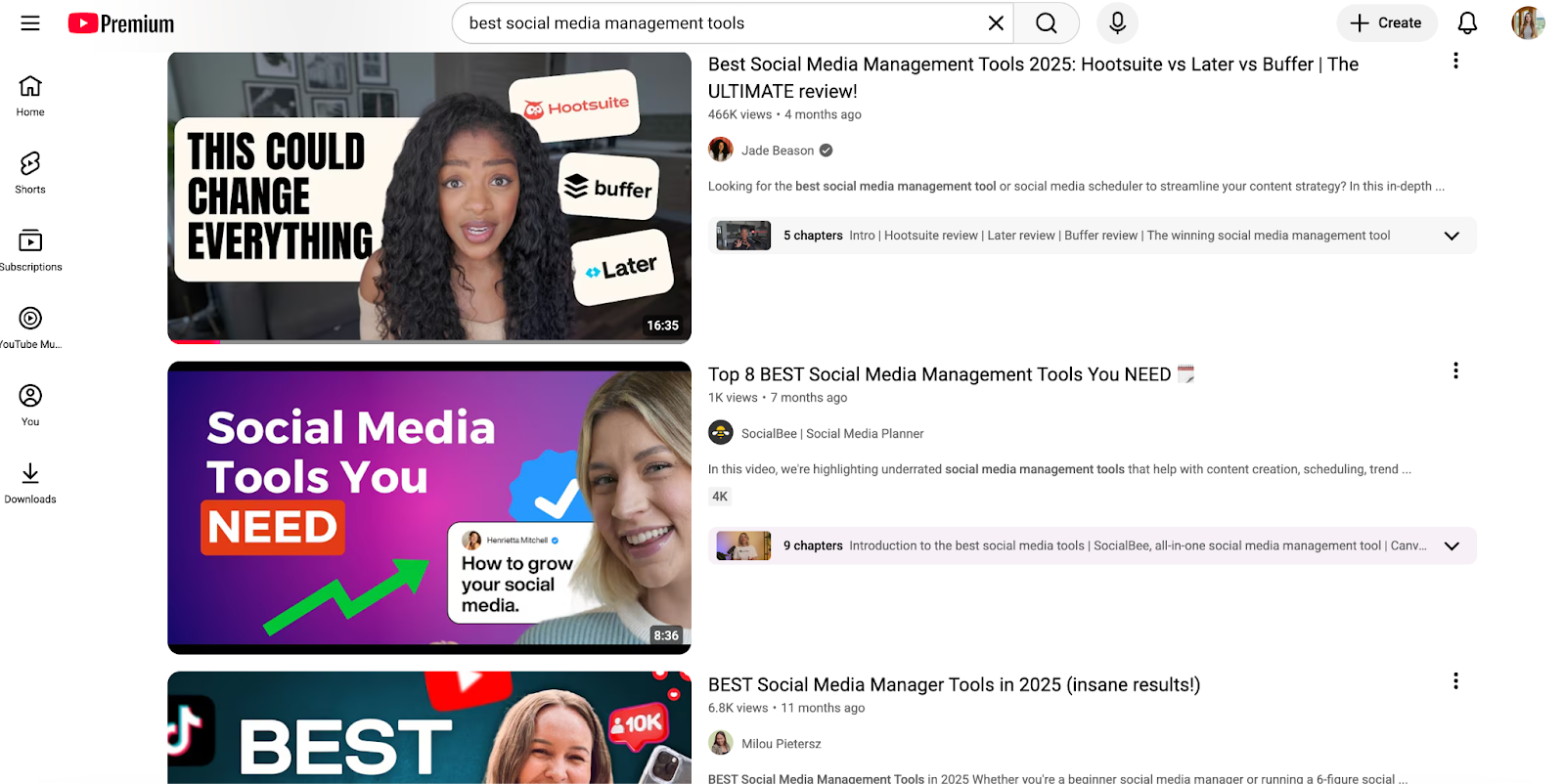
For example, Hootsuite sponsored a YouTuber to create a video targeting the keyword “Best Social Media Management Tools.”
You’ll see that the keyword currently ranks first in YouTube search results for the target keyword:
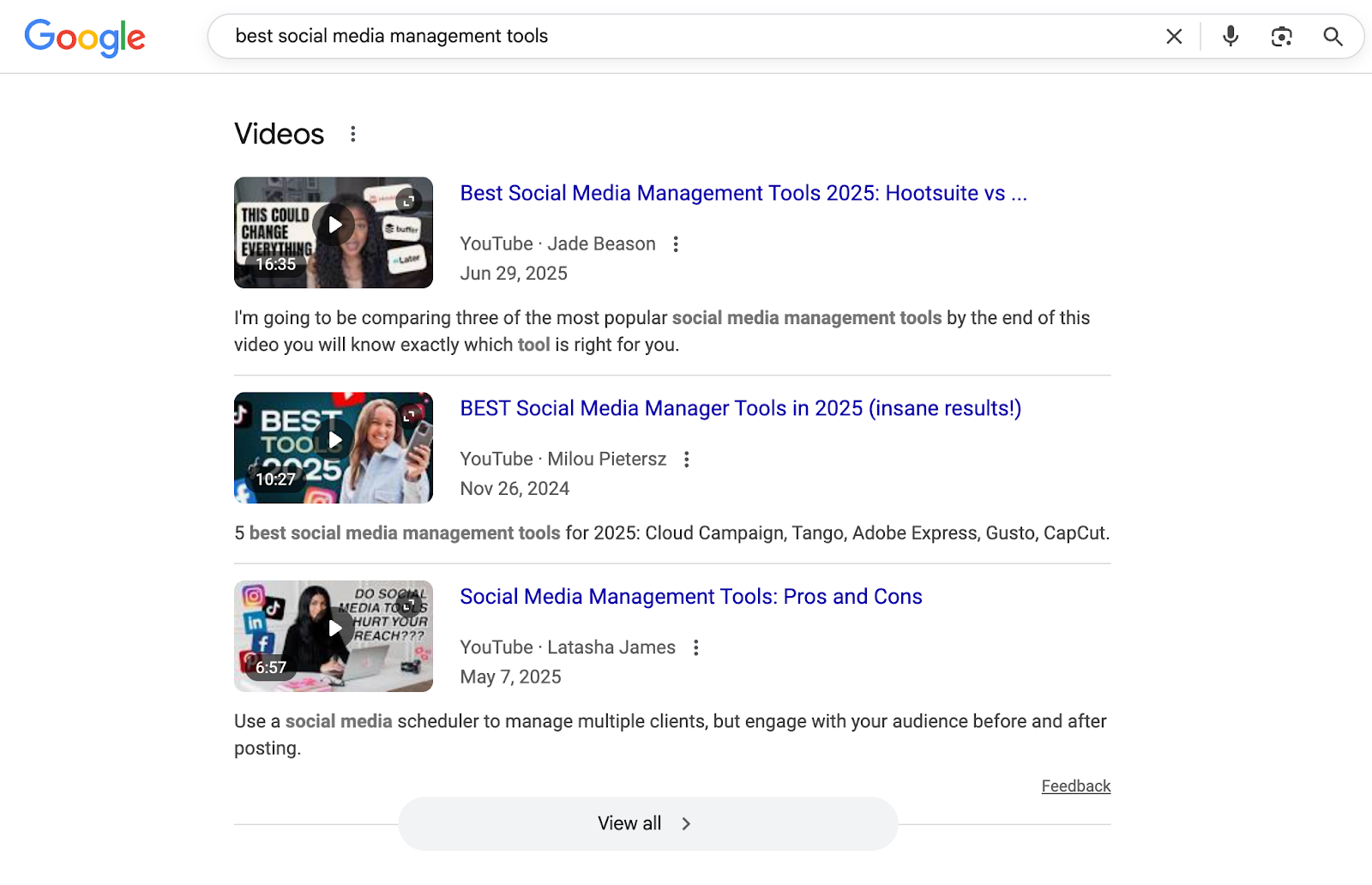
Hootsuite’s sponsored video also ranks first in the video results on the first page of traditional Google Search results.
In fact, this video also appears in the AI overviews and you’ll see that Hootsuite happens to be the first product recommended:
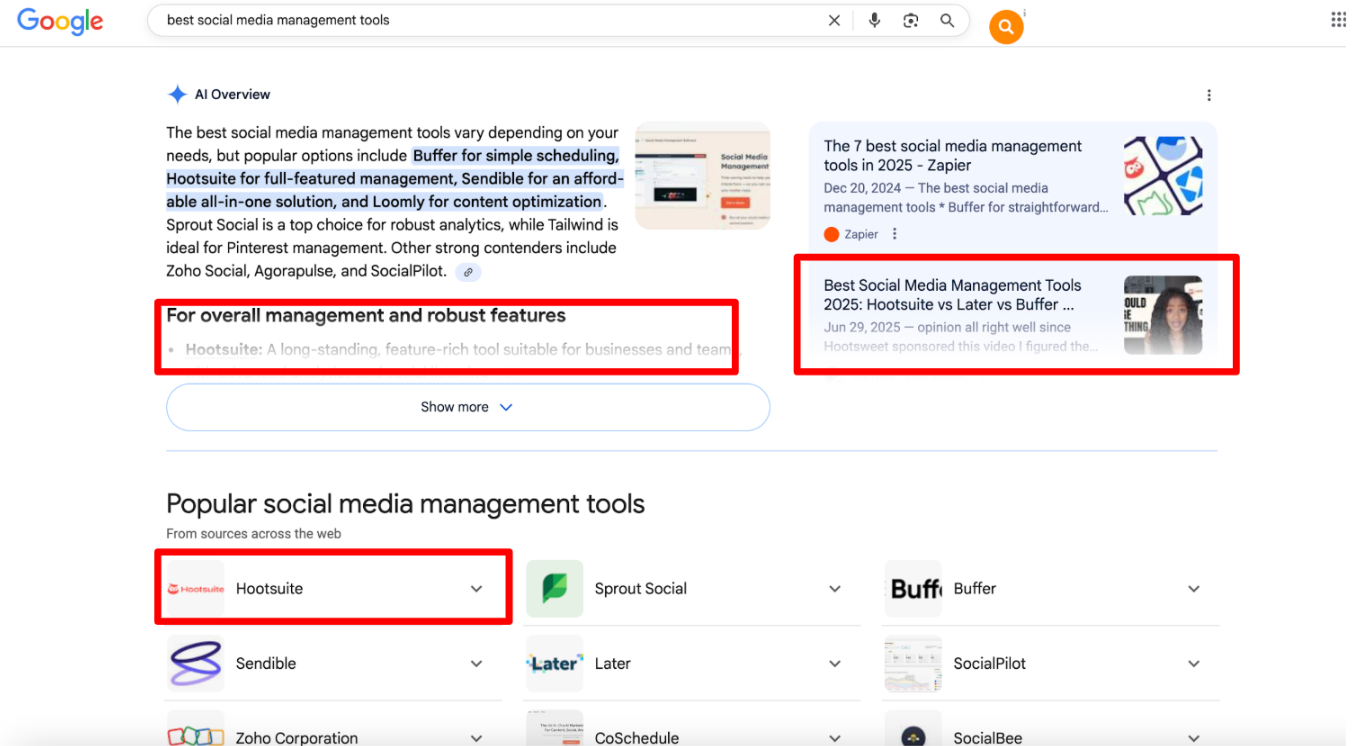
Therefore, more and more businesses are likely going to create video content for target keywords.
#5: Decreasing Creator Supply Increases Emphasis on Employee Advocacy
B2B influencer marketing is becoming increasingly popular and there’s now more demand than supply for B2B influencers.
As a result, we’re seeing prices increase and brands offer longer-term exclusivity contracts.
“On our end, there's more demand than there are actual thought leaders/influencers in the B2B space and the price is definitely going to increase for us. And I know we're going to see a lot of exclusivity against everybody because they just want to have ad placement secured. So because there's not enough creators to work with.” – Nicole Ponce, Head of Influencer Marketing at Semrush
This means that it’s important to start testing creators now, before your competitors sign contracts with them.
Additionally, more and more companies are beginning to invest in employee advocacy to make employees influential industry experts.
#6: B2B Creator Relationship Building
In B2C, many brands send creators gifts and host events specifically for influencers.
B2B brands are just now starting to realize the ROI of deepening creator relationships and are therefore starting to send gifts and host retreats and events for creators.
For example, Zapier hosted a retreat in Zion National Park for 20 of the creators who represent Zapier.
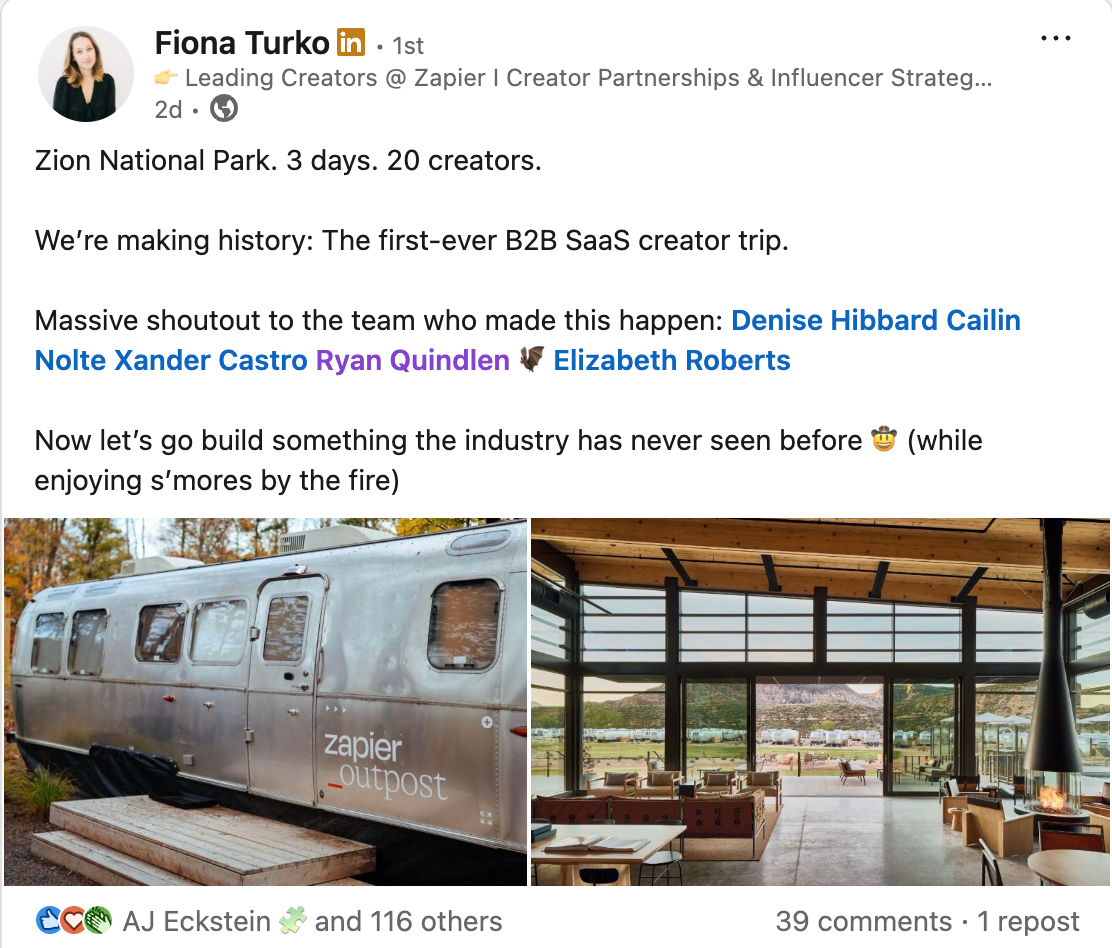
Additionally, several brands are starting to gift creators. For example, this fintech brand sent a LinkedIn creator a pickleball set with the words “Serving Profit” as a part of a recent campaign:

As it becomes increasingly challenging to reach B2B creators, more B2B brands will turn to B2C influencer marketing tactics to reach creators.
#7: Creator Equity
As creator partnerships become increasingly expensive and creator promotion increases in demand, some brands are starting to simply partner with creators by offering equity.
For example, MKBHD did a deal with Ridge Wallet where he was offered equity in the company:
Magic Spoon is another example of a company that raised money from creators (checks ranging from $5,000 to $25,000). As part owners in the company, these creators were therefore incentivized to promote it to their audiences.
Here’s a video explaining the deal:
There are already plenty of examples of creator-led businesses in B2B.
For example, B2B influencer Ankur Nagpal launched his fintech startup, Carry, from a single Tweet:
In the future, many B2B founders will likely give equity to B2B creators to promote an existing product or build a new product.
#8: Creator in Residence Roles
Vivian Tu, the founder of Your Rich BFF, was recently hired as SoFi’s new Chief of Financial Empowerment.
Rather than giving her straight equity, she has a salary position in a deal that’s similar to a long-term partnership.
This takes long-term partnerships to the next level.
There are also a few other benefits to creator in residence roles:
- Network effect: Vivian’s friends will also want to work with her, making it easy for the company to access other top tier creators.
- Creator led strategy advisory: Vivian knows what creators want and what converts, so she’ll be able to better advise the brand on which creators to partner with and campaign ideas.
As Monica Khan stated in her post:

#9: Niche Relevant Creators Will Rise
More and more brands are becoming aware that brand/audience match and a creator’s credibility are essential.
Often, macro creators have broader audiences and less trust among their audience than smaller influencers with a very specific audience.
Therefore, many brands are seeing better results working with niche-relevant creators.
For example, Alex Llull said that some of their most profitable sponsorships come from a YouTube channel that averages just 500 views per video:

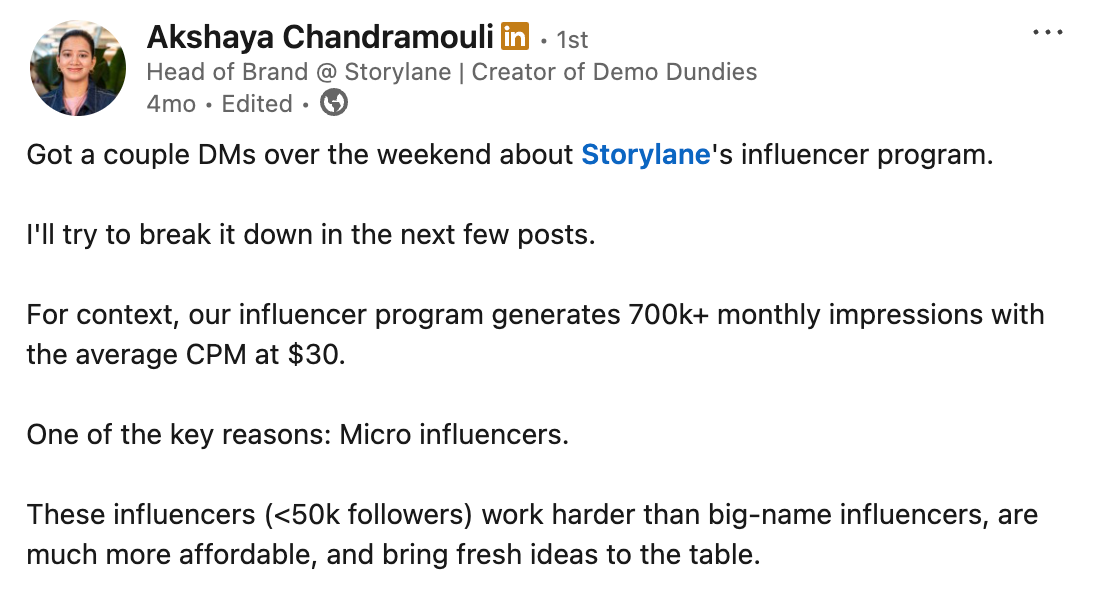
Similarly, Akshaya from Storylane said that their most profitable influencers are often smaller, niche relevant influencers, because they work harder and bring fresh ideas to the table.
Make 2026 Your Most Successful Influencer Campaign Year Yet
One of the hardest aspects of influencer marketing is finding the right creators and then managing the collaboration process.
To solve this problem, we built Favikon, an all-in-one platform that allows you to discover creators on any platform (including LinkedIn and Substack!) and then execute the outreach and collaboration process directly inside Favikon.
You can try Favikon today to learn how it can make your influencer campaigns more successful with less effort.
Others articles