Best AI Agents for Influencer Marketing in 2026
AI agents are changing how brands find creators, manage outreach, and track influencer campaigns. This guide compares the best AI agents for influencer marketing in 2026 and highlights what each tool can do.

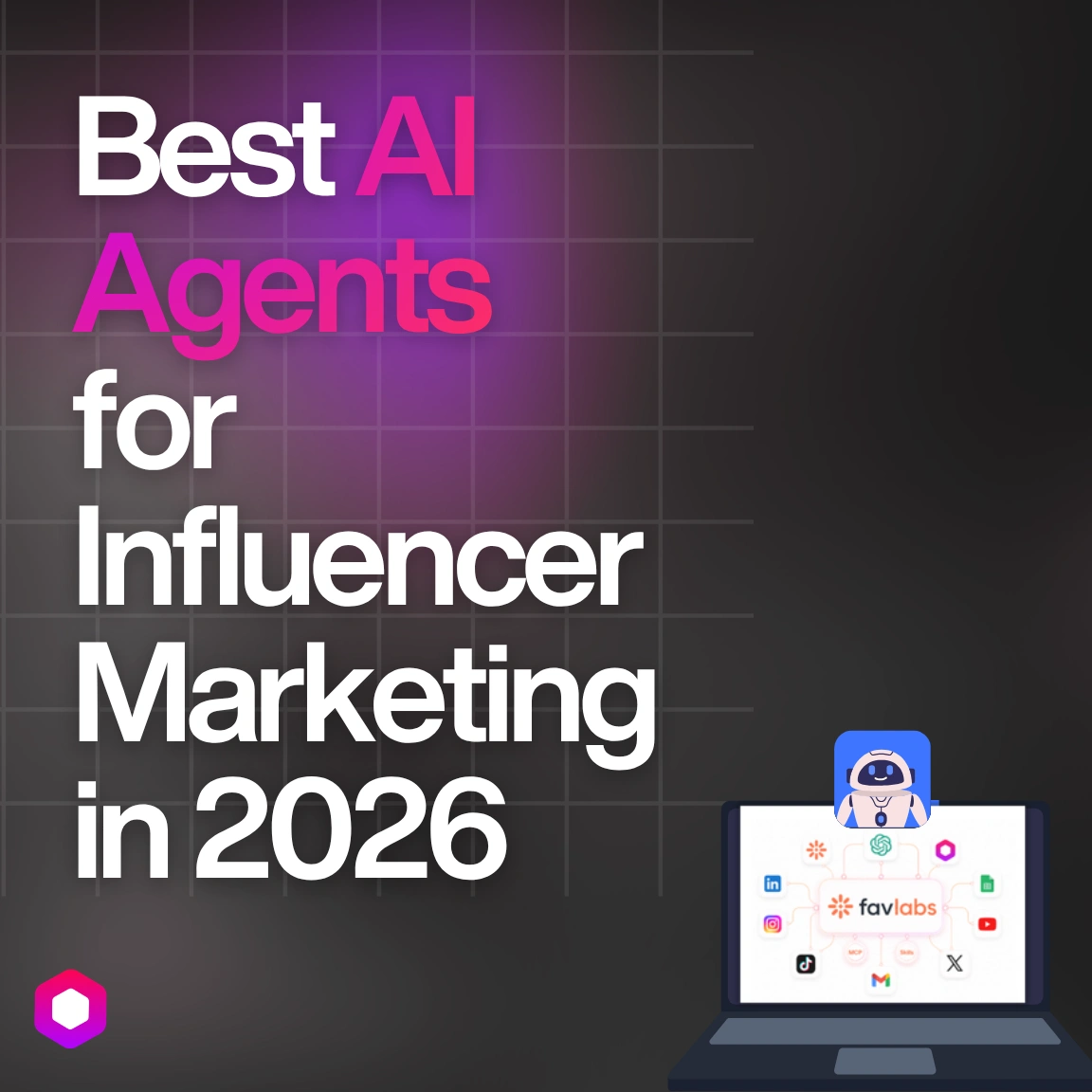
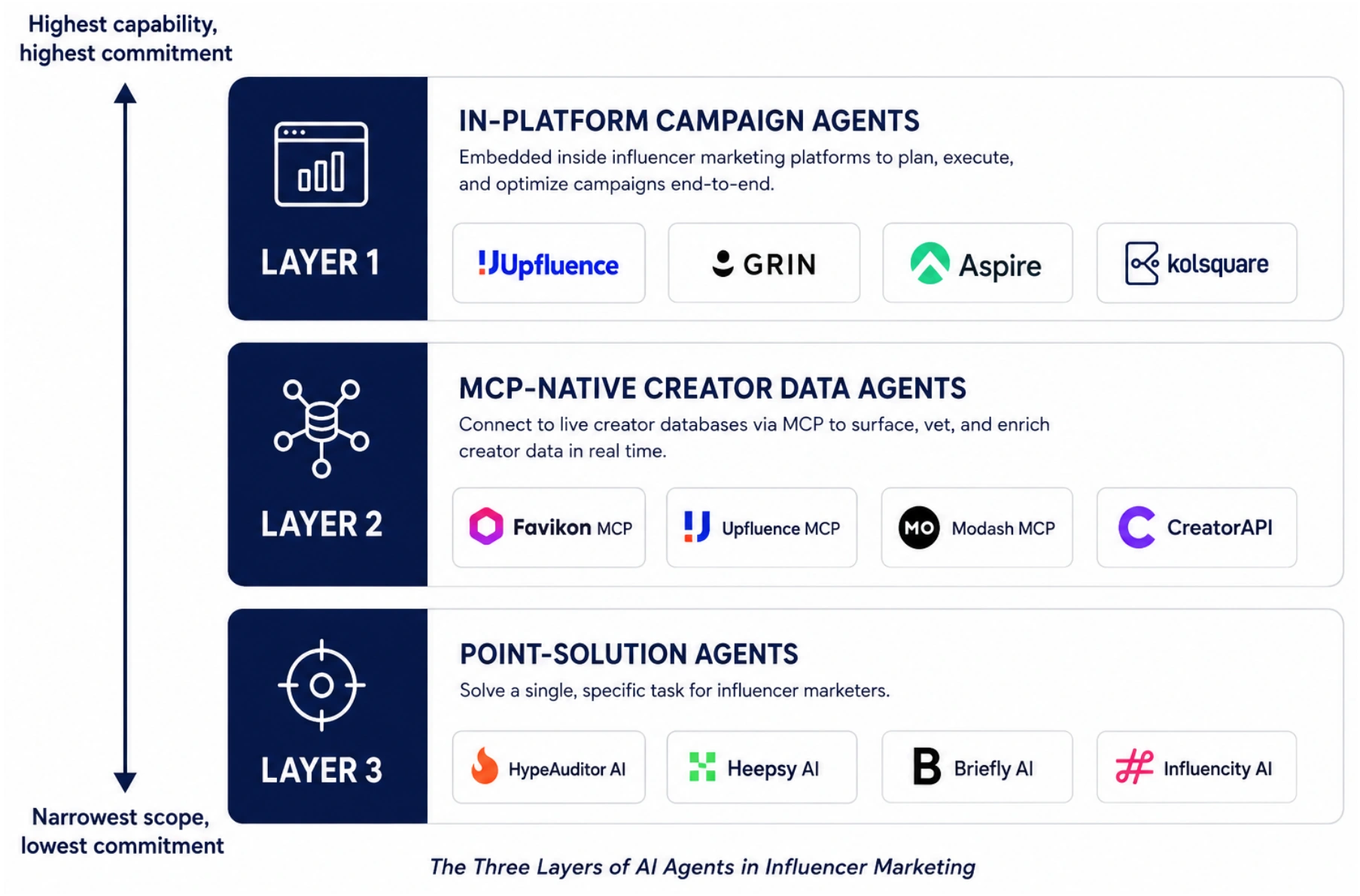
The best AI agents for influencer marketing fall into three layers, and most comparison lists only cover one of them. Layer 1 is in-platform campaign agents like GRIN’s Gia, Upfluence’s Jaice, and Passionfroot’s Zest, which run workflows inside a paid platform. Layer 2 is MCP-native creator data agents that live inside Claude or ChatGPT with no new login. Layer 3 is point solutions that do one job narrowly. Which layer you need depends less on feature checklists than on whether you want a system of record, a research assistant, or a single task automated. Here is the full landscape, layer by layer.
What Counts as an AI Agent in Influencer Marketing (vs. an AI Feature)
The phrase “AI-powered” has been attached to influencer marketing software for years, which makes the current wave hard to evaluate. A useful test: does the tool take an action on your behalf, or does it just rank things faster?
An AI feature helps you filter. You still open the dashboard, apply the filters, read the results, and decide. Semantic search, audience quality scores, and brief generators are all AI features. They are genuinely useful and they are not agents.
An AI agent takes a goal and executes a sequence of steps toward it. You describe an outcome, and the agent decides which steps to run, runs them, and reports back. The category label most vendors use is “agentic,” and the practical signal is an approval gate: if the product’s marketing shows you reviewing and approving work the system already did, it is behaving like an agent. If it shows you a better set of filters, it is a feature.
Three questions separate the two in a demo:
1. Can it act without me clicking through each step? Ask the vendor to give the agent a goal, not a query, and watch what happens next.
2. Does it analyze content, or only metadata? Follower counts and engagement rates can be purchased. What a creator actually says on camera cannot. Vendors that hedge when asked this are analyzing metadata.
3. What happens when it is wrong? Agents that send outreach without a human gate create brand risk. Agents with no gate at all are usually not ready for a real program.
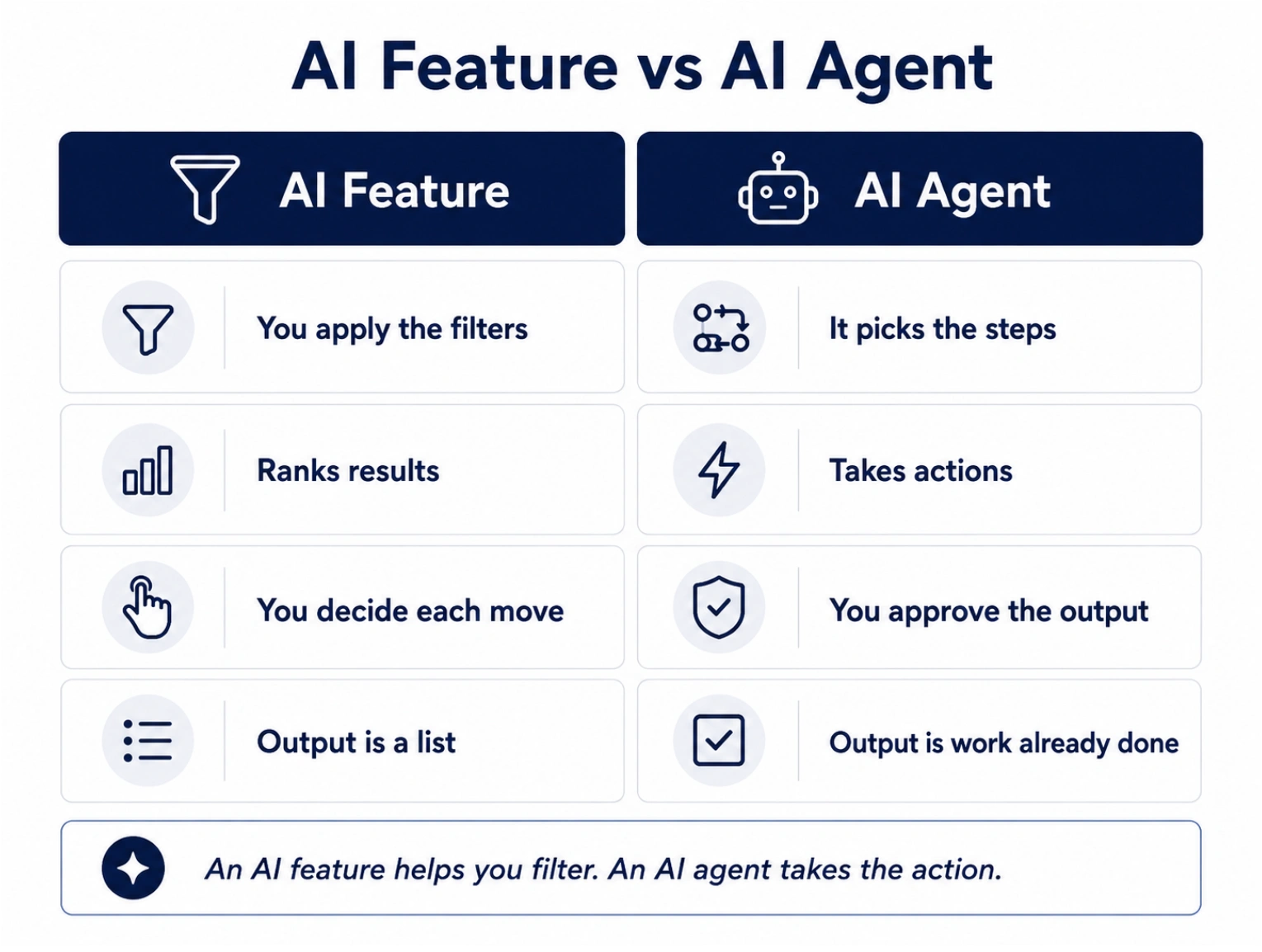
That bar matters because the tools below sit at very different points on it. Some run a program end to end. Some answer questions well and do nothing else. Both are worth paying for, in different situations. For background on how this shift started, our piece on how AI is transforming B2B influencer marketing covers the underlying trend.
The Three Layers of AI Agents in Influencer Marketing
Existing “best AI agent” lists mix full campaign platforms with narrow point tools in one flat ranking, which makes them hard to act on. A $30,000-a-year platform agent and a free TikTok search tool are not alternatives to each other. They solve different problems at different stages.
The Three Layers of AI Agents in Influencer Marketing sorts the category by where the agent lives and what it is allowed to do:
A few tools appear in more than one layer, which is a feature of the market rather than a flaw in the framework. Upfluence ships both an in-platform agent and an MCP server. SpotSnow does the same for podcast advertising. When a vendor operates in two layers, you can start in the low-commitment one and graduate.
The important thing is to know which layer you are shopping in before you compare pricing, because the layers do not price against each other in any meaningful way.
Layer 1: In-Platform Campaign Agents
These agents are embedded in a platform you pay for. They have the deepest capabilities because they sit on top of proprietary campaign data, and they carry the highest switching cost for the same reason.
Gia (GRIN)
GRIN launched Gia, short for GRIN Intelligent Assistant, in May 2025 and describes it as built from the ground up rather than added on top of the existing product. CEO Ryan Debenham has framed it as an agentic operating system for influencer marketing rather than a layer over GRIN’s older tooling.
Gia handles discovery, outreach, gifting, briefs, affiliate setup, and deliverable tracking, with human approval on the moments that matter: which creators advance, which messages send, which creators receive product. GRIN says Gia draws on more than $1 billion in verified brand-creator partnership data and 700,000-plus transaction-verified creators scored across 180 brand-fit attributes.
Best for: DTC and consumer brands running product-seeding and affiliate programs at volume.
Access: GRIN has moved to instant self-serve access with no demo or contract required to start. Full Gia capability is gated to paid tiers. If you are weighing Gia against a B2B-first option, our Gia vs Favy comparison goes deeper on where each fits.
Limitation: the creator graph behind Gia is built on consumer commerce data. For B2B software buyers, that data set is the wrong shape.
Jaice (Upfluence)
Jaice is Upfluence’s agent, built into the platform and connected to campaign history. You define campaign goals and Jaice builds the program around them, including creator selection, briefs, deliverables, timelines, and compensation. It works across Upfluence’s database of more than 14 million creators, evaluating audience alignment, engagement depth, and historical performance, and can surface lookalike creators and affiliate-ready partners.
Upfluence’s real strength is commerce integration. It connects to Shopify, Amazon Attribution, Klaviyo, and Stripe, so creator activity ties to revenue rather than to reach.
Best for: ecommerce and DTC teams that want creator activity attributed to sales.
Limitation: the same commerce-first design that makes Jaice strong for online retail makes it thin for B2B, where the conversion event is a pipeline entry rather than a checkout. Our Favikon vs Upfluence breakdown covers that gap in detail.
Zest (Passionfroot)
Zest is the strongest B2B-native agent in Layer 1, and it should be on your list if you sell software. You can ask Zest to build a full strategy including ICP, platforms, formats, creator mix, and budget recommendations before outreach starts. It then generates campaign briefs and personalized proposals per creator, which you adjust and approve before anything sends.
Two things make Zest credible rather than just well-positioned. It runs on the Creator Graph, a proprietary data set of B2B creator pricing and performance built from thousands of campaigns, and payouts flow through the Passionfroot Wallet. Passionfroot raised a $15 million Series A led by Insight Partners in July 2026 and says it has paid creators at least $10 million over the previous 18 months.
Best for: B2B SaaS marketing teams running newsletter and creator sponsorships across LinkedIn, YouTube, Substack, and beehiiv.
Limitation: Passionfroot is deliberately narrow. It is not built for lifestyle creators or consumer ad buys. If your program spans both B2B thought leadership and consumer campaigns, you will need something else alongside it. Our Zest vs Favikon comparison covers where the two diverge.
Kuli
Kuli takes a different angle from everyone else in this layer: instead of filtering a database, it watches the content. Founded in 2024 with offices in San Francisco and Paris, Kuli uses multimodal AI to analyze actual video across TikTok, Instagram, and YouTube, evaluating visual style, messaging, tone, and brand mentions, so you can search on what creators genuinely communicate rather than on follower count alone. It also runs competitor tracking and pulls lookalikes by aesthetic and audience overlap rather than by tags.
Best for: enterprise consumer brands where creative fit matters more than list size. Kuli lists Supercell, Disney, and Havas among its users, and went through Y Combinator’s Spring 2026 batch.
Access: custom pricing on request, aimed at mid-market and enterprise brands.
Limitation: video-first analysis is a poor fit for channels where the content is text, which rules out most B2B LinkedIn and newsletter work.
London (Creator.co)
London is Creator.co’s agent, covering creator discovery, outreach automation, and campaign management end to end. It sits in the same consumer-brand territory as Gia and Jaice without a clear wedge against either. Worth a look if you are already a Creator.co customer.
Stormy AI
Stormy is a growth platform with an agent that handles creator discovery, outreach, and campaign execution for ecommerce brands, with a free tier and paid plans for advanced features. The free tier makes it the cheapest way to see what an in-platform agent actually feels like before committing budget.
AhaCreator
AhaCreator appears in most competing roundups but publishes little verifiable detail about how its agent works or what it costs. Treat it as an unknown until you have seen a live demo.
Layer 2: MCP-Native Creator Data Agents
This is the layer nobody is comparing properly, and it is the fastest-moving one in 2026.
The Model Context Protocol is an open standard that lets an AI client connect directly to an external data source. In practice, it means you can ask Claude or ChatGPT a creator research question in plain language and get an answer from a live creator database, without opening a platform or learning a query syntax. There is no new dashboard, no seat to provision, and often no additional cost beyond the API access you may already have.
For an influencer marketing manager, this changes the shape of the research workflow. Vetting, shortlisting, and audience comparison move into the same window where you are already drafting the brief.
Upfluence MCP
The Upfluence MCP server exposes more than 14 million creator profiles to any MCP-compatible client and works with Claude, ChatGPT, Cursor, VS Code, Windsurf, and Gemini. You can search by niche, location, and audience, pull demographics and authenticity signals, estimate sponsorship pricing, and check brand-partnership history, all from a natural-language prompt.
influData MCP
influData’s connector ships 14 read-only tools against the same API key as its Social API, is scoped to your organization, and is included at no extra cost for anyone with API access. The underlying Social API covers more than 90 million creator profiles across major platforms. Read-only is deliberate here: the AI cannot create, change, or delete anything. That is the right default for research, and a hard limit if you wanted the agent to act.
Influencers.club MCP
The widest data set in this layer. It searches 340 million-plus creators with natural-language queries plus 40 or more structured filters, reverse-looks-up an email into a creator profile and social graph across 47 platforms, finds lookalikes, and compares audience overlap for 2 to 10 creators at once. The hosted server signs you in with OAuth so there is no API key to move around, and the project is open source and still in beta.
Influee MCP
Worth knowing about because it breaks the read-only pattern. Influee’s server exposes more than 110 tools covering campaign management, creator collaborations, content review, and UGC delivery workflows. That makes it the closest thing in this layer to an agent that executes rather than researches.
InfluenceKit MCP
InfluenceKit lets you onboard through Claude or ChatGPT directly: paste a starter prompt, connect the MCP server, and go from no account to a connected workspace inside one conversation. A small thing, but a good signal of where onboarding is heading.
Favikon MCP and Favy
Favy is Favikon’s MCP-native agent, launching September 1, 2026. It connects Favikon’s B2B-weighted creator data to Claude and other MCP clients, so the research that currently happens in the platform can happen in the chat window instead.
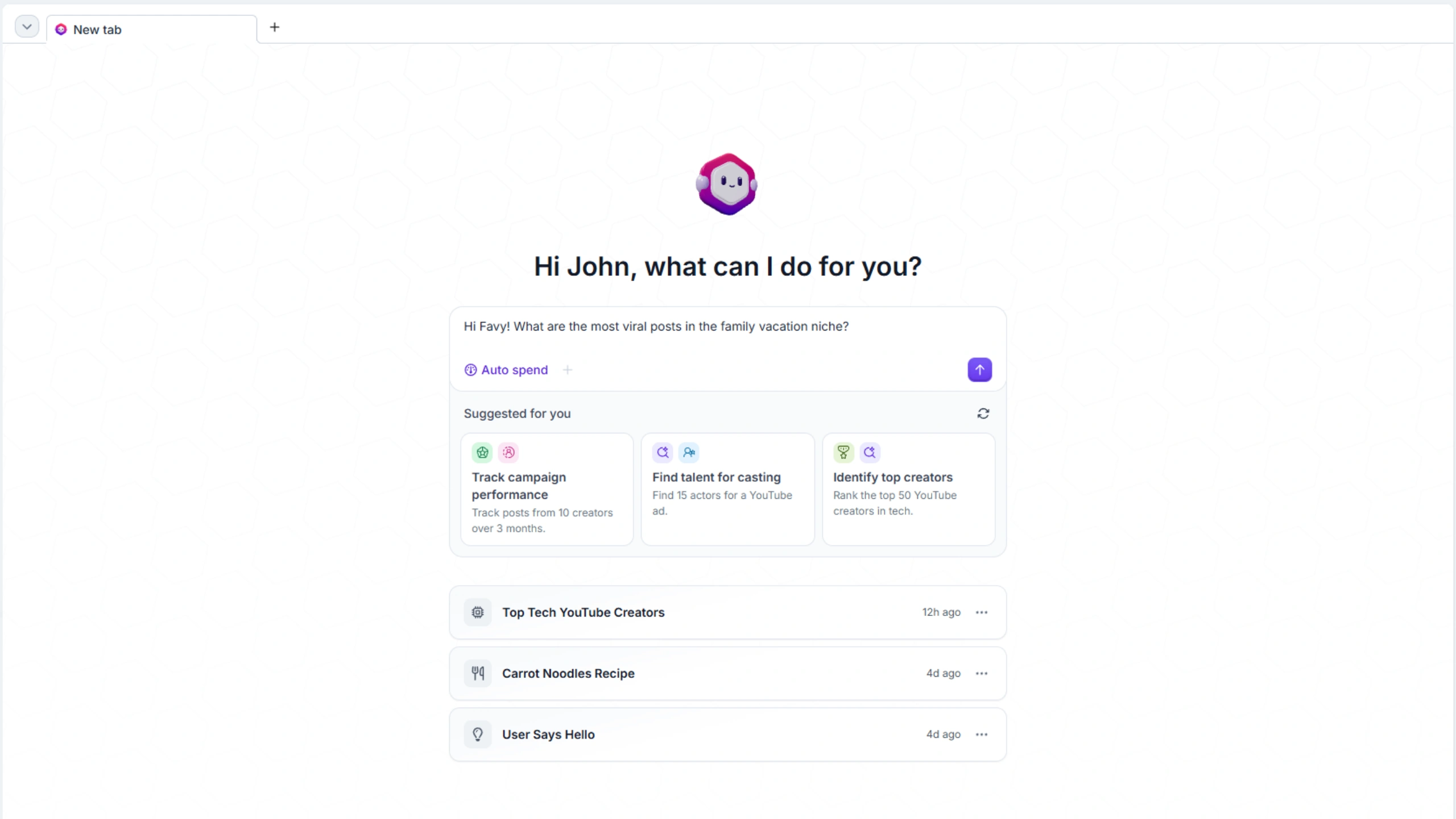
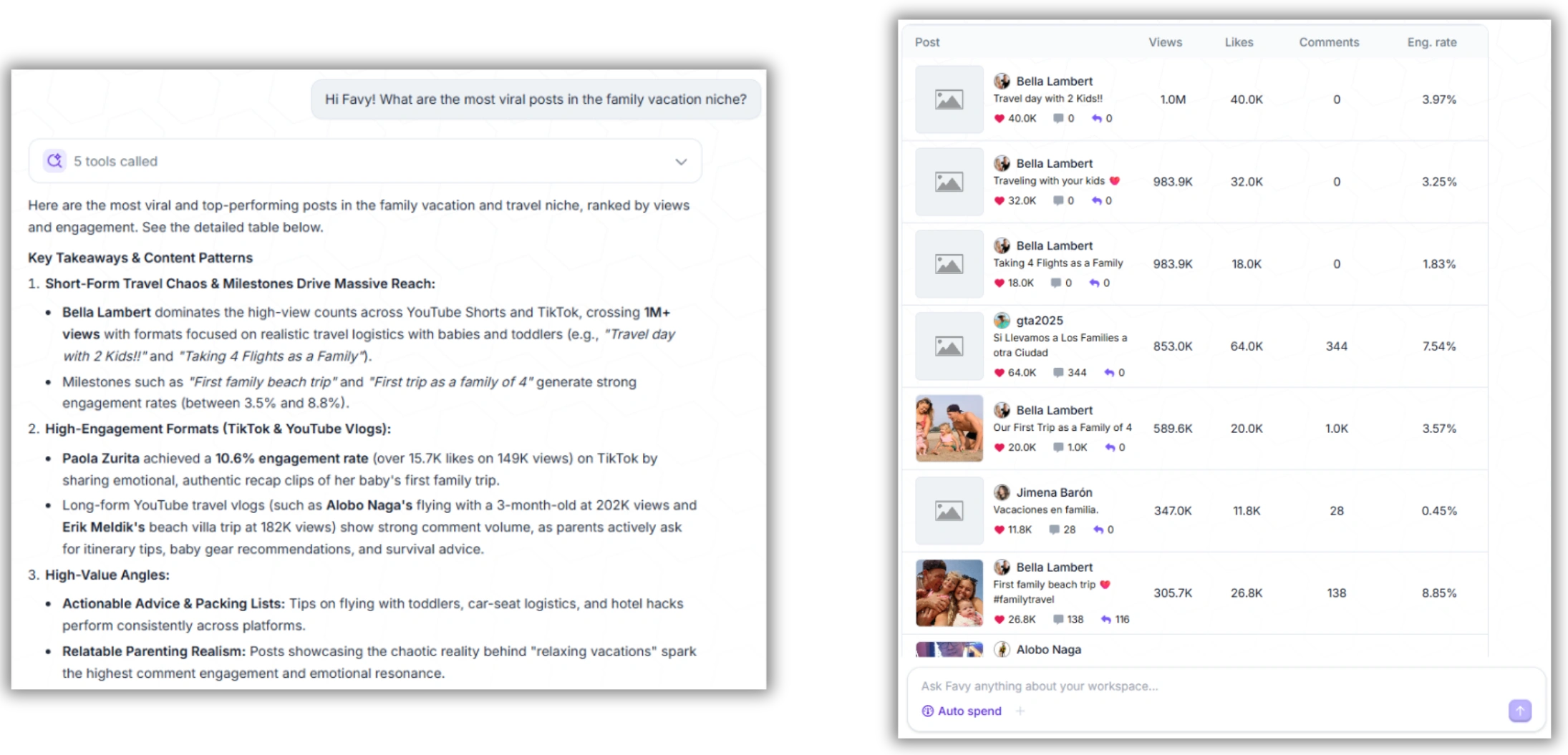
The data behind it is the part worth evaluating now,because it exists today. Favikon covers creators across nine platforms, runs content-based search across more than 30 million posts, maintains transparent creator rankings across 600-plus niches, and returns verified contact details with an 82% match rate. If your ICP is a VP of Engineering who posts on LinkedIn rather than a beauty creator on TikTok, that index is shaped differently from the consumer commerce graphs behind most Layer 1 agents. Rankings are only as good as the scoring behind them, so Favikon’s creator scoring methodology is published in full rather than treated as a black box.
Favy launches September 1, 2026. If you want early access, join the waitlist at favikon.com/favy.
Layer 3: Point-Solution Agents
Narrow by design, usually cheap or free, and often the fastest way to test a channel before you commit to a platform.
Lessie AI is a people-search agent rather than a creator-only tool. It searches across 100-plus sources including LinkedIn, X, YouTube, TikTok, Instagram, GitHub, company websites, industry databases, podcasts, and news, then scores each result by persona match, activity level, and contactability. It covers influencer discovery alongside B2B lead generation, investor search, and talent sourcing, with a free tier to start. Useful for B2B teams whose target creators do not self-identify as creators.
SpotSnow owns podcast and YouTube host-read advertising. Its AI builds a full campaign plan from your brand, audience, and budget, you can search 59,000-plus podcast and YouTube creator profiles, route ad copy to hosts for approval, and track impressions, spend, clicks, ROAS, and per-episode performance. It also connects to Claude and ChatGPT through its own MCP server, which puts it in Layer 2 as well. In June 2026 it added custom agents for podcast networks that build media plans, respond to RFPs, vet shows, and draft outbound.
Tiger Finder does TikTok creator discovery by niche, audience, and engagement. Narrow, self-serve, and fine for a single-channel test.
partnrUP is a newer entrant running agents across discovery, recruitment, approvals, and commerce integrations. Early, but worth tracking.
Comparison Table: Every AI Agent at a Glance
Two patterns are worth pulling out. First, Layer 2 is close to free if you already pay for the underlying data, which makes it the cheapest place to start. Second, B2B fit correlates with data shape rather than with feature count: the highest-capability agents in Layer 1 are mostly built on consumer commerce data.
If B2B creator data is your constraint, the Favikon influencer search tool is the layer underneath Favy, and it is live today.
How to Choose the Right AI Agent for Your Team
Work through it in this order.
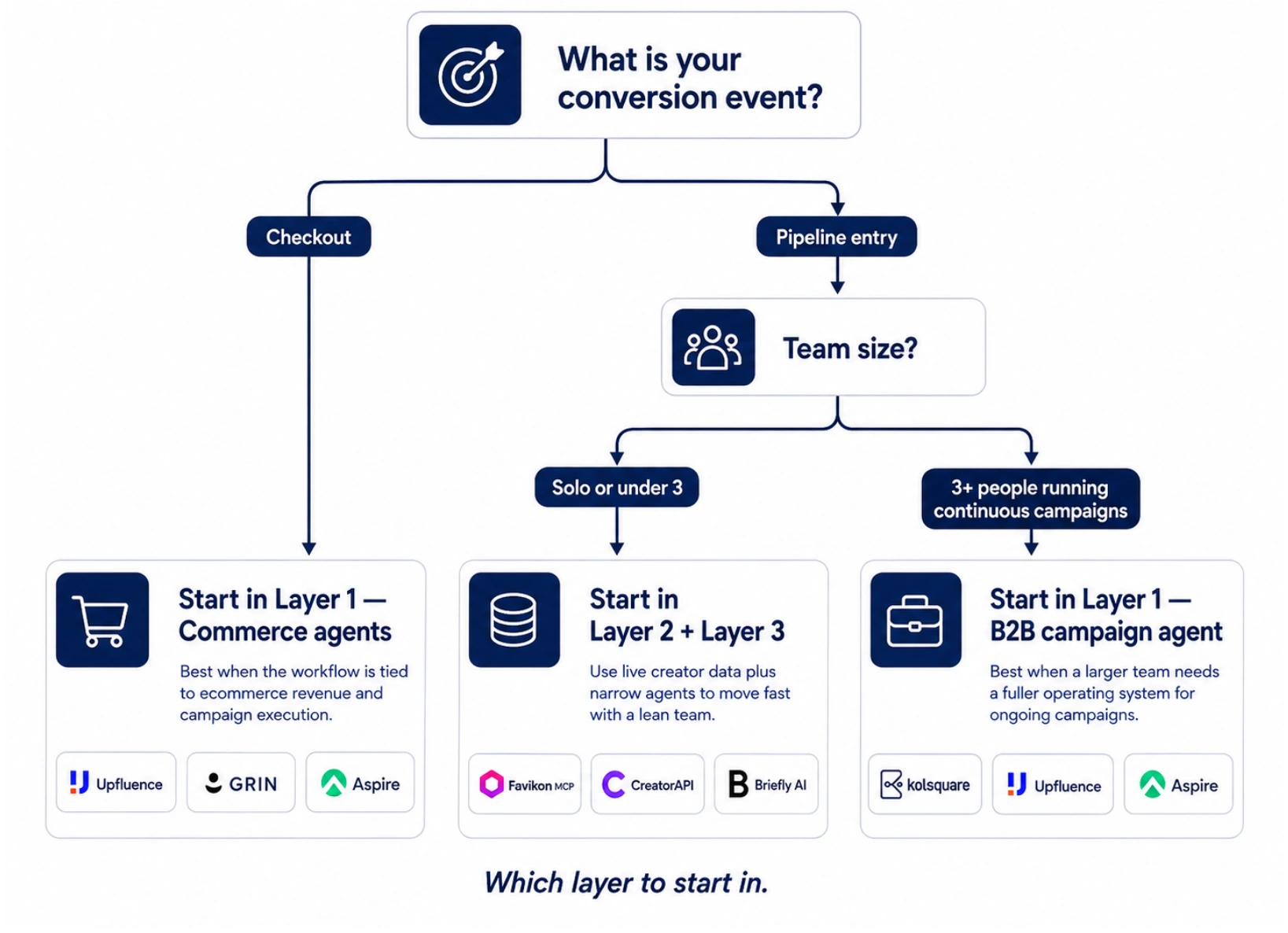
Start with your conversion event. If a creator post should end in a checkout, Layer 1 commerce-integrated agents like Jaice and Gia earn their price. If it should end in a demo request or a pipeline entry, that attribution model does not apply and you want a B2B-shaped option.
Then check your data shape, not the feature list. Every agent in this list can write a brief. Not one of them can find a credible creator who is not in its index. Ask any vendor for a sample of 20 creators in your exact niche before you evaluate anything else. This is the single most common reason an agent purchase disappoints.
Match the layer to your team size. A one-person program gets more value from Layer 2 and Layer 3 than from a platform agent, because there is no team to coordinate and the setup cost of a full platform is not recovered. Somewhere around three to five people running continuous campaigns, a system of record starts paying for itself.
Test the approval gate before you buy. Ask what the agent does without a human in the loop, and what happens when it gets a creator wrong. Vendors with a clear answer have thought about brand risk. Vendors without one are selling a demo.
Keep the sequence cheap. Start in Layer 2 with an MCP connector against data you already have access to. Add a Layer 3 tool for any channel you want to test. If B2B is your target, you can find B2Binfluencers without paying for anything first, which is enough to judge whether an index fits your niche. Only move to Layer 1 when coordination overhead, not research time, has become the bottleneck.
Favikon’s B2B creator index is available today, and Favy brings it into Claude and other MCP clients on September 1, 2026. Join the Favy waitlist to get access on launch day.
FAQ
What is an AI agent in influencer marketing?
An AI agent takes a goal and executes a sequence of steps toward it, rather than helping you filter faster. You describe an outcome, such as a campaign targeting a specific audience on a set budget, and the agent selects creators, drafts briefs and outreach, and reports on results, pausing for your approval at defined points. Tools that only rank or filter results are AI features, not agents.
Is Gia or Jaice worth it?
Both are strong if your program is consumer commerce. Gia suits product seeding and affiliate programs at volume, and GRIN now offers self-serve access so you can evaluate it without a contract. Jaice suits ecommerce teams that need creator activity tied to Shopify or Amazon revenue. Neither is a good fit if your buyers are B2B software purchasers, because the creator data behind both is shaped around consumer purchase behavior.
What is an MCP server for influencer marketing?
An MCP server is a connector built on the Model Context Protocol that gives an AI client such as Claude or ChatGPT live access to a creator database. You ask a question in plain language and the client queries the database directly, so there is no separate platform to log into and no query syntax to learn. Upfluence, influData, Influencers.club, Influee, and InfluenceKit all run one, and Favikon’s launches September 1, 2026.
Are AI agents better than influencer marketing platforms?
They are not competing categories. Most agents in Layer 1 are features of a platform rather than replacements for one, and Layer 2 agents pull data out of platforms into your AI client. The real question is whether you need a system of record. If you run continuous campaigns across a team, you need the platform and the agent makes it faster. If you run occasional campaigns solo, an MCP connector plus a point tool may cover everything the platform would have.
Can an AI agent replace an influencer marketing manager?
No, and the vendors are fairly consistent on this point. Every credible agent in this list keeps a human approval gate on outreach, creator selection, and spend. What changes is where the manager’s time goes: away from manual vetting and status chasing, toward creative direction, relationship building, and deciding which partnerships are worth making in the first place.
Others articles