How Influencer Authority Is Actually Measured (and Why Follower Count Lies)
Follower count measures audience size, but true influencer authority measures their intent to act. In 2026, winning brands are ditching vanity metrics to evaluate creators on engagement quality, audience authenticity, and deep niche relevance.

.webp)
A creator with 5,000 followers can drive more revenue than one with 5 million. That isn't a hot take, it's just how attention works in 2026.
Influencer authority is a creator's real ability to influence a specific audience, measured through engagement quality, audience authenticity, and niche relevance rather than follower count.
It's the gap between a number that looks good in a pitch deck and a creator who actually moves the people you care about.
Follower count stopped predicting that a while ago. Followers can be bought, a chunk of any large account is inactive, algorithms now push content to non-followers, and the most valuable B2B audiences are small by design.
A 30,000-follower LinkedIn creator can carry more weight with your buyers than a million-follower generalist.
We’ve laid out the full framework below: what authority is, why follower count lies, the six components that actually make up authority, the red flags that expose fakes, the tools that measure it, and how our Authority Score puts a number on it.
Influencer Authority: Key Takeaways
- Follower count is a vanity metric: it can be bought, it includes inactive accounts, and it no longer predicts reach or conversion.
- Influencer authority is a composite of six components: engagement quality, audience authenticity, niche relevance, content consistency, audience-creator fit, and external validation.
- Measure authority per platform, because a creator's standing on LinkedIn doesn't transfer to Instagram.
- Manual scoring works for one to three creators a quarter, and the eight red flags below catch most fakes, but a tool is the only thing that scales past a handful.
- At Favikon, we score authority on every creator profile across 9 platforms, including LinkedIn. Start a free trial.
What Is Influencer Authority?
Influencer authority is a creator's proven ability to shape the opinions and actions of a specific audience, built on engagement quality, audience authenticity, niche relevance, and external validation.
It answers the only question that matters before a partnership: will this person actually move my audience?
Authority is relative, not absolute.
A creator can hold deep authority with home-cooking enthusiasts and none at all with enterprise IT buyers, and that's the point. The right creator is the one with authority over your audience, which is why it pays to search creators by niche rather than by follower count.
It's also earned over time. Real authority comes from consistently covering a topic, building a genuine audience, and earning outside validation like verified status, repeat brand work, and media mentions. None of that shows up in a follower count, which is exactly why follower count keeps fooling people.
Why Follower Count Lies (and What to Measure Instead)
Follower count lies because it measures audience size, not audience quality or attention. Here's the breakdown, then what to track instead.
The 5 Reasons Follower Count Is a Broken Metric
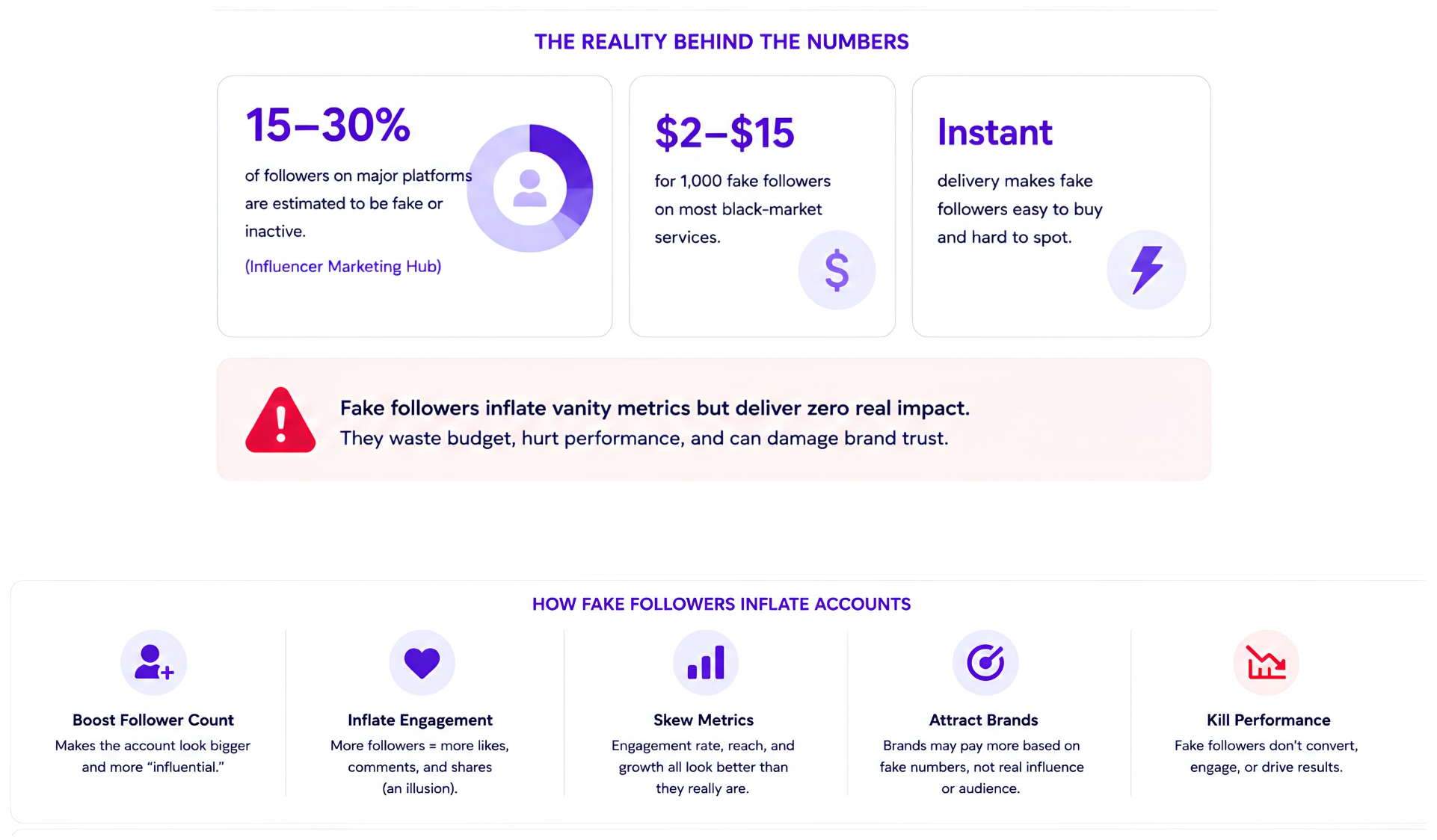
1. Fake followers are cheap and easy to buy. Industry estimates put 15 to 30 percent of follower bases on major platforms in bot or inactive territory (Influencer Marketing Hub), which inflates every account that buys them.
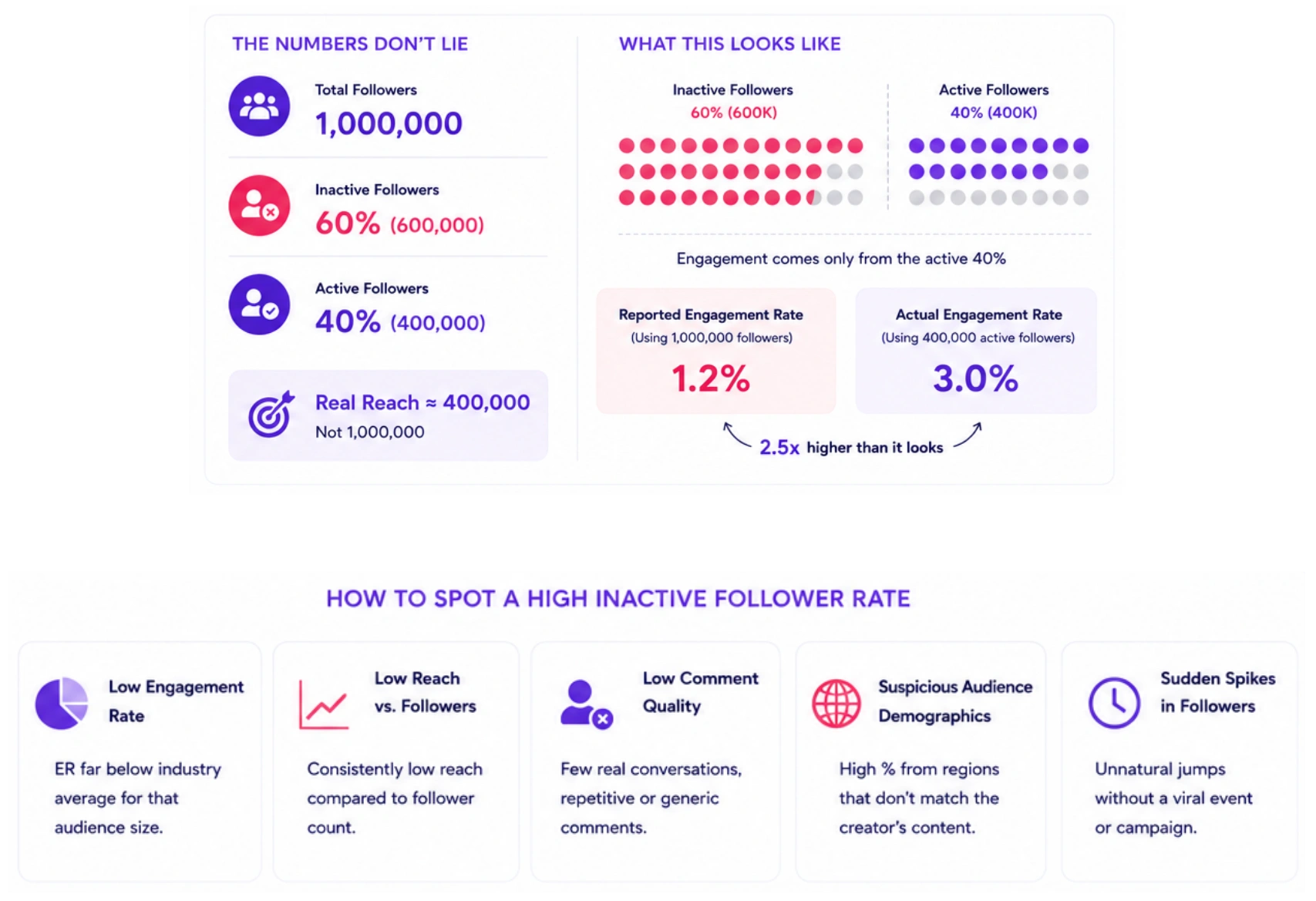
2. Inactive followers dilute every metric they touch. A one-million-follower account where 60 percent are inactive has real reach closer to 400,000, and standard engagement math never accounts for that.
3. Follower count doesn't measure niche relevance. A lifestyle creator with 500,000 followers may have 10,000 who care about your SaaS product, while a B2B creator with 30,000 followers may have 25,000 decision-makers in your ICP.

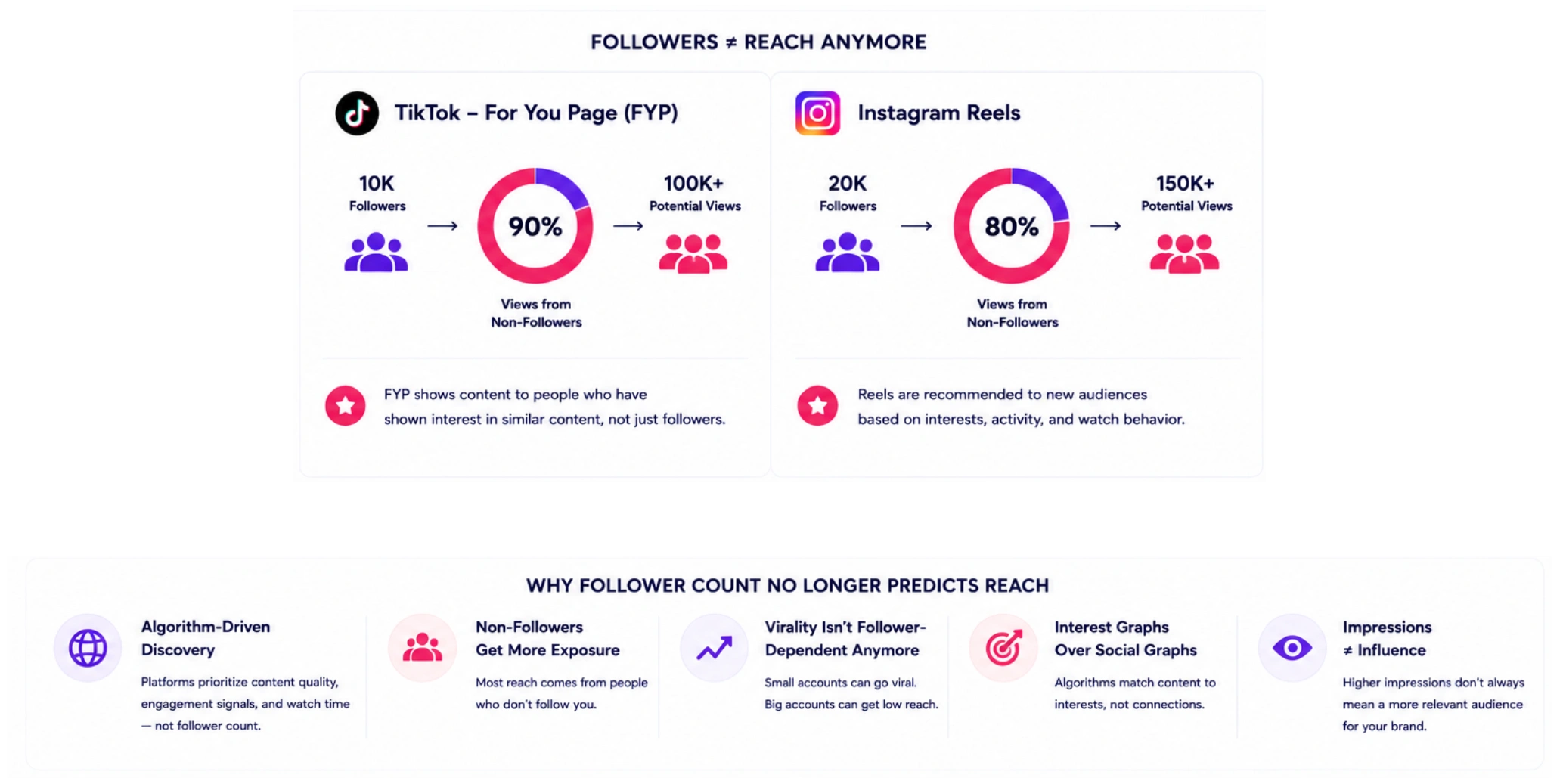
4. Algorithms have decoupled reach from followers. TikTok's For You Page and Instagram Reels both push content to non-followers, so follower count no longer predicts who actually sees a post.
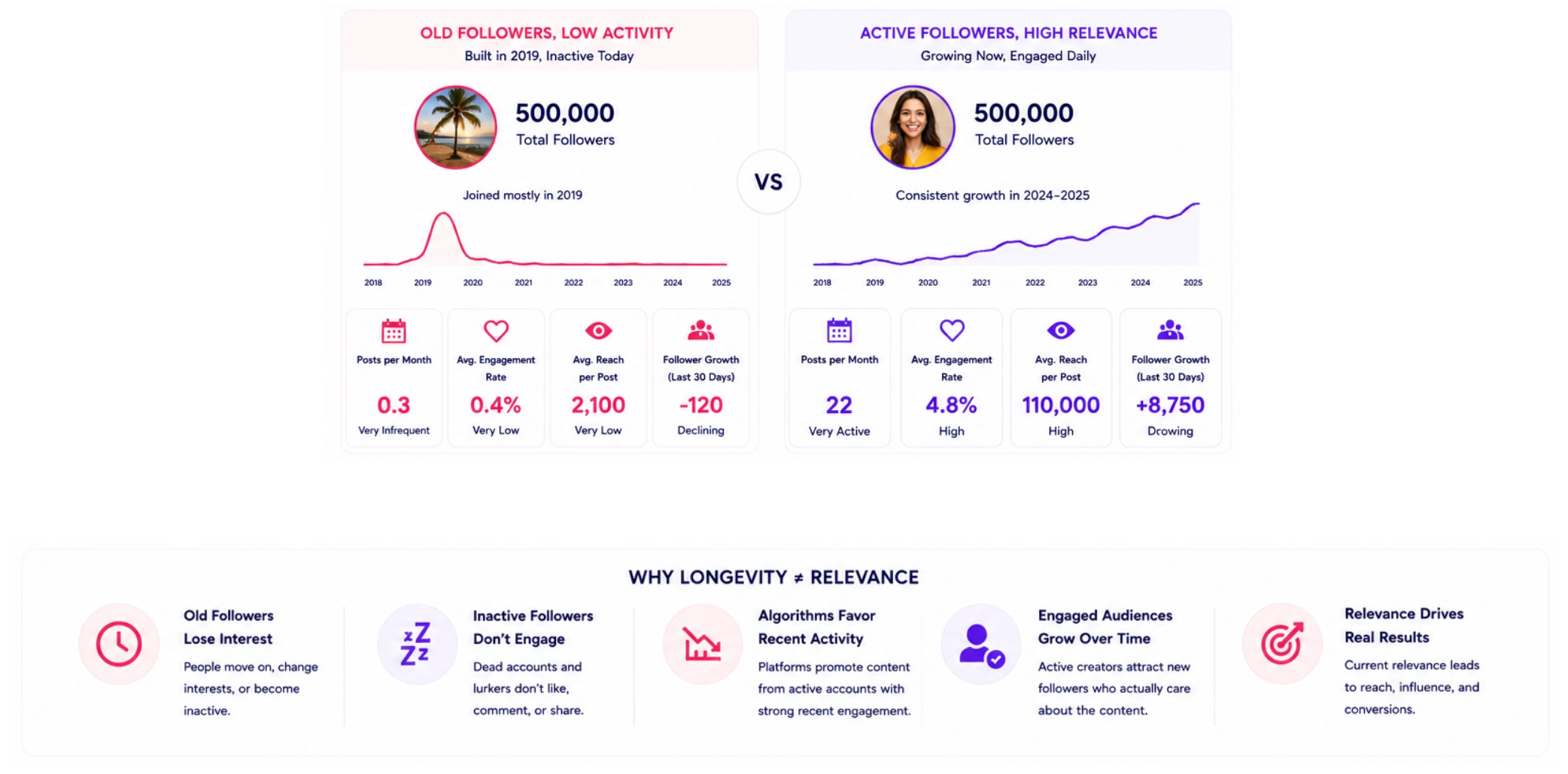
5. Follower count rewards longevity, not current relevance. An account that gained 500,000 followers in 2019 and rarely posts now shows the same number as one growing through daily engagement today. Same number, very different value.
The Honest Math: What to Measure Instead
Three metrics do the job follower count can't, and together they form authority.
- Engagement quality. Not just engagement rate, but the depth of interaction: real comments, saves, and shares over passive likes.
- Audience authenticity. The share of followers who are real, active, and demographically aligned, which is the heart of any fraud detection check.
- Niche relevance. How authoritatively a creator covers one topic, rather than how broadly they post about everything.
Blend these three and you get the composite that actually predicts results: authority.
6 Components of True Influencer Authority
True influencer authority is made of six measurable components, and a strong score needs all of them, not just one. This is the framework to score any creator against.
Component 1: Engagement Quality
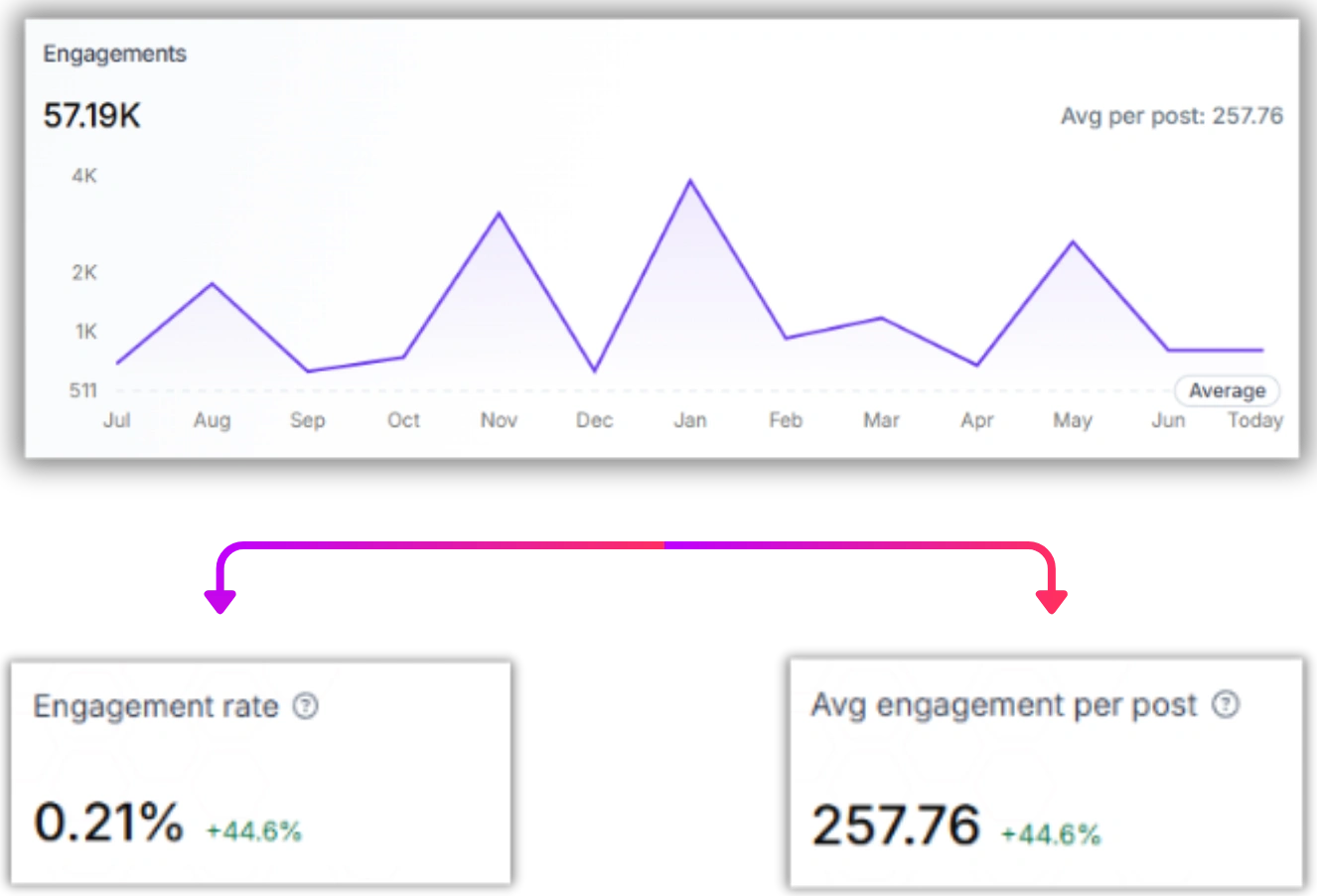
Engagement quality goes beyond likes and comments divided by followers. It measures comment depth, saves versus likes, share velocity, and conversation length. A creator with 2 percent engagement and substantive comments outranks one with 5 percent engagement and emoji-only replies.
Component 2: Audience Authenticity
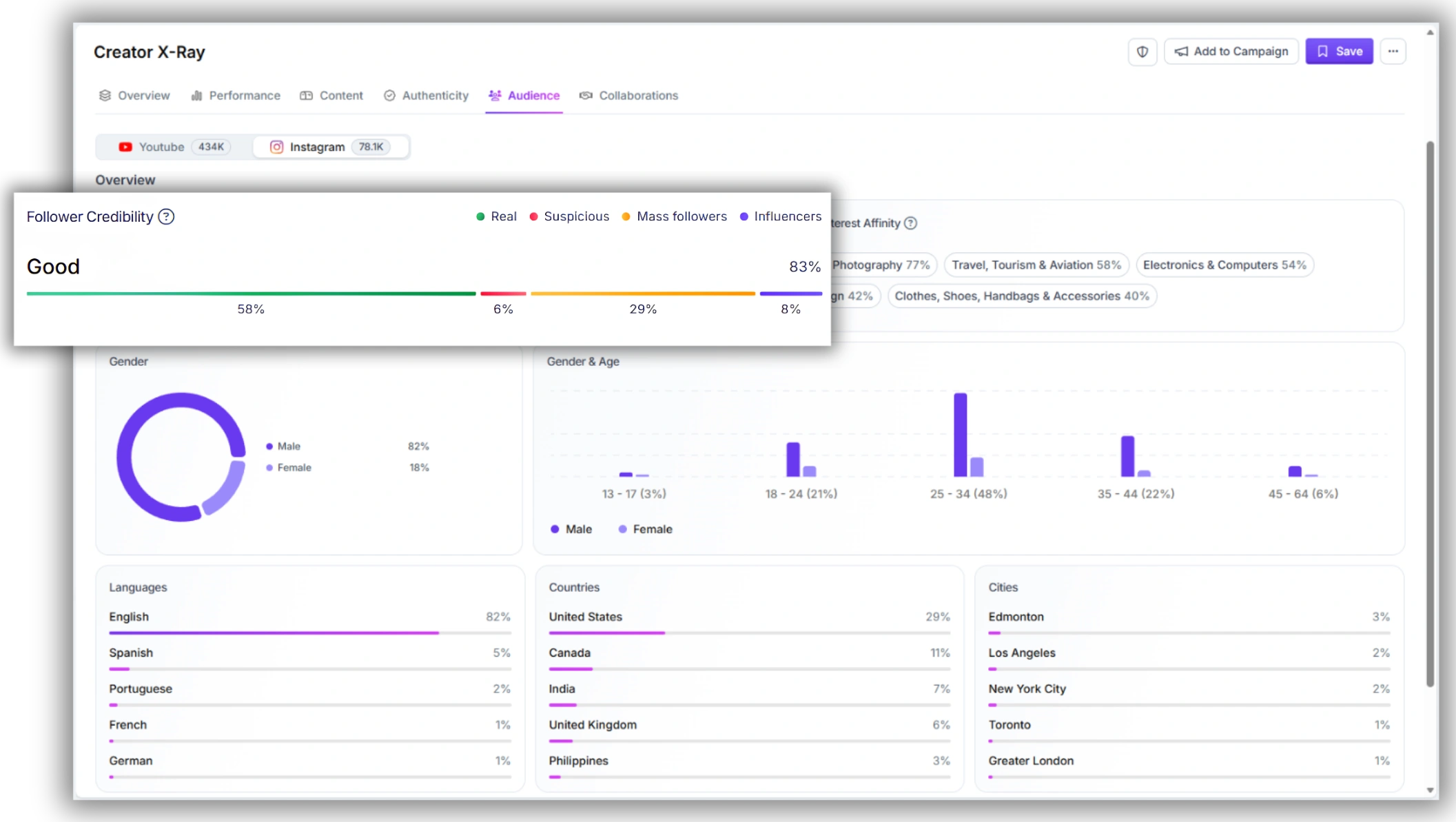
This is the percentage of followers who are real, active accounts rather than bots or dormant profiles, usually expressed as a 0 to 100 score. Authenticity below 70 percent is a serious warning sign. It's the component most directly tied to whether you're paying for a real audience.
Component 3: Niche Relevance
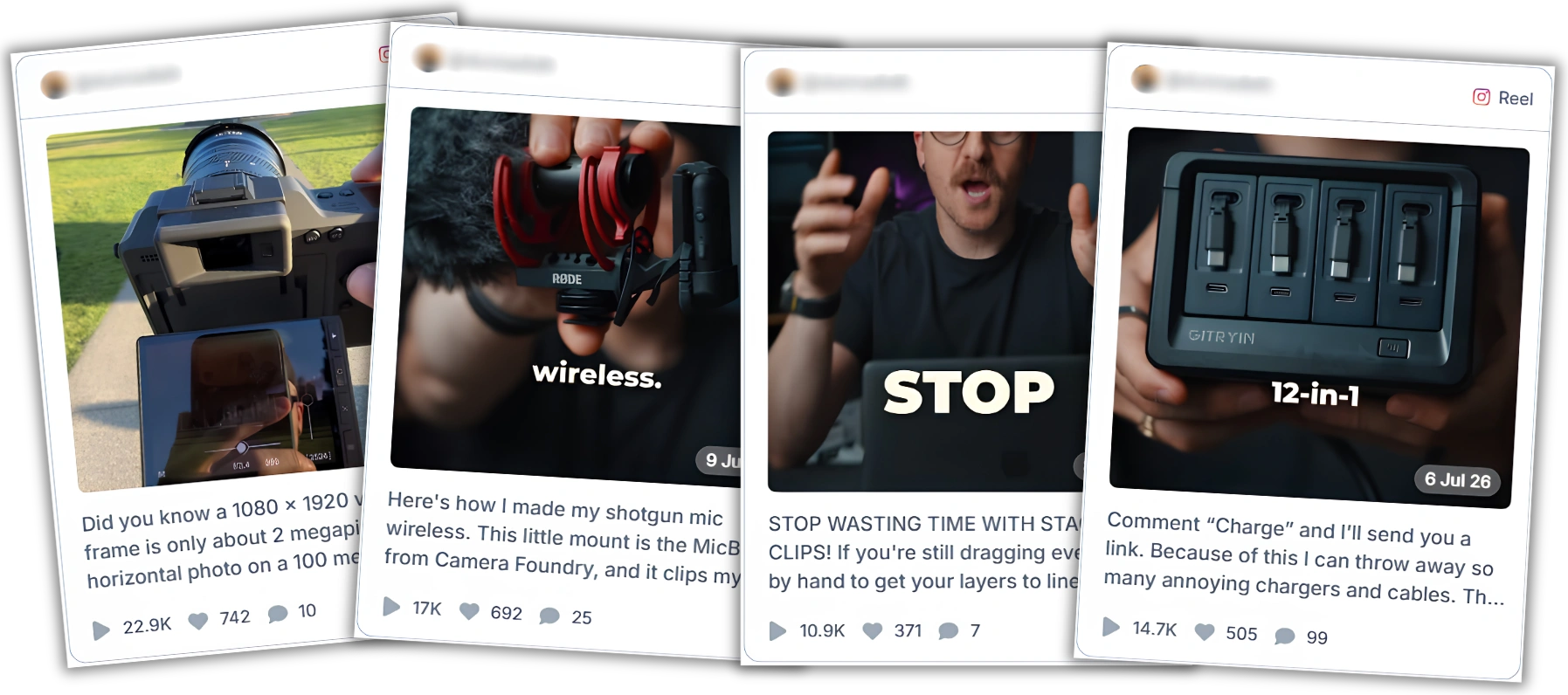
Niche relevance captures how deeply a creator covers one identifiable topic versus posting general content. At Favikon, our 600+ niche categorization measures this: a creator who posts 80 percent on "SaaS productivity" carries far more authority for a SaaS brand than a general business influencer with a bigger following.
Component 4: Content Consistency
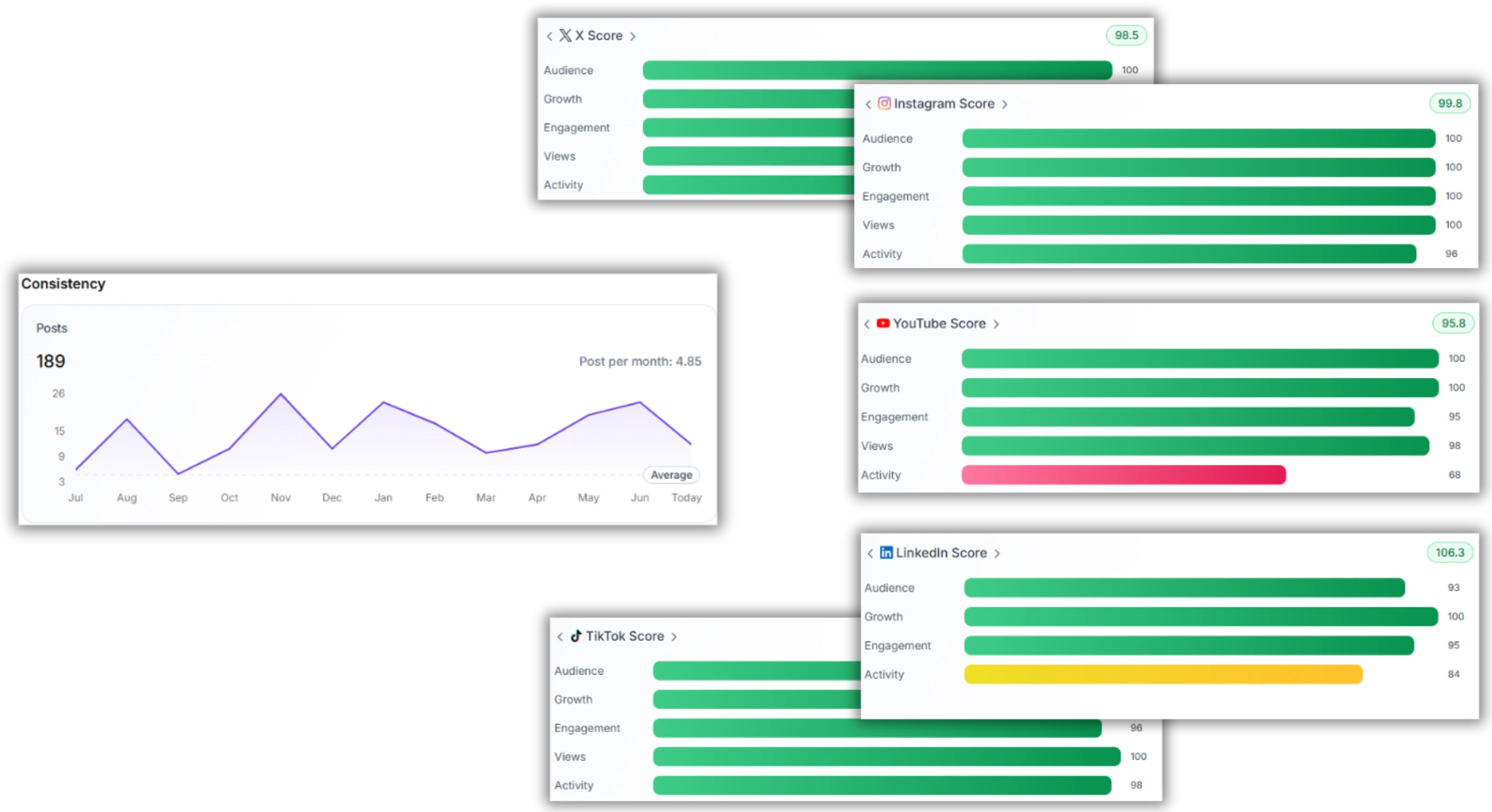
Consistency covers posting frequency, narrative coherence, and a steady voice across posts. Erratic posters lose audience trust over time, and platform algorithms quietly penalize them too. Steady, coherent output is itself an authority signal.
Component 5: Audience-Creator Fit
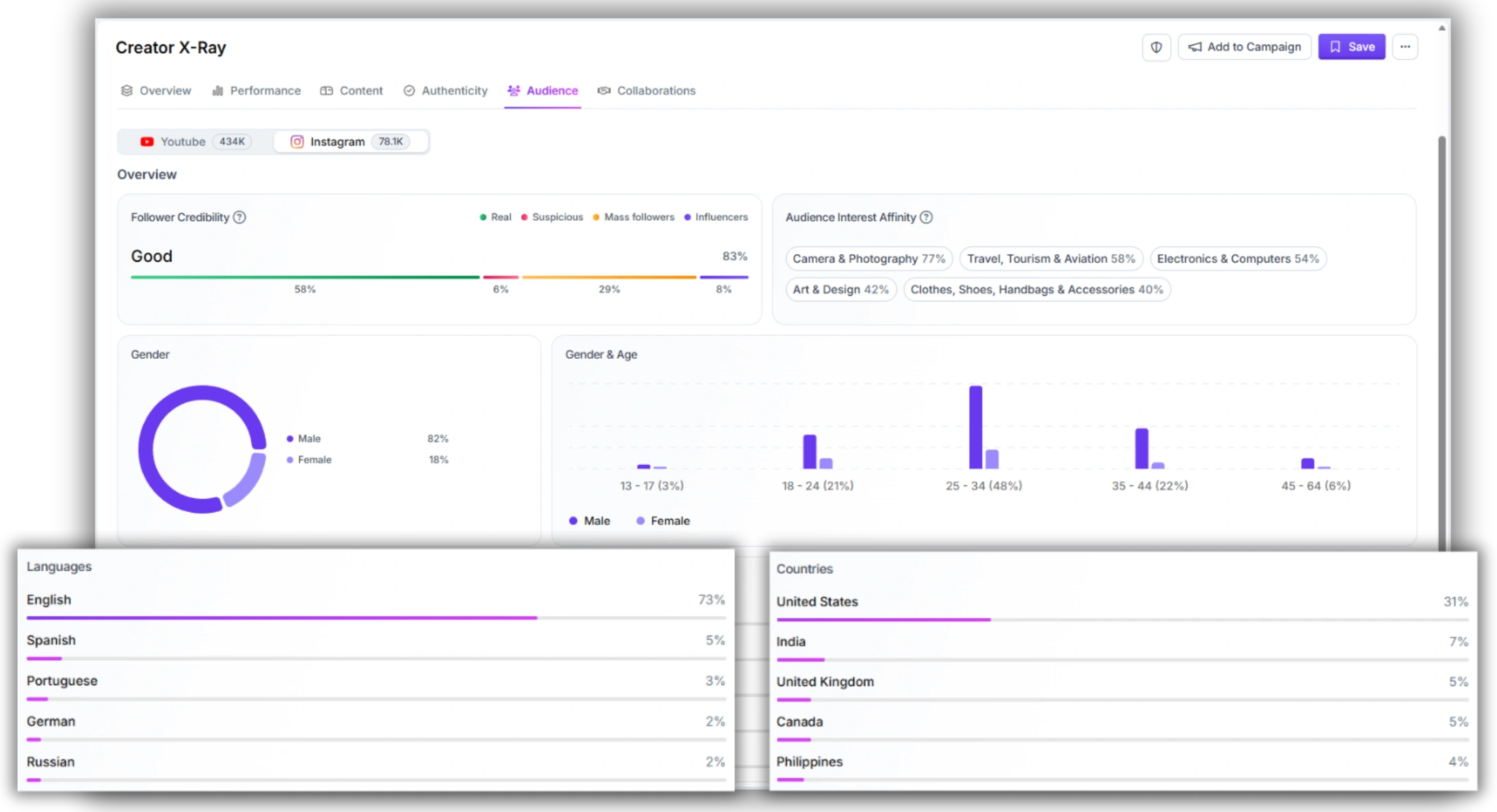
Fit measures how well the audience's demographics, interests, and intent match the creator's stated niche. A fitness creator whose audience is 70 percent interested in fitness has real authority; one at 30 percent has borrowed an audience that won't act. Mismatched fit is a common sign of manufactured authority.
Component 6: External Validation
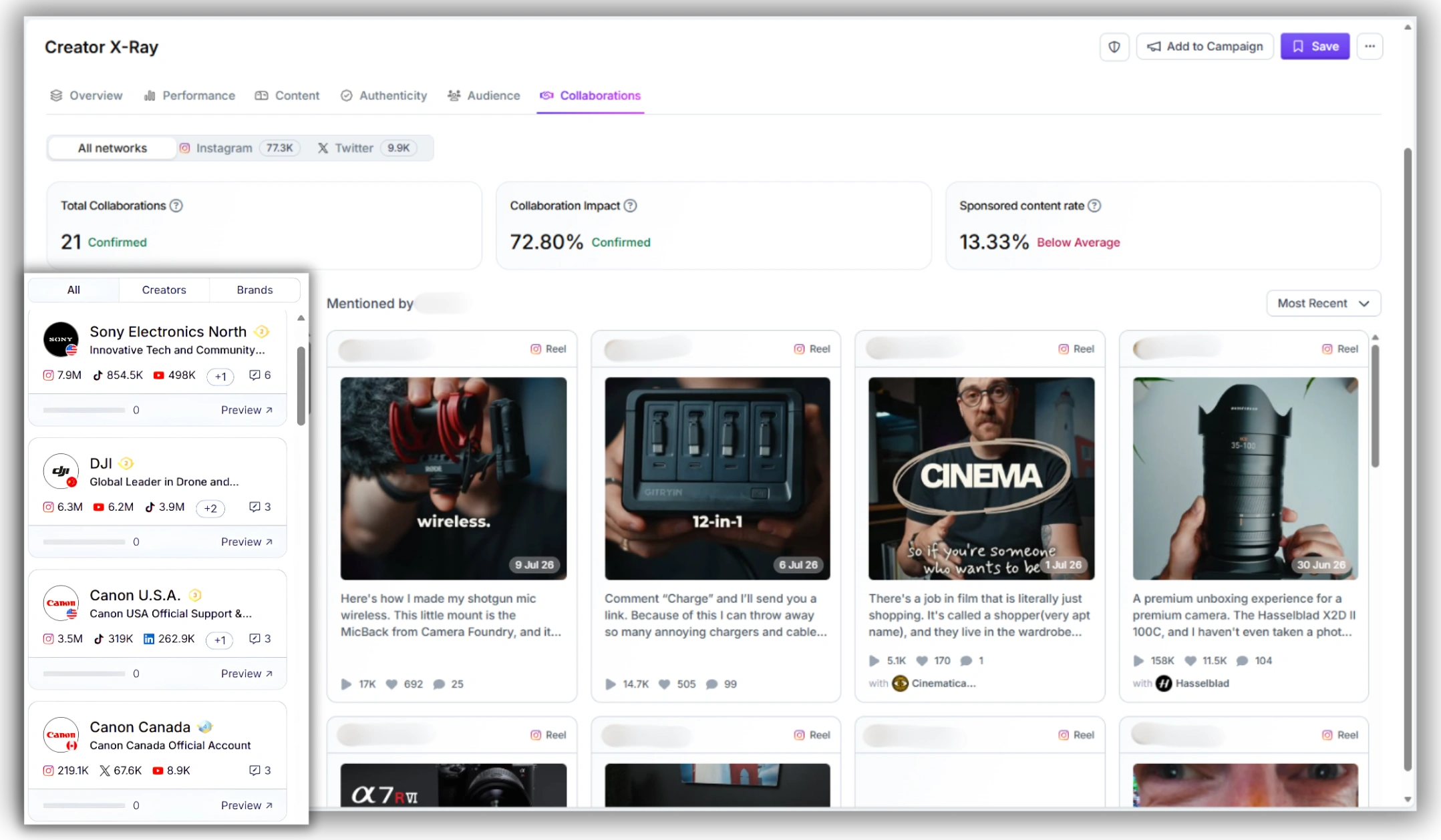
External validation is the outside proof: verified status, brand partnership history, third-party media mentions, and tenure in the niche. It's harder to quantify than the others, but it's a strong signal that real people and real brands already trust the creator.
How the 6 Components Combine
A composite authority metric weights these six inputs into a single 0 to 100 number. Different platforms and tools weight them differently, and there's no industry-standard formula, which is a big part of why authority measurement still feels opaque to most marketers. A good tool makes the inputs transparent even when the exact weights stay proprietary.
How to Measure Influencer Authority (Step by Step)
You can score a creator's authority by hand in under an hour using the seven steps below. Here's the process, component by component.
- Calculate engagement quality, not just engagement rate. Pull the last 12 posts, then count saves and shares (weighted higher than likes) and check comment depth, since comments of five or more words signal real engagement.
- Audit audience authenticity. Use a tool, or manually inspect a sample of 50 followers, to estimate what share look real and active. Below 70 percent is caution; below 50 percent, walk away.
- Score niche relevance. Review the last 30 posts and find what share sit on one identifiable topic. Above 80 percent is high niche authority; below 50 percent is a generalist, which means lower authority for any specific brand.
- Check content consistency. Look at posting frequency, voice, and theme. Erratic posters score lower even when individual posts look strong.
- Verify audience-creator fit. Pull audience demographics and match them against both the creator's niche and your ICP. Mismatches point to manufactured authority.
- Look at external validation. Check verified status, prior brand work, media mentions, and niche tenure, where three or more years is a strong signal.
- Combine into a single composite score. Manually, assign each component a 0 to 100 score and average them. Automatically, use a tool like Favikon that surfaces an Authority Score natively.
How long this takes: manual scoring runs 45 to 60 minutes per creator, versus under 30 seconds with a tool that surfaces authority natively. For any campaign vetting more than five creators, manual scoring stops being realistic.
Red Flags That Signal Weak or Fake Authority
Eight red flags catch roughly 90 percent of fake or manufactured authority. Run this checklist before you trust any creator's numbers.
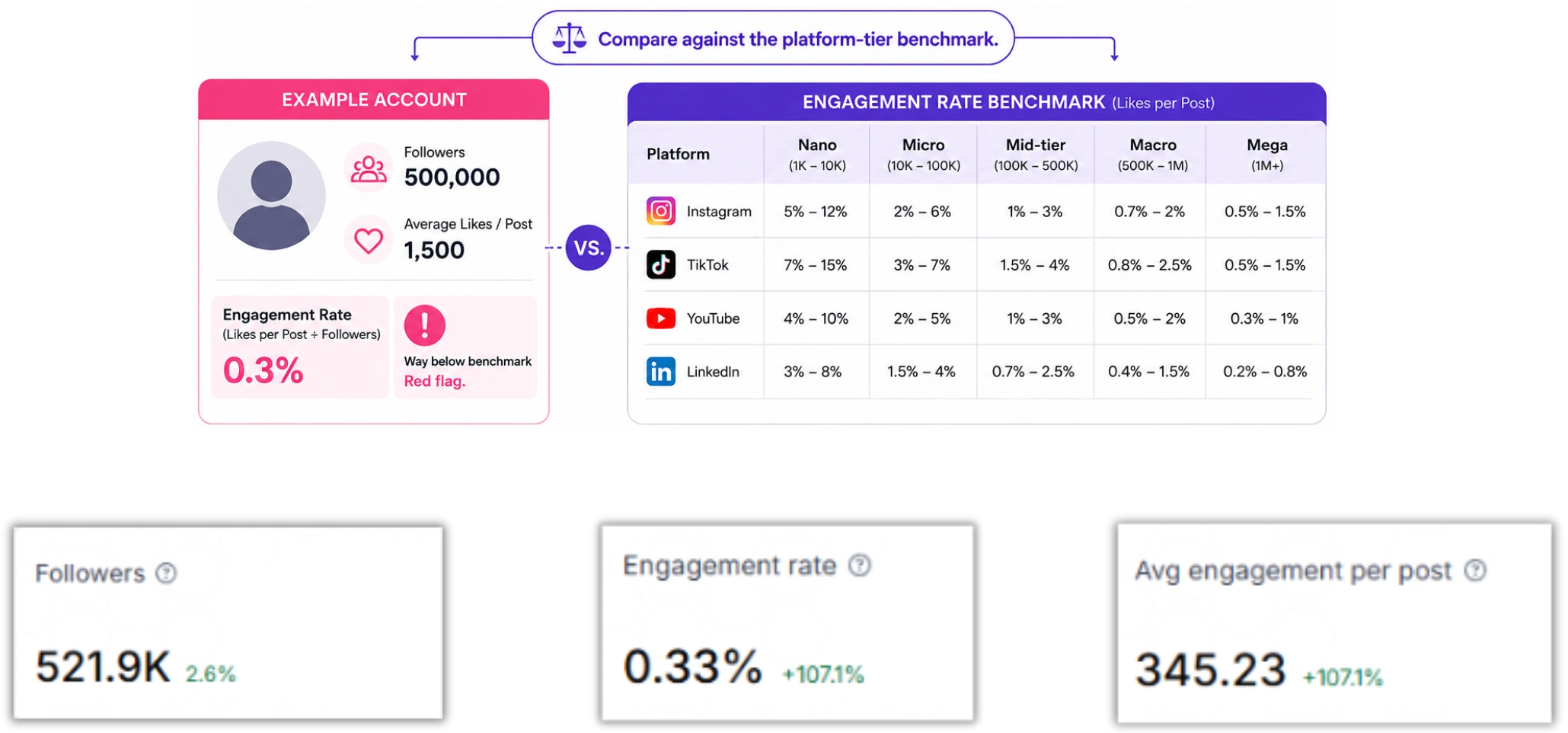
1. The follower-to-engagement ratio is way off. A 500,000-follower account averaging 1,500 likes per post (0.3 percent) is inactive, padded with fake followers, or both. Compare against the platform-tier benchmark.
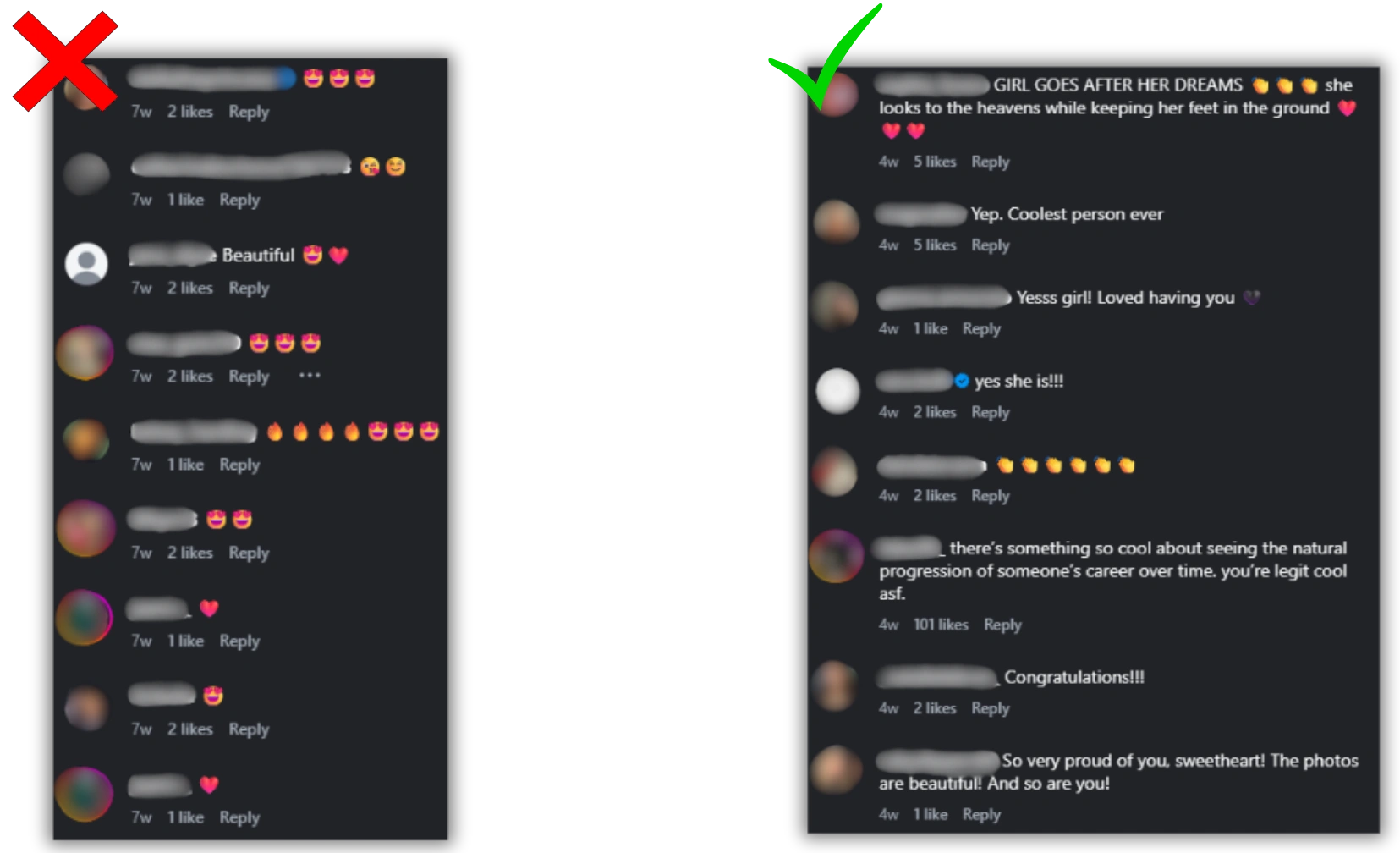
2. Engagement is mostly emoji-only comments. Real authority shows up as conversation. If 80 percent of comments are one to three emoji reactions, the audience isn't engaged, it's just compliant.
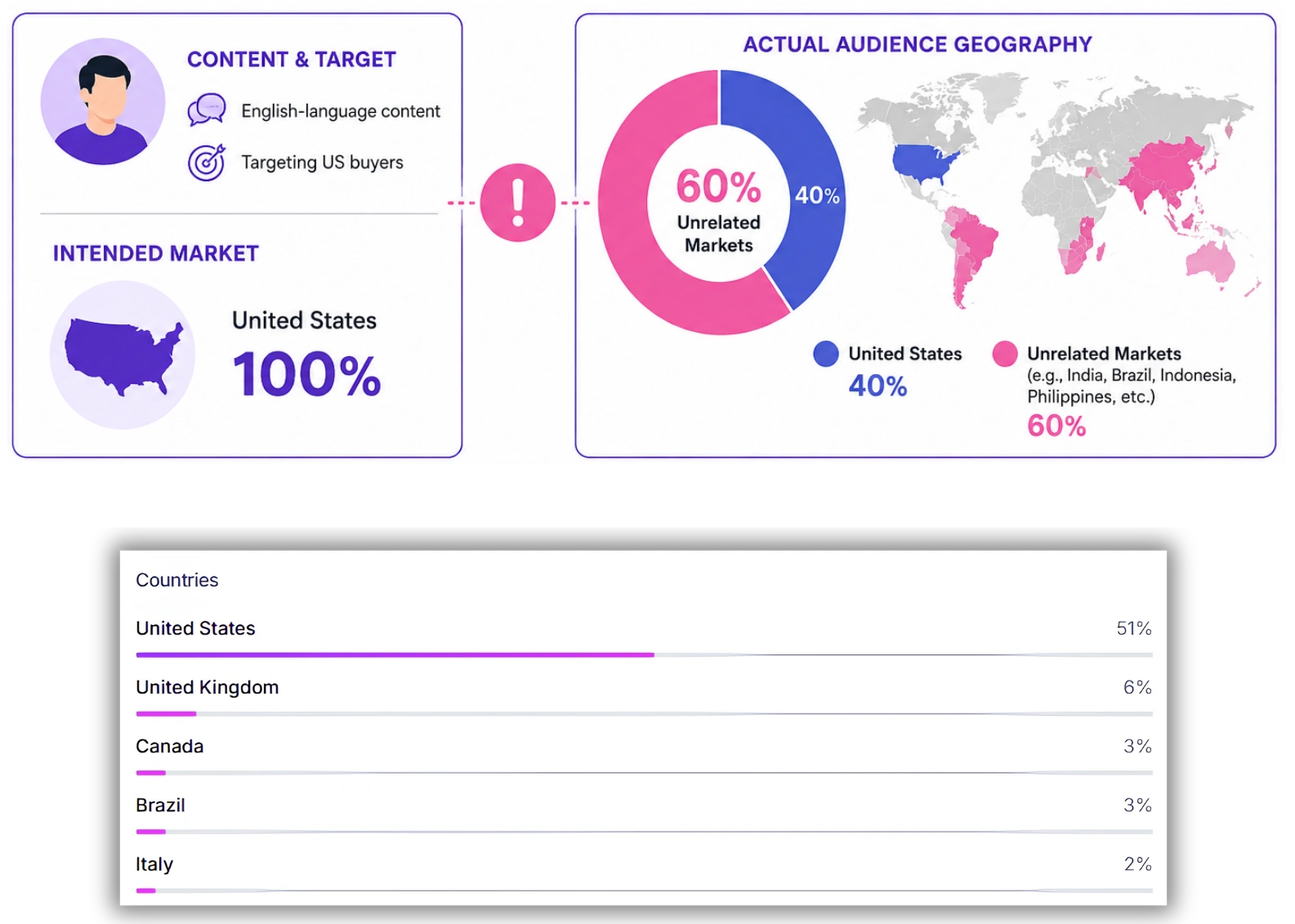
3. Audience geography doesn't match the content. An English-language creator targeting US buyers with 60 percent of followers in unrelated markets is a bought-follower tell.
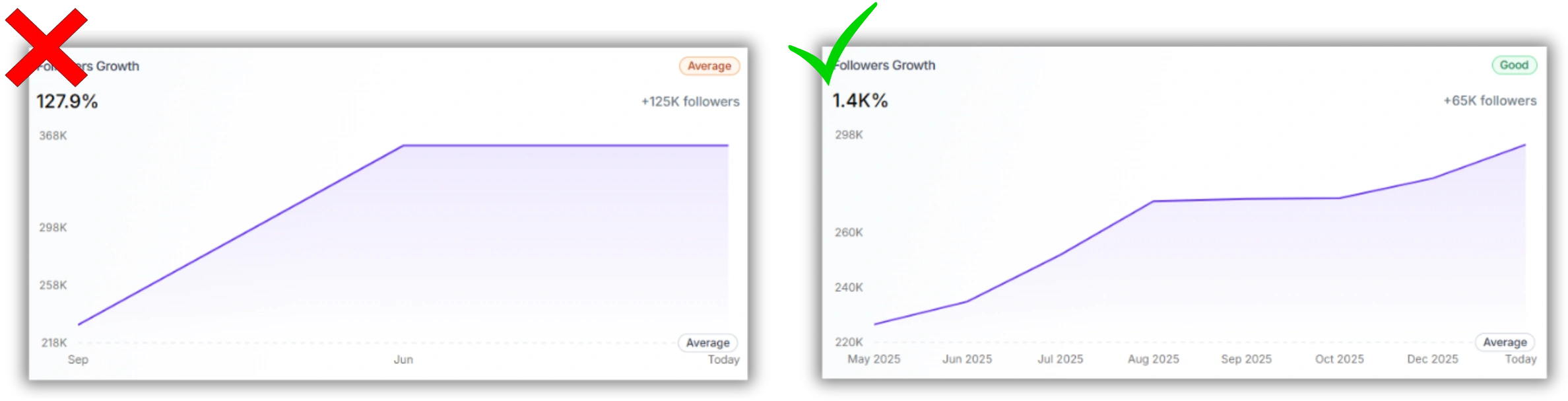
4. Sudden follower spikes without viral content. Real growth is steady. Stair-step jumps, like 10,000 to 80,000 in two weeks with no viral moment, point to purchased growth.
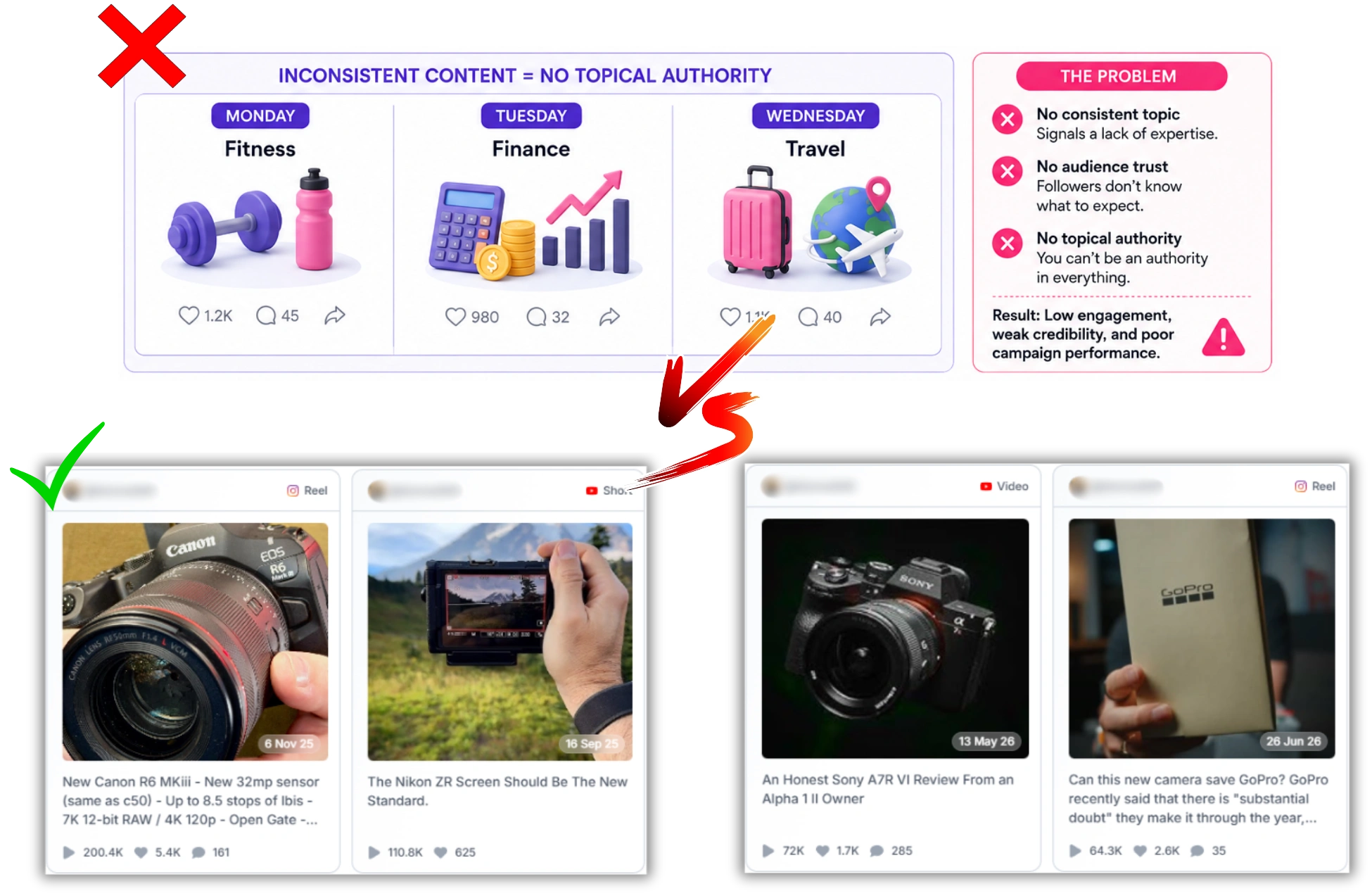
5. No niche focus. A creator posting fitness on Monday, finance on Tuesday, and travel on Wednesday holds no topical authority in any of them.
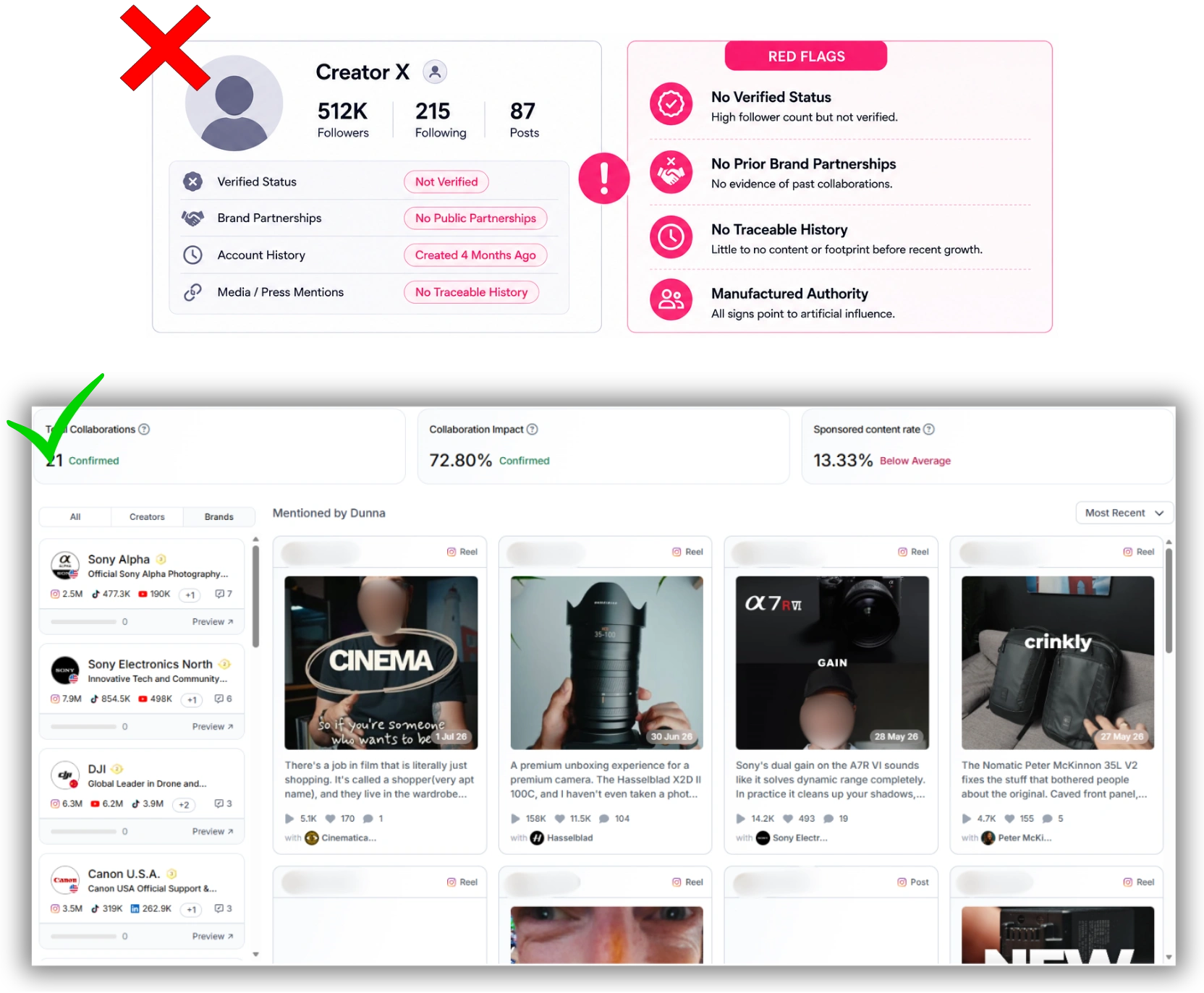
6. No external validation. No verified status despite a high follower count, no prior brand partnerships, and no traceable history before recent fame usually means manufactured authority.
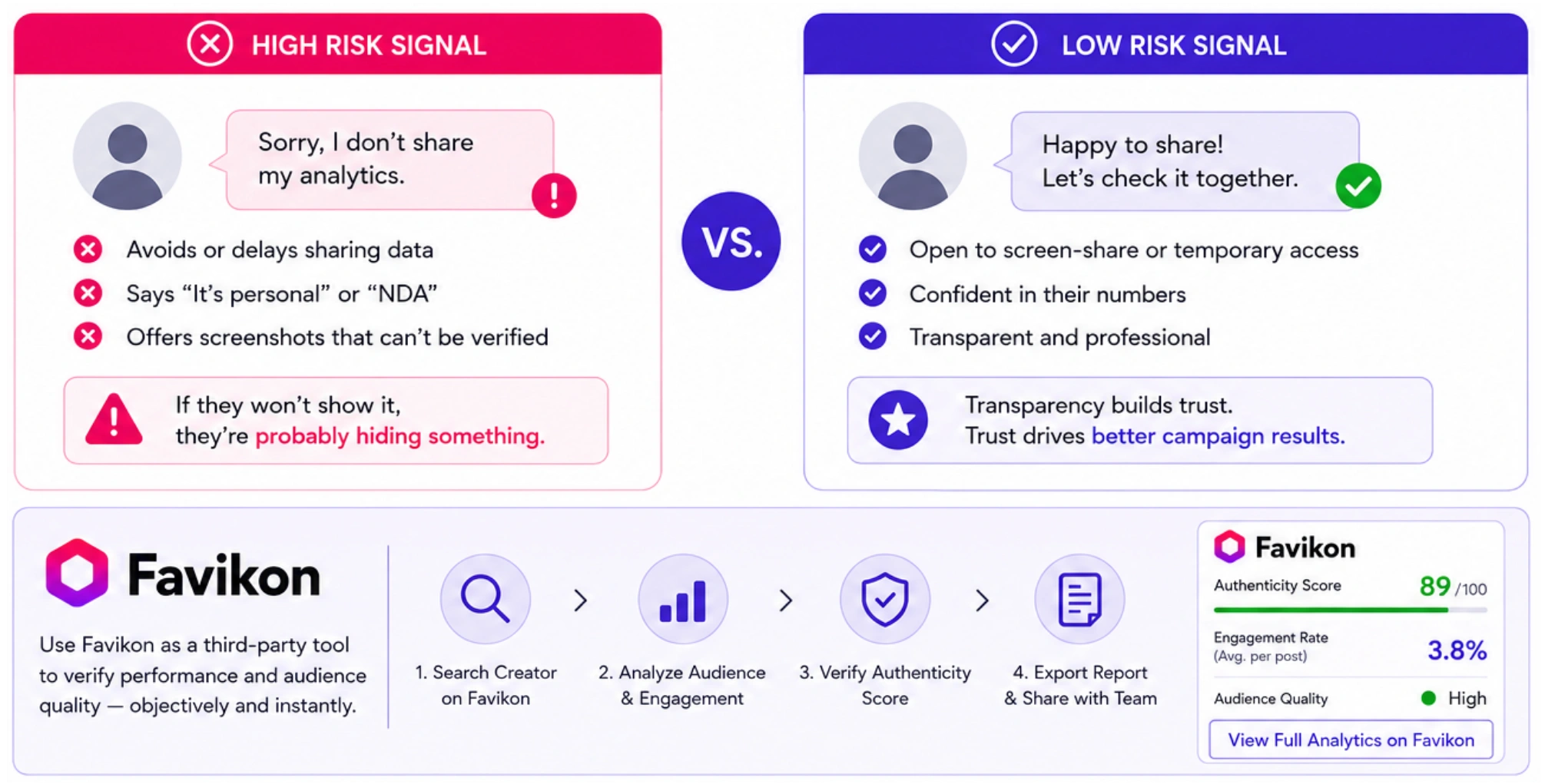
7. Refusal to share live analytics. Real creators will screen-share or grant temporary access. Resistance is the loudest signal of all.
8. Engagement collapses on sponsored posts. If organic posts pull 8 percent and sponsored posts pull 0.5 percent, the audience either doesn't trust the creator or sees through the ad. Either way, it's weak authority for branded work.

Tools to Check Influencer Authority
The fastest way to check authority at scale is a tool that scores it natively. Here are the five worth knowing, and how each one measures it.
1. Favikon: Authority Score Across 9 Platforms

At Favikon, we produce an Authority Score on every creator profile, computed from engagement quality, audience authenticity, niche relevance, and AI content share. Our differentiator is coverage: we are the only tool here that handles LinkedIn and Substack at depth. We are the best fit for brands and agencies that need B2B creator vetting at SMB pricing.
2. HypeAuditor: Audience Quality Score

HypeAuditor is an industry standard for fraud reports, with heavy weighting on audience authenticity. However, it doesn't cover LinkedIn. If you want to see how we compare, our HypeAuditor alternative page maps the differences.
3. Modash: Audience Credibility Score

Modash is strong on real-versus-fake follower analysis, though it doesn't cover LinkedIn. Our full Modash alternative comparison has the details.
4. Klear (Meltwater): True Reach and Influence Score
Klear combines reach modeling with topical authority and sits inside the broader Meltwater suite. It's strong for PR and comms teams who weigh earned media as heavily as direct response. Pricing is enterprise and demo-gated.
5. Upfluence: Component-Level Analysis

Upfluence surfaces the inputs (engagement, authenticity, demographics) but doesn't bundle them into a single score, so you weight them yourself. Best for large agencies with custom scoring frameworks. An annual contract is required.
Free and Manual Options
The free route combines Social Blade's follower-growth graphs, a manual comment audit, and native platform analytics. It works for one to three creators a quarter, but it doesn't scale, and it can't see LinkedIn or Substack at all.
How Favikon's Authority Score Works
Our Authority Score is Favikon's proprietary composite metric, a 0 to 100 score on every creator profile that bakes in the six components above. Instead of managing five separate spreadsheets, you can rely on one number, then drill into what drives it.
At a high level, the score blends engagement quality, audience authenticity, niche relevance, AI content share, and content consistency. While the exact weights stay proprietary, the inputs are visible on the profile, so you can always see why a creator scored the way they did.
At Favikon, what sets us apart is our breadth and context. We cover 9 platforms, including the LinkedIn and Substack creators most tools miss, and we benchmark each creator against 600+ niche peer groups rather than a flat industry average.
Our data also updates continuously instead of in monthly batches, so the score reflects how a creator is performing right now.
You can sort our creator rankings by niche to start with the people who already score well, and run the same check on the LinkedIn creators you couldn't vet anywhere else.
Frequently Asked Questions
1. What is influencer authority?
Influencer authority is a creator's proven ability to influence a specific audience, based on engagement quality, audience authenticity, and niche relevance rather than follower count. It measures whether a creator can actually move the people you care about, not how many people follow them.
2. Why is follower count a bad metric?
Follower count is a poor metric because followers can be bought, a large share of any big account is inactive, and algorithms now distribute content to non-followers. It measures audience size, not audience quality, attention, or relevance to your brand.
3. How do you measure influencer authority?
Measure influencer authority by scoring six components: engagement quality, audience authenticity, niche relevance, content consistency, audience-creator fit, and external validation. Score each from 0 to 100 and combine them, or use a tool that produces a composite authority score natively.
4. What's a good influencer authority score?
On a 0 to 100 scale, a strong creator typically clears 70 or above, with audience authenticity above 70 percent being a baseline. Context matters, though, because a high-authority B2B creator on LinkedIn looks different from a high-authority beauty creator on Instagram.
5. How do I check an influencer's authority for free?
Combine Social Blade's free follower-growth graphs with a manual comment audit and the platform's native analytics. This works for a few creators at a time but misses sophisticated fakes and can't cover LinkedIn or Substack.
6. What's the difference between authority and engagement rate?
Engagement rate is one input; authority is the whole picture. Engagement rate measures interaction volume, while authority also weighs audience authenticity, niche relevance, consistency, fit, and external validation into a single composite.
7. Can authority be faked?
Parts of it can, through bought followers, bot engagement, and emoji-only comments, but faking all six components at once is hard. That's why a composite score plus the red-flag checklist catches manufactured authority that any single metric would miss.
8. Does Favikon's Authority Score cover LinkedIn?
Yes. We are the only tool in this guide that scores authority on LinkedIn and Substack creators, alongside seven other platforms. This makes us the strongest fit for B2B and thought-leadership programs.
9. How often should I recheck an influencer's authority?
Recheck before every partnership and at least once a quarter for ongoing partners. Audience quality and posting patterns shift, and a strong account today can decline or buy growth later.
10. Is influencer authority the same across platforms?
No. Authority is platform-specific, so a creator with high authority on LinkedIn may have little on Instagram. Always measure it on the platform where you plan to run the campaign.
11. Stop Buying Followers, Start Buying Authority
Follower count tells you how big an audience is. Our Authority Score tells you whether it will act. Score any creator across 9 platforms with us and see the difference for yourself.
Others articles