How to Spot a Fake Influencer: A Complete Fraud Detection Playbook (2026)
With influencer fraud draining over $4 billion annually, relying on basic follower numbers is a costly mistake. Protecting your 2026 ad spend requires vetting creators through deep comment audits, growth-curve analysis, and strict geographic verification.

Influencer fraud detection is the process of confirming that a creator's audience, engagement, and content are real, using a mix of AI scoring, audience analysis, and manual review. In plain terms, it's how you avoid paying for followers and likes that were never there.
It's a bigger line item than most budgets account for. Influencer Marketing Hub estimates put 15 to 30 percent of influencer accounts showing signs of fake engagement, and global losses to influencer fraud now run past $4 billion a year. That's real money walking out of real campaigns.
Here's the whole thing: what fraud detection is, why it's harder in 2026, the seven types of fraud you'll actually run into, an 8-step manual audit you can run today, the top five detection tools ranked, the ROI math, and how Favikon handles it. Skim the parts you need, or read it straight through.
Influencer Fraud Detection: Key Takeaways
- Influencer fraud detection verifies that a creator's audience, engagement, and content are real, using AI scoring, audience analysis, and manual review.
- Industry estimates put 15 to 30 percent of influencer accounts showing signs of fake engagement, with global losses running past $4 billion a year.
- Seven fraud patterns cover nearly everything you'll see: fake followers, bot engagement, engagement pods, geography manipulation, AI-generated accounts, stolen identities, and manipulated media kits.
- You can catch most fraud by hand in about 20 minutes per creator with an 8-step audit, but it doesn't scale past a handful of creators.
- A detection tool costs a fraction of a single fraudulent partnership. Favikon scores authenticity across 9 platforms, including LinkedIn. Start a free trial.
What Is Influencer Fraud Detection?
Influencer fraud detection is the process of verifying that a creator's audience, engagement, and content are authentic, using a combination of AI scoring, audience analysis, and manual review.
It's the due-diligence layer between "this profile looks great" and "we wired the money."
"Fraud" isn't one thing. It covers fake or purchased followers, bot-driven likes and comments, manipulated reach and media-kit metrics, and a newer category: fully AI-generated creators with no human behind them.
Each one inflates the numbers a brand pays against, and each one hides differently. Tools like Favikon's AI creator search score these signals automatically, but it helps to understand what they're actually looking for.
Why Influencer Fraud Detection Matters in 2026
Fraud matters because it quietly taxes every campaign you run, and in 2026 it's both more common and harder to catch than it used to be. A World Federation of Advertisers study of 1,400 marketers across 28 countries found 81 percent had encountered influencer fraud in the past year.
The Cost of Inaction
The financial hit is the easy part to measure. Industry estimates put 15 to 30 percent of influencer accounts showing fraud signals, and the same WFA study reported a median budget waste of around $128,000 per affected mid-scale campaign.
The harder cost is trust. When a campaign underperforms because the reach was never real, the post-mortem rarely lands on "we got defrauded," it lands on "influencer marketing doesn't work for us." Checking a creator's Authority Score before you sign is a lot cheaper than rebuilding that internal confidence later.
Why Fraud Is Harder to Spot in 2026
The fakes got better. AI-generated creator accounts now post convincingly with no human behind them, and deepfake video clears a quick manual review without blinking.
Coordinated fraud rings span multiple platforms at once, so a clean-looking Instagram can be propped up by bought activity elsewhere. And micro-bot packages in the 5,000 to 10,000 follower range are tuned to mimic organic growth, which is exactly the tier brands assume is "too small to bother faking."
Why Agencies Need Fraud Detection More Than Anyone
Agencies carry the most exposure because they recommend creators to clients, so one bad partnership puts the whole retainer at risk. Multi-client work multiplies that: fraud risk scales with the number of campaigns you run.
Agencies also need defensible vetting documentation, ideally tracked in one creator CRM, for the moment a client asks "how did you pick this creator?" Manual checks don't scale to answer that.
For an agency running 10 client campaigns a quarter, manual vetting alone eats 20+ hours a week. Detection tools aren't a nice-to-have, they're the only way to scale safely.
The 7 Types of Influencer Fraud (and How to Recognize Them)
There are seven fraud patterns that account for nearly everything you'll see in the wild. Learn the names and the tells, and most fakes stop being subtle.
Fake or Purchased Followers
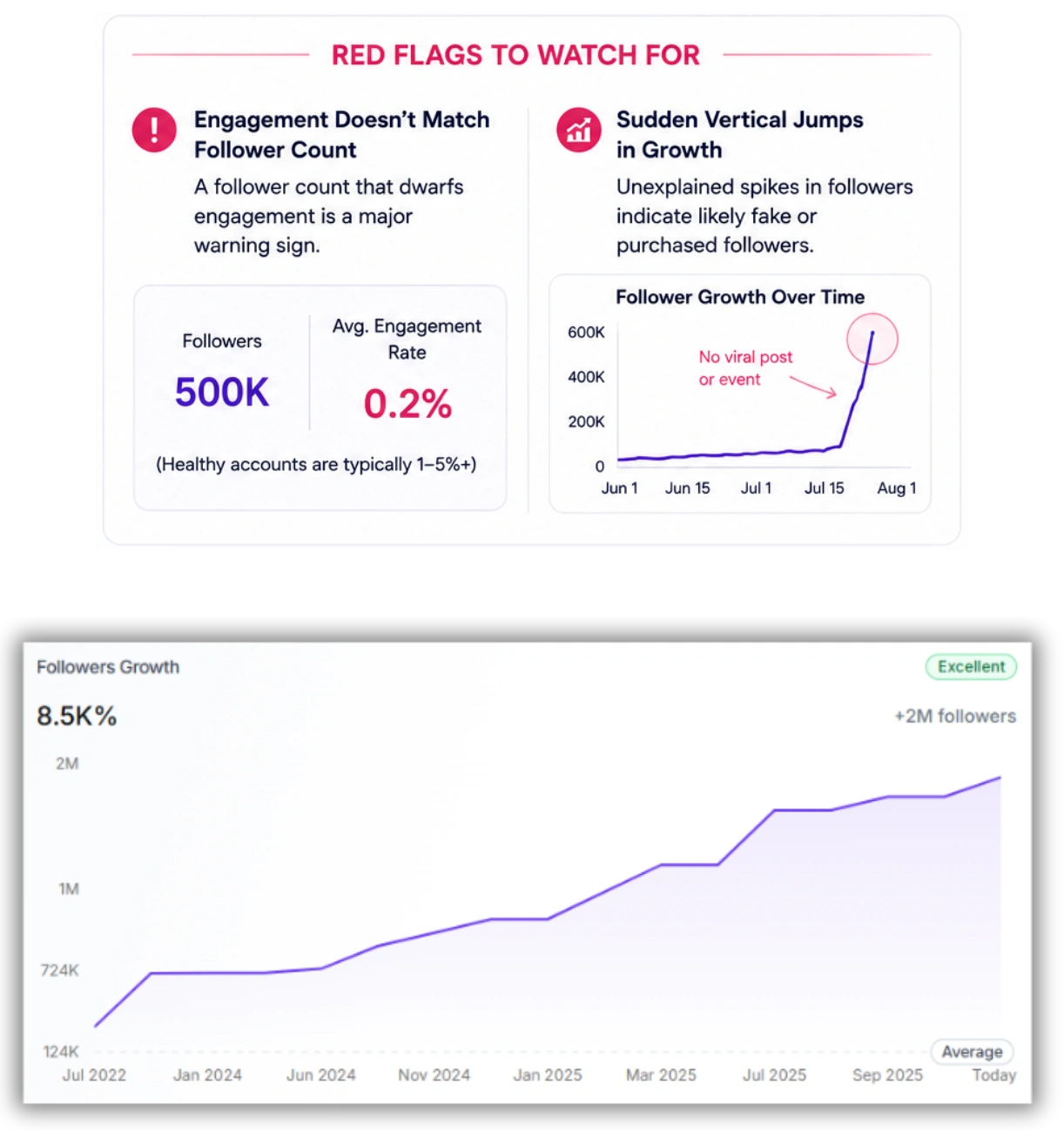
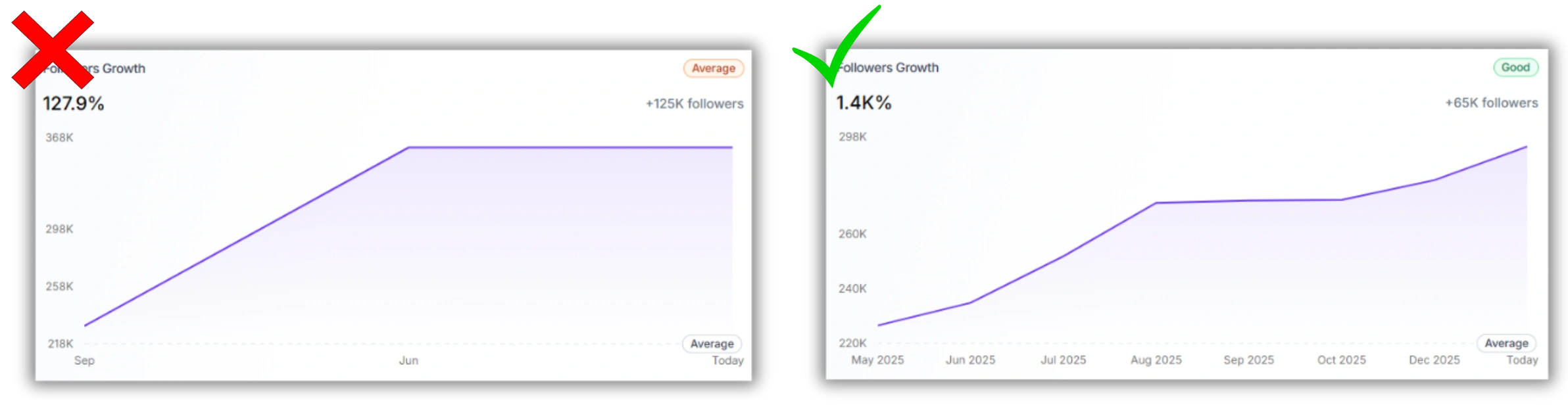
Accounts padded with bought followers to look bigger than they are. Red flags: a follower count that dwarfs engagement, and sudden vertical jumps in the growth curve with no viral moment to explain them. This is the most common form of fraud and the easiest to spot once you know to look.
Bot Engagement (Likes and Comments)
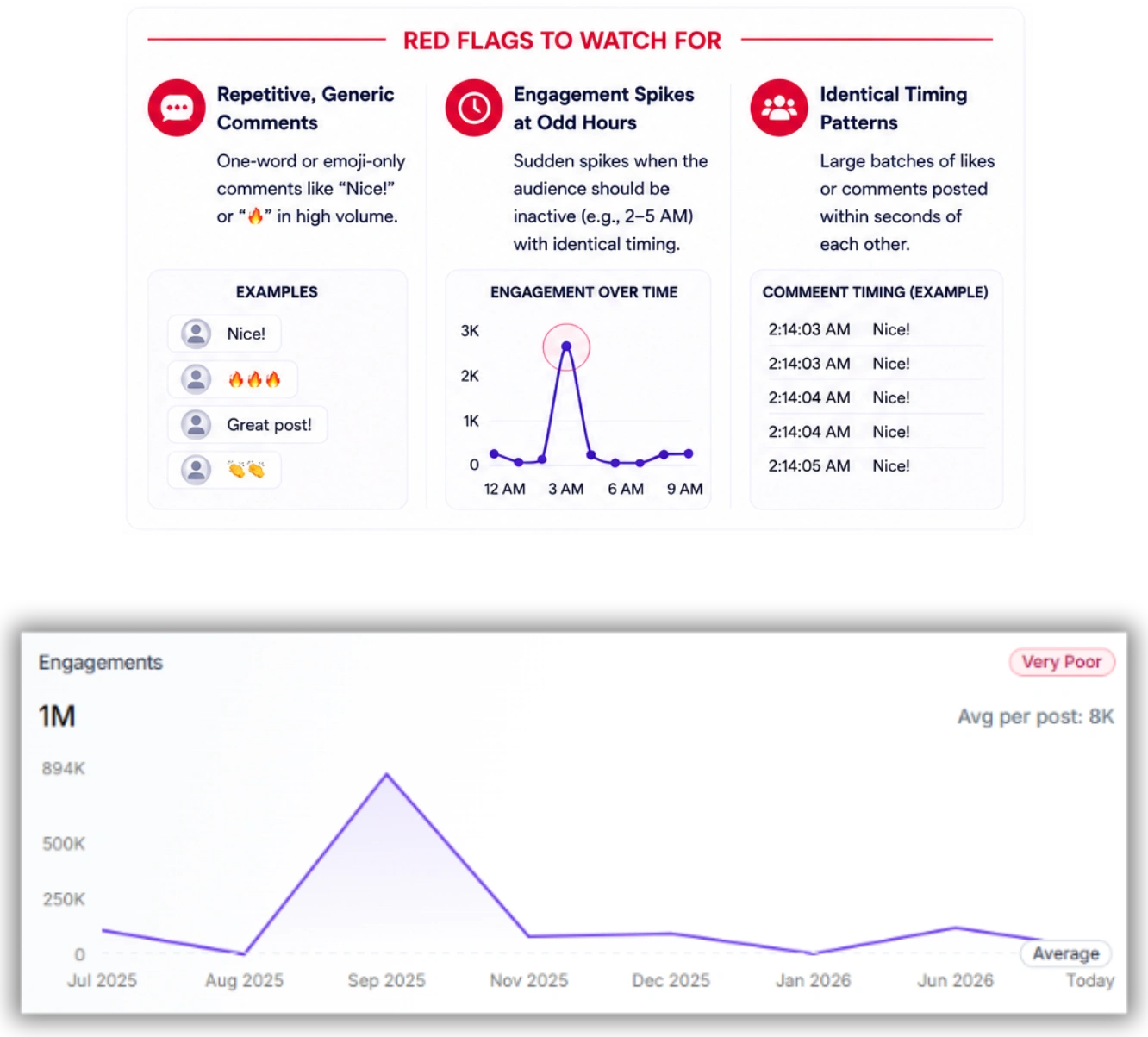
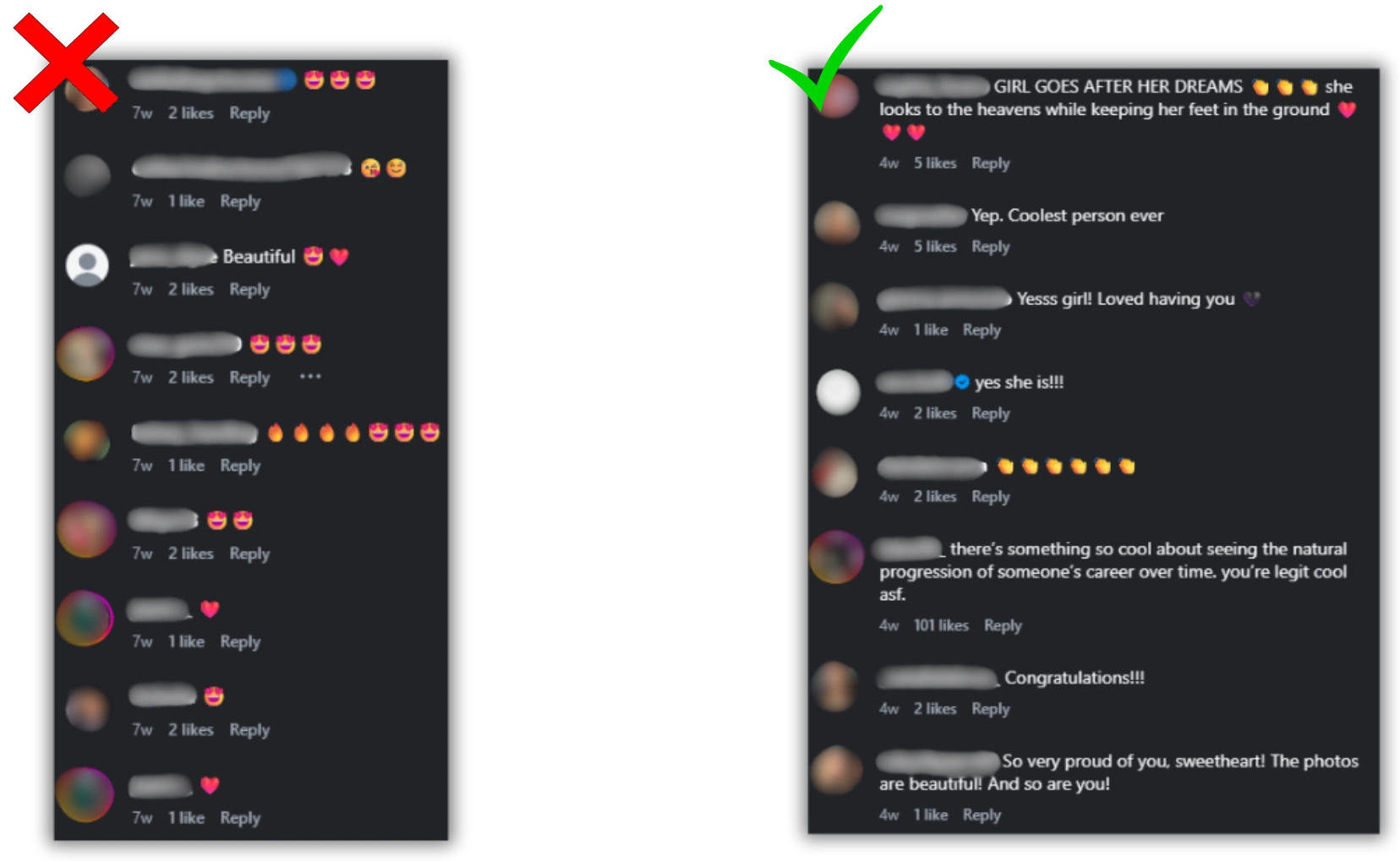
Automated likes and generic comments bought to fake an active audience. Red flags: repetitive one-word or emoji-only comments ("Nice!", "🔥"), and engagement spikes at odd hours with identical timing. Bot comments rarely reference the actual content of the post.
Engagement Pods
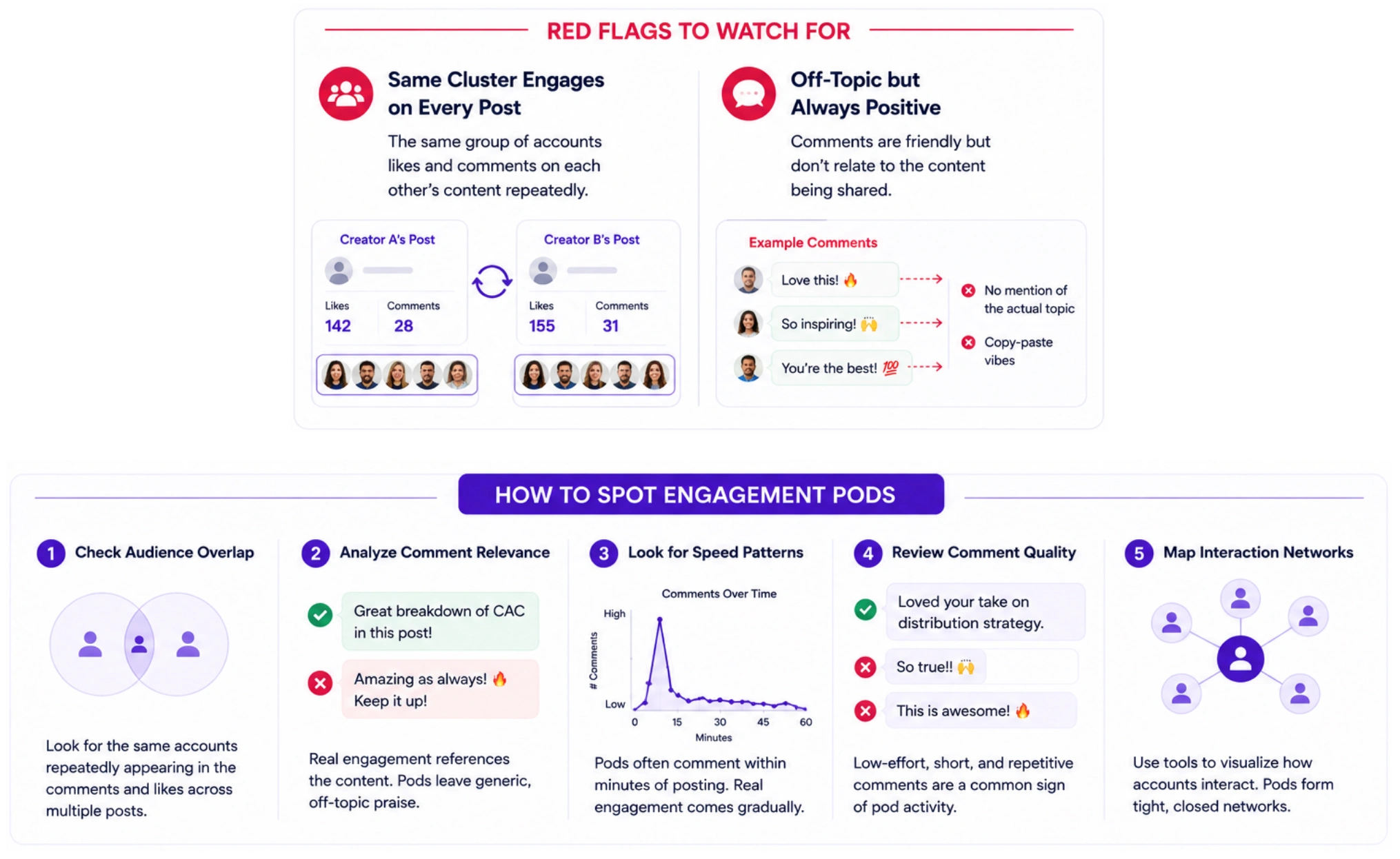
Groups of real creators who agree to like and comment on each other's posts to game the algorithm. Red flags: the same cluster of accounts engaging on every post, and comments that are positive but oddly off-topic. Harder to detect because the accounts are real humans.
Audience Geography Manipulation
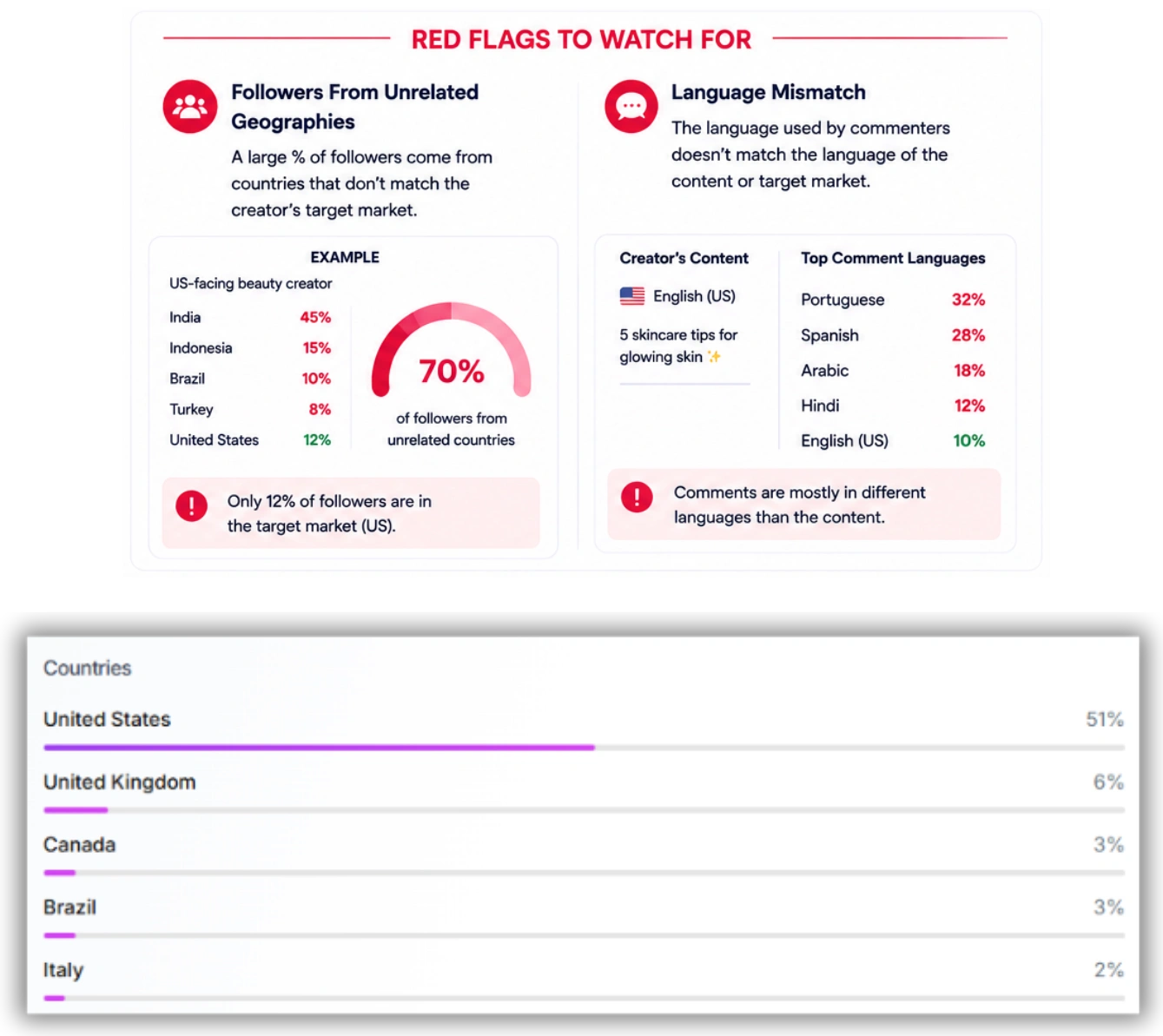
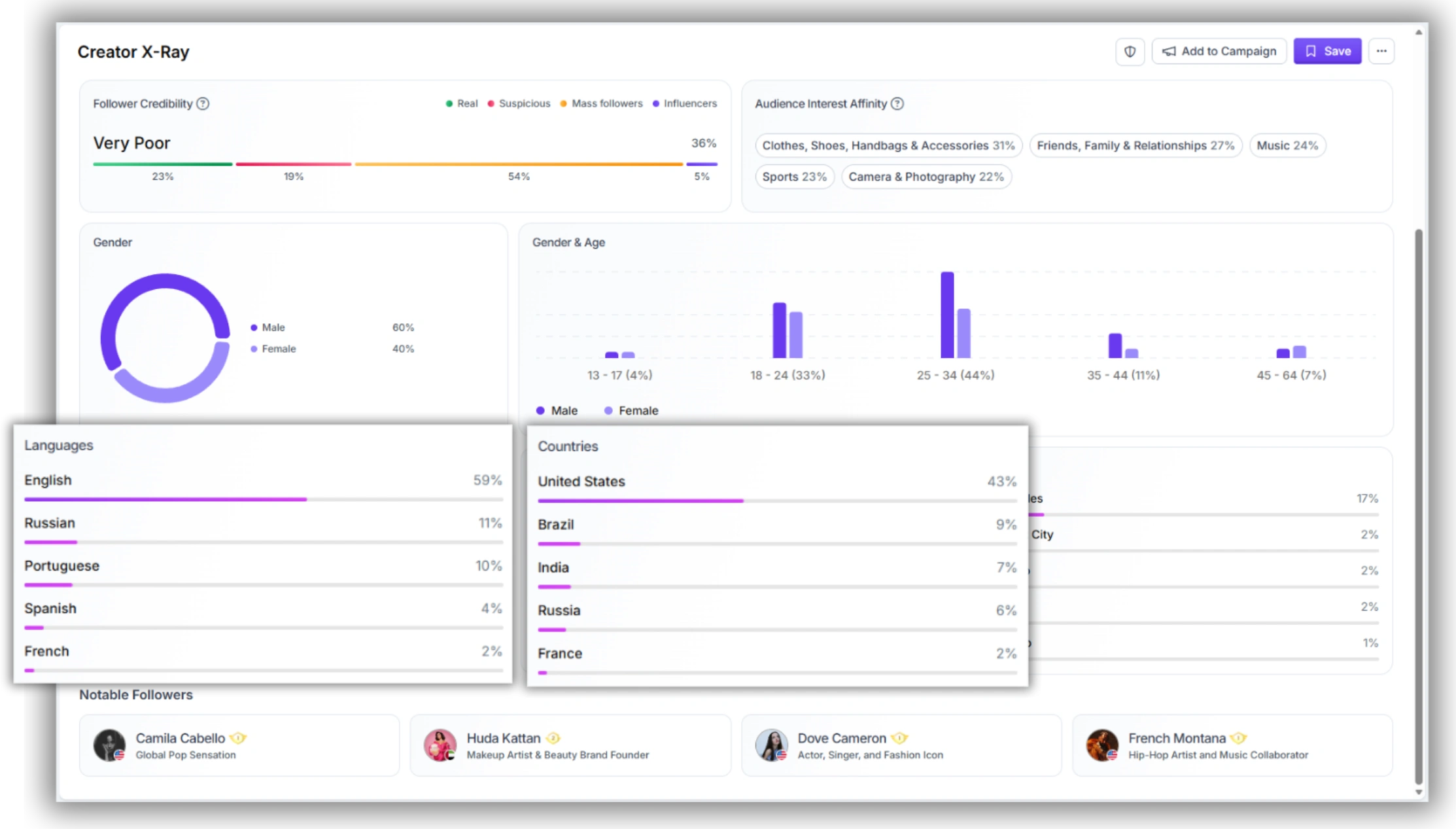
A creator whose audience is concentrated in low-cost-bot regions while they pitch a different market. Red flags: a US-facing beauty creator with 70 percent of followers in unrelated countries, or a language mismatch between captions and commenters. This quietly destroys reach in the market you actually care about.
AI-Generated Creator Accounts
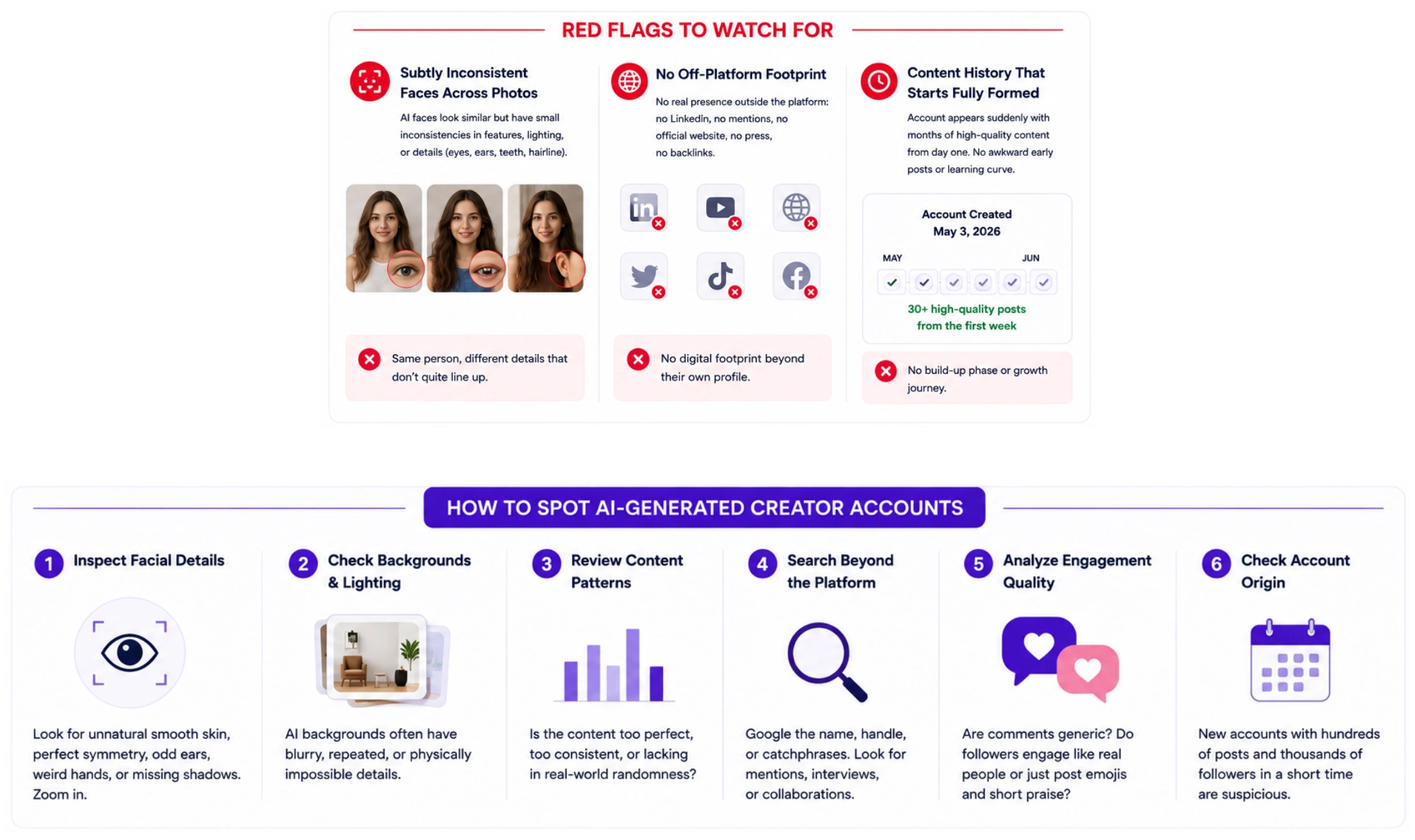
Fully synthetic creators with AI-generated faces, posts, and personas, no real person attached. Red flags: subtly inconsistent faces across photos, no off-platform footprint, and a content history that starts fully formed. The fastest-growing category in 2026.
Stolen Identity and Impersonation Accounts
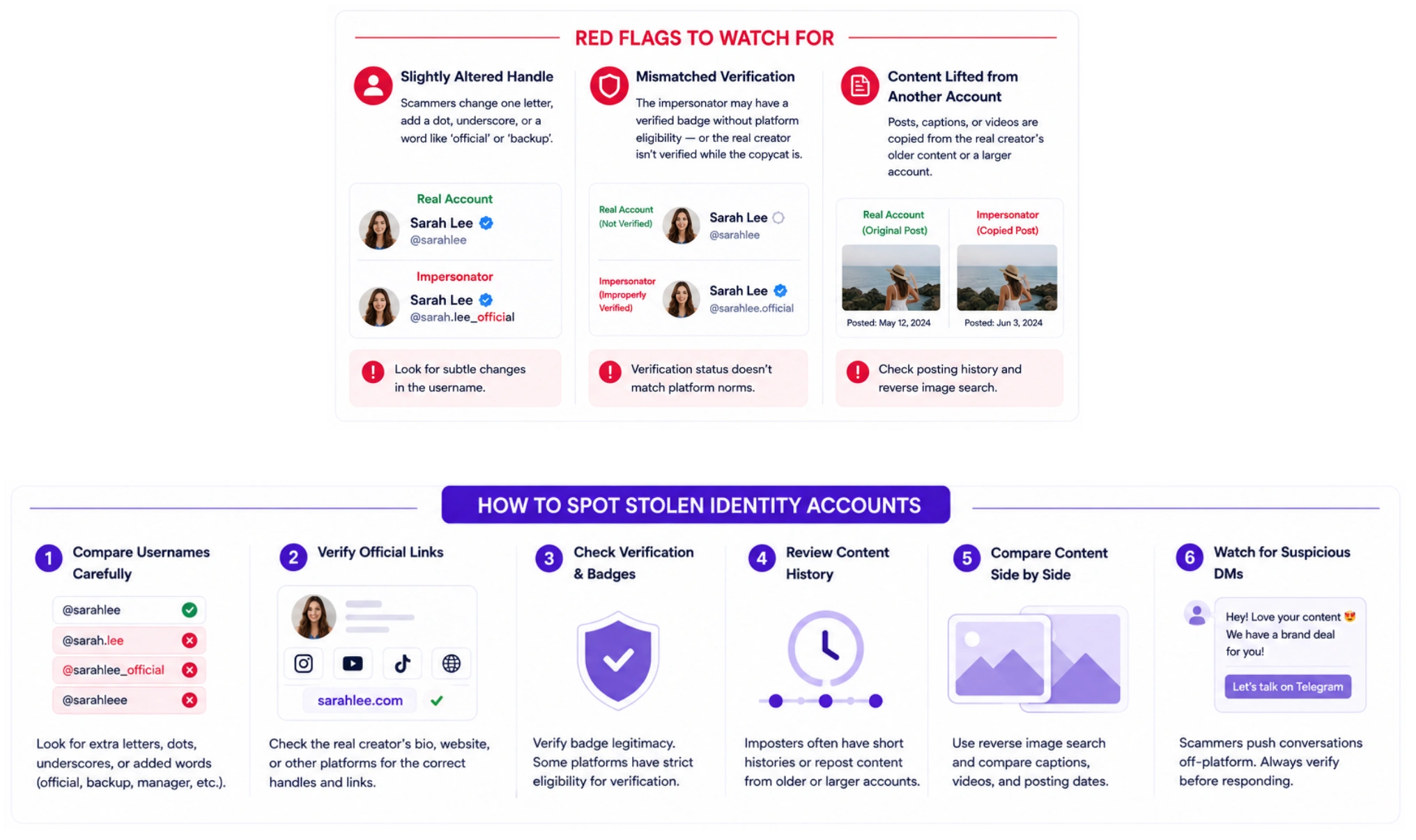
Accounts that copy a real creator's photos and name to pose as them or a near-duplicate. Red flags: a slightly altered handle, mismatched verification, and content lifted from an older or larger account. Common in DM-based "brand deal" scams.
Manipulated Media Kit Metrics
Inflated screenshots and exported numbers in a creator's media kit that don't match live data. Red flags: media-kit reach that doesn't square with public engagement, and a refusal to share live analytics. Always verify the kit against the live account.

How to Spot a Fake Influencer (The Manual Playbook)
You can catch most fraud by hand in about 20 minutes per creator, no paid tool required. Here's the 8-step audit we run before any partnership.
The 8-Step Manual Audit Checklist
1. Pull 90 Days of Public Engagement Data: Gather likes, comments, and posting cadence across the last three months so you're judging a trend, not a single good post.
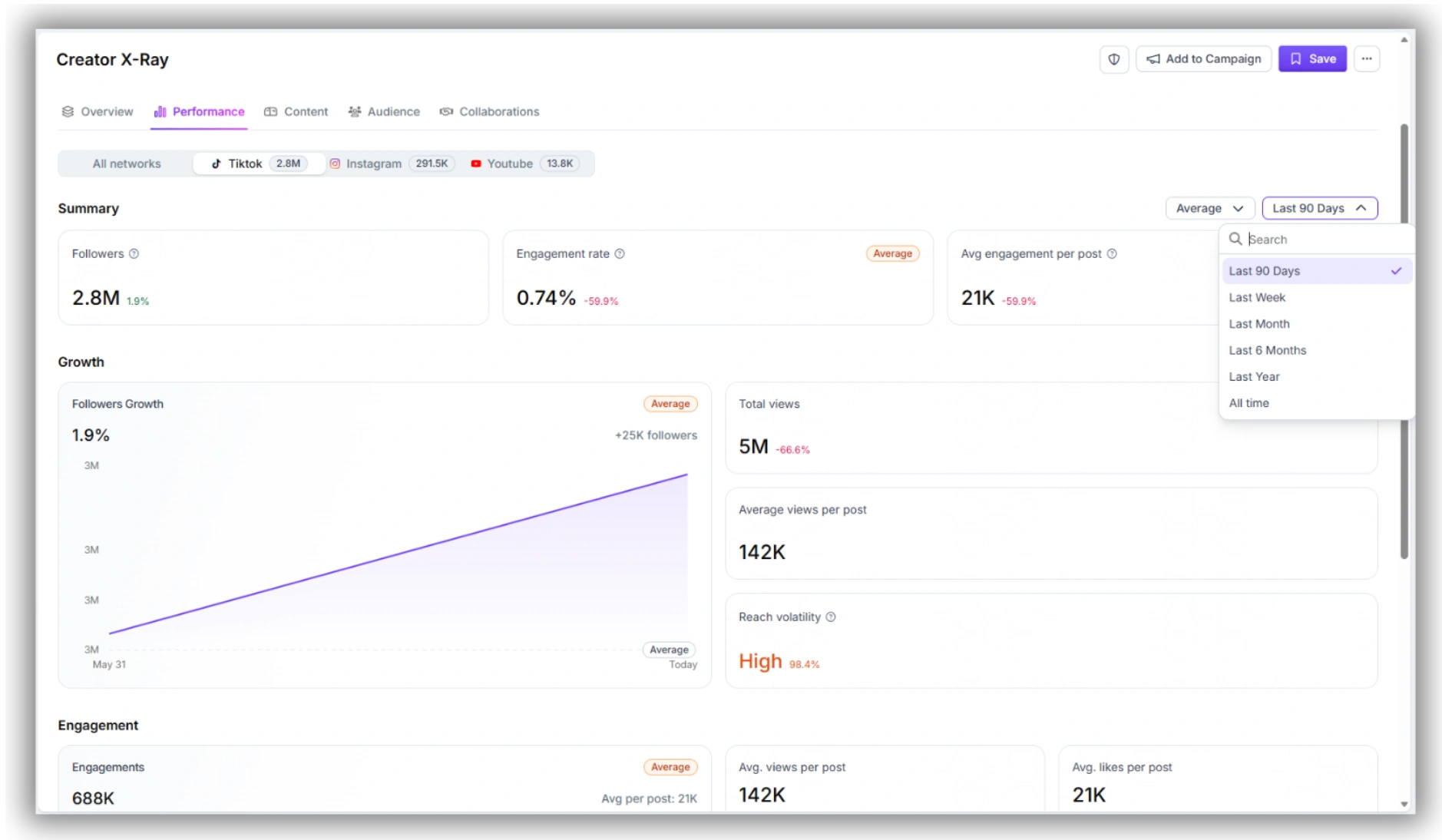
2. Calculate Engagement Rate Against Tier Benchmark: Divide average engagement by followers, then compare to the norm for that follower tier. Rates far above or far below the benchmark both warrant a closer look.
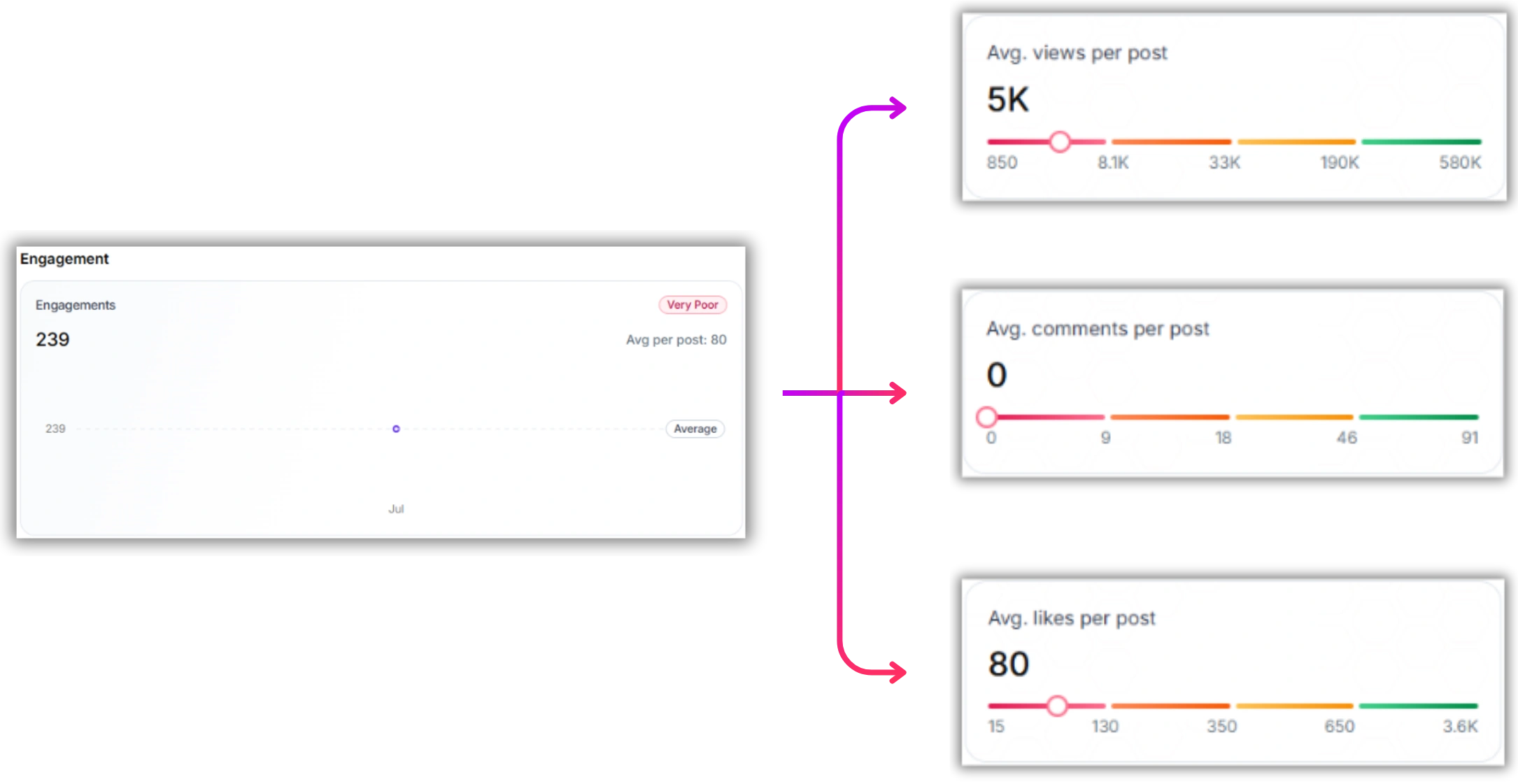
3. Inspect Comment Quality. Read 30 to 50 recent comments. Real audiences ask questions and reference the content; bots leave emojis and one-word praise.
4. Check the Follower Growth Curve. Look for smooth, gradual growth. Sharp vertical spikes with no viral post behind them usually mean bought followers.
5. Verify Audience Geography and Demographics. Confirm the audience actually lives where your customers do. A geography mismatch means you're paying for reach you can't use.
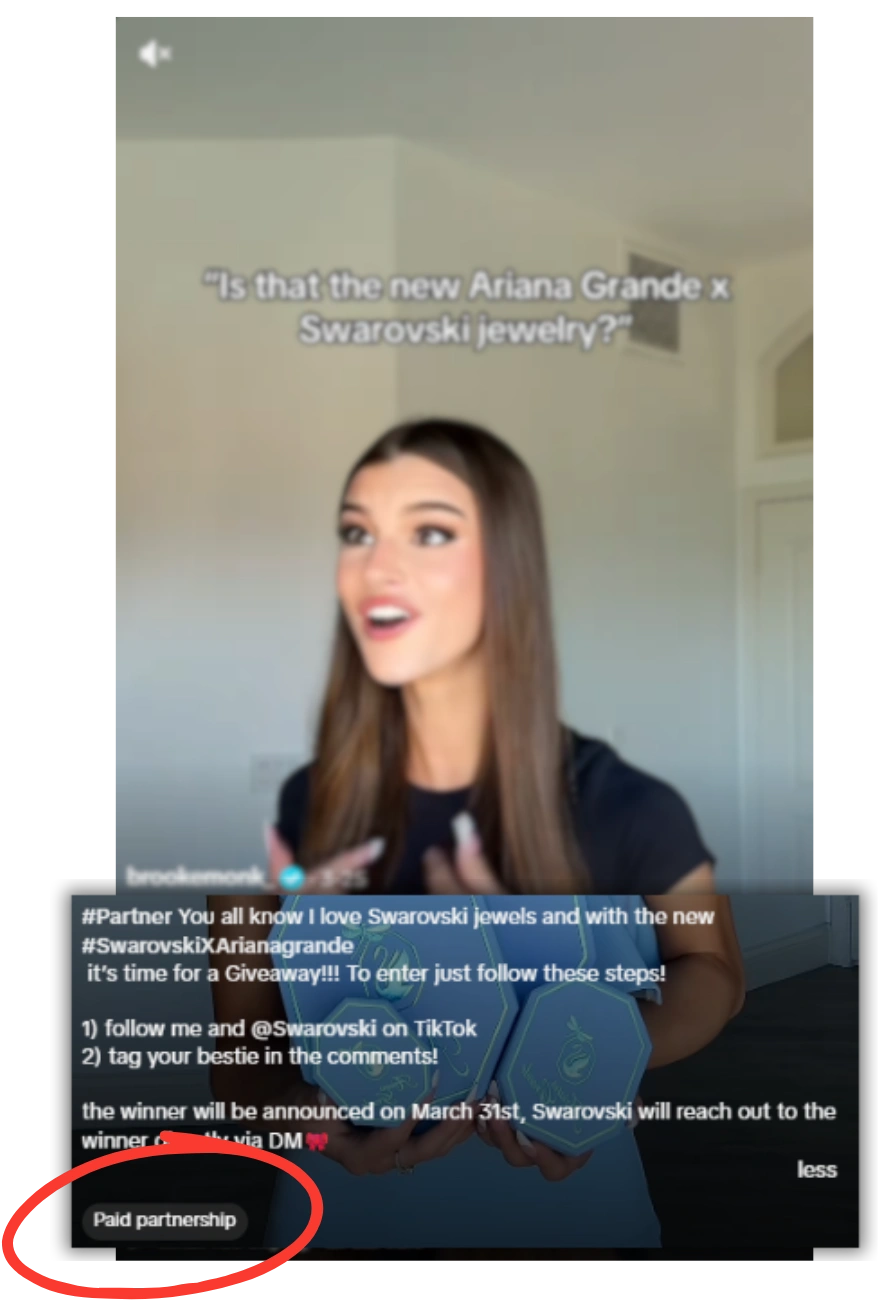
6. Check FTC Disclosure Compliance on Past Sponsored Posts. Look for clear #ad or paid-partnership labels on prior brand work. Sloppy disclosure is both a fraud signal and a legal risk for you. See the FTC Endorsement Guides for what compliant disclosure looks like.
7. Cross-Check Brand Partnership History. See who they've worked with and whether those brands repeat. Real partnerships recur; one-and-done lists can signal disappointed advertisers.
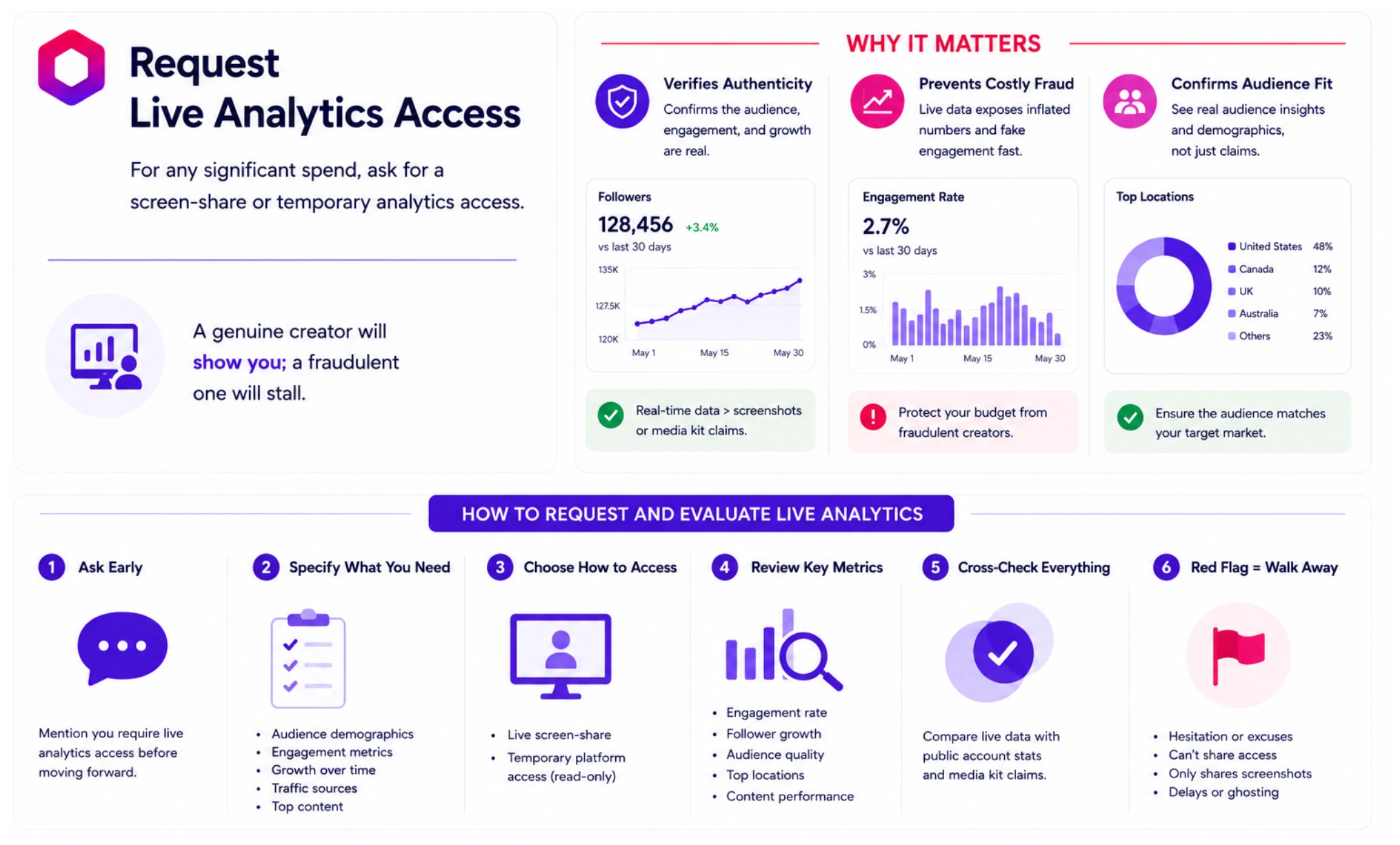
8. Request Live Analytics Access. For any significant spend, ask for a screen-share or temporary analytics access. A genuine creator will show you; a fraudulent one will stall.
The Best Influencer Fraud Detection Tools in 2026 (Top 5, Ranked)
No single tool catches every type of fraud. The right one depends on your scale, platform mix, and budget. Here are the five we consider best-in-class in 2026, Favikon included, with honest tradeoffs.
1. Favikon: Best for Multi-Platform Vetting at SMB Price
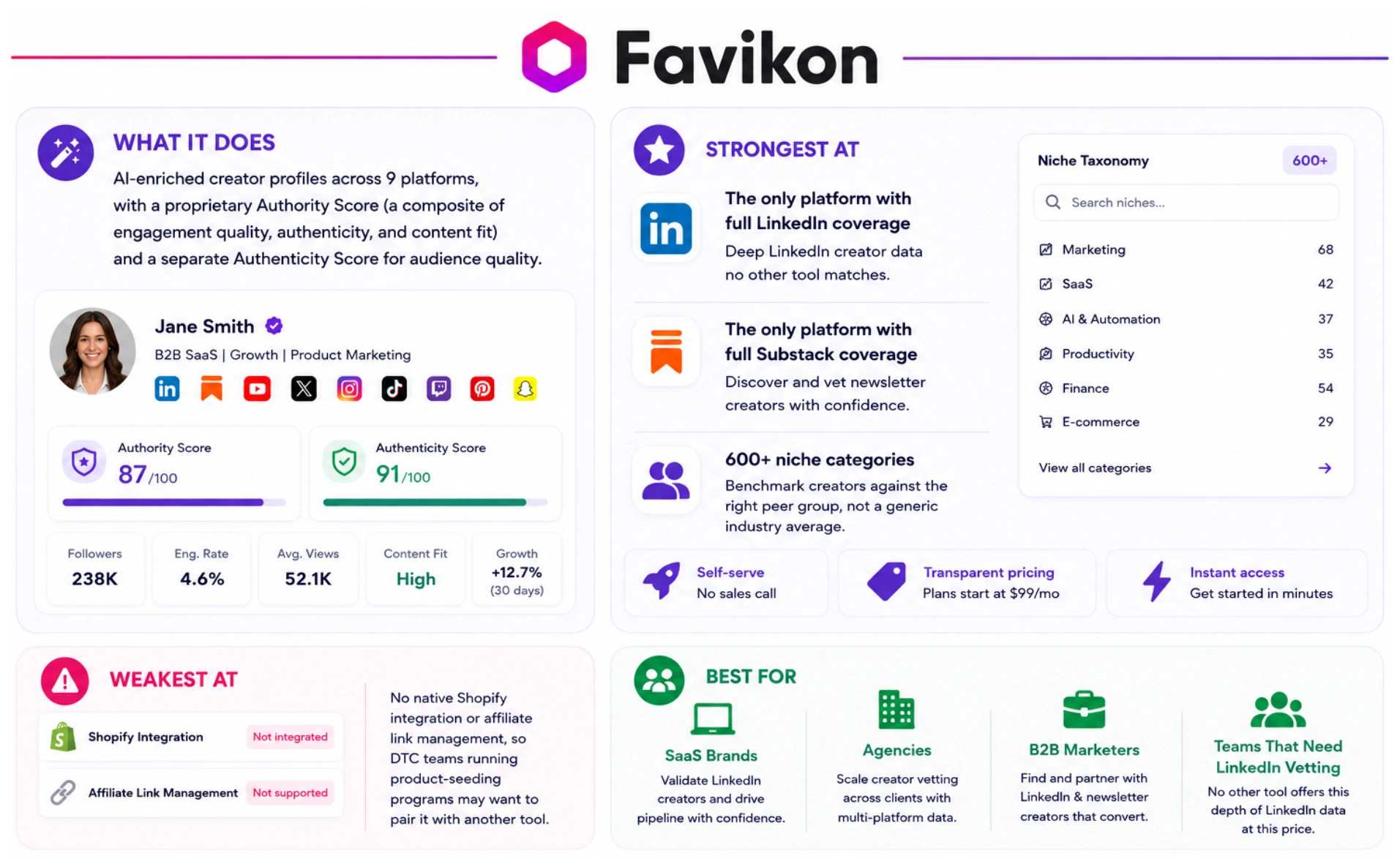
What it does: AI-enriched creator profiles across 9 platforms, with a proprietary Authority Score (a composite of engagement quality, authenticity, and content fit) and a separate Authenticity Score for audience quality.
Strongest at: It's the only platform with full LinkedIn and Substack creator coverage. It's self-serve with no sales call, pricing is public, and 600+ niche categories let you benchmark a creator against the right peer group instead of a generic average.
Weakest at: No native Shopify integration or affiliate link management, so DTC teams running product-seeding programs may want to pair it with another tool.
Best for: SaaS brands, agencies, B2B marketers, and any team that needs LinkedIn creator vetting, which no other tool here offers at this depth.
2. HypeAuditor: Best for Deep Fraud Reports

HypeAuditor is good for detailed fraud reporting, with strong audience-quality scoring and mature AI detection algorithms, which is why a lot of enterprise teams live in it. The tradeoffs are demo-gated pricing and no LinkedIn coverage.
If exhaustive fraud reports are the priority and budget isn't the constraint, it earns its spot, and our HypeAuditor alternative page breaks down where each tool fits.
3. Modash: Best for DTC and E-commerce Brands
Modash pairs a 250M+ public creator database with strong Shopify integration and solid audience credibility scoring, starting at $199/month (annual billing).
It covers Instagram, TikTok, and YouTube but not LinkedIn, so it shines when affiliate and product-seeding workflows matter more than B2B reach. See the full Modash alternative comparison for the details.
4. Upfluence: Best for Enterprise and Large Agencies
Upfluence is built for scale, with deep e-commerce and affiliate features and strong agency workflows. The catch is commercial, not technical: pricing is demo-gated and locked to a 12-month minimum contract, and there's no LinkedIn coverage. Best for teams with real budget and a defined integration roadmap.
5. Social Blade: Best Free First-Pass Tool

Social Blade is free and gives you public follower-growth graphs, which makes it great for a quick manual gut-check. It isn't a true fraud detection tool, but it's invaluable for spotting unnatural follower spikes before you invest more time. Pair it with a paid tool for any serious vetting.
How to Choose (Decision Shortcut)
- Multi-platform including LinkedIn, or B2B focus: Favikon.
- Deepest fraud reports with enterprise budget: HypeAuditor.
- Shopify and DTC product-seeding: Modash.
- Large agency ready for an annual contract: Upfluence.
- Free first-pass screening: Social Blade.
Fraud Costs vs Detection Costs: The ROI Comparison
Detection almost always costs a fraction of what fraud quietly takes. The table below is an illustrative model, applying typical fraud-rate ranges to common budget sizes, so treat the figures as estimates rather than hard numbers.
The pattern holds at every size: a single seat on a detection tool costs less than one fraudulent partnership. Even at the small-brand level, one paid seat plus free tools runs a fraction of the budget you'd otherwise lose to fake engagement.
How Favikon Detects Influencer Fraud
Favikon scores authenticity at the content level, not just the follower level, which is the part most tools skip. Every profile gets an Authority Score, a real-time composite of follower quality, engagement authenticity, content relevance, AI content share, and expertise, plus a separate Authenticity Score focused on audience quality.
Because Favikon reads the actual posts, it can flag AI-generated content and sponsored noise that a follower-count check would miss. It runs this across all 9 platforms, so a creator who looks clean on Instagram but is propped up elsewhere doesn't slip through.
The practical upside is speed. Instead of the 20-minute manual audit per creator, you get a scored shortlist, and you can browse creator rankings by niche to start from people who already clear the bar.
For B2B teams, it's also the only place to run that same vetting on LinkedIn creators. It's self-serve and starts at $99/month, so you can see Favikon pricing and test it on your own shortlist before committing.
Frequently Asked Questions
1. What is influencer fraud detection?
Influencer fraud detection is the process of verifying that a creator's audience, engagement, and content are authentic, using AI scoring, audience analysis, and manual review. It's how brands avoid paying for fake followers, bot engagement, and inflated reach.
2. How do you spot a fake influencer?
Spot a fake influencer by checking engagement rate against the tier benchmark, reading comment quality, and looking at the follower growth curve. Sudden follower spikes, generic or emoji-only comments, and an audience in the wrong countries are the clearest red flags.
3. What's the difference between fake followers and bot engagement?
Fake followers are inactive or purchased accounts that inflate follower count, while bot engagement is automated likes and comments that fake an active audience. A profile can have one without the other, which is why you check both.
4. How much does influencer fraud cost brands?
Global losses to influencer fraud are estimated at more than $4 billion a year, and one World Federation of Advertisers study found a median waste of around $128,000 per affected mid-scale campaign. At the brand level, fraud typically taxes a meaningful share of each campaign's budget.
5. What are the best influencer fraud detection tools in 2026?
The best influencer fraud detection tools in 2026 are Favikon, HypeAuditor, Modash, Upfluence, and Social Blade. Favikon is strongest for multi-platform and B2B vetting, HypeAuditor for deep fraud reports, Modash for DTC, Upfluence for enterprise, and Social Blade for free first-pass checks.
6. Is influencer fraud detection different for agencies?
Yes. Agencies carry more risk because they recommend creators to clients and run many campaigns at once, so fraud exposure scales with volume. They also need defensible vetting documentation, which manual checks can't produce at scale.
7. Can AI detect deepfake influencers?
Yes, to a point. Content-level AI scoring can flag AI-generated faces, synthetic posting patterns, and accounts with no off-platform footprint. Detection and generation are in an arms race, so AI scoring works best paired with a quick manual check.
8. How accurate are influencer fraud detection tools?
Accuracy varies by tool and signal, with comment-quality and engagement-anomaly checks among the most reliable. No tool is perfect, so the strongest approach combines automated scoring with the manual audit steps in this playbook.
9. How often should I check influencers for fraud?
Check every creator before you sign, and re-check ongoing partners at least once per quarter. Follower bases and engagement patterns change, and a clean account today can buy growth tomorrow.
10. What's a free way to check for fake followers?
The free route is to use Social Blade's public growth graphs to spot unnatural follower spikes, then run the manual checks on engagement rate and comment quality. Free tools catch obvious fraud but miss sophisticated cases.
11. What should I do if I discover fraud after a campaign?
Document everything with screenshots and analytics, withhold any unpaid balance where your contract allows, and pursue refunds or chargebacks for bought engagement. Then add the creator to a do-not-use list and tighten pre-campaign vetting.
12. Does Favikon detect influencer fraud?
Yes. Favikon scores authenticity at the content level with its Authority Score and a separate Authenticity Score, across all 9 platforms including LinkedIn. It flags AI-generated content and weak audience quality before you commit budget.
Vet Every Creator Before You Pay
Fraud only wins when nobody's checking. Run your next shortlist through Favikon, score authenticity across 9 platforms, and sign with confidence.
Others articles