The 7 Best Modash Alternatives in 2026
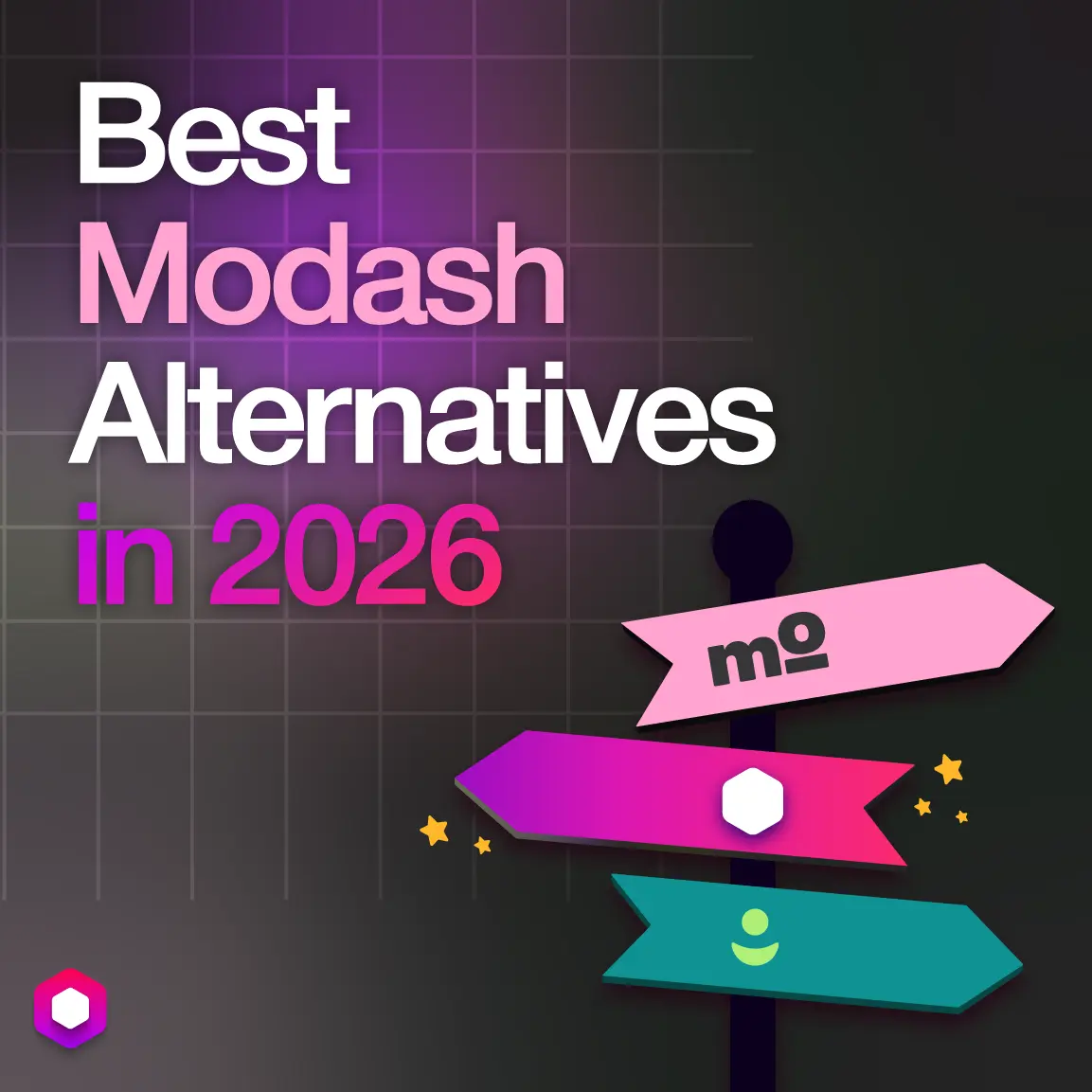
Looking for the best Modash alternatives in 2026? This guide compares seven influencer marketing platforms based on features, pricing, pros, and cons.

Modash is good. That is the honest starting point, and it is why most people who leave do so for a reason that has nothing to do with quality.
The reason is almost always coverage. Modash indexes Instagram, TikTok, and YouTube, with a deep Shopify integration and published pricing from $199/month.
If your buyers are on LinkedIn or reading newsletters, Modash cannot see them, and no amount of database size fixes that.
Let’s talk about what Modash does well, the gaps that send buyers looking, and the best alternatives to go for.

TL;DR: Modash Alternatives
- Modash is a genuinely strong DTC discovery tool for Instagram, TikTok, and YouTube, with deep Shopify integration and published pricing from $199/month.
- Its biggest gap is channel coverage: no LinkedIn and no Substack, which rules it out for most B2B and thought-leadership programs.
- Favikon is the best alternative for B2B and multi-platform teams, adding LinkedIn and Substack coverage and unified creator profiles at a comparable $199/month entry.
- Switching? Start a free 7-day trial, no credit card required, and run a real campaign before you cancel anything.
Why Would You Look for a Modash Alternative?
The honest starting point is that Modash is good at what it does. The reasons people look elsewhere are usually about fit, not quality.
What Modash Does Well (Named Honestly)
Here is what has made some people choose Modash:
- Large database of 250M+ public creator profiles across Instagram, TikTok, and YouTube
- Strong Shopify integration for affiliate tracking and product seeding
- Published pricing from $199 to $499/mo with a monthly billing option
- Solid audience credibility scoring for fake-follower detection
- Self-serve access with a 14-day free trial, no credit card
- A workflow well designed for DTC and e-commerce teams
These strengths have made it a useful tool for some e-commerce marketers. However, as the industry changes, specific needs often arise that push users to other options.
The Gaps That Push Buyers to Look Elsewhere
Here are some of the biggest reasons people move out of Modash:
- No LinkedIn coverage. This is the single biggest gap. Any B2B, SaaS, or LinkedIn-led program cannot use Modash for that channel.
- No Substack coverage. For B2B thought-leadership programs where newsletter partnerships matter, Modash does not index the space.
- Discovery is organized by platform account. A creator active on Instagram, TikTok, and YouTube shows up as separate platform profiles, so cross-platform vetting takes more manual work.
- DTC-oriented workflow. The product tilts toward Shopify, affiliate, and product seeding. If your use case is B2B, PR, or employer branding, you use a fraction of it.
- Entry starts at $199/month. Reasonable for its depth, but not the lowest published entry point in the category.
Ultimately, these limitations define where Modash hits a ceiling, making it clear why teams with evolving or more complex needs often begin their search for a more versatile solution.
Who Typically Looks for an Alternative
The search for a Modash alternative rarely stems from a lack of quality. Instead, it’s usually driven by specific use cases or organizational needs that push beyond Modash’s core focus.
Here are the most common profiles of teams looking for a change:
- B2B and SaaS marketers who need LinkedIn or Substack coverage.
- Multi-platform brands looking for unified creator profiles.
- Enterprise DTC teams that have outgrown Modash’s current tier structure.
- Budget-conscious buyers seeking entry points under $100/month.
- Teams that prefer a marketplace model rather than discovery-first software.
If your team falls into any of these categories, the following alternatives are designed to bridge those specific gaps.
How We Chose the Best Modash Alternatives
Five criteria, specific to evaluating a Modash replacement:
- Fills a specific Modash gap. Each alternative must solve at least one gap Modash has, such as LinkedIn, unified profiles, a marketplace model, gifting, enterprise workflow, or price.
- Comparable or better core functionality. Discovery, vetting, and basic campaign management at least matching Modash’s depth.
- Pricing transparency. Published pricing preferred, with demo-gated allowed only where the tool serves a fundamentally different tier.
- Data quality. Credible audience quality and authenticity scoring. Any tool without this fails.
- Contract flexibility. A monthly billing option is preferred, for a fair comparison to Modash’s flexibility.
We applied the same five criteria to every tool, and named where a tool’s coverage or pricing could not be independently confirmed.
Modash vs. The 7 Alternatives: Quick Comparison
Prices marked “Est.” are estimates from public third-party benchmarks, and actual quotes require a demo. Heepsy’s exact entry price varies by currency and promotion.
1. Favikon

Best for: B2B, SaaS, and multi-platform marketers who need the LinkedIn and Substack coverage Modash lacks, plus unified creator profiles across channels.
Favikon is a full influencer marketing platform that fills Modash’s two biggest gaps, LinkedIn and Substack, at a comparable entry price.
Features
- Creator discovery across 9 social channels, including the LinkedIn and Substack coverage Modash does not offer
- Unified multi-platform creator profiles, so one creator is one profile across channels
- Authority Score and Authenticity Score on every profile
- 600+ AI niche categories, including B2B segments like SaaS, revops, cybersecurity, and HR tech
- Creator CRM and outreach managed from one inbox, so shortlists, conversations, and campaign status stay in one place
- GA4 integration for conversion tracking
Pricing
Core is $199/month, or $159/month billed annually. Pro is $299/month, or $239/month billed annually. Enterprise is custom. Everything is published on the pricing page, with a 7-day free trial and no credit card required.
Pros vs. Modash
- Covers LinkedIn and Substack, which Modash does not, opening B2B and thought-leadership programs
- Unified creator profiles across platforms, versus Modash’s platform-by-platform view
- Broader channel coverage, at 9 channels versus Modash’s 3
- Comparable $199/month entry with monthly billing and a no-card free trial
- Authority Score speeds creator vetting
Cons vs. Modash (Honest)
- No in-platform creator payments today. Modash has affiliate payouts built in, and Favikon’s payments are on the roadmap.
- Shallower Shopify integration. For high-volume Shopify product seeding, Modash’s integration is deeper.
2. GRIN
Best for: Enterprise DTC brands that have outgrown Modash’s tier structure and need deeper product seeding, creator payments, and multi-store workflows.
GRIN is an end-to-end creator management platform built for e-commerce, tying creator activity directly to sales data.
Features
- Full creator lifecycle: discovery, outreach, gifting, content, payments, and revenue reporting
- Deep e-commerce integrations (Shopify, WooCommerce)
- Automated creator payments and 1099 processing on higher tiers
- Affiliate and discount-code management
Pricing
Published since January 2026: Lite at $399/mo, Essentials at $699/mo, and Complete at $1,799/mo, all month-to-month with a 30-day free trial and credit-card signup.
Pros vs. Modash
- Deeper product seeding and fulfillment workflows than Modash
- Built-in creator payments, which Modash covers but GRIN handles at more depth for scaled programs
- Transparent self-serve tiers with month-to-month billing and a 30-day free trial
- Strong fit for DTC brands managing large creator rosters
Cons vs. Modash (Honest)
- Higher entry price. GRIN Lite starts at $399/month versus Modash’s $199/month, and enterprise deployments run well into five and six figures annually.
- Heavier tool for discovery-first needs. If you mainly need discovery and vetting, GRIN’s full lifecycle suite is more than required.
- No LinkedIn or Substack. Like Modash, it does not solve the B2B channel gap.
3. Upfluence
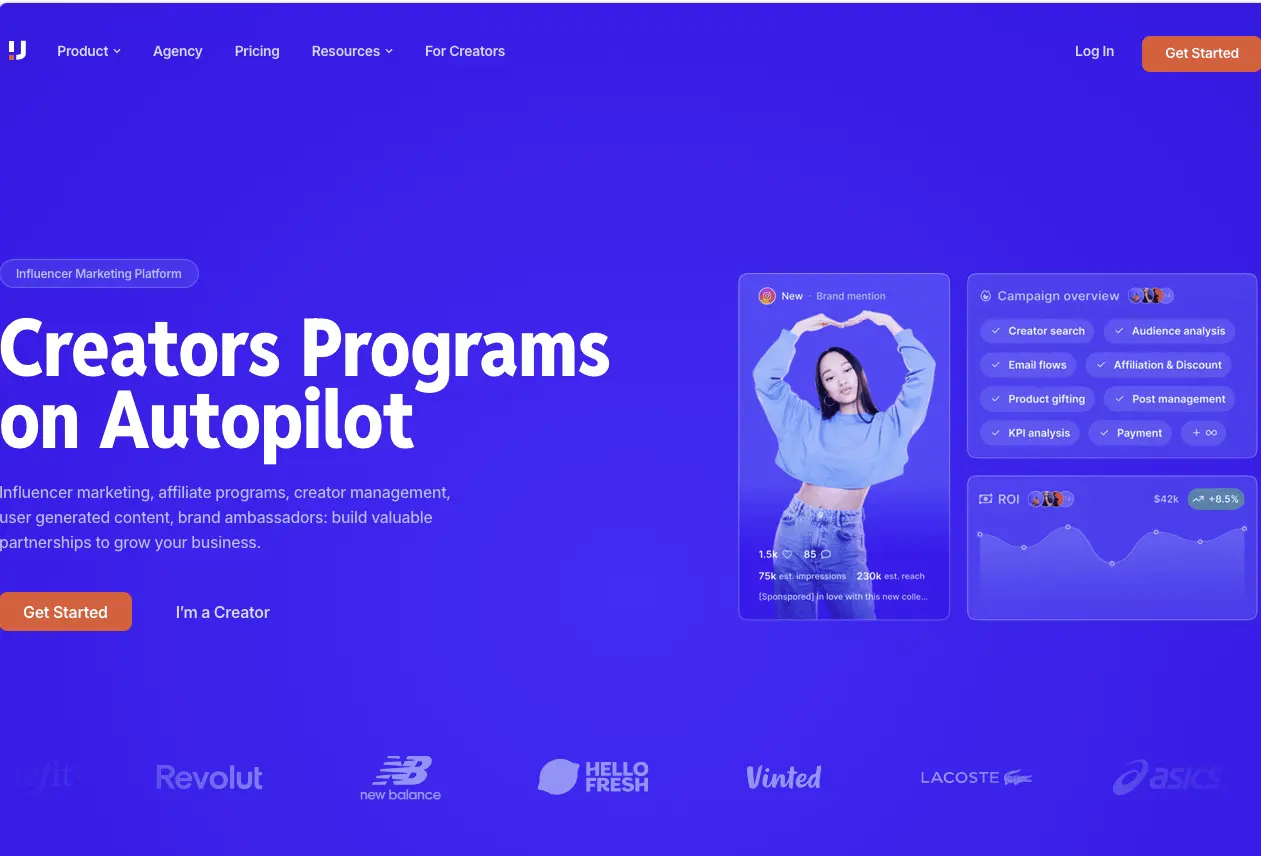
Best for: Mid-market to enterprise brands that need affiliate tracking and international creator payments alongside standard discovery.
Upfluence is an end-to-end platform with strong affiliate and e-commerce features, plus international payment infrastructure.
Features
- Discovery across Instagram, TikTok, YouTube, X, and Twitch
- End-to-end campaign management, including international creator payments
- Affiliate tracking and social listening add-ons
- Deep e-commerce integrations (Shopify, WooCommerce, Magento)
Pricing
Demo-gated with a 12-month minimum. Public benchmarks put realistic full deployments around $1,000+/mo.
Pros vs. Modash
- Affiliate tracking and international payments beyond Modash’s scope
- Full end-to-end workflow in one tool
- Enterprise-grade security and compliance
- Modular structure for larger programs. See our Favikon vs Upfluence comparison
Cons vs. Modash (Honest)
- Demo-gated pricing and a 12-month minimum. Modash is self-serve and monthly, while Upfluence requires a sales call and an annual commitment.
- Higher cost. Realistic full deployments run around $1,000+/mo, above Modash’s entry.
- Limited LinkedIn depth. It covers LinkedIn lightly, so it does not fully solve the B2B channel gap.
4. HypeAuditor
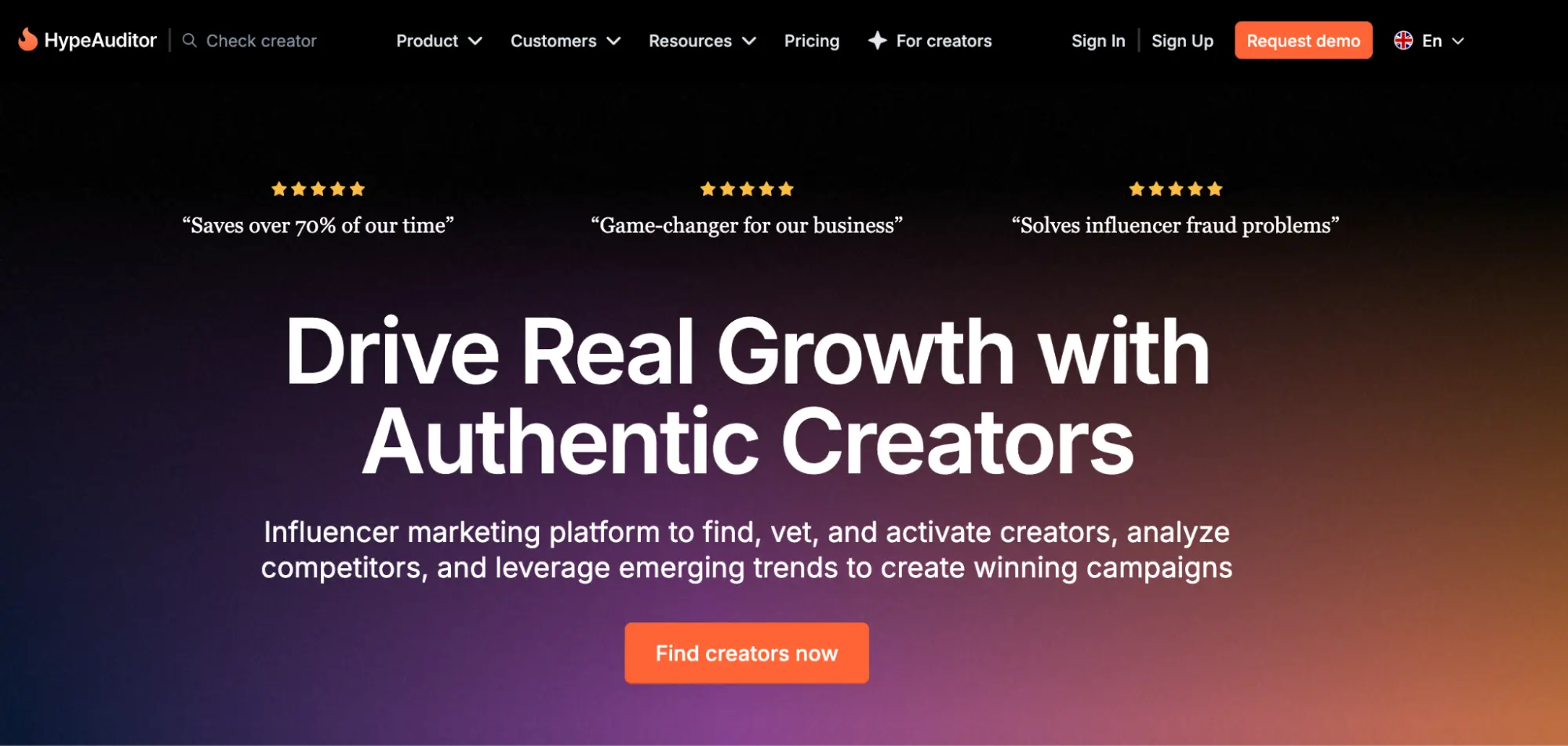
Best for: Brands whose primary concern is fraud detection and audience-quality auditing, especially in regulated industries or high-stakes partnerships.
HypeAuditor is a benchmark tool for creator fraud detection and audience quality, with a large multi-platform database.
Features
- AI-powered fraud detection reports
- Audience Quality Score across 5 platforms: Instagram, TikTok, YouTube, X, and Twitch
- Content brand-safety analysis
- Campaign workflow tools
Pricing
Free basic reports are available. Paid tiers start around $299/mo, with the tiers most teams need quoted after a demo.
Pros vs. Modash
- Deeper fraud detection than Modash’s fake-follower scoring
- Well-regarded audience quality methodology
- Free basic reports for entry-level evaluation
- Credible in audit-focused, regulated industries. See our Favikon vs HypeAuditor comparison
Cons vs. Modash (Honest)
- Less campaign workflow depth. Modash covers outreach and gifting more completely, while HypeAuditor is vetting-first.
- Higher tiers are quote-based. The Basic tier is published, but the tiers most teams need require a sales conversation.
- No LinkedIn or Substack. It does not solve the B2B channel gap either.
5. Aspire
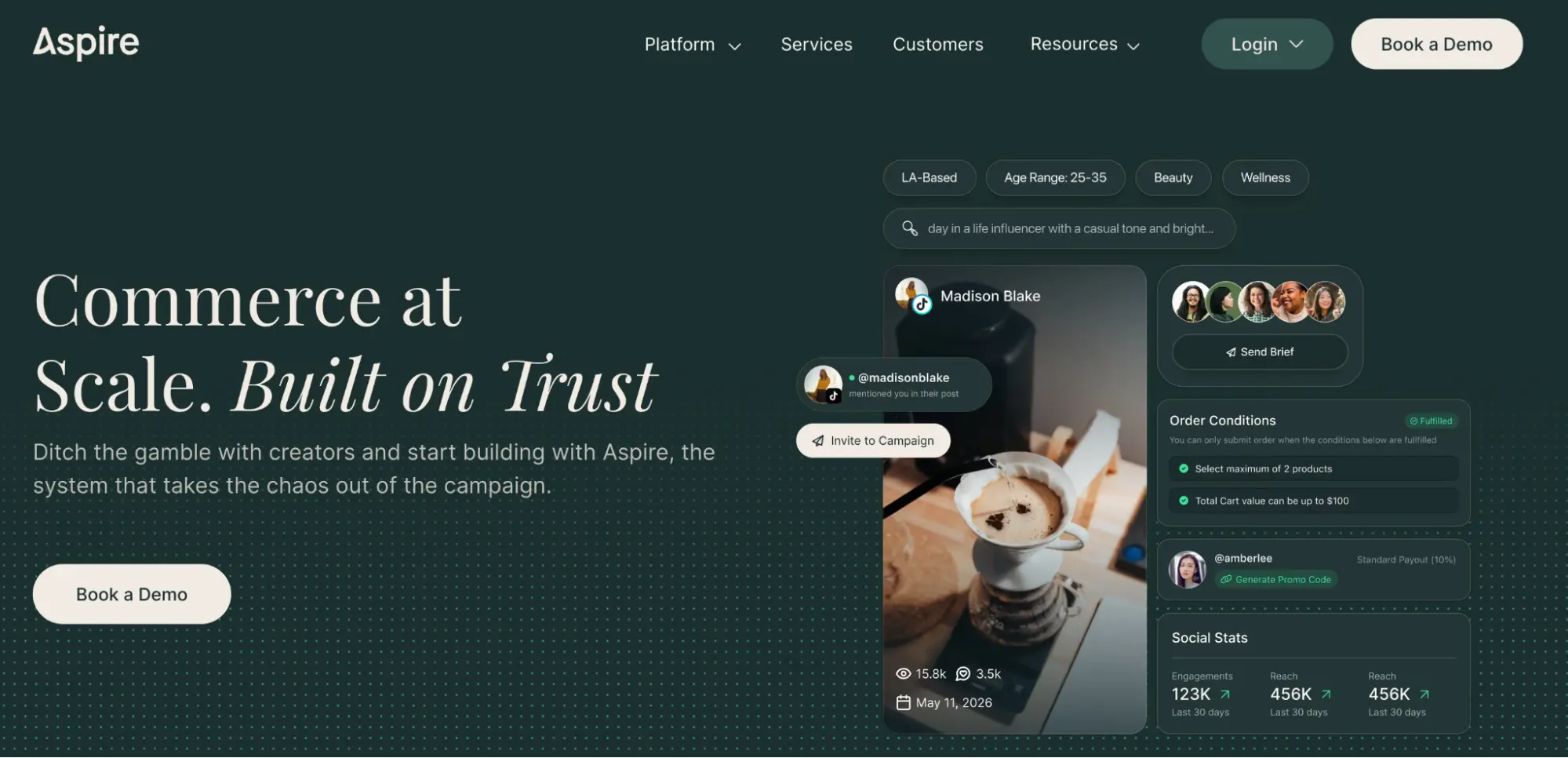
Best for: DTC brands that want a two-sided creator marketplace rather than discovery-first software, especially for gifting and product seeding.
Aspire is a marketplace-model platform with a 1M+ creator marketplace and a full campaign suite.
Features
- Creator marketplace with inbound applications and outbound search
- Full lifecycle: discovery, contracts, content approval, payments, and analytics
- Affiliate tracking and ambassador program tools
- Social ads and content repurposing
Pricing
Demo-gated and annual. Reported entry sits around $2,000/mo, roughly $24K/yr minimum, with no self-serve trial.
Pros vs. Modash
- Marketplace model, where creators apply to your campaigns, versus Modash’s discovery-only approach
- Strong gifting and ambassador program workflows
- Large marketplace used by well-known DTC brands
- End-to-end campaign management in one suite
Cons vs. Modash (Honest)
- Enterprise pricing with an annual lock-in. Aspire’s reported entry is far above Modash’s monthly $199.
- No self-serve trial. You commit budget before you can fully test it, unlike Modash’s 14-day trial.
- Overbuilt for simple discovery. If discovery is your core need, it is more platform than required.
6. Heepsy

Best for: SMB DTC teams on tight budgets who want a Modash-tier discovery tool at a lower entry price.
Heepsy is an affordable discovery and analytics tool covering Instagram, TikTok, and YouTube, with a free plan.
Features
- Creator discovery across Instagram, TikTok, and YouTube
- Audience authenticity filter for fake-follower detection
- Search filters by location, category, followers, and engagement
- A marketplace where creators can apply to campaigns
Pricing
From around $49/month, with an indefinite free plan. The exact entry price varies by currency and promotion, so check the vendor site before you commit.
Pros vs. Modash
- Lower entry price than Modash, with an indefinite free plan
- Easy to use for straightforward discovery
- Fraud detection included
- Good fit for smaller budgets and European or Spanish-market discovery
Cons vs. Modash (Honest)
- Smaller database and aggressive feature-gating. Core filters like audience demographics and Shopify integration sit on higher tiers, so real value often needs the top plan.
- Shallower workflow than Modash. It is discovery-first, without Modash’s depth on campaign tracking and payments.
- No LinkedIn or Substack. It matches Modash’s channel gap rather than solving it.
7. CreatorIQ

Best for: Fortune 500 brands that have outgrown SMB and mid-market tools and need global compliance, deep integrations, and multi-market coverage.
CreatorIQ is the most enterprise-focused platform here, built for large-scale programs with deep integrations.
Features
- Enterprise-grade compliance and global creator payments
- Deep CRM and ERP integrations (Salesforce, HubSpot, Adobe)
- Multi-market campaign management
- Advanced reporting and BI integration
Pricing
Demo-gated and annual, commonly multi-year. Entry typically starts around $2,500+/mo, roughly $30K+/yr.
Pros vs. Modash
- Enterprise scale and compliance far beyond Modash’s tier
- Deep integration set across enterprise systems
- Global, multi-market coverage
- Dedicated account management as standard
Cons vs. Modash (Honest)
- Not accessible below enterprise scale. Entry sits far above Modash’s monthly $199.
- Long sales and onboarding cycles. Procurement and implementation take months, versus Modash’s self-serve start.
- LinkedIn is not a documented focus. Its coverage centers on consumer channels, so it does not clearly solve the B2B LinkedIn gap.
How to Switch from Modash to Another Platform
Switching tools sounds harder than it is. The trick is to run the change in parallel so you never lose coverage mid-campaign. Here is the pattern we see work.
Step 1: Export Your Data from Modash Before Your Billing Cycle Ends
Pull your creator lists, campaign history, and reporting out of Modash while your access is active. Export to CSV so you have a clean record of who you worked with and how each campaign performed.
Step 2: Run Your Next Campaign in Parallel
Start a free trial on the new platform while you are still on Modash, and run one real campaign end to end. This is the honest test, since a live campaign shows you the discovery quality, vetting, and reporting far better than a demo.
Step 3: Import CRM and Creator Lists to the New Platform
Rebuild your saved lists and creator relationships in the new tool using your exported data. Most platforms let you organize creators into lists or a CRM view, so map your Modash structure over before you scale up.
Step 4: Cancel Modash Aligned with Your Billing Cycle
Once the new platform is carrying a live campaign cleanly, cancel Modash at the end of your billing period rather than mid-cycle, so you do not pay for overlap you are not using.
Step 5: Validate Your Reporting on the New Platform
Confirm that your key metrics, such as engagement rate, audience quality, and conversion tracking, line up with what you measured in Modash. Small definitional differences are normal, so document them once and your reporting stays consistent going forward.

When Favikon Is the Right Modash Alternative (And When It Isn’t)
When to Switch from Modash to Favikon
- You need LinkedIn coverage, which is Modash’s biggest gap and Favikon’s biggest strength
- You need Substack coverage for B2B thought-leadership programs
- You want unified creator profiles across platforms, rather than Modash’s platform-by-platform view
- You run campaigns across more than three social channels, since Favikon covers 9
- You want comparable pricing to Modash with broader coverage, at the same $199/month entry
When to Stay on Modash (or Choose Another Alternative)
- High-volume Shopify or DTC product seeding. Modash’s Shopify integration is deeper than Favikon’s. Consider Modash or GRIN.
- In-platform creator payments are critical. Modash has affiliate payouts built in, and Favikon does not yet. Consider Modash, GRIN, or Upfluence.
If Favikon Fits, Here Is What to Know
At Favikon, we cover 10M+ creator profiles across 9 channels, including the LinkedIn and Substack coverage Modash does not offer, with 600+ AI niche categories, Authority and Authenticity Scores, unified multi-platform profiles, and GA4 integration.
Core is $199/month, or $159/month billed annually. Pro is $299/month, or $239/month billed annually. That matches Modash’s entry while adding LinkedIn and Substack coverage, and the 7-day free trial needs no credit card.
For the full picture, see our general best-platforms ranking, the B2B platform ranking, or the LinkedIn-specific tools guide.
The migration pattern is simple: start the trial while still on Modash, run a real campaign, then decide.
Frequently Asked Questions
What Is the Best Alternative to Modash in 2026?
For most teams switching away from Modash, Favikon is the best fit, because it adds the LinkedIn and Substack coverage Modash lacks and offers unified creator profiles at a comparable $199/month entry. For enterprise DTC, GRIN or CreatorIQ may fit better.
Is Favikon Better Than Modash?
It depends on your channels. For B2B and multi-platform programs that need LinkedIn and Substack, Favikon is the stronger fit. For high-volume Shopify and DTC seeding on Instagram, TikTok, and YouTube, Modash’s database depth and integration are hard to beat.
What Is Cheaper Than Modash?
Heepsy is the lowest entry point here, from around $49/month with a free plan, though its database is smaller and its best features sit on higher tiers. Favikon matches Modash’s $199 entry while adding LinkedIn and Substack coverage.
Does Modash Have LinkedIn Coverage?
No. Modash covers Instagram, TikTok, and YouTube only, so it does not index LinkedIn or Substack creators. If LinkedIn is part of your program, you need a platform that covers it.
Can I Switch from Modash Without Losing My Data?
Yes. Export your creator lists, campaign history, and reporting from Modash to CSV before your billing cycle ends, then rebuild those lists in the new platform. Running one campaign in parallel before you cancel keeps you from losing coverage.
What Is the Difference Between Modash and Favikon?
Modash is a DTC-focused discovery tool for Instagram, TikTok, and YouTube with deep Shopify integration. Favikon covers 9 channels including LinkedIn and Substack, uses unified creator profiles, and adds Authority and Authenticity Scores, at the same $199/month entry.
Is There a Free Alternative to Modash?
Yes, in a limited sense. Heepsy and HypeAuditor both offer free tiers, useful for basic evaluation rather than running a program. Favikon offers a 7-day free trial with no credit card so you can test a full campaign.
How Do I Compare Modash to Favikon Side by Side?
The honest way is to run the same creator brief in both during their trials and compare the results, especially on the channels you care about. Favikon’s trial needs no credit card, so you can search your niche and judge coverage directly.
What If I Like Modash but Need LinkedIn?
Then Favikon is the natural addition or switch, since LinkedIn is exactly the gap Modash leaves open. You can keep Modash for DTC channels and trial Favikon for LinkedIn, or consolidate onto one platform that covers both.
Which Modash Alternative Has Monthly Billing (No Annual Contract)?
Favikon, GRIN, HypeAuditor, and Heepsy all offer monthly options, while Upfluence, Aspire, and CreatorIQ are annual and demo-gated. If contract flexibility matters, Favikon matches Modash’s monthly model and adds LinkedIn and Substack coverage.
Match the Gap to the Tool
We built Favikon to bridge the massive gap left by limited platforms, giving you instant access to the LinkedIn and Substack creators that actually drive B2B growth.
Our unified dashboard pulls all your social channels into one sleek profile, saving you hours of vetting while we deliver the deep data you need to scale. Join the teams that have already upgraded their strategy.
Others articles