Find B2B Influencers: 6 Ways That Actually Work
Finding the right B2B influencers takes more than searching by follower count. This guide shares six proven methods to identify trusted creators who match your audience, industry, and marketing goals.
.png)
How to Find B2B Influencers: The Authority-Fit-ROI Framework
Finding the right B2B influencers is one of the most underrated parts of running a successful influencer marketing campaign. Most guides stop at listing channels — this one tells you which influencer is actually worth the outreach email.
Whether you're hunting niche micro-influencers or the top name in a specific industry, there's a clear process to follow — plus a few tactics most marketers skip entirely, like reverse-engineering your competitors' best-performing partnerships. Here's how to do it manually first, then how to speed the whole thing up with the right tool.
What "Right" Means: Authority, Fit, and ROI
Before you open a single search tab, define what a good match actually looks like. Every candidate on your list should clear three bars:
• Authority — genuine credibility in the space, not just a large following
• Fit — an audience that overlaps with your actual ICP, not just adjacent industry buzz
• ROI — a plausible path to a measurable outcome, whether that's leads, signups, or brand lift
Run every tactic below through that filter. An influencer can pass one or two of these checks and still be the wrong pick — the framework only works if you require all three.
1. Start With Manual Search on Each Platform
The most straightforward place to start is manually searching each platform with specific keywords. Looking for an SEO specialist on LinkedIn? Type "SEO consultant" or "SEO" into the search bar and filter by people. You can layer on a location or industry filter too, though in practice those filters rarely add much.
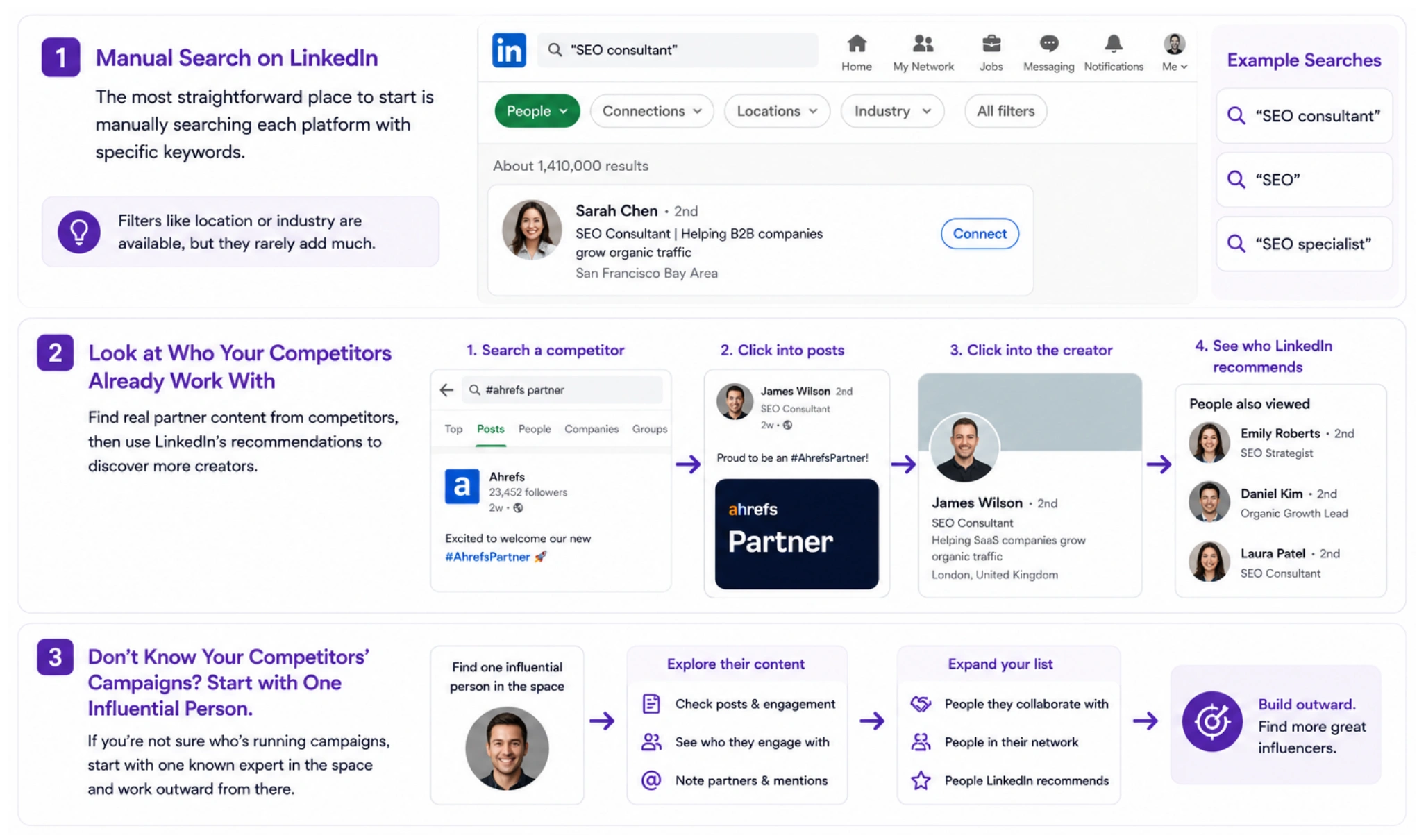
What's far more useful is looking at who your competitors have already worked with. If Ahrefs is a competitor, for example, search "#ahrefs partner" on LinkedIn, click into posts, and you'll get a list of real partner content. From there, click into one of those creators and see who else LinkedIn recommends — that often surfaces genuinely good leads.
The tricky part: you might not know which competitors are currently running LinkedIn influencer campaigns at all. In that case, start by finding one influential person in the space and work outward from there.
Watch Out for Fake Engagement
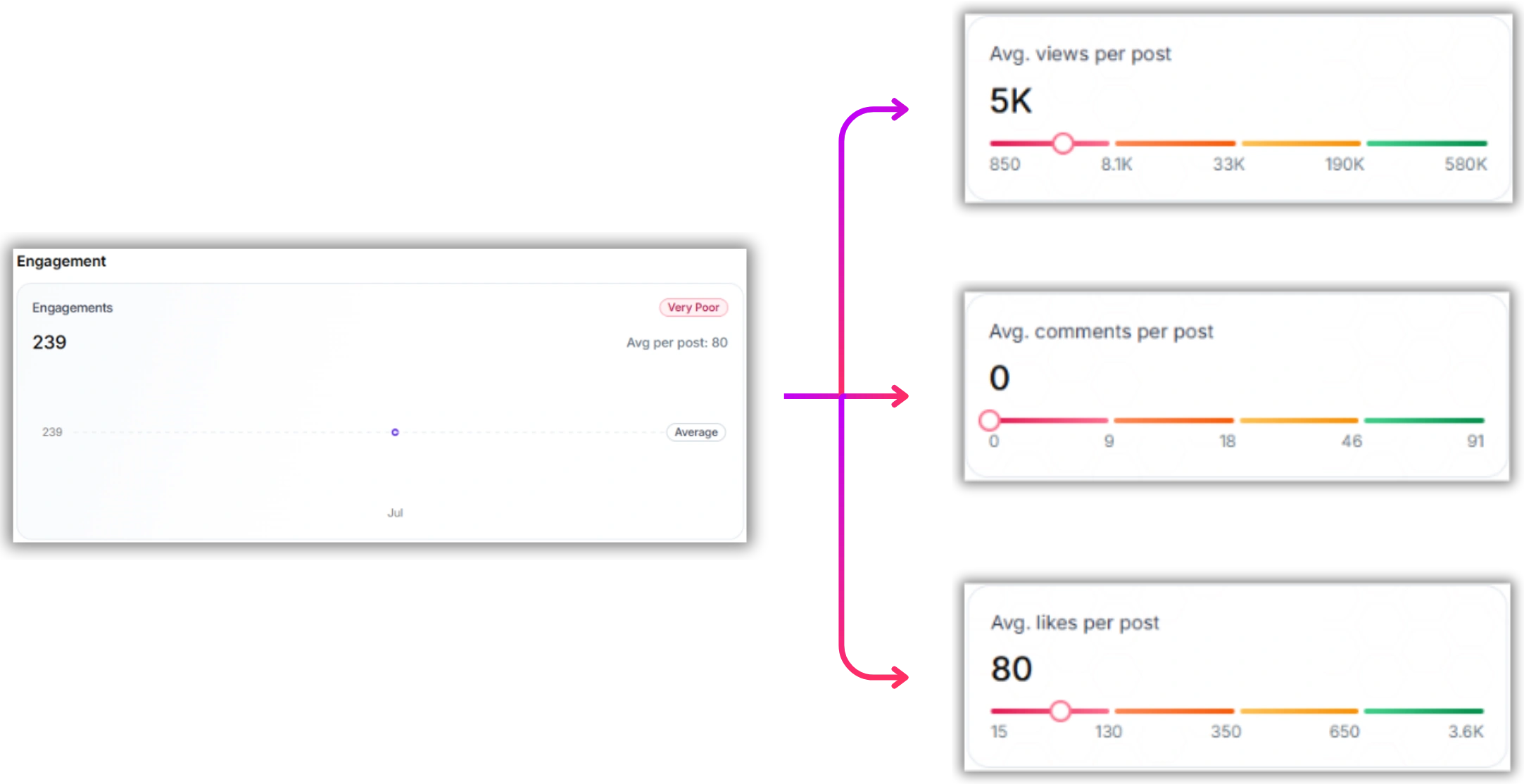
Before reaching out to anyone on LinkedIn, check whether their engagement is legitimate. This is a real problem on the platform — a lot of high-engagement creators participate in engagement pods, meaning the numbers can look great without actually reaching your ideal customer profile. It's a big enough issue that one influencer marketing manager quit partnering with LinkedIn creators entirely over it. For a deeper walkthrough of how to vet a creator once you've found them, see how to analyze a B2B influencer.
2. Finding Influencers on YouTube
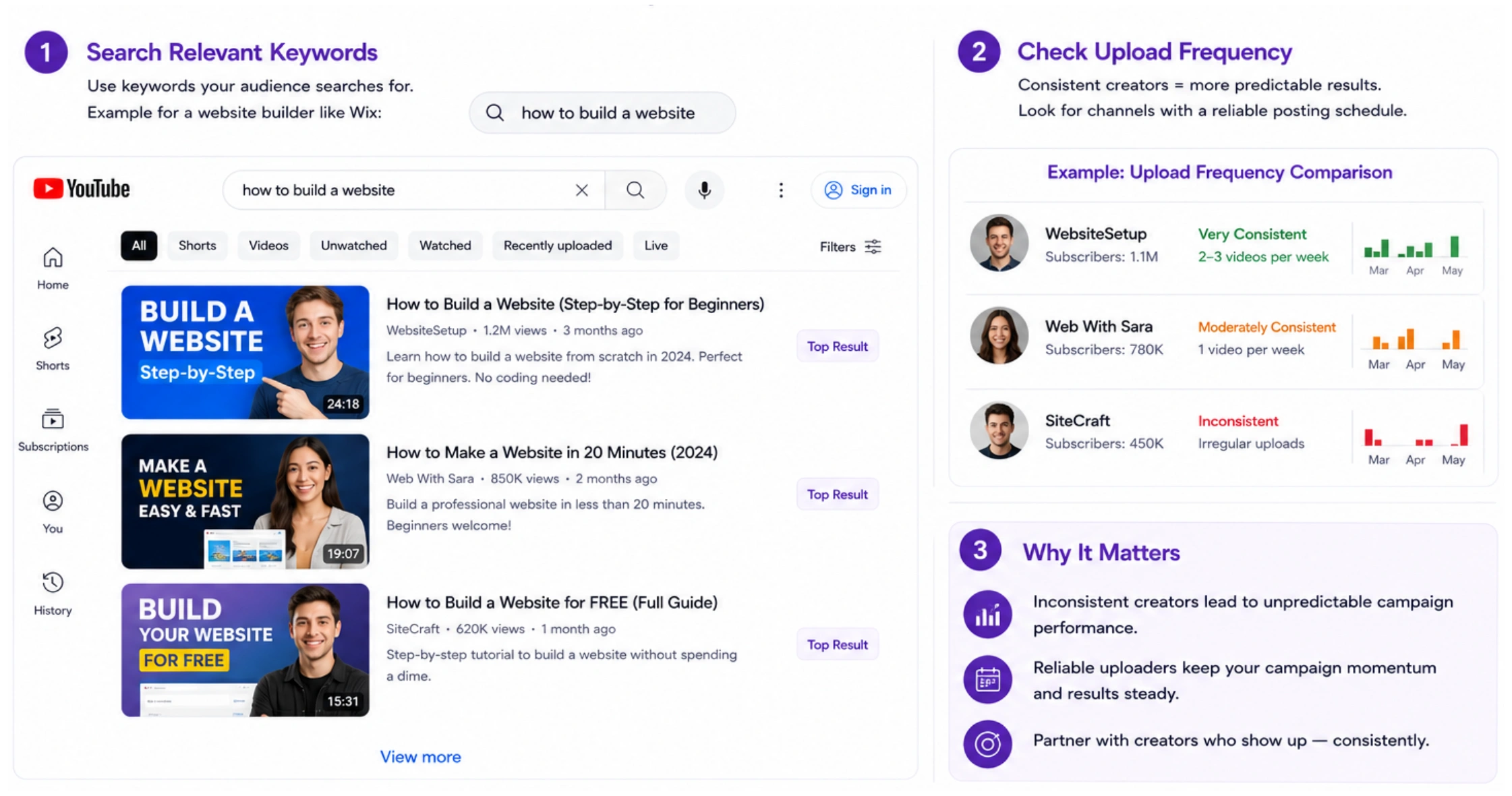
On YouTube, the process is similar but even more direct: search for keywords relevant to your product. A website builder like Wix, for instance, would search "how to build a website" and note which YouTubers consistently rank at the top. One extra thing worth checking — upload frequency. Inconsistent creators make campaign results swing wildly from one run to the next, so favor channels with a reliable publishing schedule.
3. Substack Is a Different Animal
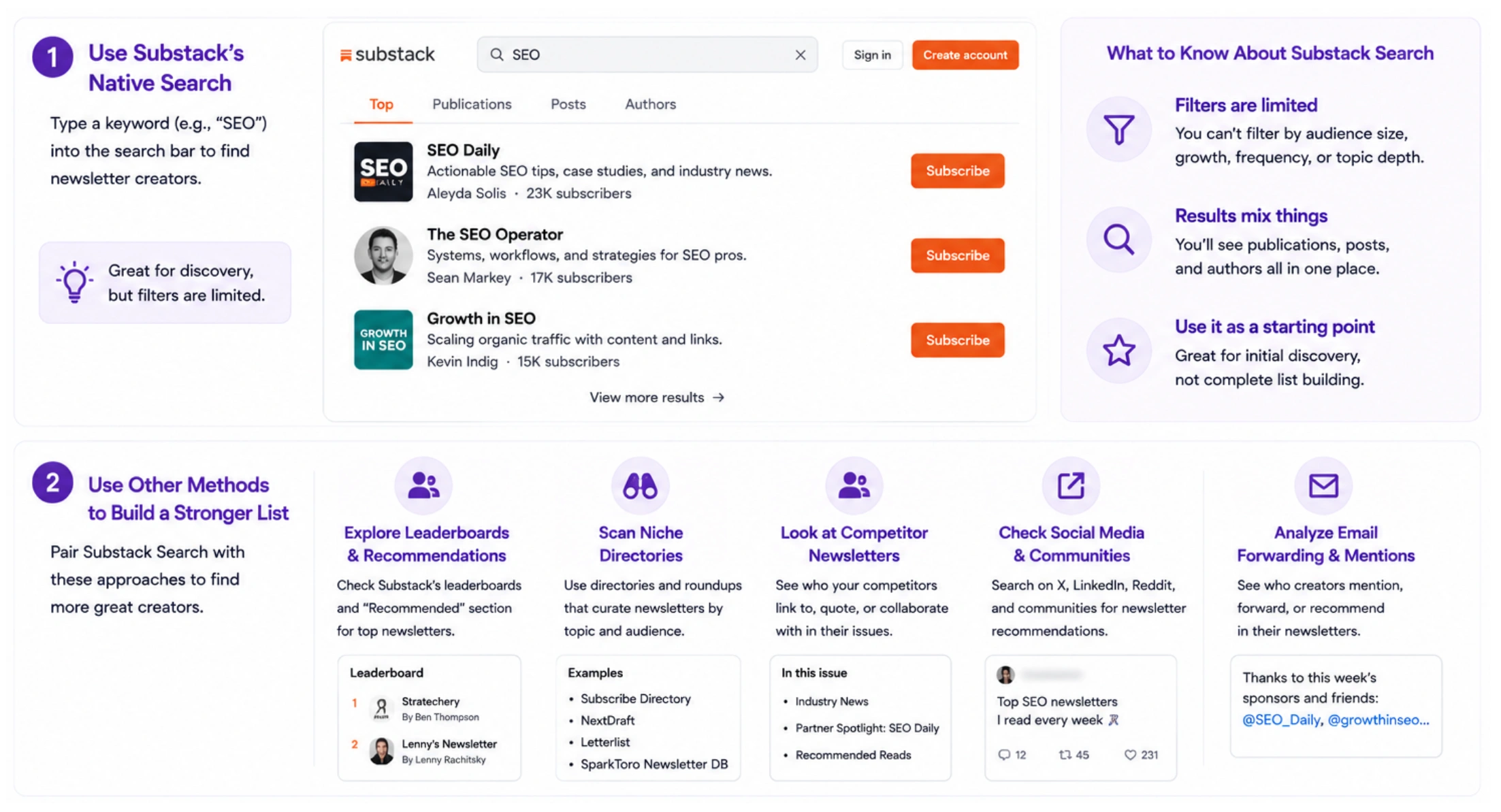
Substack has a native search function — type in a keyword like "SEO" and you'll get newsletter creators back. The filter itself isn't especially strong, though, so it's usually better to treat Substack search as a starting point and lean on other methods to fill out the list.
4. Use Google or ChatGPT for Recommendations
For newsletter creators, a simple Google search like "best SEO newsletters" returns a solid list — Google is strong for this kind of broad discovery. It's weaker for surfacing LinkedIn creators specifically, which is where ChatGPT tends to do better.
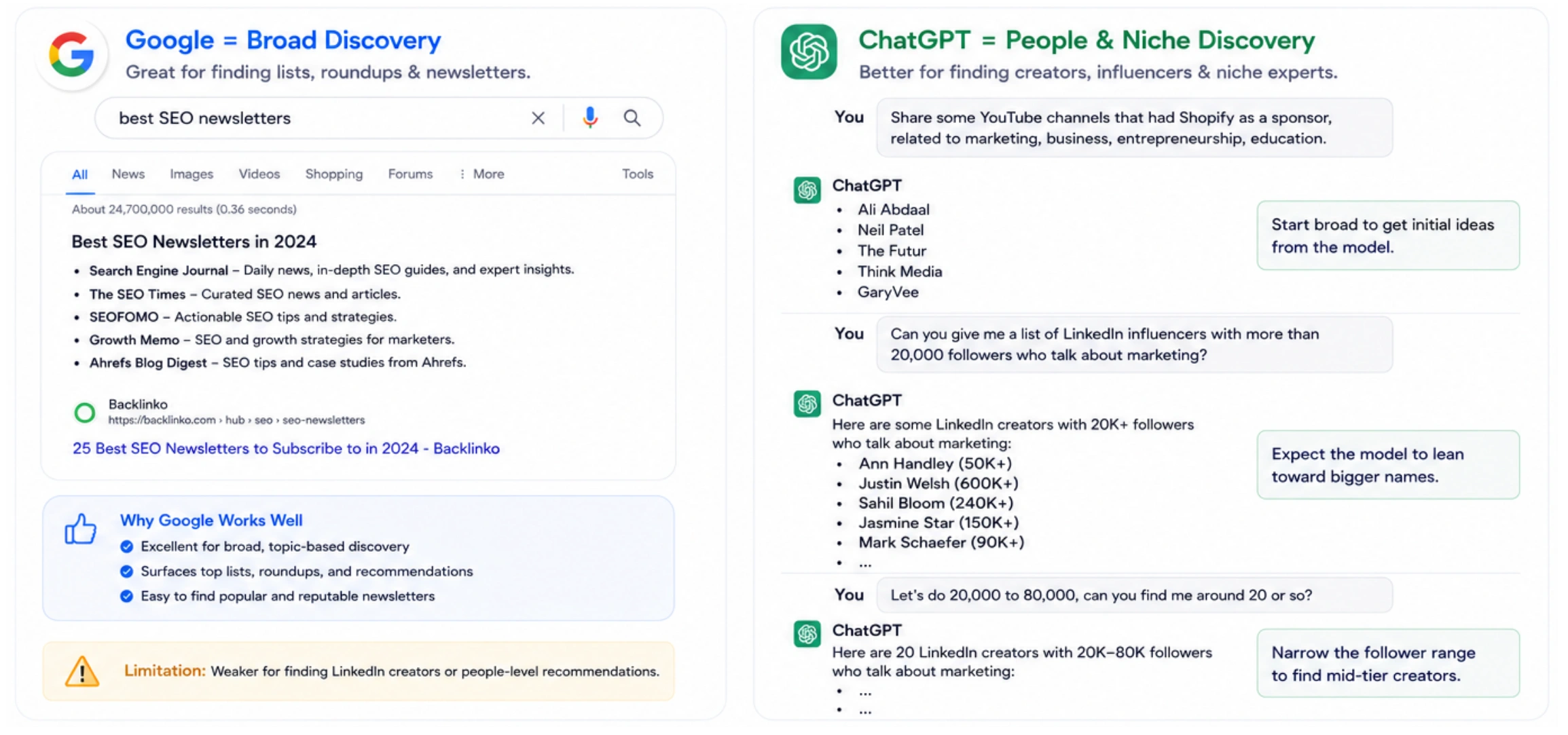
One practitioner's exact process: start broad — "Share some YouTube channels that had Shopify as a sponsor, related to marketing, business, entrepreneurship, education." For LinkedIn, ask something like "Can you give me a list of LinkedIn influencers with more than 20,000 followers who talk about marketing?" If the results skew toward mega-influencers, narrow the follower range — "Let's do 20,000 to 80,000, can you find me around 20 or so?" Even then, expect the model to lean toward bigger names by default, which is where the next tactic helps.
Look at Your Existing Customer Base
This is the option most teams overlook, and it's often the strongest starting point. Are any of your existing customers already influencers? They know the product, have real use cases, and often already have a result worth sharing — which makes them far easier to work with than a cold outreach target.
One founder's starting question before looking anywhere else: "Who among our users might already have an audience and talk about these topics?" Those users need far less briefing since they already know the product and have a live case study ready — something as simple as a conversion-rate comparison from switching tools is already a compelling testimonial. A single outreach email to the customer base ("we're looking for people who want to talk about their experience with the product — if you have an audience and are interested, reply") can supply leads for a long time.
5. A Clever Trick Using Your LinkedIn Archive
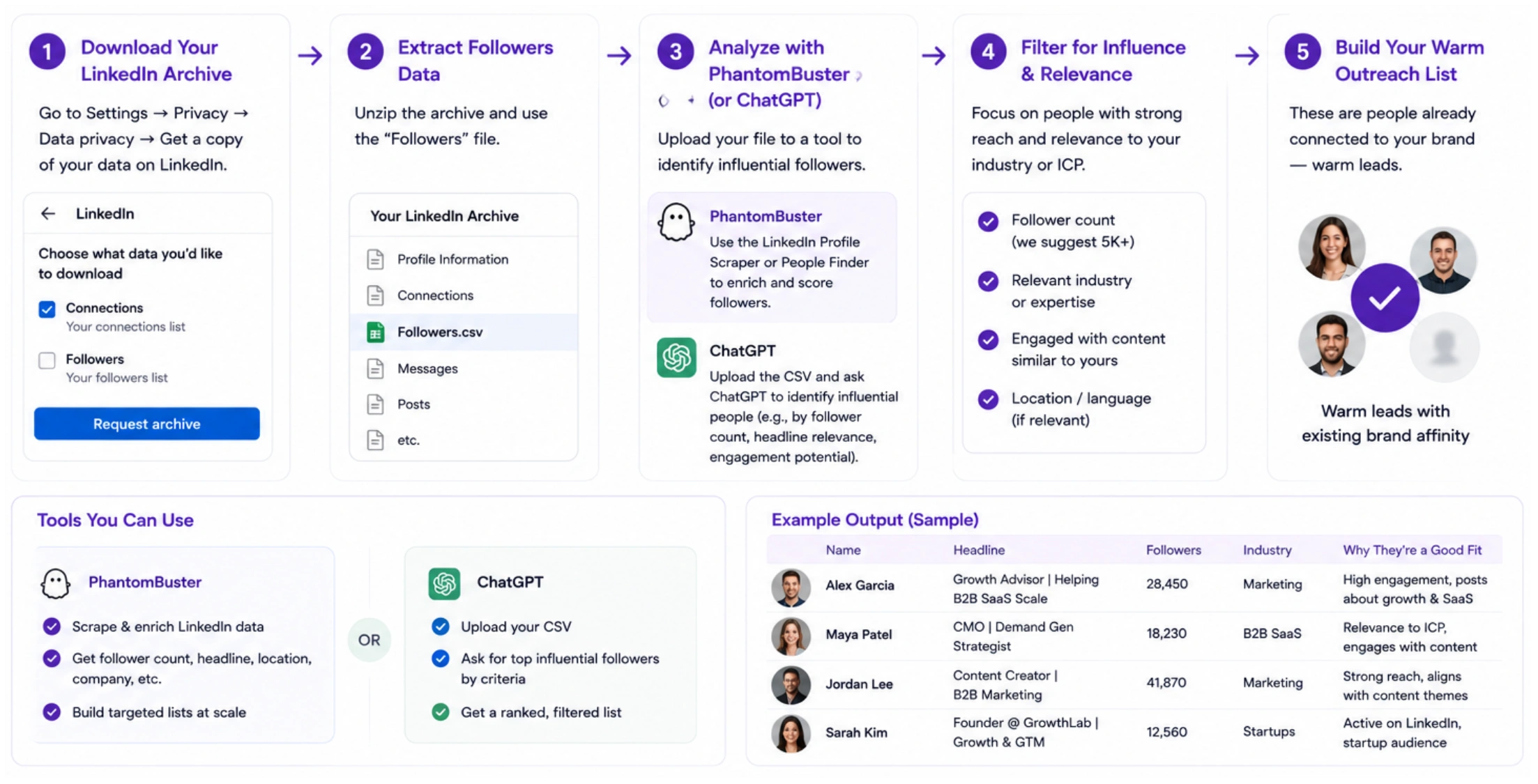
Download your LinkedIn archive, then use a tool like PhantomBuster — or even ChatGPT — to analyze the data and surface influential people who already follow your company page or the pages of influential employees at your organization. Not every customer follows your LinkedIn page, so this won't be a complete list, but it's a solid supplementary way to find warm leads with an existing connection to your brand.
6. Use a Tool Like Favikon to Speed Everything Up
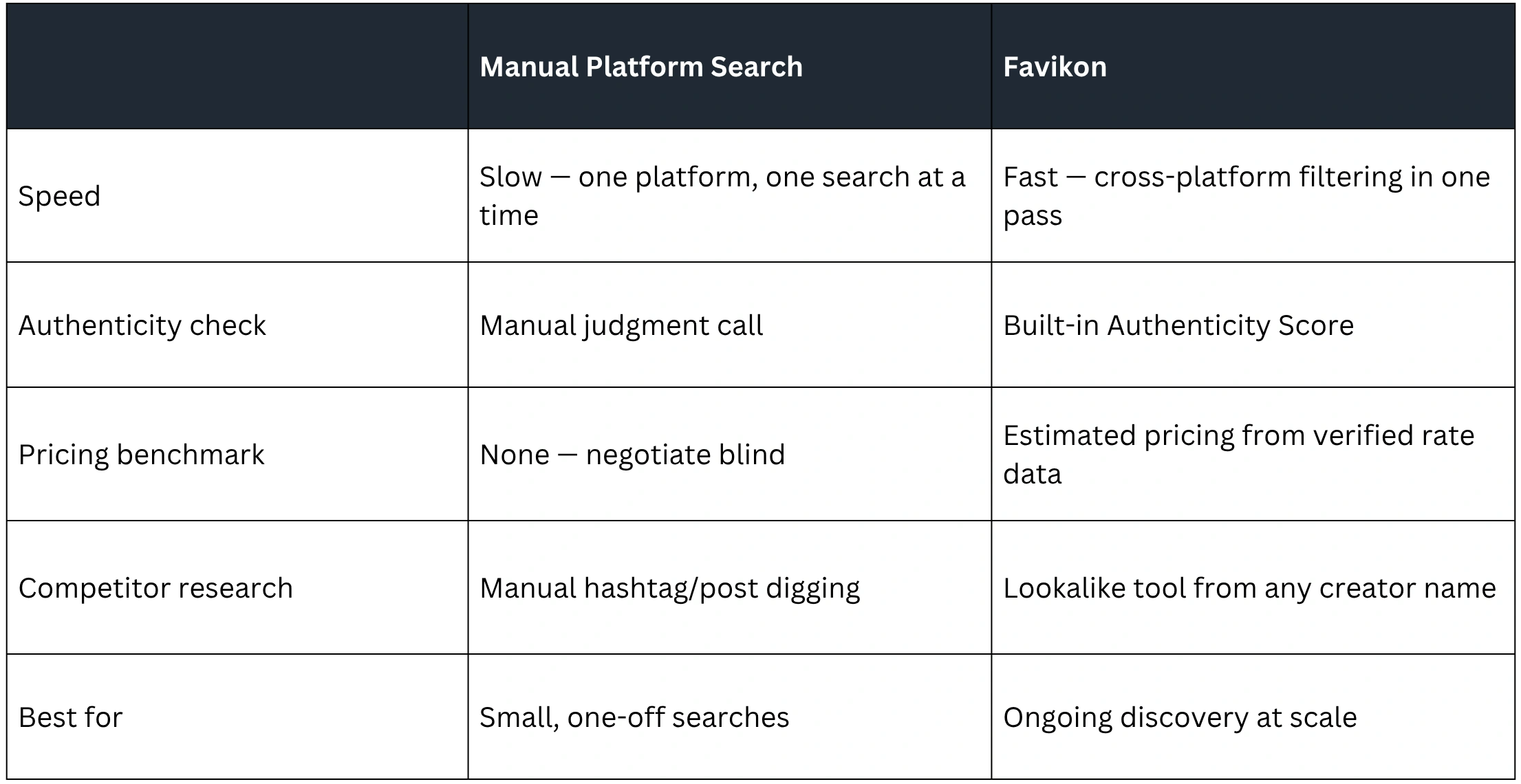
The fastest way to find relevant B2B influencers at scale is a purpose-built tool. Favikon works across the major B2B platforms — LinkedIn, Substack, and YouTube, plus Instagram and TikTok — with filtering by niche, engagement rate, follower count, posting frequency, language, and country.
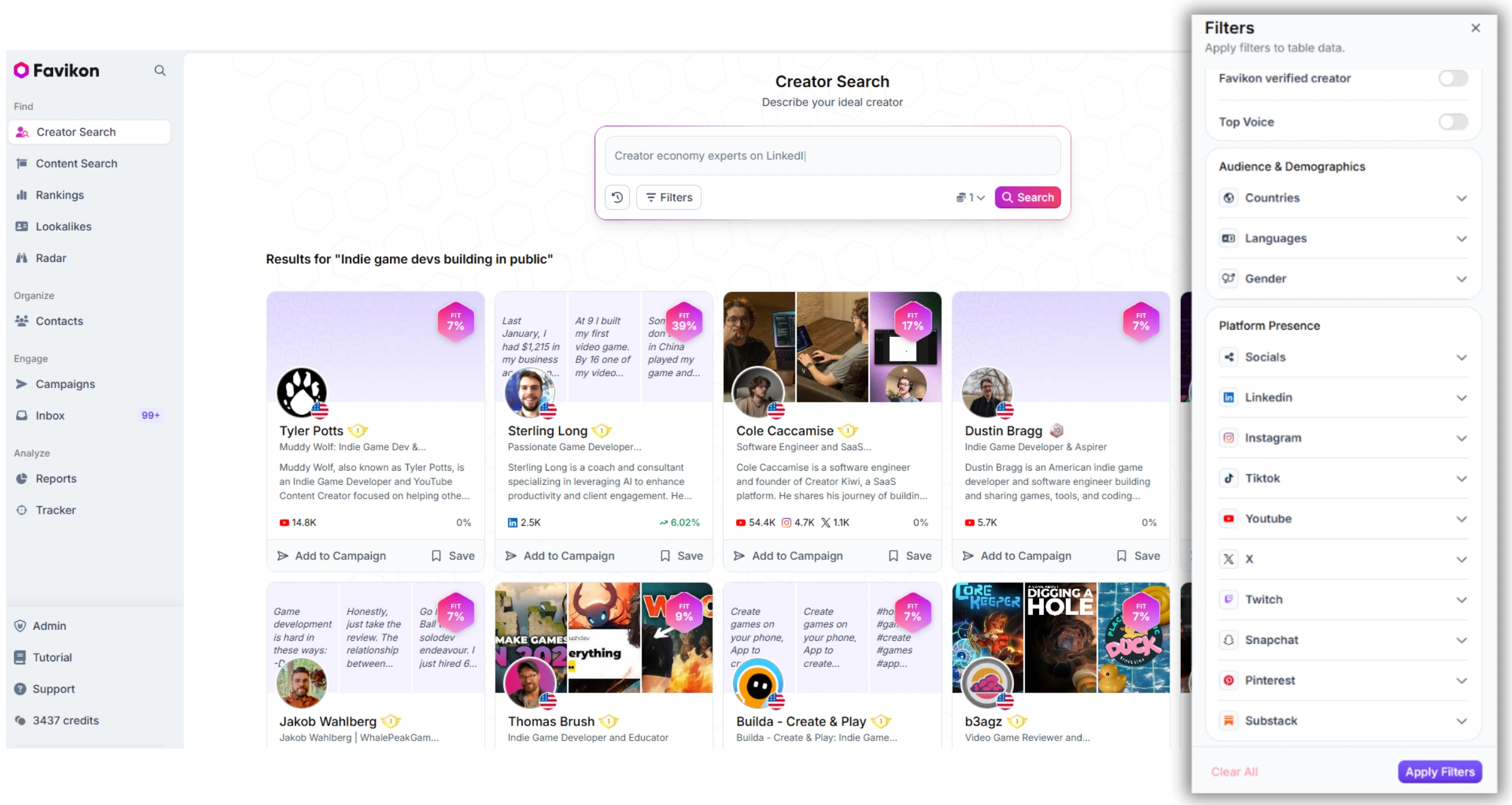
A query like "SEO influencers on LinkedIn with at least 10,000 followers but no more than 50,000, who speak English and are active on the platform" returns a ready-made shortlist, each with a specialty overview and platform breakdown you can click into for more depth.
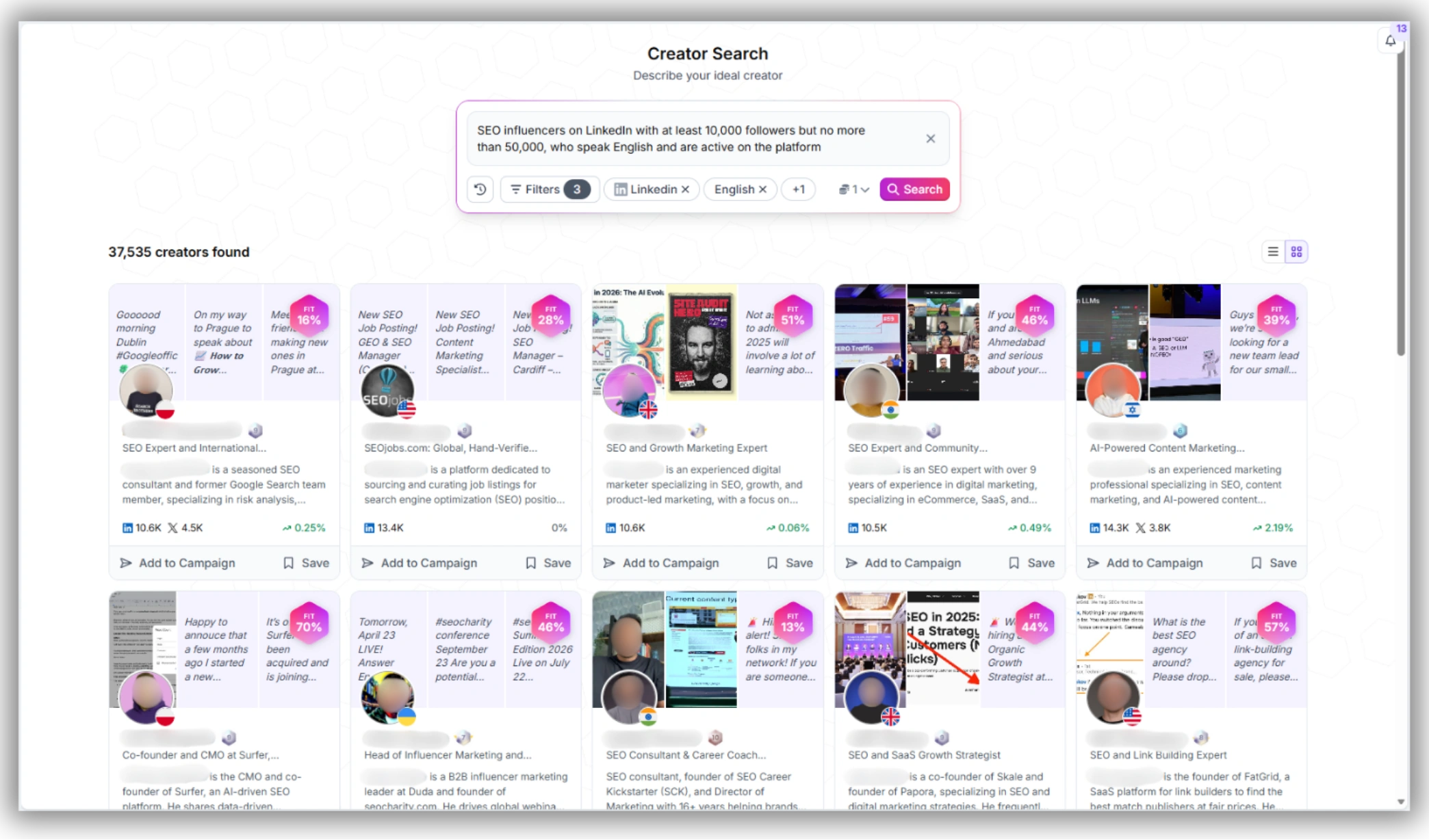
Across a recent sample of B2B creators on the platform, Favikon's authenticity-score distribution shows a meaningful spread between high-authority accounts and pod-driven engagement — the kind of signal no tool-roundup listicle can cite, because it depends on proprietary cross-platform data rather than public follower counts.
The Authenticity Score Feature
One of Favikon's standout features is the Authenticity Score — a metric built specifically to flag influencers who lean on fake engagement (engagement pods, excessive AI-generated content, and similar patterns). Given how common this is on LinkedIn, this single feature alone saves significant time and budget. A creator's profile shows the Authenticity Score at a glance, alongside estimated pricing based on verified rates collected from over 100 LinkedIn creators — pricing that factors in follower count, engagement, and the Authenticity Score together.
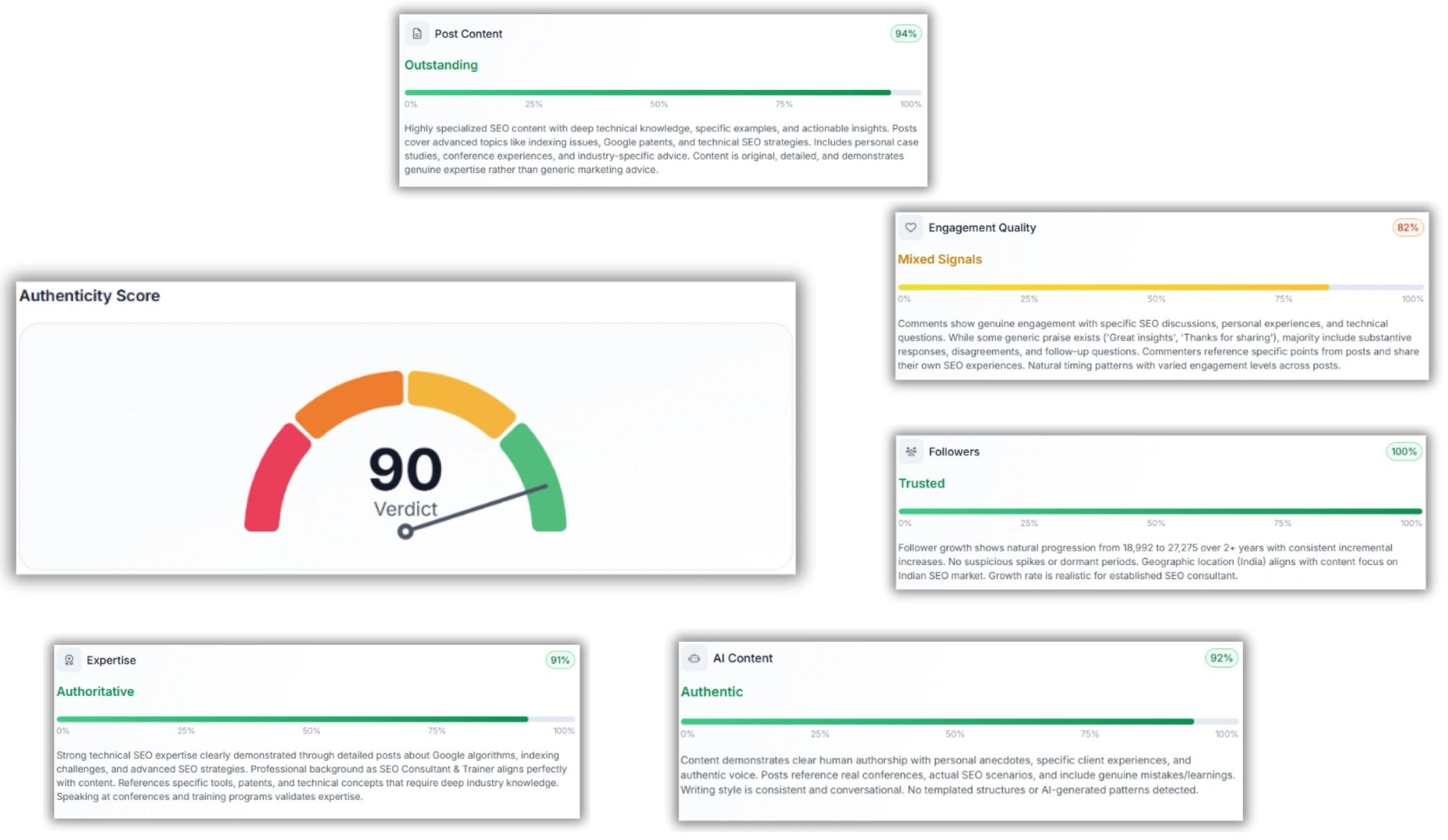
Treat the estimated price as a benchmark, not a hard ceiling — the market is still uneven enough that quotes can vary wildly even for comparable creators.
The Lookalike Tool for Competitor Influencer Research
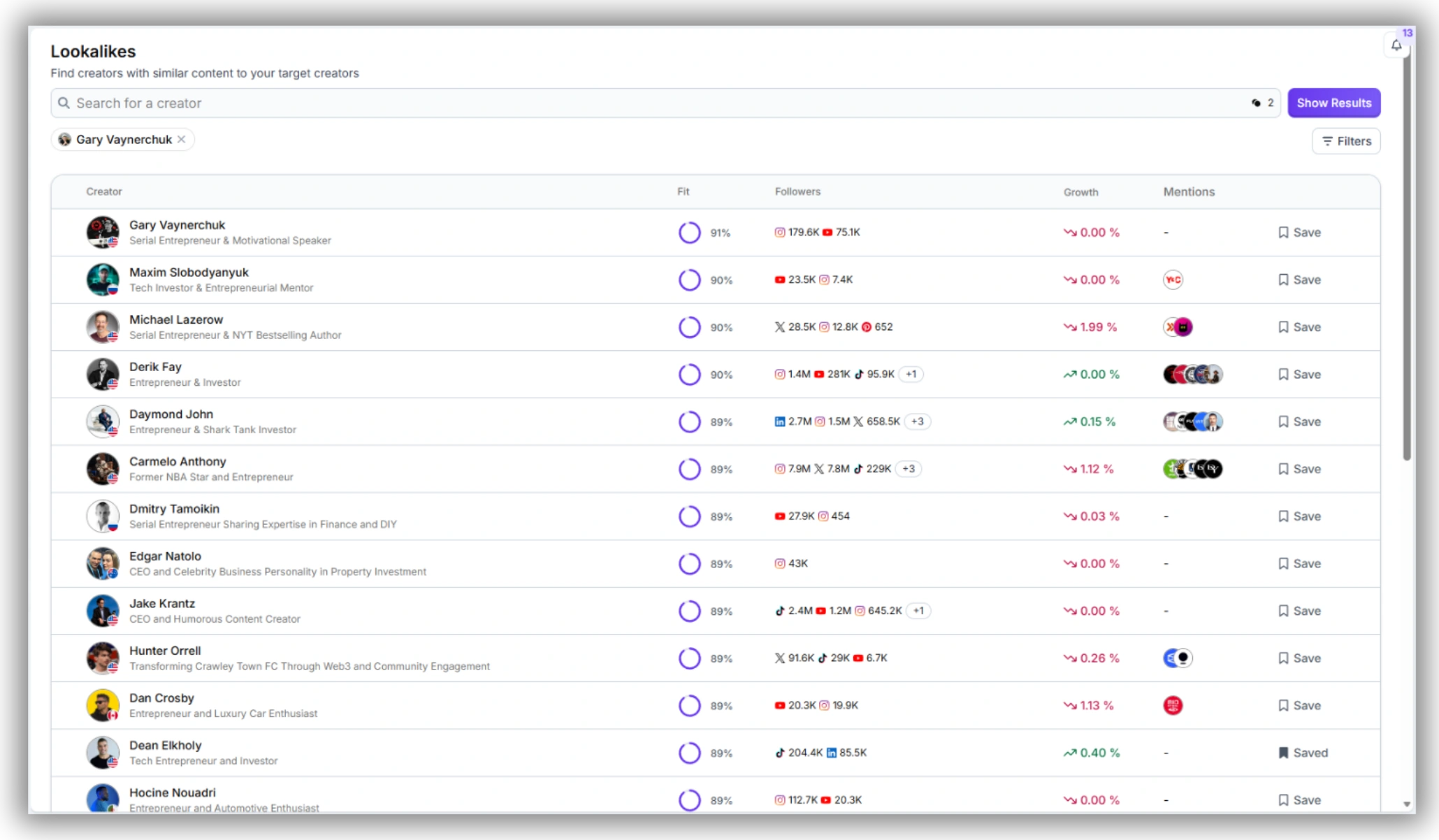
One of the hardest parts of influencer marketing is figuring out which creators actually drive sales. A useful shortcut: look at which influencers your competitors keep rehiring. Repeat bookings are a strong signal that a creator converts. You likely can't hire that exact person due to exclusivity terms, but Favikon's lookalike tool surfaces similar creators — type in any influencer's name and get a list of comparable options, then layer on filters (niche, platform, etc.) to narrow further.
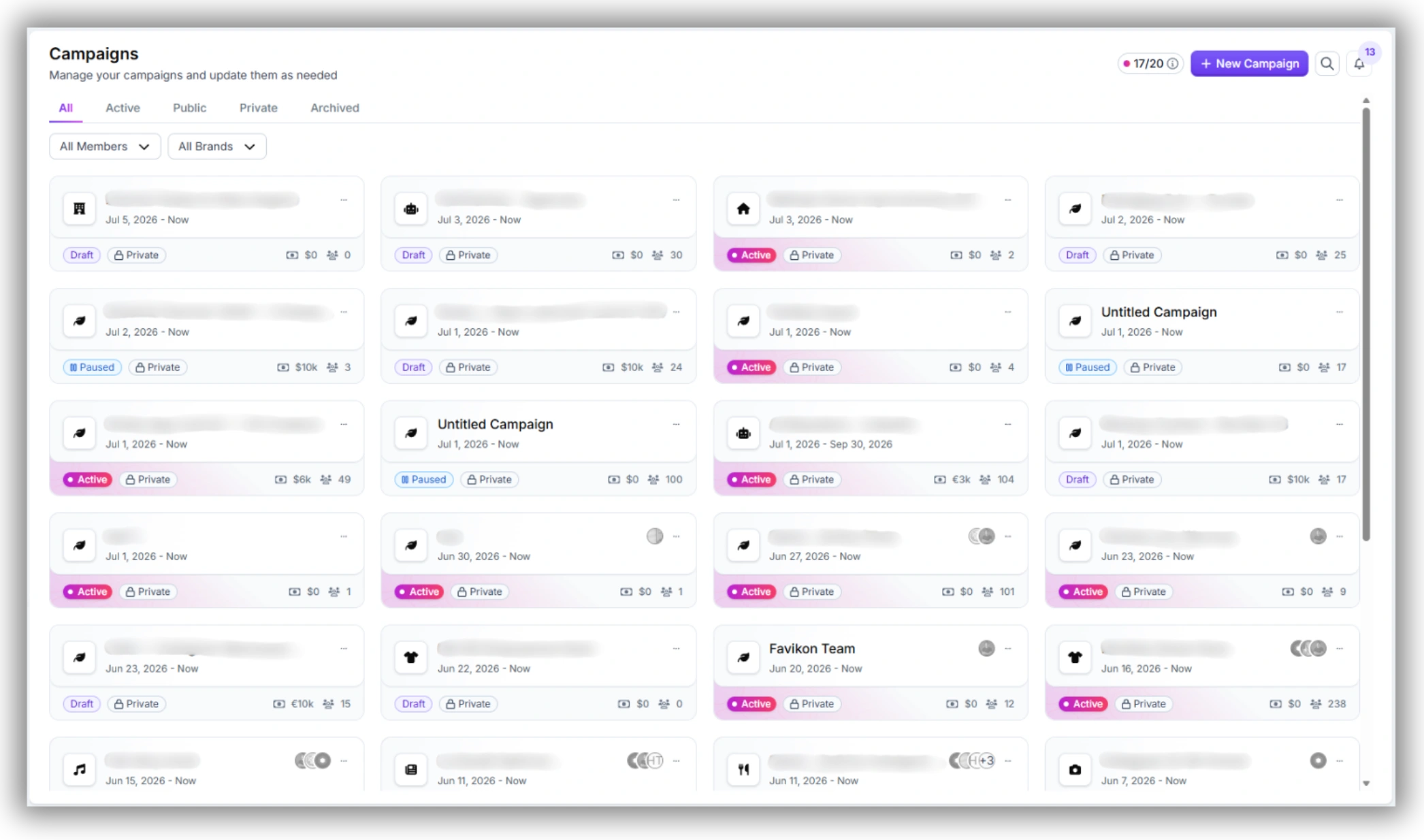
Managing Campaigns Inside the Tool
Beyond discovery, Favikon lets you manage the entire campaign in one place — messaging influencers directly and handling outreach from within the platform. That removes a meaningful amount of coordination overhead, especially when running multiple campaigns at once.
What About Hiring an Agency?
Another route is hiring an influencer marketing agency. The main benefit: agencies already have systems in place and typically know which influencers tend to convert and what fair pricing looks like for your category — a real shortcut when you're just getting started.
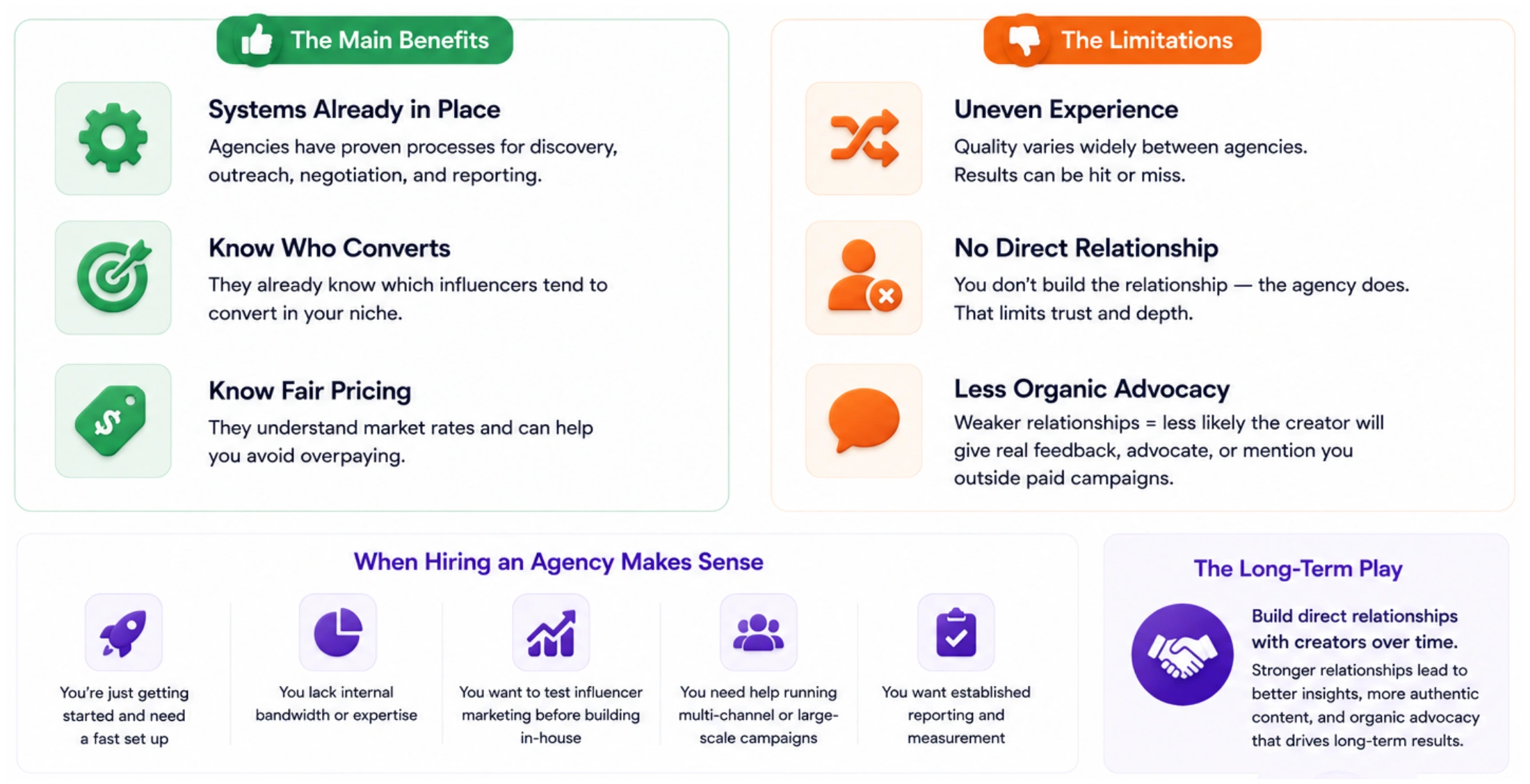
That said, an agency isn't a perfect solution. Working through one can be an uneven experience, and the bigger issue is that you don't build a direct relationship with the influencer yourself. That relationship matters — the deeper it is, the more likely a creator is to share genuine customer insight, talk about your brand positively and organically, and mention you outside of paid campaigns. An agency can be a good way to get systems in place early, but over time, direct creator relationships are worth building.
How to Know If It's Actually Working
Running every candidate through the Authority-Fit-ROI Filter up front only pays off if you actually check the ROI side after the campaign runs. A few practical signals to track:
• Attributed conversions — a unique link, code, or landing page per creator so results aren't guesswork
• Engagement quality over volume — comments and shares from people who match your ICP, not just raw counts
• Repeat-worthiness — would you book this person again without hesitation? That's often a faster signal than the metrics alone
• Pipeline influence — whether prospects who saw the content move faster through your funnel, even without a direct click
If a creator clears Authority and Fit but the ROI signals stay flat after a reasonable test period, that's useful information too — it tells you the framework caught something the follower count alone would have missed.
Prefer watching? Hit play below:
Manual Search vs. a Discovery Tool
The Bottom Line
There's no single right way to find B2B influencers, but there is a smart order to go in. Start with your existing customer base — those are the warmest leads and the easiest conversations. Then expand with manual platform searches and ChatGPT. When you're ready to scale, use a tool like Favikon to handle the heavy filtering, verify authenticity, understand pricing, and find lookalike creators based on what's already converting for your competitors. Run every name through the Authority-Fit-ROI Filter before you commit — the research phase is where most campaigns win or lose, long before launch.
FAQ
How do I find B2B influencers?
Combine manual platform search (LinkedIn, YouTube, Substack), competitor partnership research, your own customer base, and a discovery tool like Favikon — then filter every candidate through authority, audience fit, and measurable ROI potential.
What's the best platform to find B2B influencers?
It depends on the channel your ICP actually consumes content on — LinkedIn for most B2B decision-makers, YouTube for longer-form technical content, Substack for newsletter-native audiences. A cross-platform tool like Favikon removes the need to pick just one.
How do I find influencers on LinkedIn?
Search relevant keywords and filter by people, check hashtags your competitors' partners use (e.g. "#brandname partner"), or use LinkedIn's recommendation engine after finding one relevant creator. For a deeper walkthrough, see how to find influencers on LinkedIn.
Others articles