The Best Influencer Database Tools in 2026
Looking for the best influencer database tools in 2026? This guide compares top platforms for finding creators, checking audience data, and managing influencer campaigns.

A lot of tools called “influencer databases” are really just marketplaces of opted-in creators, or piles of scraped profiles you can look at but never actually contact.
A real influencer database is a searchable index of creator profiles. You filter it by niche, audience, and engagement instead of guessing. Then you act on what you find, whether that's messaging someone directly or exporting their contact details.
That distinction matters more than people realize. Some brands just want the biggest possible pool to search. Others need verified emails to run outreach at volume. A huge database that won't let you reach anyone is close to useless for that second job.
This list breaks down which tools actually deliver on each of those needs, so you know what you're getting before you sign up.
TL;DR: Best Influencer Database Tools
- An influencer database is a searchable, filterable index of creator profiles you can actually act on, not just browse.
- Favikon stands out for LinkedIn and Substack coverage, channels most competitors treat as an afterthought if they cover them at all.
- Modash leads on raw scale, with more than 380 million indexed creator profiles across Instagram, TikTok, and YouTube.
- HypeAuditor is the strongest pick if fraud detection and audience authenticity checks matter most to you.
Start a free 7-day trial with Favikon to search creators across all nine channels before you pick a plan.
What Is an Influencer Database (And What It Isn't)
An influencer database is a searchable index of creator profiles, built so you can filter by niche, audience, and platform instead of scrolling social apps by hand.
Say you need TikTok creators in the fitness space with at least 50,000 engaged followers. A database lets you type in those filters and pull a working shortlist in minutes, complete with engagement rates and audience data, instead of guessing your way through hashtags and hoping you found the right people.
A database is not the same thing as a marketplace. A marketplace is built from creators who signed up and agreed to be found, so you message and hire them directly inside the platform, and the pool is limited to whoever joined. It is also not a full platform on its own.
Platforms add campaign management, contracts, and creator payments on top of the profile data, turning discovery into an end-to-end workflow. Many databases add campaign management, outreach, and analytics on top of creator discovery. Favikon follows that model.
Opt-In vs Aggregated: How Influencer Databases Are Actually Built
Every influencer database gets built one of two ways, and that choice decides how reliable the contact info actually is once you try to use it. Some platforms only index creators who signed up themselves. Others index creator profiles without requiring each creator to register on the platform first.
Here's how the two approaches actually differ:
- Opt-in databases: Creators actively join and fill out a profile, which is why contact details tend to be accurate and current. The tradeoff is scale. You're limited to whoever signed up, so niche or emerging creators outside that pool won't show up in your search at all.
- Aggregated databases: These index profiles at scale without requiring every creator to sign up first, which allows them to cover a much larger pool of creators. That scale is the appeal, but contact info and profile details can go stale fast, since nobody is actively keeping the listing updated.
Favikon indexes more than 10 million profiles across nine channels without requiring every creator to register first. That comes with the same tradeoff every aggregated tool has. Verify and refresh a creator's contact details before you rely on them for outreach.
How We Chose These Influencer Database Tools
The right influencer database isn't whichever one has the biggest number on its homepage. It's the one that matches how you actually plan to use it, since a massive database with weak filters wastes as much time as a small one with no filters at all.
We weighed these tools on four things that actually predict whether you'll find the right creators and be able to trust what you find.
Here's what we looked at for every tool on this list:
- Database size and channel coverage: A bigger index matters less than whether it covers the channels your creators actually use. A tool with 300 million profiles on three platforms won't help if your buyer lives on LinkedIn.
- Search and filtering depth: Raw profile count is only useful if you can narrow it down fast. We looked at how well each tool filters by niche, audience demographics, engagement rate, and growth, since that's what turns a pile of profiles into a working shortlist.
- Authenticity and fraud detection: Fake followers and bought engagement are common enough that skipping this check wastes real budget. We checked whether each tool flags suspicious accounts before you commit to a creator, not just after the campaign runs.
- Pricing transparency: A published rate card lets you compare tools side by side without booking a demo first. We noted where pricing is public, where it's estimated from third-party sources, and where it's fully sales-gated.
Quick Comparison: Best Influencer Database Tools
1. Favikon
What is it? Favikon is an AI-powered influencer marketing platform for brands and agencies, covering discovery, creator CRM, outreach, campaign management, and analytics in one place. It indexes more than 10 million creator profiles across 9 channels, including LinkedIn and Substack alongside Instagram, TikTok, YouTube, X, Pinterest, Twitch, and Snapchat.
Best for: B2B marketers and agencies who need LinkedIn and Substack creators alongside the usual platforms, plus built-in audience vetting.
Why I Picked It: Most influencer platforms treat LinkedIn as an afterthought. Favikon built its discovery engine around B2B channels from day one, which matters if your buyer is a VP of engineering, not a TikTok teenager. The built-in scoring means you don't need a separate fraud-detection tool.

Features
- 10M+ profiles across 9 channels, including LinkedIn and Substack alongside Instagram, TikTok, YouTube, X, Pinterest, Twitch, and Snapchat. It's the only platform on this list built to find B2B buyers where they actually post, not just consumer creators.
- Authority Score and Authenticity Score on every profile. Vetting happens at the search stage, so you're not running a separate fraud check after you've already found someone you like.
- AI-powered lookalike search that surfaces creators similar to ones already converting in your program, so scaling a working partnership doesn't mean starting the search from zero again.
- Creator CRM with outreach managed from one inbox, keeping shortlists, conversations, and campaign status in one place instead of scattered across email and spreadsheets.
- GA4 integration that ties creator activity directly to website traffic and conversions, so you can show which creators actually drove revenue, not just impressions.
Limitations
- Aggregated, not opt-in, so contact details can go stale. Refresh a creator's info before a large outreach push instead of assuming it's current.
Pricing
Core starts at $199/month, or $159/month billed annually. Pro is $299/month, or $239/month annually. Enterprise is custom quoted. Every plan includes a 7-day free trial, no credit card required.
2. GRIN
What is it? GRIN is a creator marketing platform built for DTC and ecommerce brands managing long-term creator relationships rather than one-off campaigns. It handles creator discovery, relationship management, product seeding, and payments, with deep native integrations for Shopify and WooCommerce.
Best for: DTC and ecommerce brands managing ongoing creator relationships and Shopify-native gifting programs.
Why I Picked It: GRIN earns its spot for DTC brands running long-term gifting and seeding programs, not cold discovery. The Shopify-native integration ties creator activity straight to actual sales, which most database-first tools can't do. Where it falls short is discovery itself. There's no LinkedIn coverage, and creator search feels thinner than tools built around search first. If discovery is your main job, look elsewhere on this list.

Features
- AI assistant Gia for sourcing, outreach, and reporting, which cuts down the manual search time that eats into most creator managers' weeks.
- Native Shopify and WooCommerce integration that ties creator activity straight to storefront sales, so you can see which partnerships actually moved product.
- Automated creator payments, including 1099 processing, so payouts and tax paperwork don't turn into a separate admin project every quarter.
- Affiliate link and discount code generation built into the workflow, making it easy to track which creator drove which sale without a third-party tool.
- Usage-based credit pricing instead of per-seat plans, so cost scales with how much you actually use the platform rather than how many people log in.
Limitations
- No LinkedIn coverage, and creator search feels thinner than tools built around search first. If B2B discovery matters to you, you'll need a second tool anyway.
- Architecture is wired entirely to Shopify and ecommerce workflows, so SaaS or B2B teams end up paying for infrastructure built to solve someone else's problem.
Pricing
Free plan available. Paid plans start at $200/month, scaling to $1,500/month for the Complete tier. Month-to-month, no annual contract, no required sales call.
3. Modash
What is it? Modash is a discovery-first influencer marketing platform built around a massive database of creator profiles on Instagram, TikTok, and YouTube. It combines search and filtering with audience analysis, fake-follower detection, and campaign tracking, with published, transparent pricing rather than a sales call.
Best for: Brands and agencies doing large-scale discovery on Instagram, TikTok, and YouTube who want transparent, published pricing.
Why I Picked It: Modash wins on sheer scale. More than 380 million indexed profiles is the largest raw database on this list, and the filtering is genuinely deep once you're in it. The catch is coverage. Everything lives on Instagram, TikTok, and YouTube, so if your creators are on LinkedIn or X, Modash simply doesn't see them, no matter how big the database gets.

Features
- Database of 380M+ creator profiles across Instagram, TikTok, and YouTube, giving you a wide enough pool that niche searches still return real options instead of the same 20 names.
- Audience quality and fake-follower detection built into every search, so suspicious accounts get flagged before you spend a campaign budget on them.
- AI-powered lookalike and visual search that finds creators who match a look or style, not just a follower count.
- Native Shopify integration for DTC gifting workflows, so product-seeding campaigns don't require exporting data into a separate system.
- Verified email unlocks for outreach at volume, useful if your process depends on cold email rather than in-platform messaging.
Limitations
- Coverage limited to Instagram, TikTok, and YouTube, with no LinkedIn or X. If your buyers live outside those three platforms, this database simply won't see them.
- Searches by platform account rather than a unified creator profile, so a creator active on two platforms shows up twice and needs manual deduplication.
Pricing
Essentials is $299/month, or $199/month billed annually ($2,388/year). Performance is $599/month, or $499/month billed annually ($5,988/year). Enterprise starts at $14,700/year, with pricing customizable above that. 14-day free trial, no credit card required.
4. HypeAuditor
What is it? HypeAuditor is an analytics-heavy influencer marketing platform built around vetting creators before you commit budget. It covers Instagram, TikTok, YouTube, X, and Twitch, with audience quality scoring, fake-follower detection, and a built-in CRM for managing outreach and campaigns.
Best for: Brands and agencies that need to vet audience authenticity before committing campaign budget.
Why I Picked It: HypeAuditor is the benchmark most agencies compare fraud-detection tools against. Its audience-quality scoring goes deeper than most competitors, flagging bought followers and engagement pods before you waste a campaign budget on someone who looks bigger than they are. Outreach is where it's thinner. The CRM covers the basics, but if bulk contact management is your main workflow, a dedicated CRM-style tool will serve you better.

Features
- Audience Quality Score and fake-follower detection across every profile, built on a standard most other platforms in this space reference as their own benchmark.
- Cross-platform search across 5 channels, covering the platforms where most consumer campaigns actually run.
- Built-in influencer CRM for managing outreach and campaigns, so you're not exporting shortlists into a separate spreadsheet to track conversations.
- Campaign tracking and reporting that shows performance after launch, not just discovery data before it.
- Shopify, Magento, and WooCommerce integrations for ecommerce brands running product-seeding or affiliate campaigns.
Limitations
- Only 5 platforms covered, with no LinkedIn or other B2B-relevant channels, so this isn't the right fit if your buyer isn't a consumer.
- Creator payments run through PayPal only, which adds conversion fees on every payout to an international creator.
- Paid pricing is fully demo-gated, so you can't compare costs against other tools without booking a call first.
Pricing
Custom quoted. HypeAuditor does not publish a public rate card, and a demo is required to get pricing.
5. CreatorIQ
What is it? CreatorIQ is an enterprise creator marketing platform built for large brands and agencies running influencer programs at scale. It connects directly to social platform APIs rather than scraping public data, covering discovery, campaign management, creator CRM, fraud detection, and earned media value tracking across a database of more than 20 million profiles.
Best for: Enterprise brands and agencies that need a verified, first-party data layer and governance across large creator programs.
Why I Picked It: CreatorIQ earns its enterprise reputation through first-party data. Pulling straight from platform APIs means audience and performance numbers are harder to fake than scraped alternatives, which matters at Fortune 500 scale. It's not built for smaller teams, though. Pricing is fully custom, reported to start around $30,000 a year, with an annual contract and a sales-led onboarding process that can stretch for weeks before you touch the platform.

Features
- Direct social platform API integrations rather than scraped data, so the numbers you're reporting to leadership are harder to dispute or fake.
- Database of 20M+ creator profiles, sized for programs running across multiple markets and brands at once.
- AI-powered, content-first discovery that surfaces creators based on the content they actually make, not just their follower count.
- Fraud detection and brand safety tooling built for continuous monitoring, not a one-time check before a campaign launches.
- Multi-brand governance for agencies and holding companies managing several client accounts under one roof.
Limitations
- Pricing is fully custom, reported to start around $30,000 a year, putting it out of reach for teams without a dedicated influencer budget.
- Annual contract required, with a sales-led onboarding process that can stretch for weeks before your team is actually running searches.
Pricing
Fully custom quoted. CreatorIQ does not publish pricing, and every plan requires an annual contract.
6. Aspire
What is it? Aspire is a creator marketplace and campaign platform built around inbound applicants rather than cold outreach. Brands post campaigns and creators apply directly, with more than 1 million creators in the marketplace across gifting, ambassadorships, affiliate programs, and sponsored content.
Best for: Brands that want creators applying to campaigns directly instead of running cold outreach.
Why I Picked It: Aspire flips the usual discovery model. Instead of searching and cold-messaging creators, you post a campaign and let interested creators come to you, which surfaces real intent you don't get from outreach alone. The tradeoff is contact. There's no exporting creator details for outreach outside the platform, so every conversation stays inside Aspire, which won't suit teams that want to own their contact data directly.

Features
- Opted-in marketplace of 1M+ creators, so every applicant has already chosen to be found rather than being pulled from a scraped database.
- Inbound campaign applications instead of cold outreach, which cuts down the hours spent messaging creators who never respond.
- Affiliate and gifting program management handled inside the same platform where applications come in.
- Content management and social ad boosting, so approved creator content can go straight into paid distribution without switching tools.
- Campaign performance reporting that shows which applicants actually converted, not just who signed up.
Limitations
- No exporting creator details for outreach outside the platform, so every conversation and relationship stays locked inside Aspire.
- Mandatory annual contract, with no self-serve trial, meaning you're committing before you've tested whether the applicant pool fits your niche.
Pricing
Custom quoted, with no published rate card. Aspire requires a mandatory annual contract and does not offer a self-serve trial.
7. Upfluence
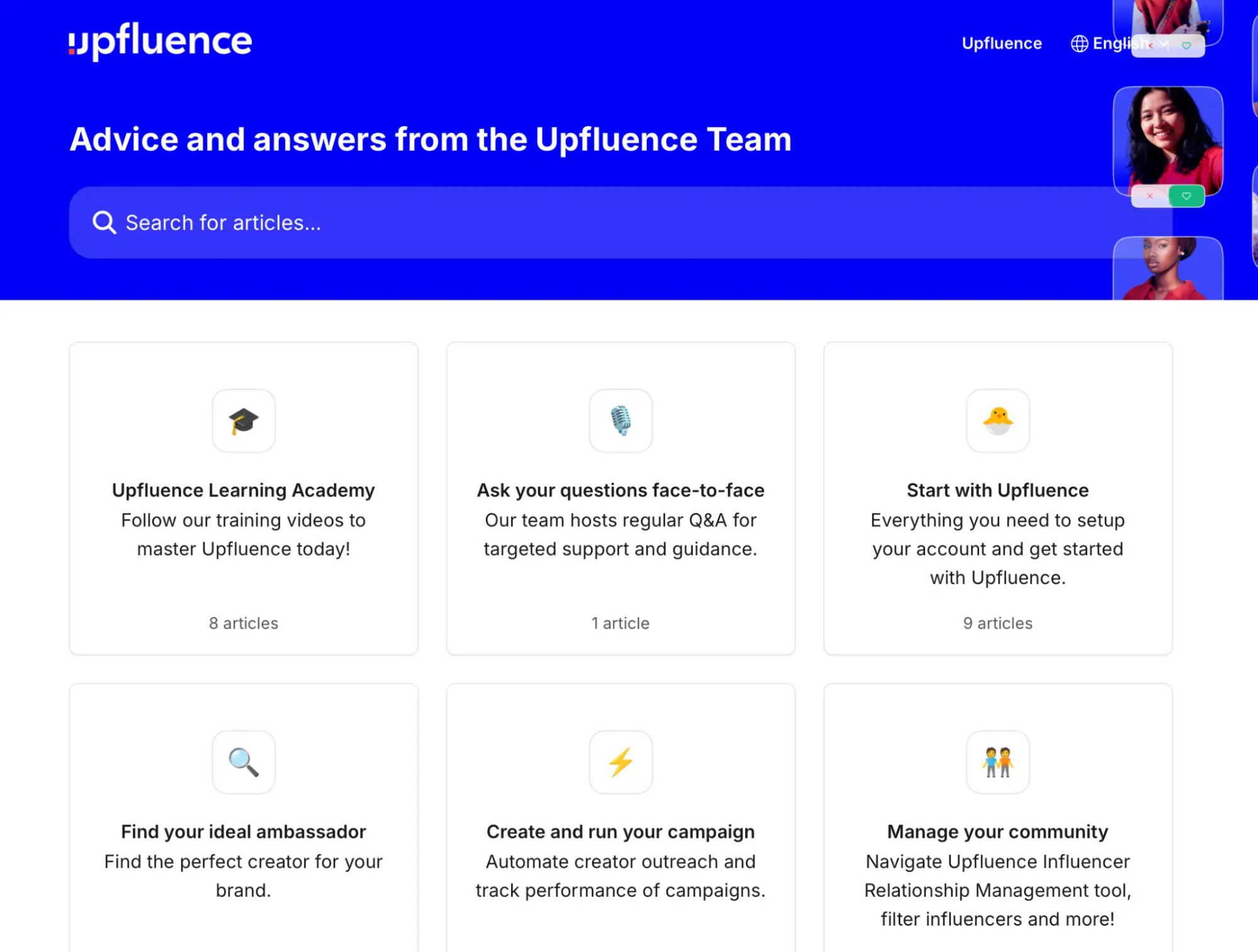
What is it? Upfluence is an influencer marketing platform built around identifying affiliates from a brand's own existing customer base, alongside standard creator discovery across Instagram, TikTok, YouTube, X, Twitch, and Pinterest. It combines search, outreach, and campaign tracking with ecommerce integrations for affiliate attribution.
Best for: Ecommerce brands that want to identify affiliates from their own customer base rather than searching cold.
Why I Picked It: Upfluence's real angle is automatically matching your existing customers to potential affiliates, turning people who already buy from you into your next wave of creators. That's a genuinely different approach from pure discovery tools. The database itself is smaller than dedicated discovery platforms, though, and there's no self-serve trial. You'll need a demo and a 12-month commitment before you can test whether it fits.
Features
- Customer-to-affiliate matching from your own CRM or ecommerce data, so your best-fit creators are people who already know and use your product.
- Cross-platform search across 6 channels for teams that also need standard cold discovery alongside the affiliate matching.
- Modular pricing by feature, so you can pay only for the parts of the platform your program actually uses.
- Campaign and affiliate tracking that shows which matched customers turned into real revenue-driving partnerships.
- International creator payments, useful for programs running affiliates outside the US.
Limitations
- No self-serve trial; a demo and 12-month commitment are required before you can test whether the matching actually works for your customer base.
- Database is smaller than dedicated discovery platforms, so cold search outside your existing customers is a weaker use case here.
Pricing
Custom-quoted only, with no published rate card. Every module requires a demo call for a price. 12-month minimum contract, per Upfluence's own FAQ.
8. Traackr
What is it? Traackr is an enterprise influencer marketing and measurement platform built for global, multi-market brand programs. It covers creator discovery, relationship management, campaign tracking, and brand-impact benchmarking against named competitors, with a smaller, more curated database than the discovery-first tools on this list.
Best for: Enterprise brands running multi-market programs that need competitive benchmarking and brand safety tooling.
Why I Picked It: Traackr's benchmarking is the reason enterprise teams pay for it. Being able to measure your program against a named competitor's, not just your own past performance, is hard to find anywhere else on this list. The database is the smallest curated one here, though, and the platform has a genuine learning curve. Budget time for onboarding, not just money for the contract.

Features
- Brand-impact benchmarking against named competitors, so leadership sees where your program actually stands in the category, not just how it did last quarter.
- Cross-platform creator search with filtering by job title, location, language, platform, and engagement rate, built for teams vetting creators across multiple regions at once.
- Audience analytics that go beyond basic follower counts into who's actually engaging with a creator's content.
- Campaign management and budget tracking in one place, so multi-market spend doesn't get reconciled across separate spreadsheets.
- Coverage across 70 countries and 26 languages, built for programs running in more than one region simultaneously.
Limitations
- Smallest curated database on this list, which limits volume for teams that need to search widely rather than work from a vetted pool.
- Genuine learning curve, so budget onboarding time in addition to the contract cost before the platform starts paying off.
- No public pricing; every plan requires an annual contract with no monthly billing option.
Pricing
Custom quoted. Traackr does not publish pricing anywhere on its site, and every plan requires an annual contract with no monthly billing.
How to Choose the Best Influencer Database Tool
The biggest database isn't automatically the best one. A tool with 300 million profiles still wastes your time if it can't narrow those profiles into people you actually want to work with.
When you're comparing platforms, focus on four things first:
- Coverage should match where your creators actually publish. Most databases are excellent on Instagram, TikTok, and YouTube. If your campaigns also rely on LinkedIn, newsletters, or podcasts, check those channels before comparing profile counts.
- Discovery matters more than raw numbers. Good filters save more time than a bigger database. Look for audience demographics, engagement quality, niche, location, keywords, growth trends, and similar creators. Those are the filters you'll use every day.
- Treat audience quality as a requirement, not a bonus. Fake followers and inflated engagement still exist across every major platform. A database that helps you spot suspicious audiences before outreach will save far more money than one that simply indexes millions of creators.
- Finally, think beyond discovery. Some teams only need a searchable database. Others want outreach, creator CRM, campaign tracking, analytics, and ROI reporting in the same platform. Buying multiple tools for each step often ends up costing more than choosing one that handles most of the workflow.
If your shortlist includes platforms that meet those requirements, compare them side by side with your own workflow instead of choosing whichever advertises the biggest database.
And if LinkedIn, Substack, cross-platform discovery, and built-in creator vetting are priorities for your team, Favikon is worth trying first with its 7-day free trial before committing to a paid platform.
Frequently Asked Questions
What Is an Influencer Database?
An influencer database is a searchable index of creator profiles with audience demographics, engagement data, and content niches, built so you can filter and shortlist creators instead of scrolling social apps by hand. Favikon indexes over 10 million profiles this way, across nine channels including LinkedIn.
What's the Difference Between an Influencer Database and an Influencer Marketplace?
An influencer database and an influencer marketplace solve different jobs. A database is built for discovery, so you search and filter profiles by niche, audience, and engagement. A marketplace is made up of creators who opted in, so you message and hire them directly inside the platform. Favikon blends both.
Which Influencer Database Tool Covers LinkedIn?
Favikon is the influencer database tool built specifically to cover LinkedIn, alongside Substack, Instagram, TikTok, and YouTube, across nine total channels. That makes it one of the few database tools designed around B2B-adjacent discovery from the start, not added on for a market that showed up later.
Do Influencer Databases Include Verified Contact Information?
Yes, some influencer databases are built specifically for contact enrichment and verified email export at volume, unlocking addresses for cold outreach. Others, including Favikon, focus on discovery and authenticity scoring instead, with outreach handled through an in-platform CRM rather than bulk email export.
How Much Does an Influencer Database Tool Cost?
An influencer database tool's cost depends on scope. Discovery-focused tools like Favikon and Modash start around $199 to $300 a month with published pricing. Enterprise platforms like CreatorIQ and Traackr skip public pricing entirely and require a sales call to get a number.
Is a Bigger Database Always Better?
No, a bigger influencer database isn't always better. Raw profile count matters less than whether the platform's filtering actually surfaces creators who fit your niche. Modash's 380 million profiles help only if you can act on what you find, whether that's messaging someone or exporting their contact details.
Can I Use an Influencer Database and a Campaign Platform Together?
Yes. You can use an influencer database and a campaign platform together, and many teams do exactly that. Use a database like Favikon or Modash for discovery and vetting, then manage signed partnerships and payments in a separate campaign platform or CRM tool.
Others articles