How to Find KOLs: A Step-by-Step Guide for Brands
The right key opinion leaders can help your brand build trust and reach the right audience. This step-by-step guide explains how to find, evaluate, and connect with KOLs for successful marketing campaigns.
.png)
How to Find Key Opinion Leaders (KOLs) for Your Brand
A Key Opinion Leader (KOL) is someone whose expertise and credibility in a specific field makes their endorsement more valuable than their follower count alone. For brands targeting professional audiences, choosing the right KOL is the difference between a campaign that builds genuine trust and one that generates impressions with no downstream impact.
This guide covers how to find, evaluate, and prioritize the right KOLs for your brand — with a specific walkthrough of Favikon’s KOL search. If you’re starting from B2B influencer discovery more broadly.
How to find KOLs: Start by defining the niche and platform where your audience is most active, then use a discovery tool to search by topic expertise rather than follower count. On Favikon, type a plain-language prompt describing the KOL profile you need — the AI Search returns results ranked by Authority Score, which measures niche expertise and engagement quality. Filter by platform, location, and audience demographics, then evaluate each profile’s content history and past brand deals before reaching out.
1. What Makes Someone a KOL (Not Just an Influencer)
The distinction matters for discovery. An influencer builds a following through content volume and entertainment value. A KOL builds authority through demonstrated expertise — they are cited by peers, they headline industry events, and their recommendations carry weight because they’re seen as domain experts first, content creators second.
In practice, this changes how you search. Searching by follower count finds influencers. Searching by niche authority, content topic, and peer recognition finds KOLs.
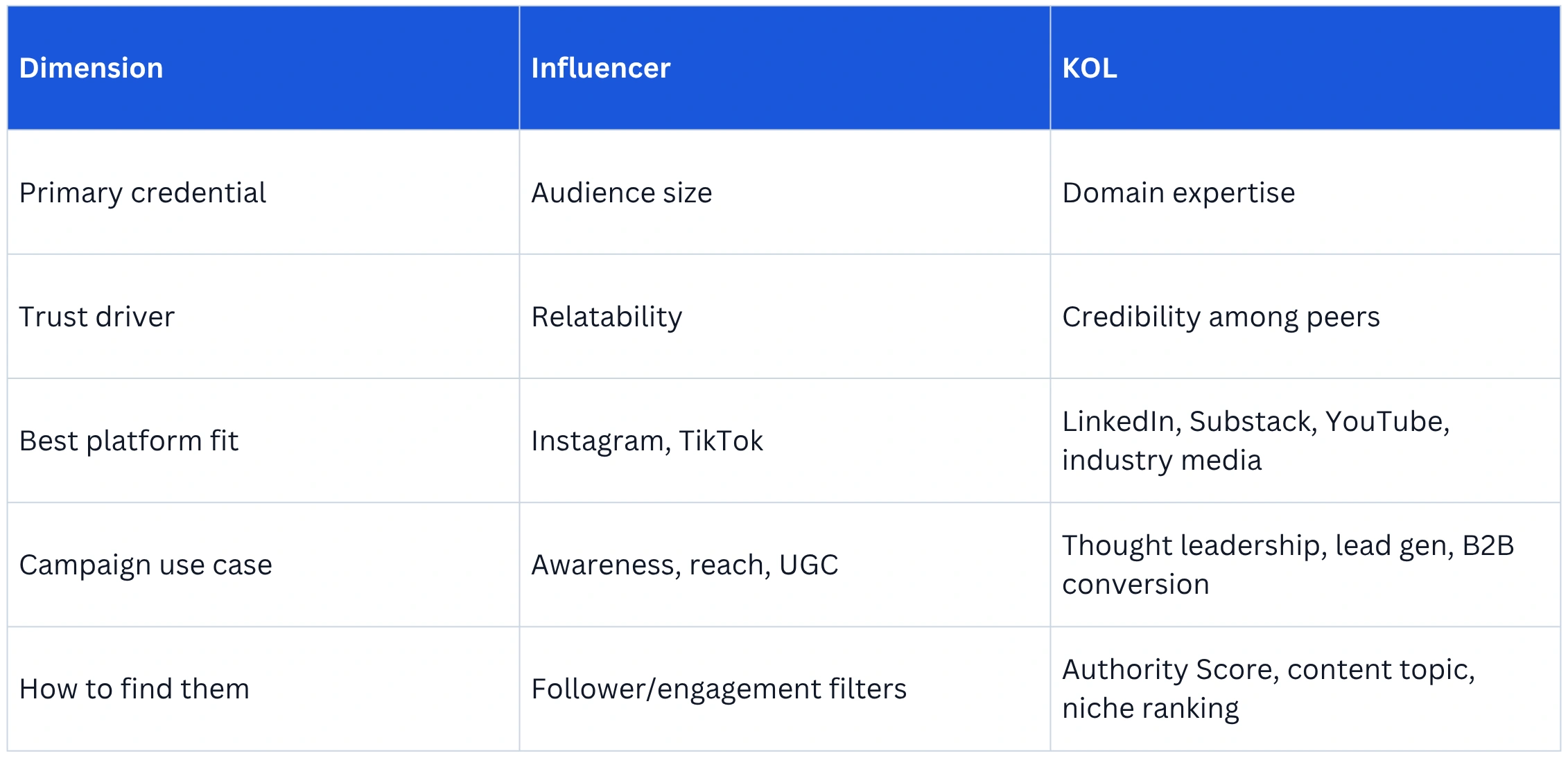
A micro-influencer with 15,000 LinkedIn followers who writes weekly about fintech regulatory compliance is a KOL in that niche. A lifestyle creator with 500,000 Instagram followers is not — regardless of their engagement rate. The relevant metric is influencer authority score, not total reach.
Step 1: Define Your KOL Criteria Before You Search
The most common mistake in KOL discovery is going to the tool before you know what you’re looking for. Discovery tools return what you search for — if your criteria are vague, you’ll get a list of high-follower accounts and spend hours qualifying down from there. Define the criteria first.
The five criteria to lock before opening any tool
• Niche: Not “health” or “tech” — the specific sub-niche. “Pharma regulatory affairs,” “SaaS product-led growth,” “clinical nutrition.” The more specific, the better the signal-to-noise ratio in results.
• Platform: Where does your target audience actually consume expert content? For B2B and professional audiences: LinkedIn and Substack. For consumer health or pharma: YouTube and Instagram. Platform choice changes the entire discovery search.
• Audience size range: Resist defaulting to the largest accounts. For KOL campaigns focused on conversion, mid-tier experts (10k–100k) consistently outperform mega-KOLs on engagement quality and audience trust.
• Content format: Long-form articles, short-form video, podcasts, newsletters? The format affects how the partnership is structured and what deliverables make sense.
• Audience demographics: Job title, industry, seniority level, location. For B2B KOLs, this matters more than age or gender.
Write this criteria down before opening Favikon or any other tool. The search prompt you type will directly reflect these five inputs.
Step 2: Use Favikon’s AI Search to Find KOLs by Niche and Authority
This is where discovery actually happens. Favikon’s AI Search takes a plain-language prompt and returns profiles ranked by Authority Score — a composite metric that weights niche expertise, content consistency, engagement quality, and audience credibility. It doesn’t rank by follower count.
How to run a KOL search in Favikon
1. Go to Creator Search in the Favikon sidebar.
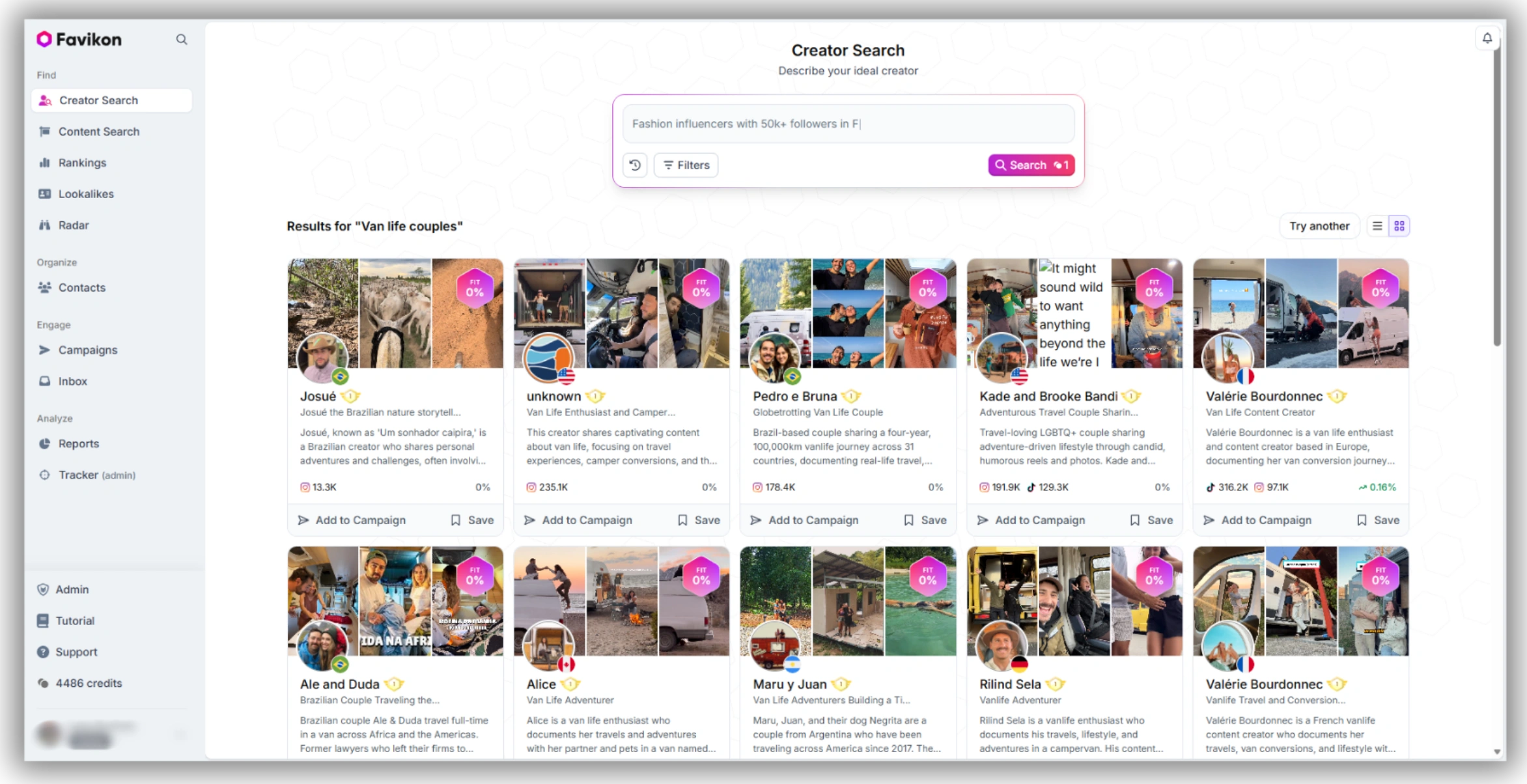
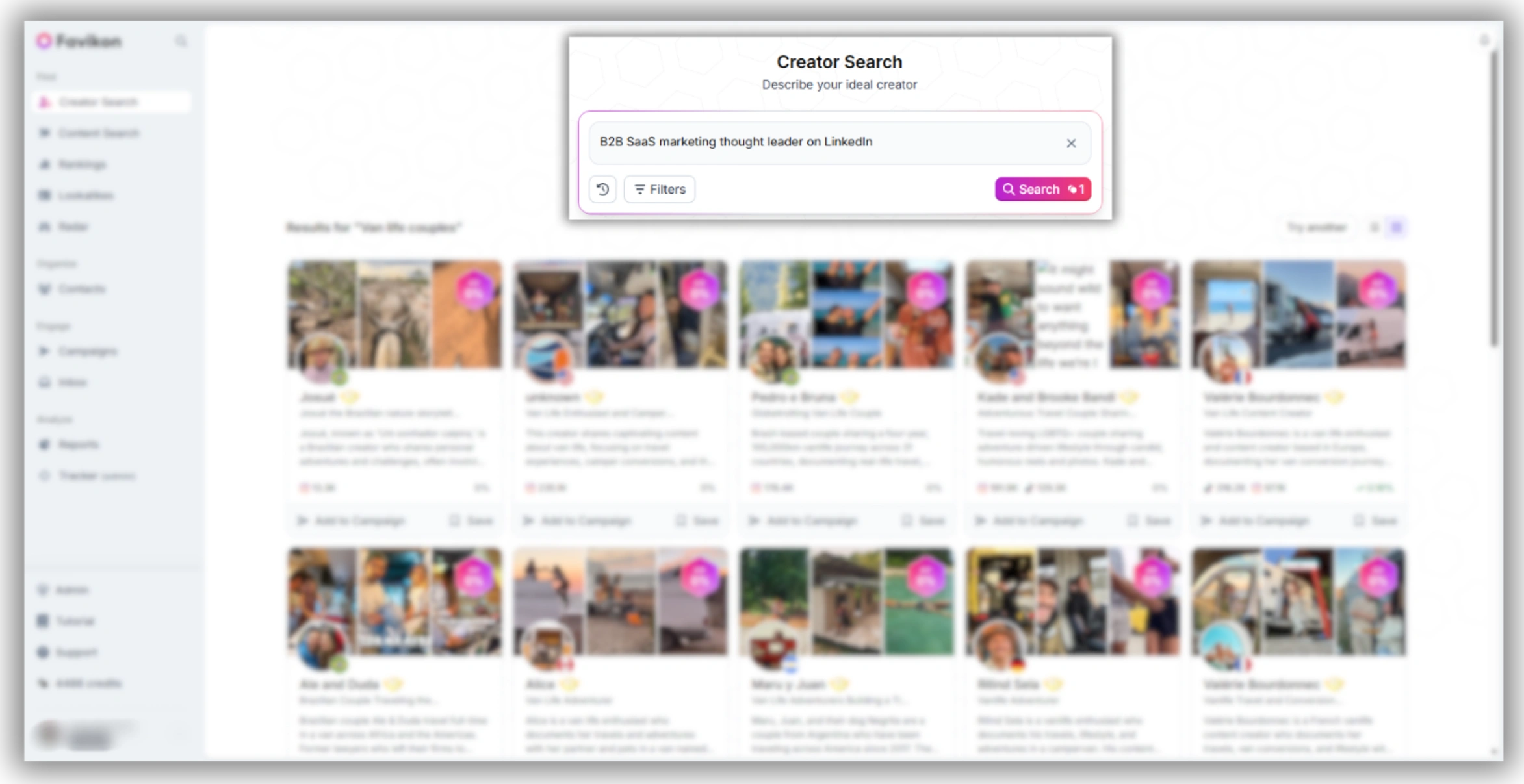
2. In the AI Search bar, type a plain-language description of the KOL you’re looking for. Examples: “B2B SaaS marketing thought leader on LinkedIn” or “clinical dermatologist on YouTube discussing skincare science” or “fintech compliance expert on Substack.” The more specific the prompt, the more qualified the results.
3. Review the results list sorted by Authority Score by default. This surfaces KOLs whose influence comes from expertise, not from virality or ad spend.
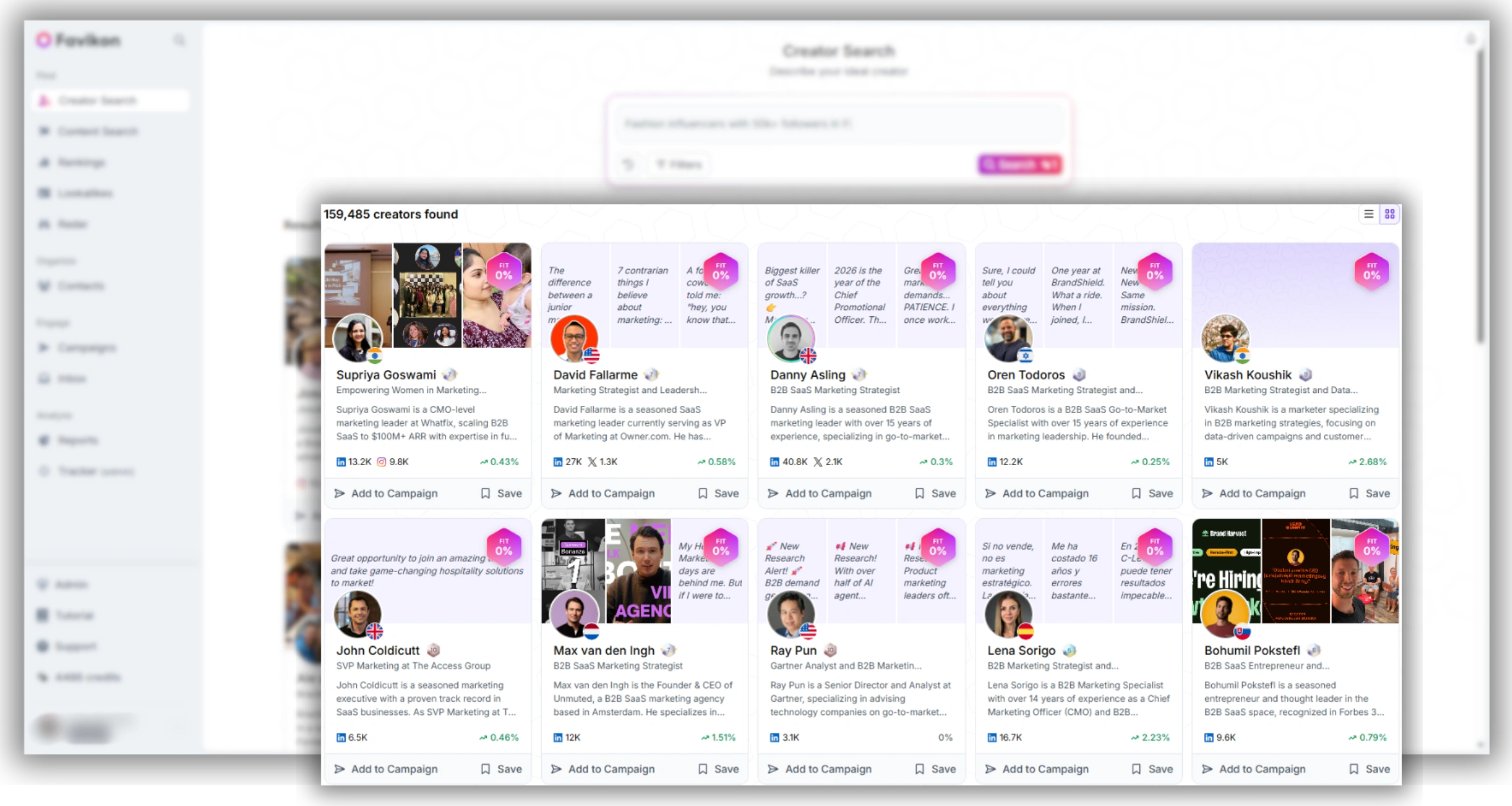
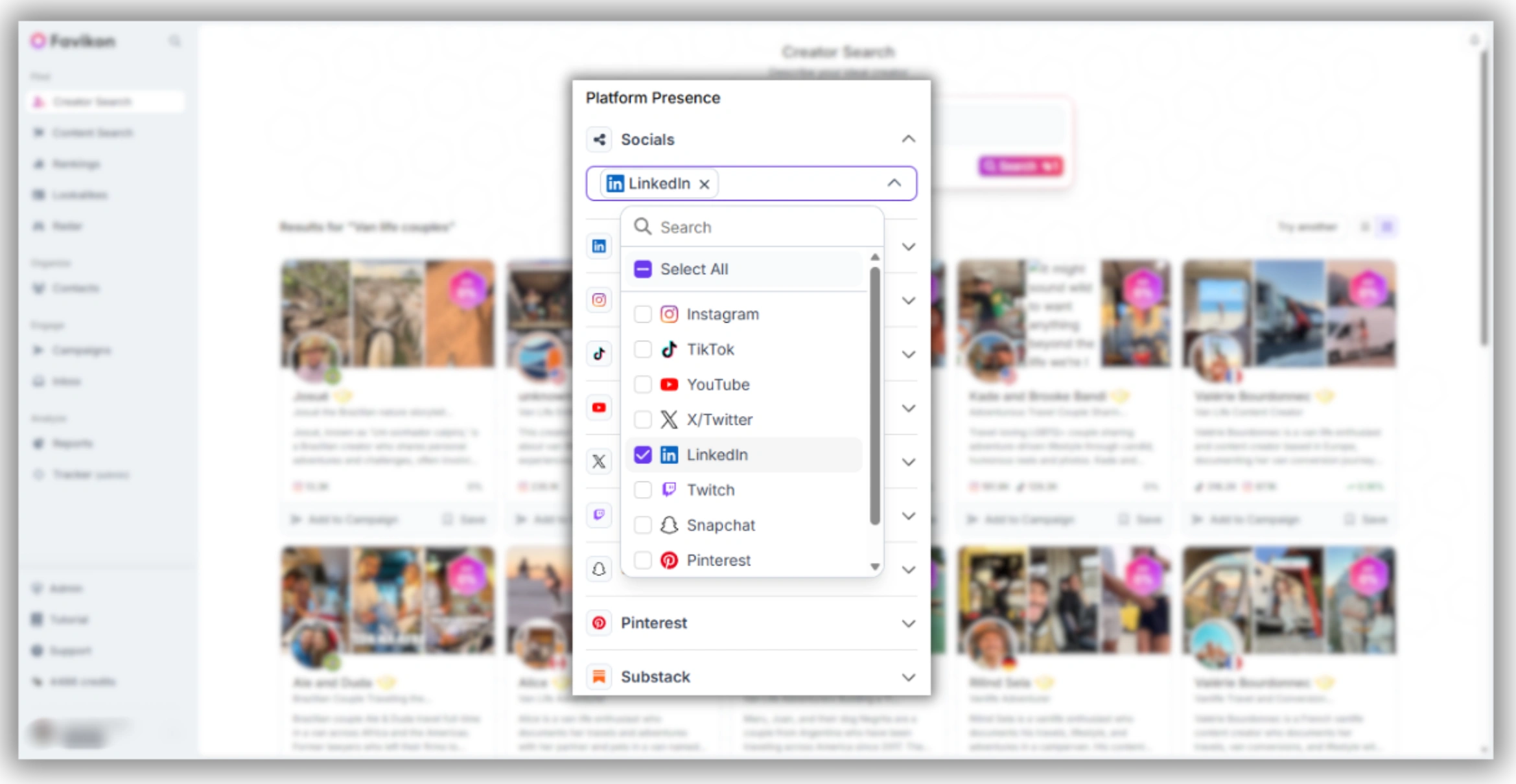
4. Apply platform filters to narrow to LinkedIn, YouTube, Substack, Instagram, or other channels relevant to your audience.
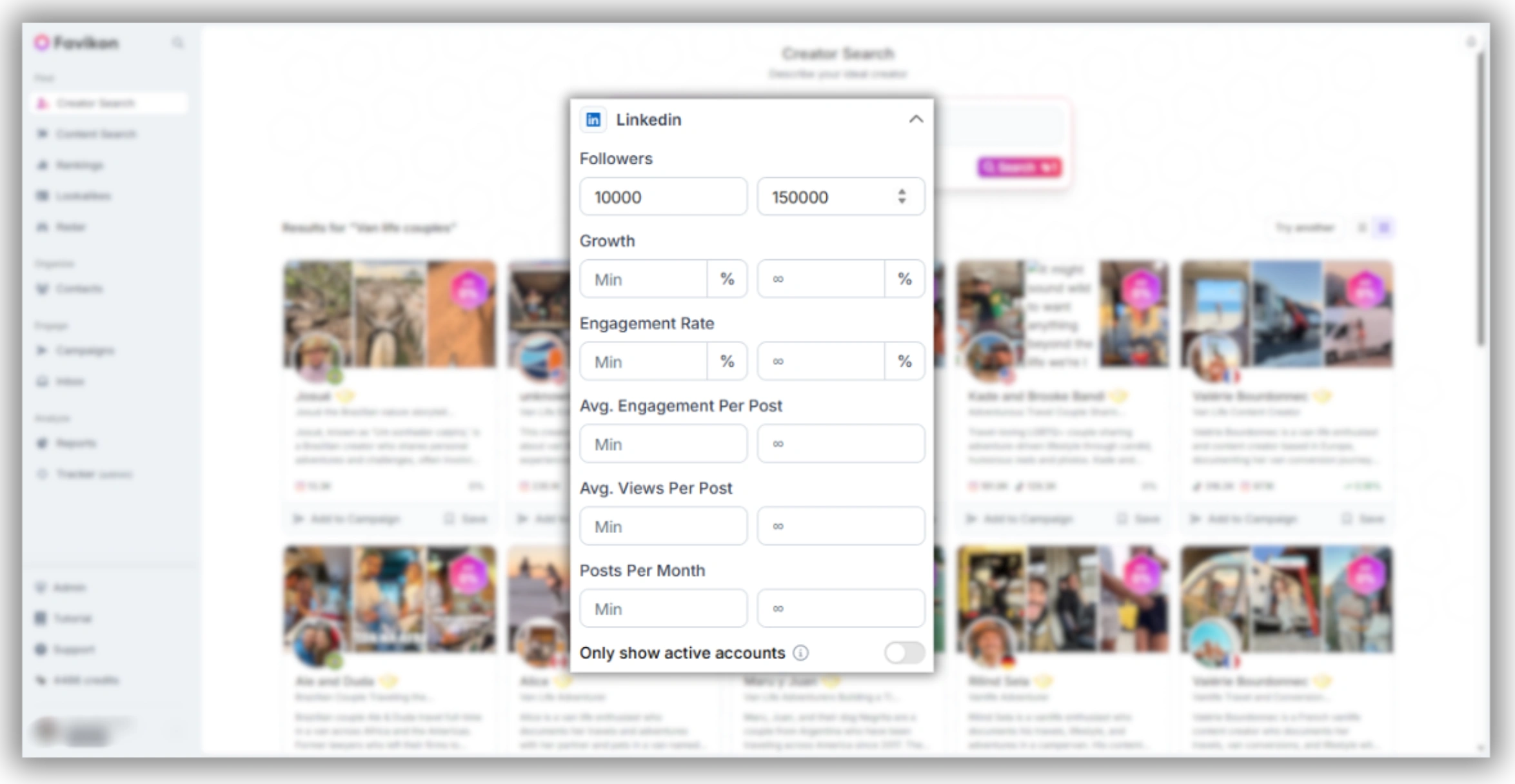
5. Use the follower range filter to set your target size band. For B2B KOLs, 10k–150k is typically the most productive range.
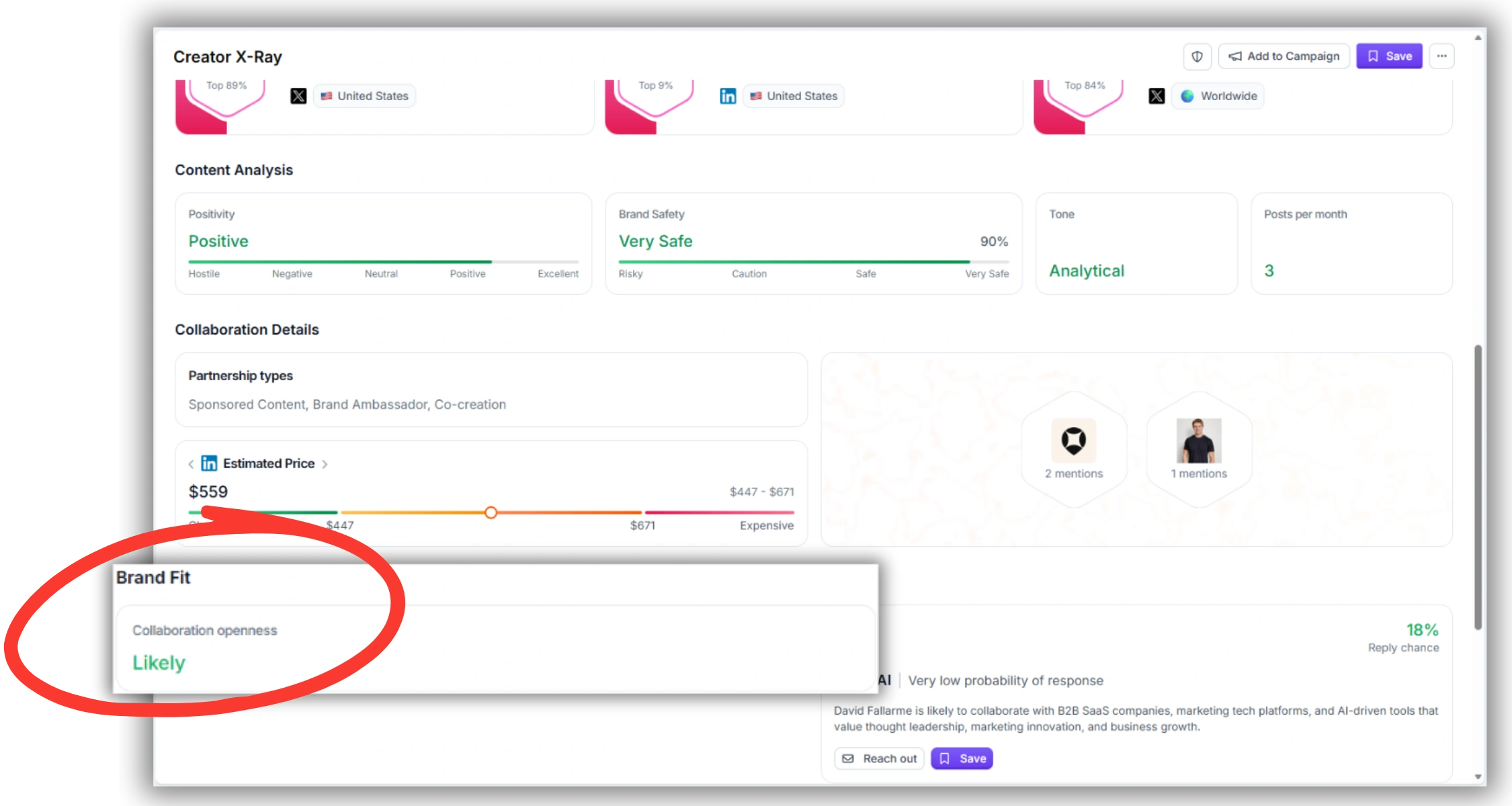
6. Check the Brand Fit score on each profile. This measures how well the creator’s content topics and audience demographics align with your brand’s positioning — it’s a pre-qualification step before you spend time reviewing the full profile.
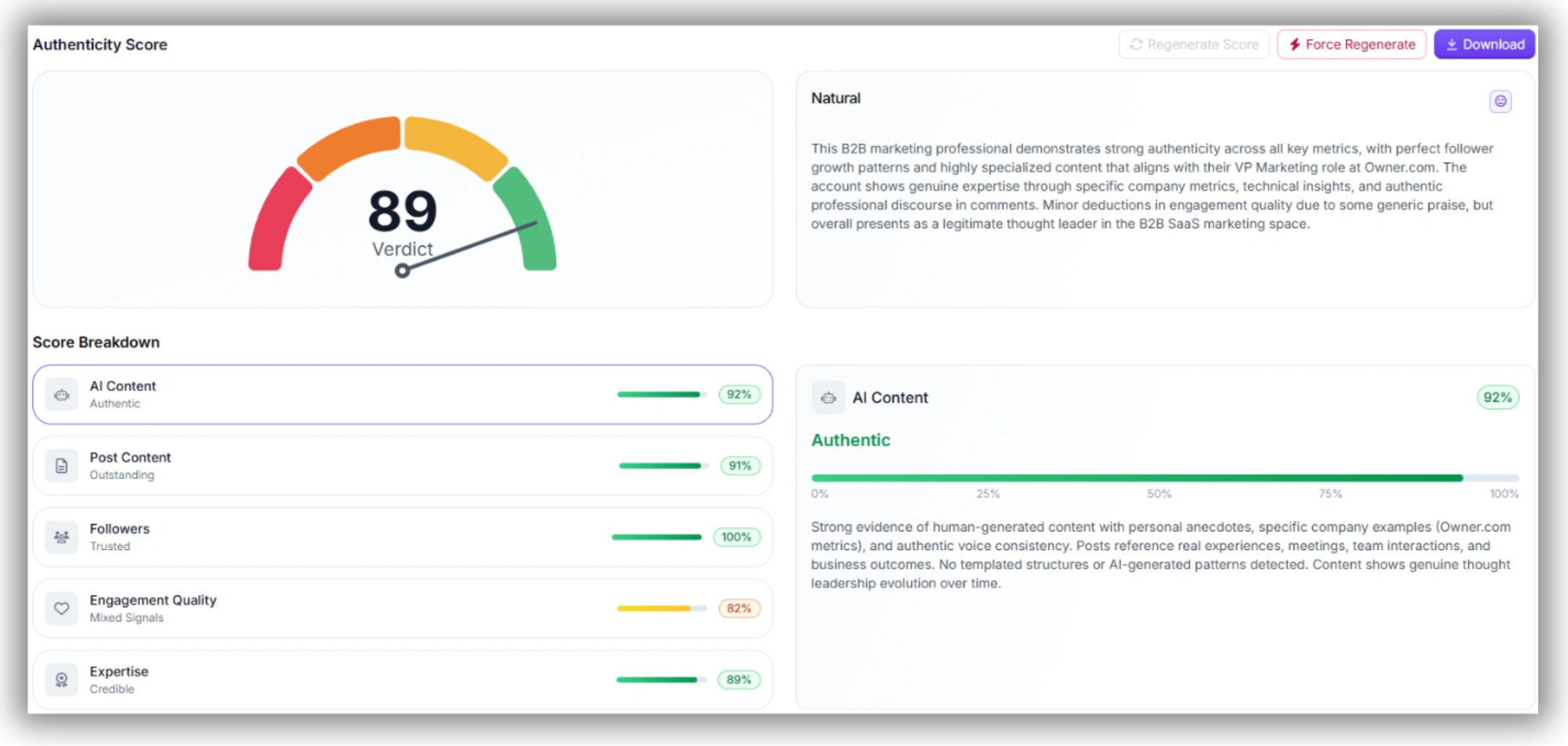
7. Check the Authenticity Score to flag accounts with inflated or purchased engagement. This filters out low-quality KOLs who rank well on surface metrics but whose audiences aren’t real.
Step 3: Evaluate Their Content and Audience Before Reaching Out
Authority Score gives you a ranked shortlist. The next step is qualitative: open the Creator Profile and evaluate three things.
Content tab: what they actually post
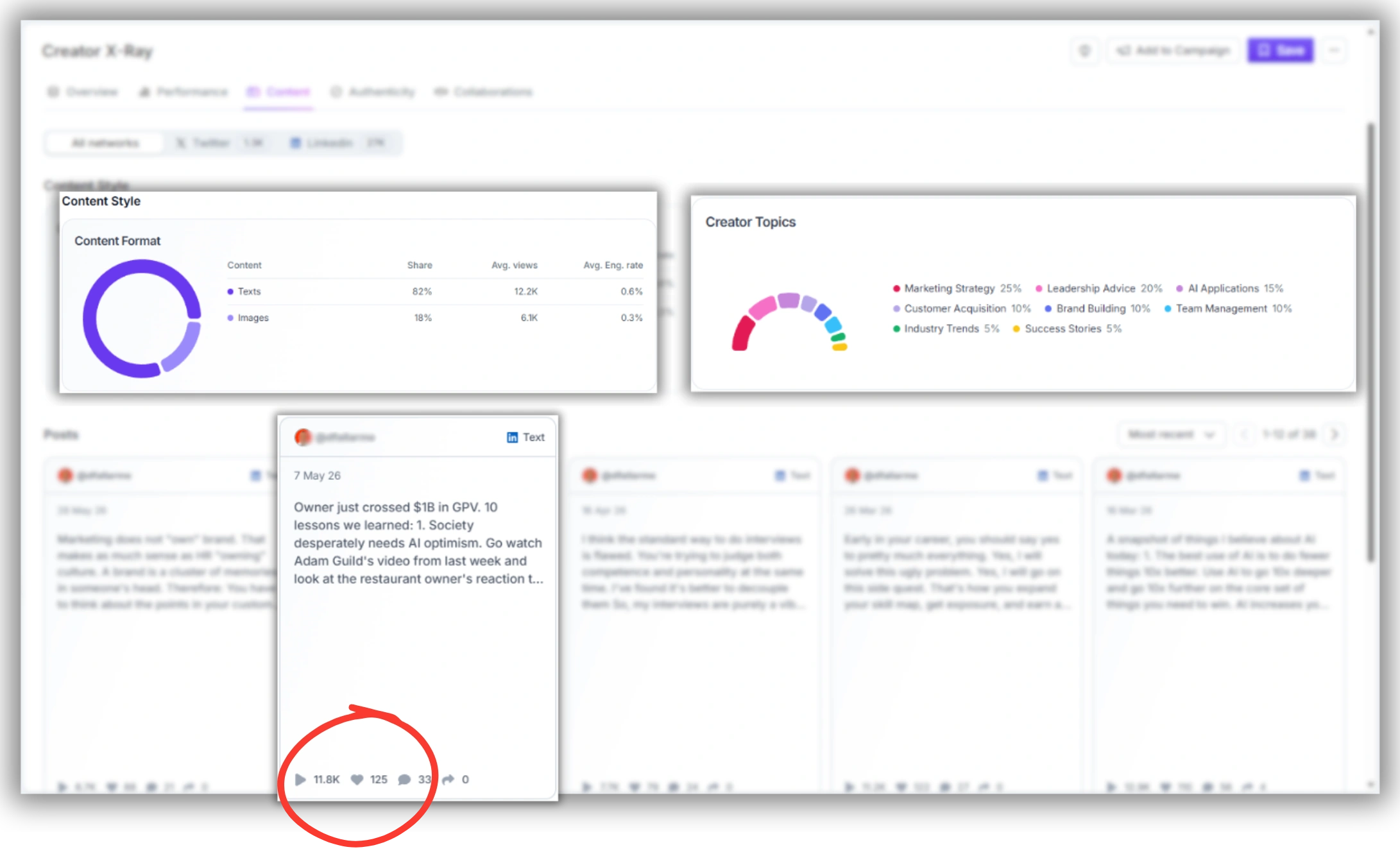
• Review the last 30 days of posts. Are they posting consistently in your target niche, or is the account a mix of topics? KOLs with scattered content tend to have fragmented audiences.
• Check content format: articles, videos, carousels, or short posts. Align this with your campaign deliverable expectations.
• Look for posts that generated above-average engagement. What topics drove the most response? This tells you what the audience actually responds to within the KOL’s content mix.
Audience tab: who follows them
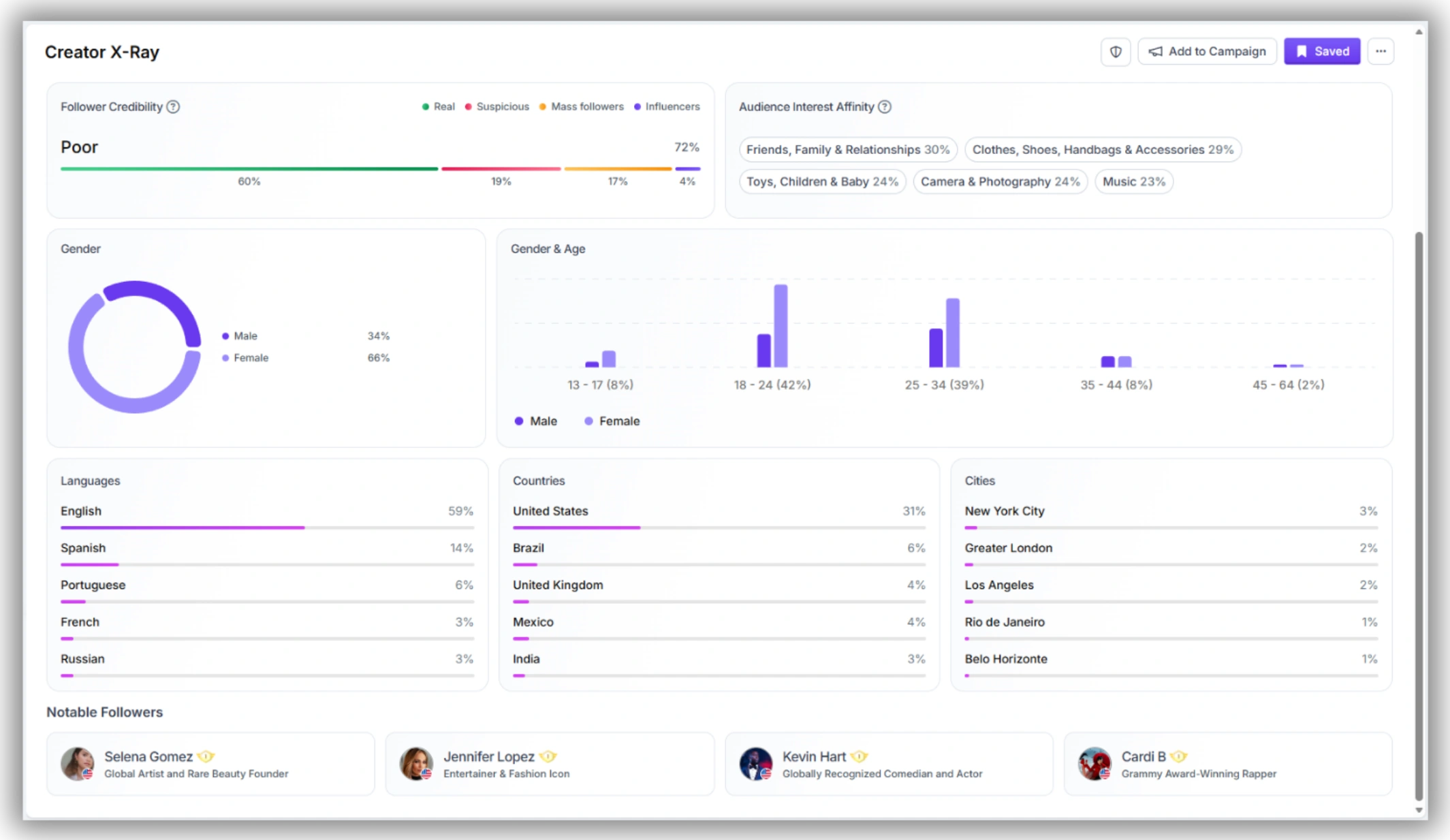
• Check audience demographics: job titles, industries, seniority level (for LinkedIn), and location. For B2B KOLs, this is the most important filter. A fintech compliance expert whose audience is 60% students is not the right KOL for an enterprise software campaign.
• Check audience credibility score: what percentage of followers are real, active accounts vs. bots, inactive accounts, or mass-followers. Favikon flags this in the audience breakdown.
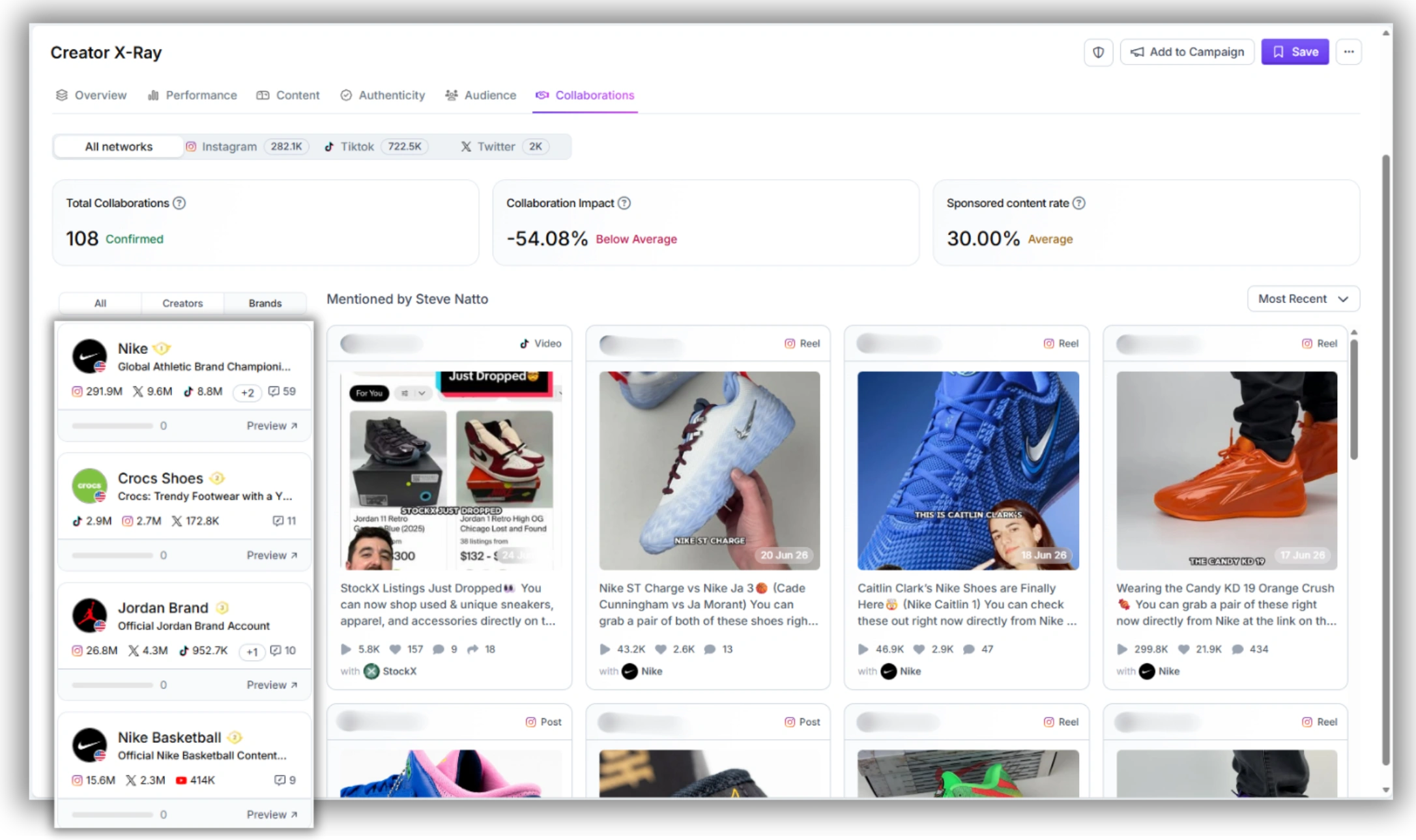
Collaborations tab: past brand deals
Review which brands this KOL has worked with and in what capacity. You’re looking for two things: category fit (have they worked with companies adjacent to yours?) and exclusivity conflicts (are they currently in an active campaign with a direct competitor?)
Step 4: Cross-Check on LinkedIn and Industry Publications
Platform data tells you what a KOL’s audience looks like. Manual signals tell you whether they have genuine authority in their field. This step takes 10 minutes per candidate and filters out creators who have optimized their Authority Score without actually being recognized by their industry.
Three checks:
• Industry media citations: Search their name in Google alongside your industry vertical. Quoted in Forbes, cited in a trade publication, referenced in a conference recap? That’s a KOL signal.
• Conference presence: Do they appear as a speaker or panelist at industry events? This is the clearest signal of peer-recognized expertise.
• Who follows them on LinkedIn: Check the follower list if visible. If other recognized experts in the niche follow them, that’s a strong credibility signal. If the followers are primarily other creators in the same space, the account may have influence within the creator ecosystem but not with professional buyers.
Step 5: Prioritize Long-Term Fit Over One-Time Reach
KOL relationships compound. The first campaign establishes the association between your brand and the KOL’s area of expertise. The second and third campaigns convert that association into trust. A study shows long-term partnerships with KOLs increase brand recall by 34% compared to one-off campaigns (Source: Influencer Marketing Report, 2025).
This changes the evaluation criteria. When choosing between two KOLs with similar Authority Scores, prioritize the one whose content roadmap overlaps with your category over the next 6–12 months — not the one with the highest single-post engagement.
Before finalizing a KOL, run the B2B influencer marketing criteria check: platform fit, audience ICP match, content relevance, and no active competitor conflicts. If all four pass, they’re worth a first conversation.
Finding KOLs in your niche? Favikon’s AI Search covers 10M+ creators across 9 platforms, ranked by Authority Score across 600+ niches. Start your 7-day free trial →
Frequently Asked Questions
Q: How do I find KOLs for my brand?
A: Define your niche, target platform, and ideal audience profile first. Then use a discovery tool like Favikon to search by content topic and Authority Score rather than follower count. Filter by platform and audience demographics, then evaluate each candidate’s content history and past brand collaborations before reaching out.
Q: How do I choose the right KOL?
A: Match on four criteria: niche alignment (do they post about your category?), audience fit (does their audience match your ICP?), content quality (is their content credible and consistent?), and no active competitor conflicts. Authority Score helps with the first two. Manual review covers the other two. Prioritize long-term fit over peak reach.
Q: How do I identify KOLs vs. regular influencers?
A: KOLs are recognized by their industry peers, not just their followers. The practical signals: they’re cited in industry publications, invited to speak at conferences, and followed by other domain experts. On Favikon, Authority Score surfaces this distinction — it weights expertise signals over raw follower volume.
Q: What’s the difference between a KOL and an influencer?
A: An influencer’s reach comes from audience size and content volume. A KOL’s influence comes from domain expertise and peer credibility. KOLs typically have smaller but more qualified audiences. In B2B contexts, a KOL’s recommendation carries weight because their audience sees them as an expert first — not just a content creator.
Q: What is a KOL finder?
A: A KOL finder is a discovery tool that identifies key opinion leaders by niche, platform, and expertise signals — rather than just follower count. Favikon’s Creator Search functions as a KOL finder: its AI Search returns profiles ranked by Authority Score across 600+ niches, with filters for platform, location, audience demographics, and Brand Fit.
Also See 👀
➡️ HOW TO MANAGE MULTIPLE INFLUENCER CAMPAIGNS
➡️ HOW TO BUILD INFLUENCER MARKETING REPORT
➡️ FAVIKON INFLUENCER DATABASE — 10M+ PROFILES
Others articles