Influencer Outreach at Scale: How to Do It Without Sounding Like a Bot
Growing your outreach efforts does not mean sending generic messages to hundreds of creators. This guide shows how to contact influencers at scale while keeping outreach personal, relevant, and more likely to get replies.

How to Do Influencer Outreach at Scale Without Sounding Like a Bot
Every playbook on influencer outreach says the same thing: don't send mass emails, personalize instead. Then those same guides offer no practical advice for teams managing 100+ creators. You can't write 150 bespoke emails a week. That's not a productivity problem — it's a math problem.
The personalization argument was correct for the era it came from — copy-paste templates, manual DMs, no follow-up system. In that world, mass outreach meant spray-and-pray. The advice earned its reputation.
But the tools have caught up. AI that reads a creator's actual content and generates a message referencing what they posted last week is not "mass outreach" in the old sense. Automated follow-up sequences that know when to stop aren't desperation. The volume vs. quality tradeoff isn't real anymore. Here's what the new version looks like in practice.
Why "Mass Outreach Is Bad" Advice Made Sense — and Why It's Outdated
The conventional wisdom has a real foundation. Sending 1,000 identical DMs to creators damages your brand's reputation with the people you're trying to partner with. Creators talk to each other. A copy-paste outreach blast — especially with a wrong name, a generic compliment, or a mismatched offer — signals that you haven't done the work. Getting ignored is the best-case outcome. Getting publicly called out is the other one.
Platforms like Modash have built whole arguments around this, and they're not wrong about the failure mode. Where the argument breaks down is in assuming the definition of "mass outreach" is fixed.
It isn't. The thing that made mass outreach bad — the complete absence of relevant personalization — is no longer an inherent feature of high-volume sending. When a tool reads a creator's recent posts and writes a message that references their specific content, the output isn't a template. It's a personalized message generated at scale. That's a different category of activity, and treating it like a mail-merge campaign means leaving a lot of replies on the table.
The Real Reason Outreach Fails at Volume (It's Not the Templates)
Most teams diagnose the wrong problem. When reply rates are low, the instinct is to slow down and personalize more. But volume itself isn't the issue. Three specific failure modes account for most underperformance:
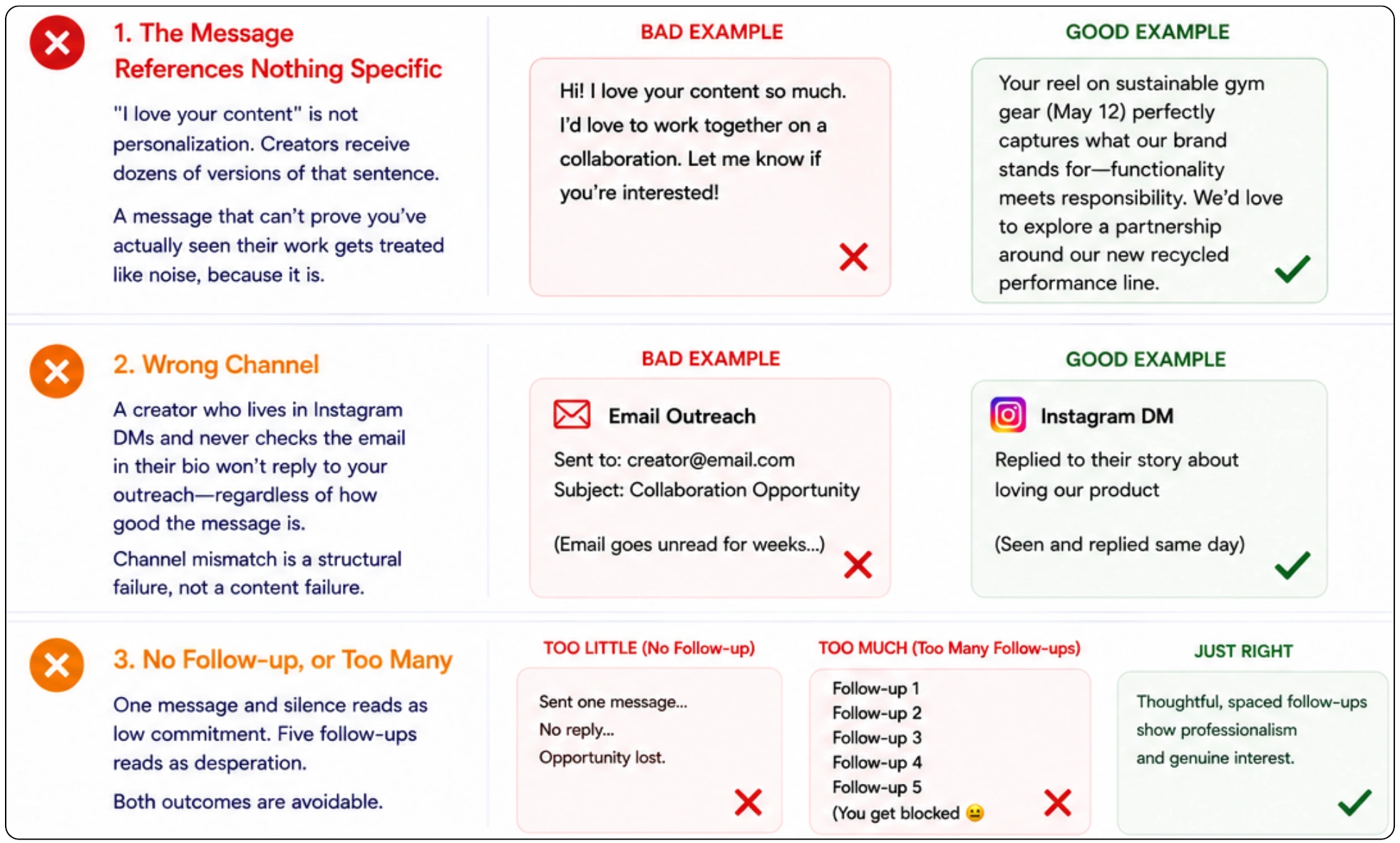
• The message references nothing specific. "I love your content" is not personalization. Creators receive dozens of versions of that sentence. A message that can't prove you've actually seen their work gets treated like noise, because it is.
• Wrong channel. A creator who lives in Instagram DMs and never checks the email in their bio won't reply to your outreach — regardless of how good the message is. Channel mismatch is a structural failure, not a content failure.
• No follow-up, or too many. One message and silence reads as low commitment. Five follow-ups reads as desperation. Both outcomes are avoidable.
Each of these is a systems problem, not a volume problem. The question shifts from "should I do outreach at scale" to "what does good outreach infrastructure look like."
The data makes the case for getting the system right. Industry average reply rates for cold influencer outreach run between 5 and 15%. Personalization that goes beyond a name-swap — messages that reference specific content — drives reply rates up by as much as 340%. A single follow-up increases replies by up to 49%. More than two follow-ups is counterproductive. These numbers come from Favikon's published influencer outreach reply rate benchmarks — the ceiling is achievable, but only if the infrastructure is in place to consistently hit it.
What AI-Powered Personalization at Scale Actually Looks Like
The mechanism matters here. Saying "AI personalizes your outreach" is vague. The concrete version: FavAI reads each creator's recent posts, identifies what they actually cover and what angles they take, and generates a message that references their specific content. Not their follower count. Not their category. What they posted.
The output is a message that reads as written for that creator — because the reference in it is specific to that creator. This is not a mail-merge where you swap in a first name. The personalization element is generated per creator, at volume.
The difference looks like this:
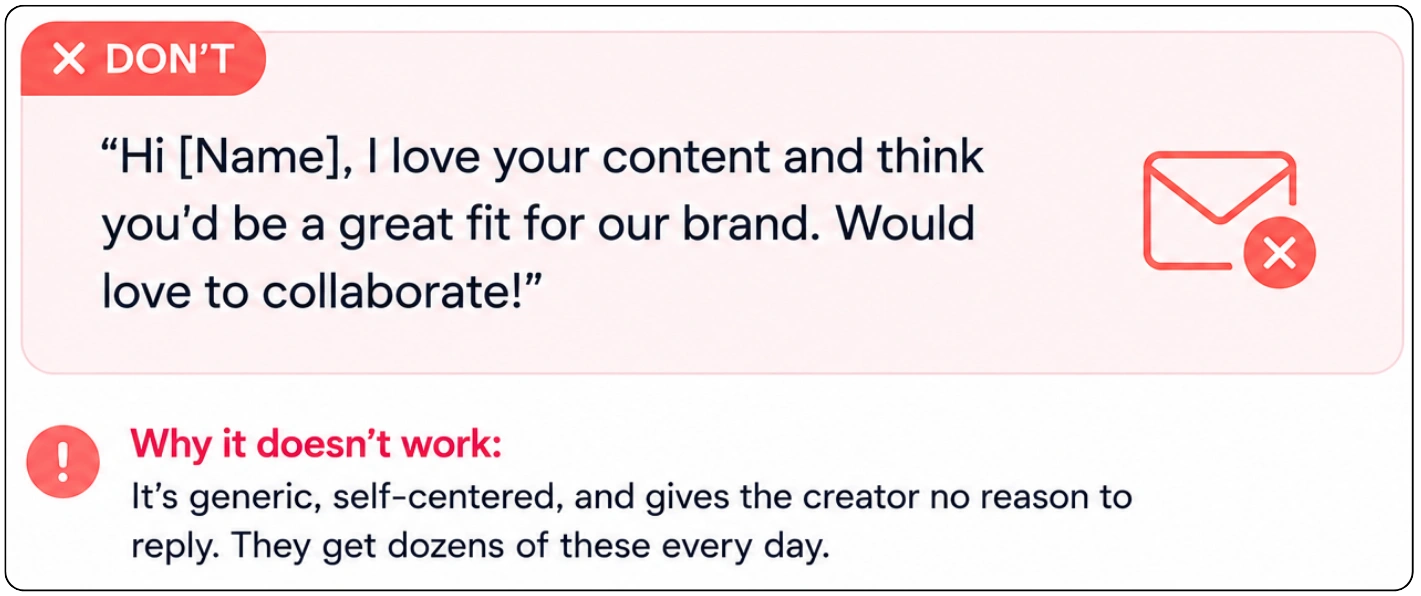
Before (generic):
After (FavAI-personalized):
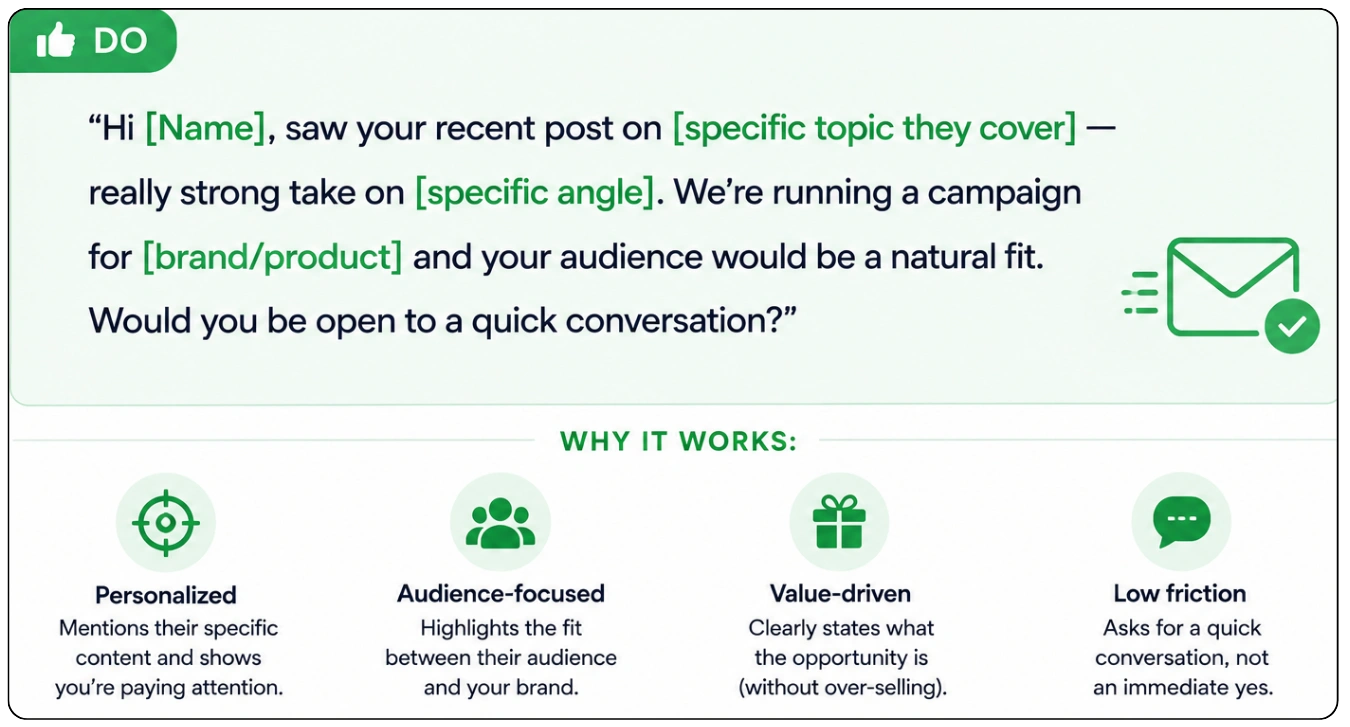
The creator in the second example has a reason to believe the sender actually knows their work. That's what drives the reply rate difference.
Reaching Creators Where They Actually Are — Email and DM in One Place
Most outreach teams have a channel problem they don't talk about. They send email only and miss creators who primarily use Instagram DMs. Or they manually DM across platforms with no central record, no tracking, no way to know if a reply came in. Channel fragmentation means outreach that should convert doesn't — not because the message failed, but because it landed in the wrong place.
The best channel is the one the creator actually checks. You don't know which that is until you try both. A creator who ignores an email for two weeks may reply to a DM within hours — not because the second message was better written, but because that's where they live.
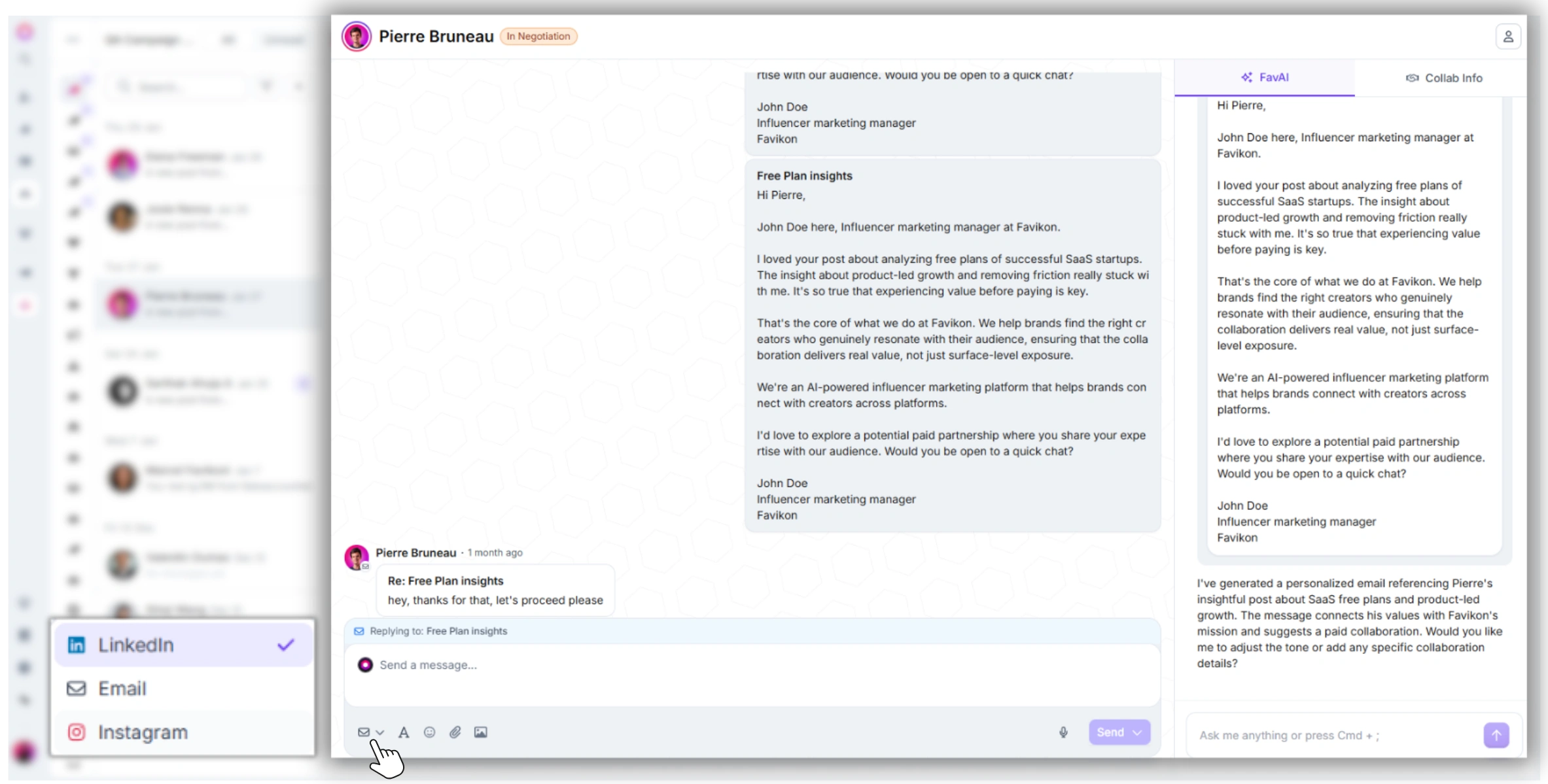
Favikon sends outreach via email and social DMs from one platform and tracks replies centrally. Even when a creator's email isn't publicly listed, there's still a channel open. For a team managing 150+ creators across a campaign, the difference between unified channel management and manual multi-platform DMing is roughly the difference between a system and a prayer.
This is where most manual outreach processes break. The channel problem isn't glamorous, but it's one of the primary reasons replies get missed. The fix is structural, not creative.
Automated Follow-Ups — The Step Most Teams Skip
Follow-up is where reply rates increase most significantly, and where manual processes collapse first. A team running outreach to 150 creators cannot reliably track who responded, who didn't, and who needs a nudge — across email, Instagram, and TikTok — without a system. So the follow-up either doesn't happen, or it happens inconsistently, which means half the list is effectively abandoned after the first message.
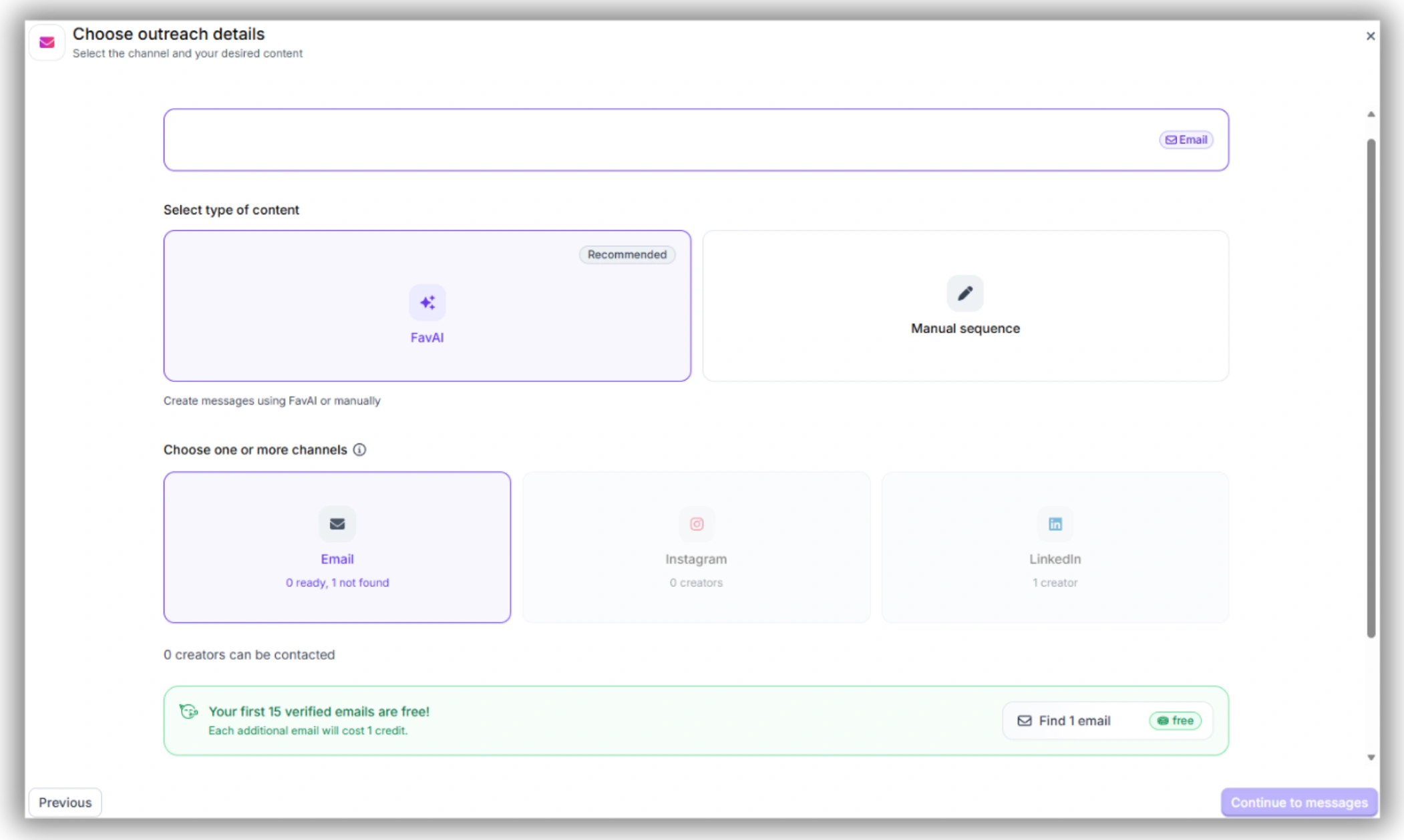
The sequence that works:
1. Message 1: AI-personalized initial outreach referencing the creator's content
2. Message 2 (day 5–7): Short, low-pressure follow-up. Not "just checking in." A specific add — a new angle on the offer, a reference to something they published since the first message, or a brief clarification. One sentence of new information is enough.
3. Stop at 2. More than two follow-ups is counterproductive by the numbers — see the influencer follow-up sequence data.
Automating this sequence isn't about removing the human — the message still matters, and a bad follow-up is worse than none. It's about making sure the follow-up actually happens, on the right cadence, for every creator on the list. Manual processes at volume mean inconsistency. Inconsistency means missed replies, which means missed partnerships.
Managing Replies at Scale — The Inbox Problem Nobody Talks About
Most outreach guides end at "send the message." Nobody addresses what happens when 30 creators reply across Instagram, TikTok DMs, and email in the same week — while you're also running a second campaign and managing a different list.
At scale, a missed reply isn't a minor oversight. It's a missed collaboration, and often a permanently closed door. A creator who responded and heard nothing back isn't going to try again.
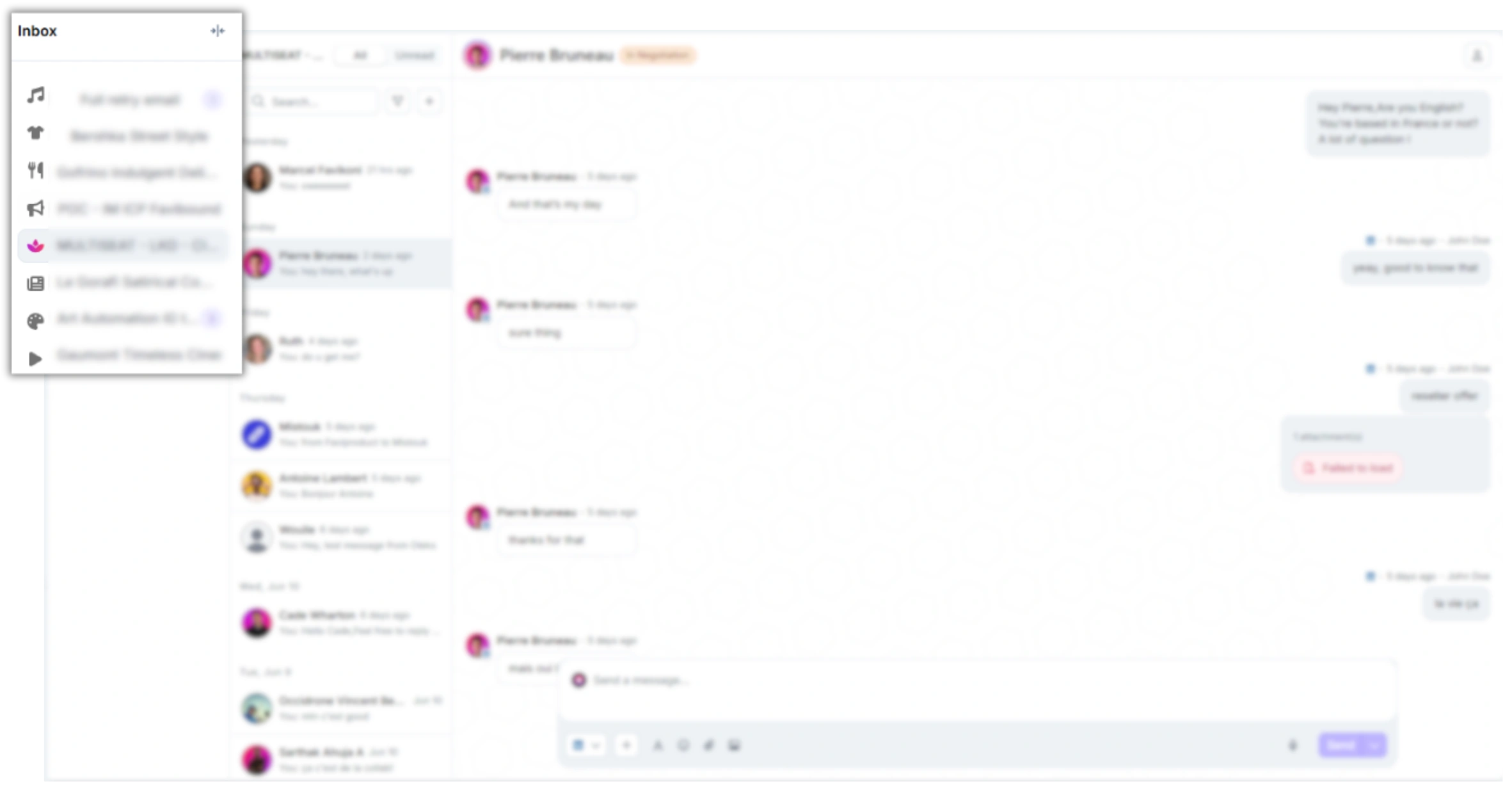
A global inbox that centralizes all campaign conversations — email replies, DM replies, across multiple campaigns — means no reply gets lost regardless of where it came from. A Kanban pipeline view lets you see who's active, who's pending a response, and what needs action across the whole creator list, without jumping between platforms.
Learn more in this video:
FAQ
What's a good reply rate for influencer outreach at scale?
Cold outreach without meaningful personalization lands at 5–15% on average. With genuine content-based personalization and a structured follow-up, that range climbs to 20–40%. If you're below 5%, the problem is usually message relevance, channel mismatch, or a list that's too broad. If you're between 5 and 15%, a single follow-up and tighter personalization will move you. The 20–40% range requires both — good messages and a consistent system behind them.
Is automated influencer outreach allowed on Instagram and TikTok?
Automated outreach is allowed when it operates within each platform's guidelines on messaging frequency and volume. Favikon's DM outreach works within those guidelines — the platform manages send rates to stay compliant. The risk of getting flagged comes from high-volume sending without rate controls, not from using a tool at all. The practical recommendation: stay within the volume thresholds the platform permits and avoid DM blasting hundreds of accounts in a single session.
How many influencers should I contact per week?
It depends on three variables: team size, follow-up capacity, and list quality. A one-person team handling follow-ups manually can realistically manage 30–50 new outreach contacts per week without letting replies fall through. A team of three using a centralized inbox can handle 150–200. If your list is highly targeted — creators already vetted for audience fit and engagement — you can push volume higher because fewer contacts waste. If you're still qualifying the list as you go, keep volume lower and focus on quality of targeting before scaling the send.
To find influencers by engagement rate and posting frequency, use Favikon's search filters to qualify before you contact.
What's the difference between mass outreach and automated outreach?
Mass outreach means the same message goes to everyone. Automated outreach means a system sends personalized messages at volume — each message specific to its recipient, but generated and delivered without manual execution per contact. This article is entirely about the latter. The distinction matters because the failure modes are different: mass outreach fails because the message is irrelevant; automated outreach fails only if the personalization mechanism is shallow (name-swap vs. content reference). A well-built automated outreach system produces results closer to 1:1 outreach at a fraction of the time cost.
Does personalizing every message actually improve results?
Yes, by a significant margin — and "personalized" has a specific definition here. Swapping in a first name doesn't qualify. The 340% increase in reply rates cited in Favikon's benchmark data applies to messages that reference the creator's actual content: what they've been posting about, what angles they take, what topics matter to their audience. A message that can demonstrate that specificity is one that earns a response. One that can't is just another generic pitch, regardless of how many fields you've populated.
For a deeper look at how to find influencers for your brand and structure the outreach that follows, the Favikon blog covers both the discovery and the contact strategy end to end.
Ready to run your outreach campaigns in Favikon and reach creators at scale without sounding like a bot?
Also See 👀
🏆 HOW TO RESEARCH INFLUENCER DEMOGRAPHICS
🏆 HOW TO CALCULATE ENGAGEMENT RATE OF ANY CREATOR
HOW DOES FAVIKON RANK INFLUENCERS?
Others articles