How Lovable Built a B2B Creator Program That Beats Paid Social
Many B2B brands rely heavily on paid ads, but creator partnerships can deliver stronger engagement and credibility. This case study breaks down how Lovable built a creator program that outperformed paid social channels.

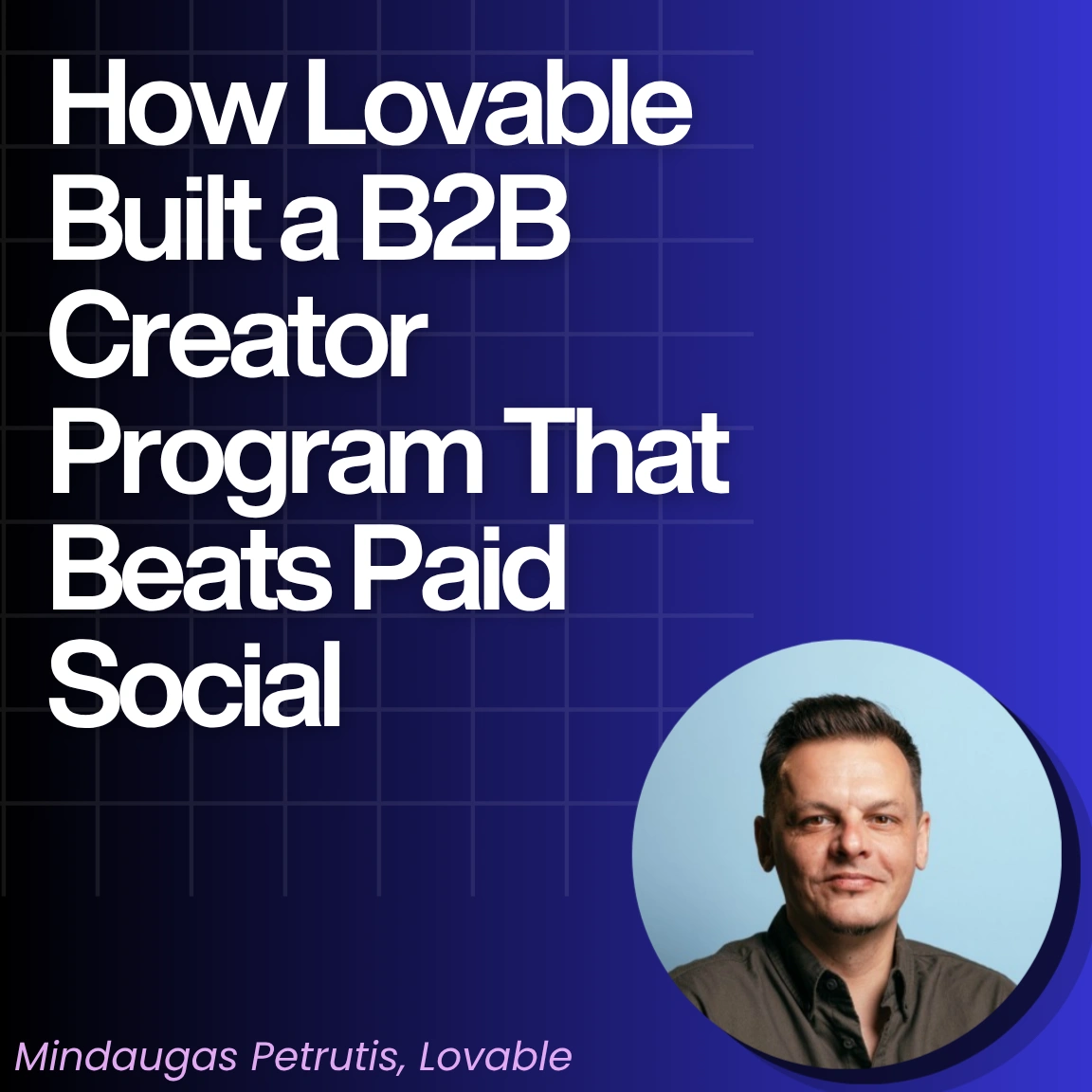
The B2B Influencer Playbook Behind Lovable’s $6.6B Growth
How Lovable built its creator program from scratch, lowered acquisition costs, and turned trusted voices into a distribution engine.
A special thanks to Mindaugas Petrutis for making this breakdown possible.
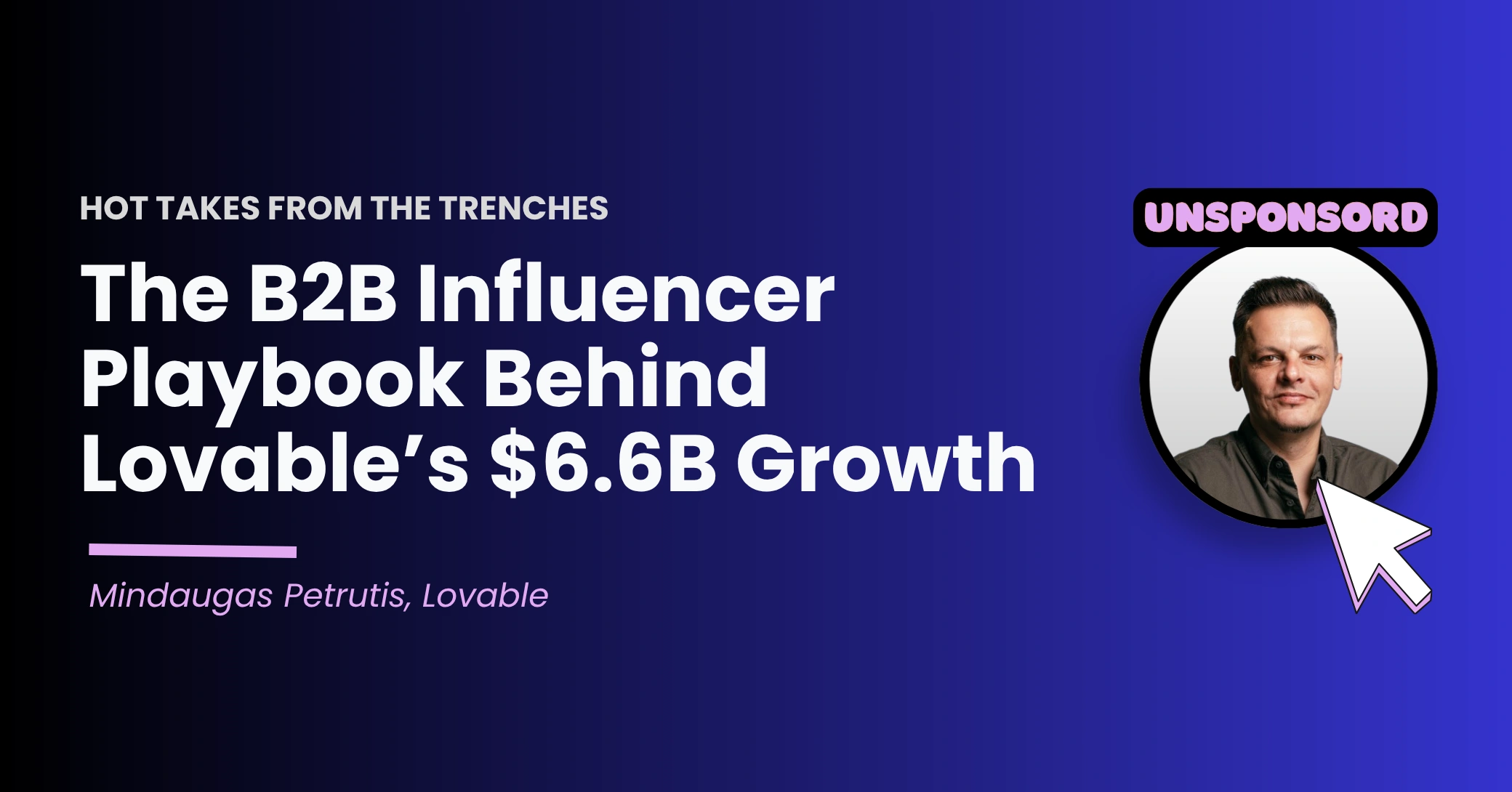
Mindaugas was one of the first 50 people at Lovable, where he built the company’s B2B influencer marketing program from the ground up.
His biggest lesson is simple:
Influencer marketing beats paid social for SaaS acquisition.
Not because creators automatically make products go viral. Not because follower counts guarantee conversions. And definitely not because paying someone to read a feature list suddenly makes it trustworthy.
Lovable approached creator marketing differently. It found people who genuinely wanted to use the product, gave them room to find their own angle, and measured what happened inside the product after the content went live.
Here is the full playbook.
Step 1: Start With Product Usage
Most influencer campaigns begin with a brief.
Lovable’s process began with the product.
Before discussing deliverables, messaging, or payment, creators were given access and asked to use Lovable for themselves. The goal was to see whether they could find a real reason to care about it.
That matters because a creator who has never touched your product can only repeat what your marketing team tells them.
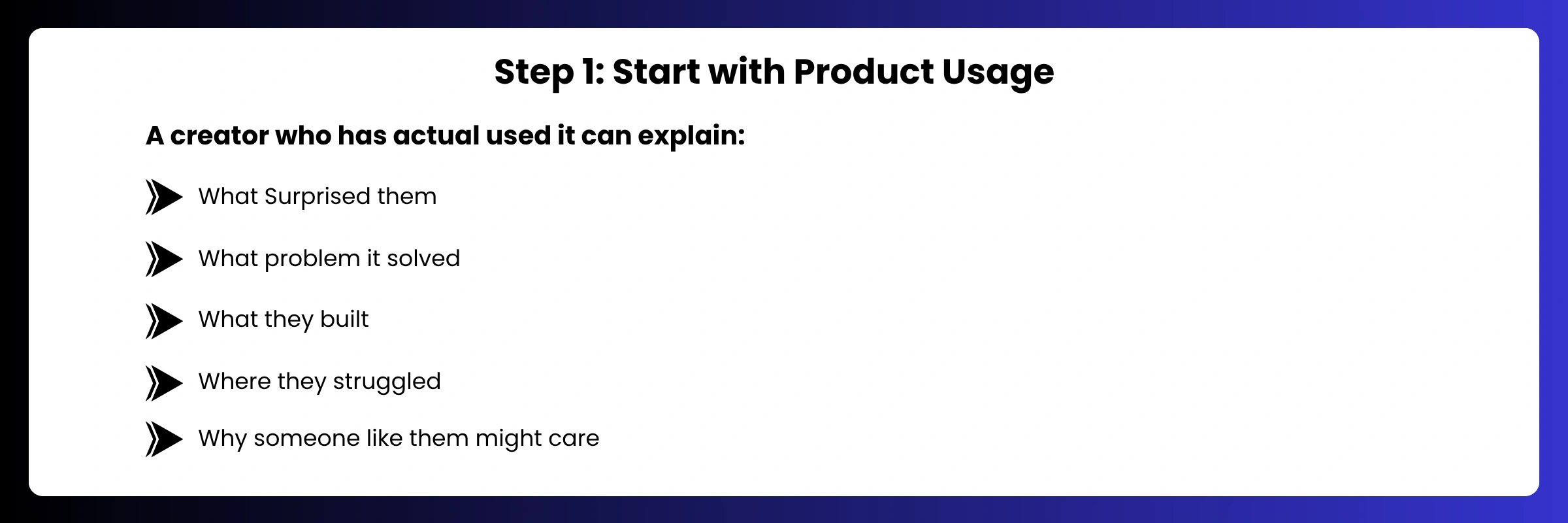
Mindaugas would sometimes give creators two weeks to experiment. If they came back with nothing to show, that was useful information.
The partnership was probably not a fit.
Pro Tip: Give creators access before giving them a brief. Their first reaction to the product will tell you more than their media kit.
This is especially important for SaaS products. The value is rarely obvious from a list of features. People need to see the product being used in a context they understand.
Step 2: Ignore Follower Count at the Beginning
Mindaugas regularly rejected creators with millions of followers.
The audience size looked impressive. The fit did not.
His creator selection process came down to four questions:
Are they good to work with?
You can often tell from the first reply.
A creator who responds to the details of your message is showing genuine interest. A creator who immediately sends a rate card without acknowledging the product may be more interested in the transaction.
That does not make them a bad creator. It may simply make them the wrong partner for this campaign.
Will they actually use the product?
Interest is not the same as usage.
A creator might love the campaign idea but have no natural reason to use the tool. That usually produces generic content because the product has no real place in their workflow.
Can they find their own angle?
The best creators do not need to be handed a script.
They can connect the product to a problem their audience already discusses. They know which questions appear repeatedly in their comments and which examples will make the product feel relevant.
Will the product solve a real problem for them?
This is the most important question.
The collaboration becomes much stronger when the creator can say, “Here is something I needed, and here is how I built it.”
The problem belongs to the creator. The story belongs to the creator. The audience can feel the difference.
Pro Tip: Use Favikon to check a creator’s expertise, audience fit, content relevance, and engagement authenticity before reaching out. Popularity can attract attention. Relevance creates action.
Reach still matters eventually. It can help determine the potential scale of a partnership.
But reach should not be the first filter.
Step 3: Study the Comment Section Before Writing the Brief
A creator’s comment section is free customer research.
Before discussing campaign angles, look at what their audience keeps asking about.
Are people asking how the creator completed a particular task?
Are they struggling with a repeated problem?
Are they asking for templates, tutorials, or access to something the creator has built?
Those questions reveal where your product can enter the conversation naturally.
The wrong approach is to start with your feature list:
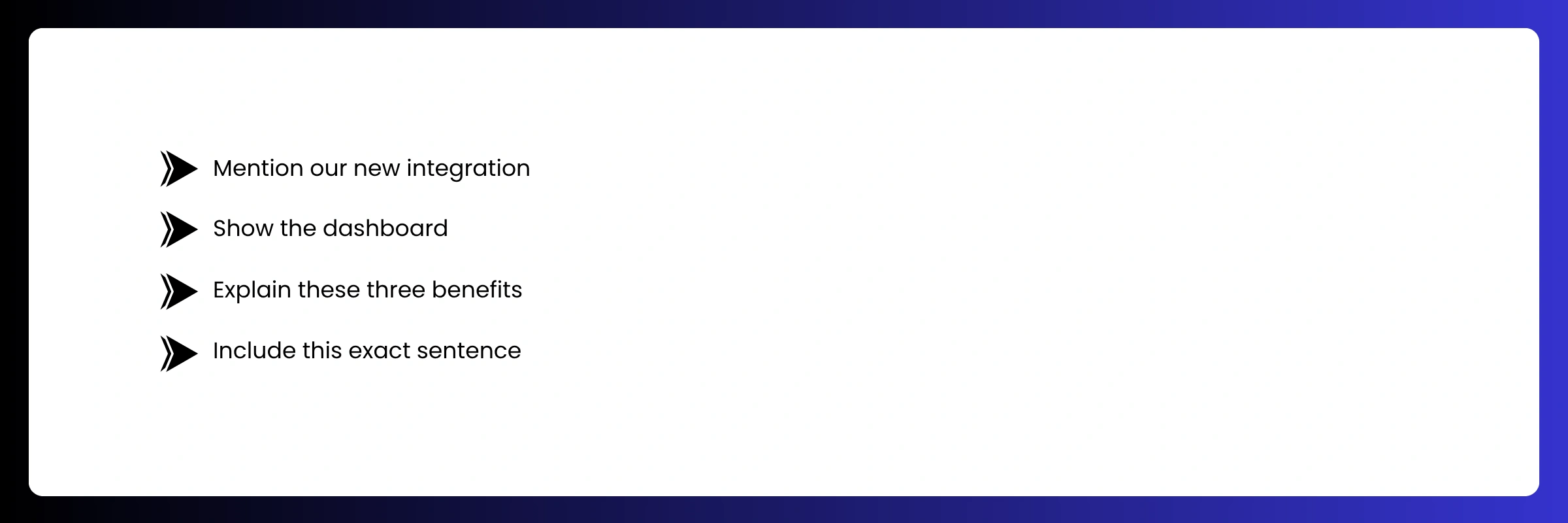
The stronger approach is to start with an audience problem:
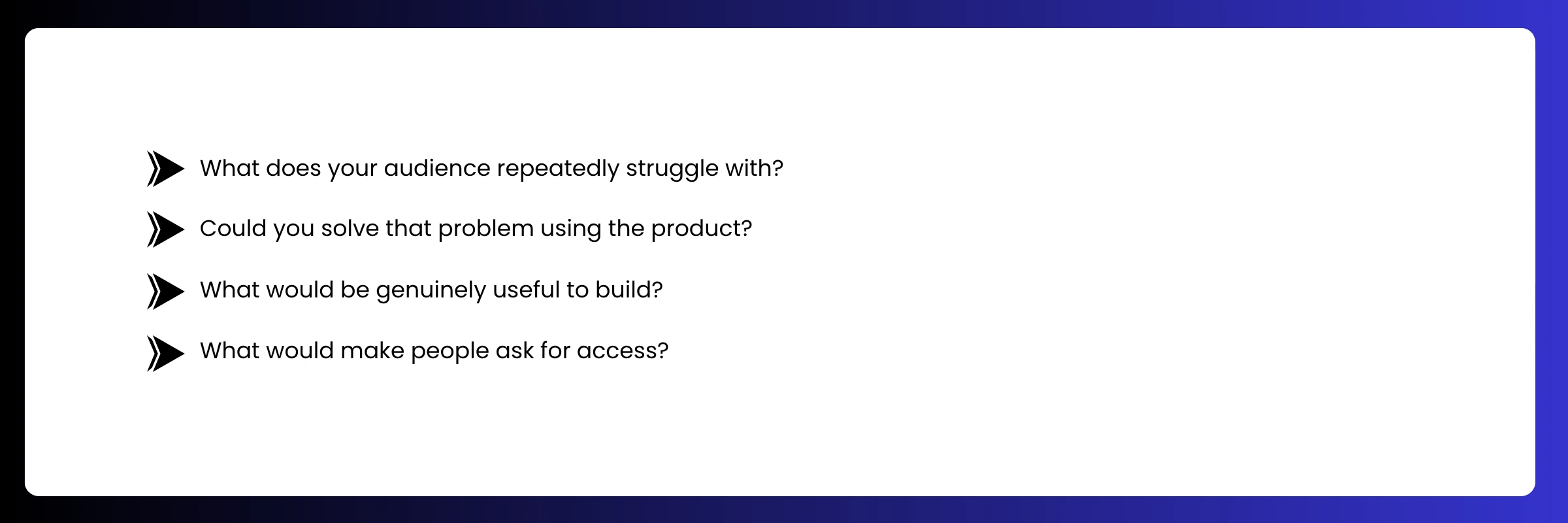
This changes the brief from “Here is what we want you to say” to “Here is the product. What would you use it for?”
Pro Tip: Build the campaign angle from audience questions, not internal product messaging.
The creator already knows how to speak to their audience. Your job is to give them enough context to make the product useful, not enough instructions to make the content sound like an advertisement.
Step 4: Make the Product Part of the Content
Most SaaS influencer campaigns ask the creator to talk about the product.
Lovable encouraged creators to make something with it.
That distinction is important.
A creator saying, “This platform helps you build applications with AI,” is a product claim.
A creator building an application, sharing the process, and letting the audience see the result is product proof.
In one collaboration, a creator built an app with Lovable for a video. The content generated around 20,000 comments asking for access. The creator then finished the product, opened a beta, and reportedly collected 30,000 signups, with more people joining the waitlist.
The product was not inserted into the content.
The product created the content.
That is the ideal position for a SaaS brand. The creator’s output becomes a demonstration, a story, a tutorial, and a reason for the audience to try the tool themselves.
Pro Tip: Ask what the creator can produce with your product, not how many times they can mention it.
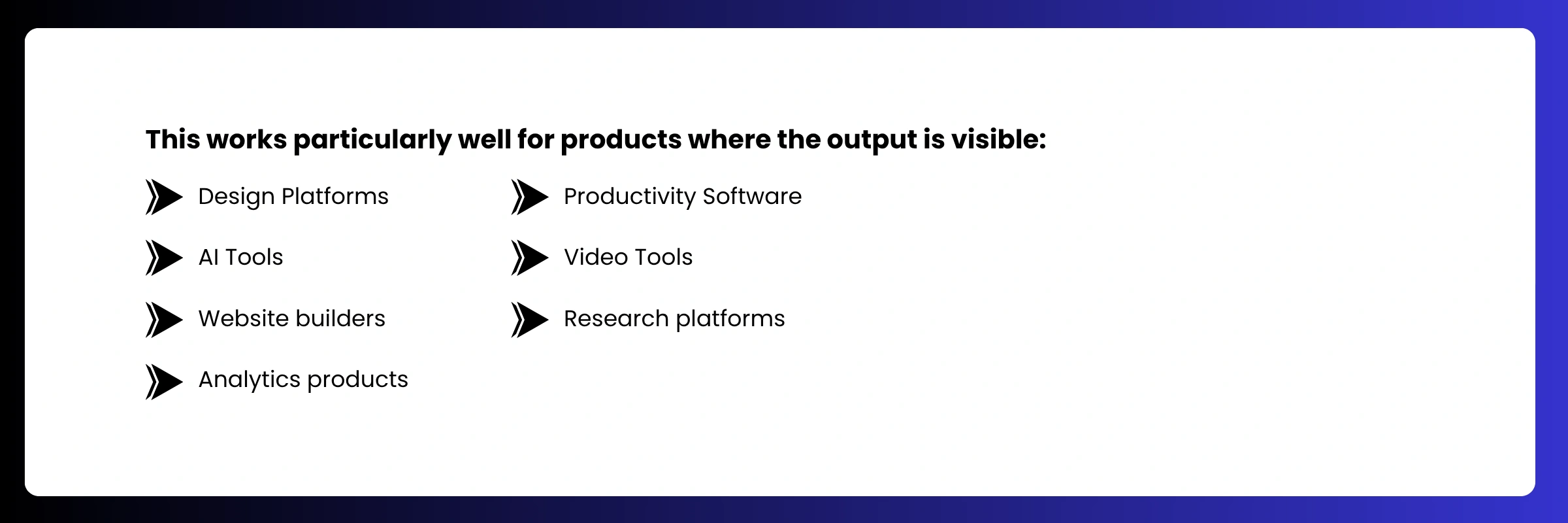
The more tangible the result, the less explanation the audience needs.
Step 5: Use Creators to Create Trust
Paid social is good at distributing messages.
It is less effective at creating trust from zero.
A brand account telling people that its product is easy to use is still a brand making a claim about itself. A respected creator showing how they used the product gives the audience context, interpretation, and proof.
The creator acts as a translator.
They take a product that may feel technical or unfamiliar and explain it through a problem their audience already understands.
This is why the right creator can outperform a polished ad.
They are not interrupting the audience with a message. They are continuing a conversation that already exists.
For SaaS brands, this matters because customers rarely purchase based on awareness alone. They need to understand:
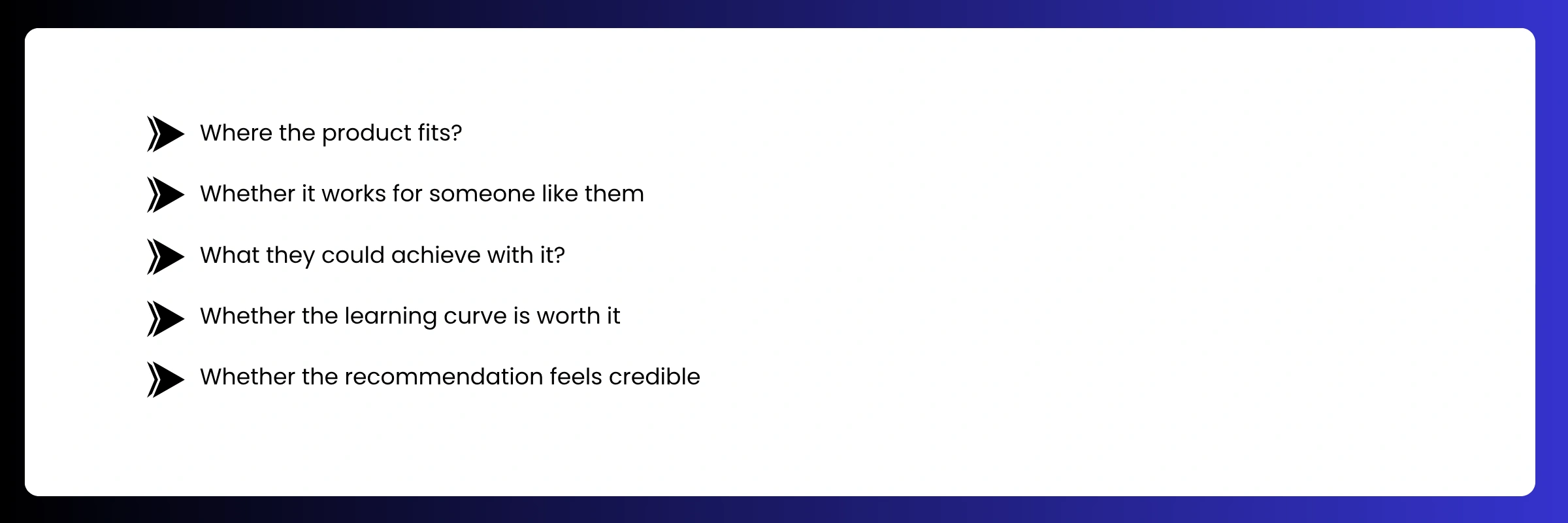
A creator can answer all five in one useful piece of content.
Pro Tip: Do not ask creators to make an advertisement look organic. Give them enough freedom to create something that would have been useful even without the sponsorship.
Paid distribution can still play a role later.
Once a creator has produced content that generates strong comments, signups, or conversions, the brand can amplify it. The creator earns the trust. Paid media extends the reach.
Trying to reverse that order usually produces expensive content that looks authentic without actually feeling authentic.
Step 6: Measure Product Metrics, Not Applause
Likes are useful signals.
They are not the final result.
The purpose of a B2B creator campaign is rarely to collect the highest possible engagement rate. It is to move the right people closer to using or purchasing the product.
The metrics that matter include:
Signups
How many people created an account after seeing the creator’s content?
Use a unique link, landing page, referral code, or another trackable path for every creator.
Activated users
A signup is not valuable if the person never experiences the product.
Define the action that shows meaningful usage. This could be creating a project, connecting an account, inviting a teammate, completing an analysis, or publishing something.
Conversions
How many users moved from free to paid?
For longer sales cycles, track demo requests, qualified leads, trial starts, or accounts influenced by the creator.
Customer acquisition cost
Calculate the full cost of the collaboration against the number of customers or activated users it generated.
This lets you compare creator marketing with paid social, search, partnerships, and other acquisition channels.
Content efficiency
Some creator content continues producing results long after publication.
Measure how much usage, traffic, or revenue the content generates over time, not only during the first 48 hours.
Pro Tip: Before launching, decide what counts as success inside the product. If the only available report contains impressions, likes, and comments, the campaign was not properly instrumented.
The goal is not to prove that every creator performed well.
The goal is to learn which creators, audience problems, formats, and product use cases produce the strongest business results.
Step 7: Treat the First Campaign as Research
Creator marketing rarely works perfectly on the first attempt.
The initial campaign should help you answer:
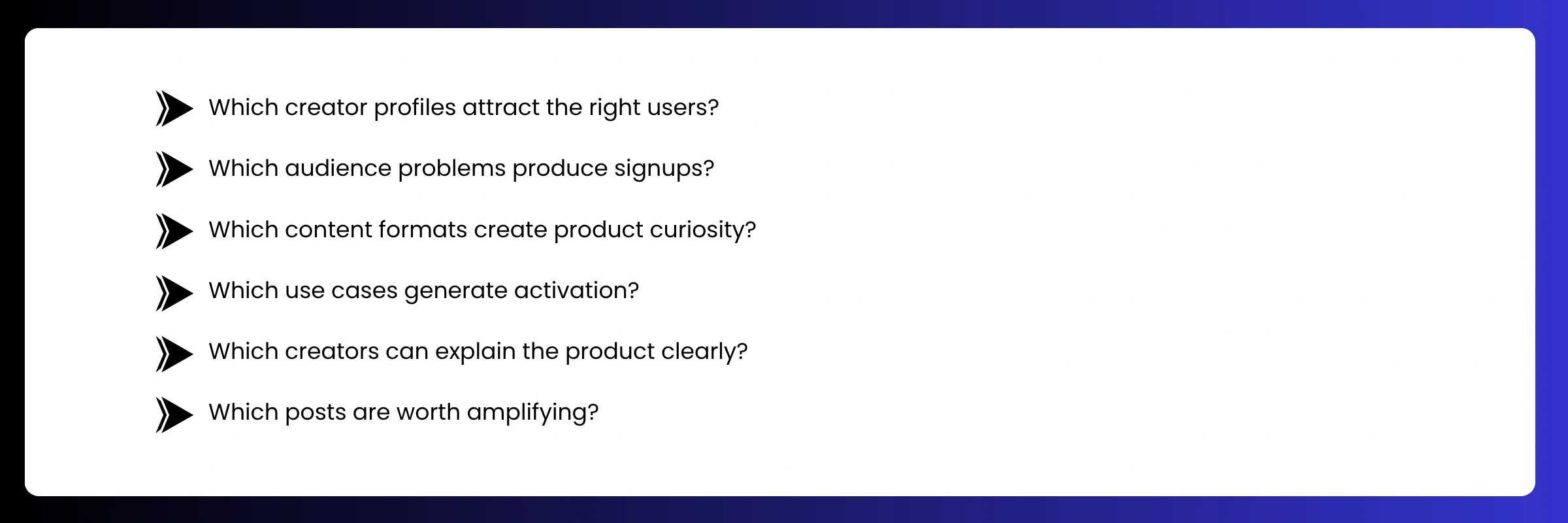
This is why putting the entire budget behind one large creator is risky.
A better starting point is a portfolio of smaller tests across different creator types and content angles. Use our B2B influencer price calculator to estimate fair rates across a range of creator sizes before you split your budget.
For example:
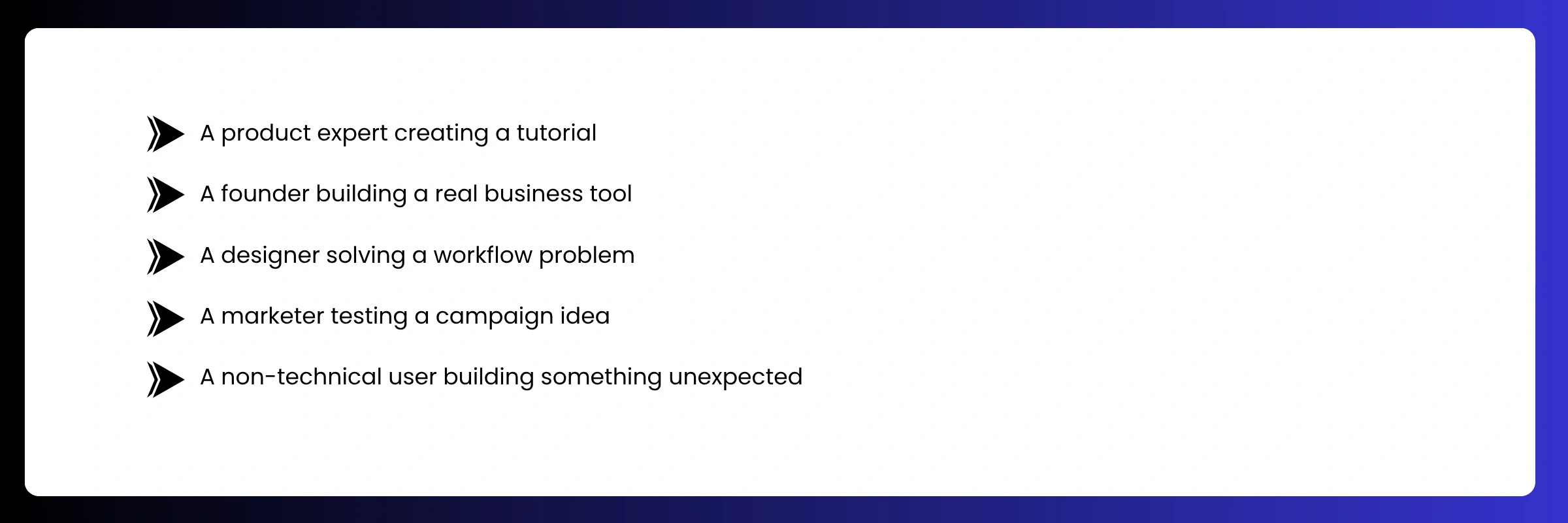
Give each creator a clear tracking path. Compare the results. Then invest more heavily in the combinations that work.
Do not try to rescue every underperforming collaboration.
A weak result may mean the creator, audience, problem, format, or product angle was wrong. Record the lesson and move the budget.
Pro Tip: Scale the creator and the angle together. A high-performing creator may struggle when forced into a use case their audience does not care about.
Step 8: Build a Creator Network, Not a Contact List
The long-term opportunity is bigger than individual sponsored posts.
Lovable turned creators into a community around what people could build with the product.
Each creator introduced the tool through a different context. Each project gave the audience another example of what was possible. Each successful collaboration made future creators more interested in participating.
Over time, the company was no longer the only party explaining the product.
Creators and users were doing it for them.
That is when influencer marketing becomes a real growth channel.
A contact list contains people you can pay to post.
A creator network contains people who:
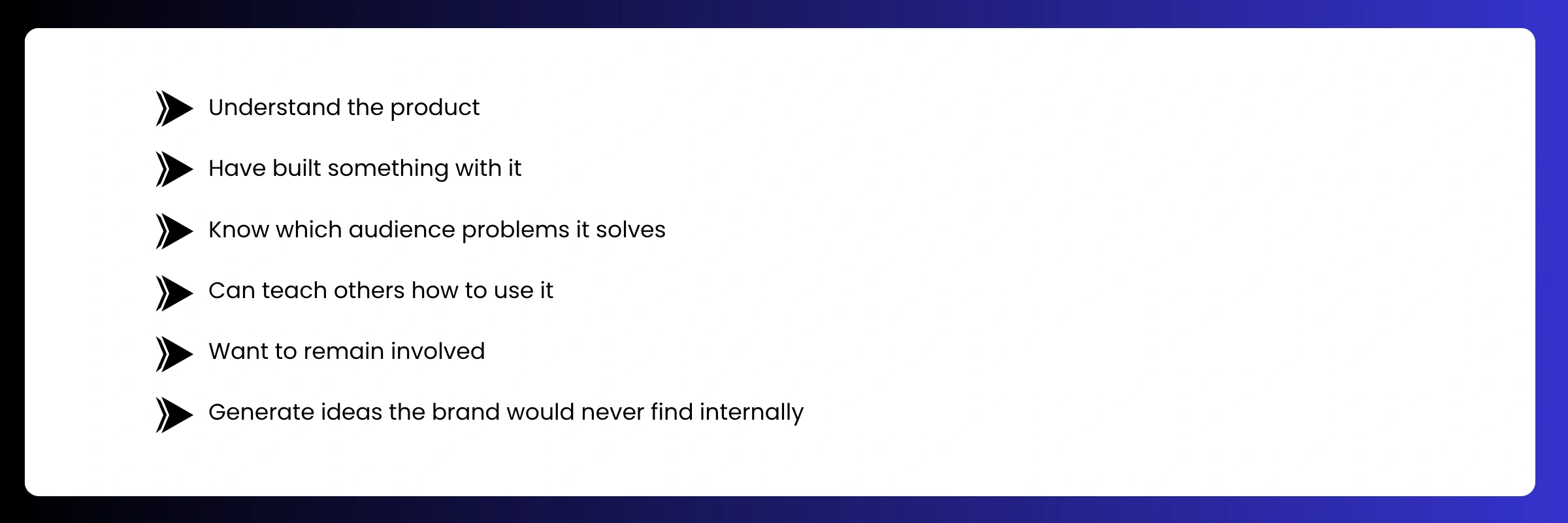
The strongest creators can return for product launches, events, experiments, community programs, webinars, and new content formats.
Their understanding compounds with every collaboration.
Pro Tip: Keep successful creators close. Repeated partnerships usually feel more credible and require less briefing than constantly replacing them with new faces.
The Lovable Framework
The full process looks like this:
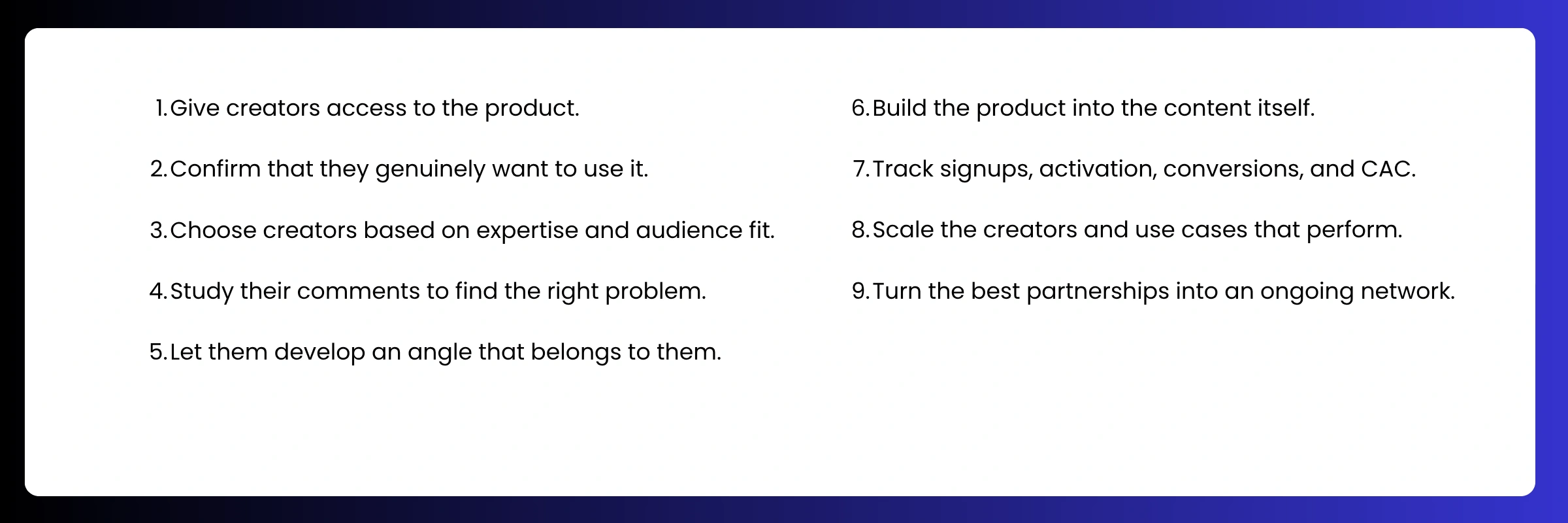
The common thread is authenticity, but not the vague version brands put in campaign briefs.
It is operational authenticity.
The creator uses the product. The problem is real. The output is useful. The audience can see the proof. The metrics connect back to the business.
That is much harder to fake than an enthusiastic product mention.
It is also much harder for a traditional paid ad to replicate.
Watch the full interview here:
Lovable didn't get lucky with one creator — they built a network. Favikon's B2B Influencer Marketing Platform helps you find, vet, and manage creators at the same scale.
→ Build your own creator network
Others articles