SaaS Influencer Marketing Playbook 2026
Influencer marketing can help SaaS companies increase awareness, attract qualified leads, and support product adoption. This playbook covers strategies, creator selection, campaign planning, and performance tracking for 2026.

SaaS Influencer Marketing: The Complete Guide for 2026
SaaS influencer marketing can generate more than impressions. When the campaign is built around the right audience, creator, offer, and measurement system, it can become a repeatable source of qualified pipeline.
The problem is that many SaaS companies still approach creators like media placements.
They select influencers based on follower count, send over a product brief, request a sponsored post, and hope the campaign generates sign-ups. When the results are unclear, they conclude that influencer marketing does not work for B2B.
The channel is rarely the real problem. The process is.
A successful B2B influencer program starts with customer research and ends with a clear attribution system. Between those points, the brand needs a focused campaign concept, relevant niche creators, a personalized outreach sequence, realistic pricing, a flexible brief, and a contract that protects both sides.
This guide transforms the complete video framework into an actionable eight-step SaaS influencer marketing playbook for 2026.
Watch the Complete SaaS Influencer Marketing Playbook
In this video, Alex explains how to plan and execute a B2B influencer marketing campaign from customer research through attribution.
What You Will Learn
By following this playbook, you will learn:
.webp)
By the end, you will have a repeatable framework for launching a B2B influencer program that contributes to real pipeline.
Why SaaS Influencer Marketing Needs Its Own Playbook
Promoting SaaS is different from promoting a consumer product.
A creator cannot always hold up the product, describe how it looks, and encourage an impulse purchase. They often need to explain a professional problem, demonstrate a workflow, establish why the problem matters, and show how the software improves the current process.
The audience may also include several types of people:
· The person who will use the product
· The manager who approves the purchase
· The executive who controls the budget
· The technical stakeholder who evaluates implementation
· The finance or procurement team that reviews the contract
That creates a longer and less predictable path from content view to closed deal.
A viewer might discover your company through a LinkedIn post, watch a webinar two weeks later, visit your website through search, and finally book a demo after speaking with a colleague.
This is why SaaS influencer marketing cannot be judged entirely through immediate purchases or last-click conversions.
It also explains why niche expertise frequently matters more than audience size. A creator with 15,000 followers in your exact category can be more valuable than a general business influencer with 500,000 followers.
The goal is not to reach everyone. It is to influence the people involved in buying your product.
The 8-Step SaaS Influencer Marketing Framework
Step 1: Conduct Customer Research and Define Your ICP
Do not begin by searching for creators.
Begin by understanding the people you need to influence.
Your ideal customer profile, or ICP, defines the type of company most likely to receive meaningful value from your product. However, a company-level profile is not enough for an influencer campaign.
You also need to understand the individual people inside that company.
Define the company-level ICP
Start with characteristics such as:
.webp)
For example, a SaaS company may target B2B businesses with 50 to 500 employees and an internal marketing team responsible for demand generation.
That is a useful starting point, but it does not tell you who should see the creator content.
Identify the people inside the ICP
Determine who experiences the problem, who evaluates the product, and who approves the purchase.
These may be different people.
Your campaign audience could include:
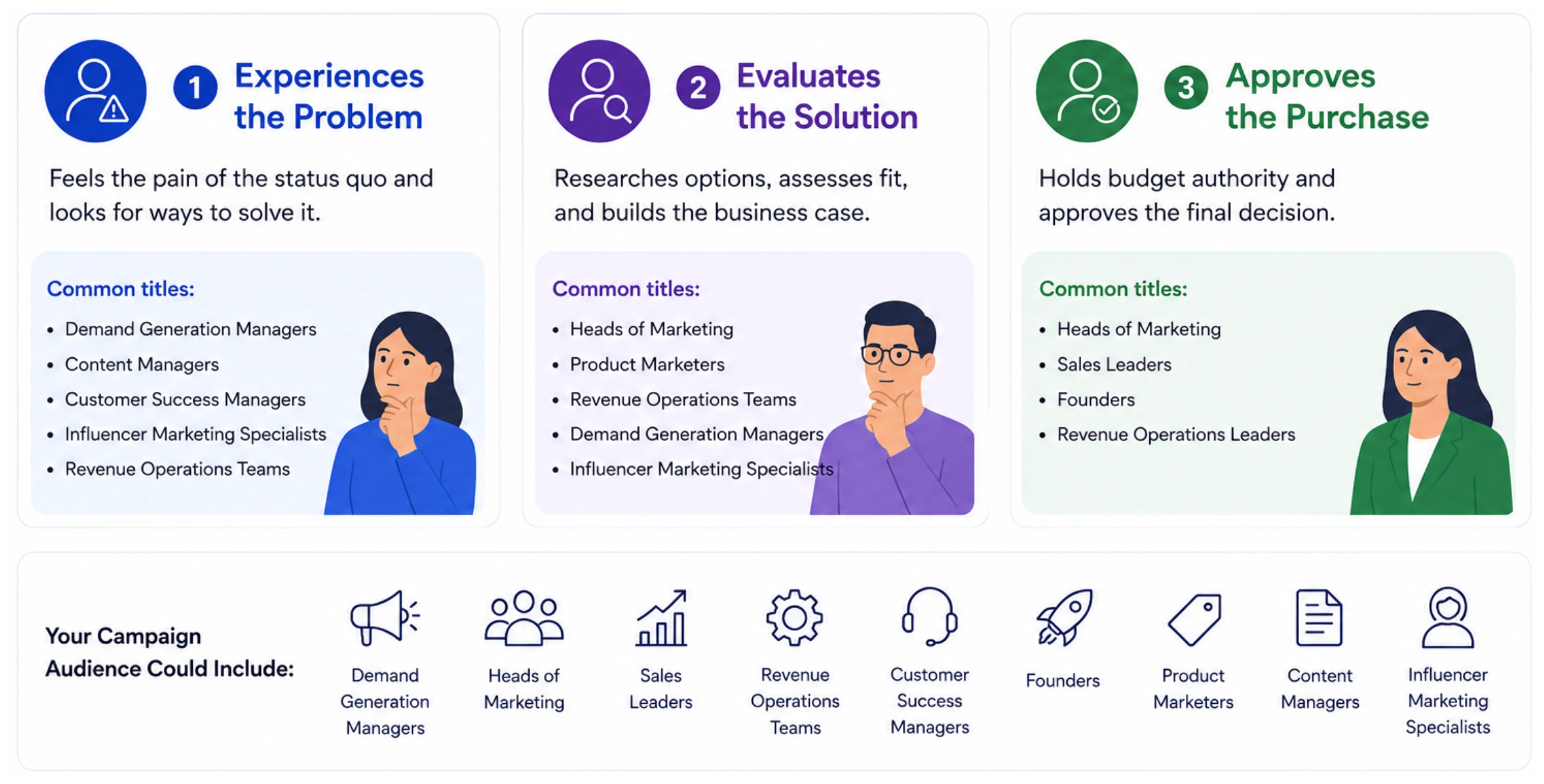
Each role may respond to a different message.
A marketing manager might care about reducing manual work. A chief marketing officer may care more about pipeline, reporting, and cost efficiency.
Find the pain points behind the purchase
The strongest campaigns are built around a painful and recognizable problem.
Ask:
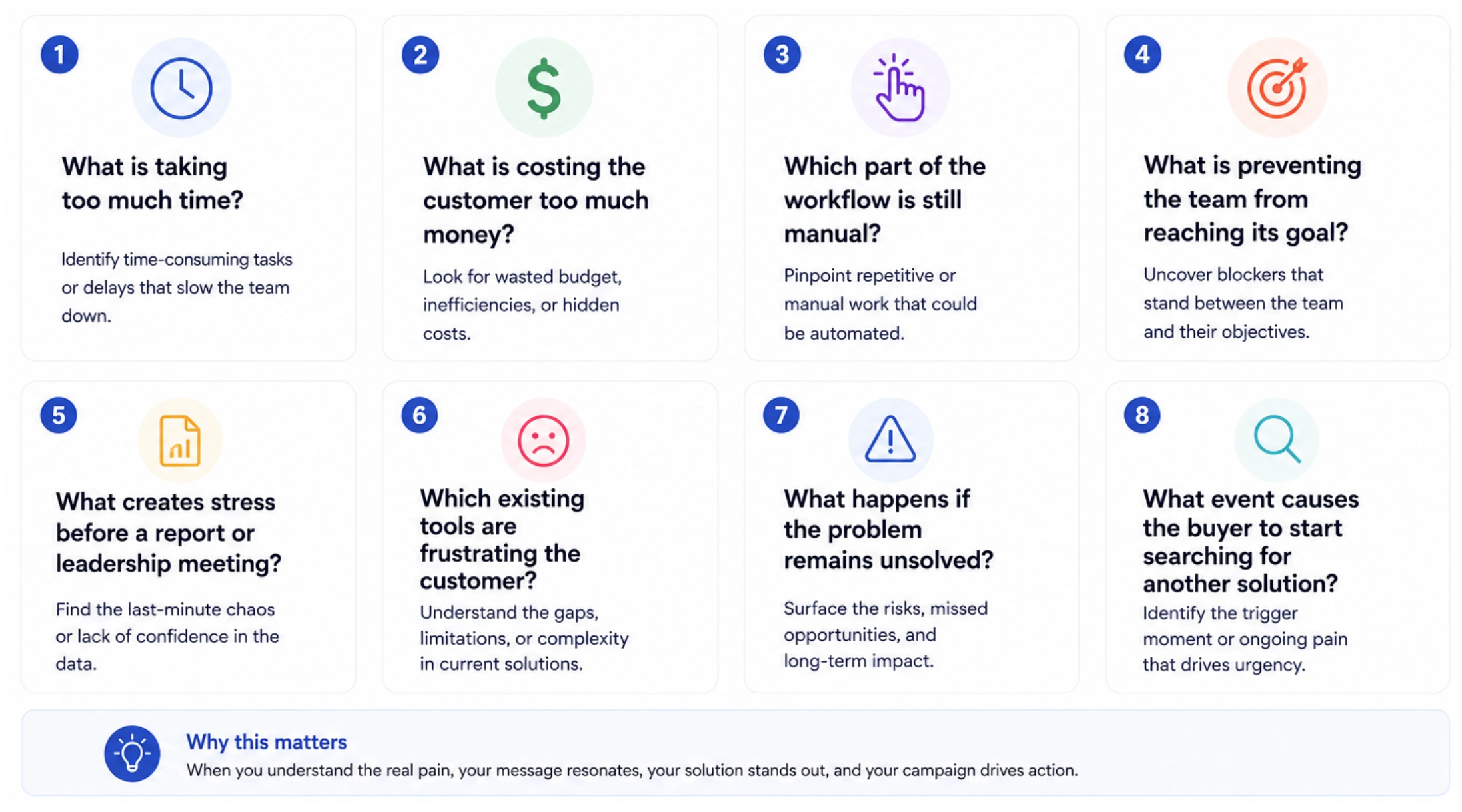
The final question is particularly important.
A company might tolerate a weak process for months. Then it launches in another market, hires a new leader, loses a major customer, receives new funding, or faces pressure to reduce costs.
That trigger changes a background frustration into an active buying problem.
Use real customer language
Do not rely entirely on internal assumptions.
.webp)
Look for repeated phrases.
The words customers use to describe their problems should influence the campaign hook, creator outreach, webinar title, landing page, and call to action.
If customers repeatedly say they are “managing campaigns through five spreadsheets,” that language will usually be more effective than a vague claim about “streamlining operations.”
Connect the pain point to a measurable outcome
A strong campaign angle connects a specific pain point to a business result.
For example:
· Too much manual reporting leads to slower campaign decisions.
· Poor creator selection leads to wasted budget.
· Disconnected outreach leads to missed replies.
· Weak attribution makes it difficult to defend marketing spend.
· Inconsistent processes make international campaigns harder to scale.
The product does not need to be the first thing mentioned.
Start with the problem the audience already recognizes. Then introduce the product as part of the solution.
Step 2: Build the Campaign Around One Focused Idea
After defining the audience and pain point, develop the campaign concept.
Do not try to communicate every product feature in one campaign.
Choose one focused angle.
The concept should connect:
1. A specific audience
2. A recognizable problem
3. A useful content idea
4. A relevant product capability
5. One primary campaign objective
For example, a campaign for an influencer marketing platform could focus on:
‘Why managing creator campaigns through spreadsheets makes attribution almost impossible.’
That angle is clearer than:
‘Discover our all-in-one influencer marketing software with AI discovery, analytics, outreach, campaign tracking, CRM, and reporting.’
The first angle gives the creator a problem to explore. The second gives them a product brochure to repeat.
Choose one primary campaign objective
The objective will usually fall into one of two categories.
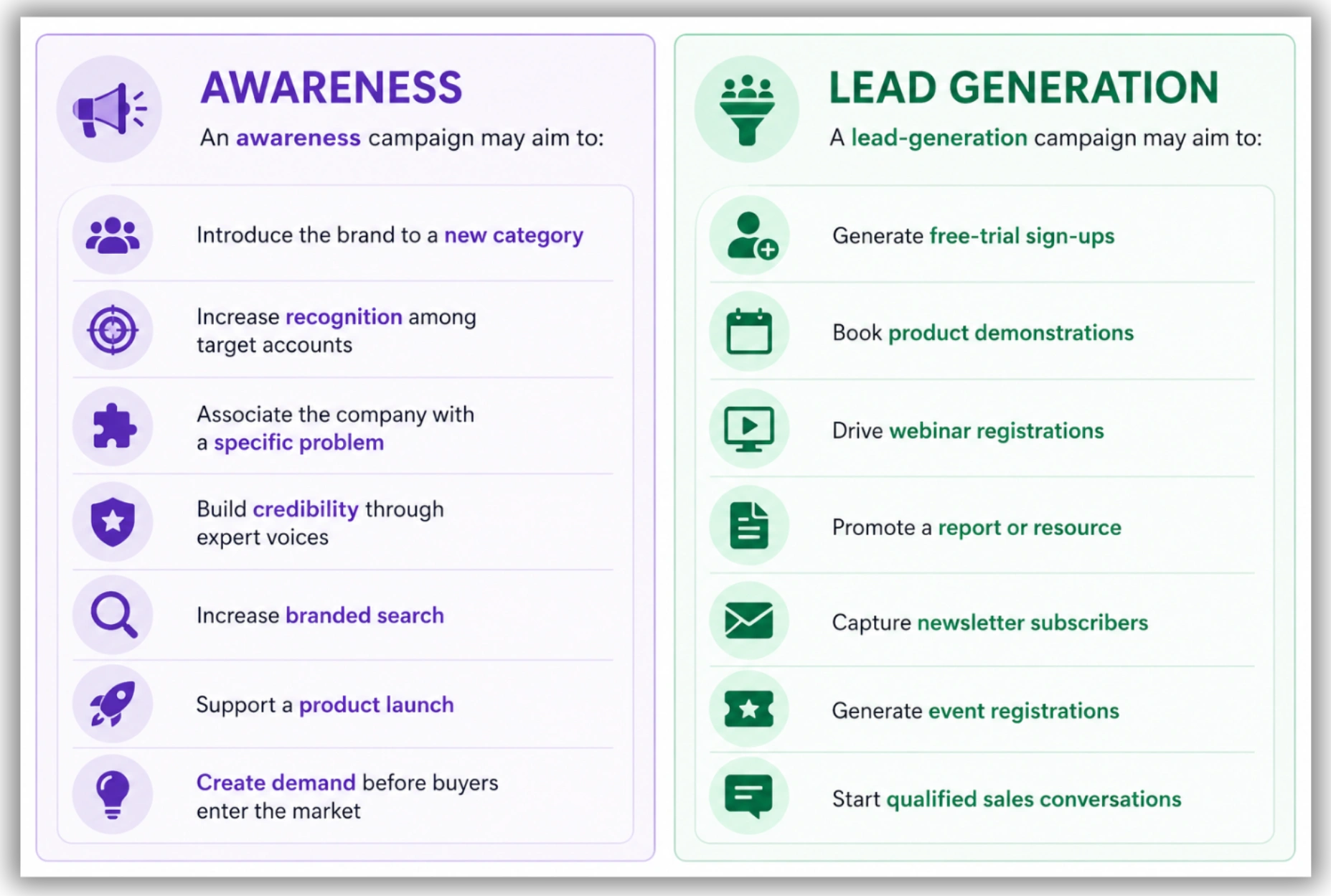
One campaign can create several secondary benefits, but the team should agree on one primary objective.
A campaign built to maximize broad reach will not look the same as one built to generate demo requests.
Make the content useful without the product
A useful test is to ask:
Would the audience still care about this idea if the product name were removed from the title?
If the answer is no, the campaign may be too promotional.
Strong B2B campaign concepts include:
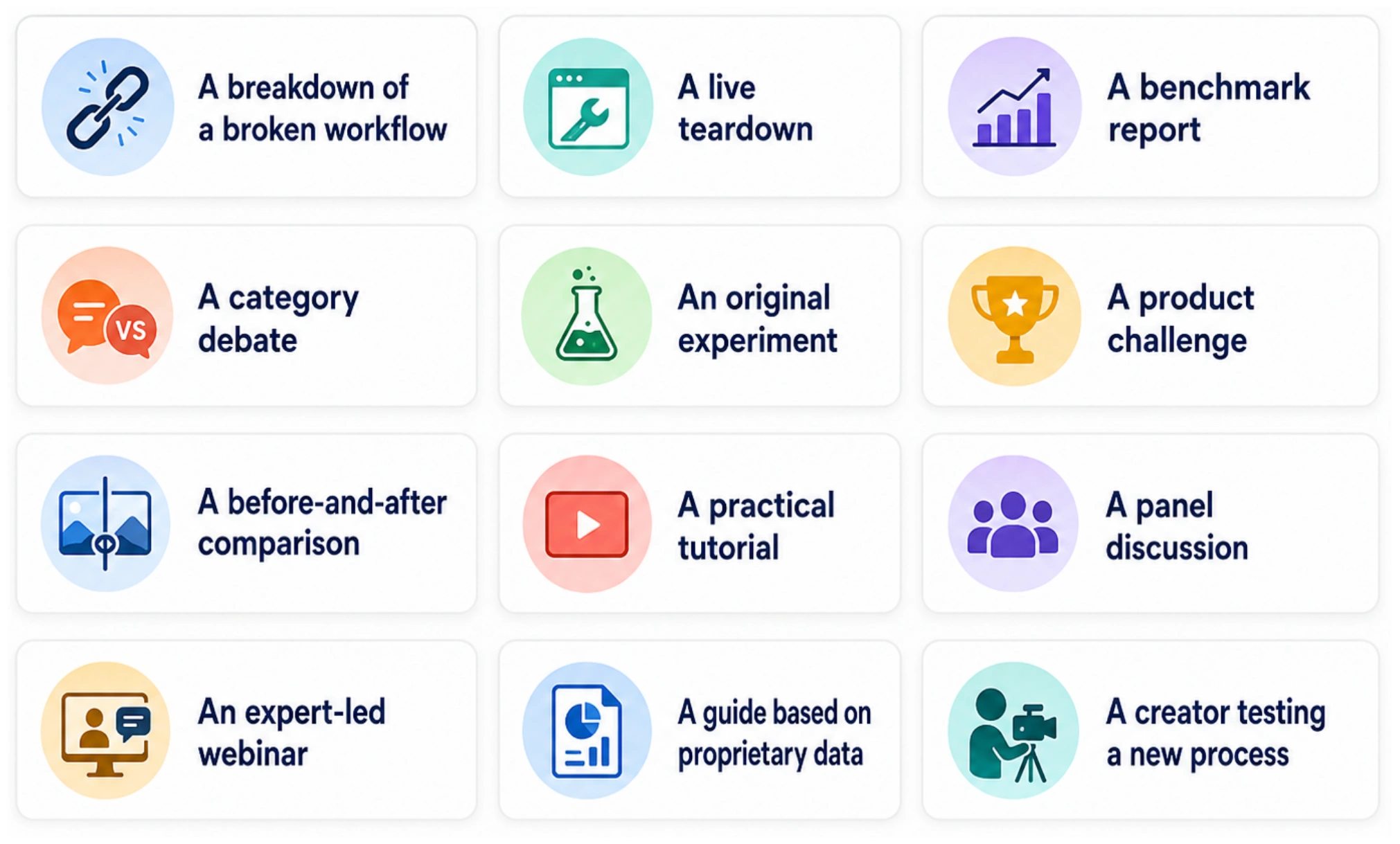
The brand still needs a meaningful role. It simply should not dominate every part of the content.
Campaign Structure: Sponsored Posts or Creator-Led Webinars?
The video separates the campaign concept from the format used to execute it.
Two useful formats for SaaS brands are sponsored creator posts and creator-led webinars.
Option 1: Sponsored creator posts
Individual posts are easier to organize and can help a brand test several creators, messages, and audience segments.
A post may take the form of:
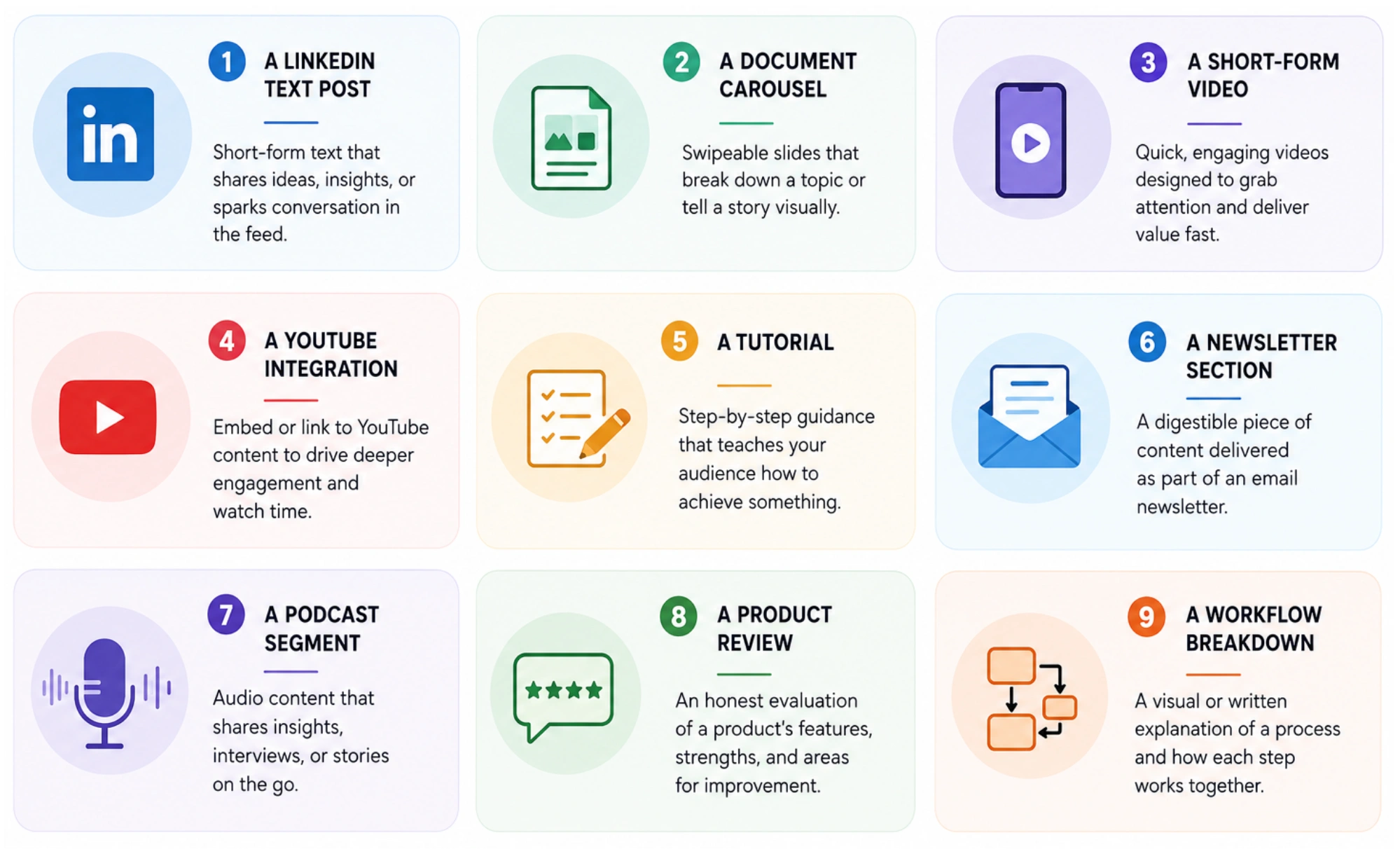
Sponsored posts work particularly well when the concept can be understood quickly.
They also allow the brand to compare several combinations of creators, messages, hooks, and calls to action.
However, the audience’s level of involvement may be limited. A person can engage with a post without becoming deeply interested in the product.
Option 2: Creator-led webinars
Creator-led webinars require more effort but create a higher-involvement experience.
The creator can:
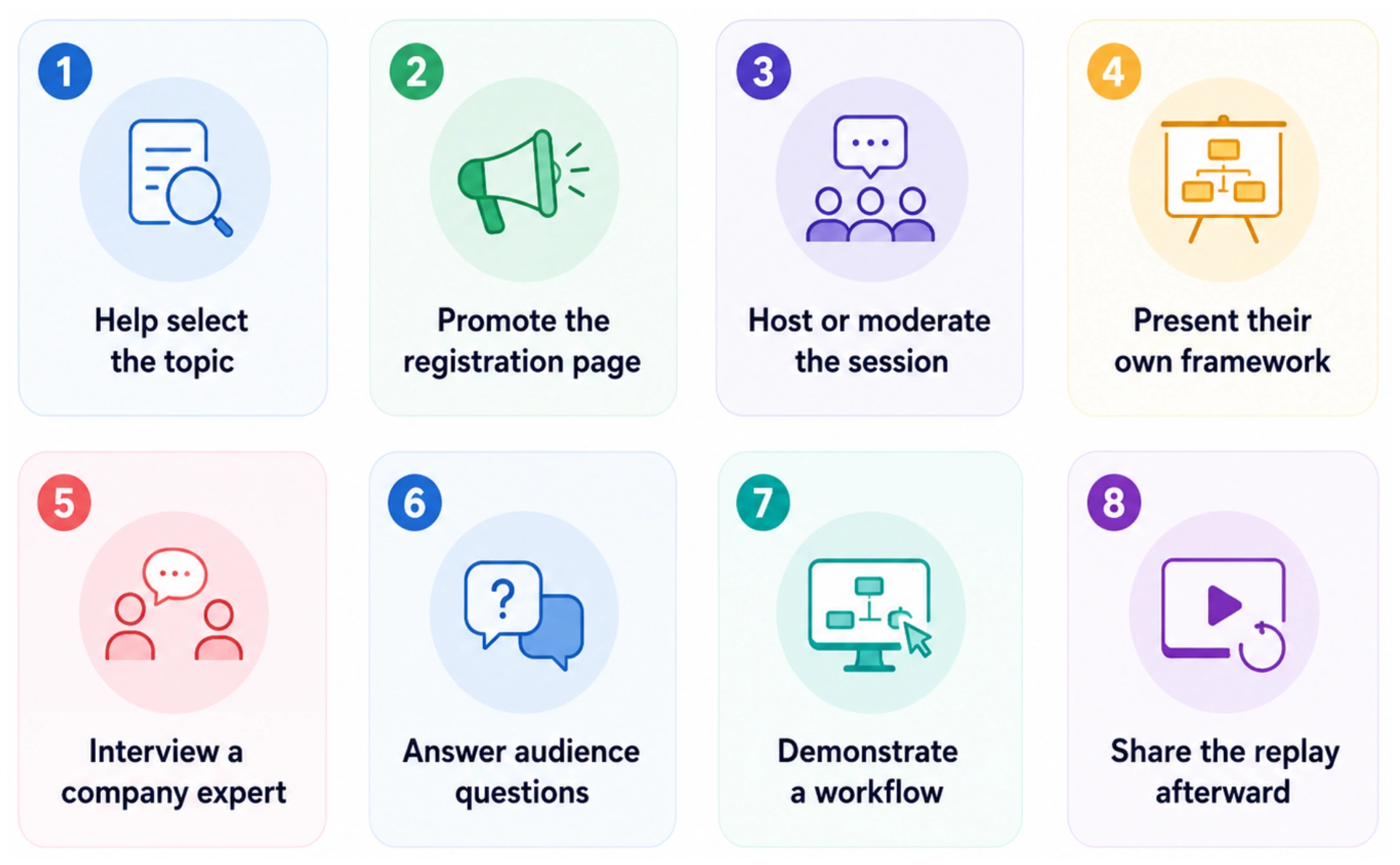
The creator should not simply appear as a guest logo on a company webinar.
Their expertise, audience, and perspective should shape the event.
A strong webinar concept may look like:
‘How B2B marketing teams can prove creator campaign ROI when attribution is messy.’
The product can appear naturally within the discussion or demonstration.
When to choose each format
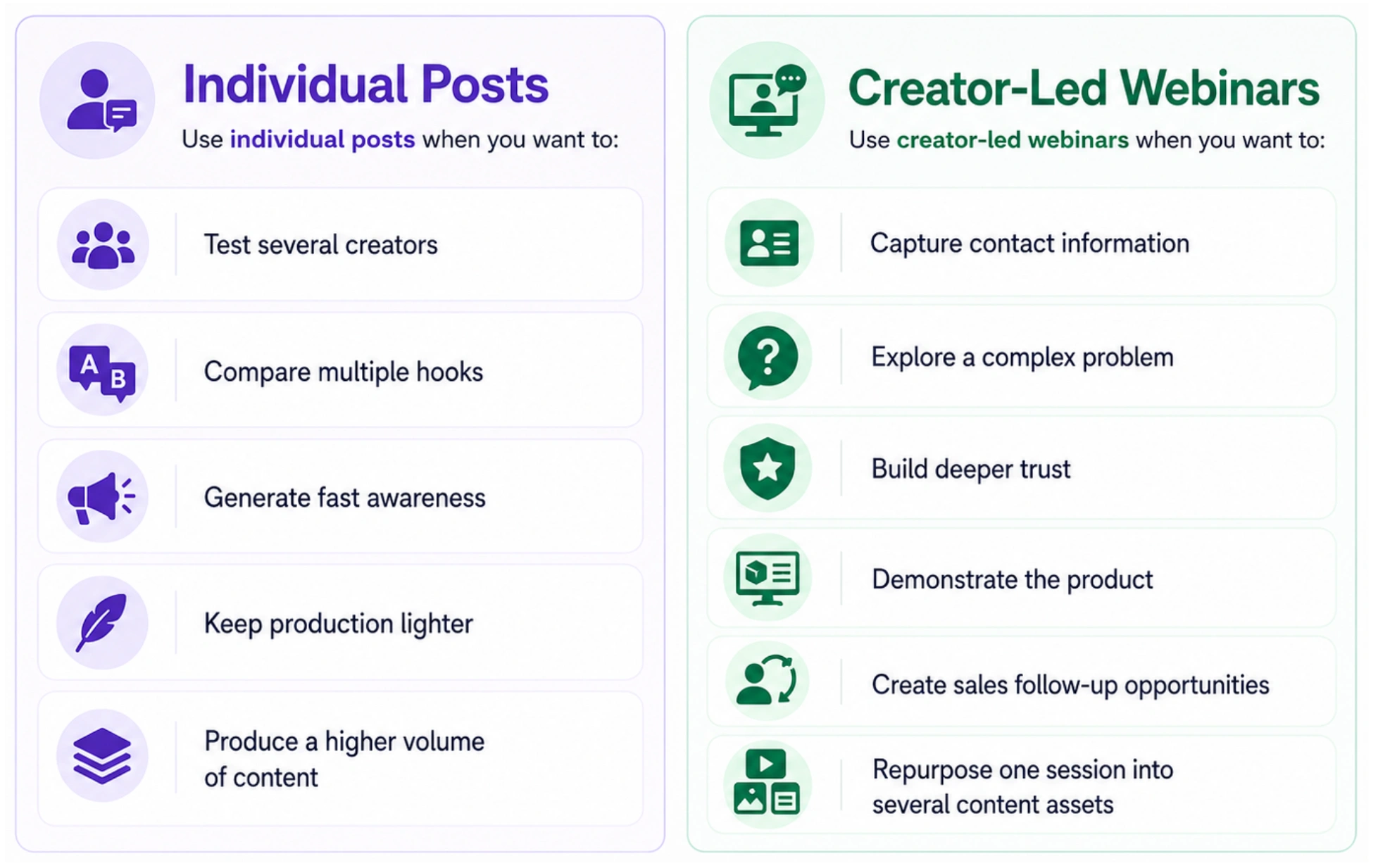
A SaaS brand can also combine both.
The creator publishes one or more posts promoting a webinar. The webinar generates registrations. The recording is then repurposed into clips, quotes, articles, and follow-up content.
This creates a campaign rather than a single sponsored post.
Step 3: Find and Vet Niche Creators
Once the campaign concept is clear, define the creator profile required to deliver it.
Do not begin with follower count.
Start with relevance.
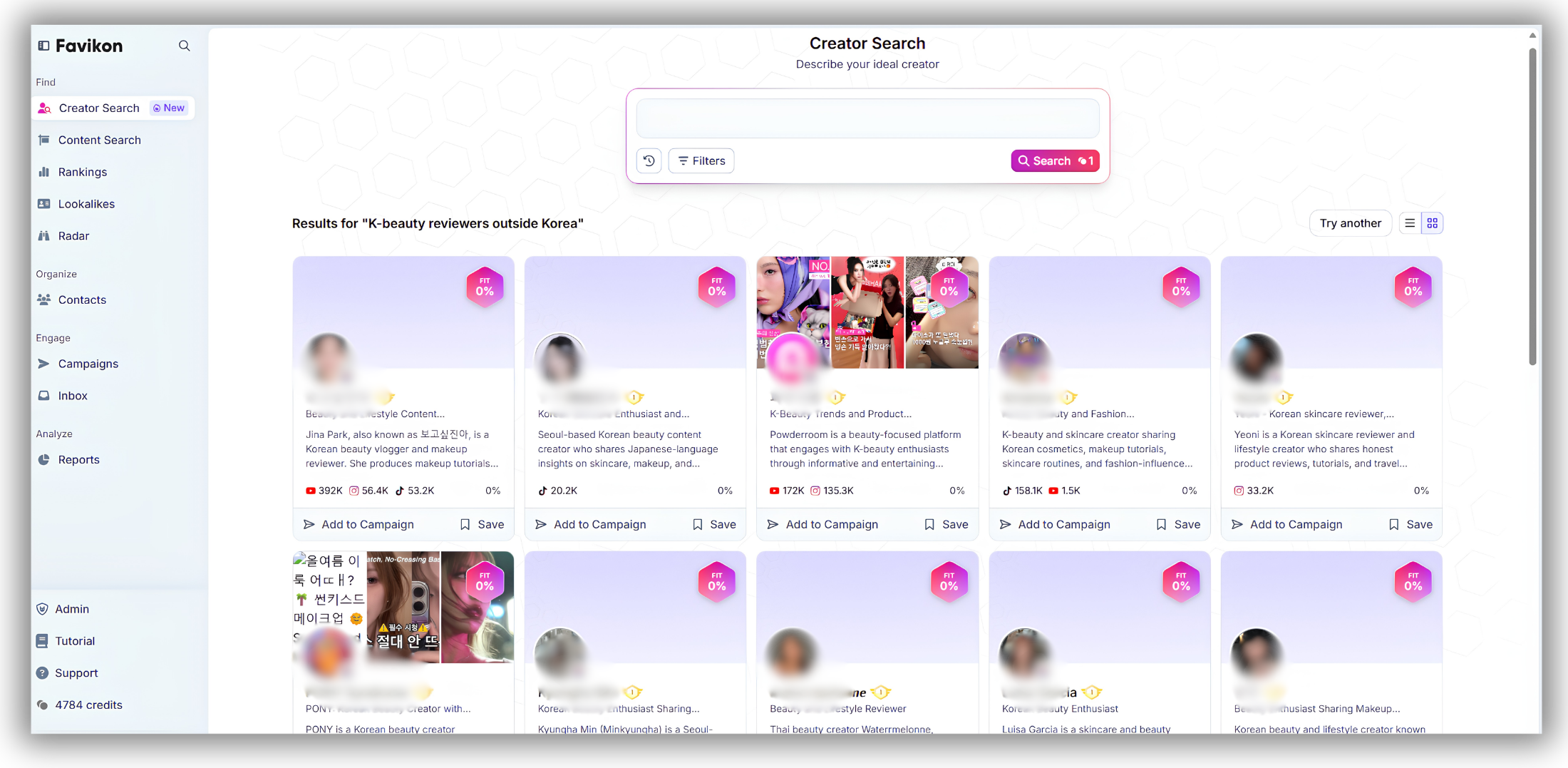
You can use an AI influencer search tool to search for creators by niche, professional role, platform, location, audience, content topics, and other campaign criteria.
Create a creator selection scorecard
Evaluate creators using a consistent set of criteria.
Audience alignment
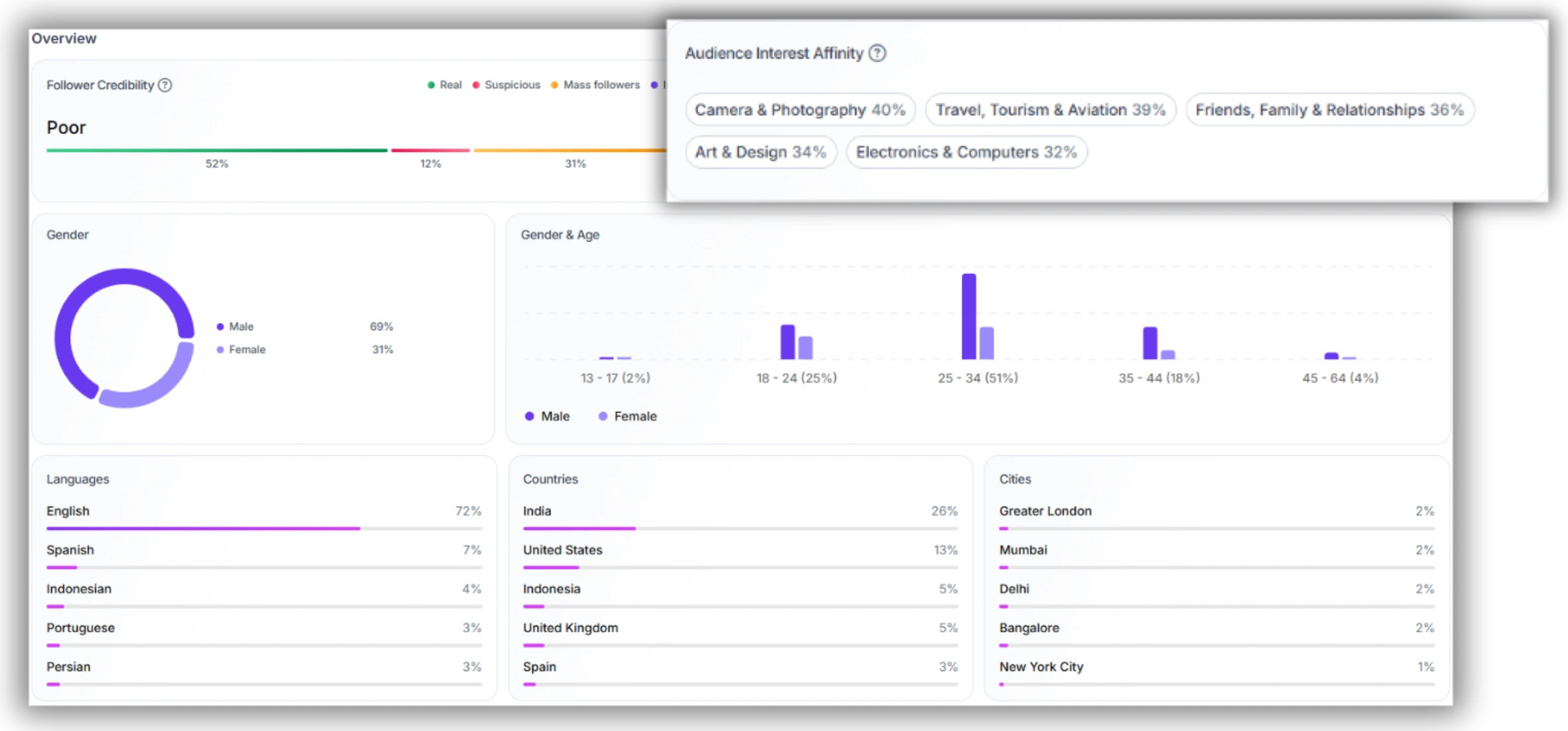
Ask:
· Does the creator reach people within your ICP?
· Are their followers in the right roles?
· Do they reach the correct seniority level?
· Are their followers concentrated in relevant markets?
· Does the audience have the ability to buy or influence the purchase?
A creator may discuss B2B marketing while primarily attracting freelancers, students, or other creators.
That does not automatically make them a bad partner. It simply may not match a product sold to enterprise marketing leaders.
Topic relevance
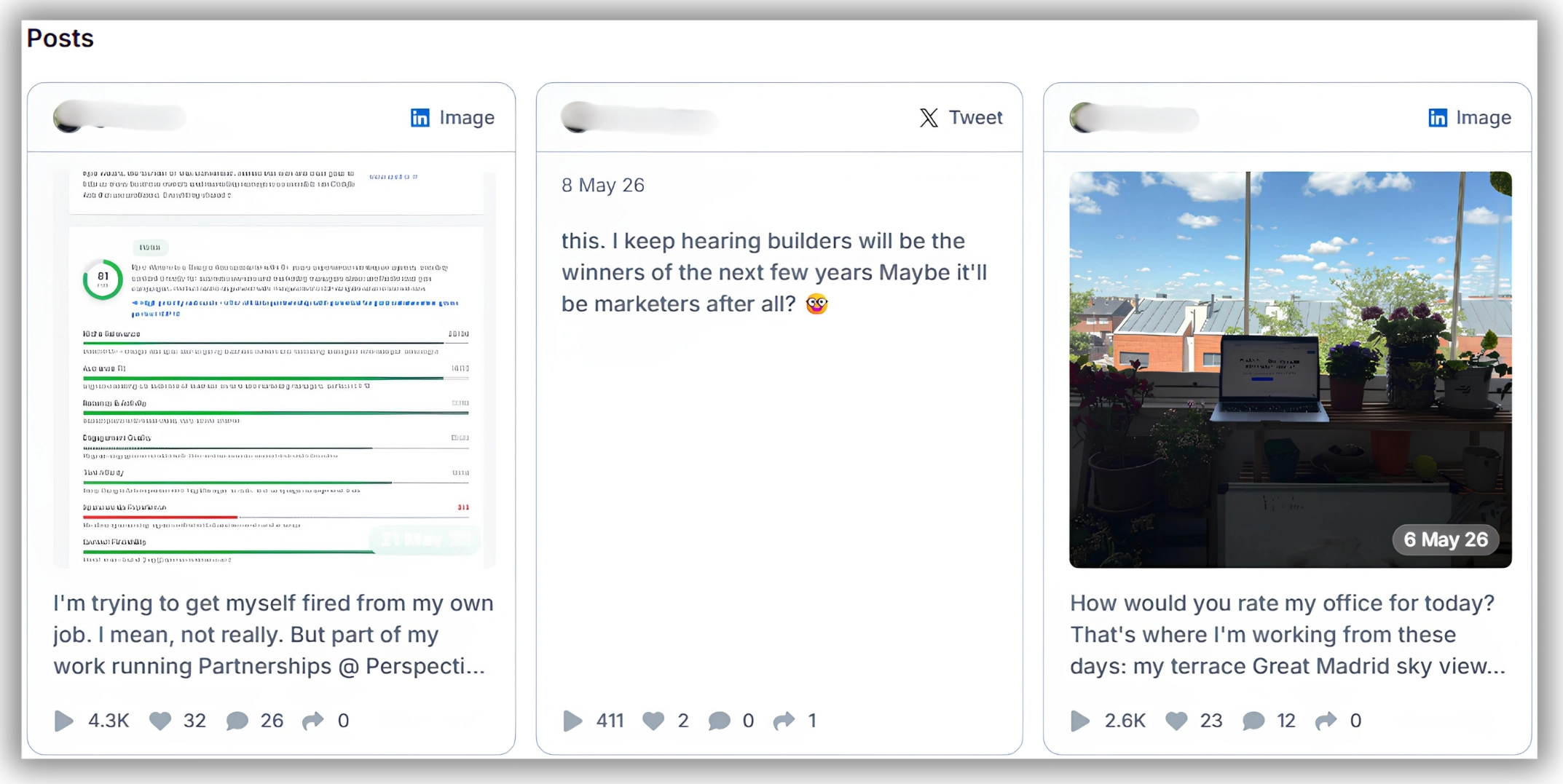
Review the creator’s actual content.
Look at:
· Topics discussed during the last three to six months
· Repeated themes
· Posts generating meaningful conversations
· Products previously mentioned
· Recurring audience questions
· Formats used most often
· The creator’s point of view on the category
A relevant job title does not guarantee relevant content.
Expertise
The creator should be able to speak credibly about the campaign problem.
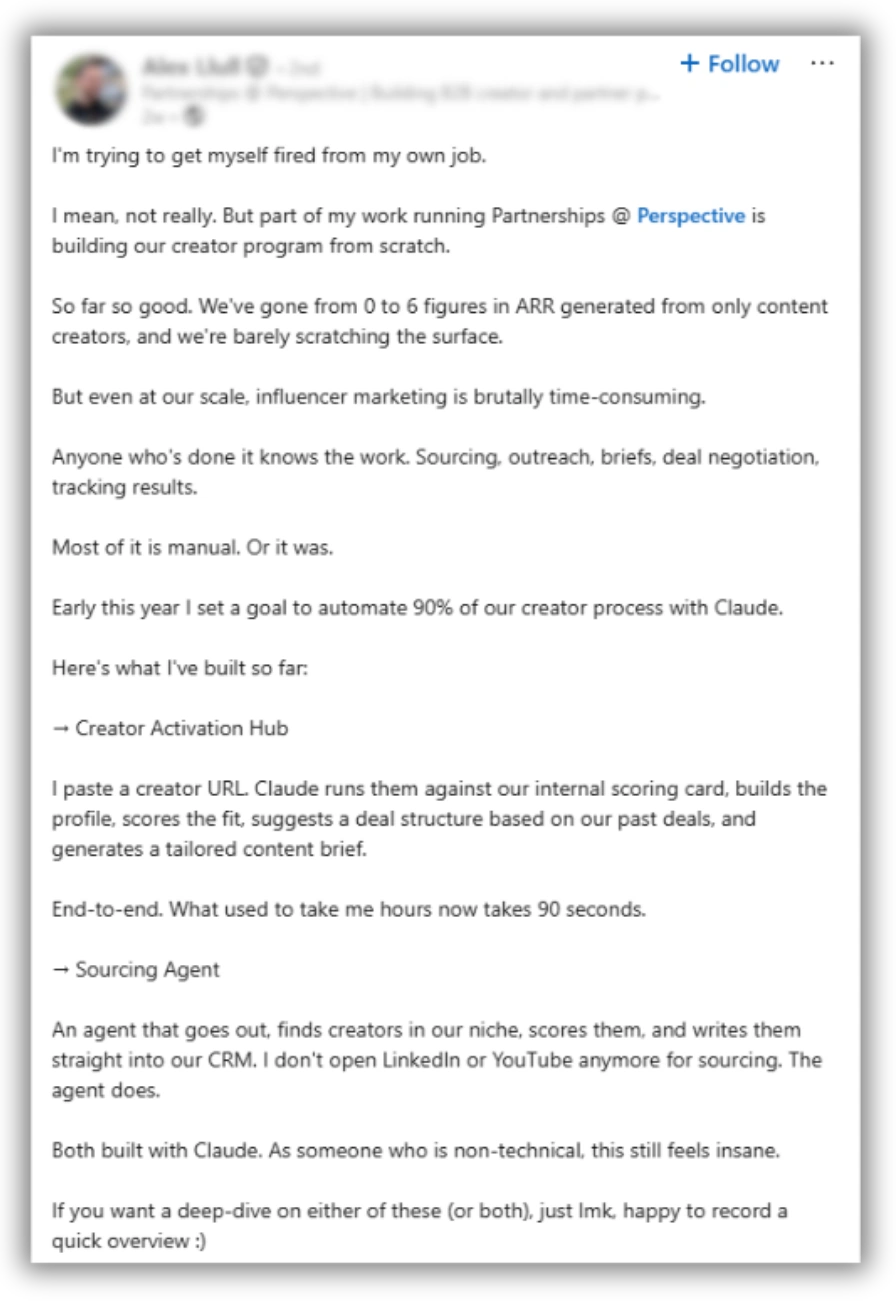
They do not need to be a technical expert in your product before the campaign begins. They should understand the professional context well enough to ask intelligent questions and explain why the problem matters.
Engagement quality
Do not judge engagement only by volume.
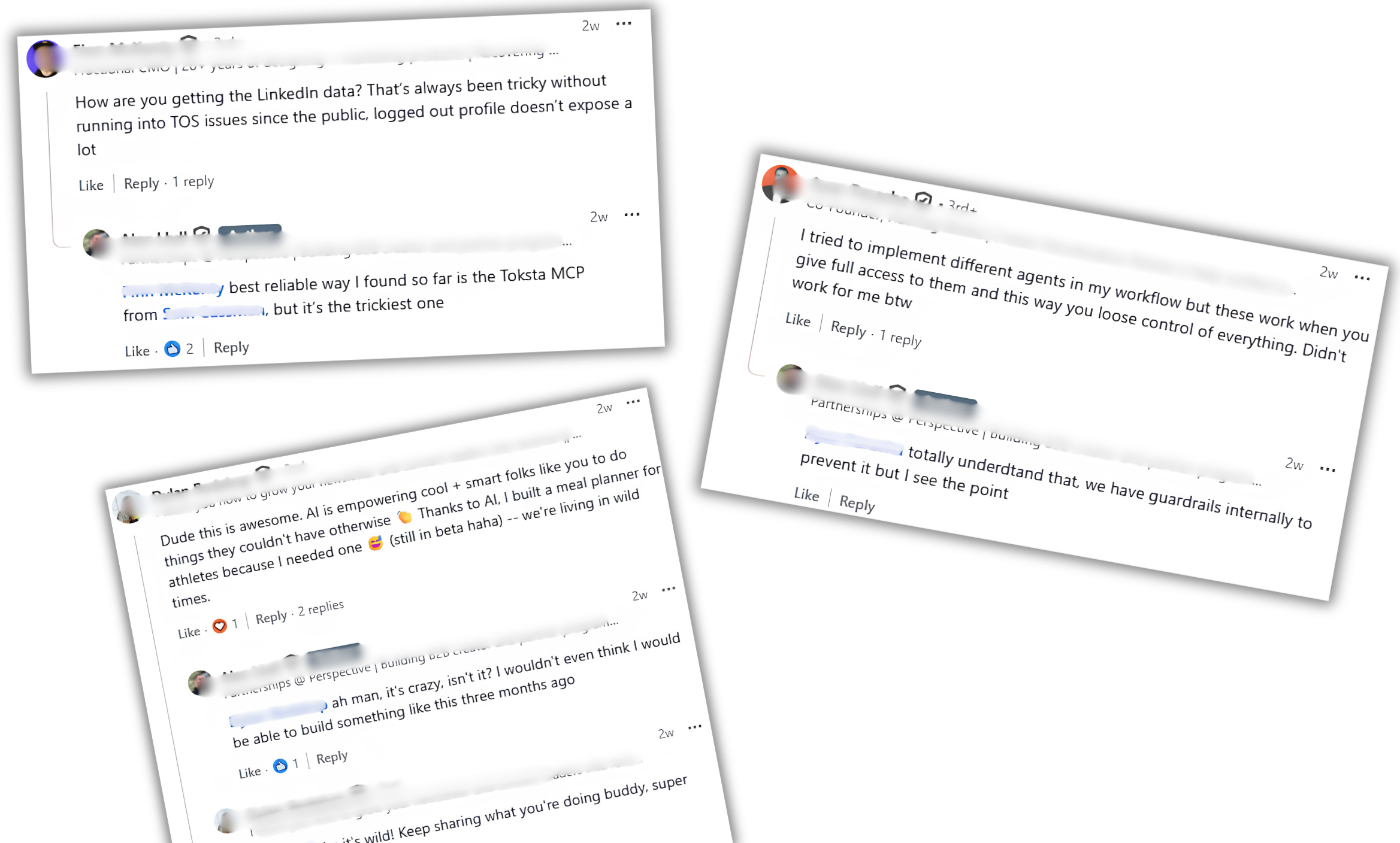
Look for comments that:
· Reference a specific point from the content
· Ask detailed questions
· Share relevant experiences
· Add another professional perspective
· Challenge the creator’s argument
· Indicate buying intent
Generic praise and repeated emojis provide less evidence of influence.
Brand fit
Consider whether the creator’s tone, values, and public positioning align with the brand.
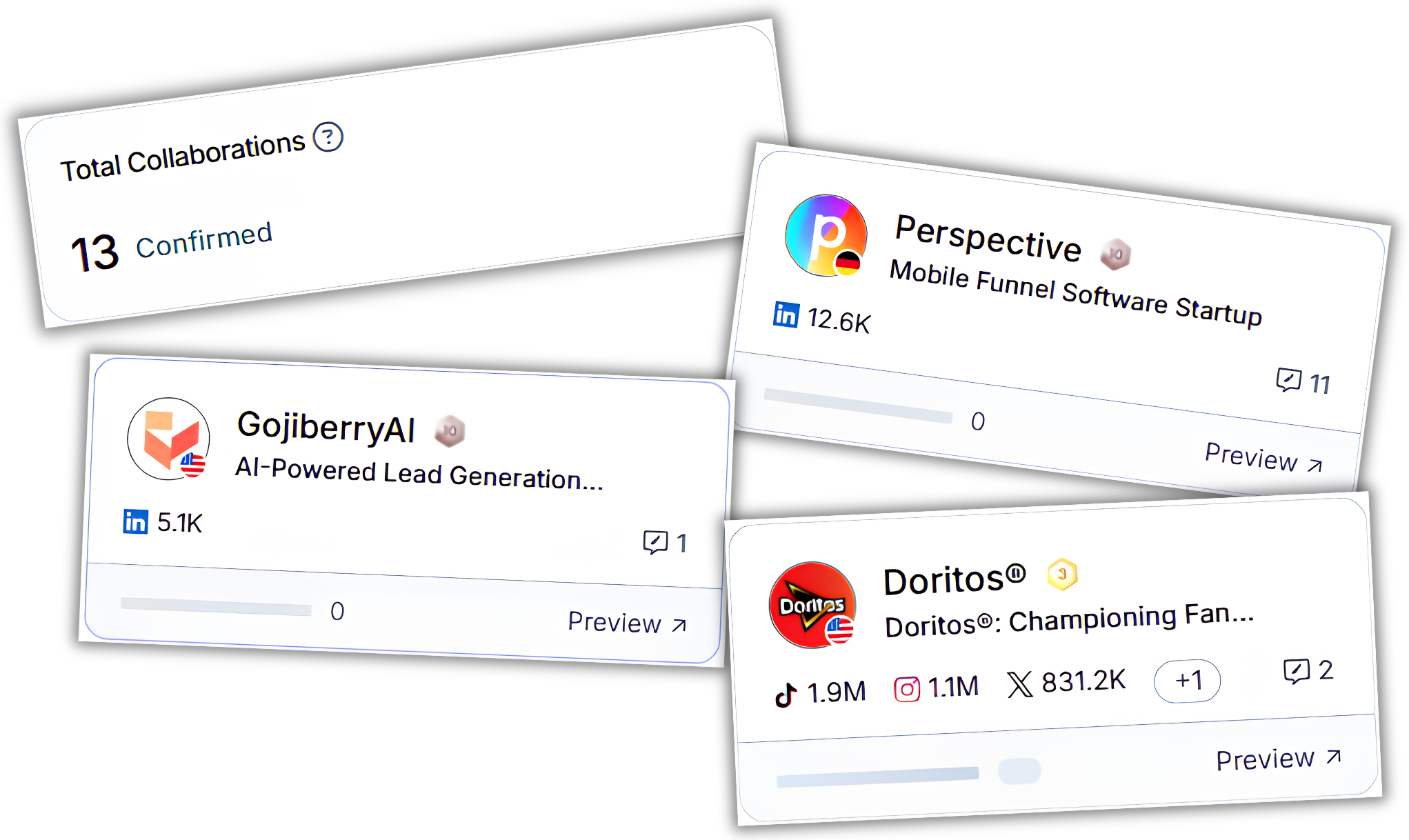
Review previous partnerships and check for:
· Direct competitors
· Conflicting claims
· Excessive sponsorships
· Undisclosed promotions
· Content that could create brand-safety concerns
Creative fit
Different creators are strong at different formats.
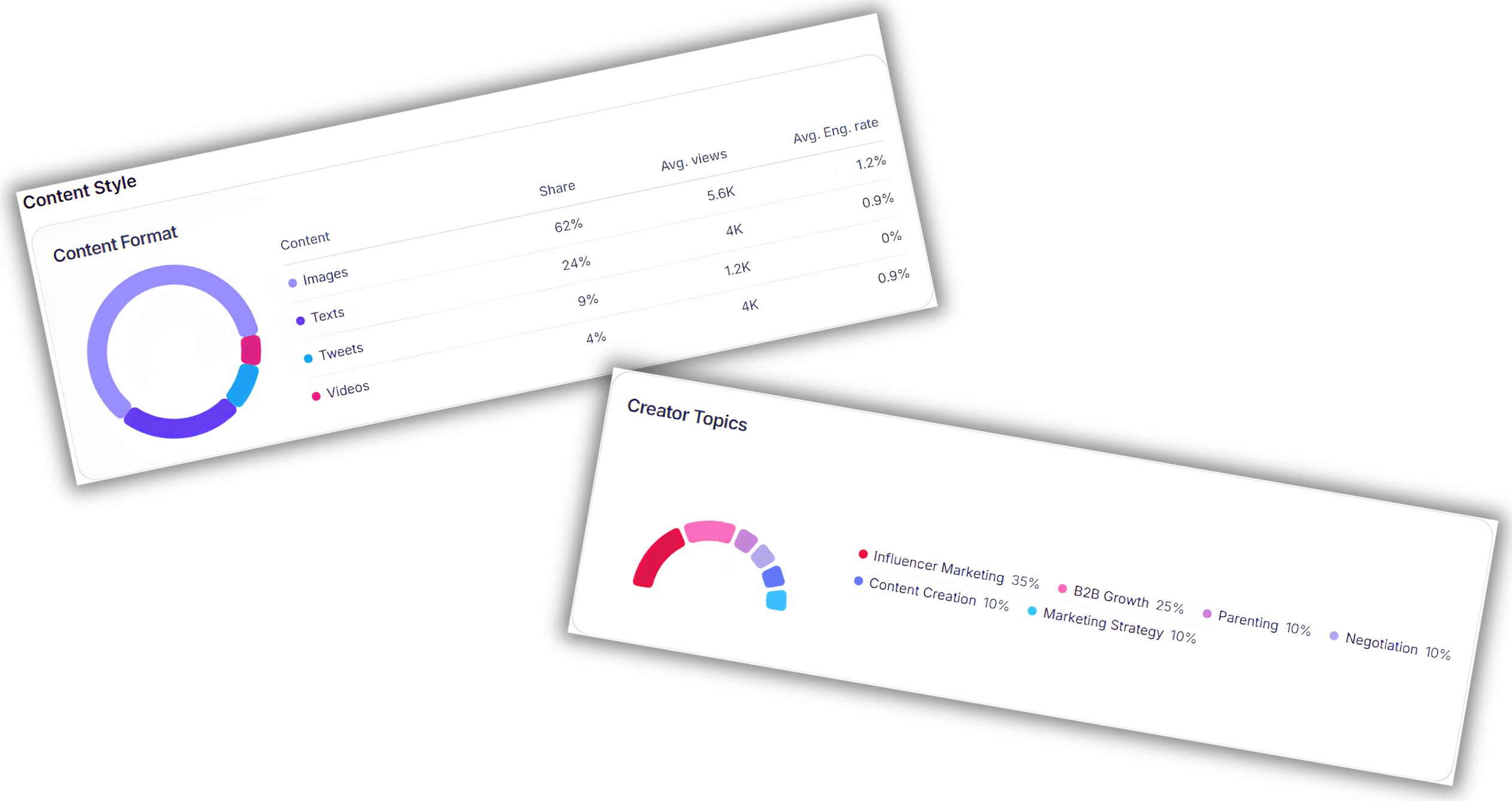
One creator may write excellent LinkedIn posts but struggle to host a live webinar. Another may have a smaller social audience but perform exceptionally well in long-form interviews.
Select creators based on the campaign format, not only their total reach.
Look beyond the largest creators
Niche creators are often particularly effective for B2B SaaS because their authority is concentrated within a defined professional community.
Micro and mid-sized creators may offer:
· More specific expertise
· Stronger audience relationships
· Higher reply rates
· More flexible campaign concepts
· Lower partnership costs
· Greater willingness to co-create
· Less audience fatigue from sponsorships
Follower count remains useful, but it should be considered after relevance, expertise, and audience fit.
Favikon’s SaaS influencer ranking can provide an initial view of creators shaping conversations around software, growth, product strategy, and B2B sales.
Step 4: Write a Creator Outreach Sequence
Finding the right creator does not matter if the outreach is ignored.
Creators receive a high volume of generic partnership requests. The first email needs to show that the brand understands their content and has a relevant reason for contacting them.
Keep the initial email short
The first email does not need to explain the entire campaign.
It should answer four questions:
1. Who are you?
2. Why are you contacting this creator?
3. What is the basic opportunity?
4. What should they do next?
A simple structure could be:
The goal is to begin a conversation, not close the full partnership in one message.
Personalize the reason for reaching out
Avoid lines such as:
‘We love your content and think you would be perfect for our brand.’
That sentence can be sent to anyone.
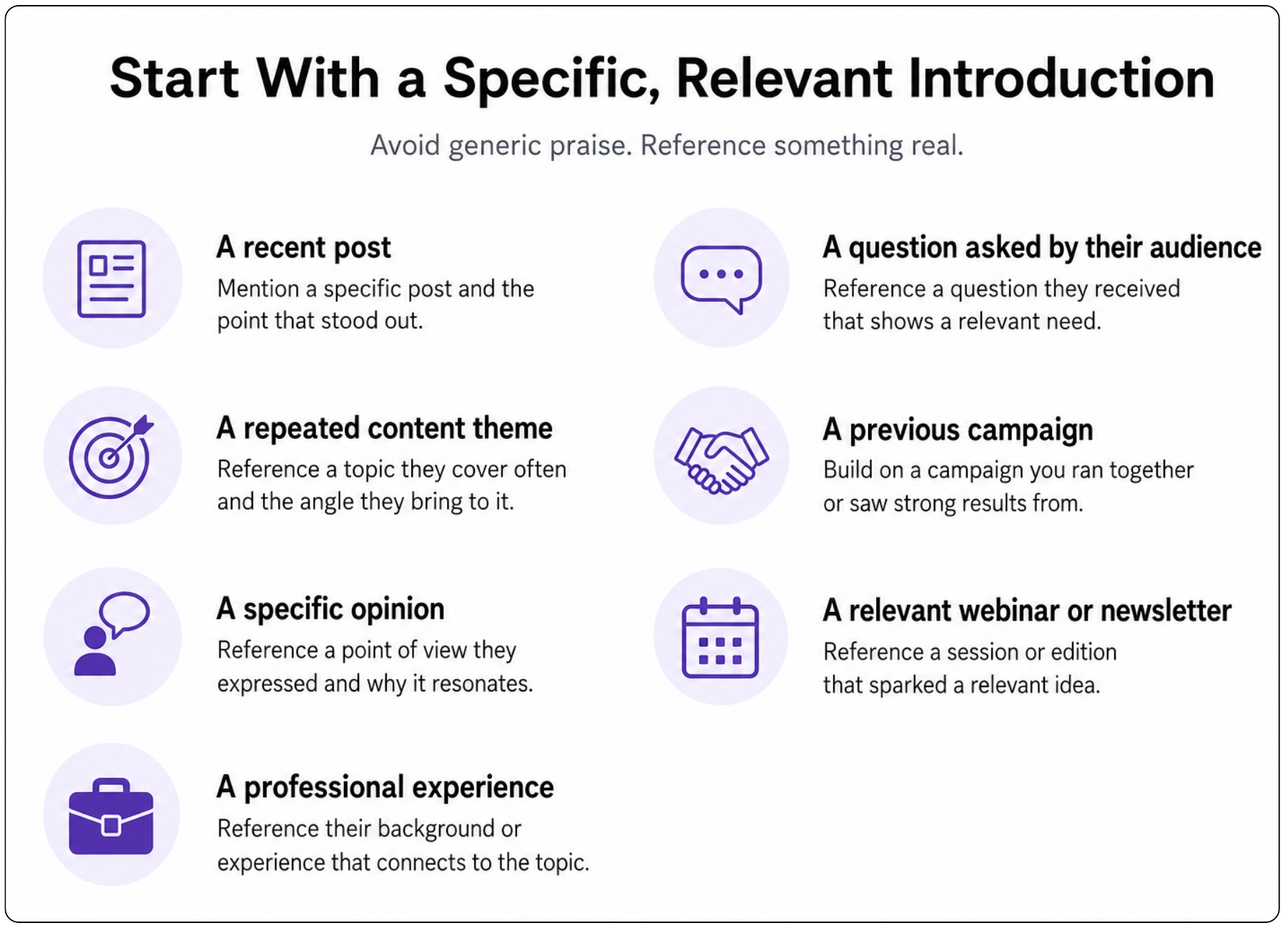
Personalization does not mean adding the creator’s first name to a template. It means explaining why this particular creator fits the campaign.
Cold Outreach Sequence Structure
One email is rarely enough.
A practical cold outreach sequence may include four or five touches.
Email 1: Personalized introduction
Introduce the opportunity and explain why the creator was selected.
Keep it focused on relevance rather than product features.
Follow-up 1: Simple reminder
Send a short reminder several days later.
For example:
Do not rewrite the full first email.
Follow-up 2: Add useful context
Share one additional detail that makes the opportunity clearer.
This may include:
· The campaign topic
· The intended audience
· The proposed format
· The expected timeline
· Another confirmed participant
· Why the topic is timely
For example:
Follow-up 3: Offer an easier response
Reduce the effort required to reply.
For example:
Follow-up 4: Close the sequence
End politely and leave the door open.
For example:
Aim for response quality, not only open rates
A strong subject line and relevant introduction can help campaigns reach 30 to 40 percent open rates, but an open is not the final objective.
Monitor:
· Delivery rate
· Open rate
· Reply rate
· Positive reply rate
· Calls booked
· Creators qualified
· Partnerships agreed
· Cost per secured creator
A high open rate with no replies may indicate that the subject line works but the campaign offer does not.
Favikon’s campaign management software can help centralize creator outreach, follow-ups, campaign stages, content, and performance data.
Step 5: Negotiate Pricing Using Unit Economics
Creator pricing can feel inconsistent because there is no universal rate card.
Two creators with similar audiences may quote very different prices based on their expertise, format, production effort, commercial demand, usage rights, and level of involvement.
Do not negotiate based only on follower count.
Start with your unit economics.
Work backward from the value of a conversion
For a lead-generation campaign, determine:
· Your target customer acquisition cost
· Your lead-to-customer conversion rate
· The value of a qualified lead
· Your average contract value
· Your gross margin
· Your expected customer lifetime value
· The number of leads the campaign may generate
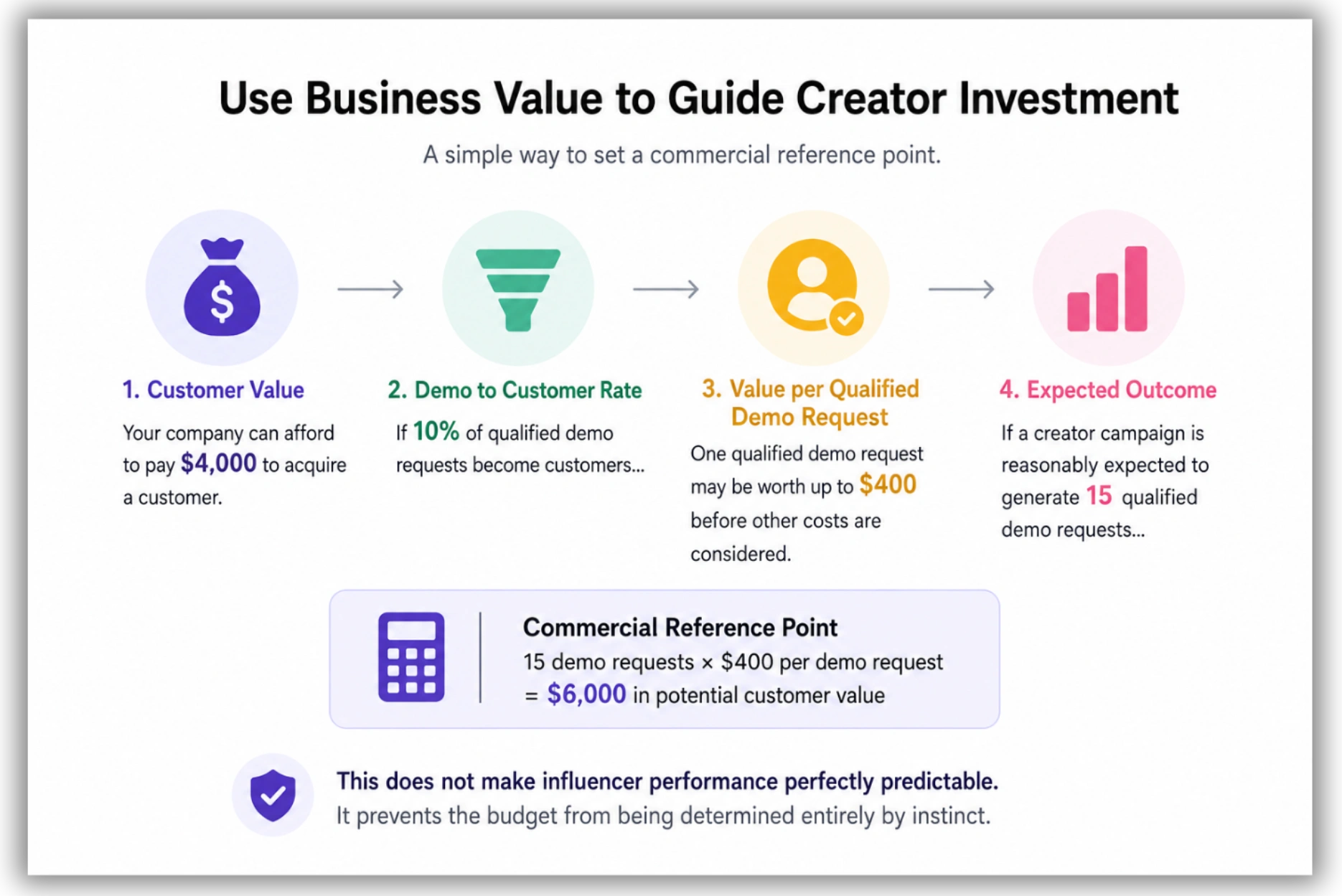
Suppose your company can afford to pay $4,000 to acquire a customer.
If 10 percent of qualified demo requests become customers, one qualified demo request may be worth up to $400 before other costs are considered.
If a creator campaign is reasonably expected to generate 15 qualified demo requests, that gives the team a commercial reference point.
This does not make influencer performance perfectly predictable. It prevents the budget from being determined entirely by instinct.
Ask the creator for their price first
When possible, ask the creator to provide their rate before sharing your maximum budget.
This helps you understand:
· Their normal pricing
· What is included
· Which rights cost extra
· Whether the campaign is commercially realistic
· How they value different formats
Ask for a clear breakdown rather than one unexplained total. Running the numbers through our B2B influencer price calculator beforehand gives you a benchmark to compare their quote against.
Understand what affects creator pricing
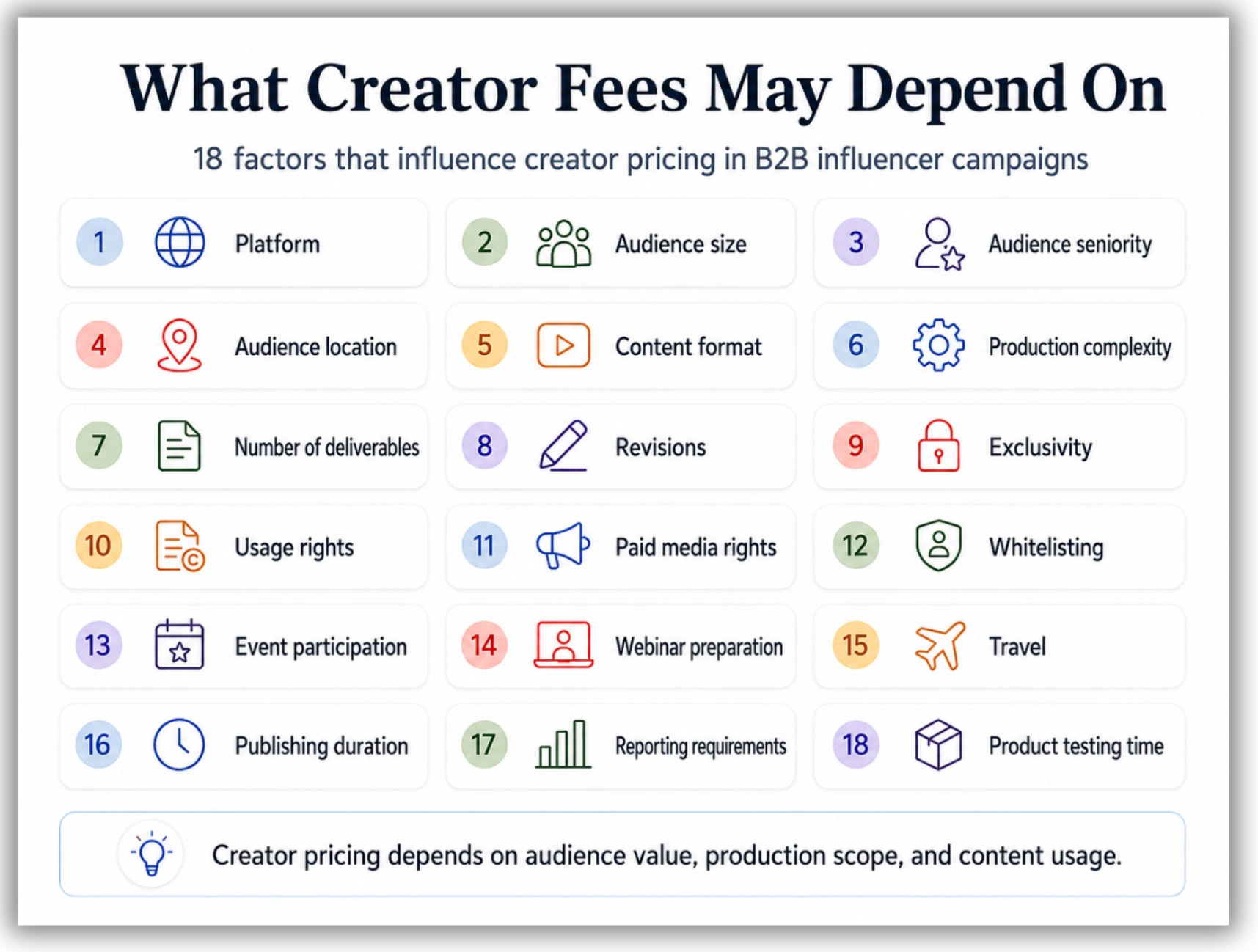
A one-page LinkedIn post is not the same as a creator-led webinar involving preparation, promotion, hosting, rehearsals, and follow-up content.
Pricing High-Involvement Campaigns
High-involvement campaigns require a different pricing conversation.
For a webinar, report, event, or multi-part campaign, the creator may be contributing more than distribution.
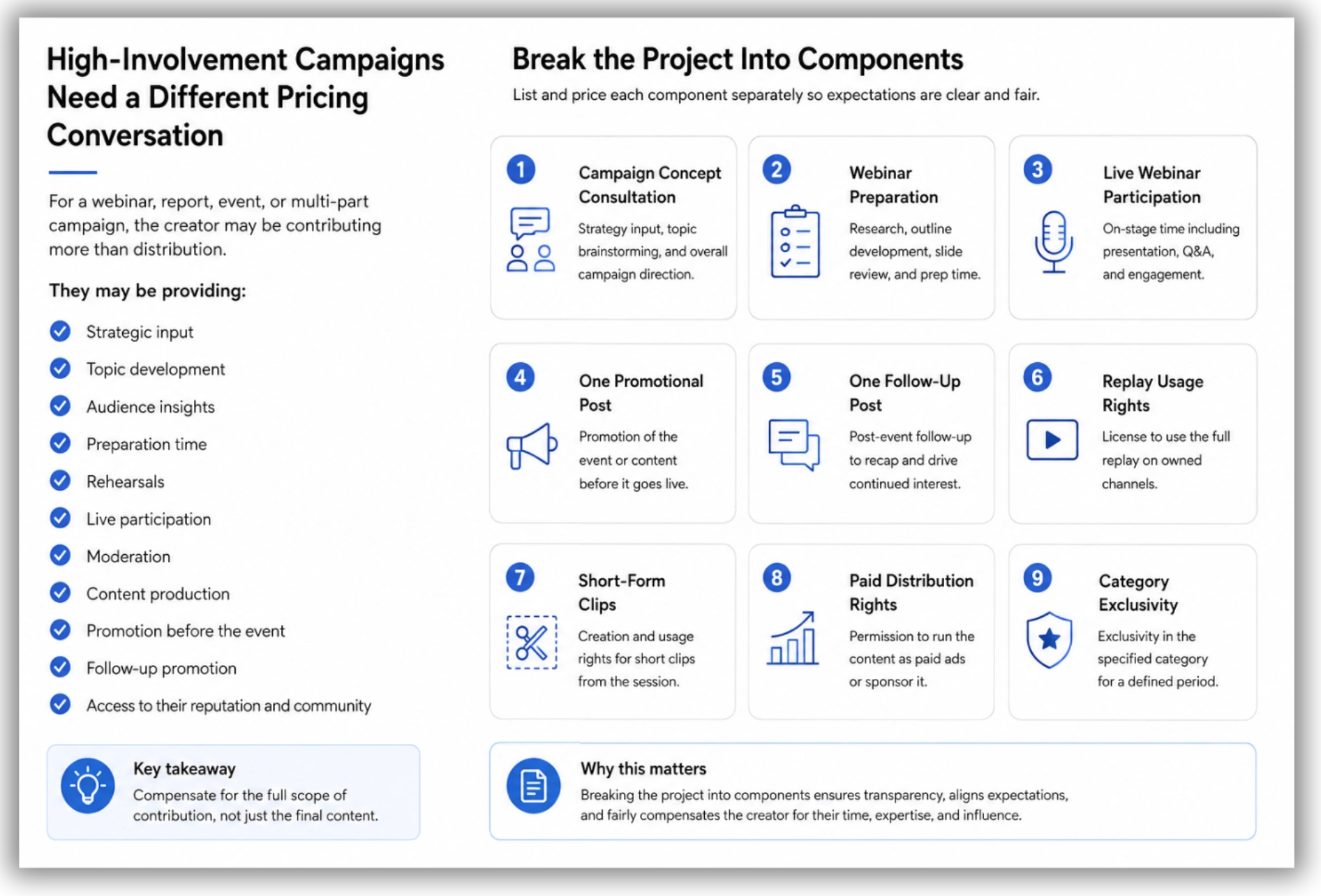
This makes the negotiation clearer for both sides.
It also prevents the brand from treating several weeks of creator involvement like the purchase of one post.
Negotiate scope before negotiating rate
When the quoted price is too high, do not immediately ask for a discount.
Consider changing the scope.
You could:
· Remove one deliverable
· Reduce the exclusivity period
· Limit paid usage
· Shorten the usage period
· Reduce revision rounds
· Remove cross-platform distribution
· Simplify production
· Replace a live event with recorded content
A smaller, clearly defined campaign is often better than forcing the creator to deliver the original scope for an unrealistic fee.
Step 6: Write a Brief Without Killing Authenticity
A creator brief should provide direction, not a script.
The brand needs to communicate the campaign objective, audience, message, deliverables, and restrictions. The creator still needs enough freedom to communicate in the style their audience trusts.
A useful brief contains the following sections.
1. Campaign background
Briefly explain:
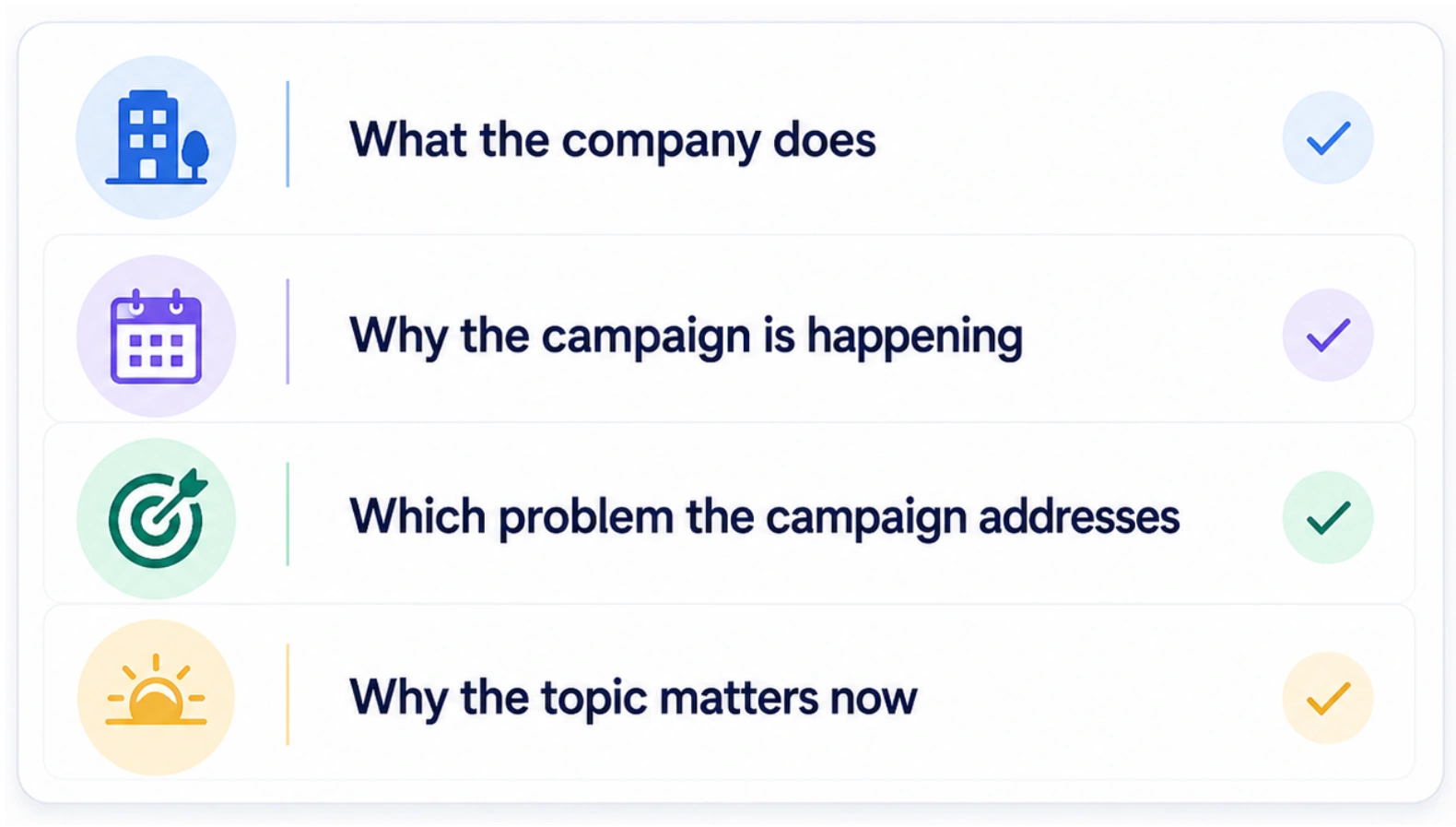
Keep this section concise.
2. Primary campaign goal
State one main objective.
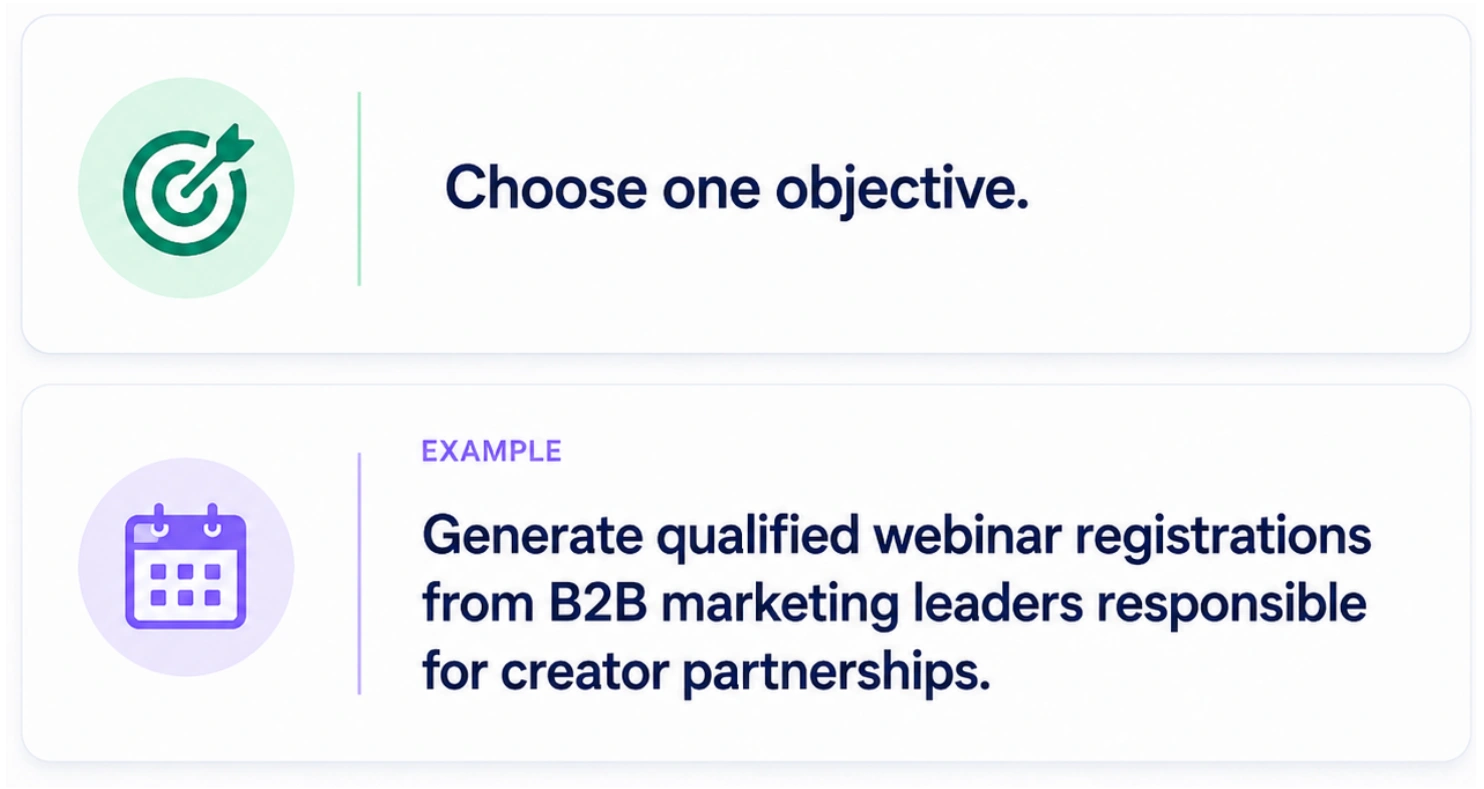
Avoid combining several equally important goals.
3. Target audience
Define:
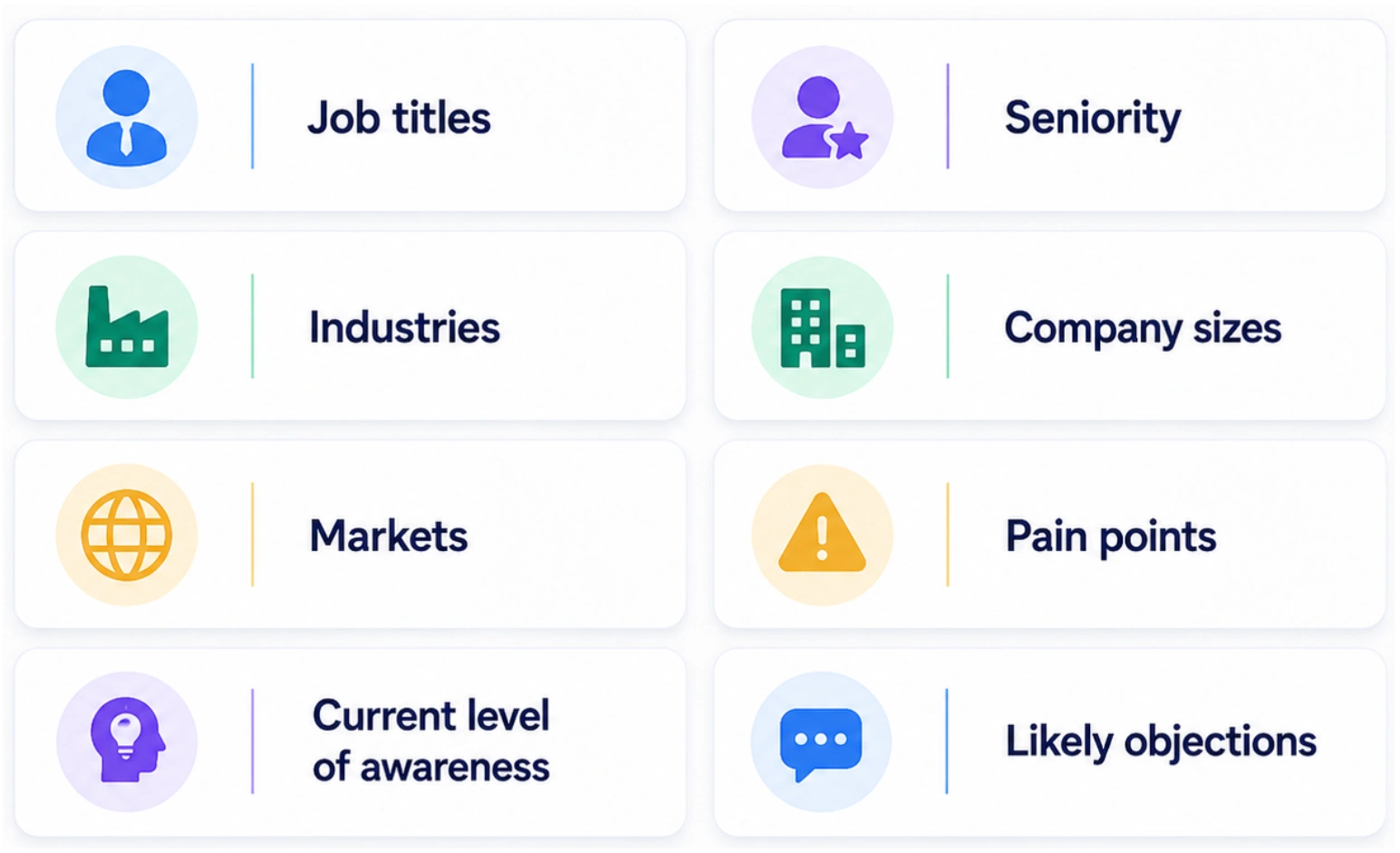
This helps the creator make better decisions about language, examples, and depth.
4. Focused campaign angle
Explain the single idea the content should explore.
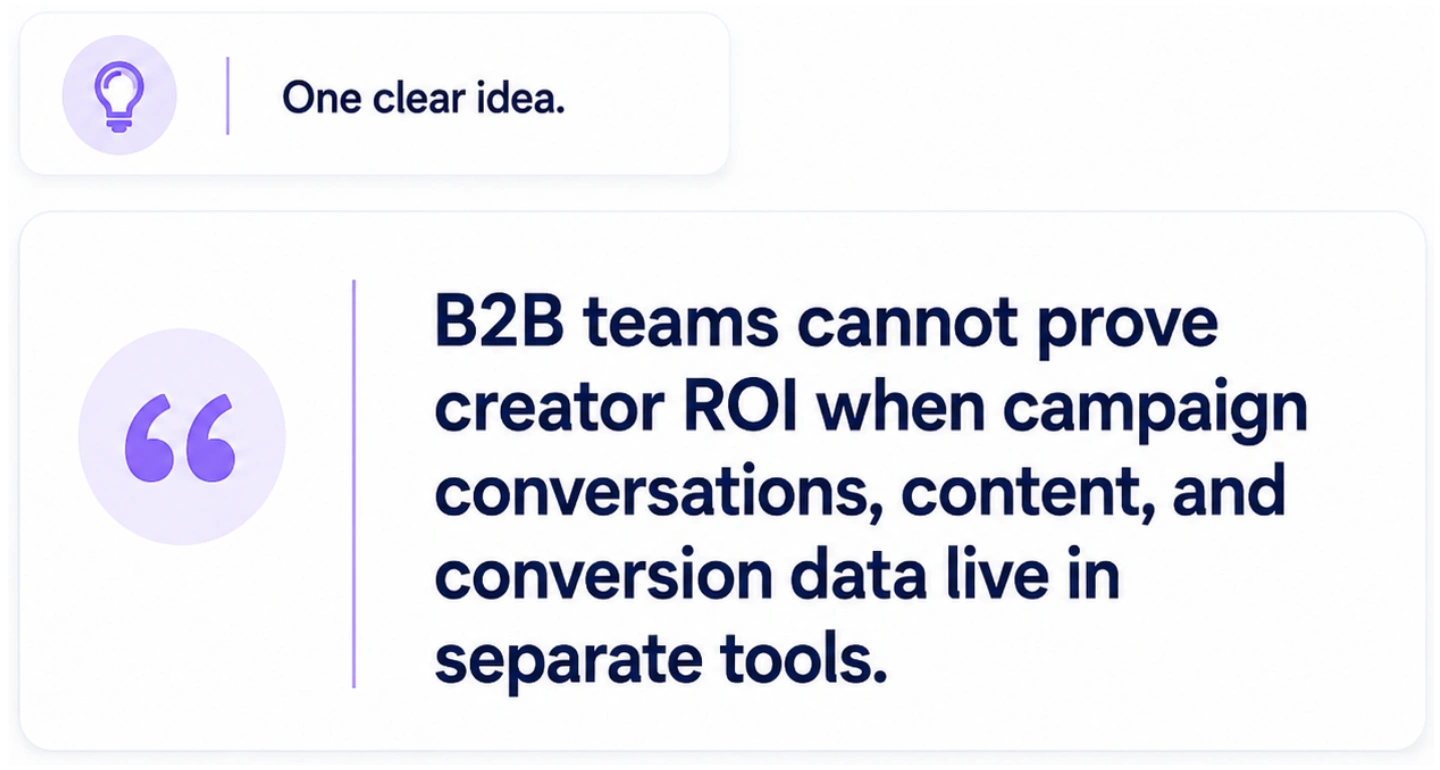
The creator can then decide how to introduce and develop that idea.
5. Reasons to believe
Provide the evidence supporting the product’s role in the campaign.
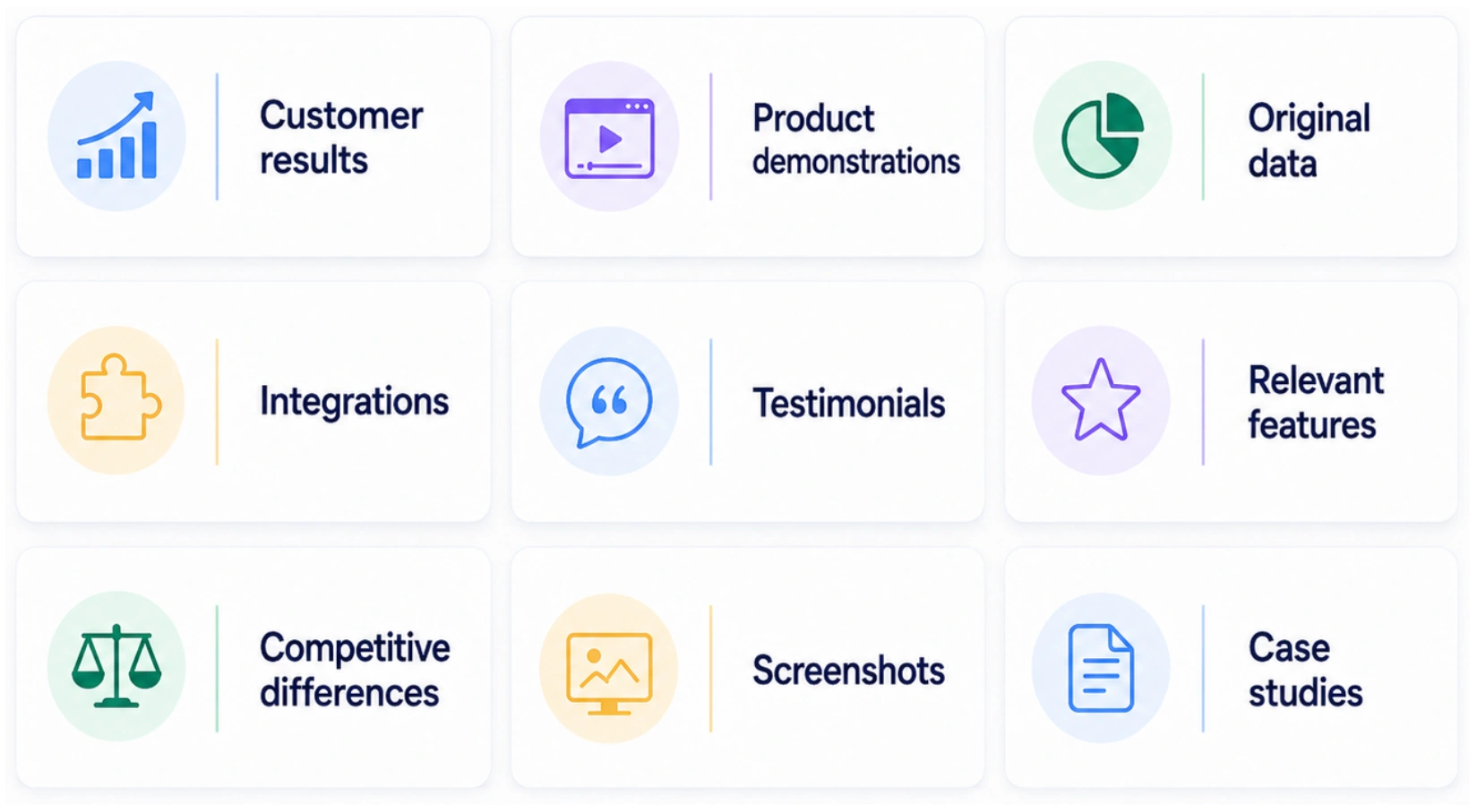
Do not require the creator to include every proof point.
Prioritize the two or three that best support the campaign angle.
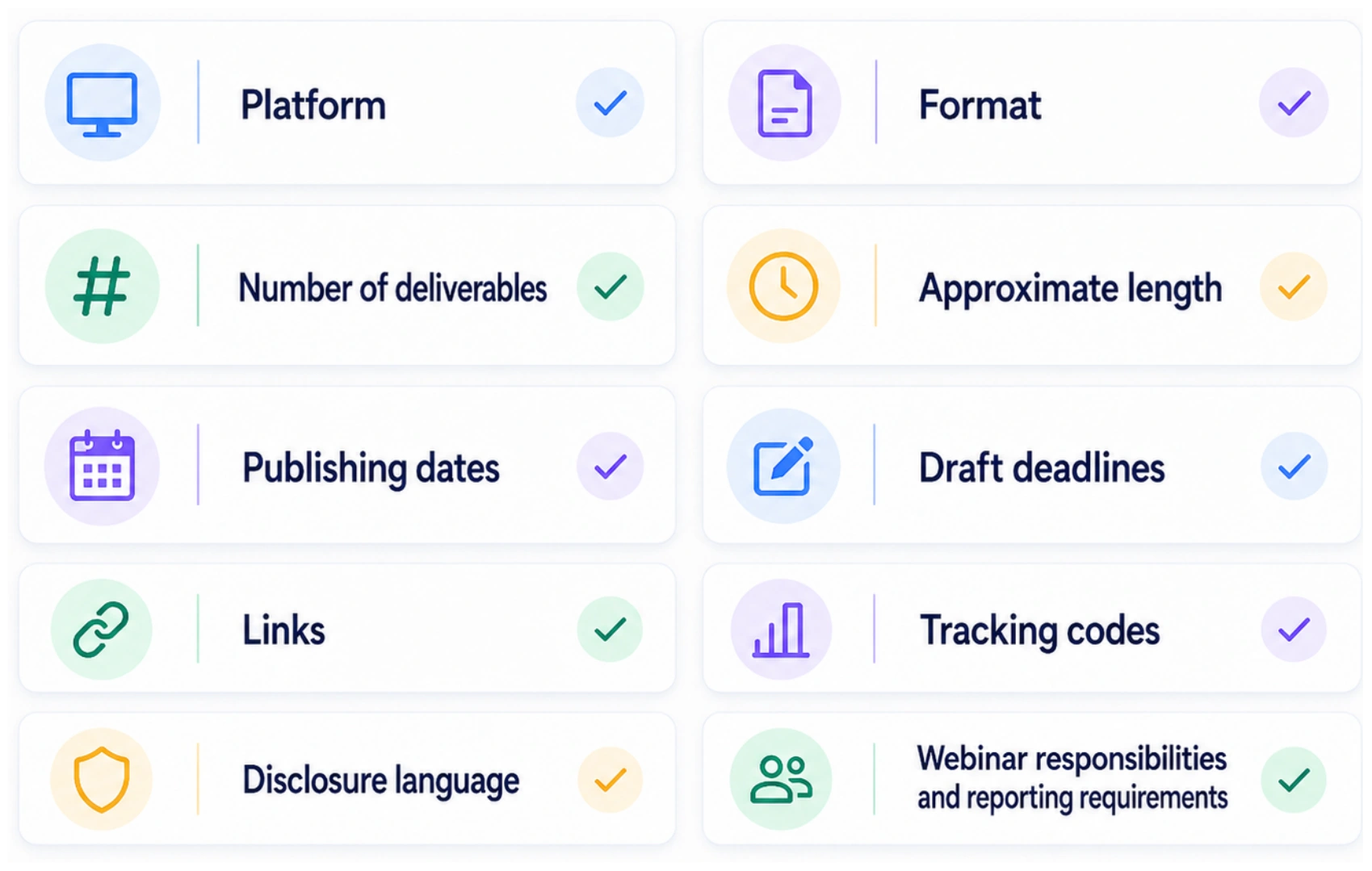
6. Deliverables
Specify:
7. Dos and don’ts
Include mandatory and prohibited elements.
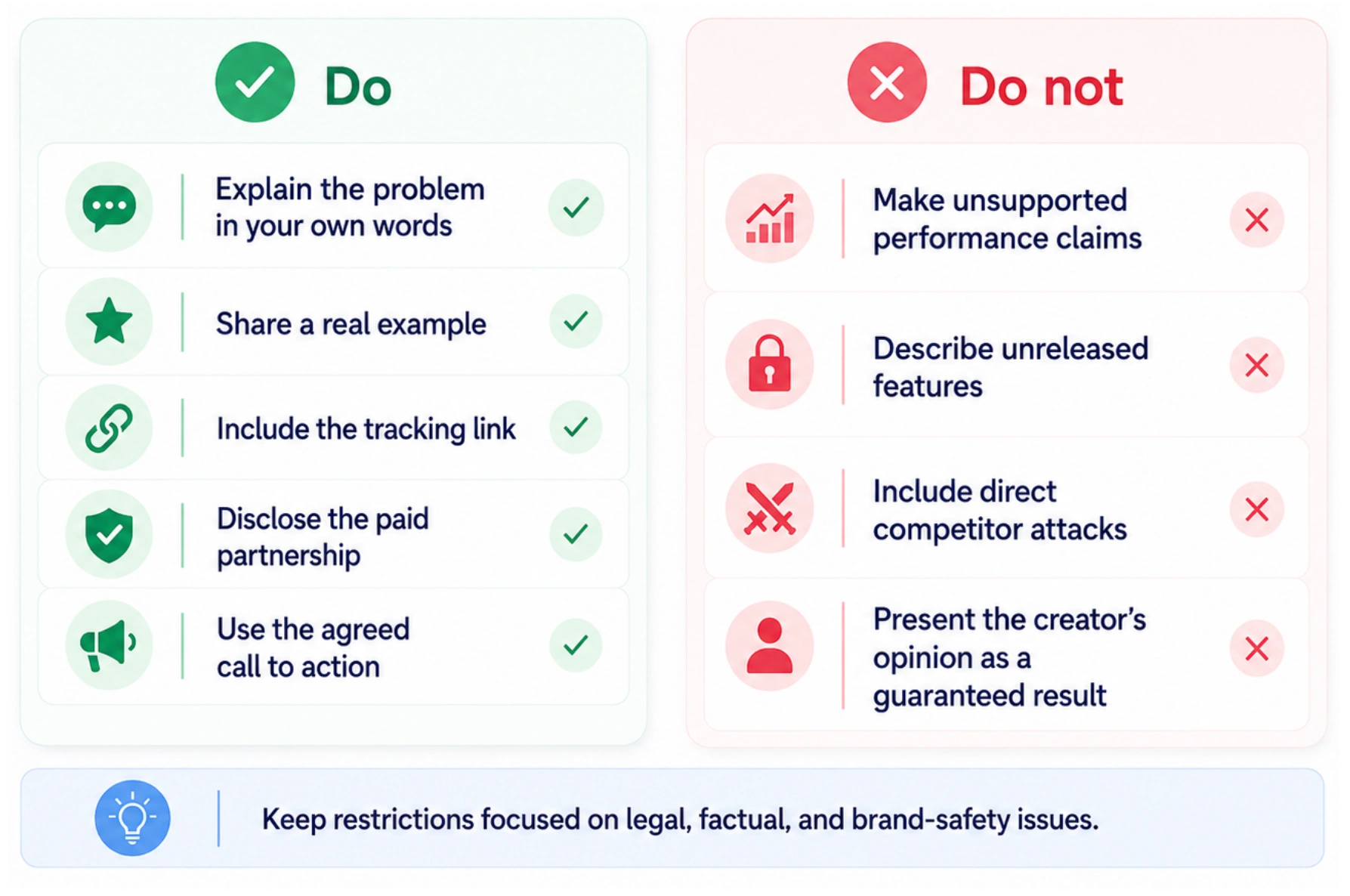
Keep the restrictions focused on legal, factual, and brand-safety issues.
Do not turn the section into a list of creative preferences.
8. Approval process
Clarify:
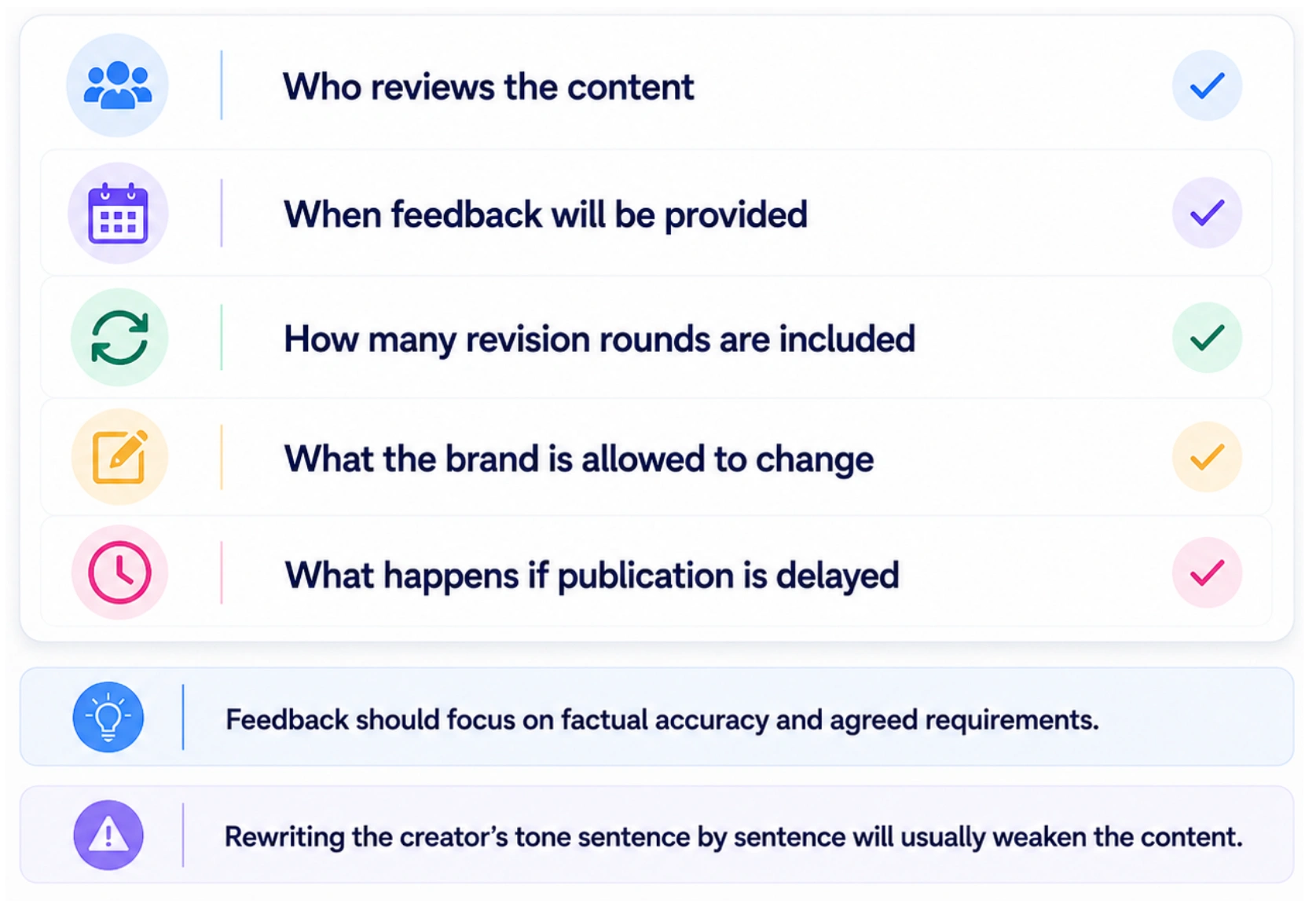
Rewriting the creator’s tone sentence by sentence will usually weaken the content.
Step 7: Structure the Contract Properly
A clear contract protects the creator and the brand.
It should reflect the actual partnership rather than relying on a vague agreement to “create promotional content.”
Define the deliverables
Document:
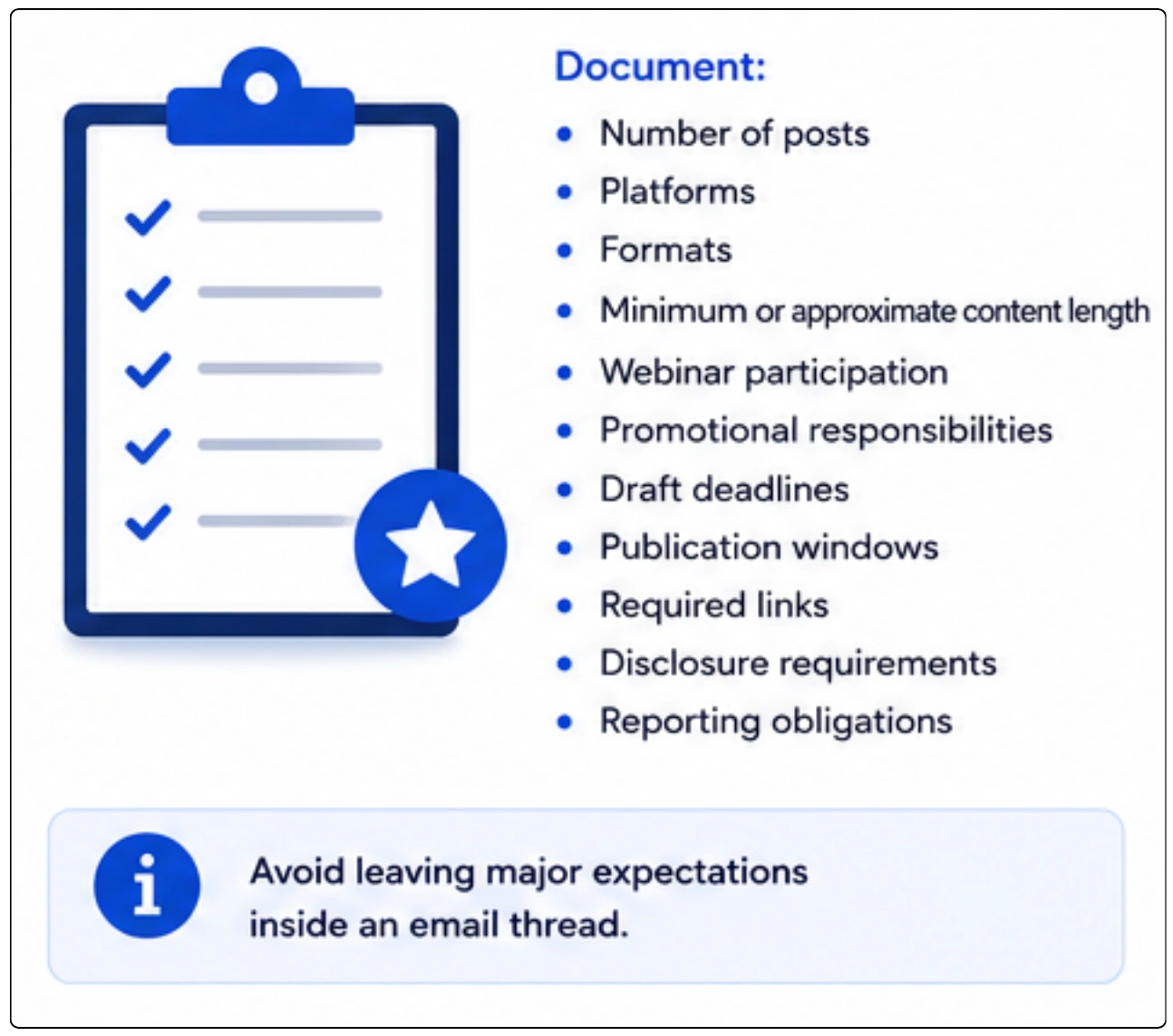
Avoid leaving major expectations inside an email thread.
Define usage rights
Publishing content on the creator’s account does not automatically give the brand permission to use it everywhere.
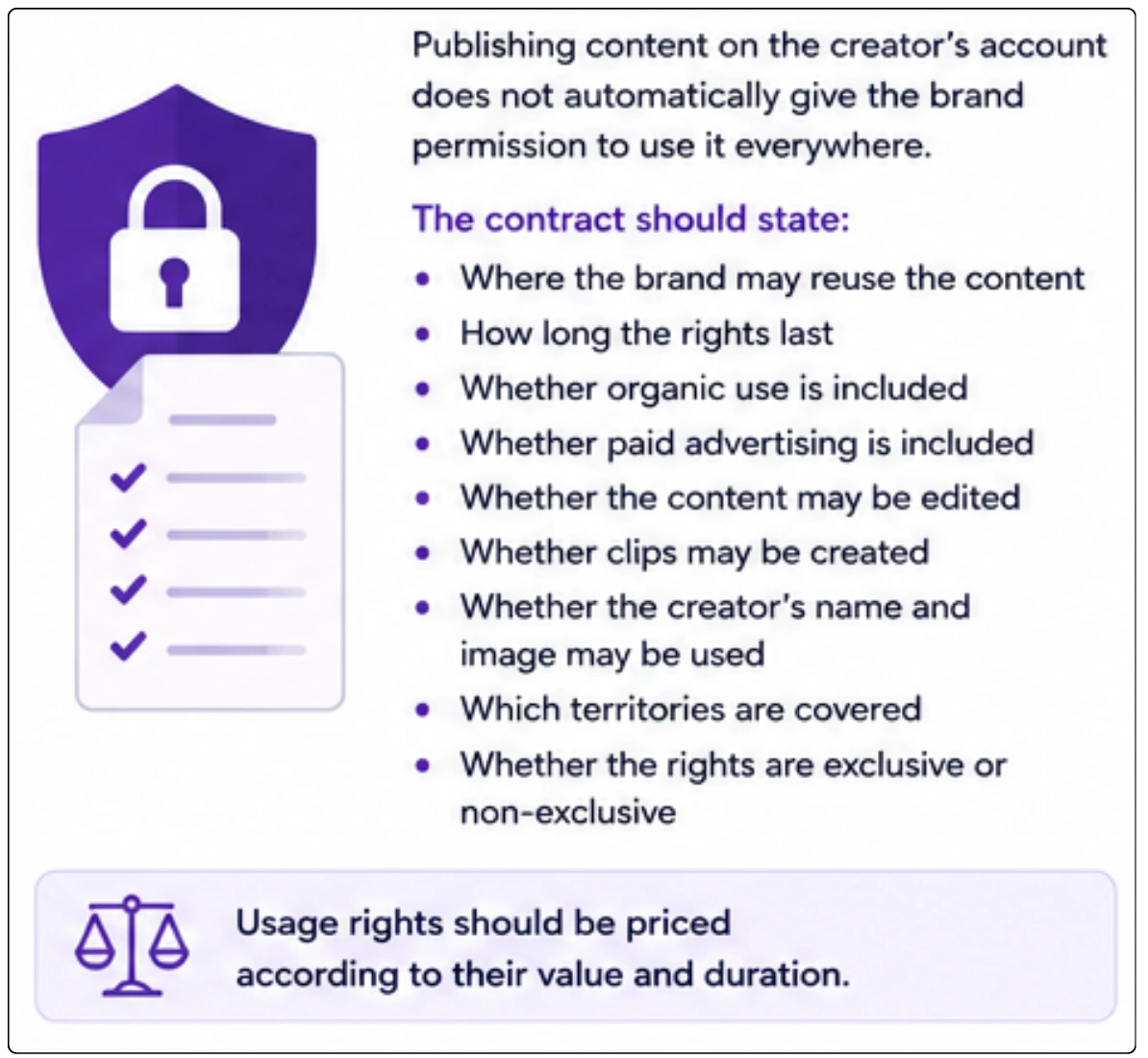
Usage rights should be priced according to their value and duration.
Address paid media separately
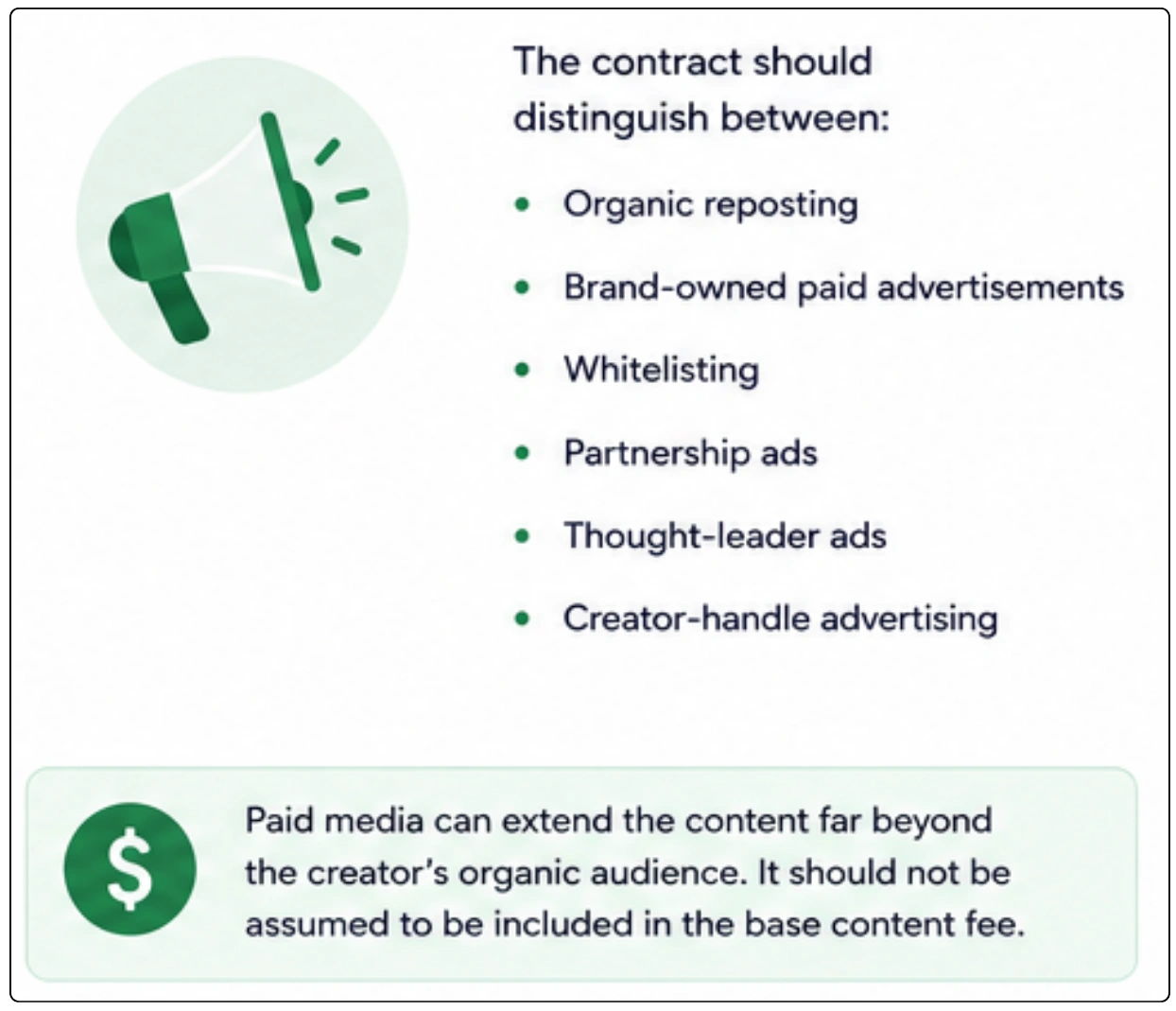
Paid media can extend the content far beyond the creator’s organic audience. It should not be assumed to be included in the base content fee.
Keep exclusivity specific
Avoid broad restrictions such as:
The creator may not work with any competing technology company for six months.
.webp)
Longer or broader exclusivity should generally increase the creator’s compensation.
Define payment terms
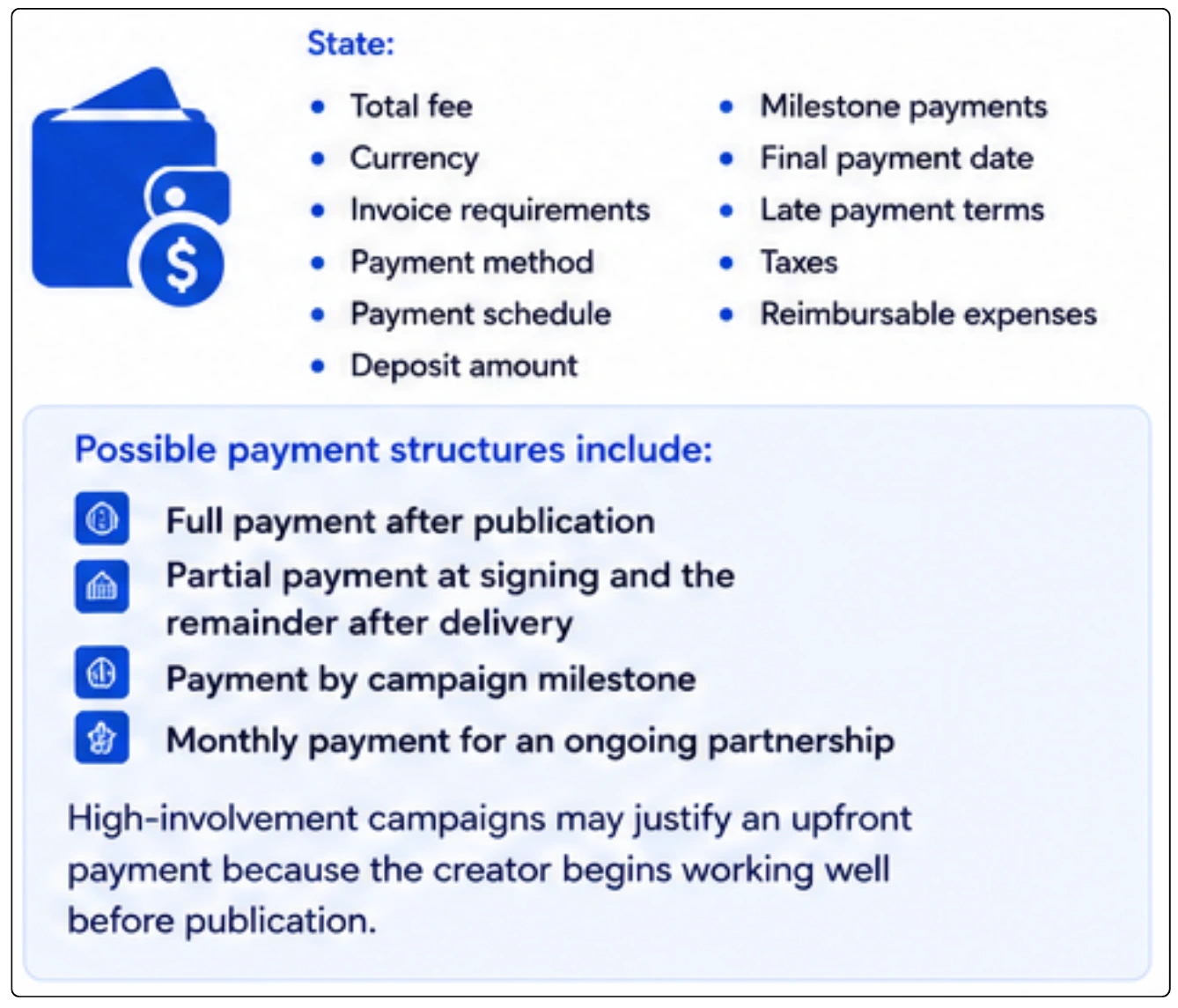
High-involvement campaigns may justify an upfront payment because the creator begins working well before publication.
Include cancellation and rescheduling terms
The contract should explain what happens when:
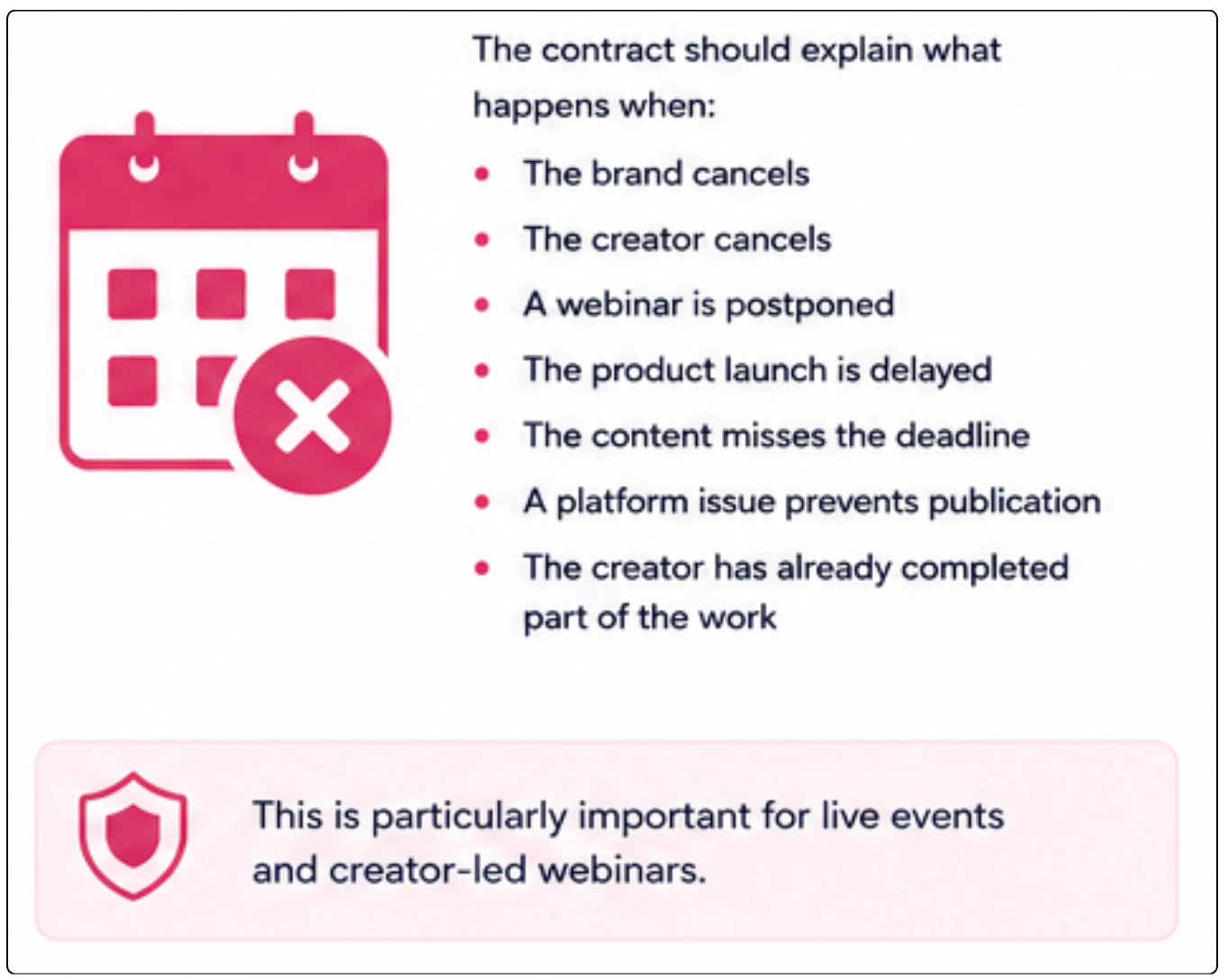
This is particularly important for live events and creator-led webinars.
Step 8: Track and Attribute Results
Attribution is one of the hardest parts of SaaS influencer marketing.
The data will rarely be perfect.
A person can see creator content, visit the website without clicking the link, return through Google, involve colleagues, and convert several weeks later.
That does not mean measurement should be abandoned.
It means the brand needs several attribution methods.
Start with campaign-specific tracking
Use:
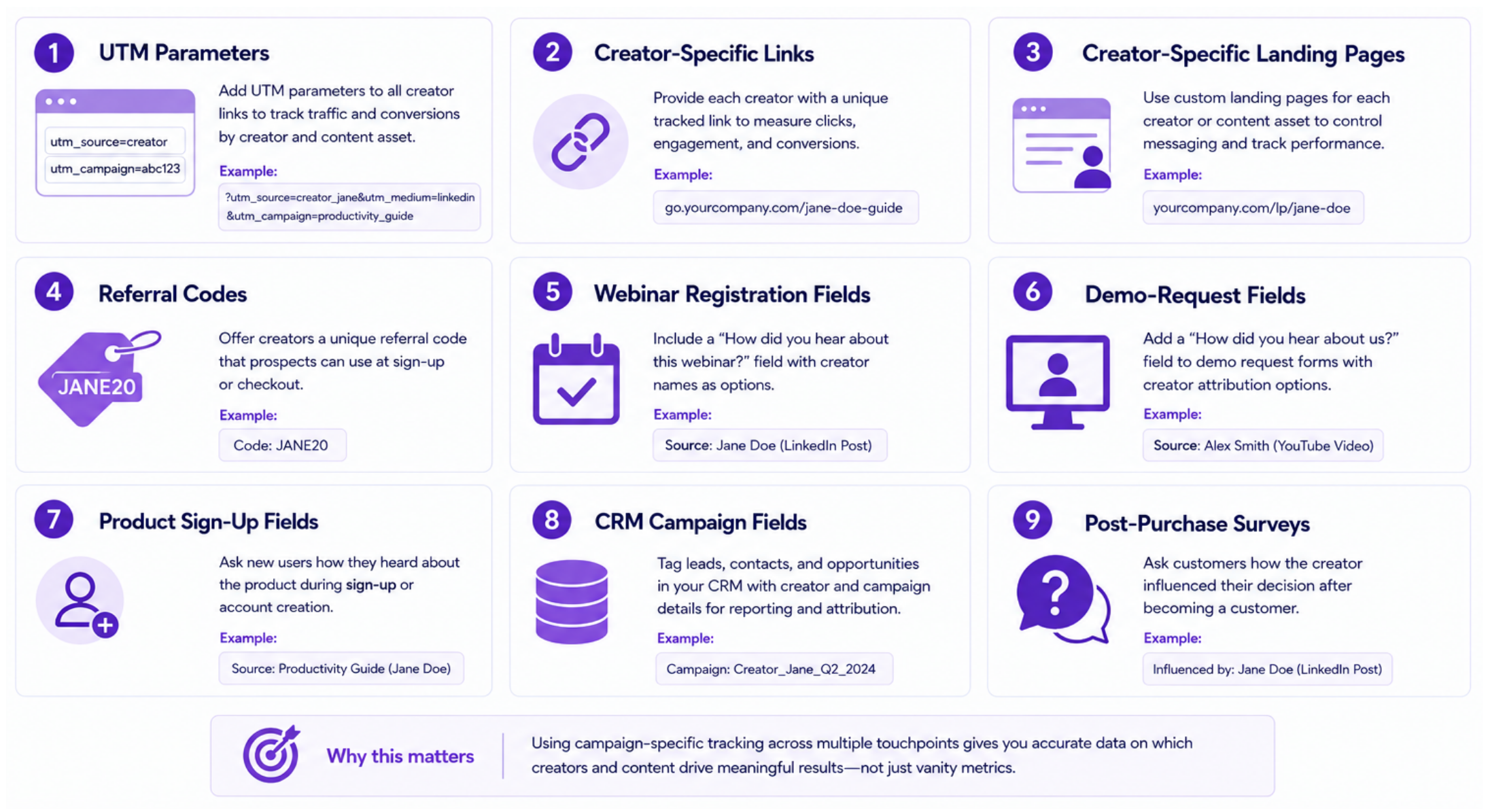
Each creator and content asset should have a distinct identifier where possible.
Connect marketing and sales data
For a B2B campaign, a sign-up is only the beginning.
Track what happens after the initial conversion.
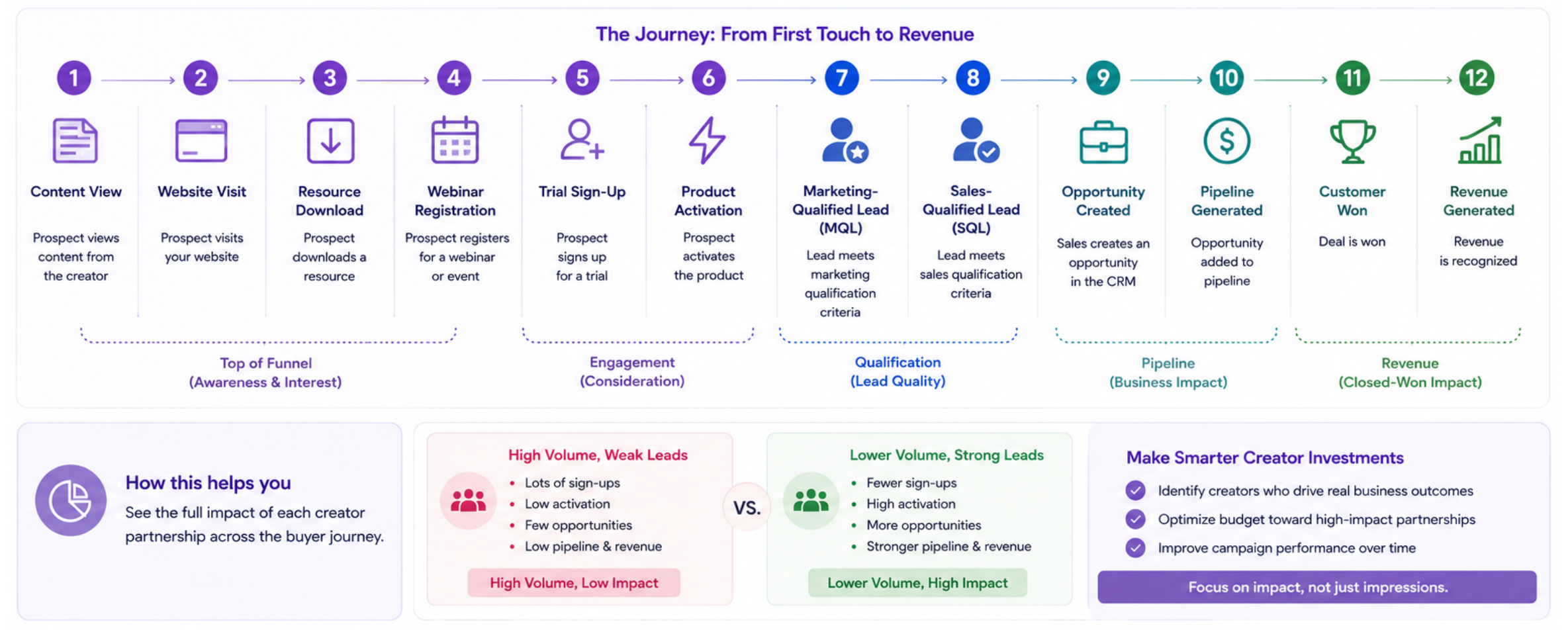
This allows the team to distinguish between creators who produce a high volume of weak leads and creators who produce fewer but more valuable opportunities.
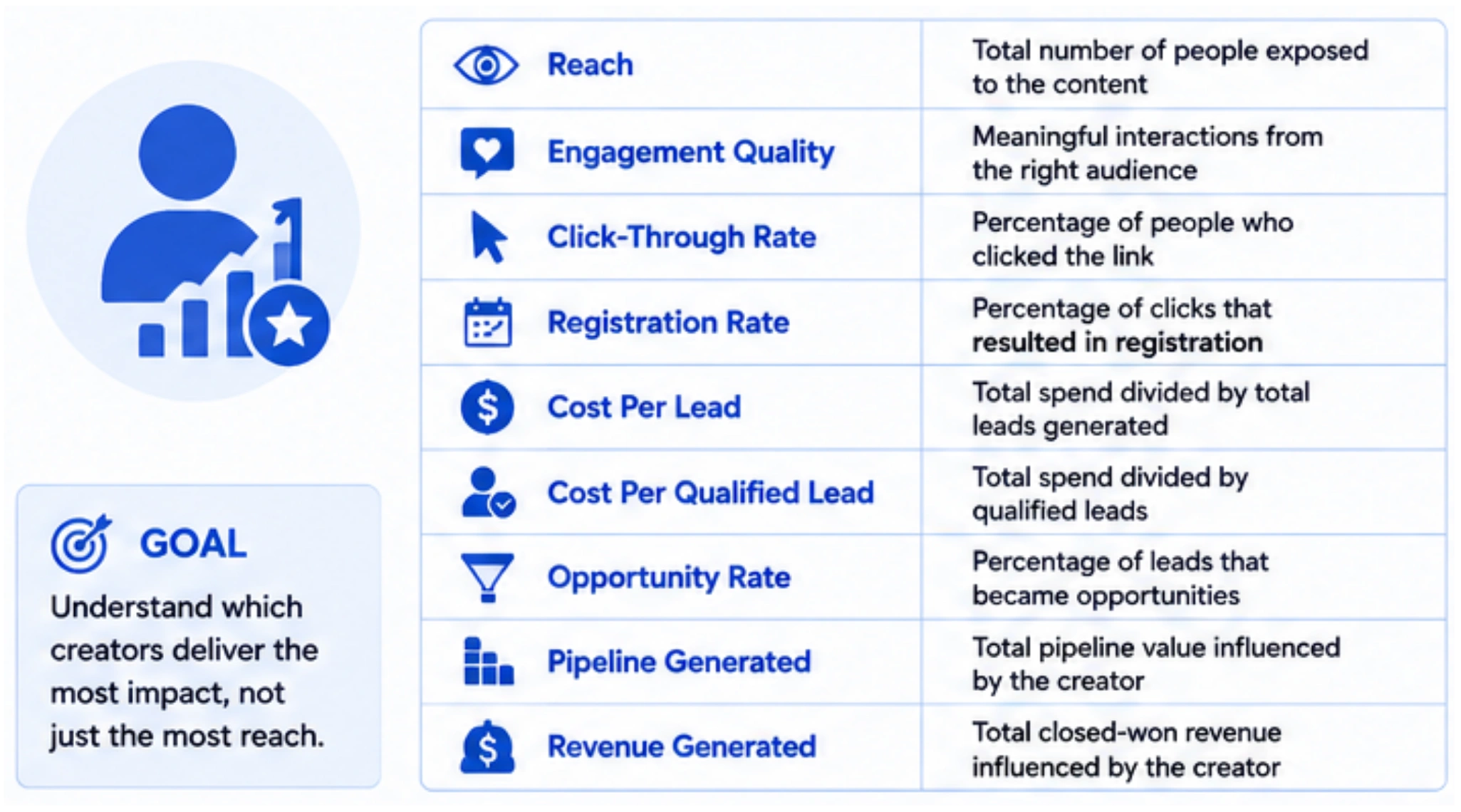
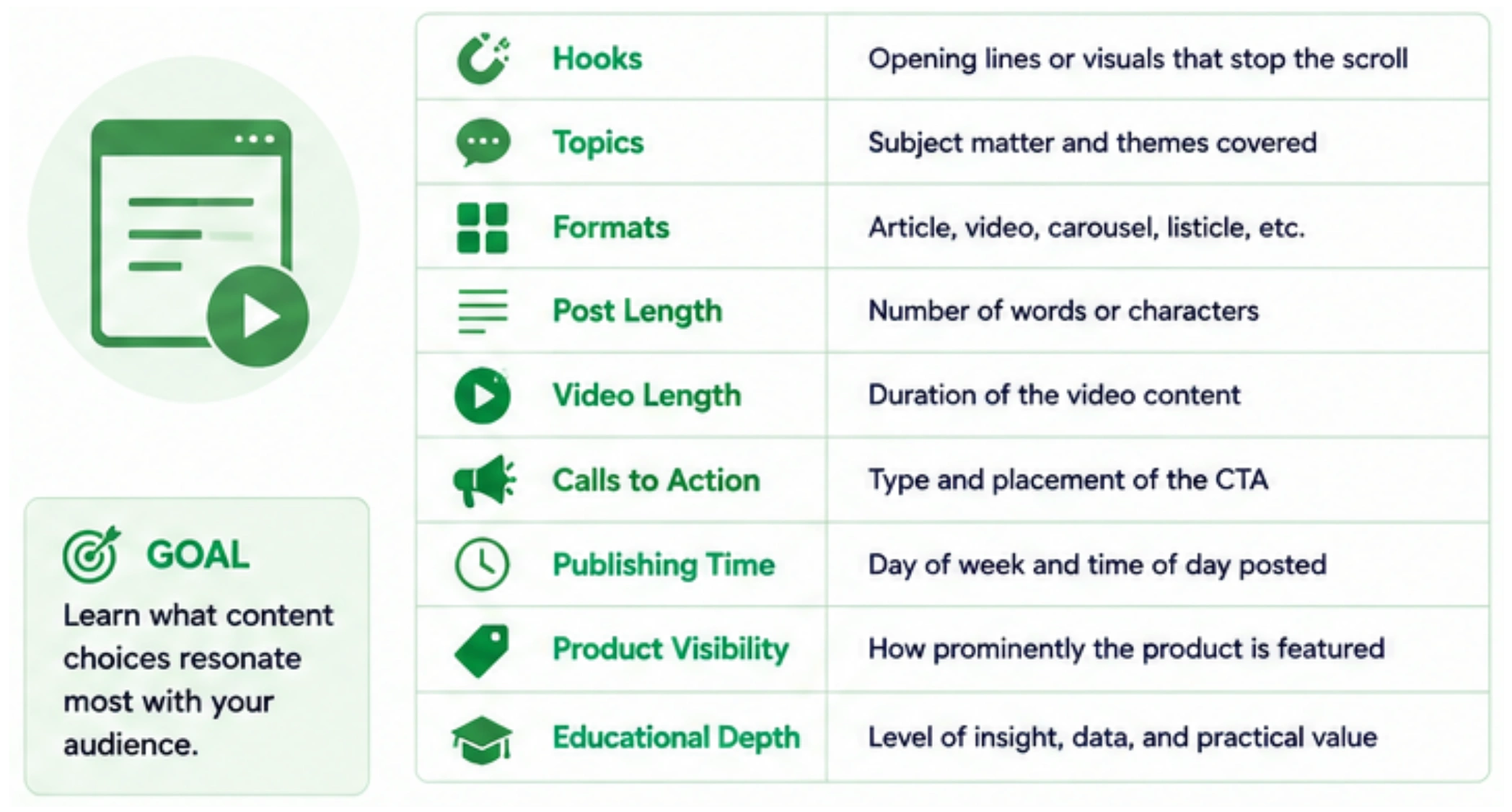
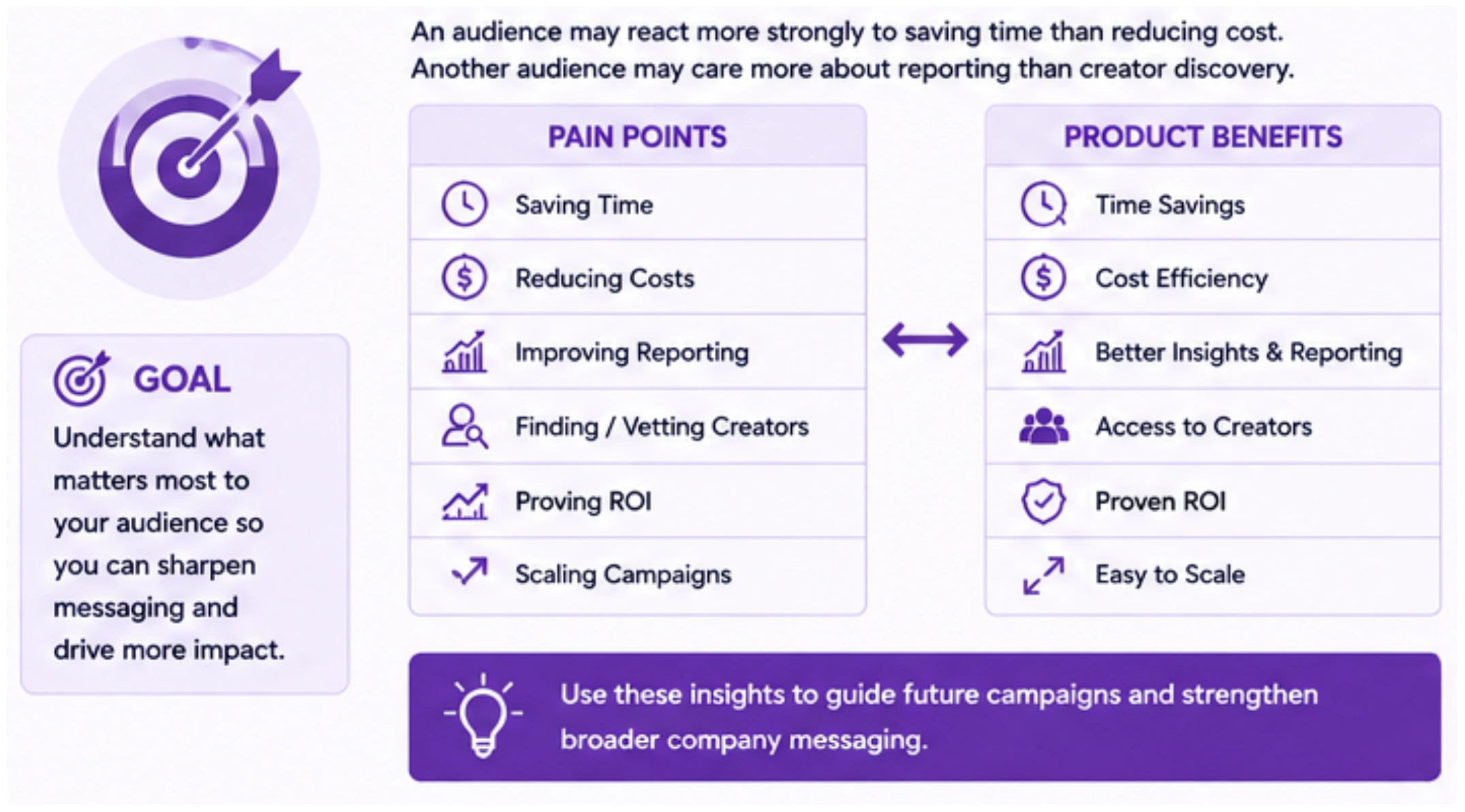
Measure performance at four levels
Creator performance
Content performance
Message performance
Format performance
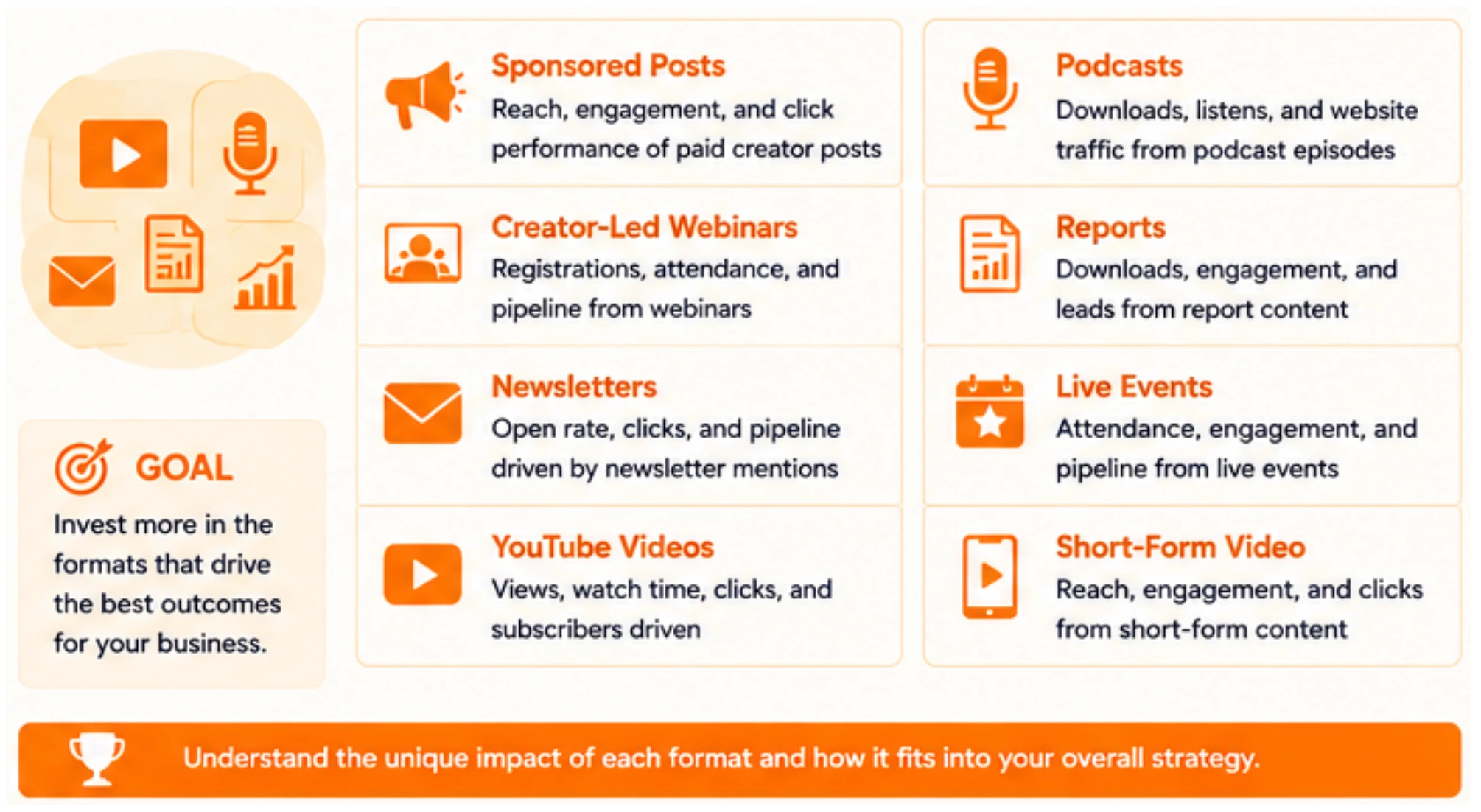
A webinar may generate fewer total views but more qualified leads. A LinkedIn post may create broad awareness and influence later conversions.
Both can work when evaluated against the correct objective.
Use self-reported attribution
Add a “How did you hear about us?” field to:
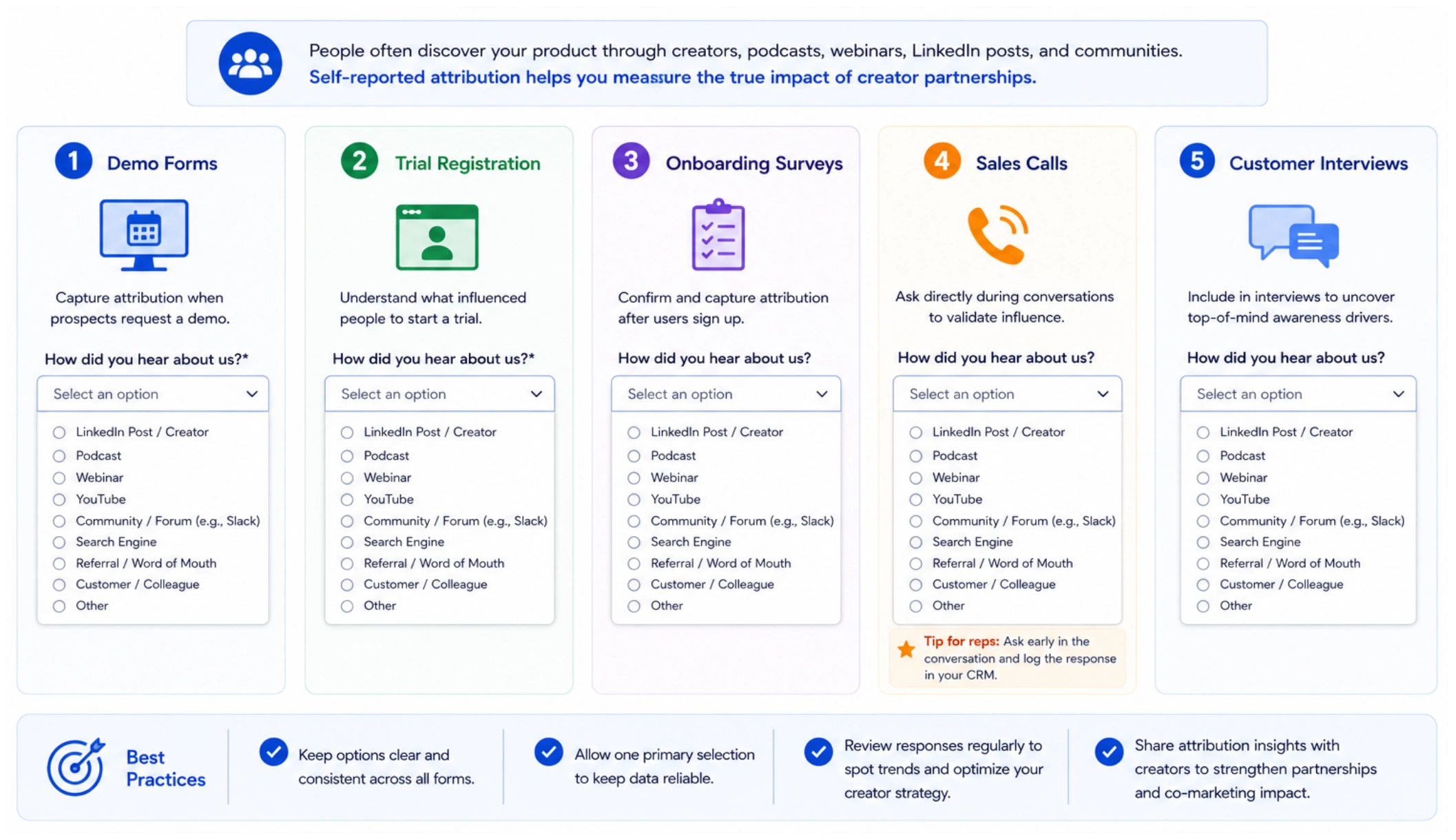
Include creator names or “creator/influencer” as an option when appropriate.
Self-reported attribution will not capture every touchpoint, but it can reveal influence that last-click analytics misses.
Track dark social signals
B2B content is often shared privately through:
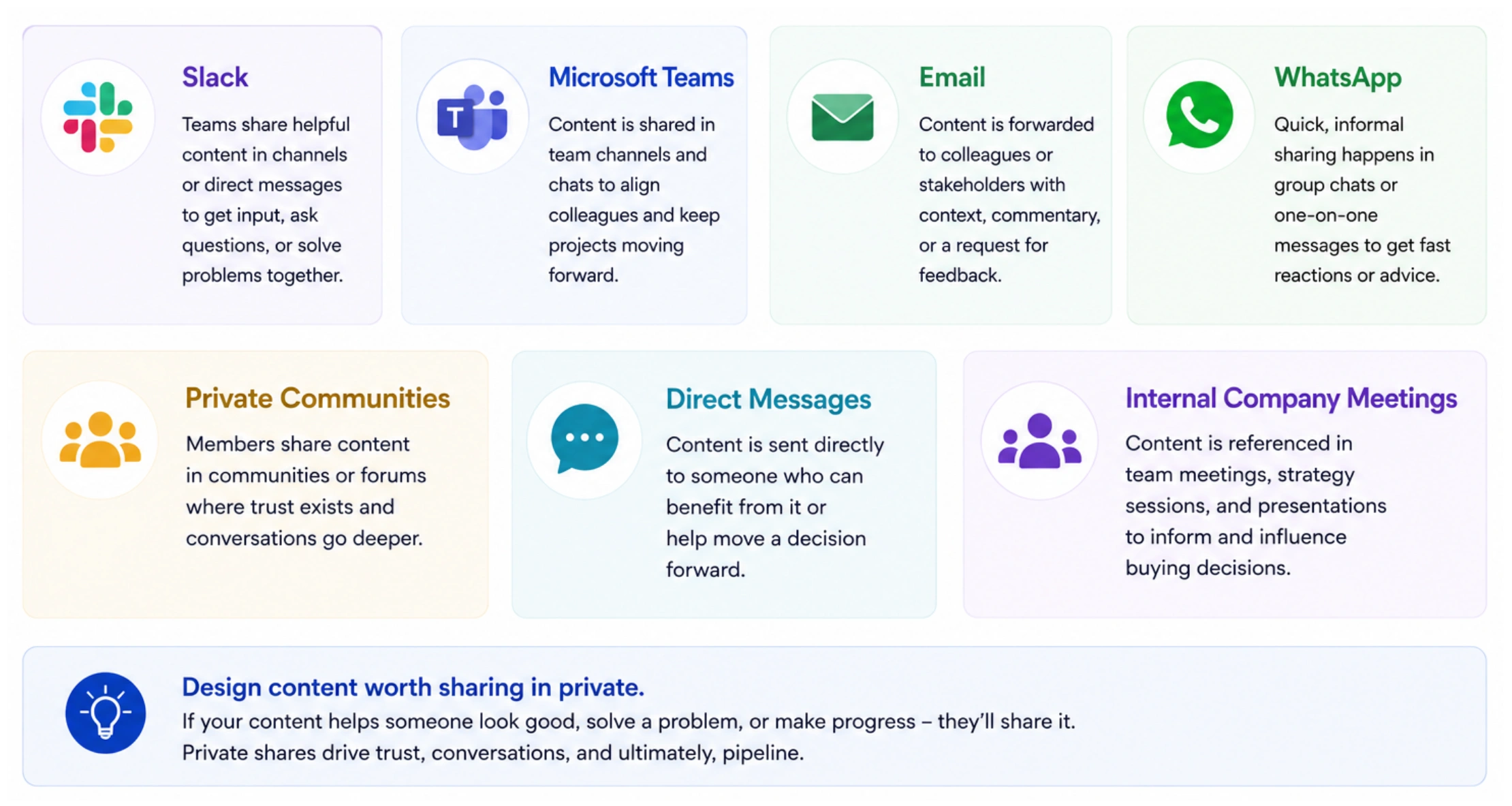
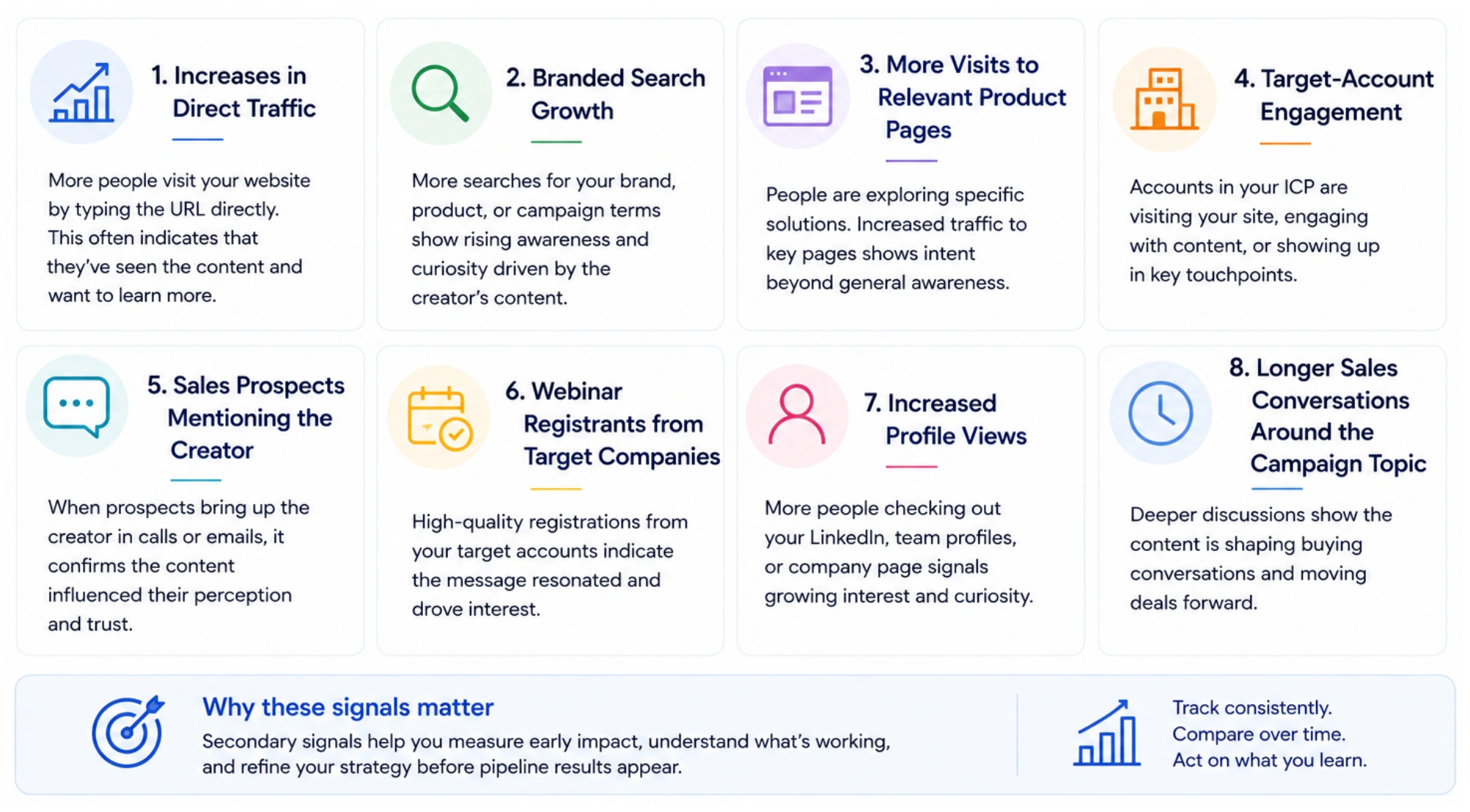
These interactions may not appear in standard analytics.
Look for secondary signals such as:
Use an attribution window that matches the sales cycle
A seven-day attribution window may be too short for B2B SaaS.
Consider tracking creator-influenced leads over 30, 60, or 90 days, depending on the product’s buying cycle.
Document the rules before the campaign begins so the team does not change the measurement method after seeing the results.
For a deeper breakdown, read Favikon’s guide to tracking sales and conversions in SaaS influencer marketing.
Favikon’s influencer campaign platform can also centralize creator content, campaign metrics, outreach, conversions, and reporting.
How to Turn the Framework Into a Repeatable Program
The first campaign should be treated as a structured test.
Do not expect the initial creator, message, or format to produce the final version of your program.
Instead, document what you learn at every step.
Build a campaign scorecard
For each partnership, record:
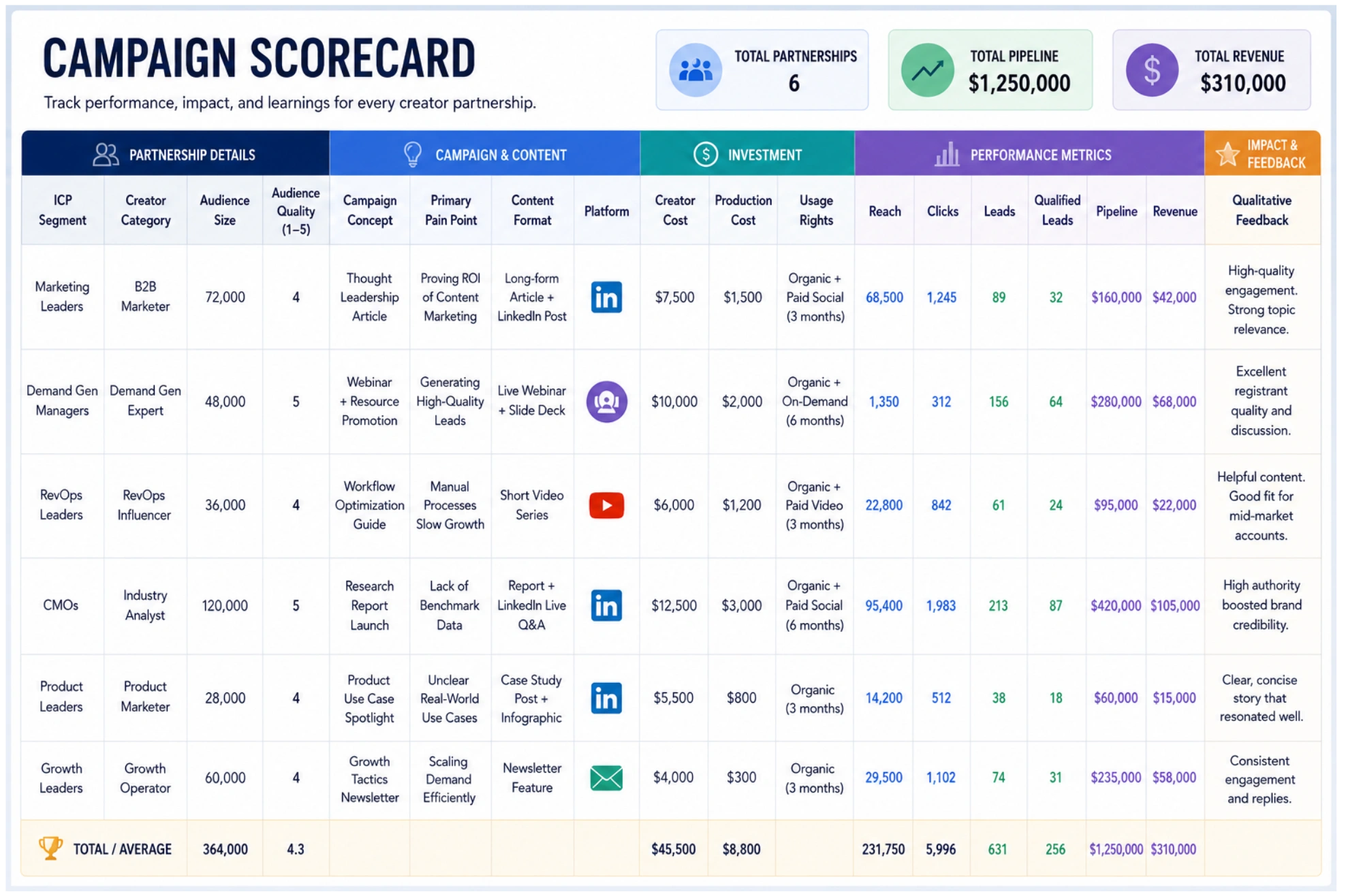
This creates a dataset that improves future decisions.
Continue working with strong creators
Do not automatically replace creators after one campaign.
Repeated partnerships can produce better results because:
· The creator understands the product
· The audience becomes familiar with the brand
· The content becomes more natural
· The creator can discuss deeper use cases
· The partnership appears more credible
· The brand learns how the creator works
A long-term relationship can include posts, webinars, events, reports, product feedback, and ambassador activity.
Favikon’s influencer relationship management platform can help teams organize creator contacts, outreach history, campaign activity, and relationship status.
Repurpose winning content
With the correct usage rights, strong creator content can be repurposed into:
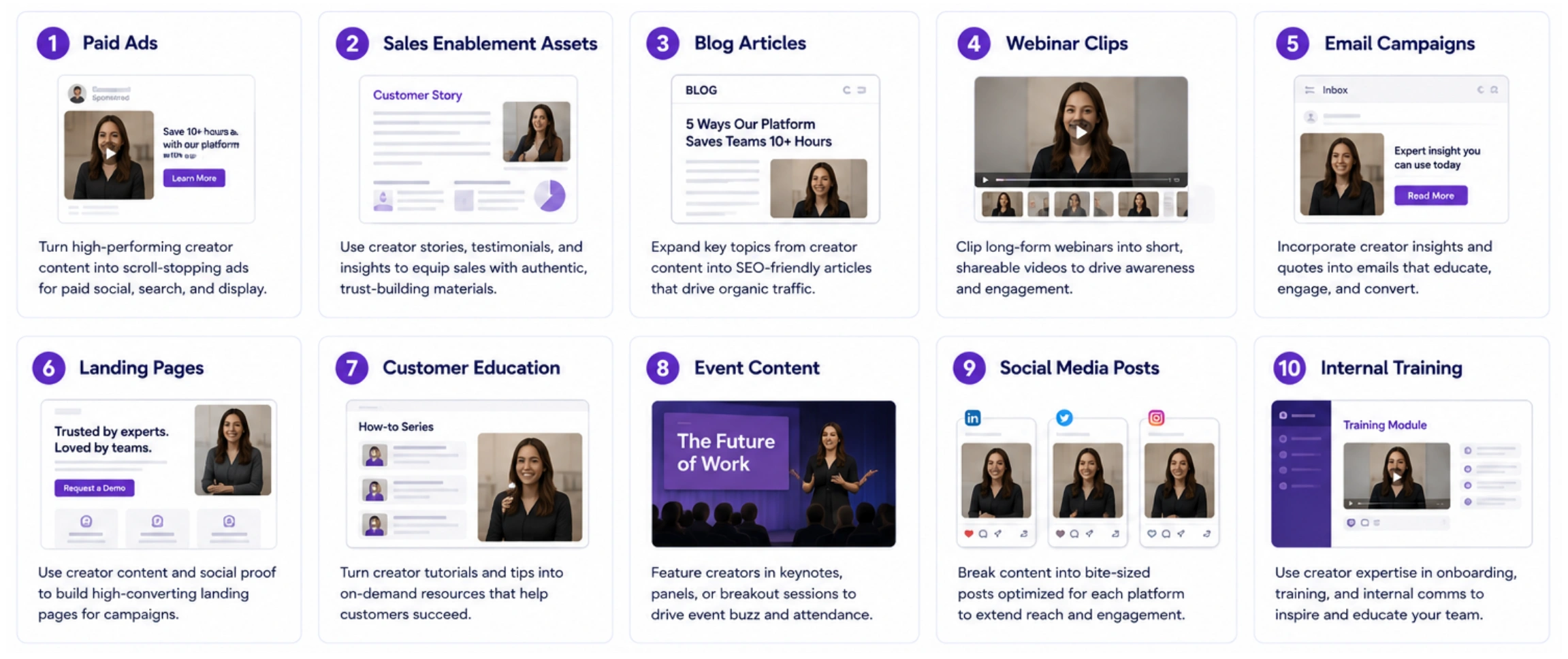
One successful creator-led webinar could produce several weeks of supporting content.
Compare influencer marketing with other channels
Influencer marketing should not be evaluated in isolation.
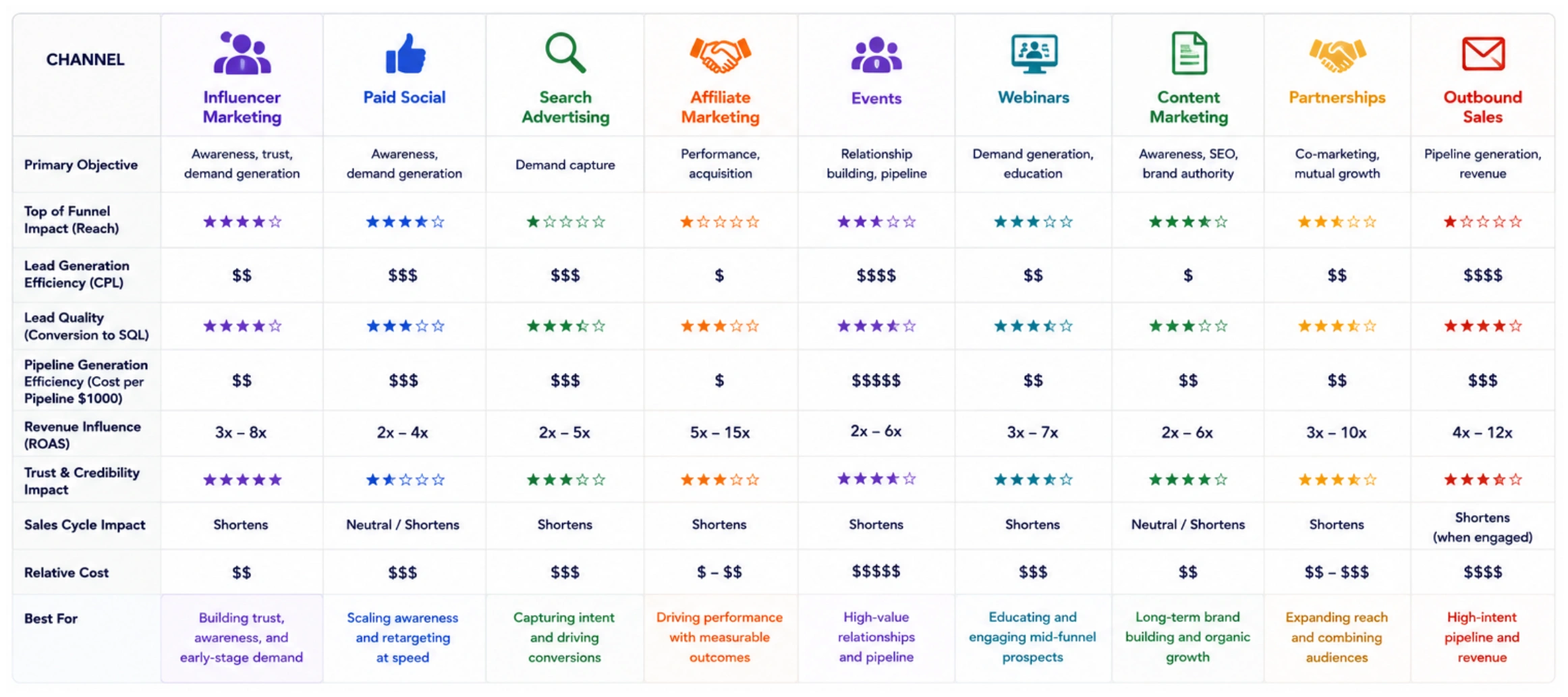
Use metrics that reflect the campaign’s purpose.
An awareness campaign should not be judged exclusively by last-click revenue. A lead-generation campaign should not be declared successful solely because it received a high number of impressions.
Common SaaS Influencer Marketing Mistakes
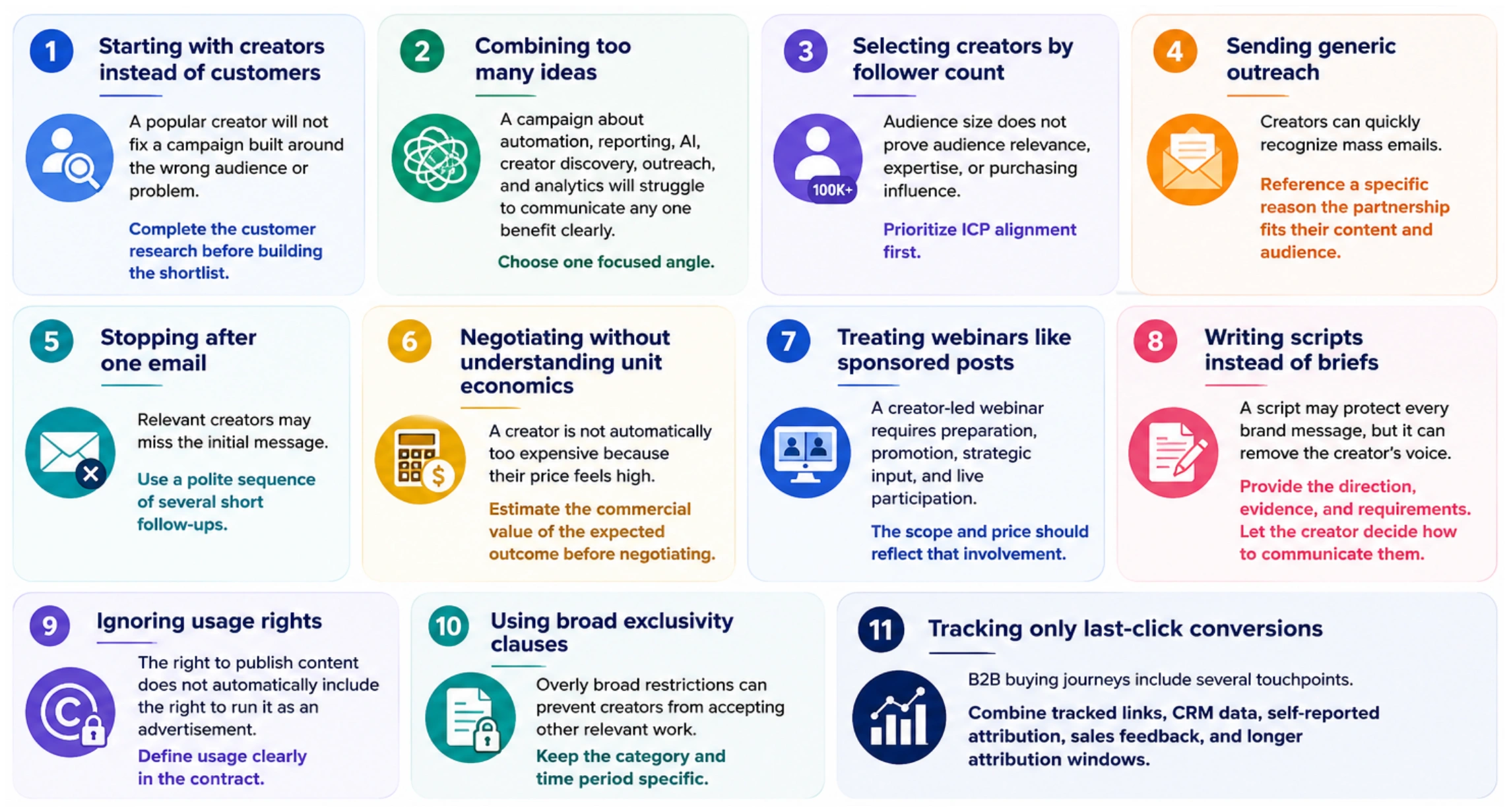
Final Thoughts
A successful SaaS influencer marketing program is not built by paying popular creators to repeat product features.
It begins by identifying the ideal customer profile and understanding the pain points that cause buyers to act.
The brand then turns one of those pain points into a focused campaign concept. That concept determines whether the campaign should use sponsored posts, a creator-led webinar, or a combination of formats.
Relevant niche creators are selected based on expertise, audience alignment, engagement quality, brand fit, and creative ability. They are contacted through a short, personalized outreach sequence rather than a generic partnership request.
Pricing is evaluated against the company’s unit economics and the creator’s actual level of involvement. The brief provides clear direction without replacing the creator’s voice, while the contract documents deliverables, usage rights, exclusivity, cancellations, and payment terms.
Finally, the campaign is measured through multiple attribution methods rather than one perfect data source.
The complete framework is:
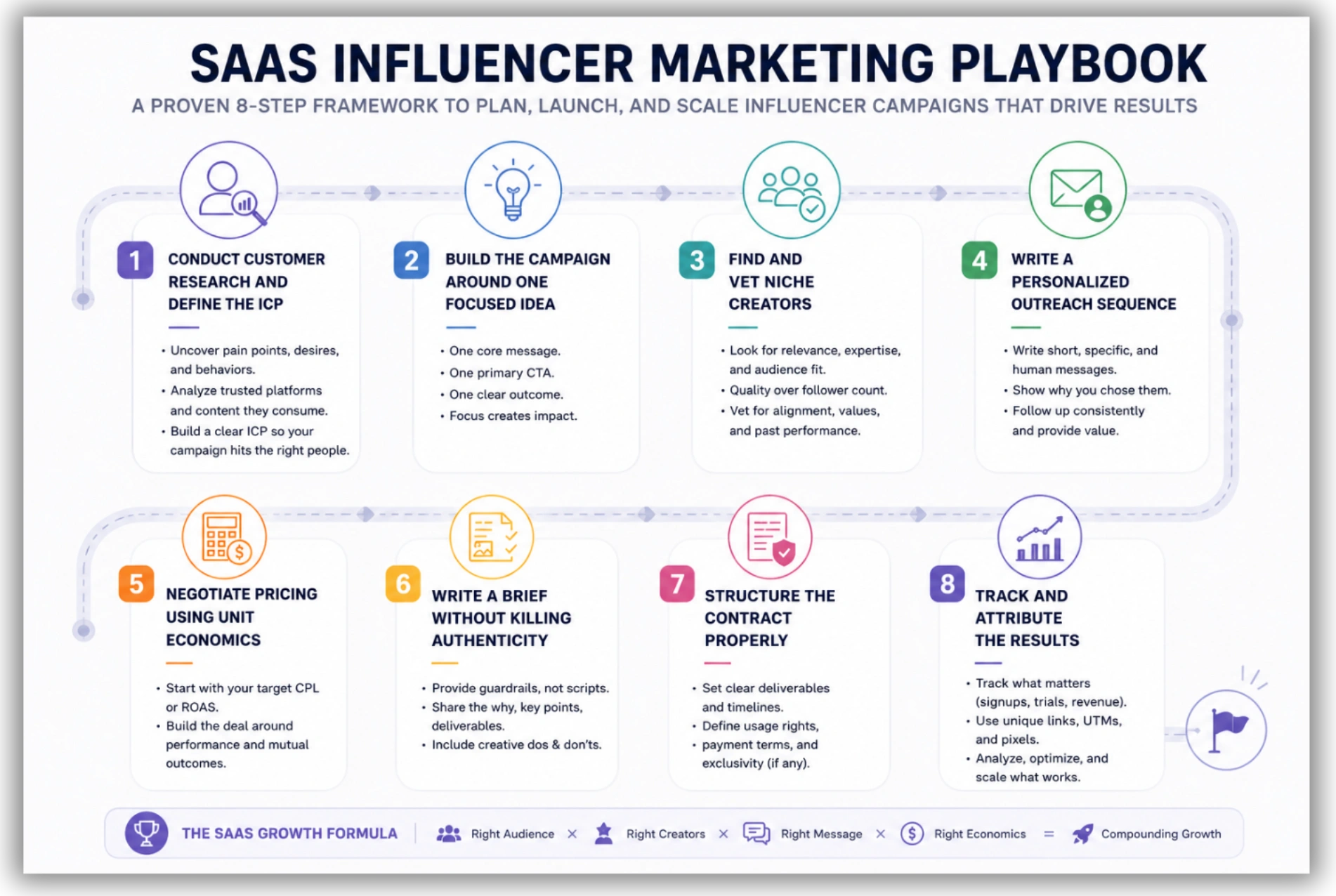
Followed consistently, this process turns SaaS influencer marketing from a collection of sponsored posts into a repeatable program that can generate awareness, qualified leads, pipeline, and revenue.
Skip the guesswork on creator rates. Favikon's B2B Influencer Marketing Platform surfaces real pricing benchmarks and creator cost data so you can negotiate from evidence, not instinct.
→ Explore the B2B Influencer Marketing Platform
Also See 👀
🏆 HOW TO DO INFLUENCER MARKETING ON LINKEDIN IN 2026
🏆 HOW TO ANALYZE INFLUENCER FOR FREE
HOW DOES FAVIKON RANK INFLUENCERS?
Others articles