How Brands Like Wix, Semrush, and Notion Use YouTube Influencer Marketing to Drive ROI
YouTube gives brands access to highly engaged audiences through trusted creators and long-form content. This guide explores how companies use influencer partnerships on YouTube to support growth and improve campaign results.

.webp)
How Brands Like Wix, Semrush, and Notion Use YouTube Influencer Marketing to Drive ROI
Most brands take one of two approaches to YouTube influencer marketing: sponsor a generic product review, or hand a creator a script. The first produces inconsistent results that depend entirely on whether the creator genuinely likes your product. The second gets skipped. Both burn budget. The brands that are actually generating ROI from YouTube — Wix, Semrush, Notion, Lovable, Instantly — are running three specific campaign structures instead. This article breaks down each one.
If you’re new to YouTube influencer marketing, start with our step-by-step guide covering costs, campaign types, and creator selection.
1. Why YouTube Is Now the #1 Channel for AI Visibility
YouTube’s role in brand visibility has shifted significantly in the past 18 months. It’s no longer just a platform for reach — it’s a primary citation source for large language models. According to BrightEdge data cited by Search Engine Land, YouTube is cited by AI search platforms 200 times more than any other video platform. That advantage holds across ChatGPT, Perplexity, and Google’s own AI Overviews — platforms with no obligation to favor Google-owned properties.
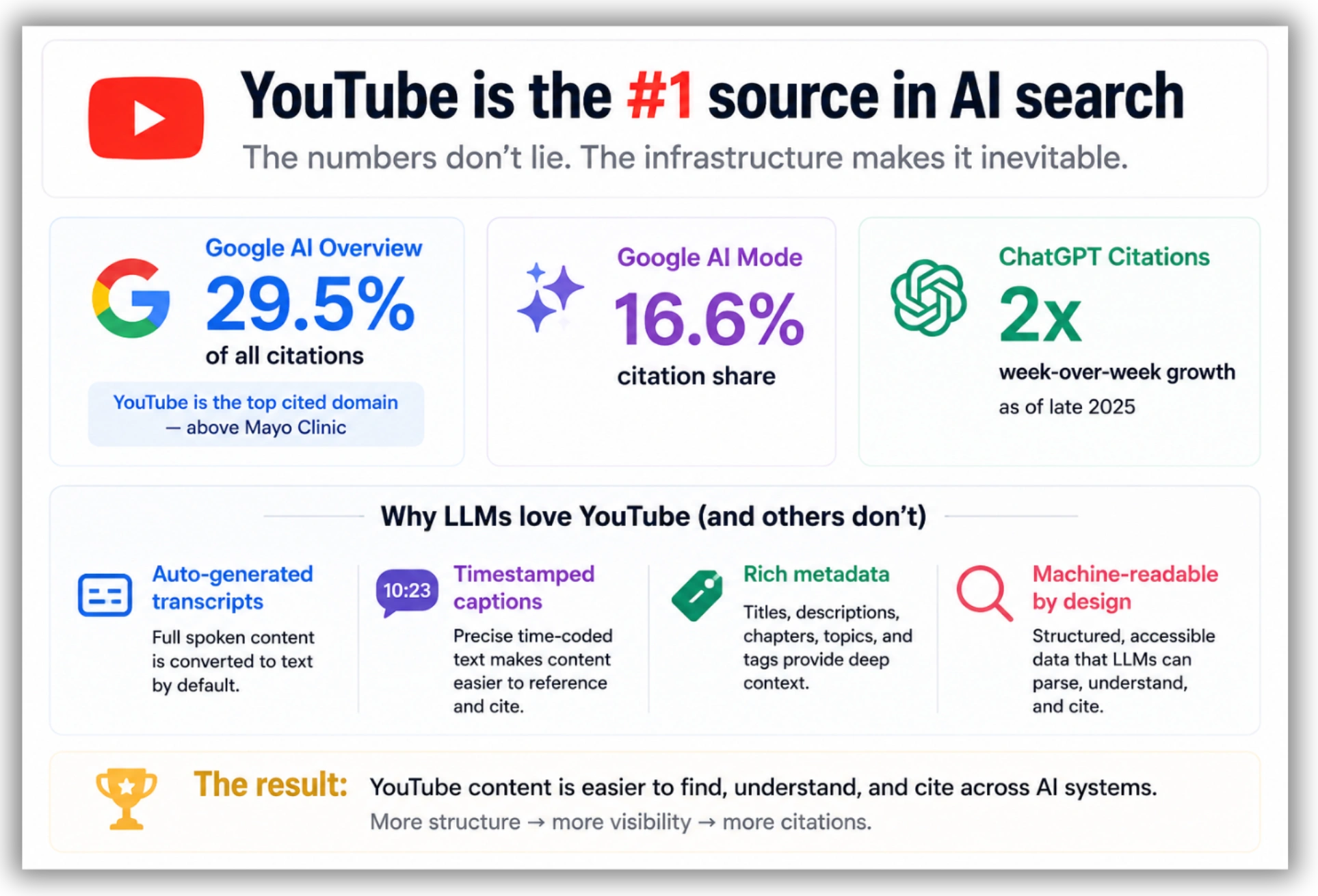
The numbers break down like this: YouTube accounts for 29.5% of all Google AI Overview citations, making it the top domain — above Mayo Clinic. It holds 16.6% citation share in Google AI Mode, and its presence in ChatGPT citations doubled week-over-week as of late 2025. The reason is structural. YouTube’s auto-generated transcripts, timestamped captions, and detailed metadata give LLMs machine-readable content that other video platforms don’t provide.
This is why B2B brands like Wix, Semrush, 11 Labs, and Instantly are increasing their YouTube influencer budgets. Not just for views. Every sponsored video on YouTube that covers a topic relevant to your product is a potential citation entry point in AI-generated answers. To scale this type of content, many companies rely on an AI video generator to create product explainers, educational videos, and campaign assets that reinforce the same message across multiple channels. Brands that own those citations own the recommendation layer.
2. The 2 Mistakes Killing Your YouTube ROI
Mistake 1: Sponsoring generic product review videos.
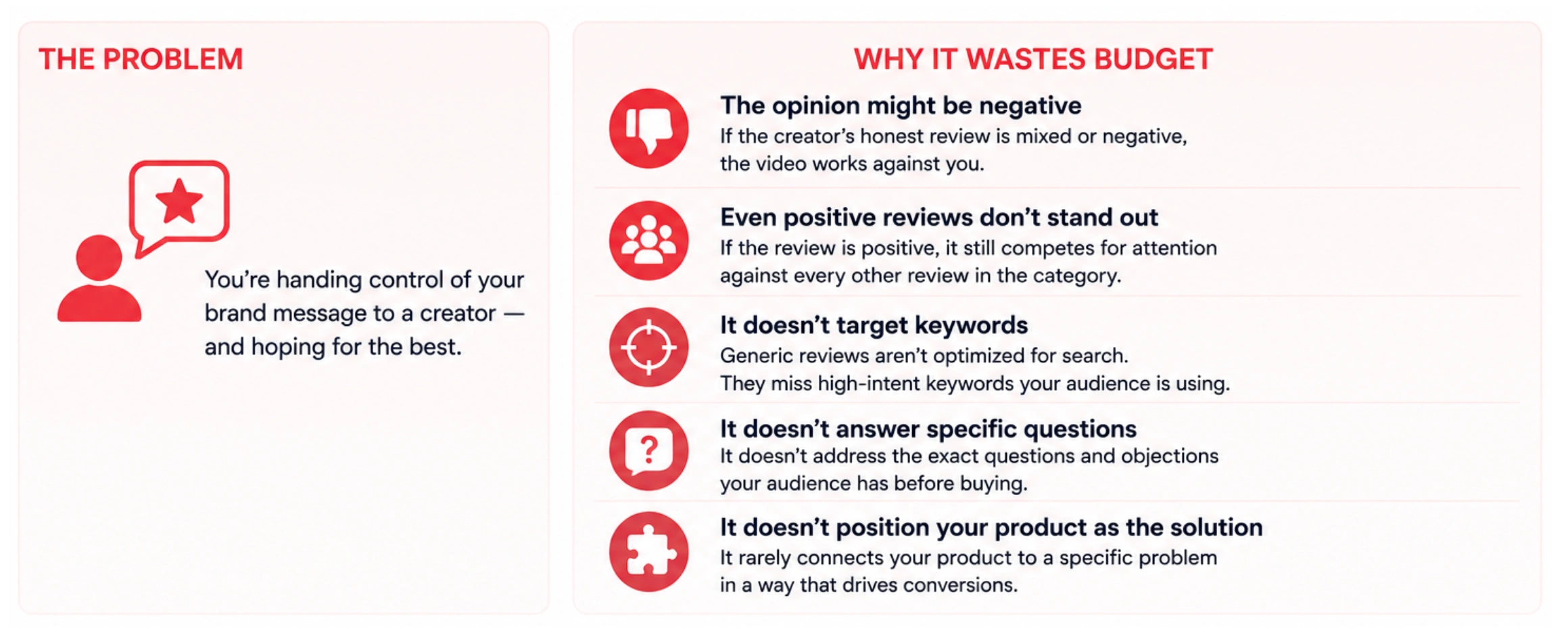
Review content is creator-driven. The creator forms a genuine opinion, and if that opinion is mixed or negative, the video works against you. If the opinion is positive, the video still competes for attention against every other review in the category. Generic reviews don’t target keywords, they don’t answer specific audience questions, and they don’t position your product as the solution to a defined problem.
Mistake 2: Scripted integrations
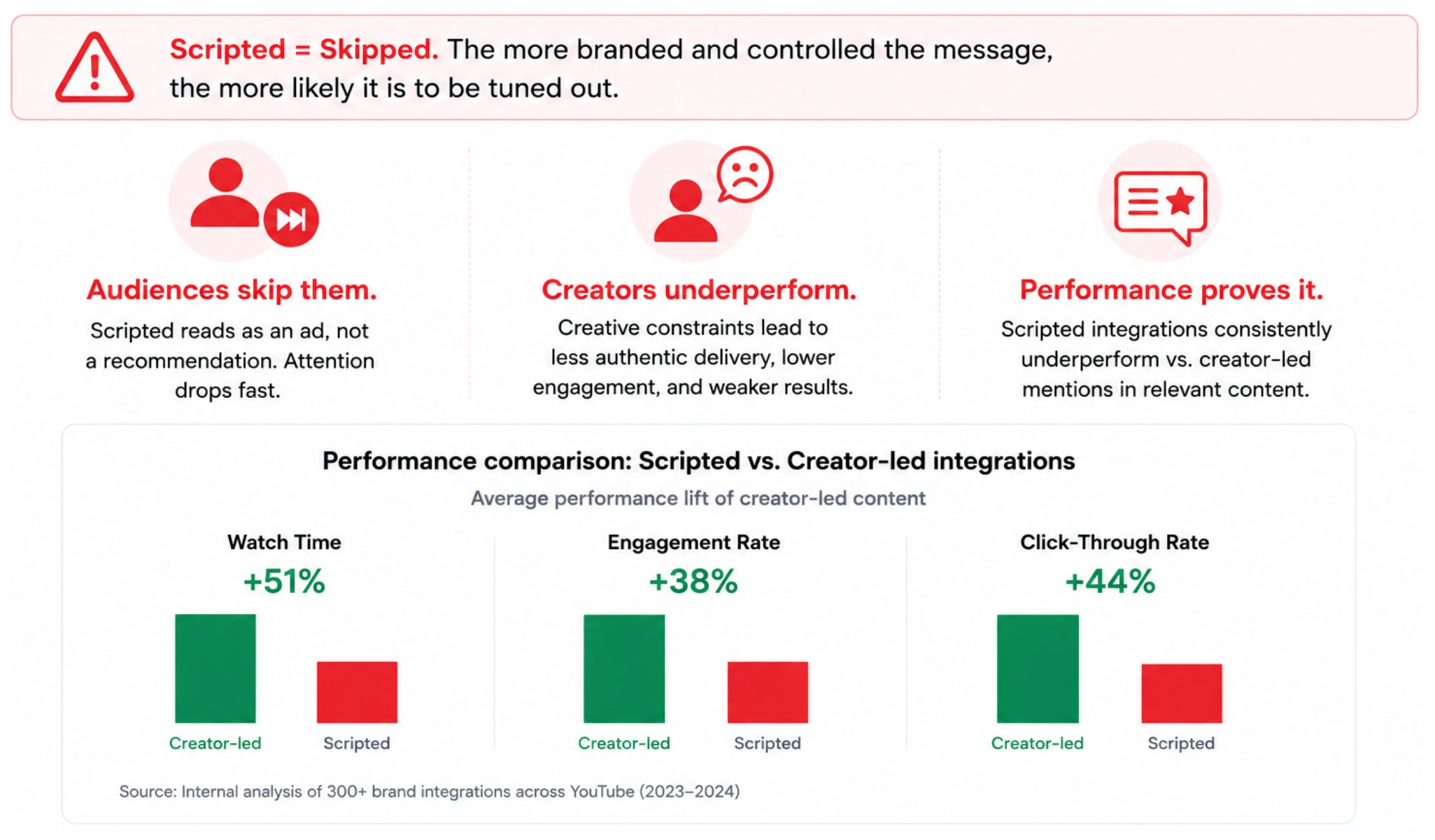
Audiences skip them. Creators who feel creatively constrained deliver worse performances. And scripted integrations read as ads — because they are. The more branded and controlled the message, the more likely it is to be tuned out. The performance data backs this up: integrations that sound scripted consistently underperform against creator-led content where the brand mention lands naturally within a relevant topic.
Structure 1: Target Keywords Your Customers Are Already Searching
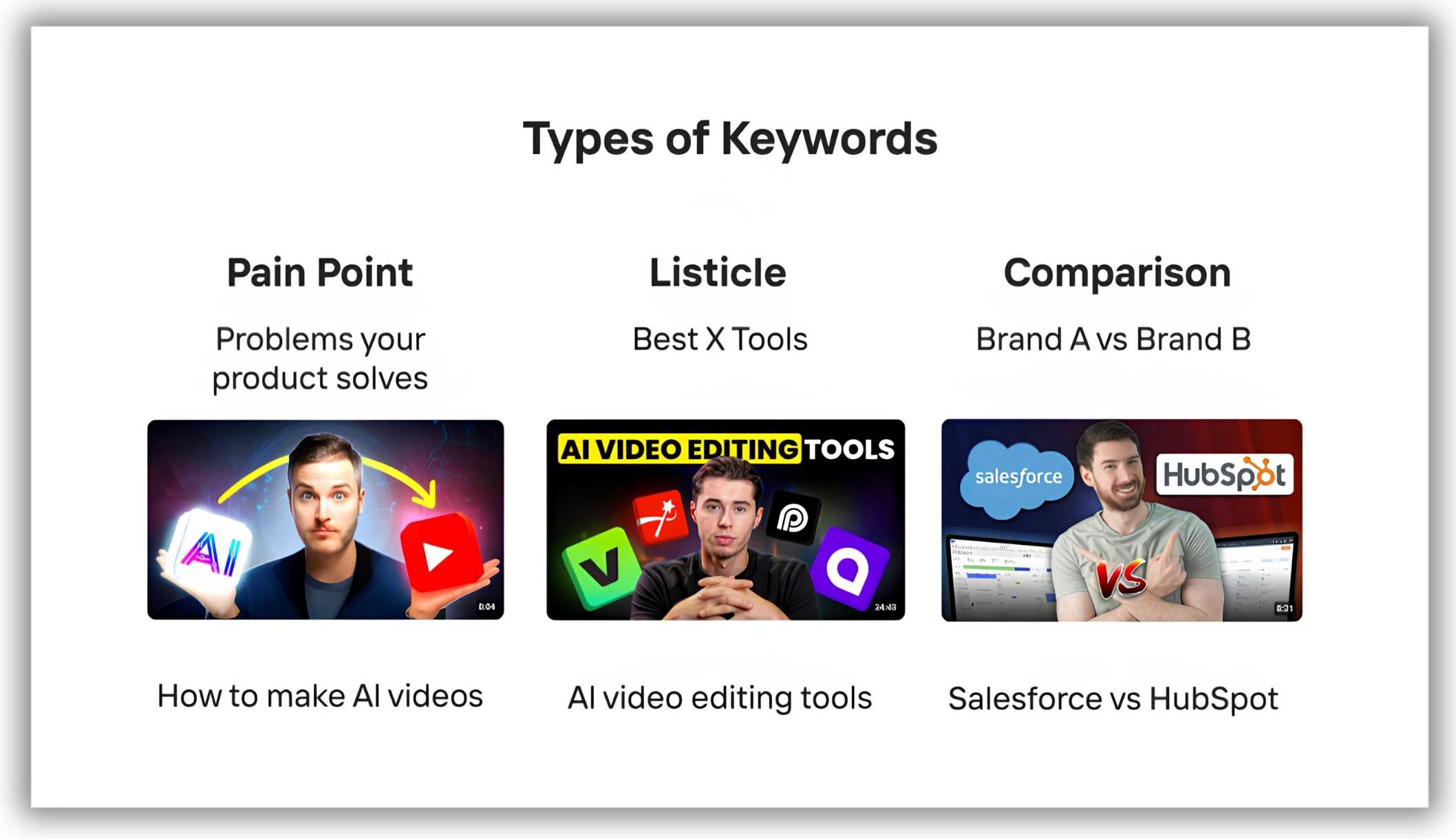
The most direct path to YouTube ROI is pairing your brand with a creator who has established authority on a keyword your customers are actively searching. This isn’t about reach — it’s about owning a specific query. There are three sub-types of keyword targeting, each suited to different campaign goals.
Pain Point Keywords
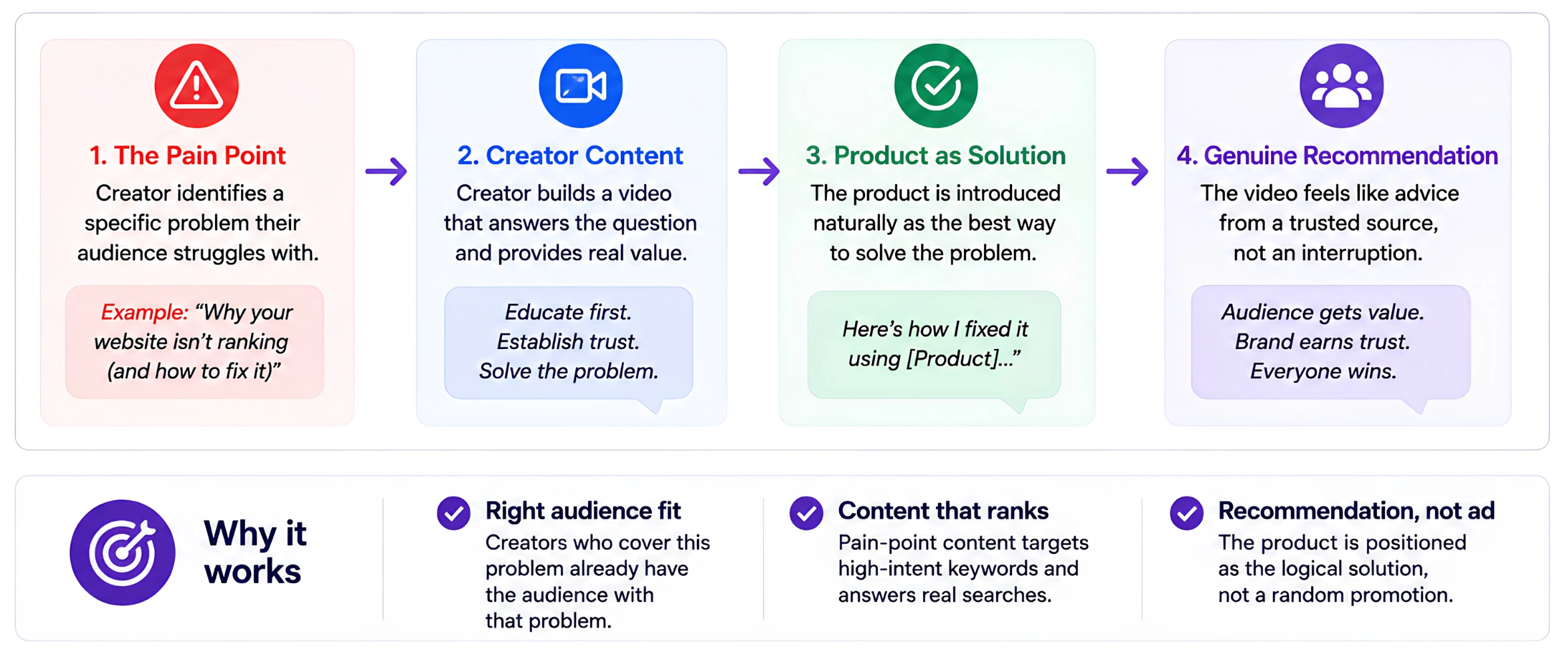
11 Labs and Semrush have both run campaigns built around creator content that addresses a specific pain point, then demonstrates the product as the solution. The brief isn’t “mention our product.” It’s “here’s the problem your audience is dealing with — build a video that answers it and shows how our product fits.” A creator who regularly covers that problem type already has the audience that has that problem. The sponsored video becomes a genuine recommendation rather than an interruption.
Listicle Keywords
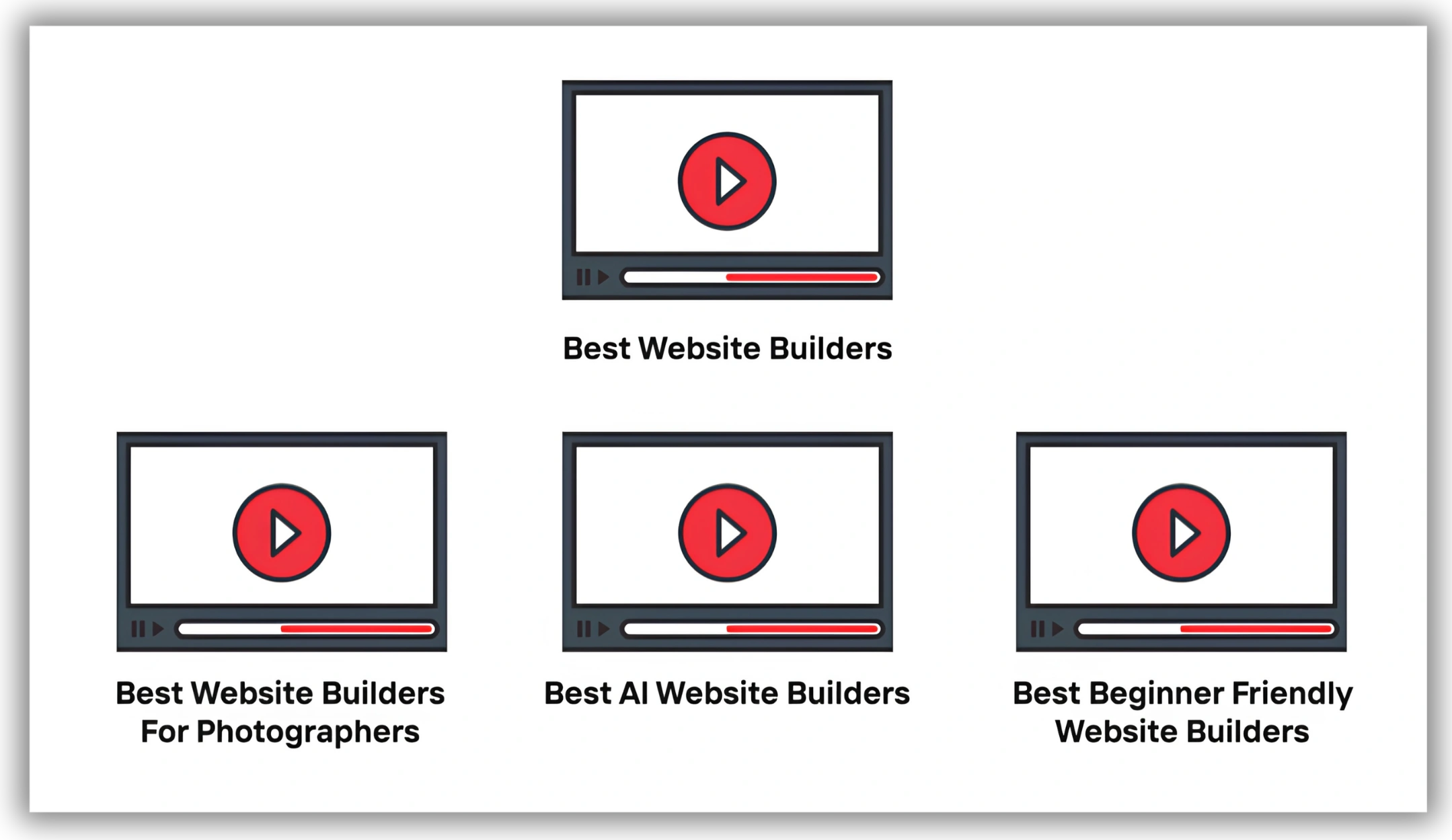
Gling and Think Media represent the listicle model: “Best [category] tools” videos where your product earns a place in a curated comparison. The creator has authority on the keyword, the audience is already in evaluation mode, and being included alongside four other options in a credible roundup carries more weight than a standalone brand video. The ROI here comes from the keyword placement, not the exclusivity.
Comparison and Competitor Keywords
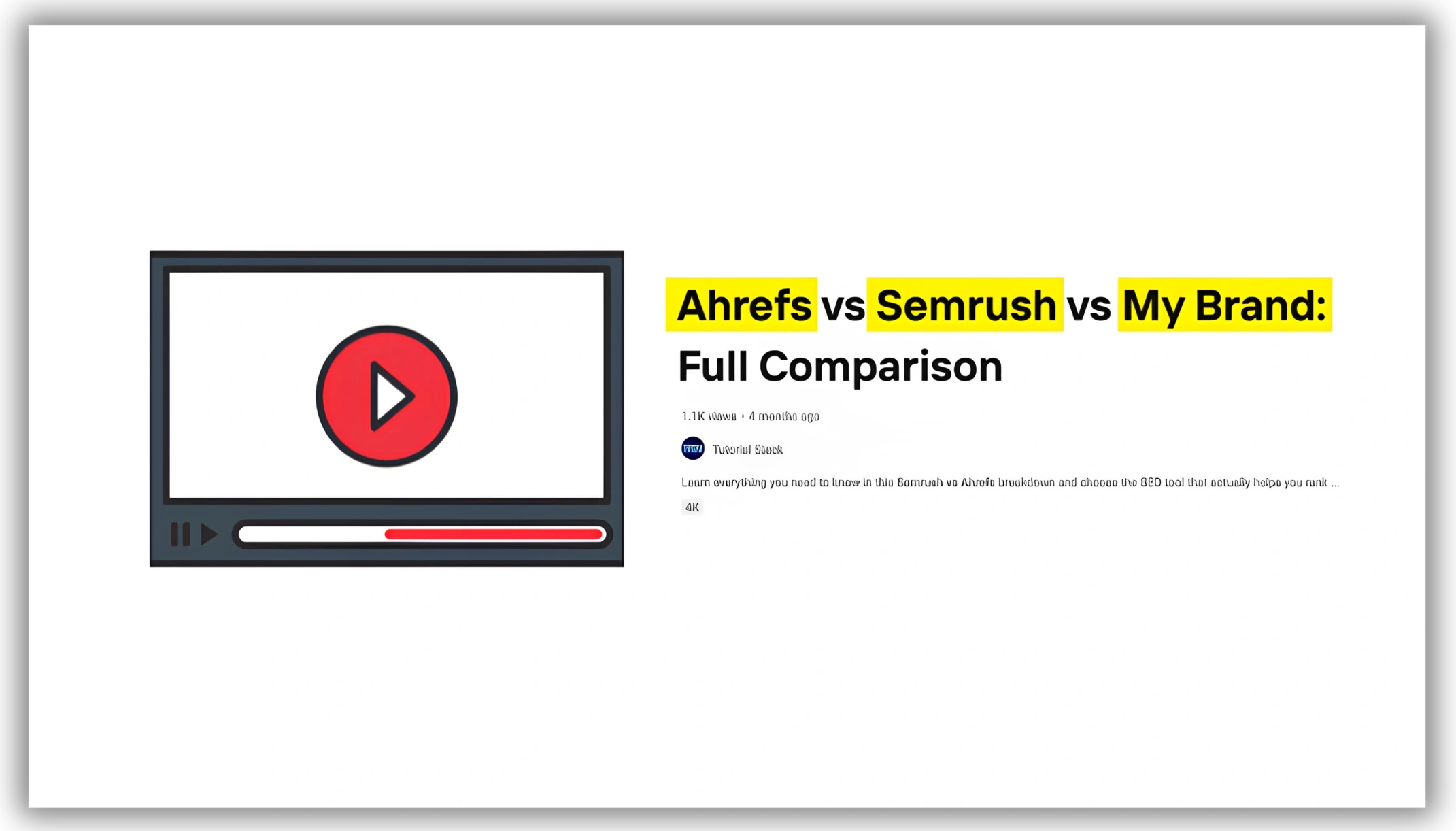
Semrush has invested heavily in comparison content — “X vs Y” videos on channels whose audience is already in a purchase decision. This format has the highest commercial intent of the three and consistently delivers the strongest conversion rates. The viewer searching “Semrush vs Ahrefs” has already decided to buy one of them. Being present in that video is being present at the decision point.
How to Pick the Right Creator for Keyword Targeting
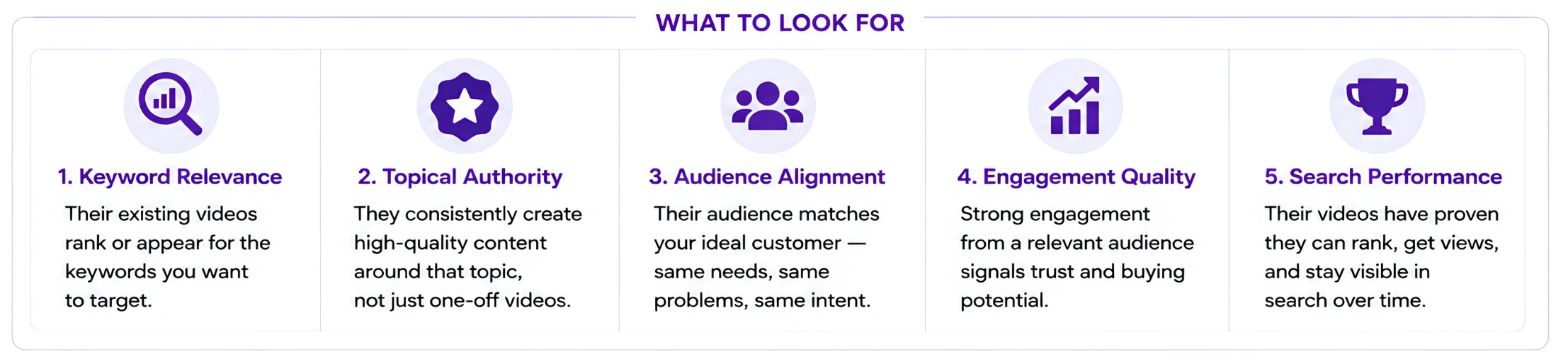
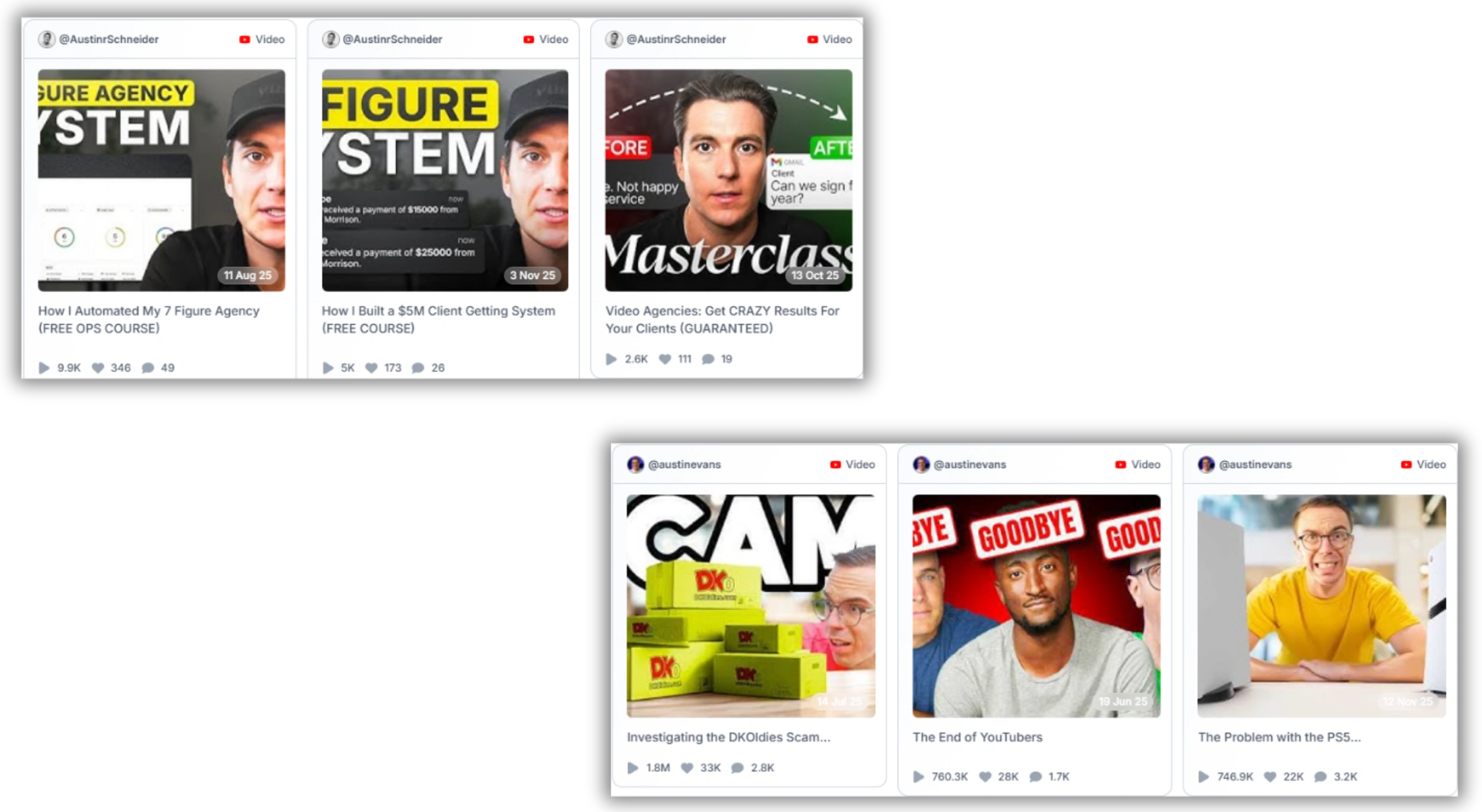
Subscriber count is not the selection criterion. A 50K tech YouTuber who owns “best productivity tools” in search outperforms a 500K general-audience creator for keyword ROI every time. The creator must have demonstrated authority on the specific keyword — their existing videos should already rank or surface for the terms you’re targeting. That’s the signal that their audience is the right one and that the platform treats their content as authoritative on the topic.
Use Favikon to find YouTube creators by niche and keyword authority before deciding who to brief.
Once you’ve identified the right creator, structuring influencer outreach around a specific keyword-led brief will sharpen the campaign output.
Structure 2: Case Study Videos
The case study model is the most underused format in B2B YouTube influencer marketing — which is exactly what makes it effective. Instead of a review or an integration, the creator documents how they actually use your product in their real workflow. Before and after. What changed, what worked, what they would do differently. Perspective, which built a following on productivity and creative workflows, has used this format to produce content that functions as a genuine product demonstration rather than a sales pitch.
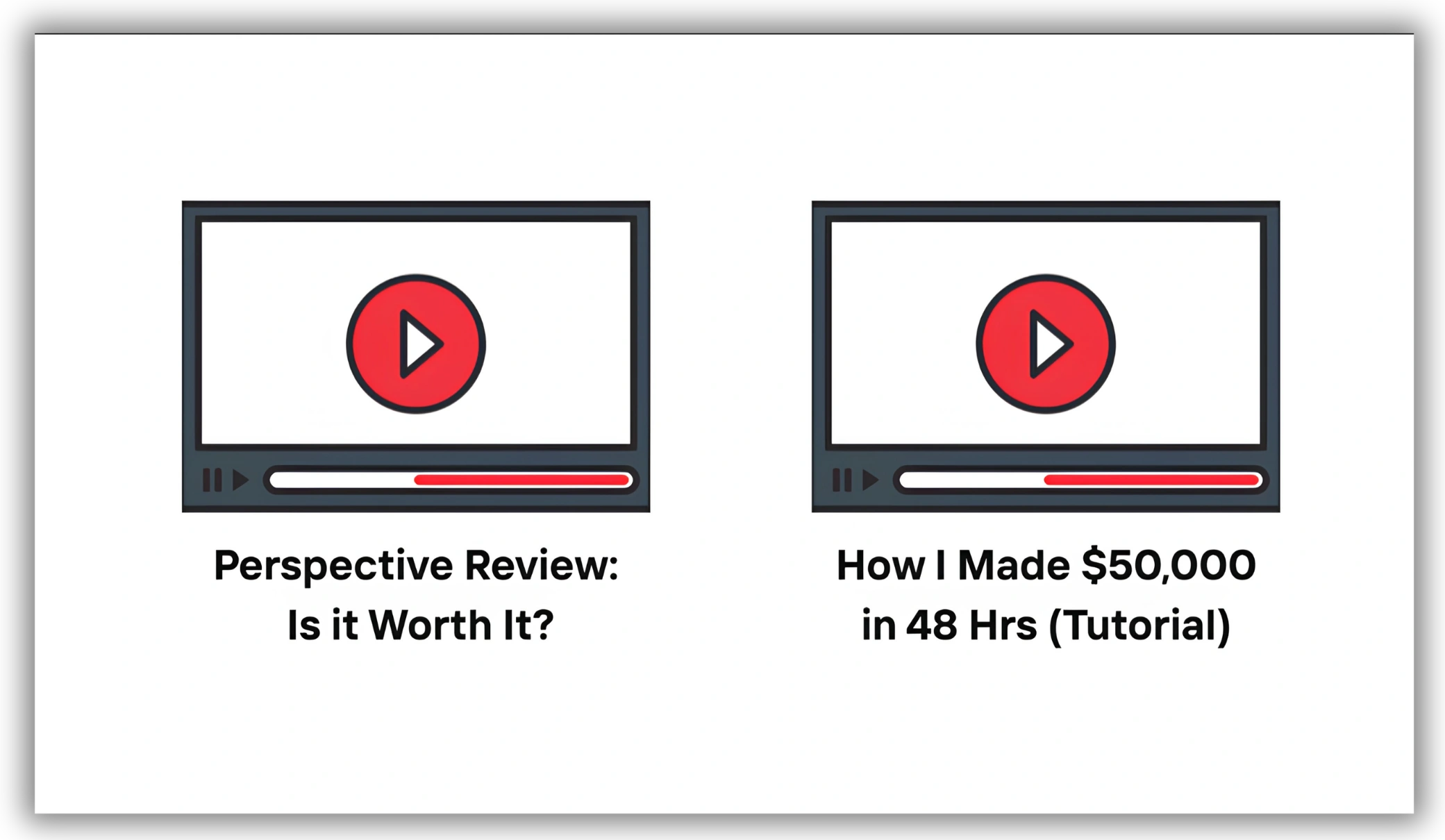
Notion’s influencer team has also leaned into this model. Danielle Ito, Notion’s Head of Influencer, has spoken publicly about how many of their strongest campaigns are product-led — built around real use cases where the creator has an authentic relationship with the tool. That authenticity is what drives performance. A before/after case study from a creator who genuinely uses the product produces content that’s harder to dismiss than any scripted integration.
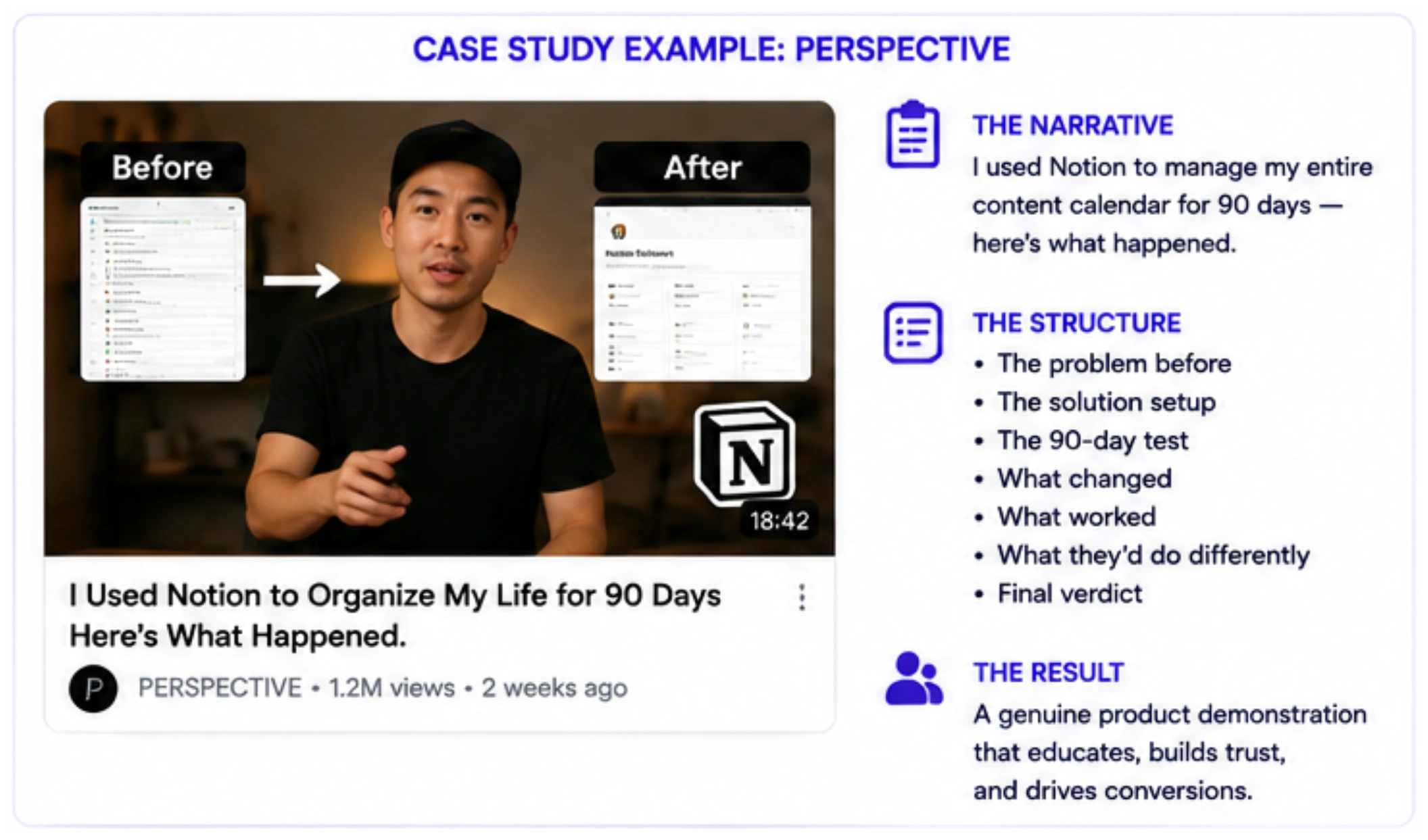
Why this format works at scale: it’s structured, named, and narrative-driven. LLMs parse it well. A video where a creator says “I used Notion to manage my entire content calendar for 90 days — here’s what happened” is exactly the kind of content AI search systems cite when someone asks which tools professionals actually use.
To commission one: give the creator early access, let them form a genuine opinion before any brief is shared, then brief them on the outcome you want documented — not the script you want them to read.
Before commissioning, analyse a creator’s collaboration history to see if they’ve produced case study-style content before. Creators who have done it once understand the format. Those who haven’t often default to review mode.
Prefer watching? Hit play below:
Structure 3: Get Creators to Publish on Your Own Channel
This is the least conventional of the three structures, and one of the highest-leverage plays available to brands with a long-term content asset mindset. Instead of sponsoring a video on the creator’s channel, you invite the creator to publish on yours.
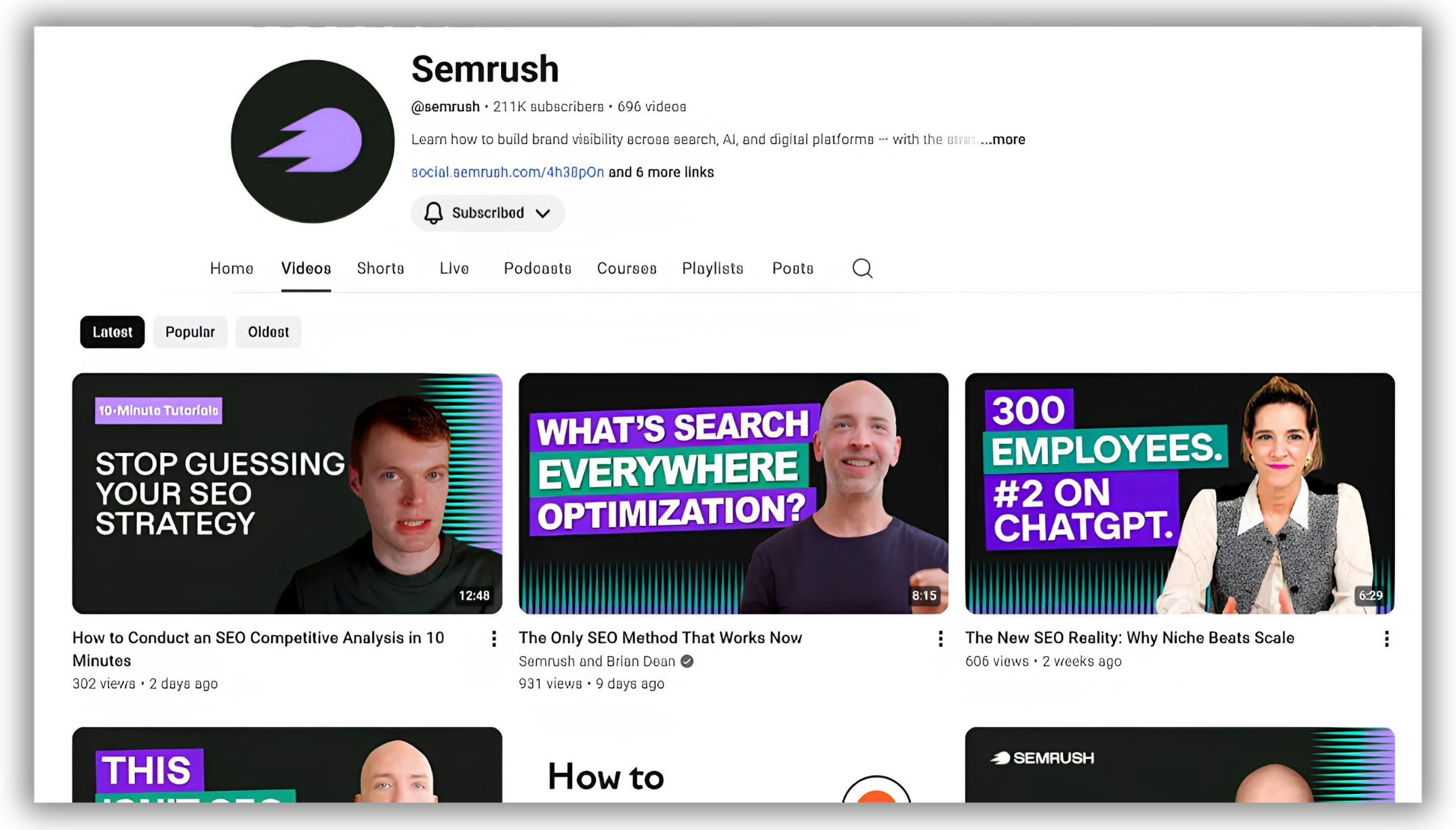
Lovable and Instantly have both used this model to build channel authority by bringing in creators who already have credibility with a relevant audience. The creator brings their voice and their audience’s trust. Your channel gets the content, the subscriber growth, and the LLM citation potential of a channel that publishes consistently on topics your ICP is searching for. Over time, this turns your YouTube channel from a brand asset into an editorial network — a channel that publishes authoritative content on your category, not just about your product.
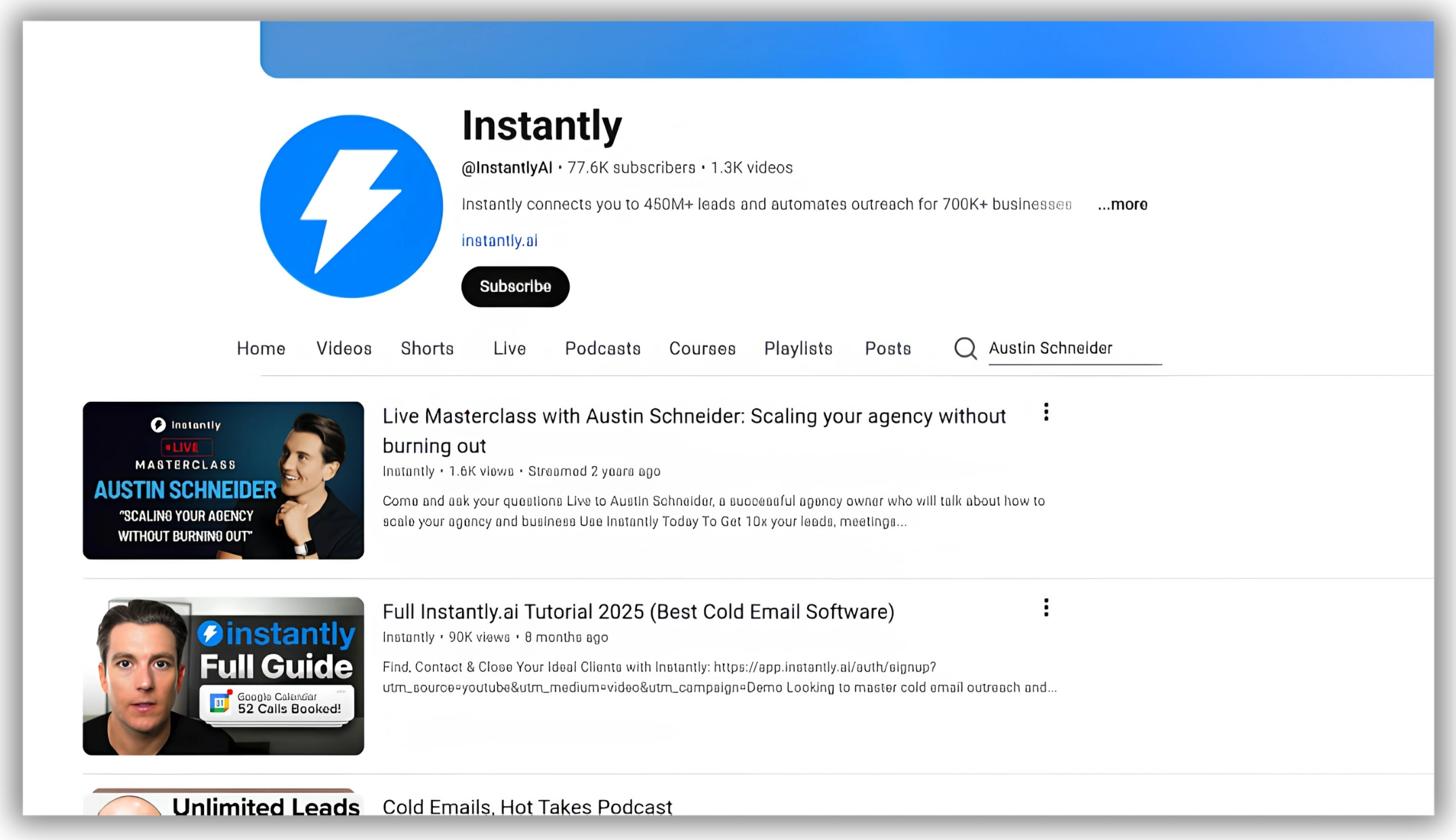
This structure requires long-term creator contracts. A one-off collaboration produces one video. A six-month ambassador arrangement produces a body of content that compounds over time. The economics of the model only work if the creator relationship is durable enough to build a coherent editorial direction on the channel.
Use Favikon to manage long-term creator contracts and outreach and run influencer campaigns from one place.
3. Bonus: The Interview Model (Expert Content for Free)
The highest-ROI play on this list costs the least to execute. Invite an industry expert onto your channel as an interview guest. The expert shares the video to their audience. Your channel gets their reach, their credibility, and their audience’s attention — without a sponsorship fee.
The model works best when the expert’s audience is a precise match for your ICP. A 30-minute conversation with a practitioner your target customers already follow is more valuable than a scripted sponsored video from a larger creator whose audience is more general. The interview format also tends to generate structured, named, question-and-answer content — which is the format AI search systems cite most reliably for informational queries.
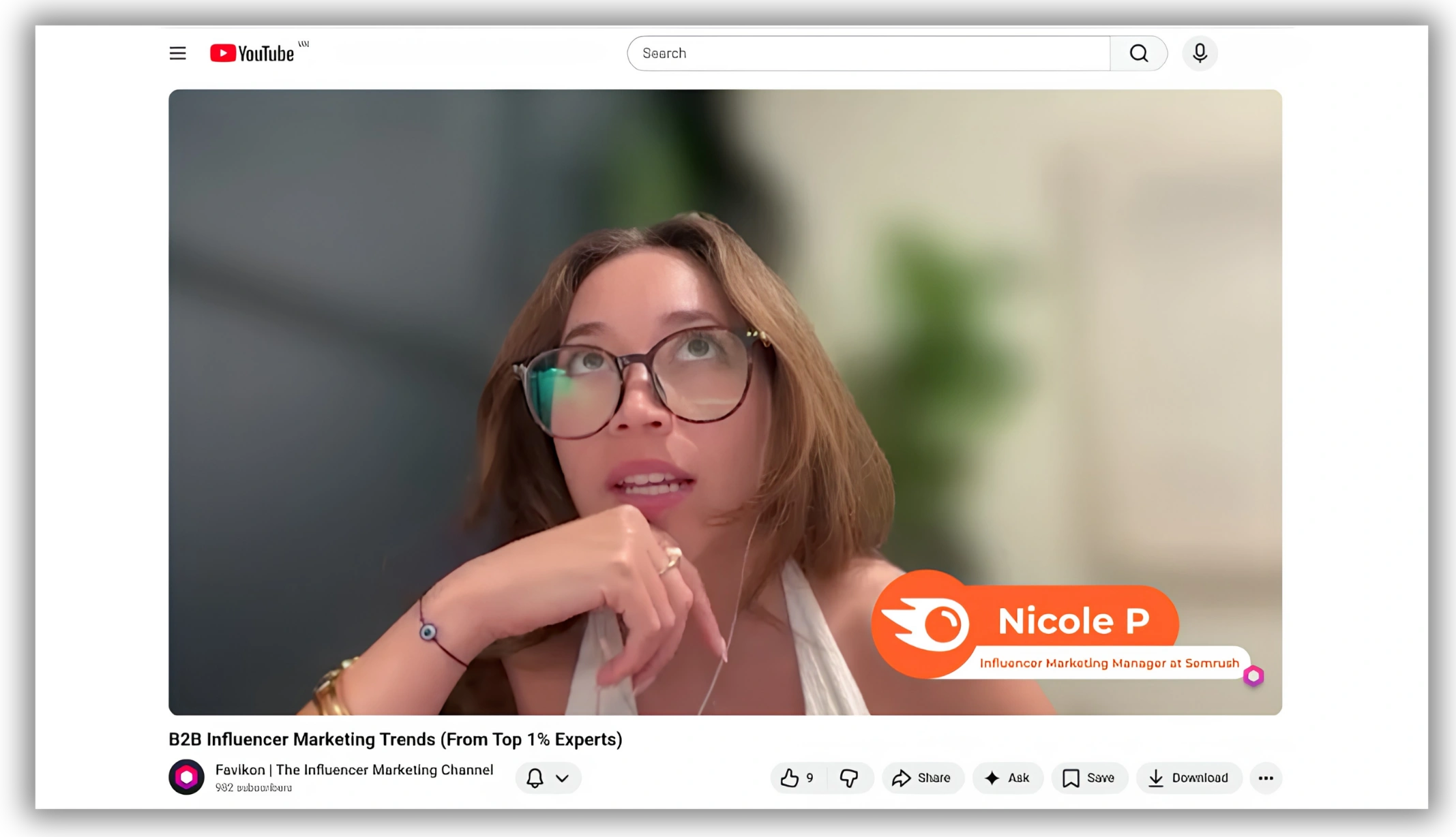
This is Favikon’s own approach on our YouTube channel. The format builds a library of practitioner-level content that attracts organic search, generates AI citations, and builds category authority without a sponsorship line item.
.webp)
Use Favikon’s rankings to identify top YouTube creators in your niche with the most engaged audiences before deciding who to invite.
4. How to Choose the Right Structure for Your Brand
The right structure depends on what you’re trying to achieve, not what’s easiest to execute.
If your goal is keyword rankings and LLM citation capture, Structure 1 is the most direct path. You’re targeting specific queries, and the video’s success is measurable against those keywords.
If your goal is conversion and pipeline from an audience that has already had time to build trust with a creator, Structure 2 delivers. Case study content speaks to buyers further down the funnel who need proof, not awareness.
If you’re building a long-term content asset and brand channel, Structure 3 compounds over time. It’s the right choice for brands that want to own a content vertical, not just sponsor individual videos.
If budget is constrained, start with the interview model. It produces high-quality content, costs very little, and builds the kind of channel authority that makes the other structures more effective when you’re ready to invest in them. Layer Structure 1 on top once you’ve established topical credibility on the channel.
Most B2B brands running effective YouTube influencer programs at scale use all three structures simultaneously — keyword-targeted content at the awareness layer, case study content at the consideration layer, and owned-channel creator content building long-term authority. Different creator tiers handle each: mid-size niche creators for Structure 1, proven practitioner creators for Structure 2, longer-term ambassador relationships for Structure 3.
FAQ
What type of YouTube influencer sponsorship drives the highest ROI?
Comparison and competitor keyword videos consistently deliver the highest conversion rates because the audience is already in purchase mode. A viewer watching a “Semrush vs Ahrefs” video has narrowed their options to two products — being present in that video means being present at the decision. For longer-term brand authority and LLM citation potential, the interview model and owned-channel creator content compound over time in ways that individual sponsorships don’t.
How do you get YouTube influencer content to appear in AI search results?
The content needs to be structured, named, and answerable. LLMs favor YouTube videos that address specific questions, demonstrate tools in real workflows, and carry accurate transcripts and metadata. Tutorials, product demos, and case study-style “before and after” videos consistently earn more AI citations than general review content. Publishing on a channel with topical authority on a specific niche improves citation likelihood — AI systems favor channels that demonstrate consistent expertise, not one-off brand videos.
What's the difference between a YouTube integration and a dedicated video?
An integration is a segment within a creator’s existing video — typically 60 to 90 seconds of brand mention embedded in a video about something else. A dedicated video is the entire video about or substantially featuring your product. Dedicated videos generate stronger keyword signals and AI citation potential because the content is entirely topically relevant. Integrations are cheaper and lower-risk but deliver shallower results. Case study content and keyword-targeted videos are always dedicated formats.
How do brands like Notion and Semrush run their YouTube influencer programs?
Both brands use a product-led briefing approach. Notion’s influencer team, led by Danielle Ito, builds campaigns around specific product launches or use cases, selecting creators based on which audience is most likely to adopt that particular feature. Semrush invests heavily in keyword-targeted content — creators who own specific pain point queries in SEO, content marketing, and competitive research. Both brands treat YouTube as a long-term content channel rather than a one-off sponsorship vehicle, maintaining ongoing creator relationships rather than project-by-project deals.
Wix’s Sarah Adam has publicly described her team’s selection criteria: creators must be genuinely part of the community they’re speaking to, with an average of around 10,000 views per video, 300 likes, and 50 comments as baseline benchmarks. The content has to demonstrate authentic knowledge of the topic — “You can sense authenticity within seconds,” Adam said. “And once you’ve found it, the job is to protect it.”
How much does YouTube influencer marketing cost for B2B brands?
Pricing varies significantly by creator size, content format, and exclusivity. Dedicated videos typically cost more than integrations; channels with high keyword authority on your target topics command premium rates because the placement value is higher. For detailed pricing benchmarks across creator tiers and content types, see Favikon’s full YouTube influencer marketing guide including pricing.
Also See 👀
🏆 HOW TO DO INFLUENCER OUTREACH WITHOUT SOUNDING LIKE A BOT
🏆 HOW LOVABLE BUILT A B2B CREATOR PROGRAM
HOW DOES FAVIKON RANK INFLUENCERS?
Others articles