9 Influencer Marketing Campaign Ideas That Actually Work in 2026
The best influencer campaigns combine creative ideas with clear business goals and the right creators. This guide shares nine campaign ideas that brands can use to increase engagement, build trust, and drive measurable results in 2026.


9 Influencer Marketing Campaign Ideas That Actually Work in 2026
The nine influencer marketing campaign ideas working in 2026 are: comedic skits built on an ICP-only pain point, sponsored YouTube videos targeting search keywords, customer use case content, creator-led webinars, creator-led boot camps, live events, concept-driven gifting campaigns, creator-hosted challenges with a prize, and co-created original research. Each one below includes a real brand example, how to run it, and the metric to judge it on.
The reason concepts matter this much: the same creator can produce wildly different results depending on what you ask them to make. Two brands can book the identical YouTuber, pay the identical rate, and one gets a video that dies in 72 hours while the other gets an asset still generating pipeline six months later. The difference is almost never the creator. It is the concept.
The Favikon Campaign Concept Test
Run every idea below through three questions before you brief anyone.
1. Does the concept hit a pain point only your ICP would recognize? If a general audience would understand it immediately, it is probably too broad to reach the people who buy.
2. Does it produce an asset or a moment? A moment ends when the post leaves the feed. An asset (a ranking video, a research report, a product built at your event) keeps working for months.
3. Is the creator a practitioner or just an audience? The strongest campaigns pair a real operator in your category with distribution. Reach alone is the cheapest and least useful thing you can buy.
Anything that fails two of the three is a spend, not a campaign.
1. The comedic skit built on an ICP-only pain point
Storylane partnered with Tom Boston, who makes comedic sales skits, on a sponsored video that stopped people mid-scroll. Storylane's head of marketing was candid that there was no direct conversion data, but the month the campaign ran was their highest month of new MRR.
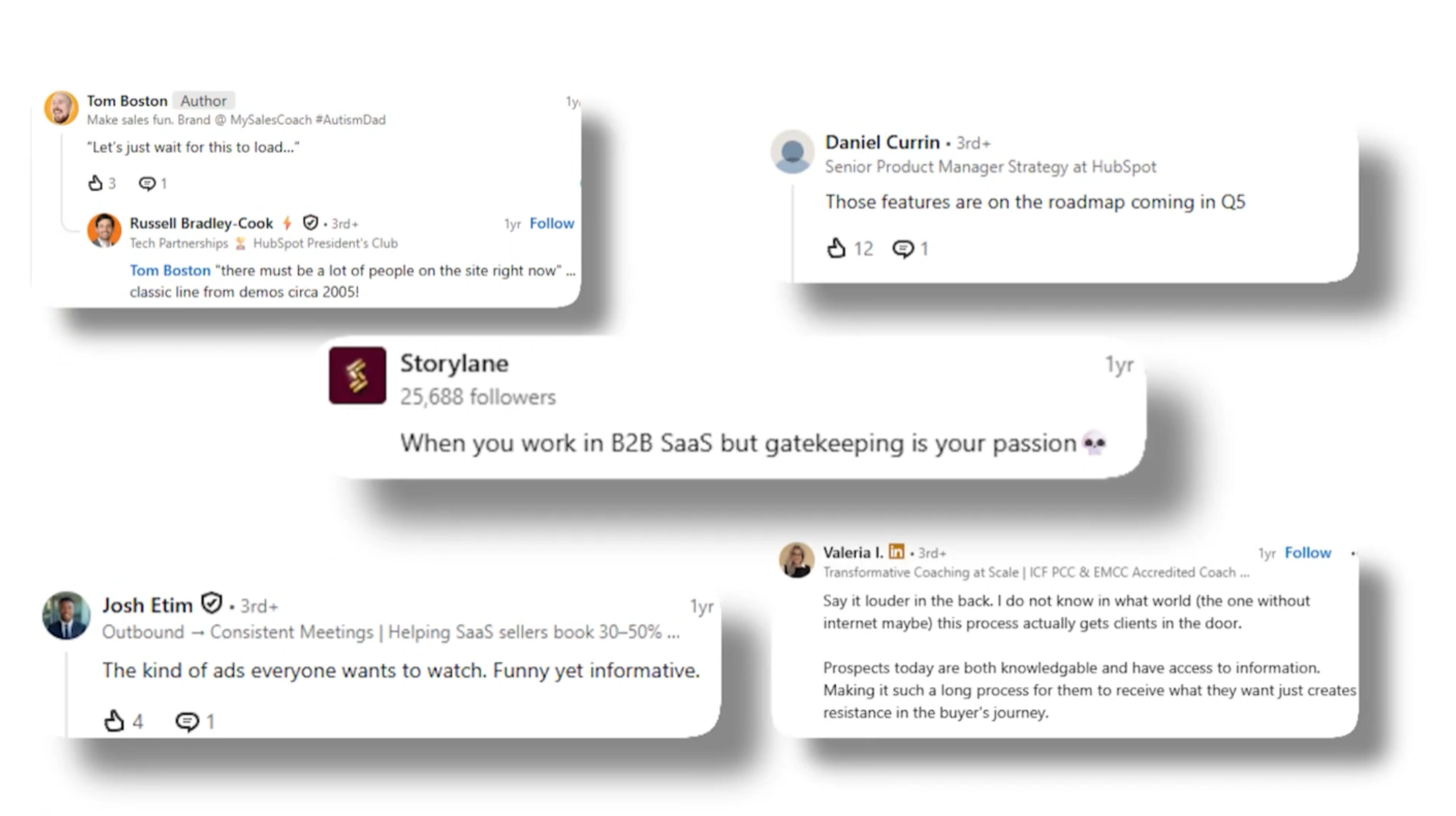
That pattern shows up elsewhere. Fiona, previously head of influencer marketing at Zapier and now at Gamma, has found that entertainment content, and comedy skits in particular, consistently outperform everything else her team runs.
How to run it: Do not start with the joke. Start with a customer pain point, then build the script around it. Boston's advice is to write for the person inside your world and accept that everyone else will miss it. He described a follower whose wife did not find his content funny at all, and treated that as a good sign.
That is the mechanism. A skit that is legible to everyone reaches no one in particular. A skit that lands only with your ICP gets shared into Slack channels and DMs, which is how B2B content actually travels. Start by narrowing to people who already speak your customers' language, using a tool that lets you find creators in your niche instead of sorting a general list by follower count.
Measure on: Shares and saves over likes, plus branded search and demo requests in the campaign month.
2. The gifting campaign with a real concept
Gifting migrated from DTC into B2B, but only the concept-driven versions work. Slate, the video editing tool, sent physical boxes to creators as part of a social media detox campaign, and let audiences nominate other social media managers to receive one. AJ Eckstein, founder of Creator Match, ran a campaign with Yahoo built on stopping doom scrolling, sending creators literal thumb blockers.

The rule: relevance to a specific pain beats the quality of the item. Slate's worked because social media managers live online and genuinely want time away from screens. Yahoo's concept had to stay broad because their ICP is effectively everyone, which is the harder version of this problem. If your ICP is narrow, use that.
How to run it: Pick one pain point, build the object around it, and give recipients a reason to pass it on. Shipping logistics across 40 creators gets messy fast, so keep addresses, send dates and follow-ups in an influencer CRM rather than a spreadsheet.
Measure on: Post rate (what percentage of recipients actually posted) and nominations generated.
3. Sponsored YouTube videos that target search keywords
This is the highest-return idea on the list, and it is the one most teams still treat as an afterthought. Instead of paying a YouTuber for a burst of views, pay them to make a video that ranks.
Two things make this work in 2026. YouTube mentions show the strongest correlation with AI visibility, so a presence there raises the odds your brand gets surfaced by ChatGPT and other LLMs. And YouTube remains the second largest search engine, with video results also appearing in Google.
Sarah Adam at Wix has made this a core KPI. Rather than tracking views, likes, comments and UTM clicks from the description, her team tracks how the video ranks on YouTube for target keywords and how it performs in LLM answers for target questions. Creator selection follows the same logic: they approach YouTubers already dominating the results for those keywords and already appearing in relevant LLM answers.

Four keyword frameworks worth sponsoring:
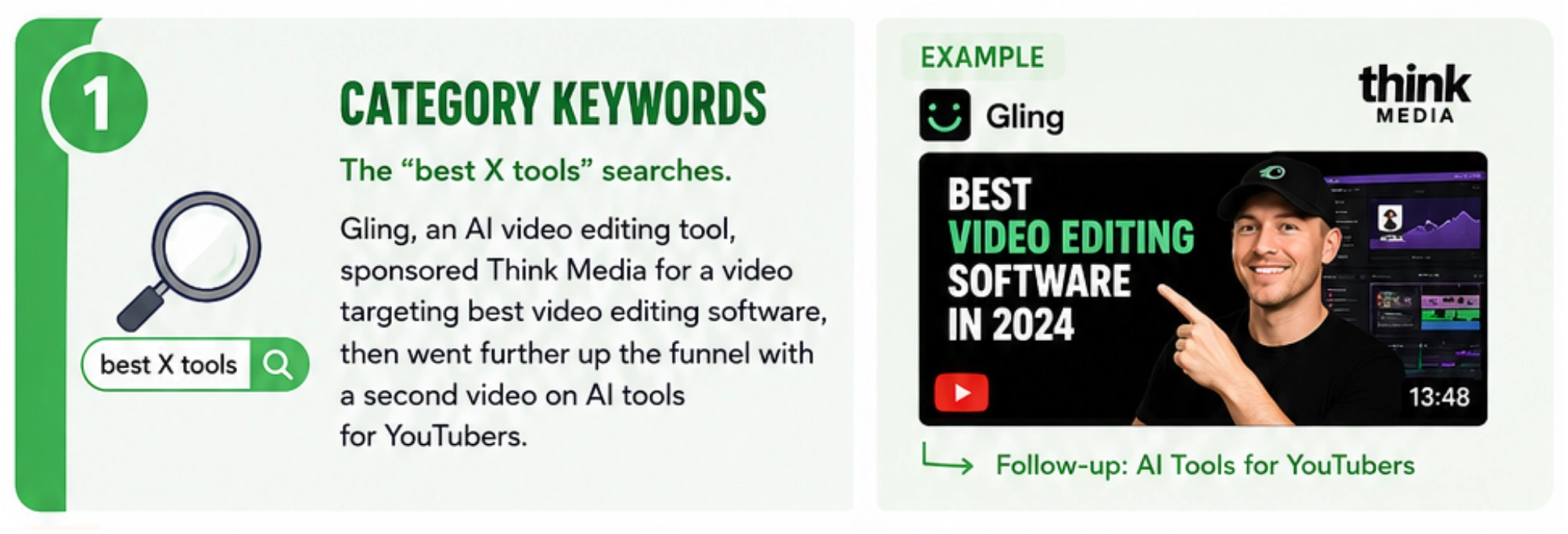
Category keywords. The "best X tools" searches. Gling, an AI video editing tool, sponsored Think Media for a video targeting best video editing software, then went further up the funnel with a second video on AI tools for YouTubers.
Pain point keywords. Problems your product solves, demonstrated live. Gling also sponsored a Think Media video on how to edit a YouTube video, which walks the viewer through the task using the product.

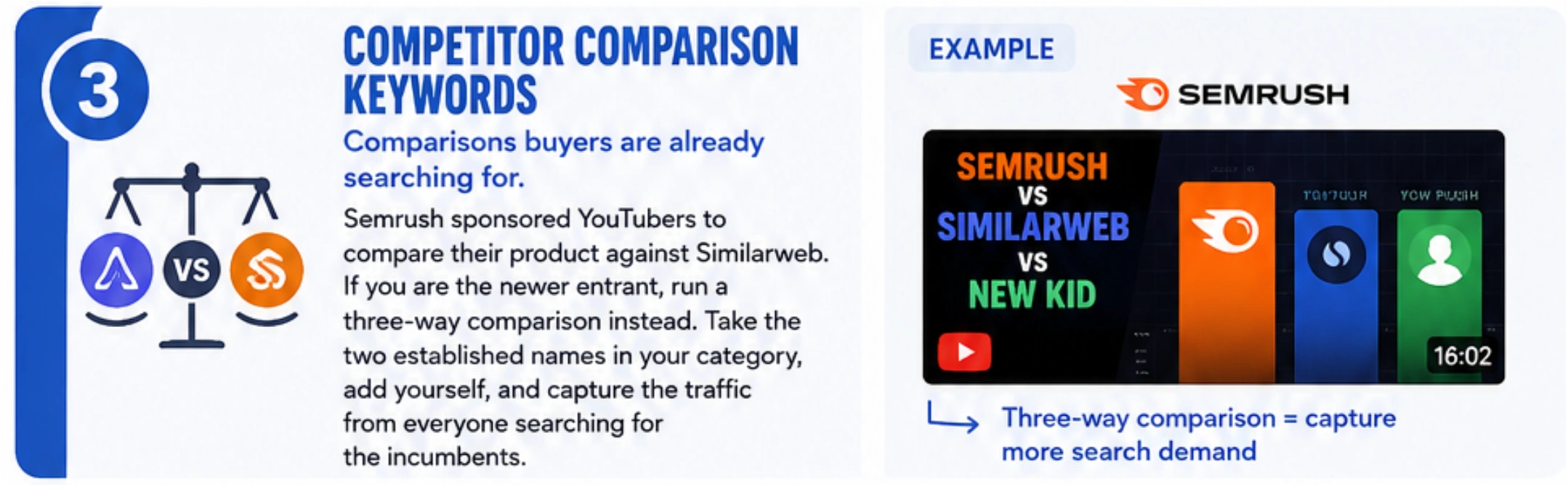
Competitor comparison keywords. Semrush sponsored YouTubers to compare their product against Similarweb. If you are the newer entrant, run a three-way comparison instead. Take the two established names in your category, add yourself, and capture the traffic from everyone searching for the incumbents.
Outcome and case study topics. Not keywords exactly, but topics your ICP actively wants. HeyReach sponsored an expert to break down how he generated $11 million in pipeline on LinkedIn, with the walkthrough naturally featuring the product.

How to pick creators: Search your target keyword and look at who already owns page one. Then check whether their views are stable or propped up by one viral upload, which a YouTube channel analyzer will show in a few seconds. Build the shortlist with a YouTube influencer finder rather than manual search.
Measure on: Keyword ranking position and LLM citation appearances, tracked monthly. These videos keep compounding, and they reach far beyond the creator's own subscriber base.
4. The live event
Lovable's former head of influencer marketing described an event they ran with Will.i.am at the FYI campus. They paired 30 artists with 30 Lovable builders who had never met, gave them five or six hours to build products solving their own problems, picked winners, and filmed the whole thing. Will.i.am offered to invest in a couple of the projects.
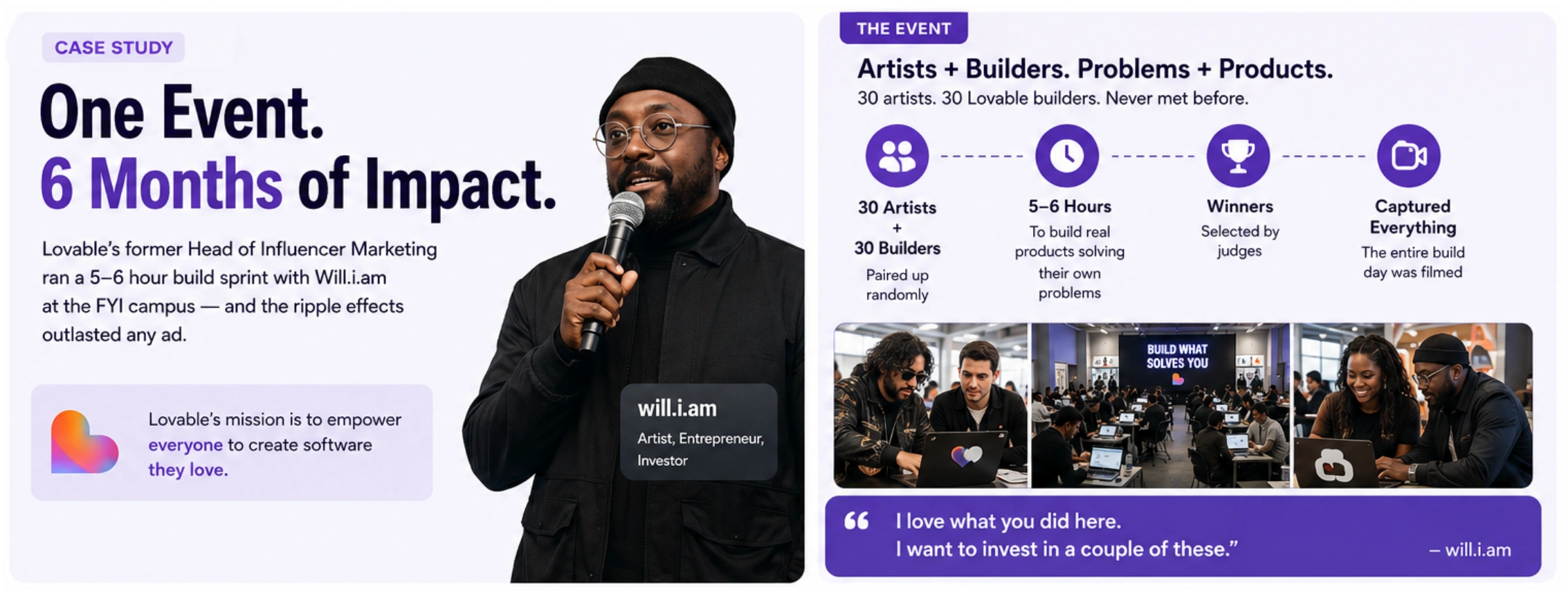
The interesting part came later. Roughly six months on, one of the apps built that day was in the App Store, raising money, and getting mentioned at other events. His framing is worth borrowing: the same budget spent on a sponsored video would have been dead three days after posting. This one was still generating conversation half a year later.
How to run it on a smaller budget: The format matters more than the venue. An online pizza party with creators and your community counts. So does a gamified side event at a conference you are already attending. What you are buying is a shared experience that people keep referencing, not production value.
Measure on: Brand mentions at 30, 90 and 180 days. Judge this one on the tail, not the launch week.
5. Customer use case content
Across more than a dozen interviews with B2B influencer marketers, this is the most frequently cited format. The brief is simple: show a creator using your product to solve a real problem of their own.
Lovable's version worked because the problem was specific. A creator mentioned she was getting married and dreading RSVP management, so she built something with Lovable to automate it. The view count was solid, but the comments were the real signal: other women saying they had been about to use a spreadsheet and had just been saved a headache.
Ahrefs ran a version of this with a creator testing Brand Radar and reporting back on what she found useful. Descript has done the same, with creators simply showing real work in progress.

How to run it: Ask the creator what they are actually struggling with this month, then build the brief around that. Resist the urge to script it. If your product has genuinely varied use cases, this format scales indefinitely, which makes it a good backbone for a longer program. The SaaS influencer marketing playbook covers how to sequence this alongside the rest of your funnel.
Measure on: Comment sentiment and use case replication, meaning how many viewers say they have the same problem. That is your signal for what to build the next campaign around.
Nine ideas is easy. Tracking nine campaigns, forty creators and their deliverables is the part that breaks. Favikon's influencer campaign management keeps discovery, contracts, content approvals and results in one place instead of across a dozen email threads.
6. The creator-led webinar
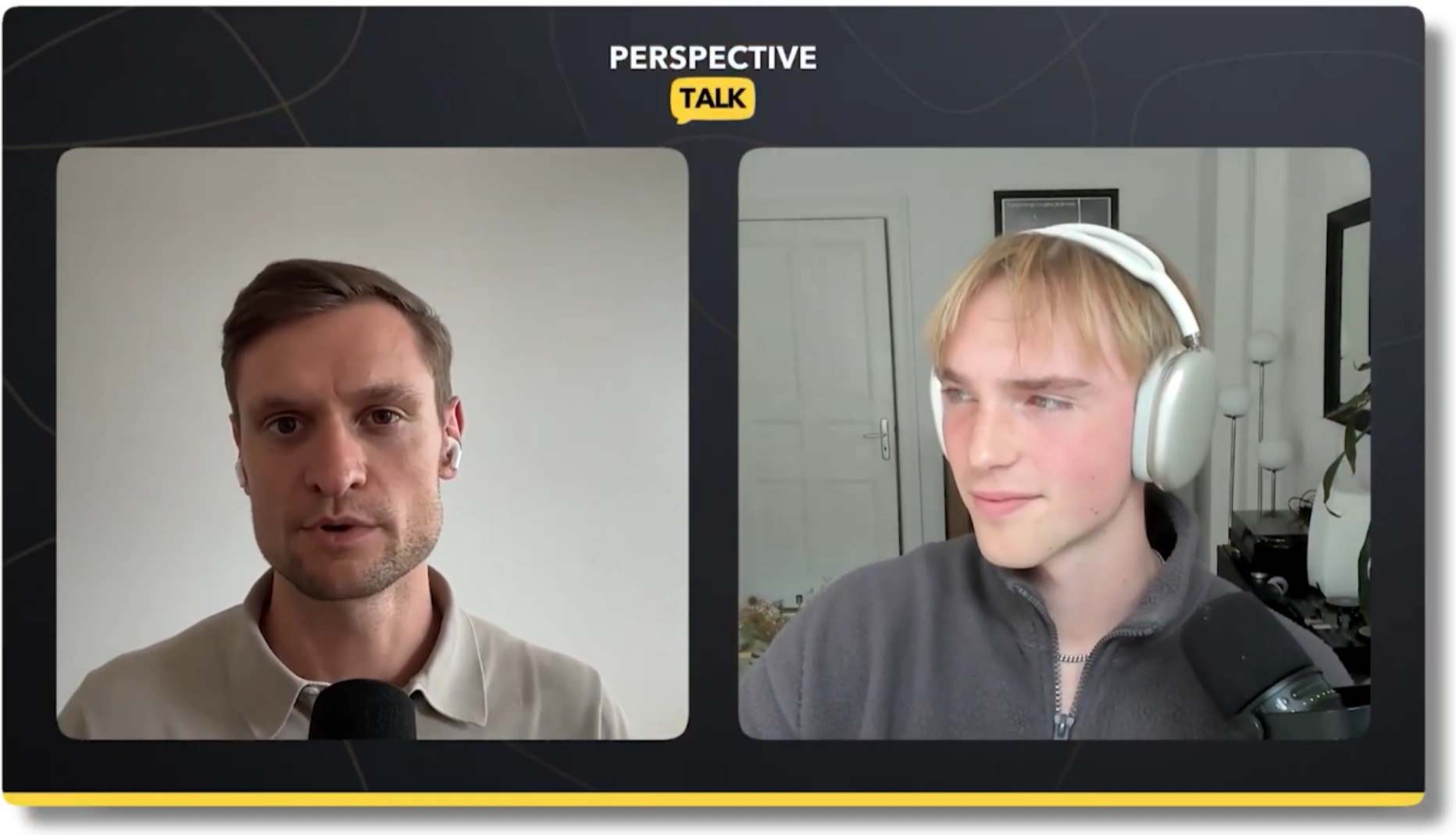
Alex, head of influencer marketing at Perspective, makes the case that webinars are wrongly treated as a relic. The people who register are already deep in the problem, which means you can deliver real value and pitch the product in the same session without it feeling like a bait and switch. Synthesia runs these too, and the comment sections show consistent ICP interest.
How to run it: Two paths. Partner with one large creator and let their audience carry attendance. Or work with roughly 15 niche creators, have each post about it, then amplify those posts with thought leader ads. The second path costs less and usually produces better-qualified registrations. For the second approach you will want to find influencers on LinkedIn who sit squarely inside your category, and the 9-step LinkedIn influencer marketing guide walks through the amplification setup.
Measure on: Registration-to-attendance rate and demo requests within 14 days.
7. The influencer-led boot camp
A step up from the webinar. ZenABM partnered with a group of B2B creators who matched their ICP and ran a free boot camp where those experts taught master classes on account-based marketing.
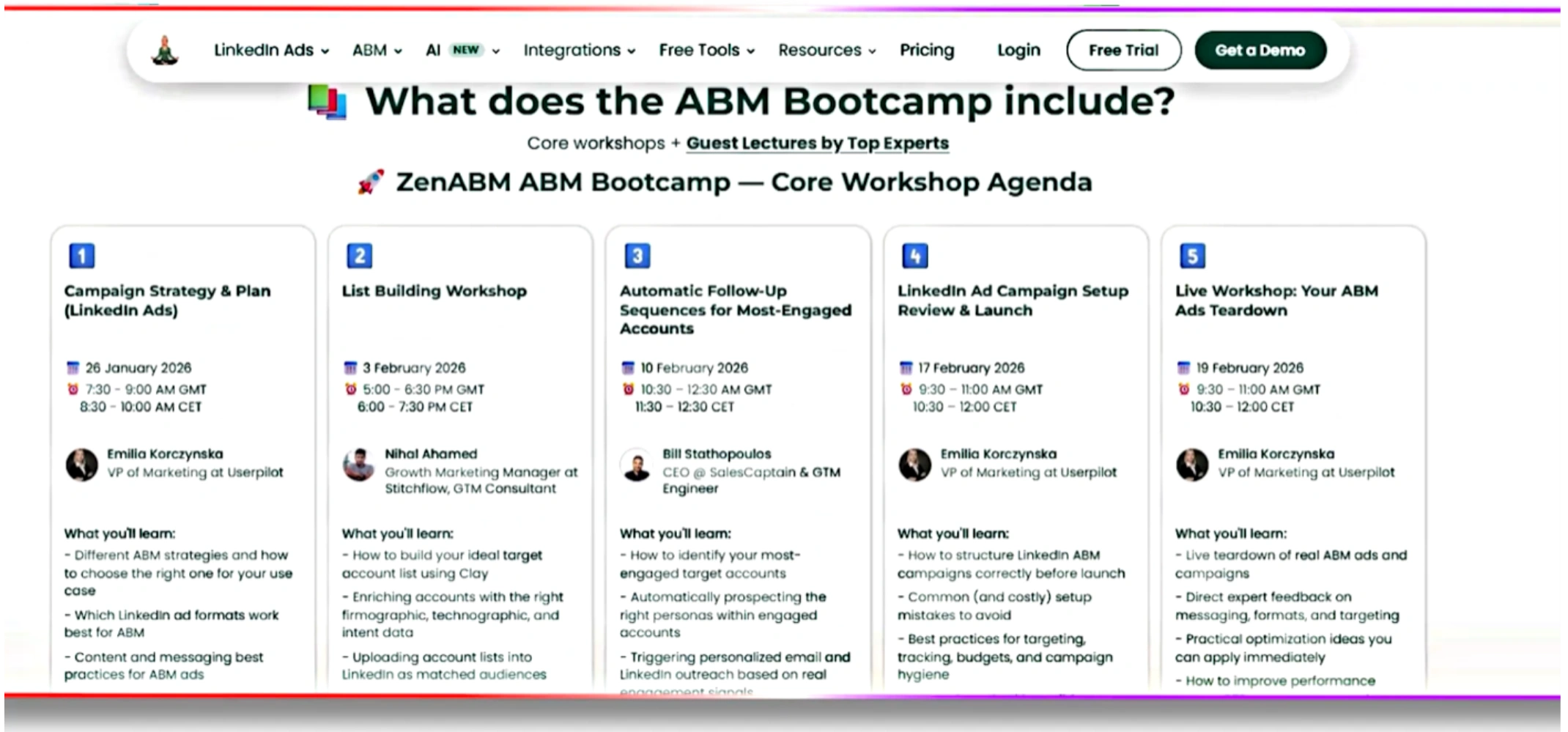
Why this format earns its cost: It does four jobs at once. It attracts your ICP with education rather than a pitch. It demonstrates the product inside a workflow. It improves your customers' actual results, which is the cheapest retention lever there is. And the creators promote it to their own audiences, so acquisition is partly handled for you.
How to run it: Three to five sessions over two weeks, each led by a different creator, each teaching one part of a process your product supports. Record everything. The recordings become gated content, course material and social clips for the next two quarters. Look for practitioners with teaching ability rather than the largest audience, which is what a B2B influencer database is for.
Measure on: Attendees who activate in the product within 30 days.
8. The creator-hosted challenge with a prize
beehiiv's core obstacle was getting people to send their first newsletter. So they partnered with Shaan Puri, co-host of My First Million, and offered a $10,000 grand prize to whoever grew the most, plus mentorship from Puri and beehiiv's founder.

The choice of partner is the whole thing. Puri is not just a popular creator. He grew and sold his own newsletter company, so the prize and the mentorship both carry weight. Find the person in your niche who has genuinely done the thing and happens to have an audience.
How to run it: A two-week or 30-day challenge, one clear metric, one meaningful prize. The challenge should require using your product, and the winning criteria should be the same outcome your product exists to deliver. Before committing budget, sanity-check the partner's real engagement with an engagement rate calculator rather than trusting follower count.
Measure on: Participants who complete the challenge, and their retention 90 days later.
9. Co-created original research
Plenty of brands pay creators to promote research. Hootsuite has done this well. But the more effective version is to bring the creator in to help create the data, not just distribute it.
Rand Fishkin partnered with Gumshoe, an AI visibility tracking brand, on research answering whether marketers should actually be tracking AI visibility. Fishkin leading the work made the findings credible to his audience, and Gumshoe earned significant visibility in the marketing community.

Why it worked: it answered a question people needed answered before spending money. Marketers were debating whether to invest thousands into AI visibility tracking with no data to guide them. The research also demonstrated Gumshoe's own capability, so anyone convinced by the findings had an obvious next step.
If you have no proprietary data: partner with a creator or agency that does. Kaylee Edmondson, a demand gen expert, analyzed 12 months of her own client data to compare what separated her best-performing campaigns from her worst. One finding: accounts that received three or more touches within 48 hours of showing buying intent converted four times better than accounts that got the same content a week later. A brand could sponsor a study like that, or simply sponsor a creator's existing survey to their audience.
How to run it: Skip generic industry surveys that change nobody's behavior. Find the question your ICP needs data to answer, then find the credible figure in your category to answer it with you.
Measure on: Backlinks, citations and inbound mentions over 6 months, plus direct demo requests from the report.
How to choose between these nine
Do not run all nine. Pick two that fit your current gap and commit to a full quarter.
If nobody knows you exist, start with ideas 1 and 2. If people know you but do not understand what you do, start with 3 and 4. If you have interest but weak activation, start with 5 and 8. If you need credibility in a crowded category, start with 9.
The bottleneck is almost never ideas. It is knowing which creator agreed to what, whether they delivered, and what it produced. Favikon's influencer campaign reporting turns that into something you can defend in a budget meeting. Start with a free search and see which creators in your category already rank for the keywords you care about.
FAQ
What is the best influencer marketing campaign idea for B2B SaaS?
Sponsored YouTube videos targeting search keywords, because they keep earning views and reach people who have never heard of your brand or the creator. They also improve the odds of being cited by LLMs, since YouTube mentions correlate strongly with AI visibility.
Do comedic skits actually drive revenue in B2B?
There is rarely clean attribution, but the signals are consistent. Storylane's highest month of new MRR coincided with their skit campaign, and marketers at Zapier and Gamma report comedy consistently outperforming other formats. Build the skit around a pain point only your ICP recognizes.
How do you measure influencer campaigns that have no direct conversion path?
Match the metric to the format. Awareness formats like skits and live events should be judged on shares, branded search and mentions over 90 to 180 days. Activation formats like boot camps and challenges should be judged on product usage within 30 days.
Should you work with one large creator or several niche creators?
For webinars and events, one large creator can carry attendance. For everything else, 10 to 15 niche creators whose audience matches your ICP usually produce better-qualified results, especially when their posts are amplified with thought leader ads.
How long should an influencer campaign run before you judge it?
At least one quarter. Videos targeting keywords compound over months, and live events generate mentions long after the day itself. Judging either on week-one metrics will kill a campaign that was working.
Others articles