How to Do LinkedIn Influencer Marketing (9-Step Guide)
LinkedIn has become a key platform for influencer marketing, especially in B2B industries. This guide walks through nine steps to find creators, build partnerships, and run effective LinkedIn campaigns.

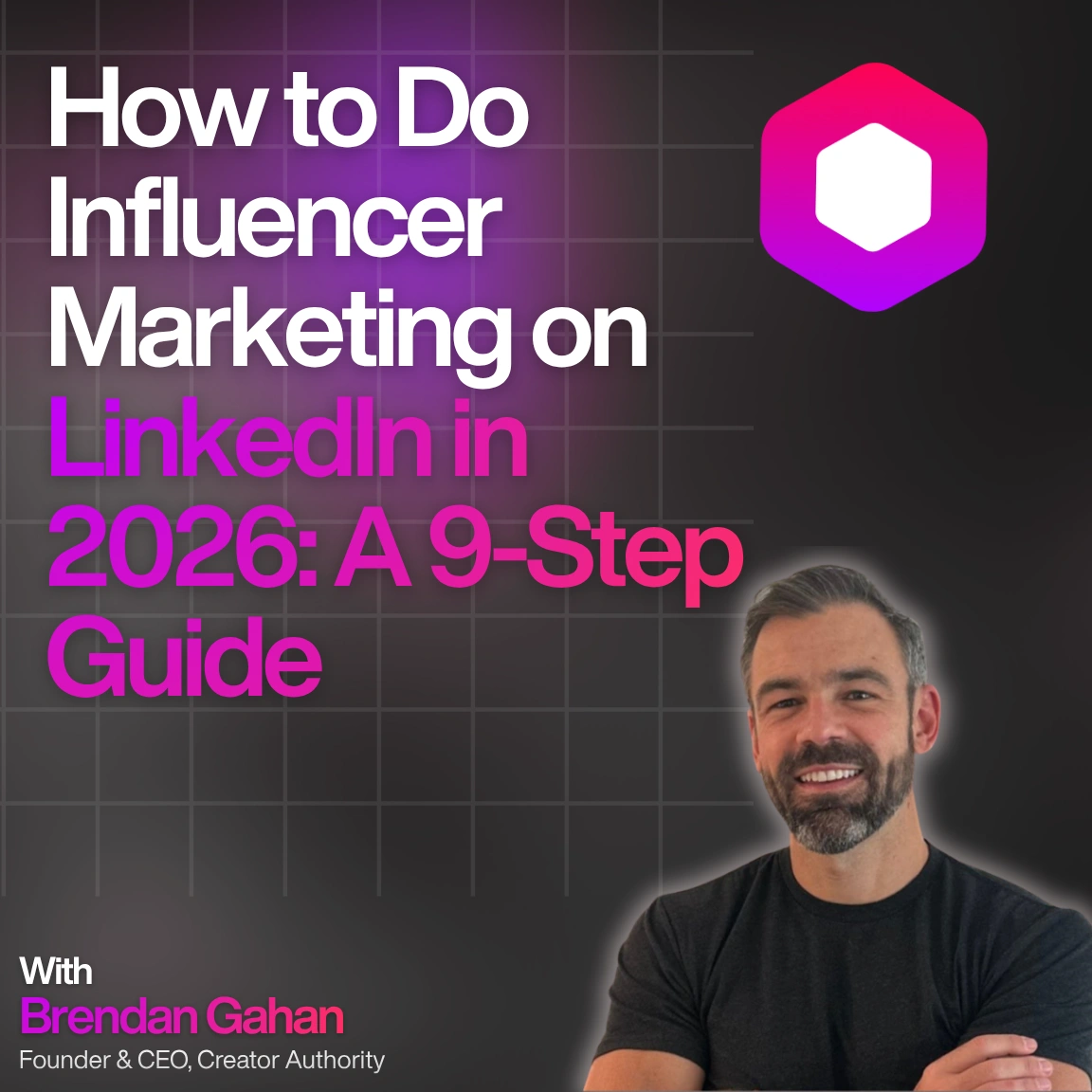
LinkedIn Influencer Marketing: A Complete 9-Step Guide for 2026
LinkedIn has quietly become one of the most powerful — and most misunderstood — platforms for influencer marketing. While most brands are still chasing follower counts on Instagram and TikTok, a small group of sophisticated B2B marketers have already figured out that LinkedIn's professional audience, paired with its low-cost thought-leader ad amplification, delivers ROI that rivals any other channel.
This guide captures that entire playbook. Every step is drawn directly from a live walkthrough recorded with Brendan Gahan, one of the world's foremost authorities on LinkedIn influencer marketing. It is designed to give you a replicable framework you can apply immediately, whether you are running your first LinkedIn creator campaign or trying to scale a program that has already shown early traction.
Why Brendan Gahan? The Expert Behind This Playbook
.webp)
Not everyone who claims expertise in influencer marketing has actually built campaigns that generate measurable revenue. Brendan Gahan is a rare exception.
With over 18 years of experience across social media advertising, influencer marketing, and the creator economy, Brendan is widely regarded as one of the founding figures of the discipline. He ran one of the first YouTube influencer activations in 2006 — before the industry had a name — and has been at the forefront ever since.
His career milestones include:
• Founded Epic Signal, one of the pioneering influencer marketing agencies, which was acquired by Mekanism in 2015.
• Served as Partner and Chief Social Officer at Mekanism, contributing to the agency's acquisition by Plus Co in 2022.
• Named to Forbes' 30 Under 30 in 2012.
• Recognized as a LinkedIn Top Voice with more than 125,000 followers on TikTok and features in The New York Times, The Wall Street Journal, Fast Company, Ad Age, and CNBC.
• Founded Creator Authority in 2023 — the first agency dedicated exclusively to LinkedIn influencer marketing.
• In April 2026, Creator Authority became an official LinkedIn Marketing Partner, the first influencer-focused agency to earn that designation.
Brendan's client roster at Creator Authority includes SAP, Notion, Dropbox, HubSpot, Webflow, Upwork, Amazon, and Canva. These are not experimental pilots — these are full-scale, results-driven campaigns.
The 9-step framework in this guide is the actual process Brendan uses with every client. It was shared publicly in a Favikon video interview and is presented here in full detail for practitioners who want to implement it themselves.
About the Author: Megan Mahoney
This guide was researched and written by Megan Mahoney, a contributing writer and influencer marketing analyst at Favikon.
Megan is an influencer marketer who approaches the discipline empirically — grounding her analysis in real campaign data, proprietary platform analytics, and interviews with practitioners actively running campaigns. With a background in content marketing and over a decade of experience helping brands grow through strategy and storytelling, she brings a practitioner's perspective to the creator economy rather than a theoretical one.
At Favikon, Megan covers B2B influencer marketing, LinkedIn creator strategy, campaign measurement, and the economics of the creator economy. Her work draws on Favikon's dataset of millions of creator profiles to surface patterns that are not visible from any single campaign or anecdote.
Her other notable pieces include 10 LinkedIn Influencer Marketing Tips from Top Marketers, The LinkedIn Influencer Marketing Strategy That Drove $1.1M in Pipeline, and 9 B2B Influencer Marketing Trends for 2026.
The State of LinkedIn Influencer Marketing in 2026
Before diving into the 9 steps, it is worth understanding why LinkedIn has become such a significant channel for influencer marketing in the first place.
• Investment in creator marketing on LinkedIn has seen a 171% year-over-year increase.
• 61% of B2B marketing leaders plan to increase their creator content spend this year.
• According to LinkedIn's own research, 87% of B2B buyers refer to thought leaders when making purchase decisions.
• 82% of B2B buyers say creator content directly influences them.
LinkedIn's thought-leader ad format is a key reason the economics work so well. Sponsored posts from LinkedIn creators come in at roughly 15 to 20% of the average LinkedIn CPM — sometimes less. That means brands get the trust and credibility of creator content at a fraction of the cost of running cold display ads.
The result is a channel that punches well above its weight for B2B brands targeting decision-makers, buyers, and professionals at specific companies or in specific roles.
The Working Example: AB Testy
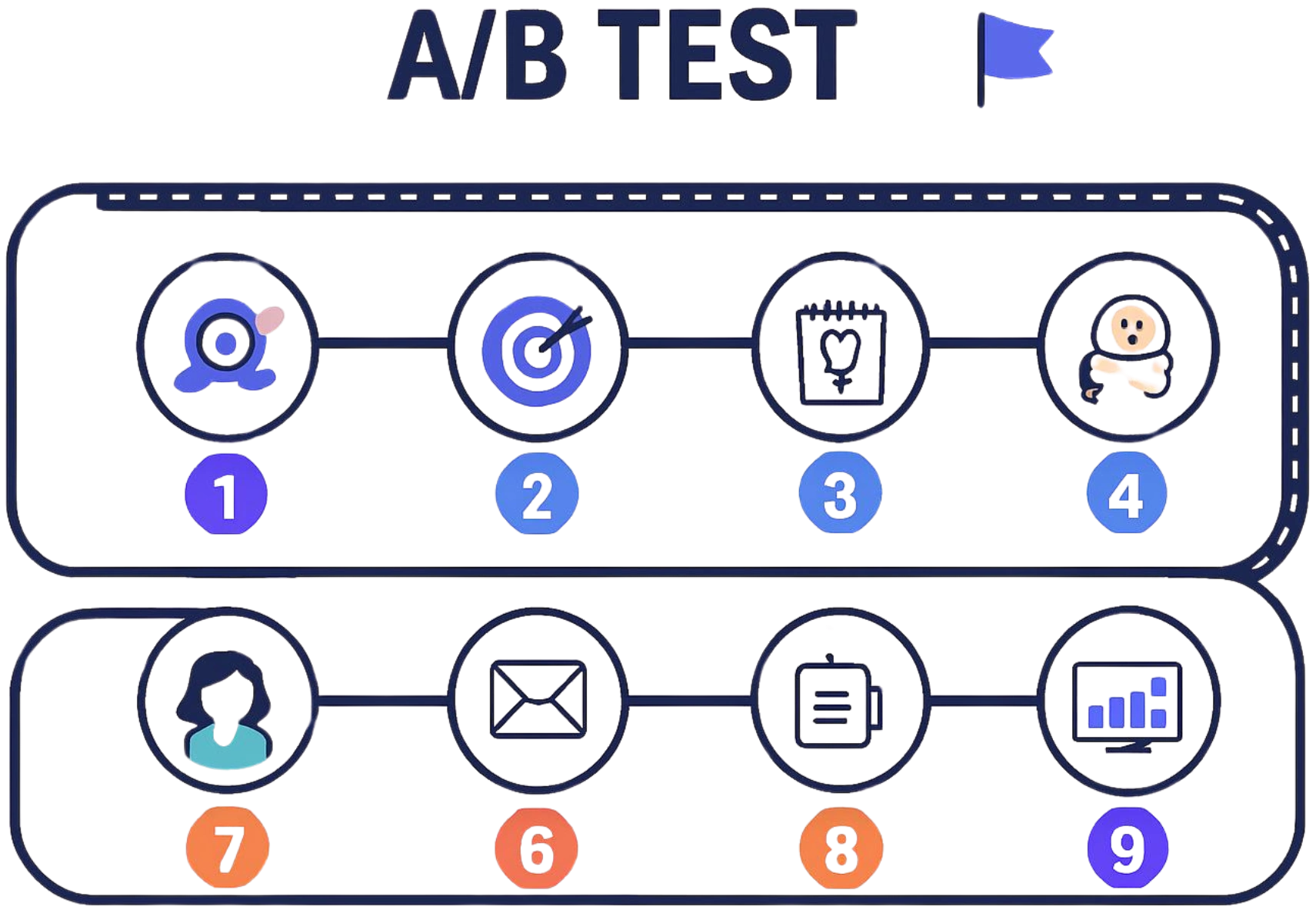
To make this framework concrete, Brendan anchors his walkthrough around a hypothetical SaaS company called AB Testy — a fictional A/B testing tool that serves marketers and product teams. Throughout this guide, AB Testy serves as the running example to illustrate how each step plays out in practice.
Think of AB Testy as a stand-in for any B2B SaaS product with a defined ICP (Ideal Customer Profile), a competitive market, and real pressure to generate pipeline efficiently.
The 9-Step LinkedIn Influencer Marketing Framework
Step 1: Research Your Buyer Before Anything Else
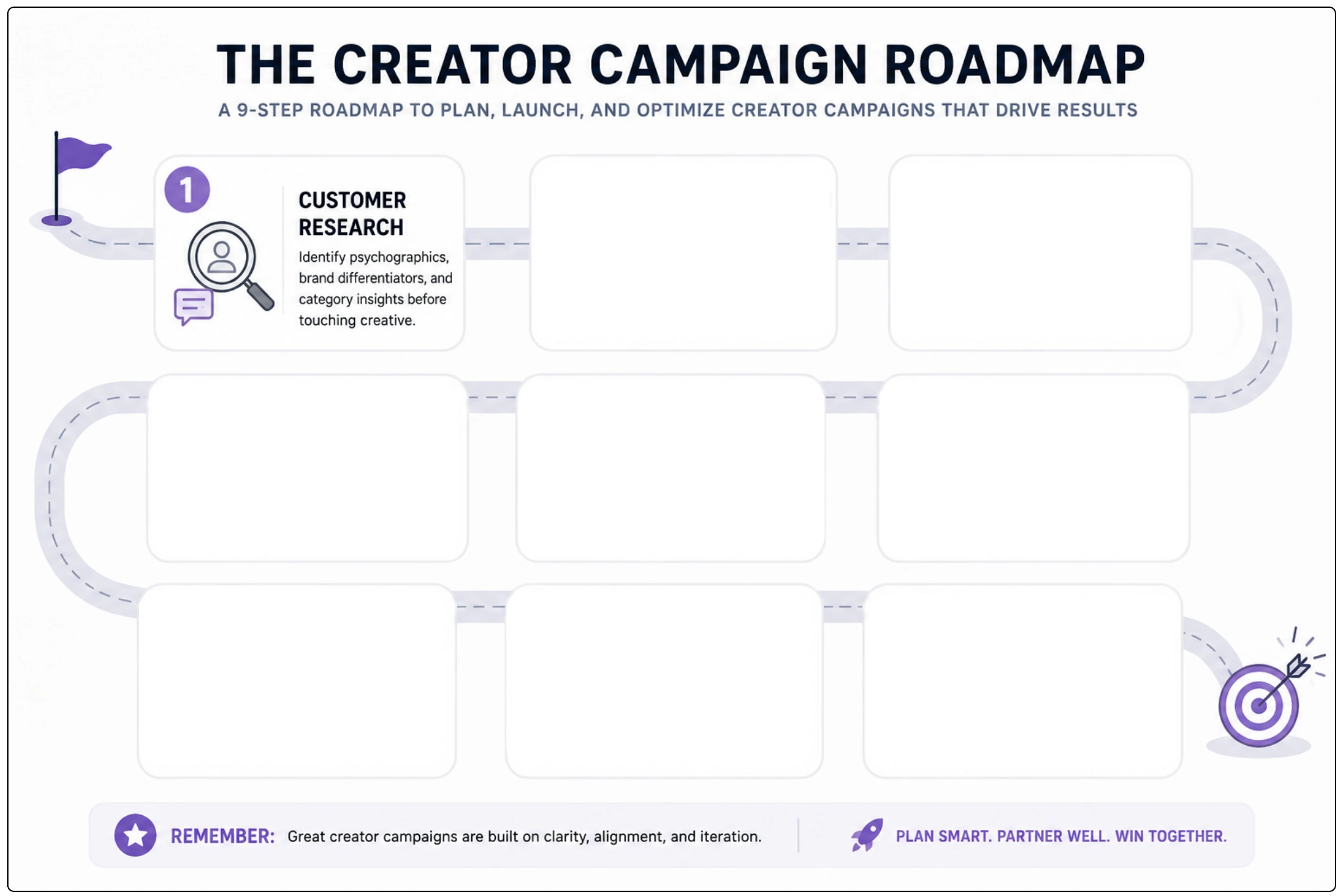
Before anything else — before writing a creative brief, before shortlisting creators, before even deciding on a campaign goal — you do customer research.
Brendan is emphatic about this starting point. Consumer insights, brand insights, and category insights are not a pre-campaign formality. They are the foundation that determines whether everything downstream will actually work.
What to Research
• Psychographic profile of your target buyer: What motivates them? What frustrates them? What are they trying to accomplish in their role?
• Brand differentiators: What does your product do that no competitor does as well?
• Category dynamics: What is the dominant narrative in your category right now? What are buyers skeptical about?
• Customer language: How do your best customers describe the problem your product solves? What words do they use?
For AB Testy, the hypothetical insight is that most marketers are running tests without statistical rigor — they are calling winners too early, wasting budget on losing variants, and missing revenue as a result. That insight becomes the strategic anchor for the entire campaign.
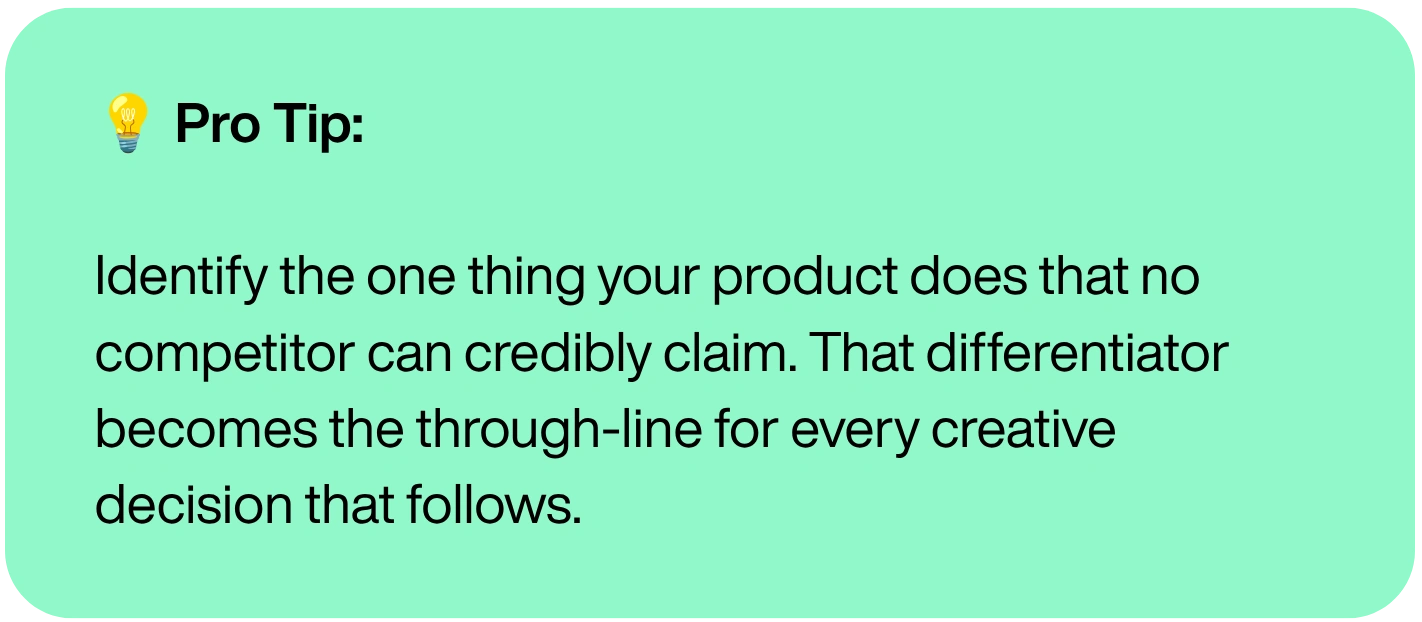
Step 2: Define Your Campaign Goal — Pick One
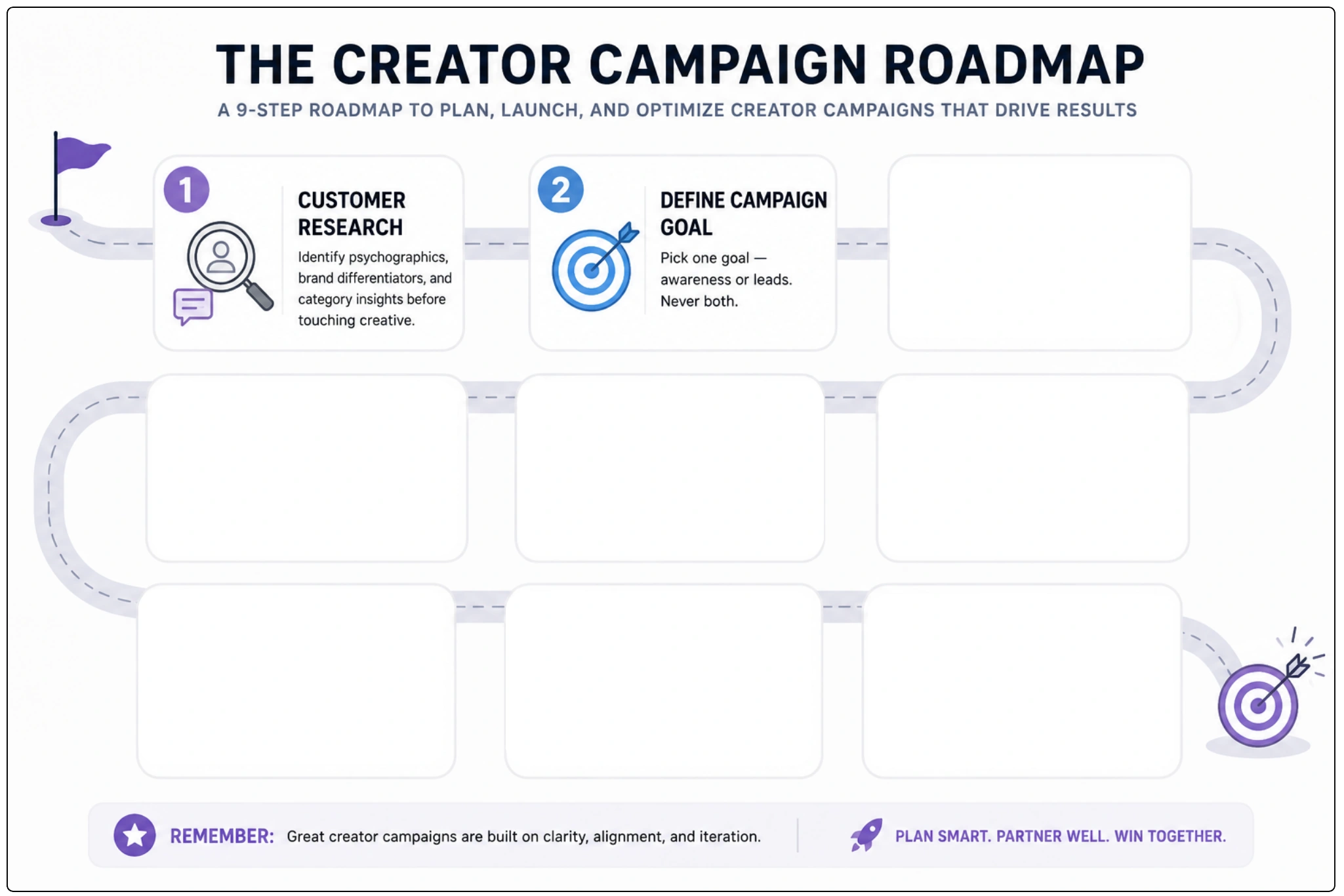
In an ideal world, every campaign can do everything. The reality is you can do anything, but you can't do everything.
- Brendan Gahan
The single most common mistake Brendan sees in LinkedIn influencer campaigns is trying to achieve multiple goals with one campaign. Awareness and leads. Brand building and pipeline. Education and conversion. Every time you try to optimize for two things simultaneously, you end up doing neither particularly well.
You pick one goal. Not two. One.
If Your Goal Is Lead Generation:
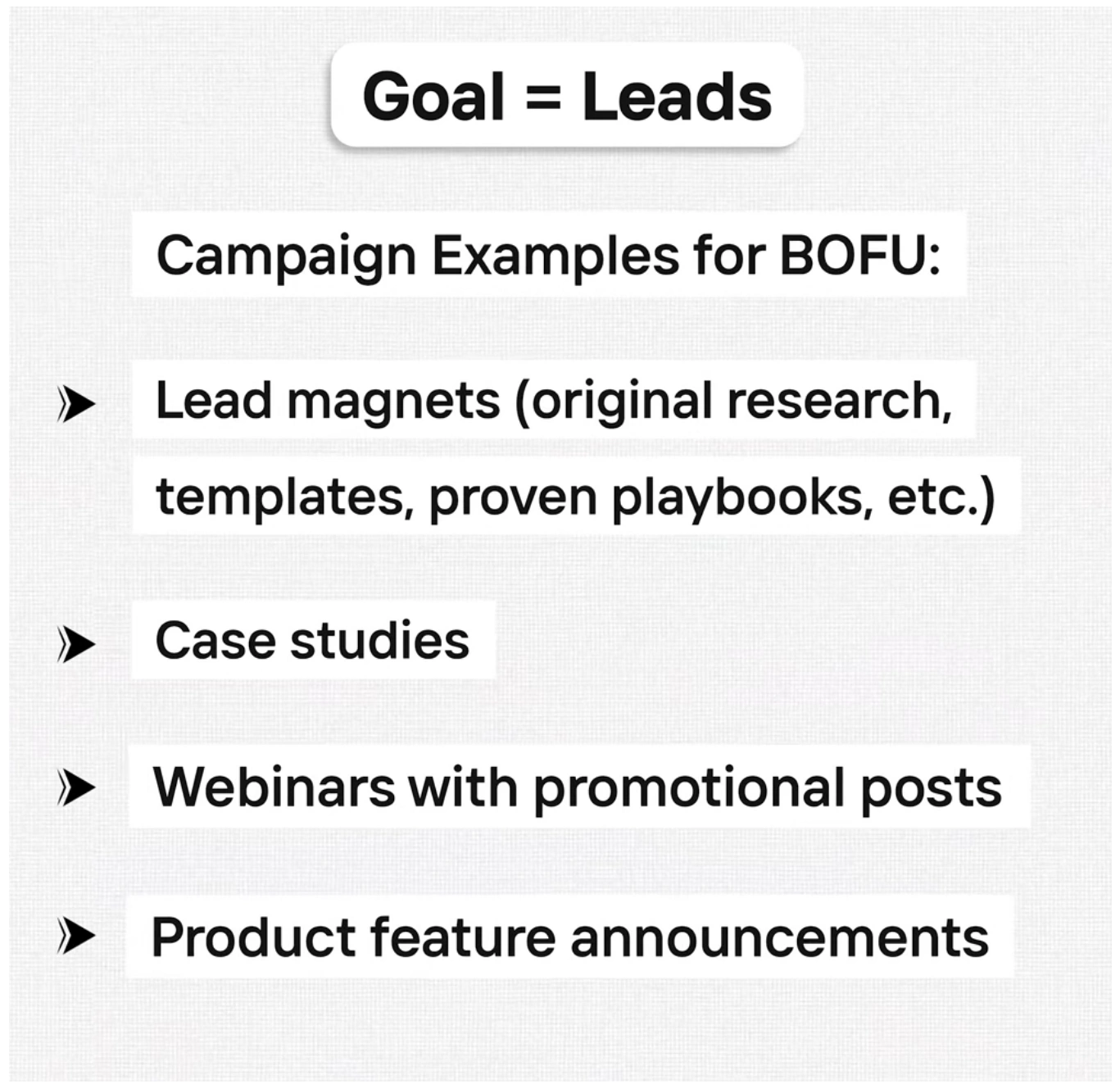
Lead campaigns are full-funnel by nature. The content has to educate, build credibility, and then convert — all in the same piece.
If Your Goal Is Awareness:
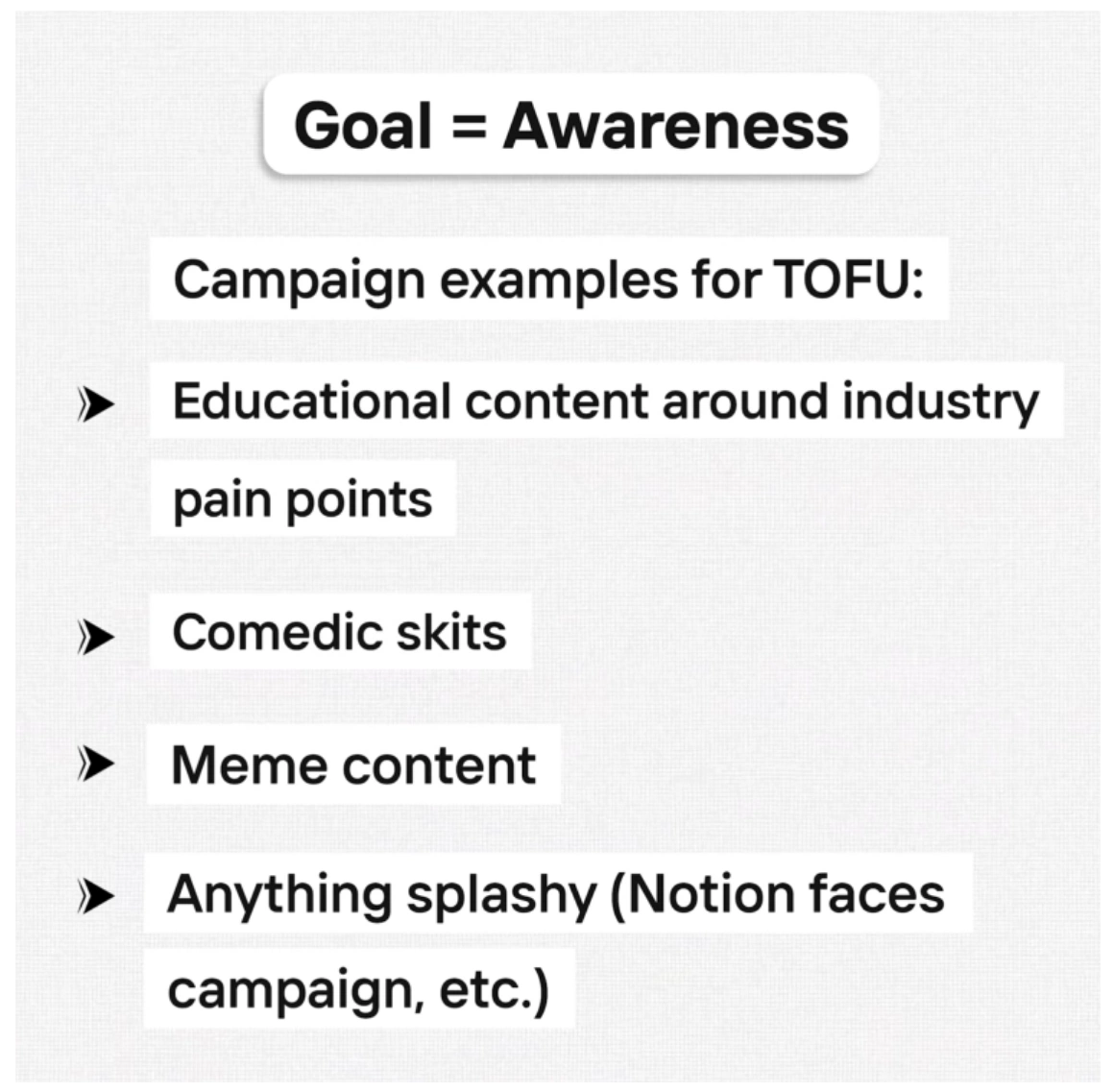
Awareness campaigns are intentionally one-directional. They do not need to be full-funnel. Their job is to put your brand in front of the right people and make it memorable.
Step 3: Build a Co-Created Campaign Concept
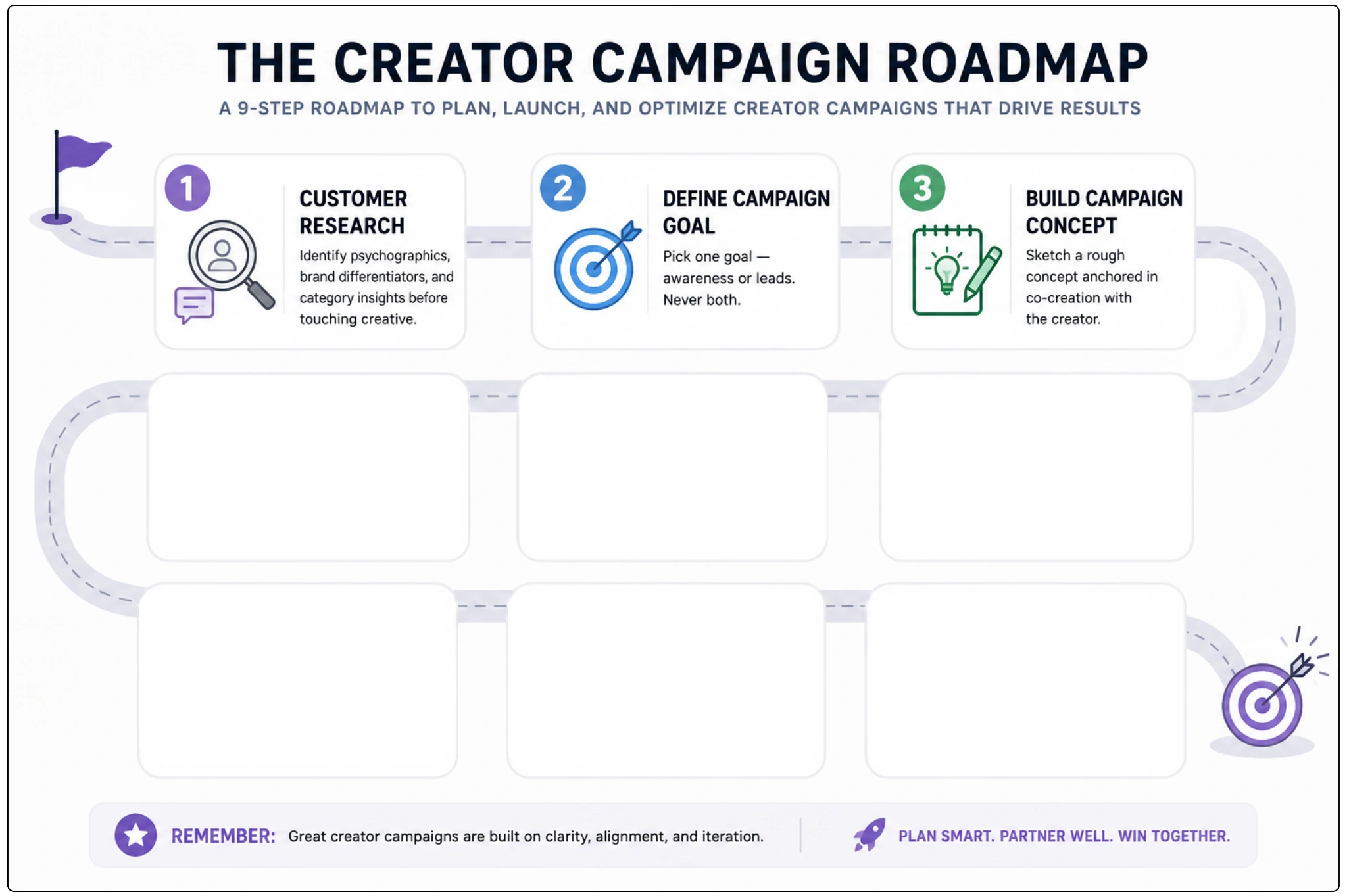
Once you have your goal, you sketch a rough campaign concept. It does not need to be polished or final. You are not writing a creative brief yet. You are establishing a direction — a hypothesis for what might work given your audience, your goal, and your product's unique position.
For Lead Generation Campaigns
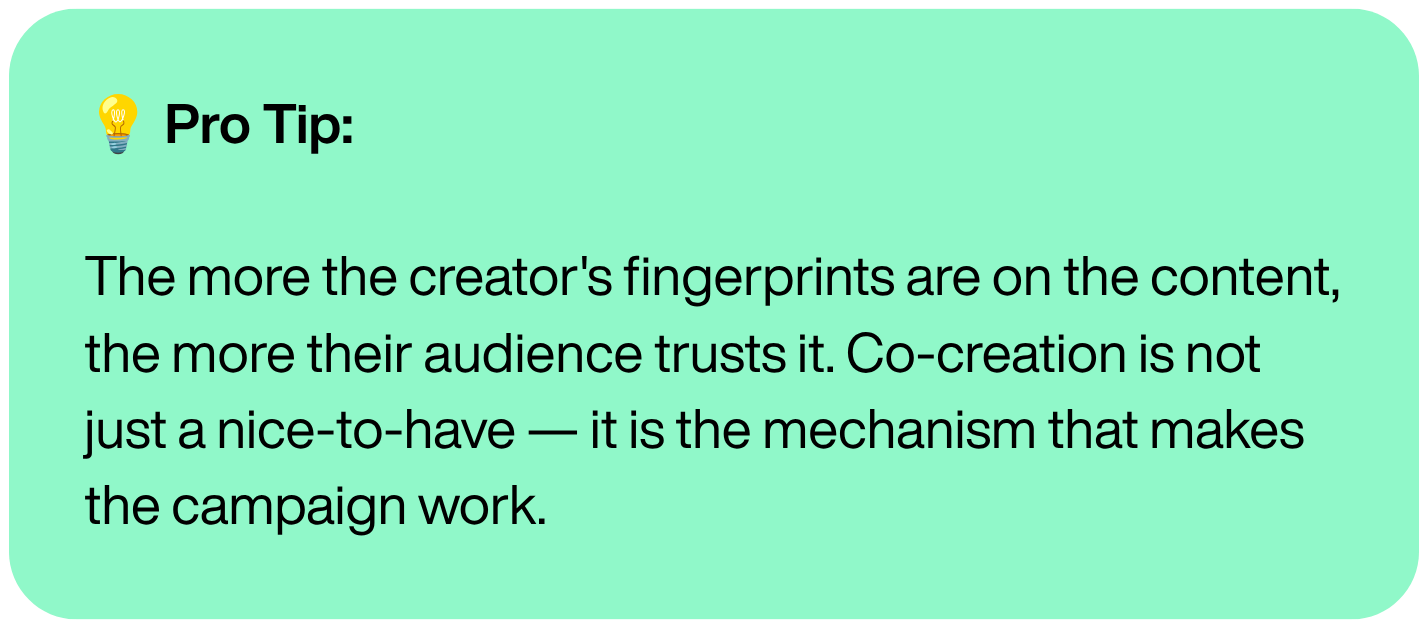
The most effective lead generation concepts on LinkedIn involve co-creation. Not a post where the creator endorses your product. An asset where the creator's knowledge is baked into the content itself.
.webp)
• A research paper where the creator contributed their own data or perspectives
• A 30-day course or challenge built around how the creator actually uses your product
• A practical guide that features the creator's voice throughout — not just their face on the thumbnail
The key principle is that the lead magnet has to be genuinely useful on its own. The creator's involvement makes it more credible. But if the audience would not want the asset without the creator's name on it, the concept is not strong enough.
The Role of Paid Media
Most LinkedIn thought leaders in a given niche do not have massive audiences. Brendan considers this irrelevant. The content gets boosted through paid media anyway.
.webp)
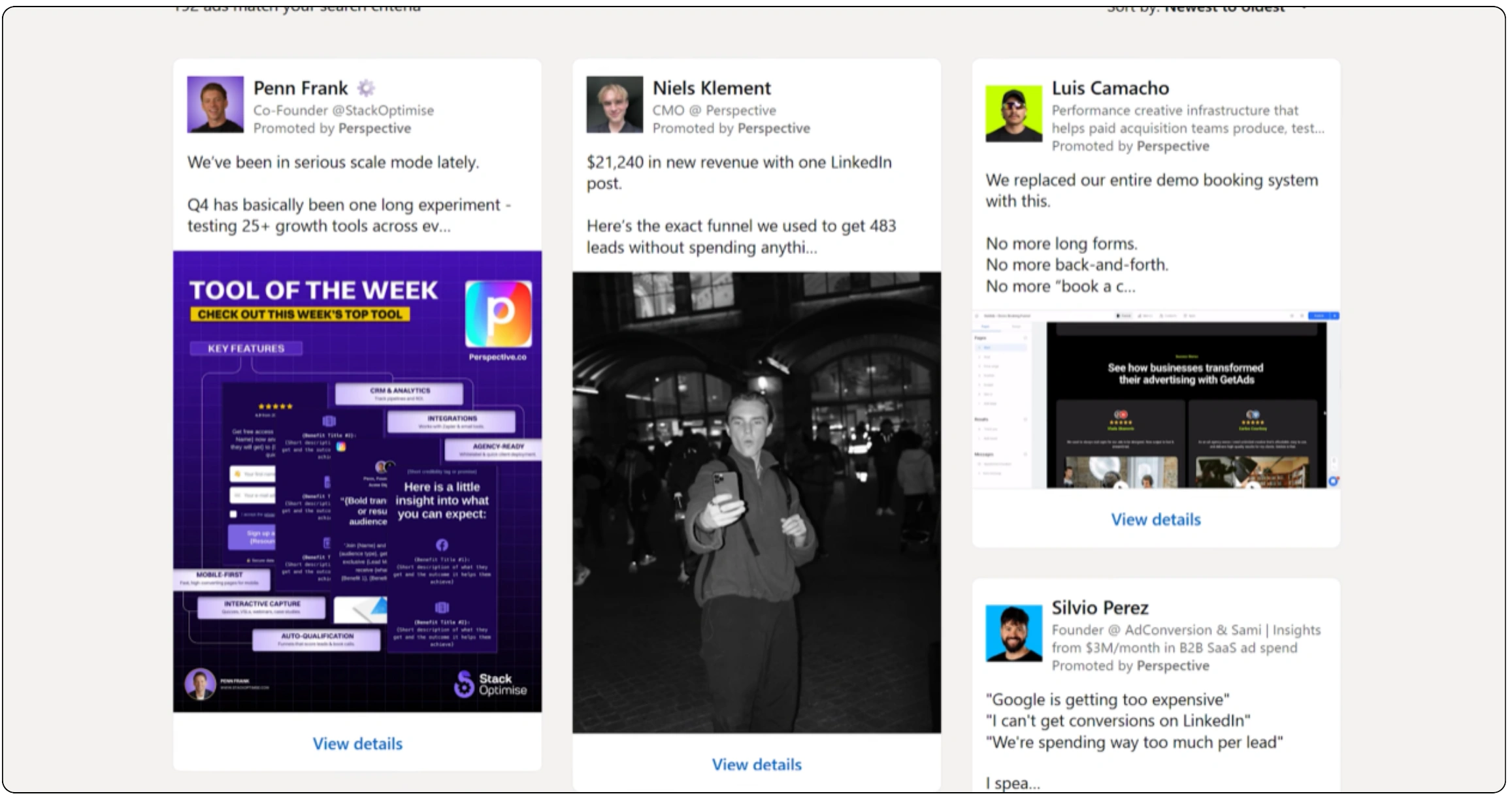
Thought leader ads on LinkedIn allow you to sponsor a specific creator's post and run it as a paid unit. Because the post looks organic, it earns the trust that organic content earns — while reaching an audience far larger than the creator's following. The CPM advantage (15 to 20% of standard LinkedIn rates) means your budget goes significantly further than it would with traditional display advertising.
Managing the creative approval workflow, tracking post performance, and coordinating paid amplification across multiple creators is where tools like Favikon's influencer campaign management platform become genuinely useful. Rather than managing creator approvals and performance data across spreadsheets and email threads, you can run the entire operation from a single dashboard.
Step 4: Select the Right Creator (Ignore Follower Count)
Creator selection is where most LinkedIn influencer campaigns are won or lost — and where most brands make their biggest mistake. They optimize for follower count. Brendan does not factor follower count into creator selection at all.
What Actually Matters
• Genuine category expertise: Does this creator have real standing in the topic area your product serves?
• ICP alignment: Does their audience match the profile of your ideal buyer?
• Authenticity: Is their engagement real, or is it inflated by pods, bots, or AI-generated content?
Brendan does look at impressions — but only for the purpose of figuring out media budget. The creative and strategic selection criteria are entirely about credibility and audience fit.
Why Audience Size Does Not Matter
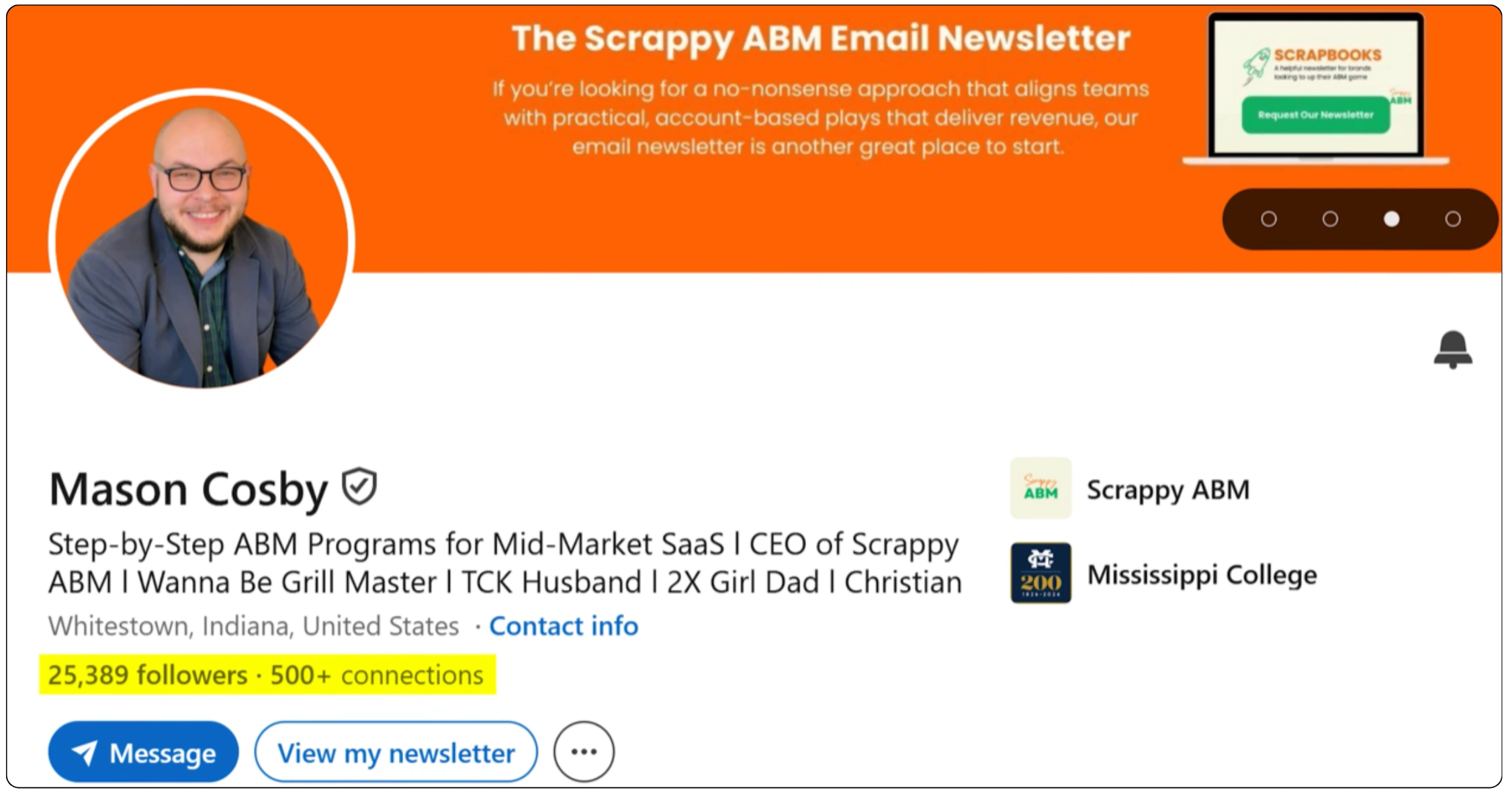
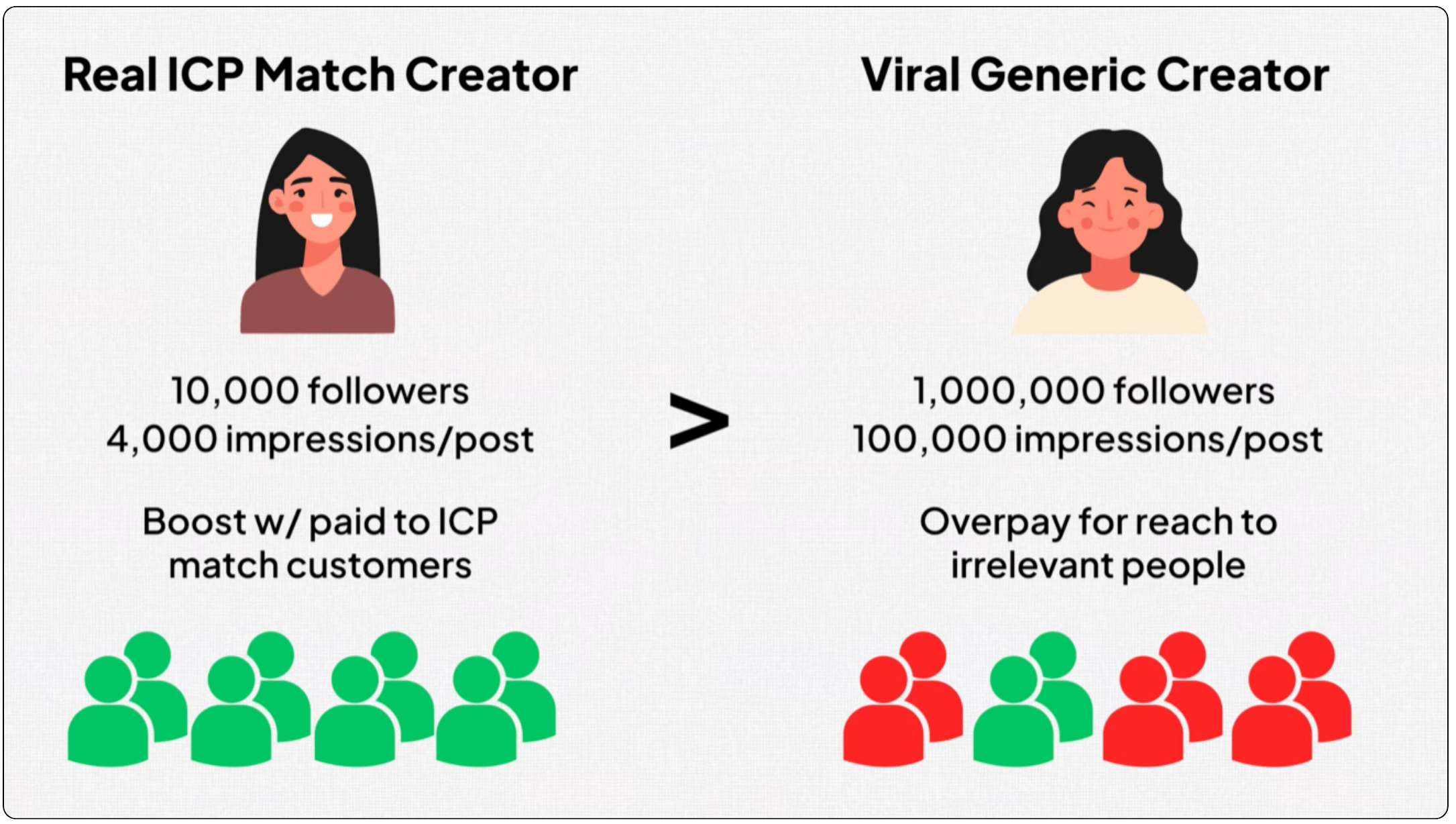
The reason follower count is irrelevant is that the model runs on paid amplification. You are not relying on the creator's organic reach to drive results. You are using the creator's authority and expertise to produce trusted content, and then buying the distribution.
A creator with 8,000 followers who is genuinely respected in the CFO community will outperform a creator with 80,000 followers whose audience is broad and disconnected. The first creator's content earns real engagement from people who actually matter to your campaign. The second creator's content earns vanity metrics.
Using Favikon for Creator Selection
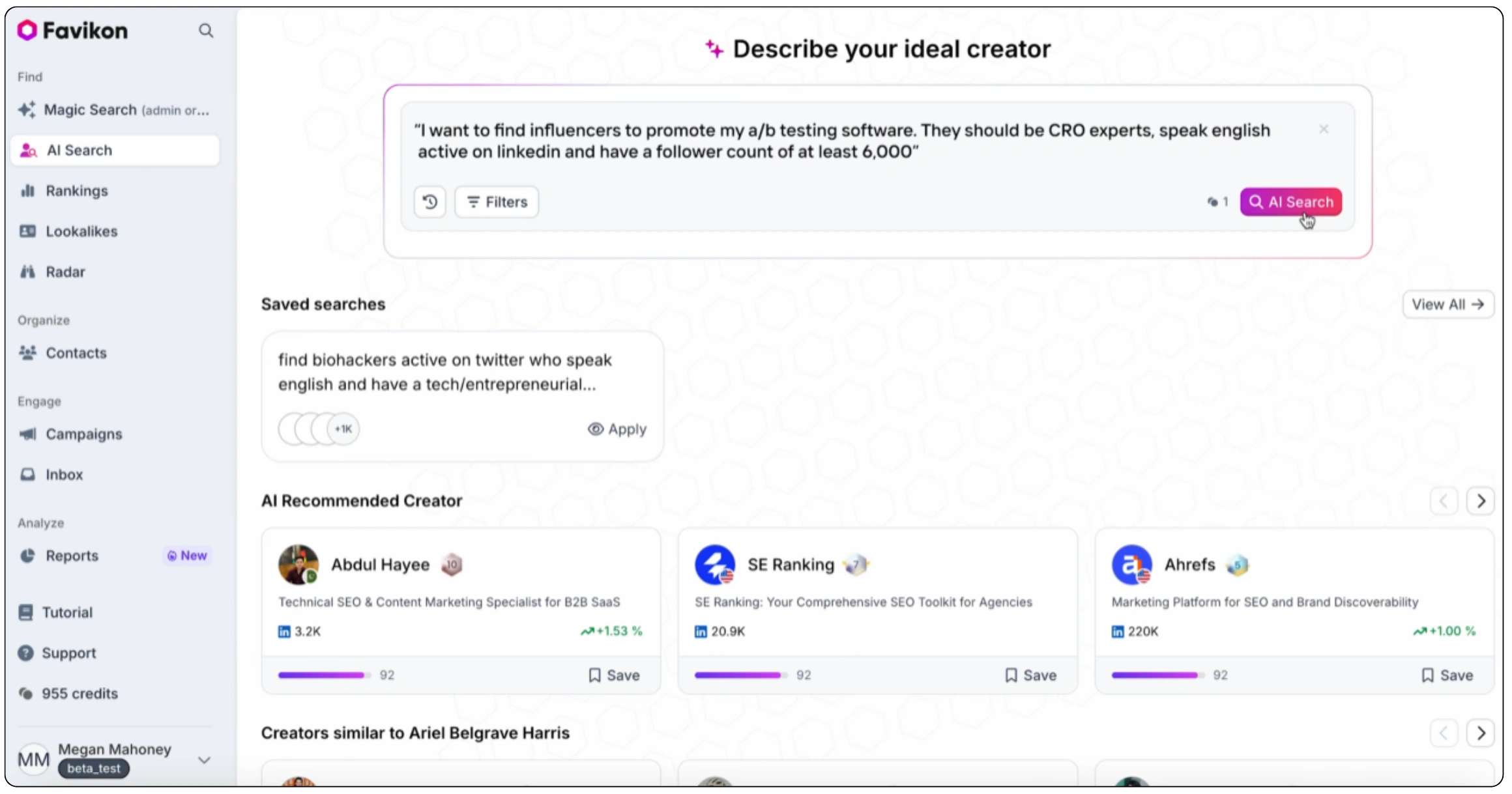
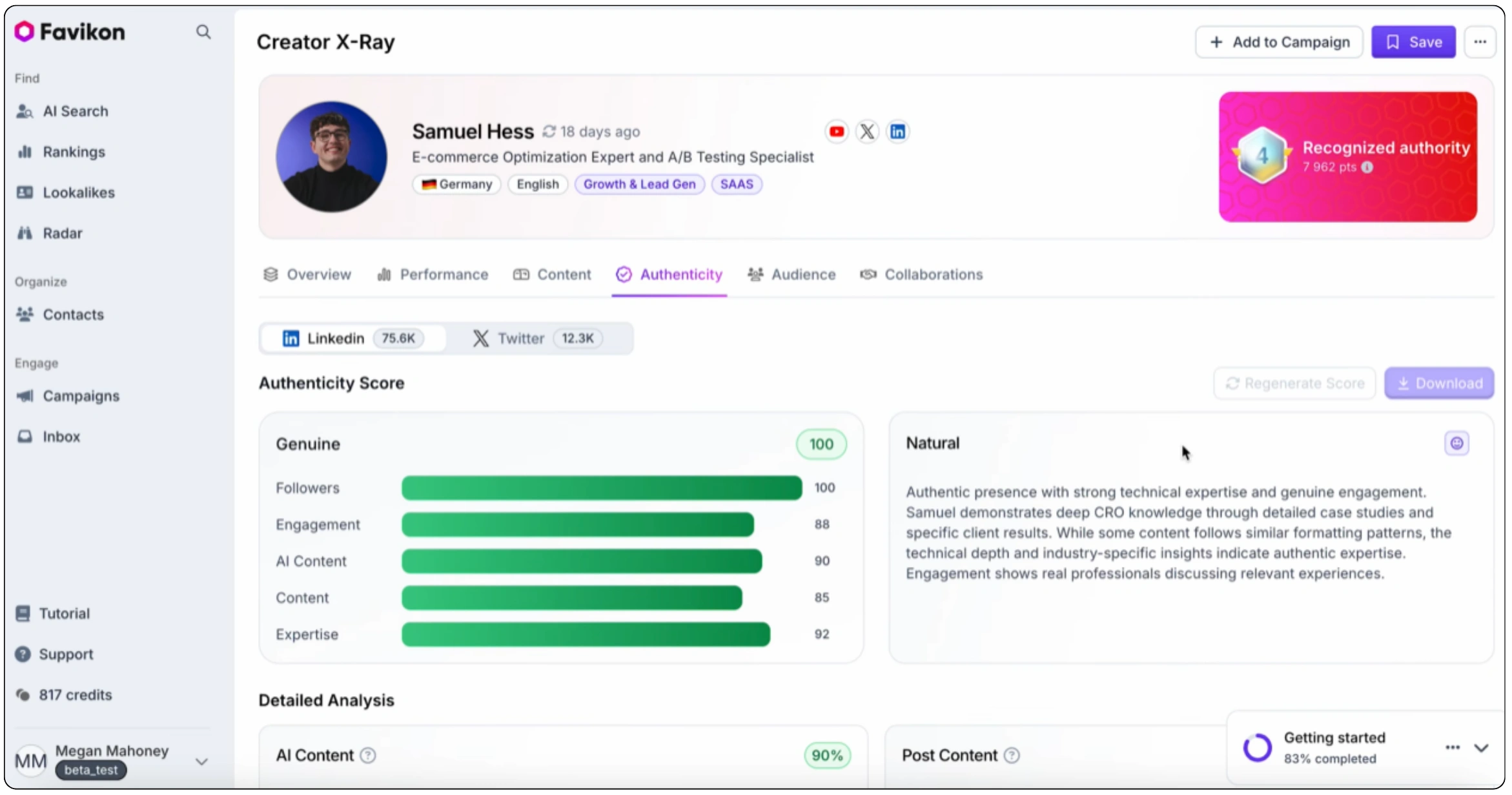
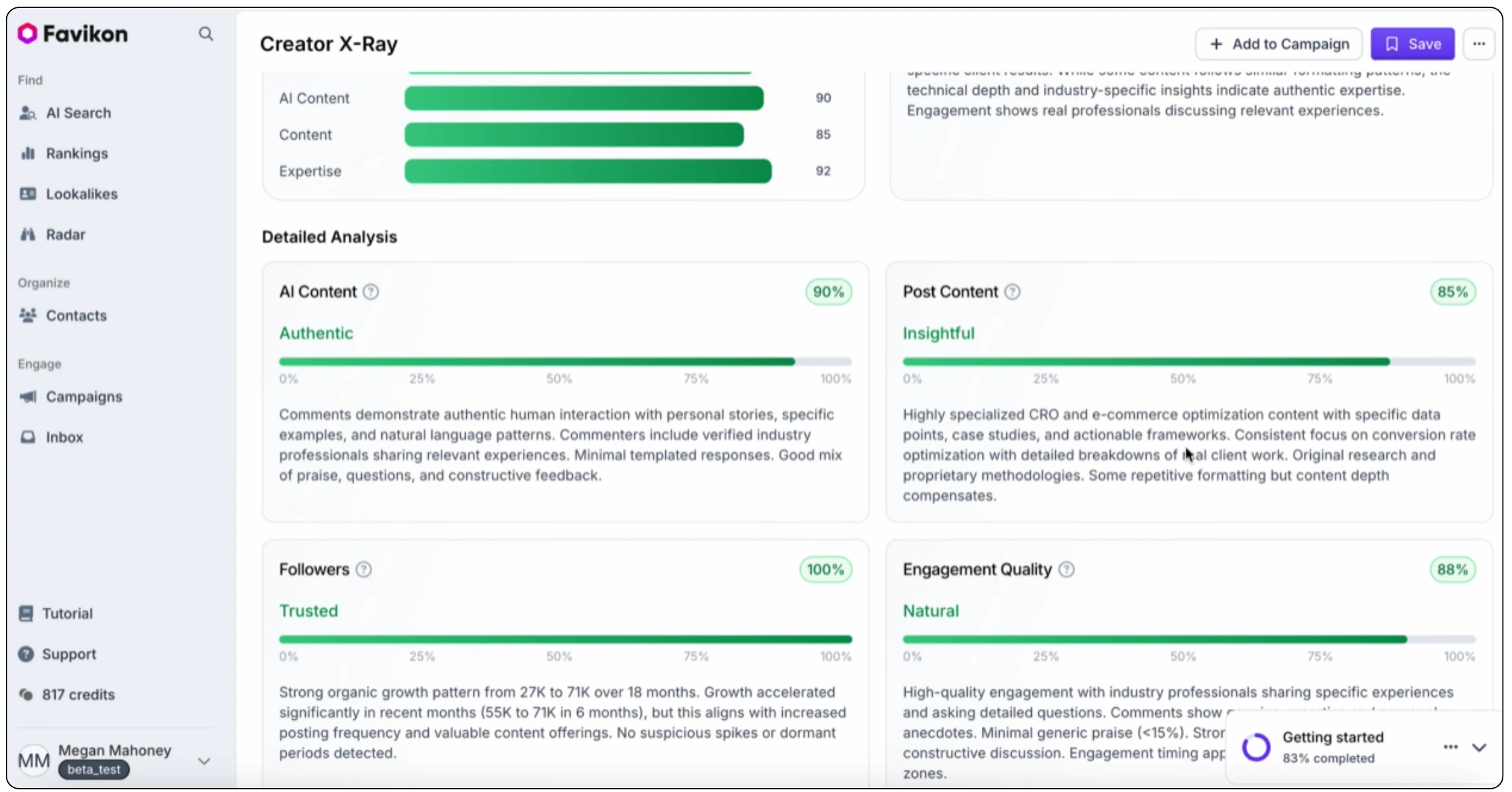
When evaluating creators with Favikon's influencer analytics tools, Brendan recommends looking for three things: ICP match (does the creator's audience reflect your target buyer?), genuine category expertise (do they post substantively about the topics your product addresses?), and a high Authenticity Score.
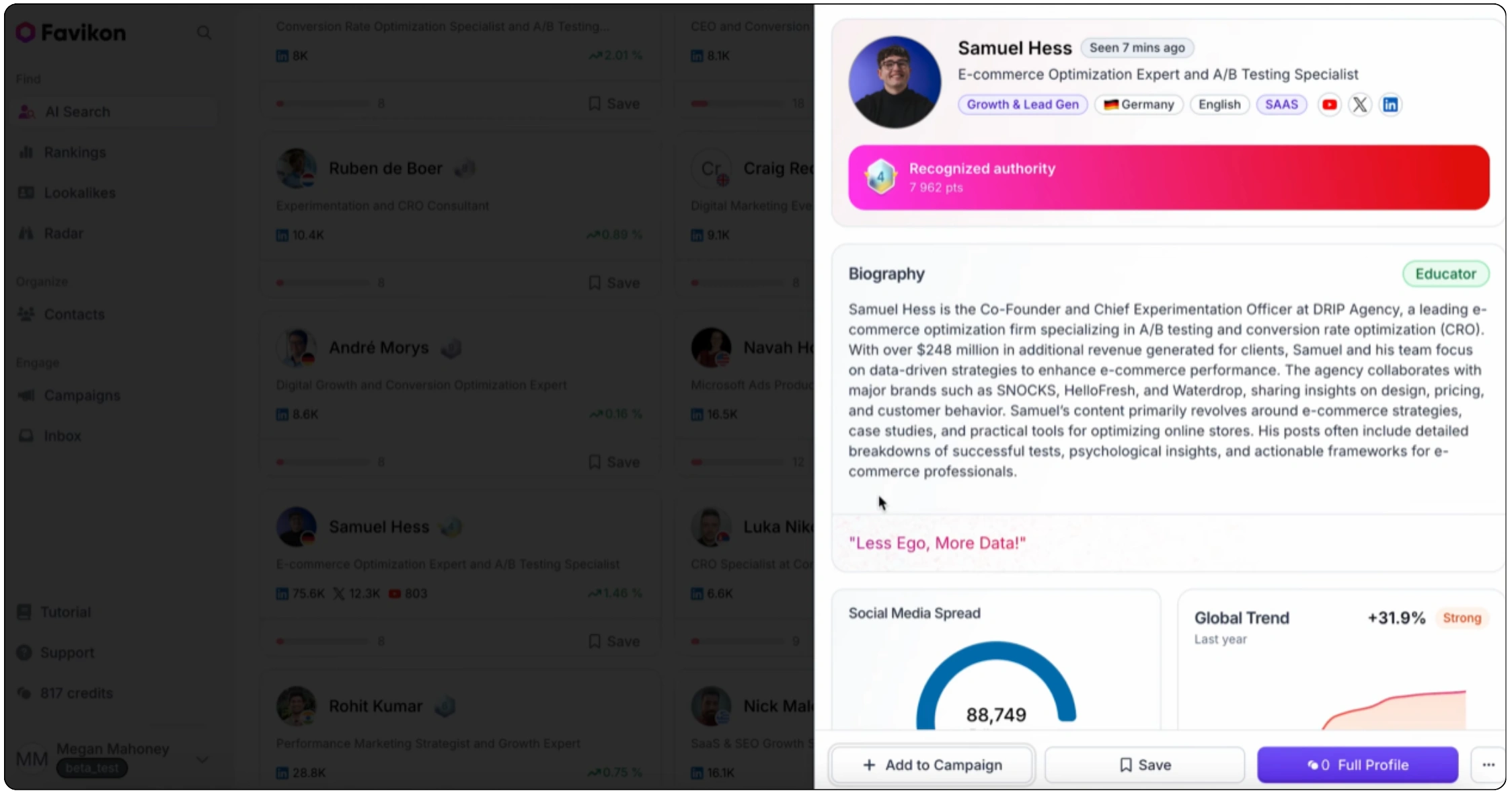
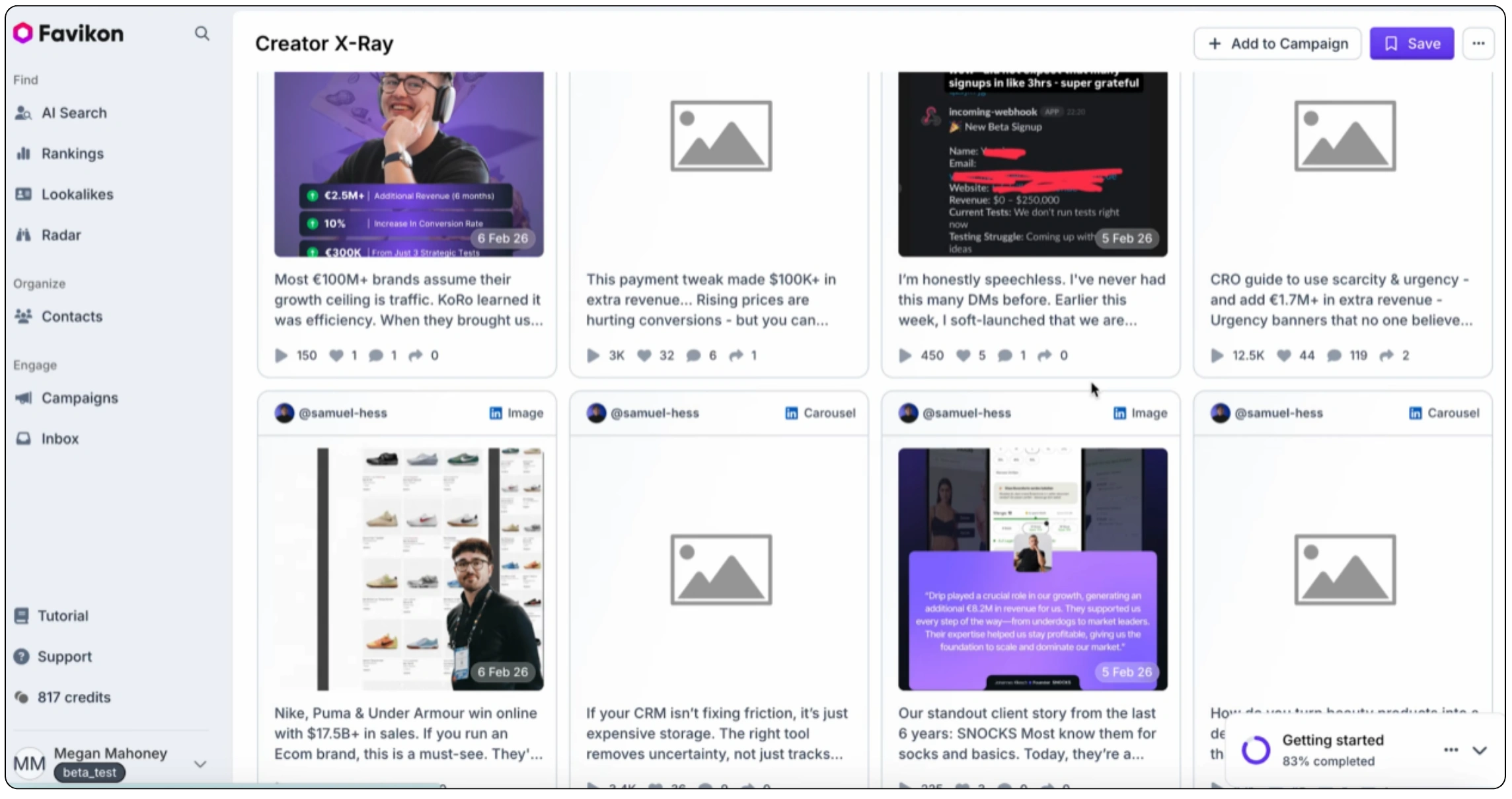
The Authenticity Score is Favikon's proprietary signal for whether a creator's engagement is genuine. A high score means the creator is not using engagement pods, not over-relying on AI to generate content, and their metrics reflect real audience behavior. This matters enormously when you are about to amplify their content with paid media spend.
Favikon's AI-powered influencer search tool lets you filter by industry, audience seniority, engagement quality, and dozens of other signals — making it straightforward to build a shortlist of credible, ICP-aligned creators without manually reviewing hundreds of profiles.
Step 5: Send Outreach That Gets a Response
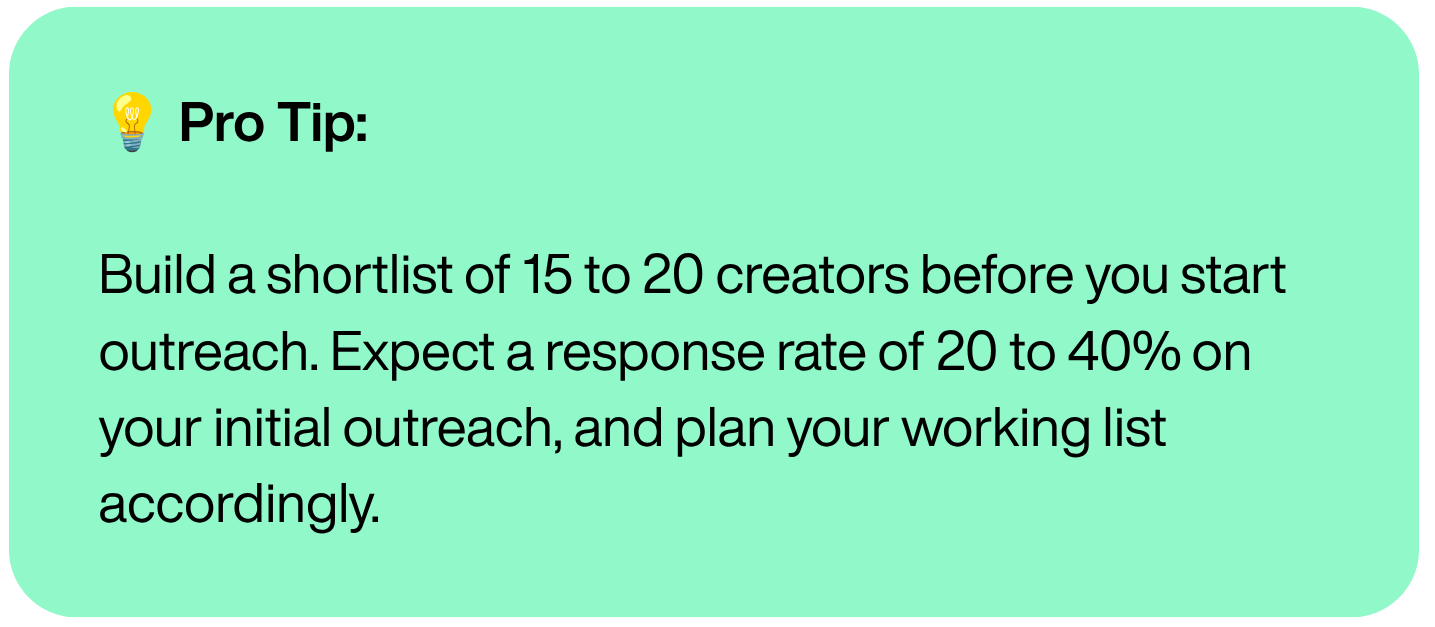
Outreach on LinkedIn is a volume game. Established creators in any professional niche receive dozens — sometimes hundreds — of partnership pitches. Your message needs to stand out by being short, specific, and direct.
The Outreach Formula
.webp)
Brendan's recommended structure for the initial message is deliberately minimal:
That is it. No elaborate pitch. No lengthy product description. No request for a specific commitment upfront. The goal of the first message is to get a response — nothing more.
Follow-Up Cadence
• Follow up multiple times. Most responses come after the second or third touchpoint.
• Space your follow-ups 4 to 7 days apart.
• Keep each follow-up as short as the original message.
• As soon as they reply, get them on a call — do not negotiate over message threads.
If you are managing outreach to a large creator list, Favikon's campaign management tools allow you to run personalized, automated follow-up sequences at scale — so you are not manually tracking dozens of individual threads.
Step 6: Run the Vetting Call (Read Their Excitement)
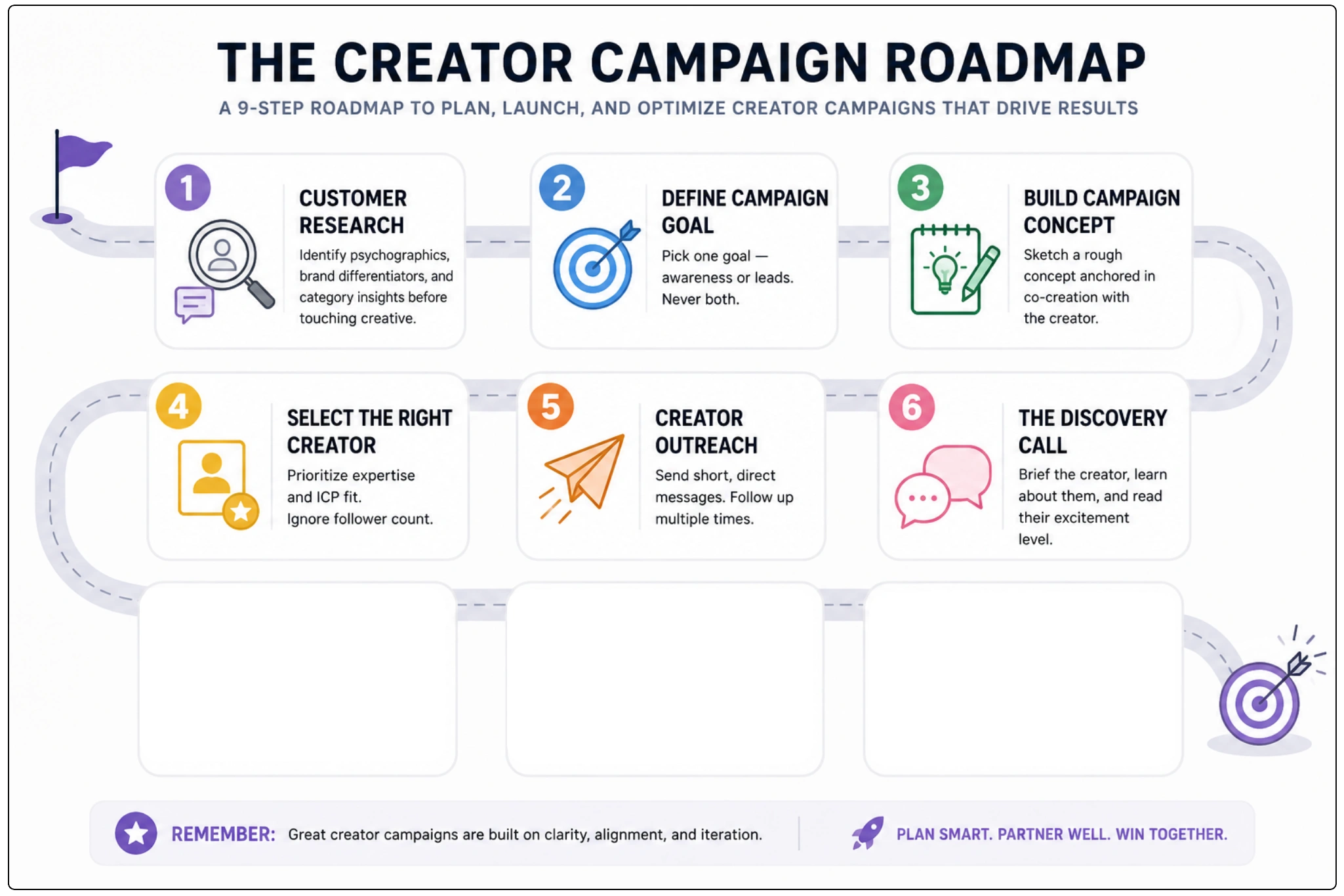
Once a creator responds and agrees to a call, the conversation serves three distinct purposes. Brendan structures every discovery call around these three goals explicitly.
Goal 1: Brief Them on the Campaign
Give the creator enough context to understand what the campaign is about, what the goal is, and what the ask looks like. Do not pitch them aggressively — you are not trying to close a deal on this call. You are giving them enough information to evaluate whether it is a good fit.
Goal 2: Learn About Them
What content do they have coming up? What is their publishing schedule like? Are they deep in a particular topic right now that could be a natural fit with your campaign? This information shapes your brief and helps you align the partnership with content they are already motivated to create.
Goal 3: Read Their Excitement Level
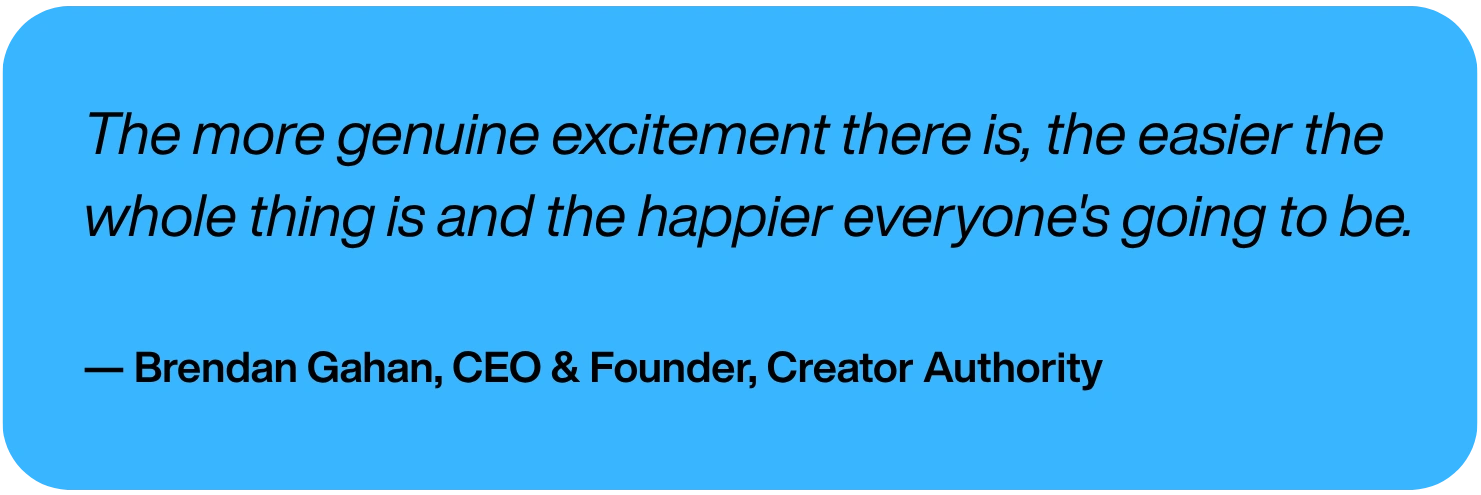
This is often the most underrated part of the vetting call. A creator who is lukewarm about your product or campaign concept will produce content that feels obligatory — and audiences sense that immediately. A creator who is genuinely interested will produce content that feels authentic, because it is.
If the excitement is not there on the call, it is a signal to move on rather than try to convince them. You will produce better content with a slightly less prominent creator who is genuinely enthusiastic than with a bigger name who is going through the motions.
Step 7: Budget and Price the Partnership
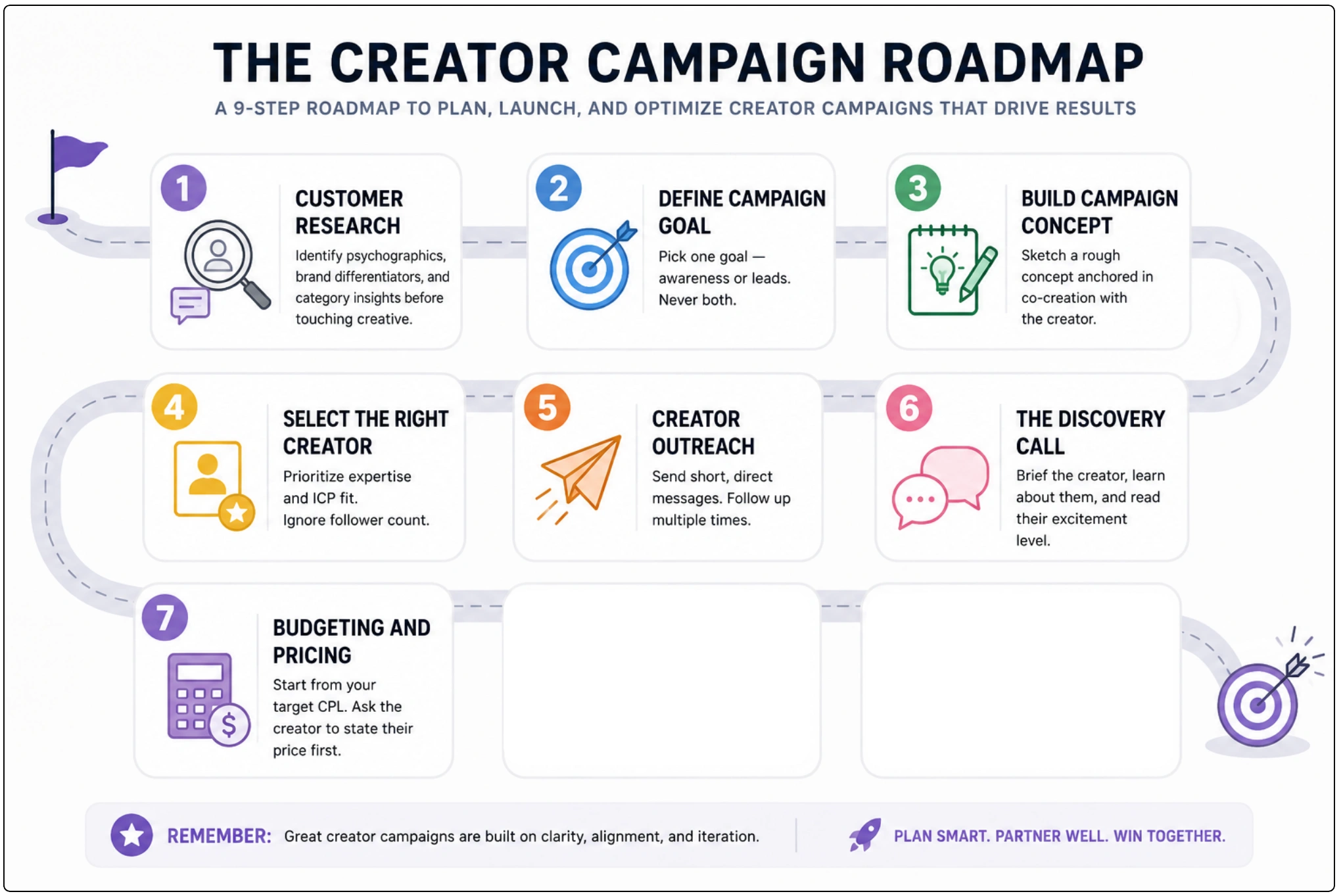
Budget conversations on LinkedIn creator campaigns are more nuanced than B2C influencer pricing, because the variables at play are more complex. Here is how Brendan approaches them.
Start From Your Business Economics
Before you ask what a creator charges, know what you can afford to pay for a lead. If your target cost per lead is $200 and a creator charges $5,000 for a campaign that historically generates 30 leads, the math works. If the same campaign generates 10 leads, it does not.
That number — your maximum viable cost per lead — is your anchor for every pricing conversation.
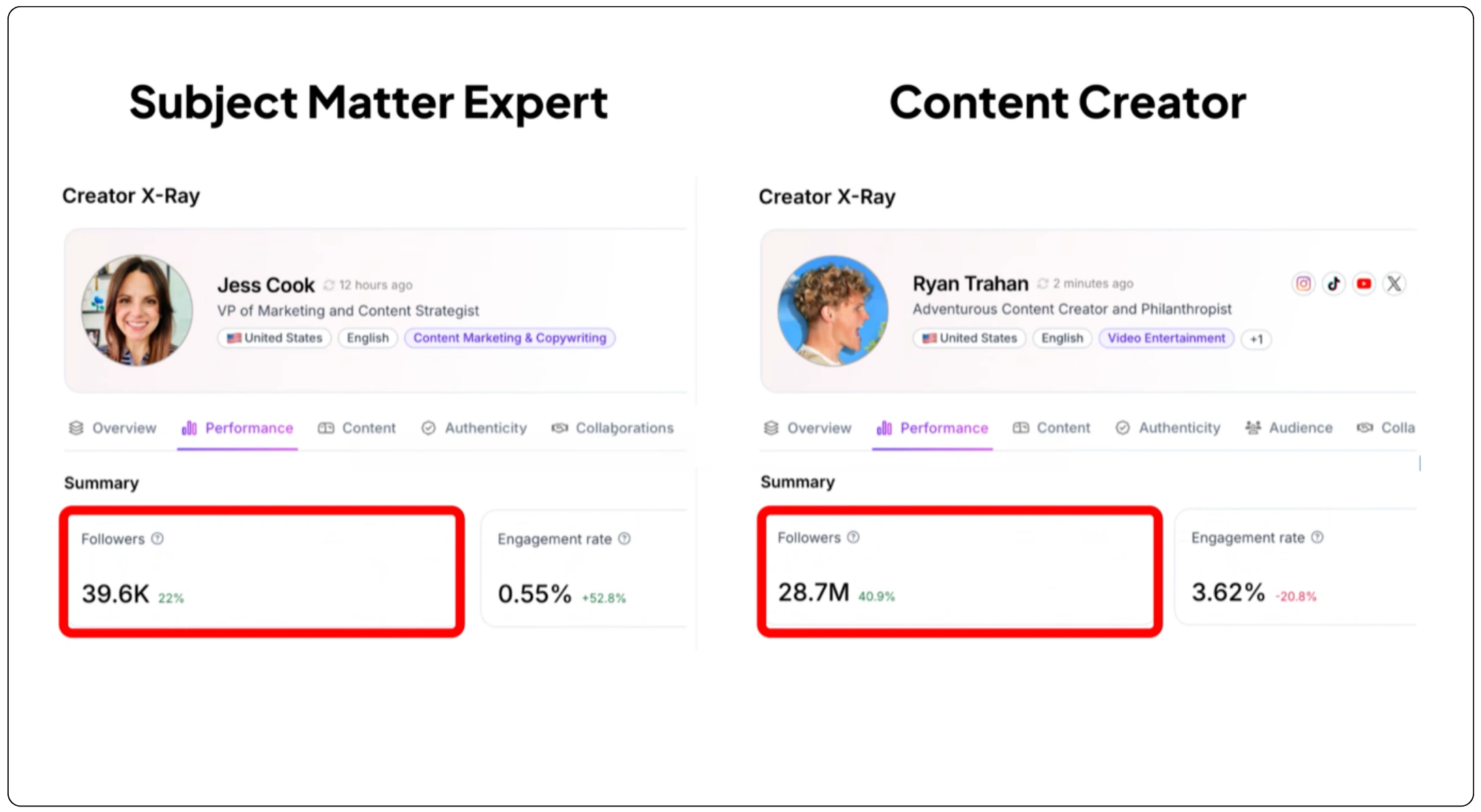
Factors That Drive Creator Pricing on LinkedIn
• Follower count and engagement rate: Base metrics that establish a floor.
• Growth rate: A creator with rapid audience growth commands a premium.
• Vertical: Finance, legal, and enterprise tech creators typically charge more than generalists.
• Subject matter expertise vs. general creator: A genuine domain expert — a CISO, a CFO, a VP of Engineering — will charge more than a generalist LinkedIn personality.
• Cross-platform presence: If the creator has a significant audience elsewhere (YouTube, Substack, podcast), their minimums will be higher.
• Type of activation: A single post costs less than a webinar. A webinar costs less than a joint research paper.
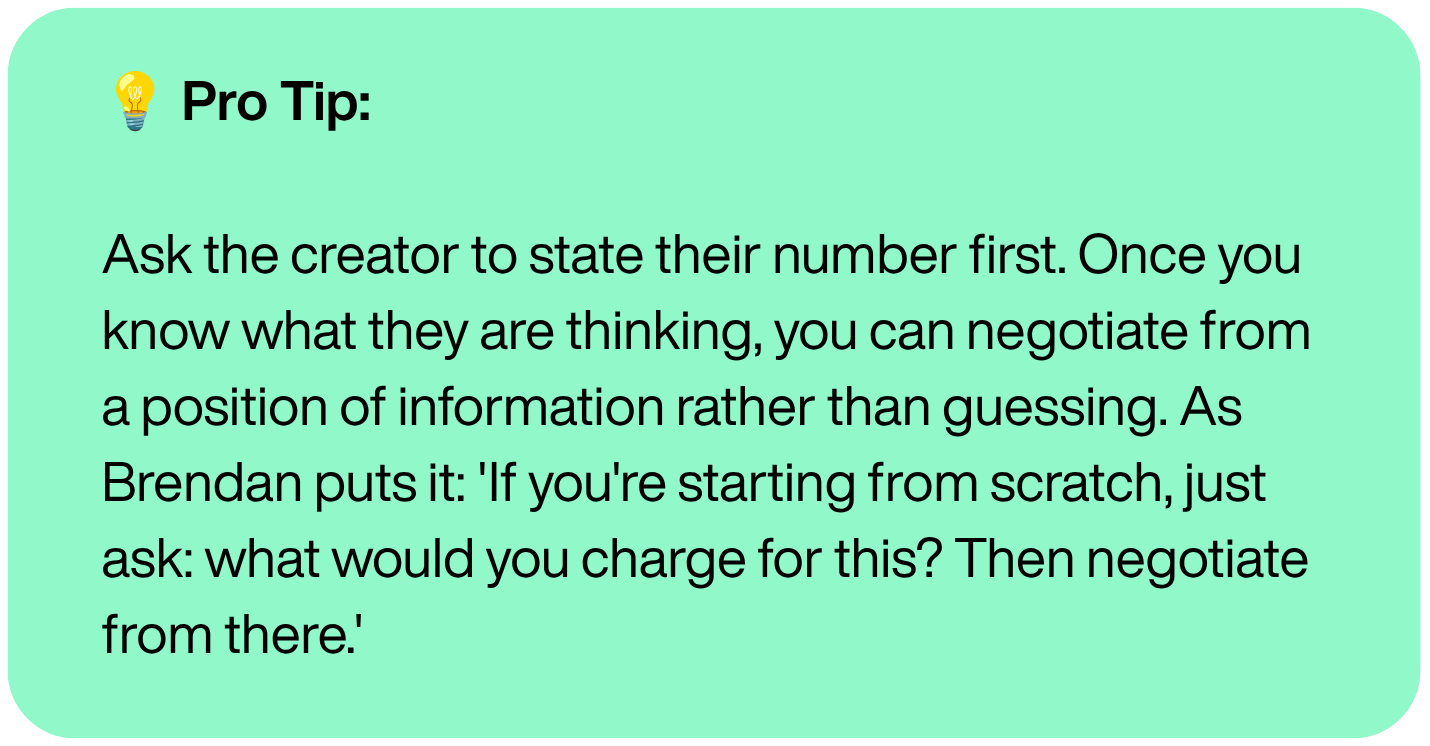
Step 8: Write a Brief That Doesn't Over-Script
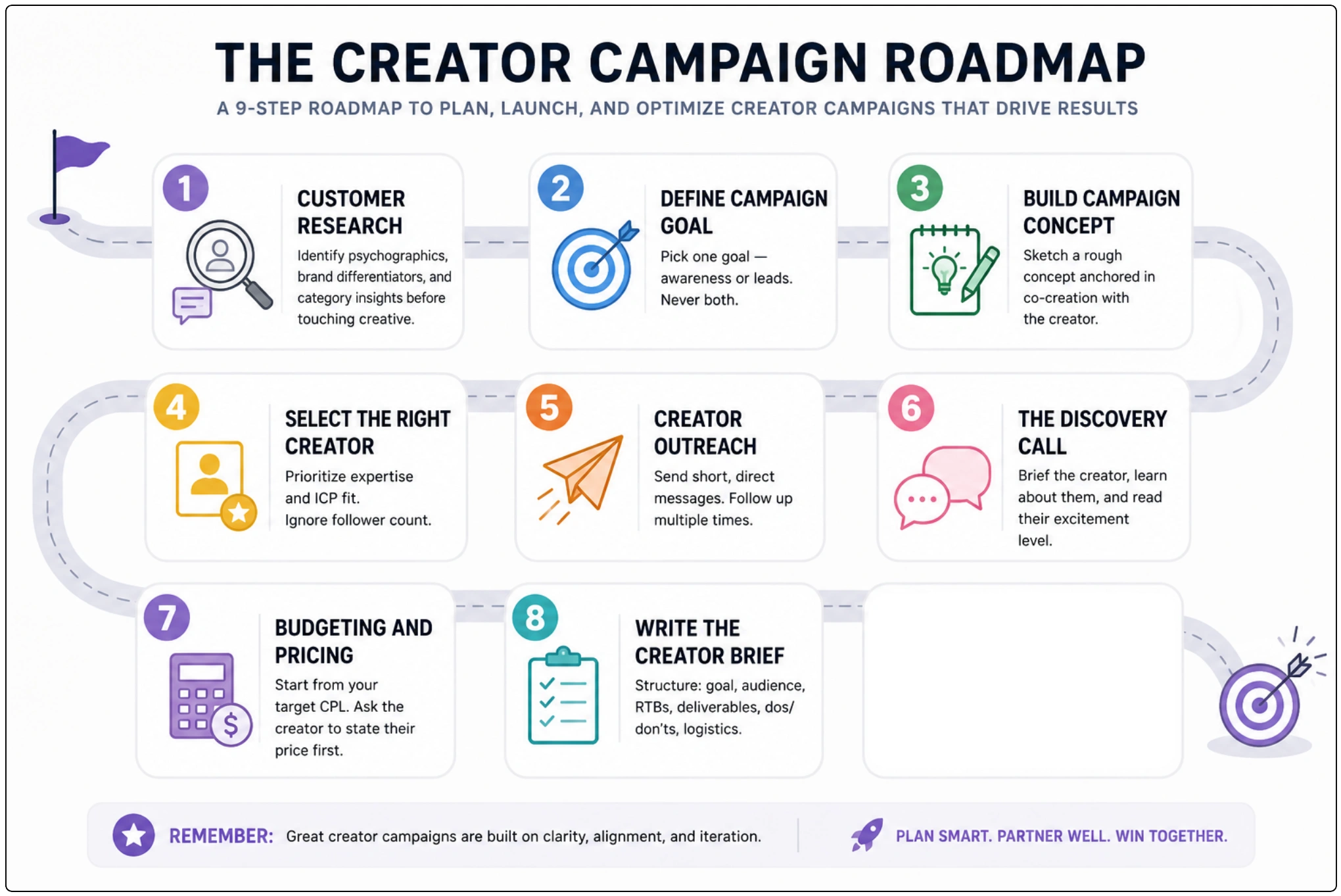
The brief is not a script. It is a creative framework. The goal is to give the creator enough structure to stay on message while preserving enough freedom for them to create in their authentic voice.
A brief that over-specifies usually produces content that feels corporate and stiff. A brief that under-specifies produces content that might be great but misses the marketing objective entirely. Brendan's structure threads that needle.
The Brief Structure Brendan Uses
1. Campaign overview: What is this campaign about and what is the goal?
2. Target audience: Who are we trying to reach? Be specific — not 'marketers' but 'demand generation managers at B2B SaaS companies with 50 to 500 employees.'
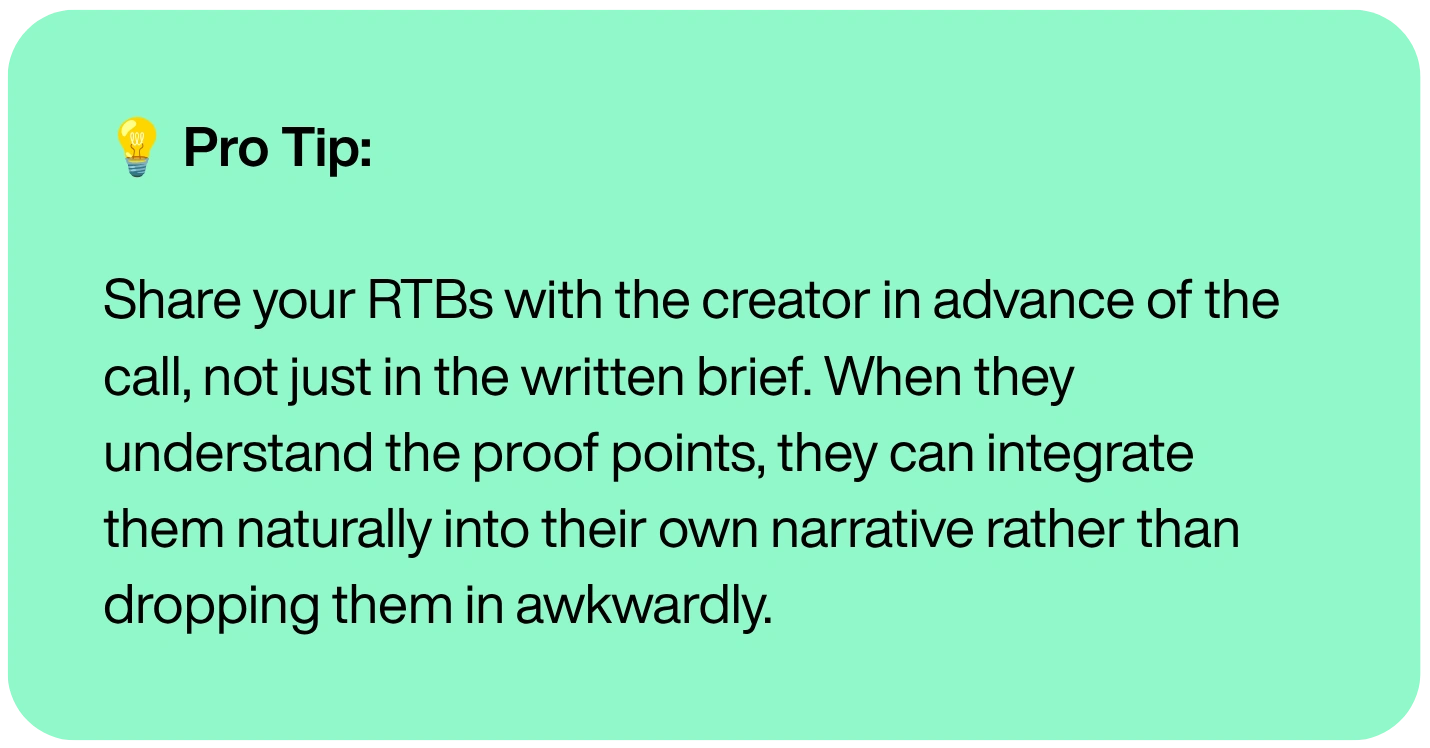
3. Reasons to believe (RTBs): The three proof points or statistics that support the key message. These are the claims the creator can credibly make on behalf of the product.
4. Deliverables: What exactly is the creator being asked to produce? How many posts, what formats, by when?
5. Dos and don'ts: What must be included (brand name, key claim, CTA)? What must be avoided (competitor mentions, specific claims you cannot legally make)?
6. Logistics: FTC disclosure language, required hashtags, UTM codes, landing page URLs.
The brief should be short enough that a creator reads the whole thing, and specific enough that there is no ambiguity about the mandatory elements. In practice, two to three pages is usually the right length.
Step 9: Track Performance by Spend, Not Just Volume
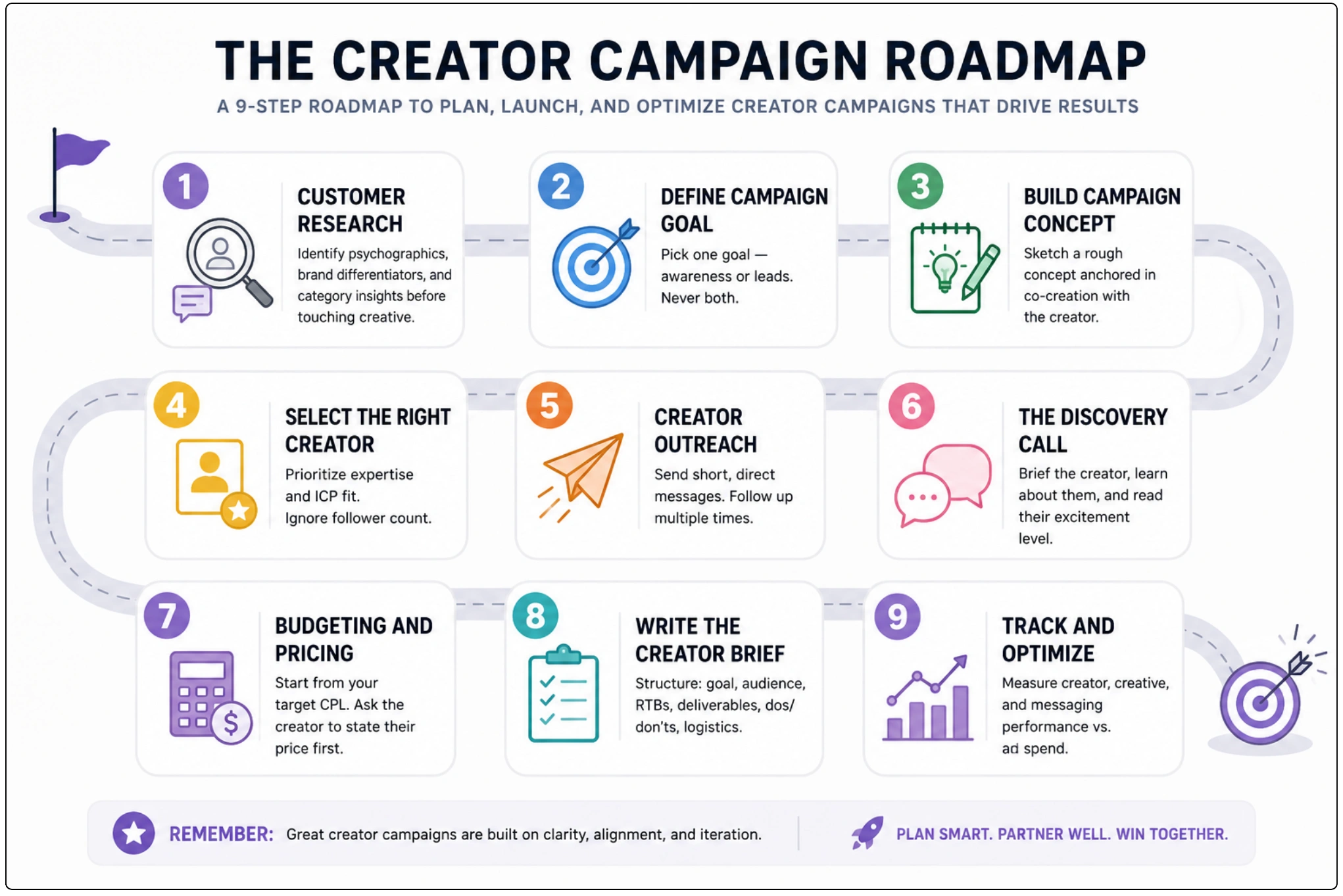
Most influencer campaigns are measured on the wrong things. Total impressions. Total likes. Aggregate engagement rate. These numbers can look good and still represent a campaign that is not generating business results.
Brendan tracks three things, and he tracks all three in context of the media spend behind each creator — not in isolation.
1. Creator Performance
Which creators are delivering results relative to the media spend behind them? A creator who generates 500 leads with $10,000 in ad spend behind their content is outperforming a creator who generates 300 leads with $5,000 in spend — even though the second creator's absolute numbers look better.
Always evaluate creator performance as a ratio of output to input.
2. Creative Performance
What type of content is working? Is long-form text outperforming video? Are document carousels driving more link clicks than single-image posts? Is the question-hook format generating more comments than the story-hook format?
These signals tell you what to ask for in the next round of content — both from the high-performing creator and from new creators you bring into the program.
3. Messaging Performance
Which RTBs (reasons to believe) and CTAs are resonating? If one proof point is generating significantly more engagement and conversions than the others, it tells you something important about what actually matters to your audience.
This feeds back into Step 1 — customer research — and informs the brief for every subsequent campaign.
The 80/20 Rule in Practice
The 80/20 rule appears consistently in LinkedIn influencer campaigns, especially at the lower funnel. A few weeks in, usually one or two creators are clearly outperforming the rest.
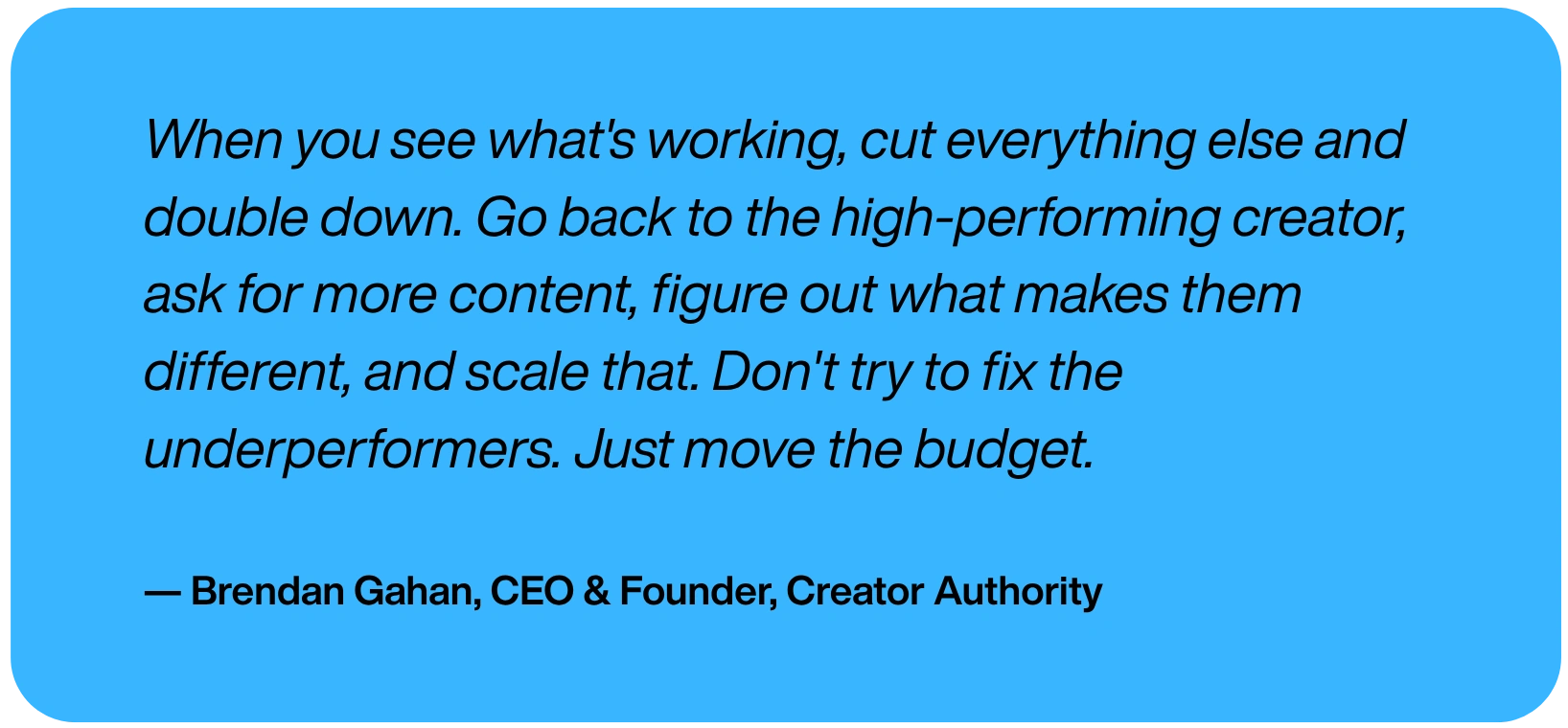
Favikon's campaign tracking and analytics tools give you a live dashboard view of all the key metrics — total engagement, EMV, engagement by post type, and creator-level performance breakdowns — so you can make optimization decisions based on data rather than instinct.
Tracking Sentiment and Awareness Campaigns
For awareness campaigns, traditional conversion metrics do not fully capture what is happening. Brendan recommends tracking comment sentiment — not just comment volume. What are people saying in the comments? Are they expressing recognition, skepticism, enthusiasm? Are they tagging colleagues, sharing their own experiences, or asking follow-up questions?
High-quality comment engagement from ICP-profile accounts is one of the strongest signals that an awareness campaign is landing with the right audience.
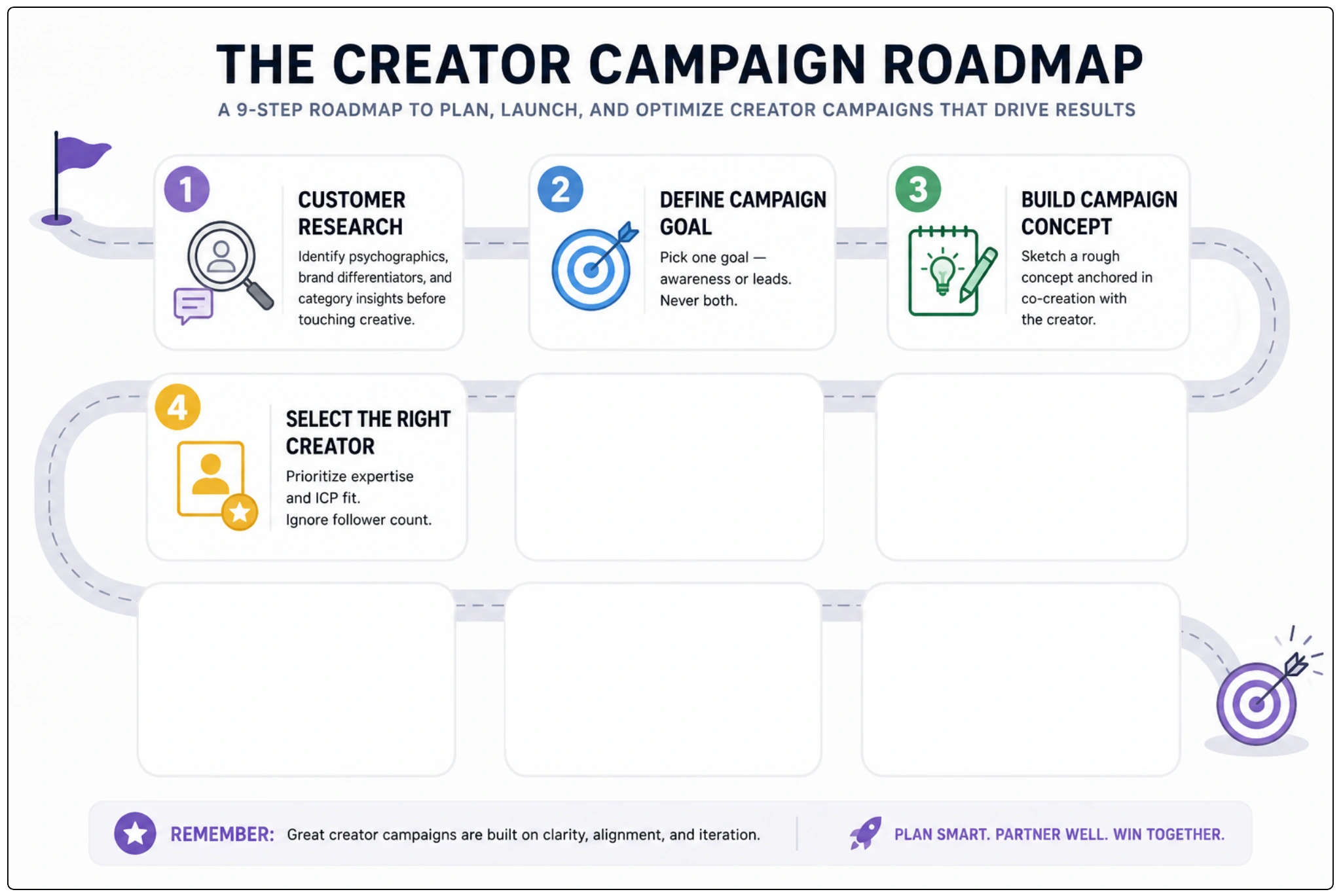
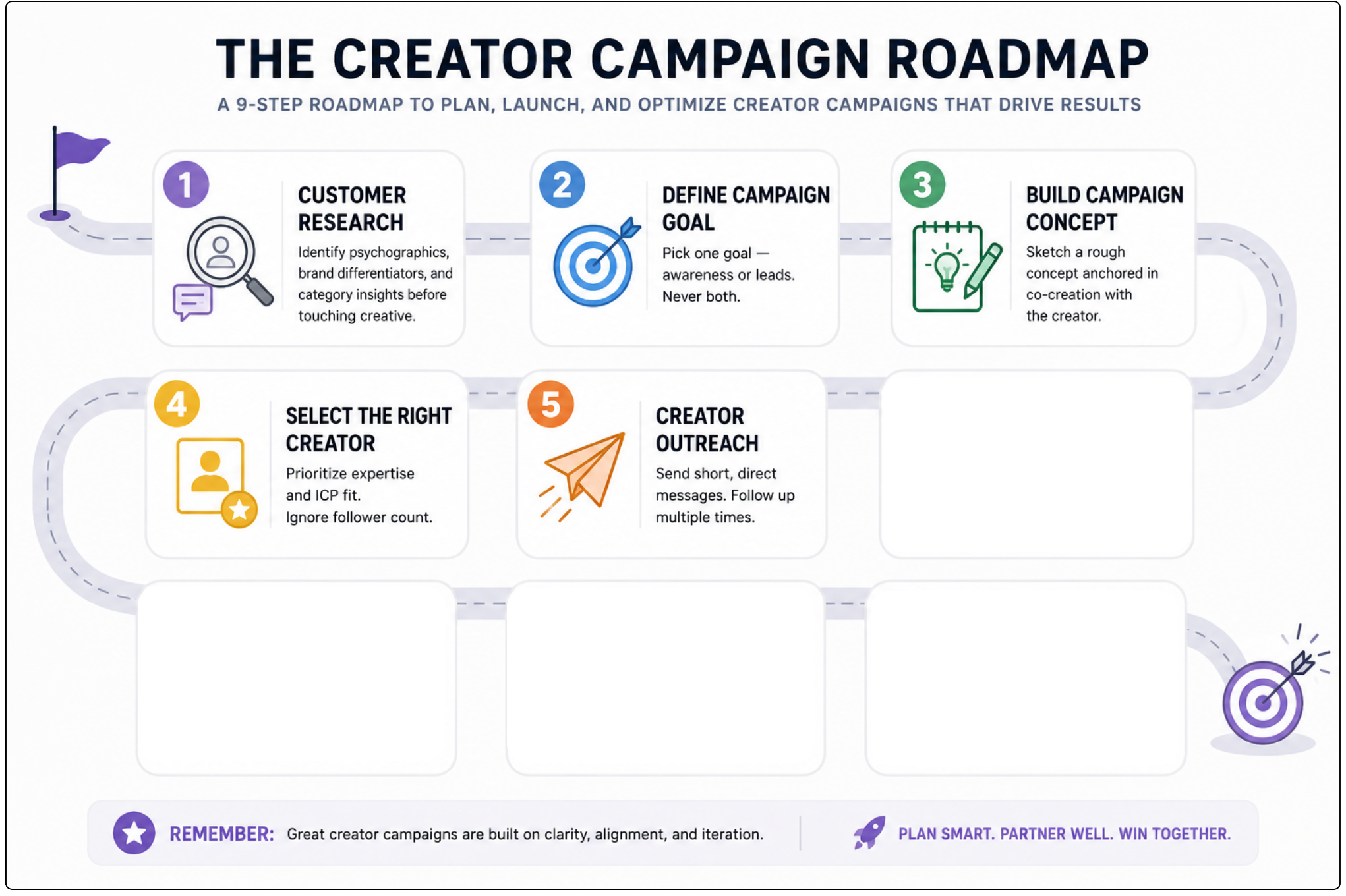
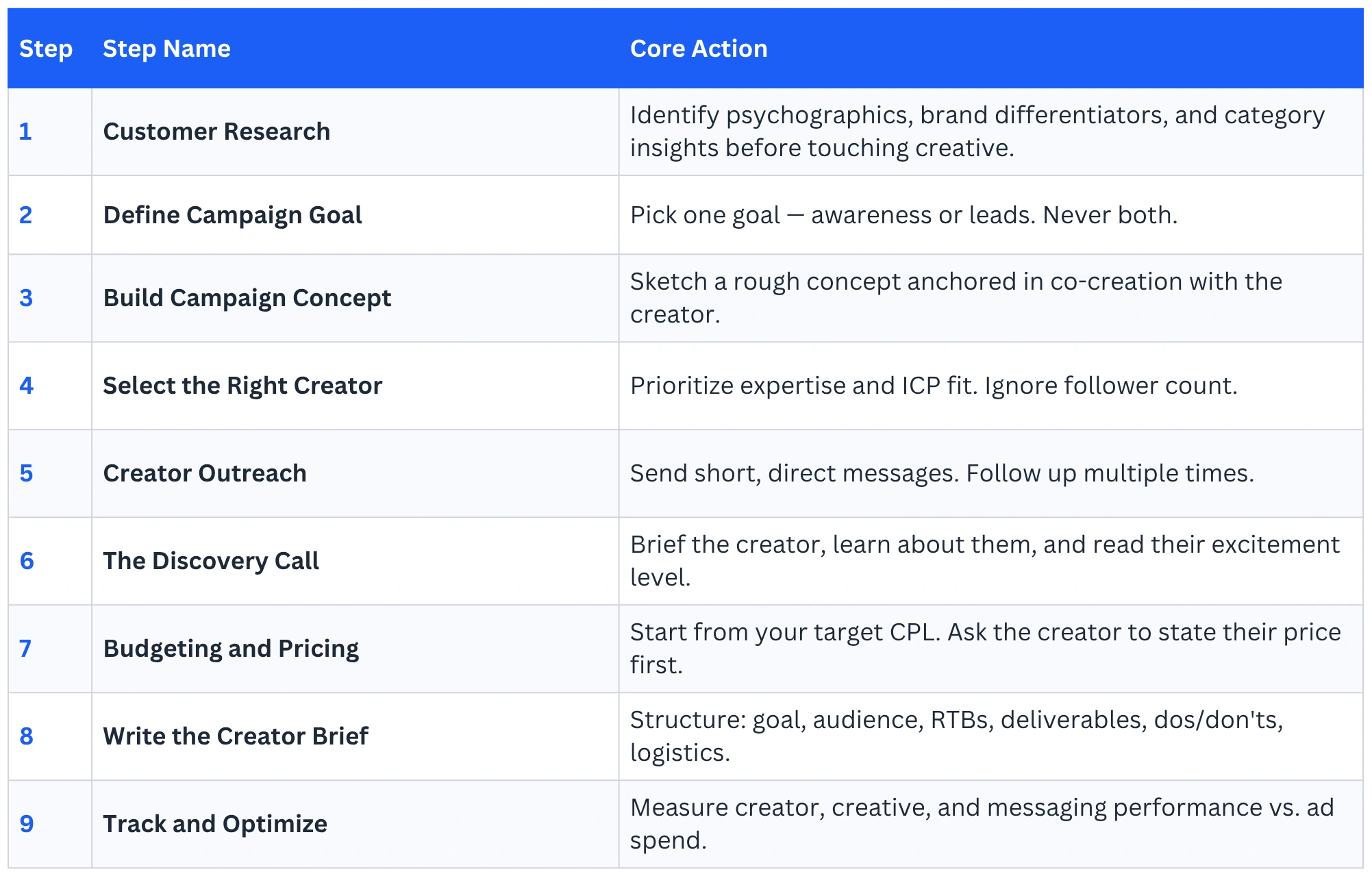
The 9 Steps at a Glance
How to Get Started
The framework Brendan has laid out is not theoretical. Every step maps to a concrete action you can take with the tools and information available today.
The biggest barrier is not budget or access to creators — it is the willingness to be systematic. Most LinkedIn influencer campaigns underperform because they skip the research, define fuzzy goals, skip the vetting call, or try to track everything without prioritizing the metrics that actually matter.
If you follow these 9 steps in sequence, you are already ahead of the vast majority of brands running LinkedIn creator campaigns.
To find and evaluate LinkedIn creators, start with Favikon's AI influencer search tool — filter by industry, audience seniority, and engagement quality to build your shortlist quickly. Use Favikon's creator analytics to vet Authenticity Scores and validate ICP alignment before outreach. And use Favikon's campaign management platform to handle outreach, approvals, and performance tracking in one place.
Put the framework to work
You've got the full 9-step process. The fastest next step is building your LinkedIn creator shortlist.
→ Start your creator shortlist here
Also See 👀
🏆 HOW TO FIND X (TWITTER) INFLUENCERS?
🏆 HOW TO ANALYZE INFLUENCER FOR FREE
HOW DOES FAVIKON RANK INFLUENCERS?
Others articles