The Ultimate Guide to B2B Influencer Marketing: Strategy, Creator Discovery, Outreach & ROI (2026)
B2B influencer marketing helps brands build trust, reach decision-makers, and generate qualified leads through trusted creators. This complete 2026 guide covers strategy, creator selection, campaign execution, and performance measurement.


Investment in creator marketing on LinkedIn grew 171% year over year, and 61% of B2B marketing leaders plan to increase their creator content spend this year. LinkedIn’s own research explains why: 87% of B2B buyers consult thought leaders when they make purchase decisions, and 82% say creator content directly influences them.
Most guides stop at that statistic. This one does not, because the numbers are the easy part. The hard part is knowing what to do on Monday morning.
This guide walks through the B2B Creator Loop, Favikon’s synthesis of how the strongest B2B creator programs actually run: strategy, discovery, selection, vetting, outreach, measurement, and then back into strategy. It is built entirely from primary research, including Brendan Gahan’s framework behind campaigns for Notion and Klaviyo, a $12,000 program that produced $1.1 million in pipeline, a pricing dataset of 141 transacted deals, and a first-party audit of how Anthropic runs Claude’s own LinkedIn program. Real names, real numbers, real campaigns, all the way down.
What Is B2B Influencer Marketing, and Why Does It Work Right Now?
B2B influencer marketing is the practice of partnering with credible industry creators, usually practitioners with a professional audience rather than entertainers, to reach a business buying committee through a voice that committee already trusts. In B2B it functions less like advertising and more like borrowed credibility.
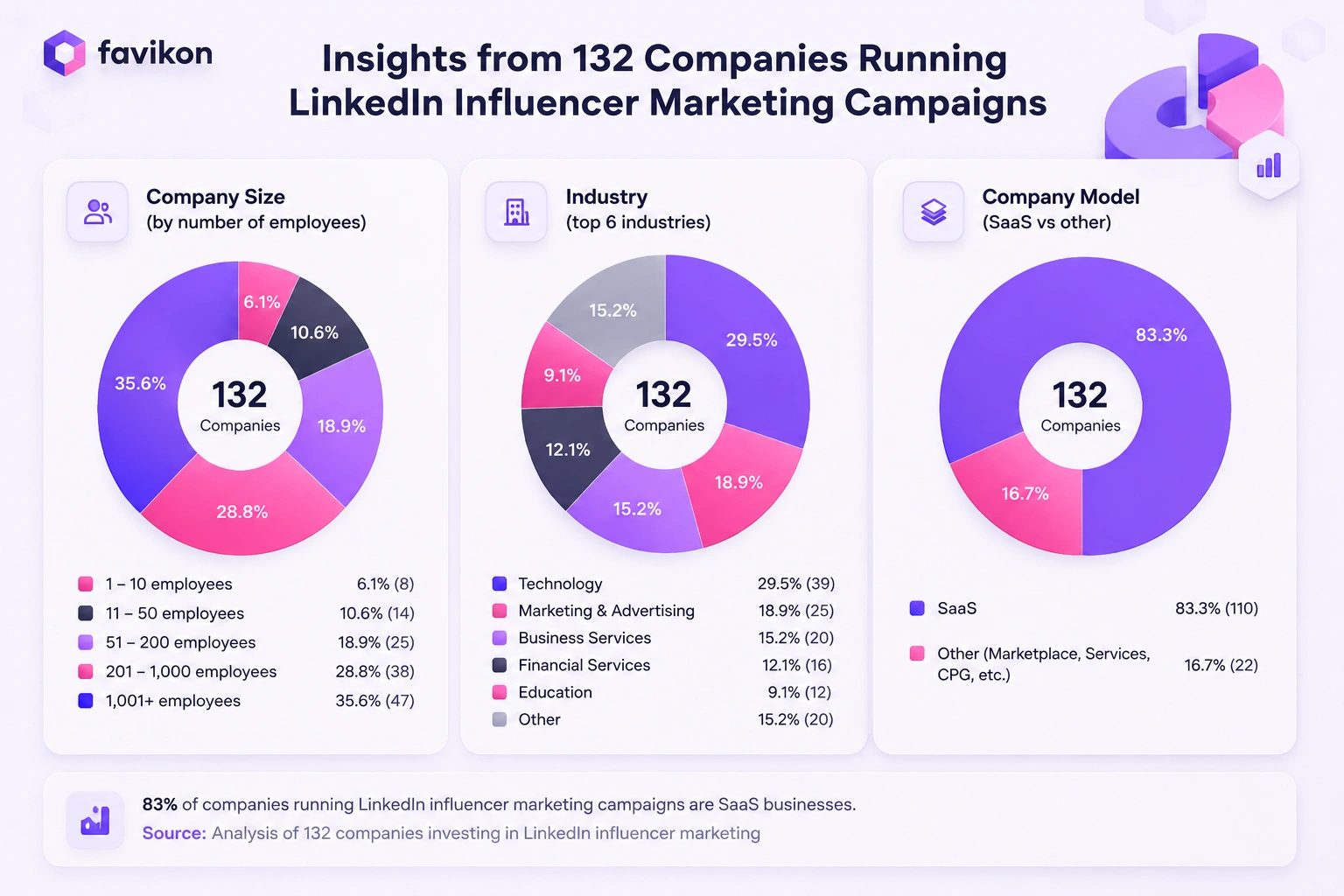
The returns hold up under scrutiny. Ogilvy and Influencer Marketing Hub put the average return at $5.20 for every $1 spent. What almost no other guide can add is who is actually doing it. Favikon analyzed a sample of 132 companies running LinkedIn creator campaigns and found the market is far less experimental than it looks from the outside:
• 83% were SaaS companies. This is a software-led discipline first, with agencies, consultancies, and service firms following.
• 31% were AI-first companies, meaning their core differentiator is an AI capability. That concentration makes sense: most of their buyers are problem-unaware and are not searching for a solution yet, so a trusted creator explaining the problem does work that search advertising cannot.
• Fortune 500 names are already in. Amazon, Adobe, and IBM all run creator campaigns on the platform.
Why B2B Is Structurally Different From B2C
Four things change once the buyer is a company rather than a person.
The audience is qualified, not broad. A creator with 8,000 followers who is genuinely respected among CFOs will outperform a creator with 80,000 followers whose audience is scattered across industries. The first earns engagement from people who can sign a contract. The second earns vanity metrics.
Nobody buys alone. B2B purchases run through a committee, so a single post rarely converts. It moves one stakeholder slightly closer to advocating internally, which is why measurement in B2B is genuinely harder (see Stage 5).
Trust beats reach. Virality is close to irrelevant when your total addressable audience is a few thousand demand generation managers.
The economics are unusually good on LinkedIn. Sponsored posts from LinkedIn creators run at roughly 15 to 20% of the average LinkedIn CPM through the thought leader ad format. Brands get the trust of creator content at a fraction of the cost of cold display advertising.
If you want the full picture of who is investing and in which categories, read the 132-company dataset behind these numbers. For where the discipline is heading next, we cover nine trends shaping 2026 later in this guide.
The B2B Creator Loop: The 7 Stages of a B2B Creator Program
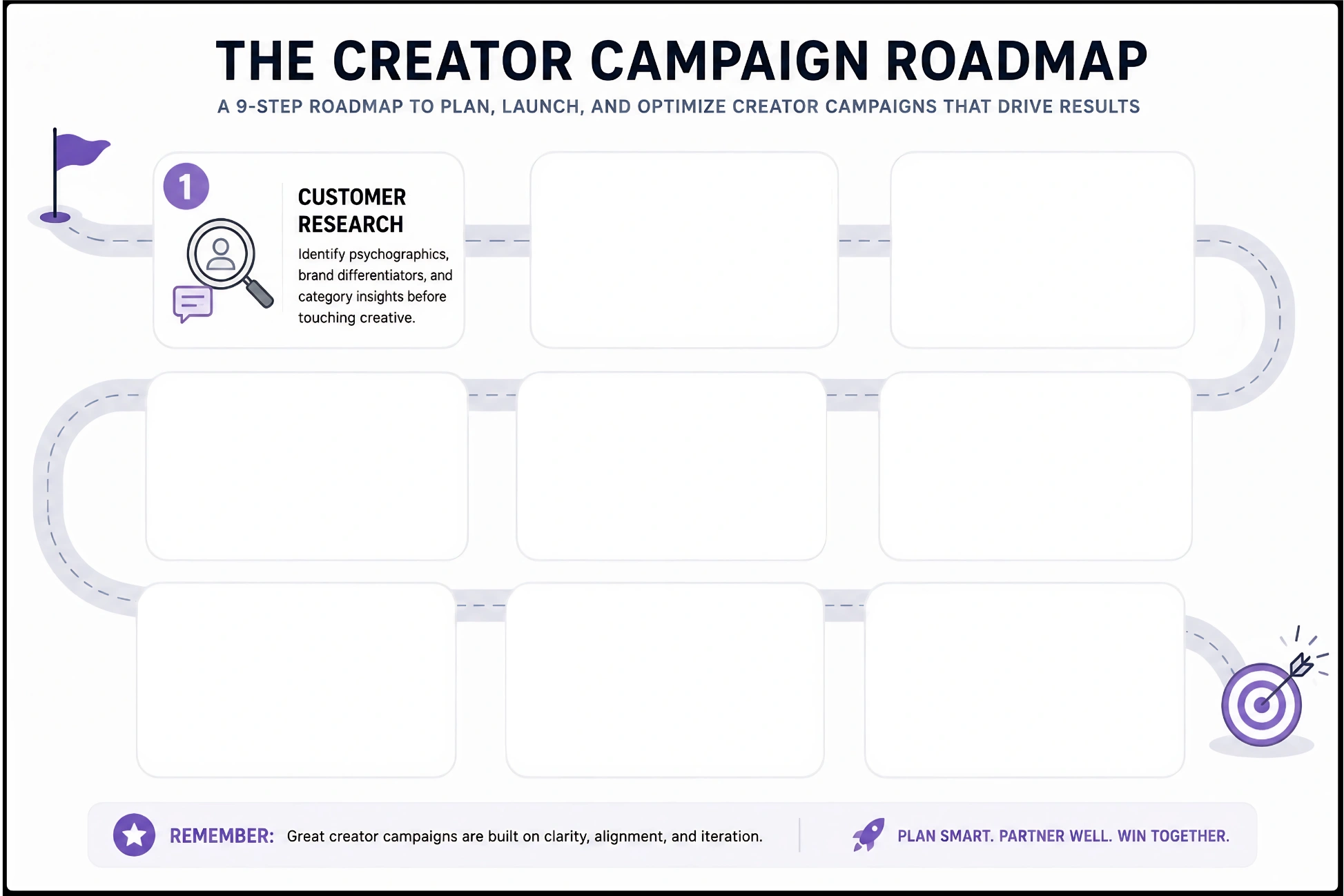
Nearly every framework in this category, including our own earlier ones, is written as a linear checklist. You do the nine steps, the campaign ends, and the document goes in a drawer. That is not how the programs that work actually behave.
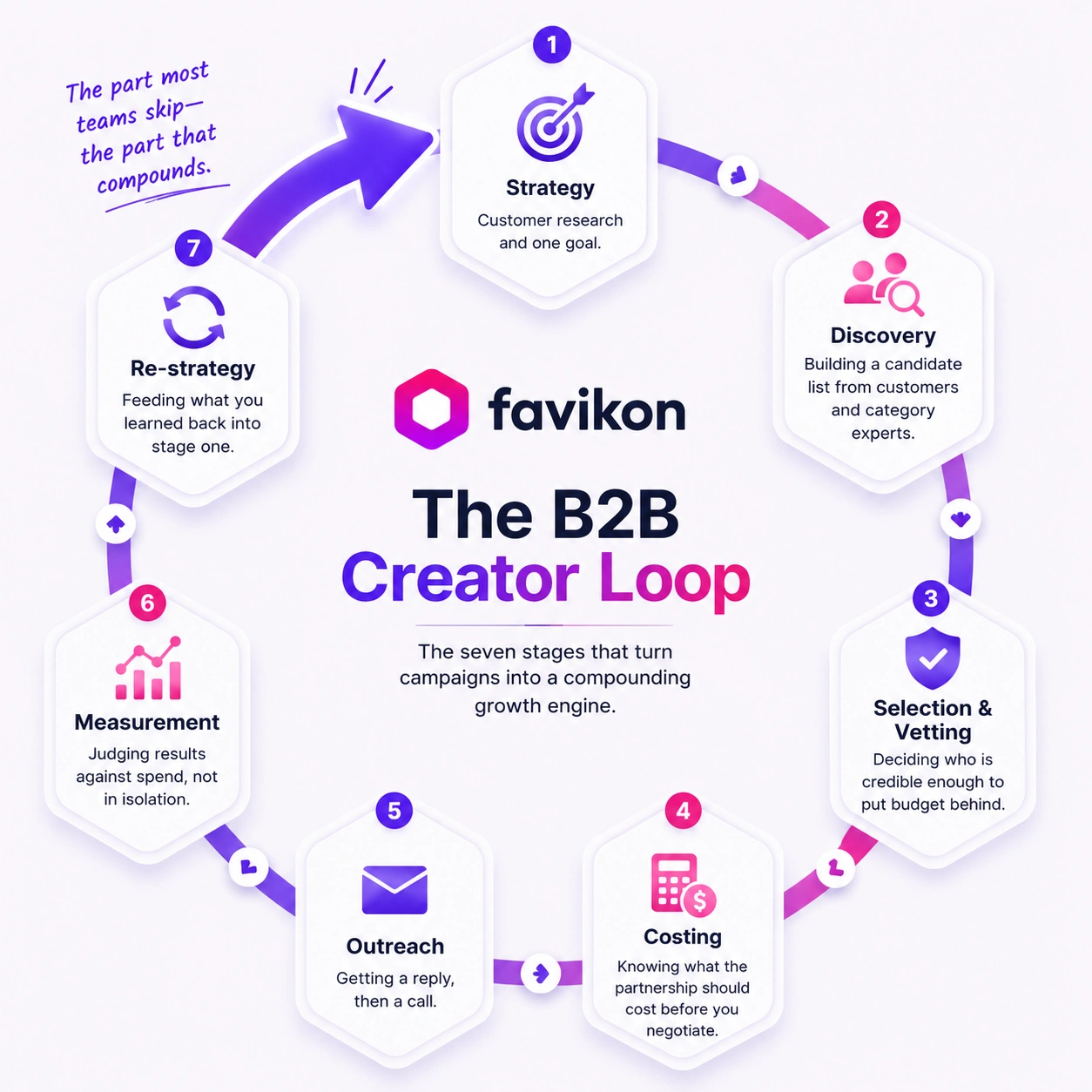
The programs that compound run as a loop:
1. Strategy. Customer research and one goal.
2. Discovery. Building a candidate list from customers and category experts.
3. Selection and vetting. Deciding who is credible enough to put budget behind.
4. Costing. Knowing what the partnership should cost before you negotiate.
5. Outreach. Getting a reply, then a call.
6. Measurement. Judging results against spend, not in isolation.
7. Re-strategy. Feeding what you learned back into stage one.
Stage 7 is the part most teams skip, and it is the difference between running campaigns and building a program. The rest of this guide is one section per stage.
Stage 1 of the Loop: Build the Strategy Before You Look at a Single Creator
Brendan Gahan is emphatic that customer research comes first. Not creator research. Not a shortlist. Customer research.
That ordering carries weight because of who is saying it. Gahan has spent more than 18 years in the discipline and ran one of the first YouTube creator activations in 2006, before the category had a name. He founded Epic Signal, which Mekanism acquired in 2015, was named to Forbes 30 Under 30 in 2012, and founded Creator Authority in 2023 as the first agency dedicated exclusively to LinkedIn influencer marketing. In April 2026 Creator Authority became an official LinkedIn Marketing Partner, the first creator-focused agency to earn that designation. His client roster includes SAP, Notion, Dropbox, HubSpot, Webflow, Upwork, Amazon, and Canva.
Step 1: Do the Customer Research
Four inputs, gathered before anything else happens:
• Psychographic profile of the buyer. What motivates them, what frustrates them, what they are trying to accomplish in their role.
• Brand differentiators. What your product does that no competitor does as well.
• Category dynamics. The dominant narrative in your category right now, and what buyers have become skeptical about.
• Customer language. How your best customers describe the problem, in their words rather than your positioning deck’s words.
Gahan anchors his walkthrough to a hypothetical A/B testing tool called AB Testy. The research surfaces a specific insight: most marketers run tests without statistical rigor, call winners too early, waste budget on losing variants, and lose revenue as a result. That single sentence becomes the strategic anchor for every creator brief downstream.
The reason this step cannot be delegated or skipped is that everything after it inherits its quality. A weak insight produces a weak brief, which produces a post that reads like an advertisement, which produces nothing.
Step 2: Pick One Goal. One.
The most common failure Gahan sees is a campaign asked to do two jobs. Awareness and leads. Brand building and pipeline. Education and conversion. Optimize for two things and you get neither.
“You can do anything, but you can’t do everything.” Brendan Gahan, Founder, Creator Authority
The advice appears almost verbatim across three separate pieces of our research, which is a reasonable signal that it is the load-bearing idea in the entire discipline. The practical consequence is structural:
• A lead generation goal makes the campaign full-funnel by necessity. One asset has to educate, build credibility, and convert. Co-created content works best here: a research paper the creator contributed data to, a 30-day challenge built around how they actually use the product, a guide written in their voice rather than one with their face on the cover. The test is simple. If the audience would not want the asset without the creator’s name attached, the concept is not strong enough yet.
• An awareness goal makes the campaign deliberately one-directional. It does not need to convert. Its job is to be memorable in front of the right people.
Write the goal down in one sentence before you open a creator search tool. If you cannot, you are not ready for Stage 2.
For the complete version of this stage, read the full nine-step Brendan Gahan framework, and for the same strategy applied to real brands, see how Notion and Klaviyo run this exact playbook. If you are starting from zero with no budget history, influencer marketing for startups covers the earlier decisions.
Stage 2 of the Loop: Find Creators by Audience Match, Not Audience Size
The single most useful data point in this guide comes from Vector, a B2B SaaS company whose head of marketing, Jess Cook, ran a program with these inputs:
• 7 creators, made up of 3 existing customers and 4 category thought leaders
• Average follower count of 13,000
• $12,000 total budget
• One post per creator per month, for three months
The result was $1.1 million in pipeline.
When Favikon went looking, we found 17 of the 21 sponsored posts and calculated an average engagement of about 111 interactions per post across the six creators we could identify. That number would get a campaign killed at most companies. It produced seven figures of pipeline.
The lesson is not that engagement does not matter. It is that audience match matters more than audience size, and that the smaller your total addressable market, the more true that becomes. Vector sells to demand generation marketers and marketing executives. There are not many of them in the world, so modest engagement from exactly the right people is the correct outcome, not a warning sign.
The caveat matters too, and most guides omit it. If you sell a low-cost, high-volume product, total engagement becomes a genuinely useful metric again, because you need volume to grow. Judge the metric against your business model, not against a benchmark.
Where B2B Creators Actually Come From
Three sourcing paths, in the order Vector used them:
1. Your own customer list, first. Before you pay anyone, check whether any current customers already have an audience on LinkedIn or X. Three of Vector’s seven creators were customers. These partnerships start with genuine product experience already in place, which removes the largest risk in Stage 3.
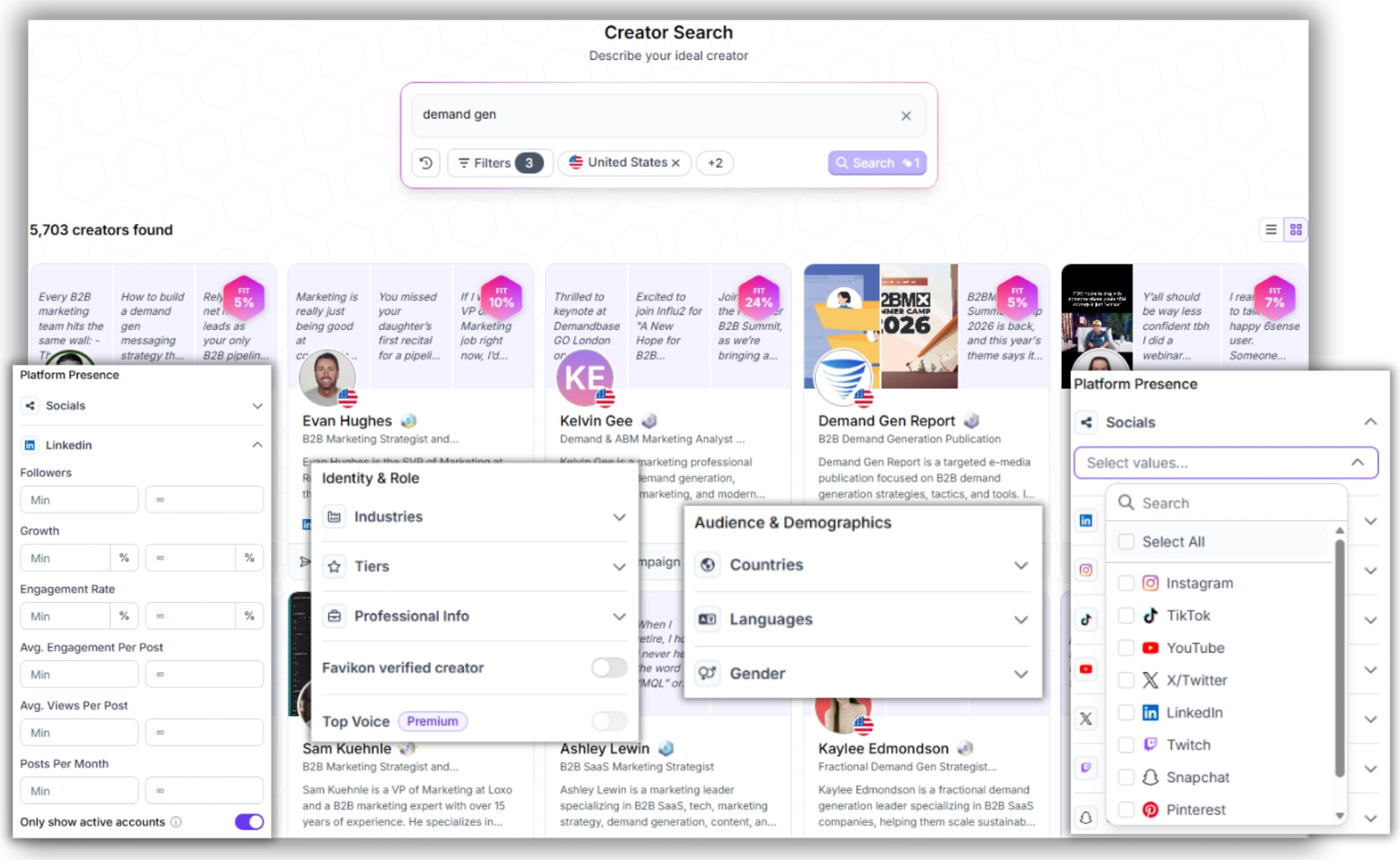
2. Category thought leaders. Look for people who have spoken at conferences, hosted webinars, or run recurring newsletters in your niche. Then filter by keyword, industry, niche, language, country, posting frequency, follower floor, and average engagement to build a list you can actually work through. In our own walkthrough, filtering for demand generation across sales and marketing in SaaS surfaced one of Vector’s actual partners within the first few results.
3. Parallel brand hashtags. Search the #brandpartner hashtag of a non-competing company that sells to the same buyer. You get a list of creators who have already done paid work, already understand disclosure, and are already comfortable with brand collaboration.
One Sourcing Hack Worth Stealing
Obaid Durrani of Clay recommends looking at who follows a creator and filtering that follower list by job title. It is the fastest way to confirm audience composition before you spend anything. When we applied it to Vector’s partners, every one of them showed a follower base concentrated in demand generation roles.
You can run all of this manually, or use Favikon’s AI influencer search tool to filter by industry, audience seniority, and engagement quality in one pass. For the full breakdown, read the complete Vector case study, and for a worked list of real names, see 20 proven LinkedIn micro-creators.
Stage 3 of the Loop: Vet for Credibility, Because Follower Count Tells You Almost Nothing
Two practitioners running very different programs arrived at the same conclusion independently.
Brendan Gahan does not factor follower count into creator selection at all. He looks at impressions, but only to size the media budget. Selection itself is about credibility and audience fit, because the model runs on paid amplification: you are buying the creator’s authority and then buying the distribution separately.
Mindaugas Petrutis, one of the first 50 employees at Lovable, where he built the B2B creator program from scratch during the company’s run to $6.6 billion in growth, regularly rejected creators with millions of followers.
The Selection Checklist
Synthesized from Gahan’s criteria, Lovable’s filter, and the SaaS playbook scorecard:
Lovable’s Four Questions
Petrutis reduced vetting to four questions, and the order is deliberate:
“Are you a good human being?” When a company is growing publicly, it attracts people chasing the opportunity rather than the product. You can tell which is which from how someone replies to a first message. Creators worth working with respond to what you actually said. The others send a rate card.
Will you use the product? Do not brief someone who has never touched it. Send access first and give them two weeks. If they come back with nothing to show, you have your answer before spending anything.
Can you find your own angle? Before any call, read the creator’s comment sections. What does their audience keep asking about? This is free customer research, and a creator who can name their own angle will produce content that sounds like them instead of like your brief.
Is there real enthusiasm? Gahan structures every vetting call partly to read excitement level. A lukewarm creator produces content that feels obligatory, and audiences detect that instantly. If the enthusiasm is not there on the call, move on rather than trying to convince them.
How to Read a Comment Section
This is the highest-signal, lowest-cost vetting move available, and it takes about four minutes per creator.
For a credible niche creator, roughly 70% of comments come from the ICP, and the comments themselves are substantive: people sharing their own experience or asking follow-up questions. Generic praise from accounts with no professional context is the opposite signal, regardless of volume.
Where the Authenticity Score Fits
Reading comment sections by hand does not scale past a shortlist. The Authenticity Score is Favikon’s signal for whether a creator’s engagement is genuine, combining expertise, engagement quality, content originality, and AI-content detection. A high score means the creator is not using engagement pods, is not over-relying on AI to produce posts, and has metrics that reflect real audience behavior.
That matters most at exactly this moment in the Loop, because you are about to put paid media behind this person’s content. Gahan’s recommendation is to look at three things together: ICP match, genuine category expertise, and a high Authenticity Score.
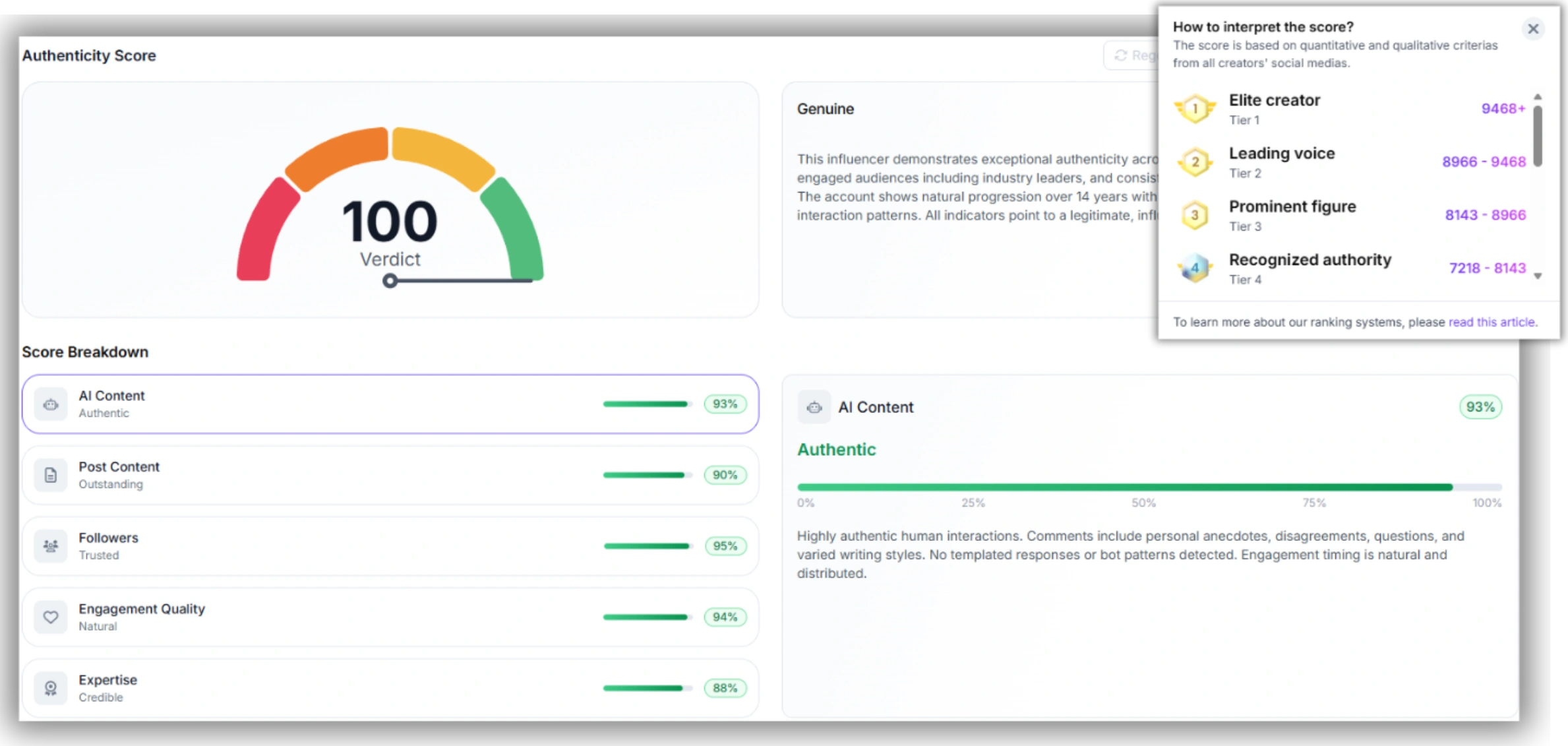
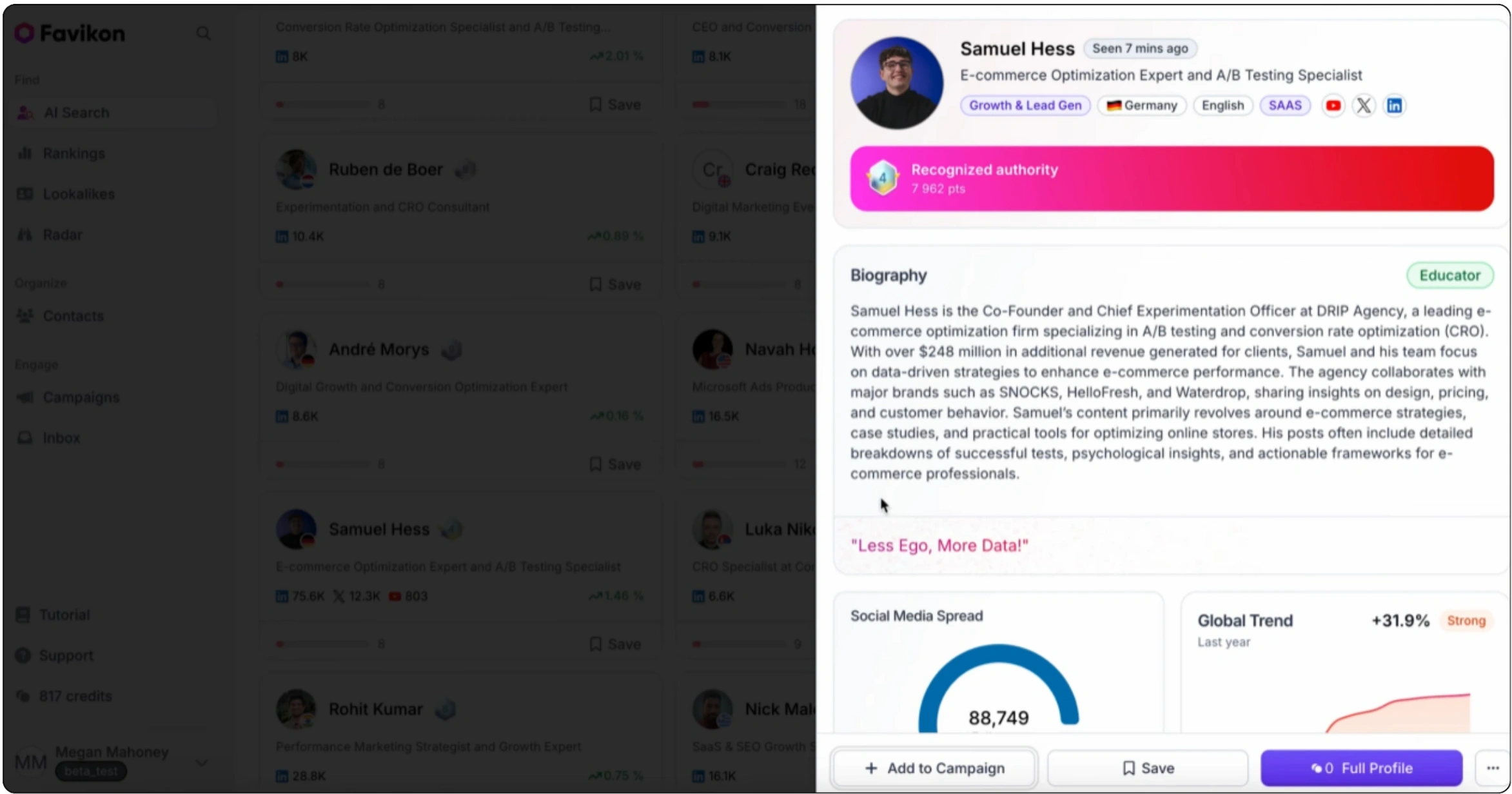
Vet before you reach out, not after. Check any creator’s Authenticity Score, audience composition, and engagement quality with Favikon’s creator analytics before a single message goes out.
For the full Lovable program breakdown, read how Lovable built its creator program. For the four types of micro-creator and when each is the right fit, see our LinkedIn micro-influencer guide.
Stage 3b: What a B2B Creator Partnership Actually Costs
Most sponsored B2B posts land between $200 and $2,000, based on Favikon’s 136-creator dataset. The more useful number is the transacted LinkedIn median of $798 across 135 real client deals in 2026.
That distinction is the whole point. A transacted median is what money actually changed hands for. Almost every pricing article you will find quotes declared rate cards, which are opening asks. The gap between the two is where budgets get set badly.
Three findings worth knowing before you negotiate:
1. Nano creators sometimes out-price micro creators, and they are right to. Our dataset includes a profile with 851 followers charging $2,400 per post. That looks absurd until you look at who those 851 people are. When the audience is close to a complete buying committee for a specific enterprise category, scarcity sets the price, not scale.
2. Geography moves the number more than most buyers expect. Austria out-prices both the UK and the US in our data. APAC LinkedIn CPMs run 30 to 60% below North America. Our 125-creator survey spans $550 in the UK down to $155 in India. Vertical compounds it further: FinTech audiences command roughly £341 CPM against £122 for marketing, and tech creators quote a median premium of about 60% over the all-niche average.
3. Format is a price multiplier, not a rounding error. A carousel adds 20 to 35% over a text post. Video adds 40 to 80%. Newsletter placements run 1.5 to 3 times a post. A speaking slot costs roughly 4 times a sponsored post.
For a first program, two anchors are worth holding in mind. A $15,000 to $25,000 pilot is a realistic first commitment. Nicole Ponce, who leads influencer marketing at Semrush, puts a properly resourced ongoing program at $20,000 to $25,000 per month including paid boosting. Smaller $5,000 tests are possible with nano creators, but spread them across several people rather than betting on one. Roughly 30% of posts underperform, and a single exceptional post tends to carry the return for the entire program.
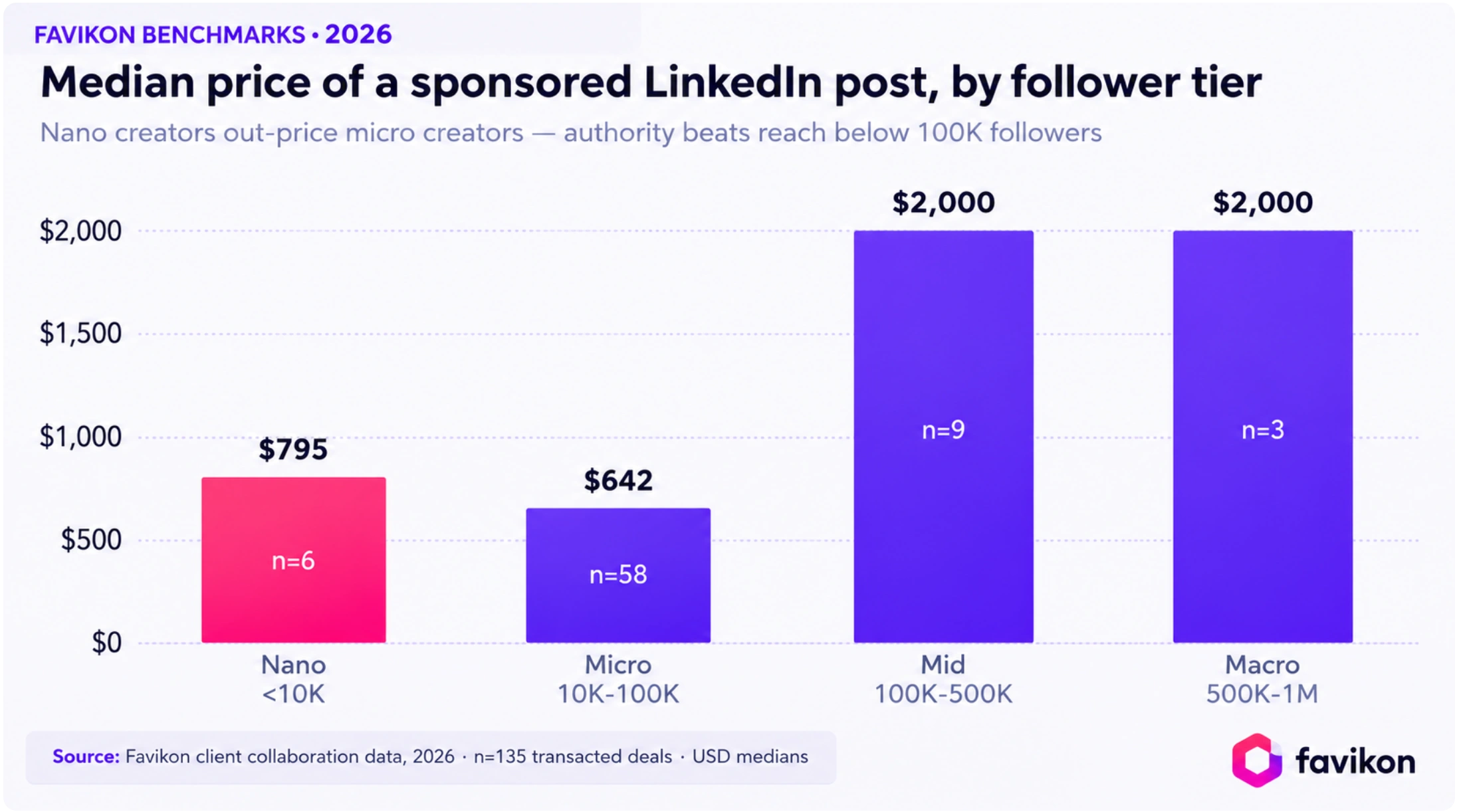
These are medians, and your creator is a specific case. Run the profile through our influencer price calculator, which combines rate data, engagement rate, follower count, geography, and Authenticity Score into an estimate before you open the conversation. For every benchmark table, including the full geographic and industry breakdowns, read the complete B2B influencer pricing guide.
Stage 4 of the Loop: Outreach That Gets Replies, Using Comment-Connect-Collab
Set expectations before tactics. General cold email reply rates average 5.8%, based on Belkins’ 2024 analysis of 16.5 million emails. That is the baseline any outreach advice is competing against, and it is why “just personalize your message” is not a strategy.
Automated outreach run through Favikon’s LinkedIn channel converts at 10 to 30%, depending on creator size and whether a follow-up is included. Sequences that warm up with a comment before the connection request land toward the higher end of that range.
The ceiling is higher still. Alex Llull at Perspective has reported an 80% reply rate from an approach built on commenting first.
Why Most LinkedIn Outreach Advice Fails Here
Nearly everything that ranks for LinkedIn outreach is a sales script. It was written to help SDRs book demo calls with cold InMail, then relabeled for creator work. The two jobs are not the same. Sales outreach measures success in booked meetings and treats every reply identically. Creator outreach is asking something different and more personal: whether someone with a reputation wants to be publicly associated with your brand.
The Comment-Connect-Collab Method
Josie Renna’s three-touch sequence, built specifically for LinkedIn creators, splits the first ask into three separate moments so that by the time you request a collaboration, you are not a stranger.
Touch 1: Comment. Find a recent post and leave a specific, substantive comment that responds to what the creator actually said. This does two jobs: it puts your name in front of them before your request arrives, and it gives you something concrete to reference next.
Touch 2: Connect. Send a short connection request that references the comment or the post. LinkedIn caps the connection note, so brevity is enforced.
Connection request:
Touch 3: Collab. Once the request is accepted, the pitch goes out as a normal DM. This is why the sequence exists: you get to skip paid InMail entirely, which is cheaper and reads as less transactional to someone deciding whether to work with you.
First DM:
One follow-up. Never two.
Follow-up, day 5 to 7:
A second unanswered message reads as pressure rather than interest.
Do Not Ask About Rates in the First Message
Saad Sarwar, co-founder of a talent management agency, analyzed more than 5,000 pitches and found that asking for rates in the first message cuts close rate roughly in half. The reason is straightforward: a rate request frames the conversation as a transaction before the creator has decided whether they care about your product. Get the call first. Price the deal there.
Gretta Van Riel, founder of SkinnyMe Tea, The 5th, and Drop Bottle, adds the longer-horizon version of the same idea: engage with a creator’s content genuinely for a period before the first ask, so the outreach arrives from a name they recognize rather than a name they do not.
One more piece of structure worth borrowing from Gahan: as soon as a creator replies, get them on a call. Do not negotiate scope, deliverables, or price in a message thread.
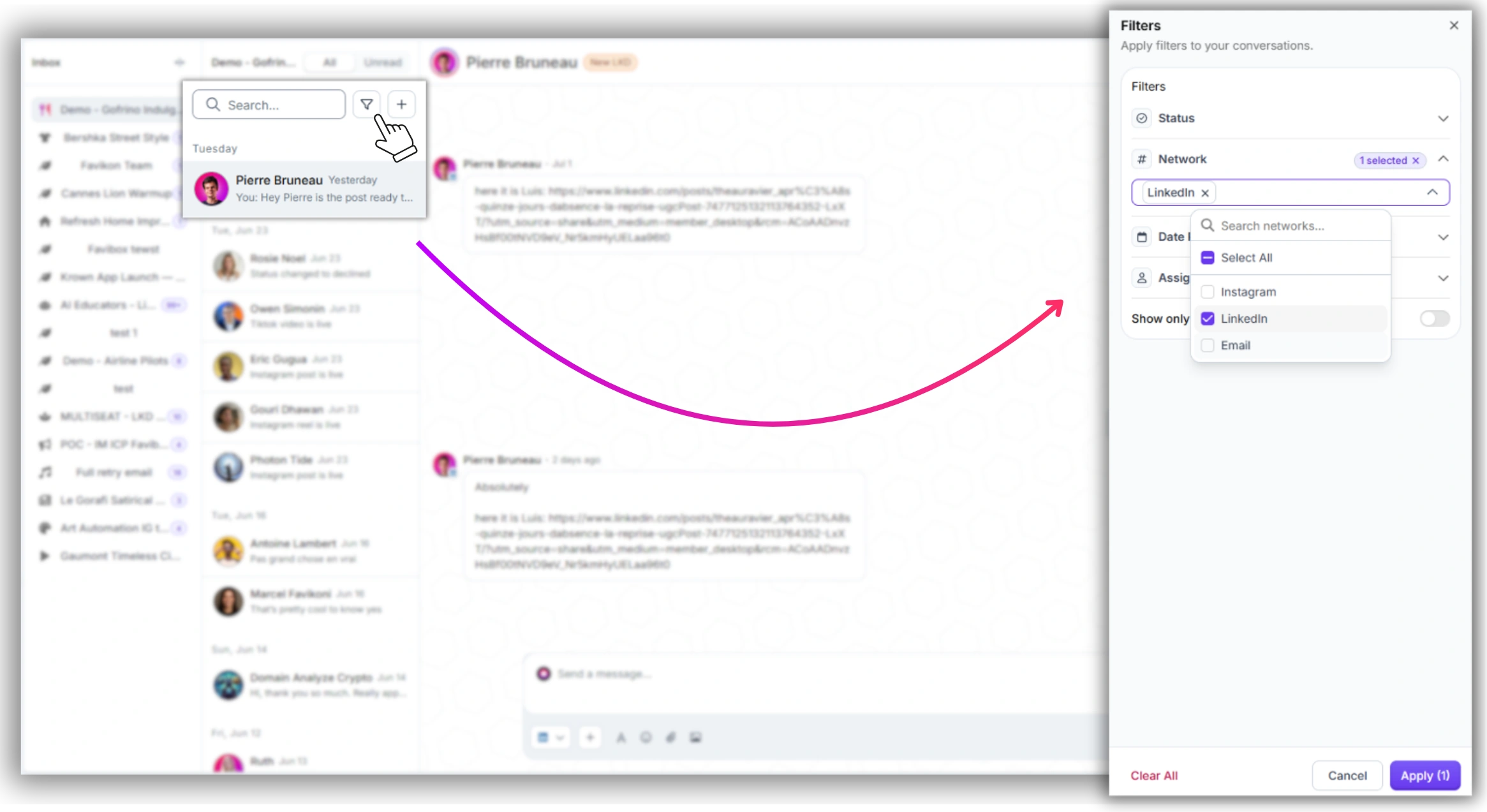
Run this sequence across your whole list, not one creator at a time. Favikon’s influencer outreach platform schedules each touch, holds the 5 to 7 day gap automatically, and tracks reply rates per sequence.
For the complete method with character counts and channel guidance, read the Comment-Connect-Collab method in full. For five more plug-and-play templates and the practitioner reply-rate data behind them, see outreach templates that actually get replies.
Stage 5 of the Loop: Measure Product Metrics, Not Applause
Both standard approaches to measurement break in B2B.
Last-click attribution breaks because the buying cycle is long and multi-touch. A creator’s post may be the reason a VP started paying attention in March, and the deal may close in September through a demo request that looks like direct traffic.
Total engagement breaks because it measures whether people enjoyed the post, not whether the right people acted on it. Vector’s posts averaged around 111 engagements and produced $1.1 million in pipeline. A campaign optimized for engagement would have cancelled it.
Measure the Funnel, Not the First 48 Hours
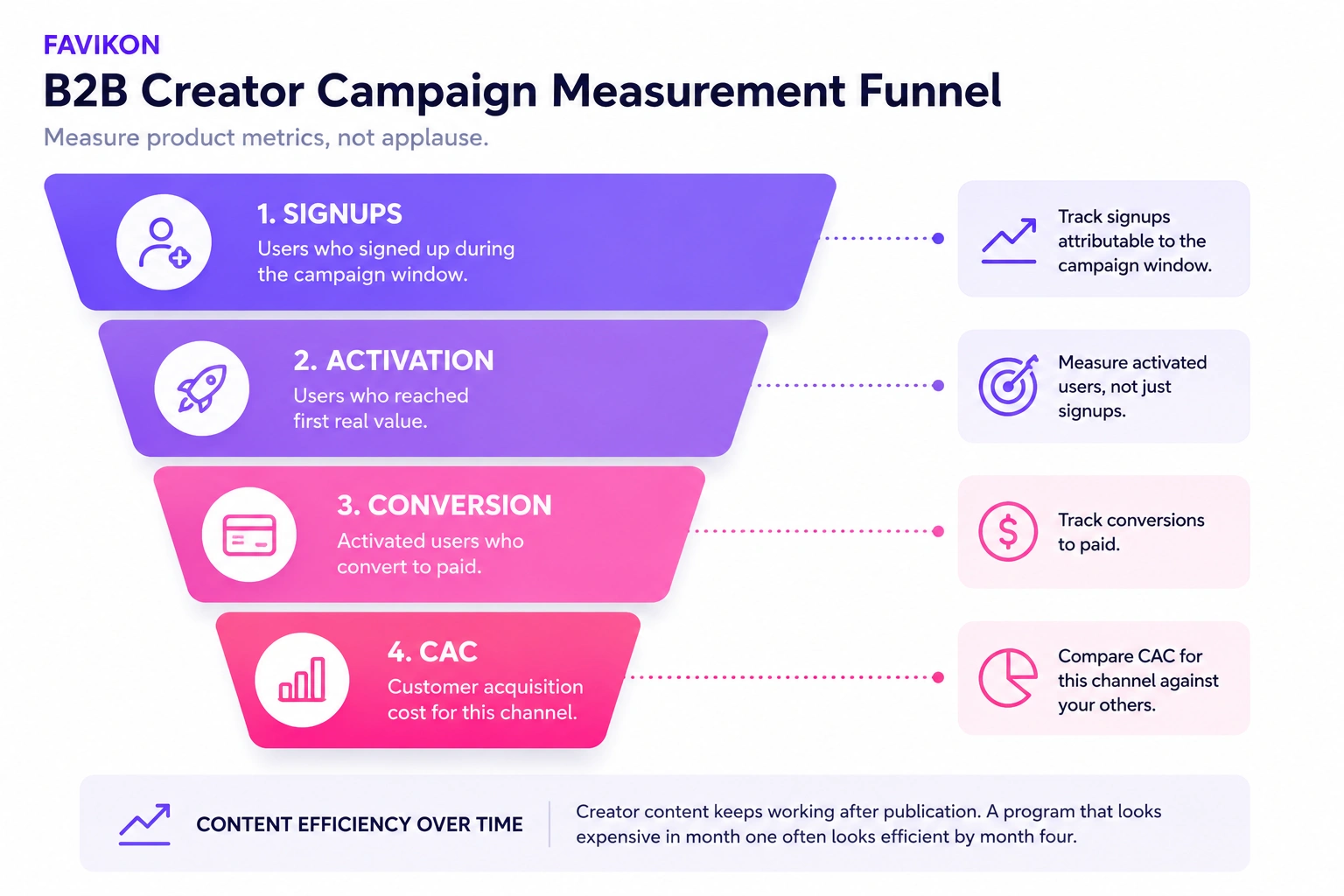
The framing Lovable used is the most transferable one in our research: measure product metrics rather than applause. In practice that means tracking a sequence rather than a number.
• Signups attributable to the campaign window
• Activated users, meaning people who reached first real value in the product
• Conversions to paid
• CAC for this channel against your others
• Content efficiency over time, meaning whether cost per activated user improves as the program matures
The last one is the metric that justifies a program rather than a campaign. Creator content keeps working after publication, so a program that looks expensive in month one often looks efficient by month four.
The Attribution Workaround Everyone Actually Uses
Jess Cook did no direct tracking on the Vector program. Instead she did two things:
1. Added a “how did you hear about us” field to the demo request form
2. Set up keyword alerts in the call recording software so mentions of creator names surfaced automatically
This shows up independently across multiple programs in our research, and it is the most common real-world answer to B2B’s broken tracking. Self-reported attribution is imperfect, and it is also frequently the only signal that connects a creator post to a closed deal. Add the field before the campaign launches, not after.
Judge Creators as a Ratio, Not a Raw Number
Gahan’s rule: always evaluate creator performance against the media spend behind them. A creator who generates 500 leads on $10,000 of amplification is outperforming one who generates 300 leads on $5,000, even though the second creator’s absolute numbers look worse.
He also tracks creative performance (which format is working) and messaging performance (which reasons to believe are resonating) as separate questions, because those two answers are what you carry into the next cycle.
Expect an 80/20 pattern. Within a few weeks, usually one or two creators are clearly outperforming the rest, particularly at the lower funnel. That is not a failure of selection. It is the normal shape of the distribution, and it is the reason to run a portfolio rather than a single bet.
For awareness campaigns, comment sentiment matters more than comment volume. Are people expressing recognition, skepticism, enthusiasm? Are they tagging colleagues? High-quality comments from ICP-profile accounts are the strongest available signal that an awareness campaign is landing.
For the full attribution model, including multi-touch tracking and attribution windows, read the complete SaaS attribution framework. To put creator-level performance next to spend in one view, use Favikon’s campaign reporting.
Stage 6 of the Loop: Turn Results Into the Next Strategy
Here is where the loop closes, and where most programs quietly stop.
Stage 5 produced three findings: which creators outperformed, which formats outperformed, and which reasons to believe resonated. Those are not a report. They are the inputs to your next Stage 1.
The messaging that generated the most qualified engagement tells you something your customer research did not: which of your proof points actually matters to a buyer. That belongs in the next round of customer research. The format that worked belongs in the next brief. The one or two creators who outperformed get more scope, and the underperformers get cut rather than renewed out of politeness.
Tom Boston, one of Storylane’s creator partners, reported that each of his consecutive sponsored posts outperformed the previous one on impressions. His explanation was not algorithmic luck. He was learning what resonated with his audience and refining each post accordingly. That is the compounding effect the loop is designed to capture, and it only appears if you commit to more than one post per creator.
The practical version, from the Vector program: give each creator a two to three post pilot rather than a single post. A single post is a poor sample. LinkedIn’s distribution is unpredictable, and the audience crossover between a creator’s consecutive posts is only around 15%, so most of the people who see the second post did not see the first. On Vector’s third post with one creator, a commenter said they were hearing about the product for the first time.
That is why this is a loop and not a checklist. A checklist ends. A loop gets cheaper and more accurate every time you run it.
Where to Run B2B Influencer Marketing: A Channel Comparison
LinkedIn is the default for most B2B programs, and the data supports that. It is not the only answer.
Two decisions follow from that table.
First, be honest about weak fits. TikTok and Instagram are not usually the right primary channel for an enterprise software purchase with a six-month cycle and a seven-person buying committee. They can be excellent for awareness and recruiting. Padding a channel plan to look thorough wastes budget you could put behind one more good LinkedIn creator.
Second, master one channel before adding a second. Christina Pearo, who runs social and influencer marketing at Slate, makes this point directly, and it is the more useful advice for any team running its first or second program. Channel depth beats channel breadth at every budget level below enterprise.
YouTube deserves one specific note, because it is the most underrated B2B channel in the set. A sponsored video keeps surfacing in search results and recommendations long after publication, which means the campaign has a tail that LinkedIn posts do not. Kristen Sesto’s approach of repurposing YouTube segments across other channels is a reasonable way to make the higher production cost work.
To go deeper on all seven channels with full pros and cons, read which channel is right for you. If you are hiring on LinkedIn specifically, our free find B2B influencers on LinkedIn tool is the fastest starting point.

Five Real B2B Creator Campaigns Worth Studying
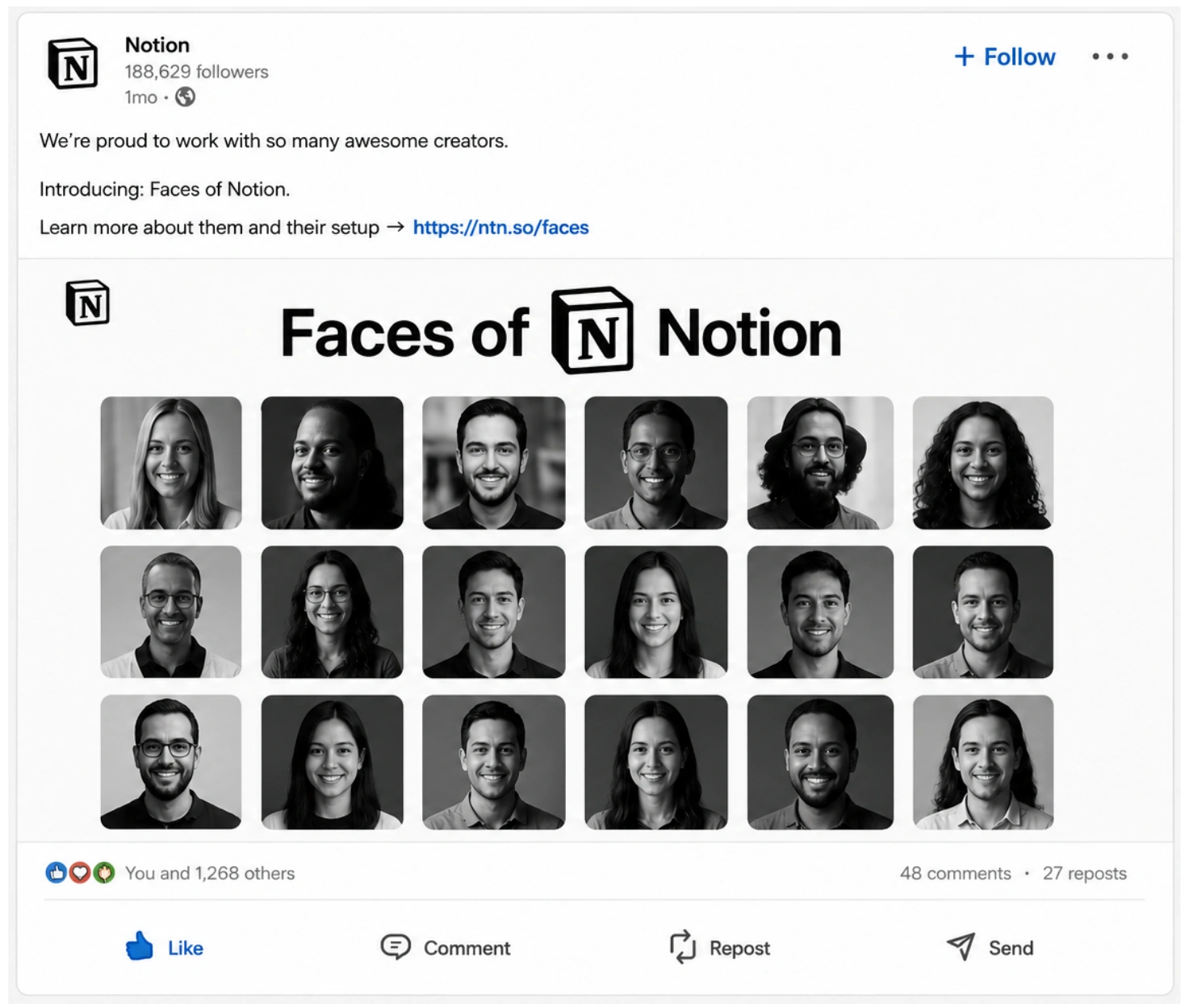
Notion Faces. More than 50 creators changed their LinkedIn profile pictures to a cryptic “LOADING…” image on the same day, then launched custom Notion Faces posts together around a New Year theme. The campaign produced over 20,000 engagements and, more importantly, more than 60 organic unincentivized posts from people who were never paid. Notion also sent physical gift boxes to participating creators, which is unusual enough for a software company that it became part of the story. AJ Eckstein, who ran the amplification, points to the prelaunch teaser as the mechanic that did the work: the anticipation was the campaign, and the launch was the payoff.
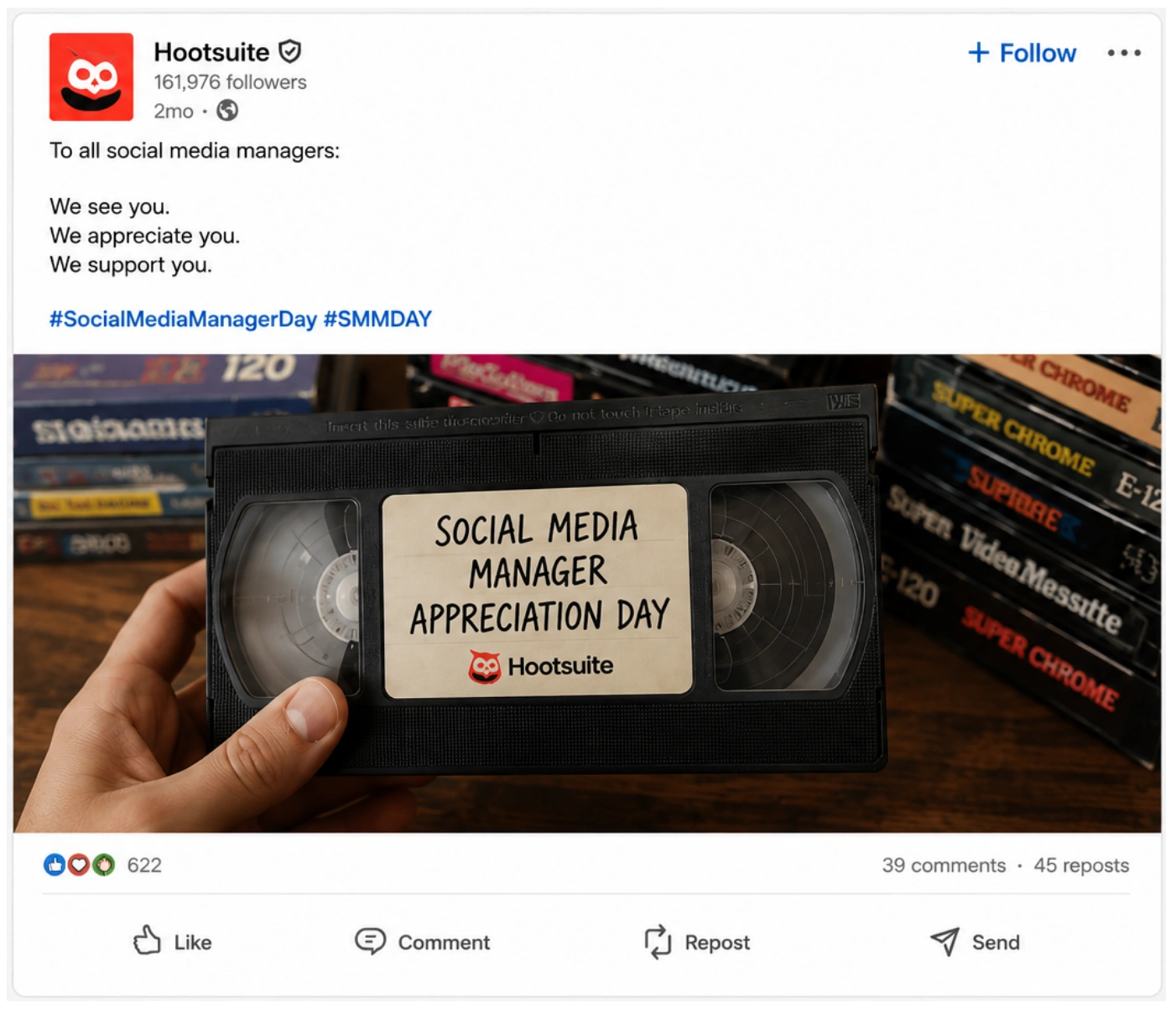
Hootsuite’s VHS tape. To launch OwlyGPT, Hootsuite made its product differentiator physical by sending creators a VHS tape, a format nobody can use, to make a point about outdated tools. It is a good example of a product-marketing campaign that gave creators something to react to rather than something to describe.
Storylane’s comedic shorts. Storylane invested more than $500,000 in LinkedIn creator marketing in 2024 across two content types: product use cases and comedic short videos with sales creators including Tom Boston and Will Aitken. In our sample, the comedic shorts made up about 30% of sponsored posts and generated about 66% of total engagement. The reason they worked is not that they were funny. They acted out the actual pain point Storylane solves, which is that non-enterprise prospects will not book a demo just to see whether a product works.

Synthesia’s AI Dubbing launch. Five creators, five languages, each demonstrating the feature rather than describing it. Chris Cunningham, co-founder of ClickUp, has the general principle for this category: demonstrate, do not explain. For any product whose value is not obvious from a feature list, showing someone use it in a context the audience recognizes does more than any amount of copy.
Anthropic’s Claude program. Our first-party audit found 50 posts across 31 creators, with 61% in the mid-tier 50,000 to 200,000 follower range. This is the most instructive case for a specific reason: Anthropic already has enormous brand awareness, so the program is not doing the job that a program at an unknown B2B SaaS company would do. Reading it against the Vector case study is a useful exercise in how the same tactics serve completely different objectives depending on where you start.
For all five full breakdowns, read five campaigns worth studying in full. For the complete post-by-post audit of the Anthropic program, see how Anthropic runs Claude’s own creator program.
Where B2B Influencer Marketing Is Headed
Three shifts worth planning around.
Creator-in-residence roles are becoming real jobs. Vivian Tu, founder of Your Rich BFF, joined SoFi as Chief of Financial Empowerment. That is not a sponsorship. It is a creator embedded in a company with a title and a remit, and it points at where the top end of the market is going: from campaign spend to headcount.
Creator supply is getting tight, which is pushing brands toward employee advocacy. Nicole Ponce at Semrush has flagged the constraint directly. In any narrow B2B niche there are only so many credible creators, and once your competitors have partnered with them, price goes up and exclusivity gets harder. The practical response is to build creators internally: your own engineers, founders, and specialists have the expertise, and the audience can be developed.
AI search visibility is becoming a reason to run creator programs at all. Igor Gorbenko at Ahrefs has made the observation that the product they promote most through creators is also their most-cited product inside large language models. Models build a picture of a brand from how the whole web discusses it, not from where a brand ranks. Distributed, specific, attributable commentary from credible practitioners is exactly the input that shapes that picture, which means a creator program now has a second output nobody was measuring two years ago.
For the full set, read nine trends shaping 2026.
FAQ
What is B2B influencer marketing?
B2B influencer marketing is the practice of partnering with credible industry creators to reach a business buying committee through a voice that committee already trusts. Unlike consumer influencer marketing, it prioritizes audience match and professional credibility over reach, because the total addressable audience for most B2B products is small and specialized.
What is the ROI of B2B influencer marketing?
Industry data from Ogilvy and Influencer Marketing Hub puts the average return at $5.20 for every $1 spent. A documented example: Vector spent $12,000 on seven creators averaging 13,000 followers each and generated $1.1 million in pipeline over three months, which is a return well above that average and was achieved with modest per-post engagement.
How much does a B2B influencer cost?
Most sponsored B2B posts land between $200 and $2,000, with a transacted LinkedIn median of $798 across 135 real deals. Price moves substantially with geography, vertical, and format, and nano creators with a precisely targeted audience can command more than micro creators. For benchmark tables by country, industry, and format, see the complete B2B influencer pricing guide.
How do I find B2B influencers?
Start with your own customer list and check whether any current customers already have a LinkedIn or X audience. Then look for category thought leaders through conference speakers, webinar hosts, and newsletter authors, and filter candidates by industry, niche, posting frequency, and engagement quality. Stage 2 of this guide covers all three sourcing paths in detail.
What is a good reply rate for B2B influencer outreach?
Automated creator outreach through Favikon’s LinkedIn channel converts at 10 to 30%, depending on creator size and whether a follow-up is included, against a general cold email benchmark of 5.8%. Sequences that begin with a genuine comment before the connection request perform toward the top of that range, and Alex Llull at Perspective has reported 80% using a comments-first approach.
Others articles