Influencer Marketing for Startups: Data-Driven Guide
If you’re considering starting your own influencer marketing program for your startup, here’s everything you need to know.


Influencer Marketing for Startups: Data Driven Guide
Influencer marketing can help startups establish the credibility they need to gain authority in the industry.
However, it involves more variables than traditional paid advertising strategies.
If you master these variables, you can generate a significantly higher ROI than paid ad campaigns, though the opposite is also true.
We've studied dozens of startups running influencer marketing campaigns and spoken with many of the influencer marketers behind the very best campaigns.
(In fact, you can see our case study of an $8M ARR SaaS startup's influencer strategy, and our recent study of the B2B brands running influencer marketing campaigns).
Based on this research, this is our guide to influencer marketing for startups. We'll address all of the common pitfalls and FAQs at each step of the process.
Step 1: When Should I Invest in Influencer Marketing
There are really two sub-questions within this question:
- Is influencer marketing the right channel to grow my startup?
- At what growth stage (budget-wise) should I invest in influencer marketing?
First, influencer marketing is a great option to invest in if any of the following statements are true:
- You're trying to build trust and credibility in the industry.
- Your audience isn't searching for your product (this is true for many AI startups, where users aren't aware of a more effective way to solve their problem).
- Paid channels are too competitive/expensive for your startup.
- Your competitors are using influencer marketing.
The next question is at what growth stage you should invest in influencer marketing.
I asked this question to Adelė Grigūnaitė, the head of influencer marketing at Omnisend, and this was her response:
"You should already have at least some sort of social media presence, and you need to have some time to dedicate to it.
Also, you need to have a budget for it. Even if you're sending your products for free for them to test, it still costs money."
The bottom line is that, just like any paid media campaign, you need to have a budget.
Even product gifting requires a significant budget because, as I explained in our influencer marketing partnership structures guide, only a very small percentage of influencers to whom you send your free product will actually post about it. (Although I recommend reading that guide to learn how to better incentivize people to post).
The million-dollar question is: how much budget?
Your best option is to start with just a few micro influencers, allowing you to get something off the ground with just a few thousand dollars.
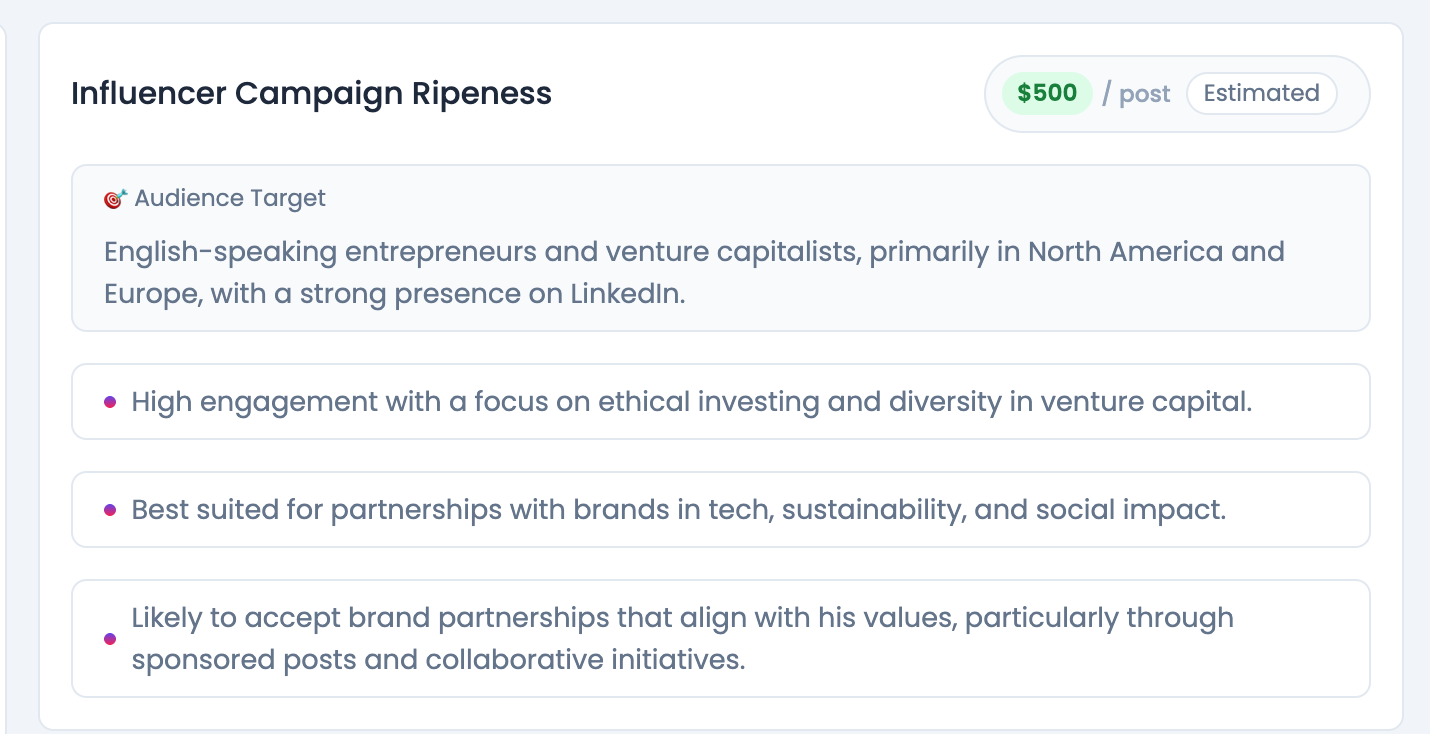
And, inside Favikon, you can get a realistic estimate of how much an influencer charges for a LinkedIn post. This estimate is based on all of the verified rates of influencers in our database.
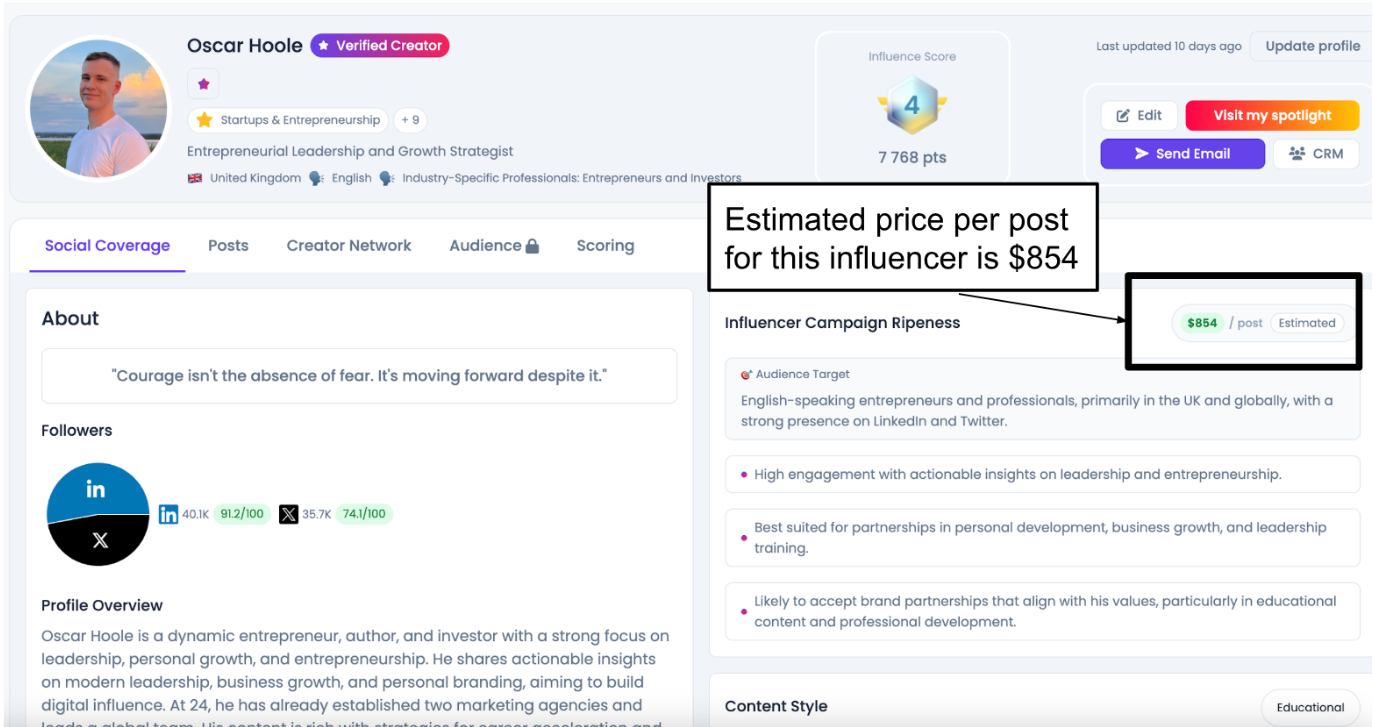
Therefore, start with just a few thousand dollars and a couple of different influencers.
Step 2: What should your campaign be?
Many people spend a lot of time thinking about who to partner with, but this might be the wrong question.
When we spoke to Ash Turner, Synthesia's Head of influencer marketing, he mentioned that the campaign idea more heavily impacted their CPMs than the influencers they hired.
"If we look at our average CPM across creators, they're all fairly consistent. However, it does vary from activation to activation.
For example, we did one [activation] a couple of months ago, which was for our L and D audience. And it was how you can turn text documents into video…
Taking a text document and making a video is cool, but I wouldn't say it's as interesting as saying I can now speak 30 different languages.
So there's that kind of virality piece that made that campaign's CPM a lot cheaper.
But it [the CPM] is fairly consistent across all of our creators, even when we work on top end and low end."
Therefore, the creativity of the campaign has a huge impact on your CPMs.
The counterargument to this might be:
"Well, views and reach aren't always a good indicator of success. Sometimes, product launch campaigns are often boring compared to brand awareness campaigns, but highly effective at converting customers."
But do product campaigns have to be boring?
Hootsuite's VHS campaign challenges this idea.
It was a feature launch campaign promoting their new feature, OwlyGPT.
However, instead of just asking influencers to promote the new feature, they sent each of them a VHS tape.
The VHS tape highlighted the key differentiator of OwlyGPT. Unlike most other AI chats, which are based on outdated information, such as blog posts (as represented by the VHS tape), OwlyGPT provides current information based on social media data.
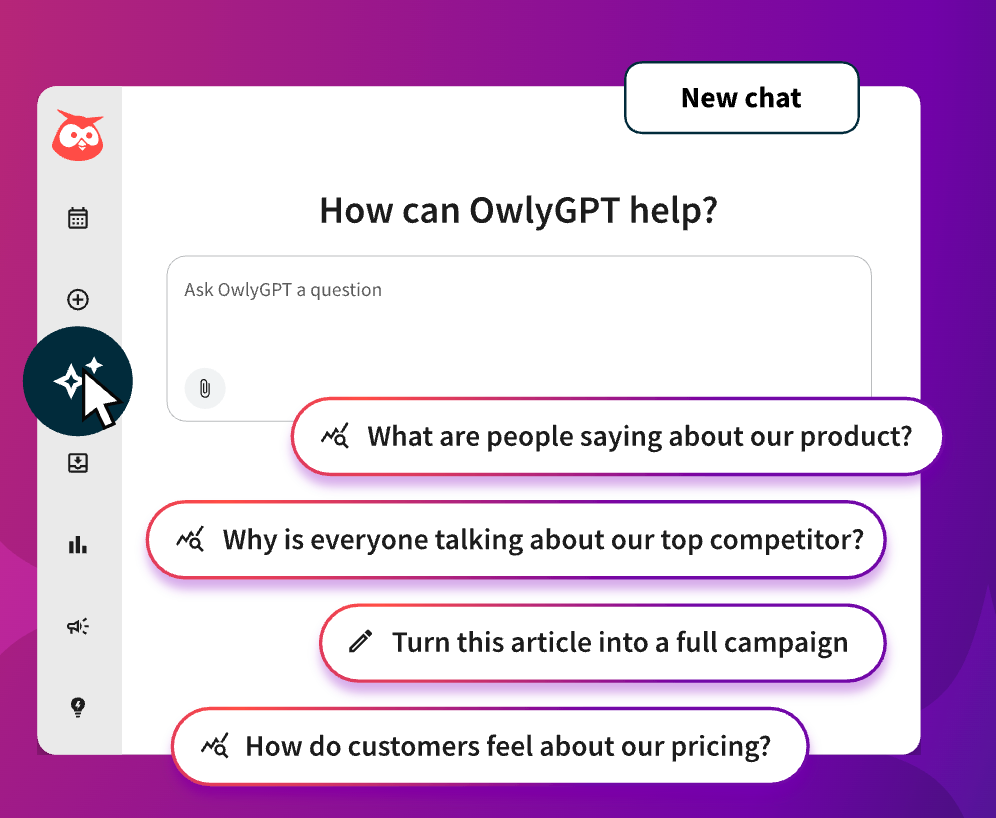
Therefore, if you want to reduce your CPMs, spend some time brainstorming campaign ideas with ChatGPT.
To help you get started, here are a few different campaign idea formats you can use to brainstorm:
You can also read our influencer marketing campaign examples post, where we break down these campaign examples in more detail.
Alternatively, if you reach out to influencers, ask them for suggestions on what would resonate with their audience. However, if you can come up with a really creative campaign idea, it can help you increase influencer response rates (as this is a common challenge).
For example, the creativity of Hootsuite's campaign definitely helped them close more influencers:
Step 3: Who should you partner with?
Once you have a campaign idea in mind, it becomes much easier to determine which influencers align with that idea.
For example, if you're running a brand awareness campaign aimed at maximizing reach, it might be more effective to collaborate with a larger creator who has a broader audience.
Or, if you know you want a comedic skit, it's important to find creators who are talented at scripting and filming content.
However, most startups are still in the "building credibility" phase, and it often makes the most sense to build long-term partnerships with industry authorities.
As you start researching influencers, you'll quickly realize that:
- Follower count ≠ Engagement/impressions
- Engagement/impressions ≠ trust/industry authority
- Only a percentage of their audience may align with your target audience
So before you start looking for influencers, here's a checklist you can use when evaluating influencers:
A common question we get is: should I find platform fit or audience fit first?
To answer this question, we asked Adelė Grigūnaitė of Omnisend. Here’s her advice:
“The main focus is audience-first. We start by identifying creators who genuinely understand our target market - mid-size businesses dealing with email marketing, regardless of which platform they're on.
If someone has deep expertise in ecommerce or email marketing and their audience trusts them for that knowledge, that's way more valuable than someone with a huge following but no real connection to our space.
That said, once we find the right creators, we do consider platform fit. A creator who's great on LinkedIn might not translate well to TikTok, and vice versa. But the creator's authenticity and audience alignment always comes first.
We'd rather work with someone who has 10,000 engaged followers in our exact niche than someone with 100,000 followers who aren't decision-makers for email marketing tools.”
Of course, evaluating influencers for this criteria is a daunting task, so we’ll discuss how you can simplify it in the next step.
Step 4: How do you find and connect with influencers?
Now that you have a criterion, you could scroll through the social media platform you selected and manually evaluate influencers.
Yet, this would likely require hours of manual effort, and most startups don't have the time to spare.
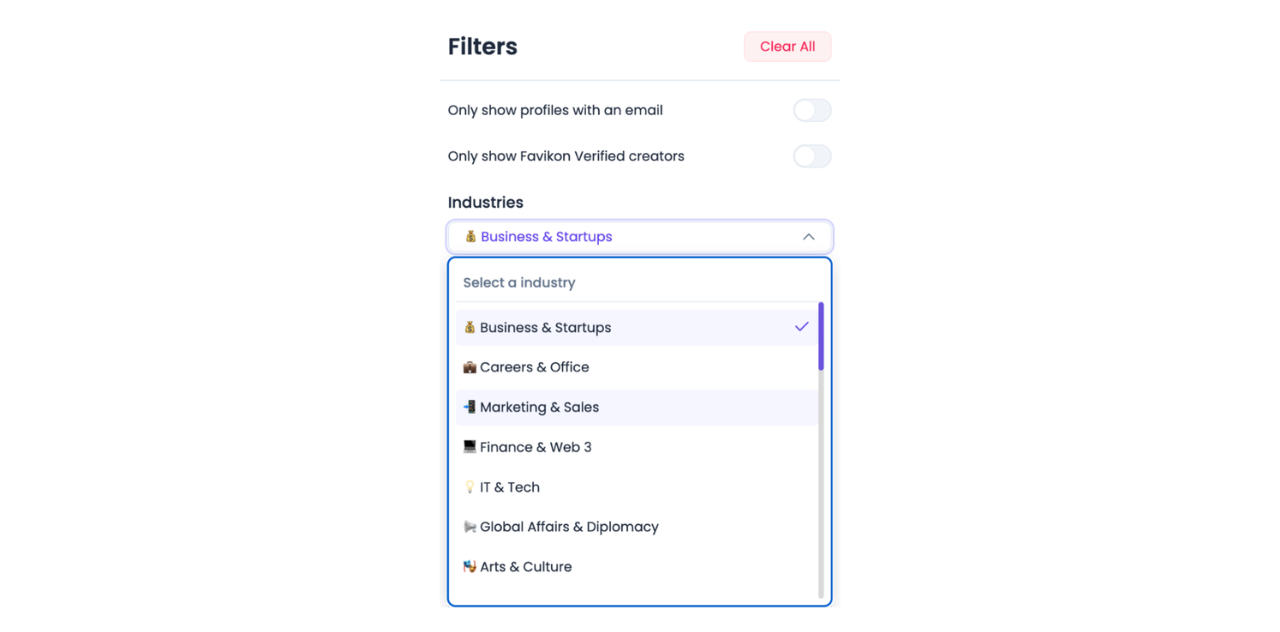
To quickly generate a list of influencers who fit your criteria, we built Favikon.
First, select your industry:
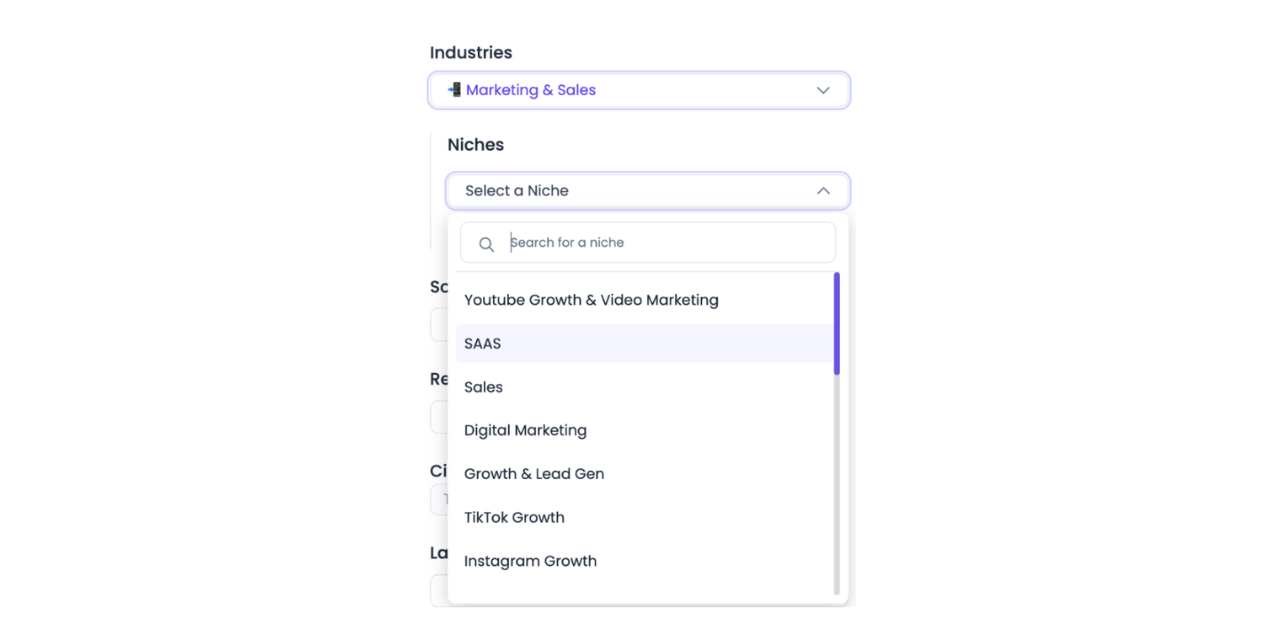
Then, you can also select a niche:
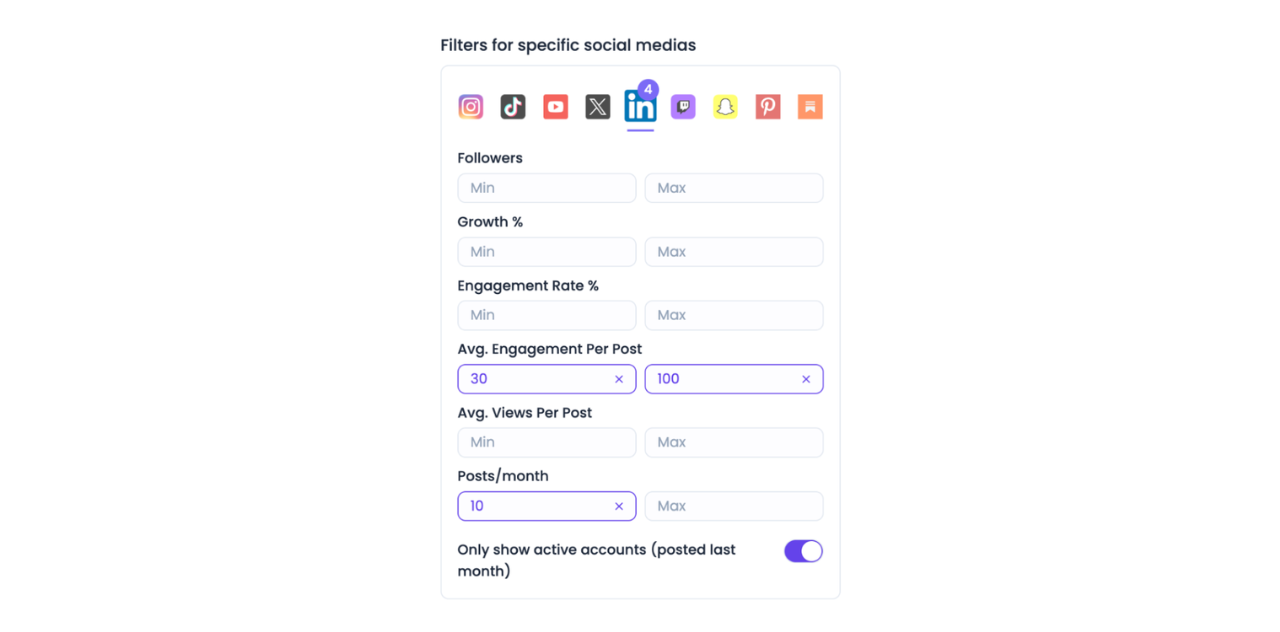
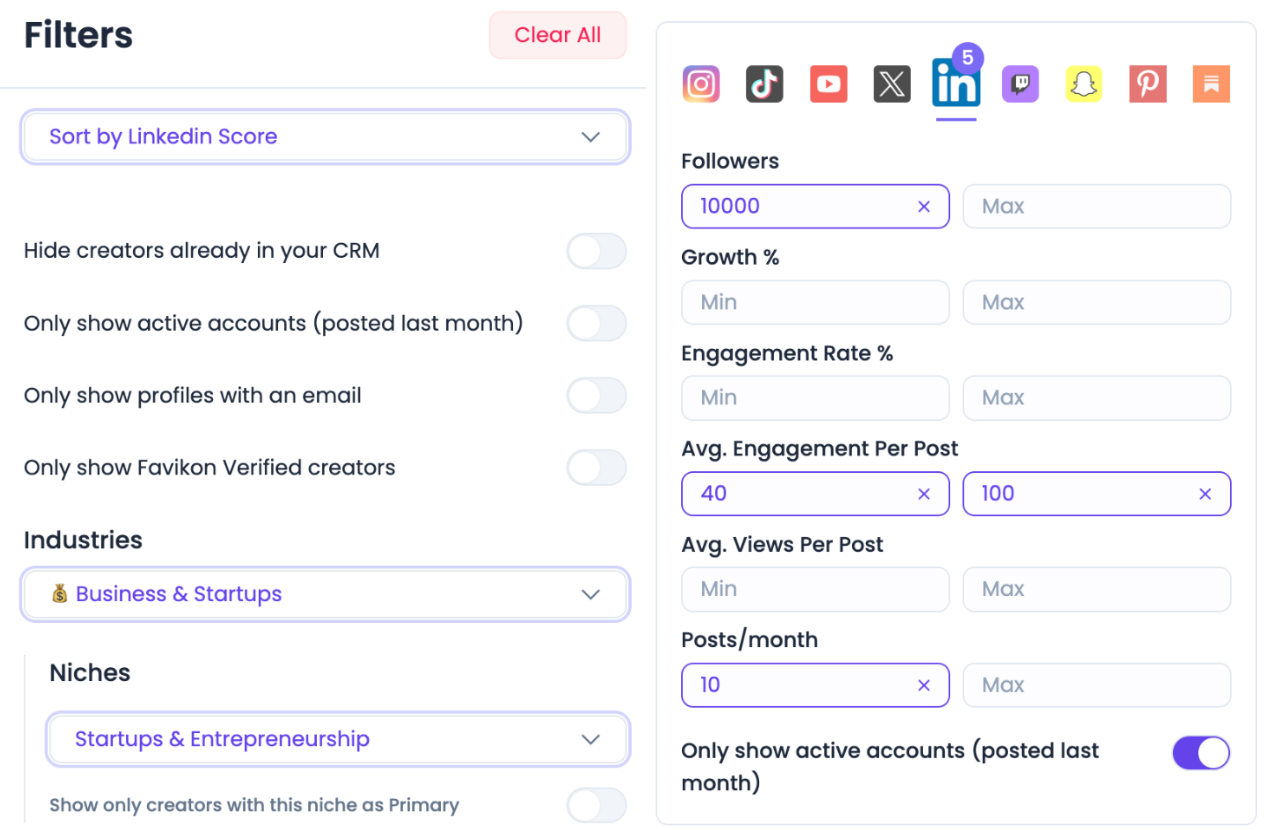
Next, fill out the criteria you selected. For example, if I’m looking for creators for a product feature launch and I want a bunch of micro influencers, this is the criteria I might select:
- Platform: LinkedIn
- Engagement per post: 30 to 100 per post
- Posts per month: At least 10
- Currently Active
However, one of the most challenging elements to address is the trust and authority of an influencer.
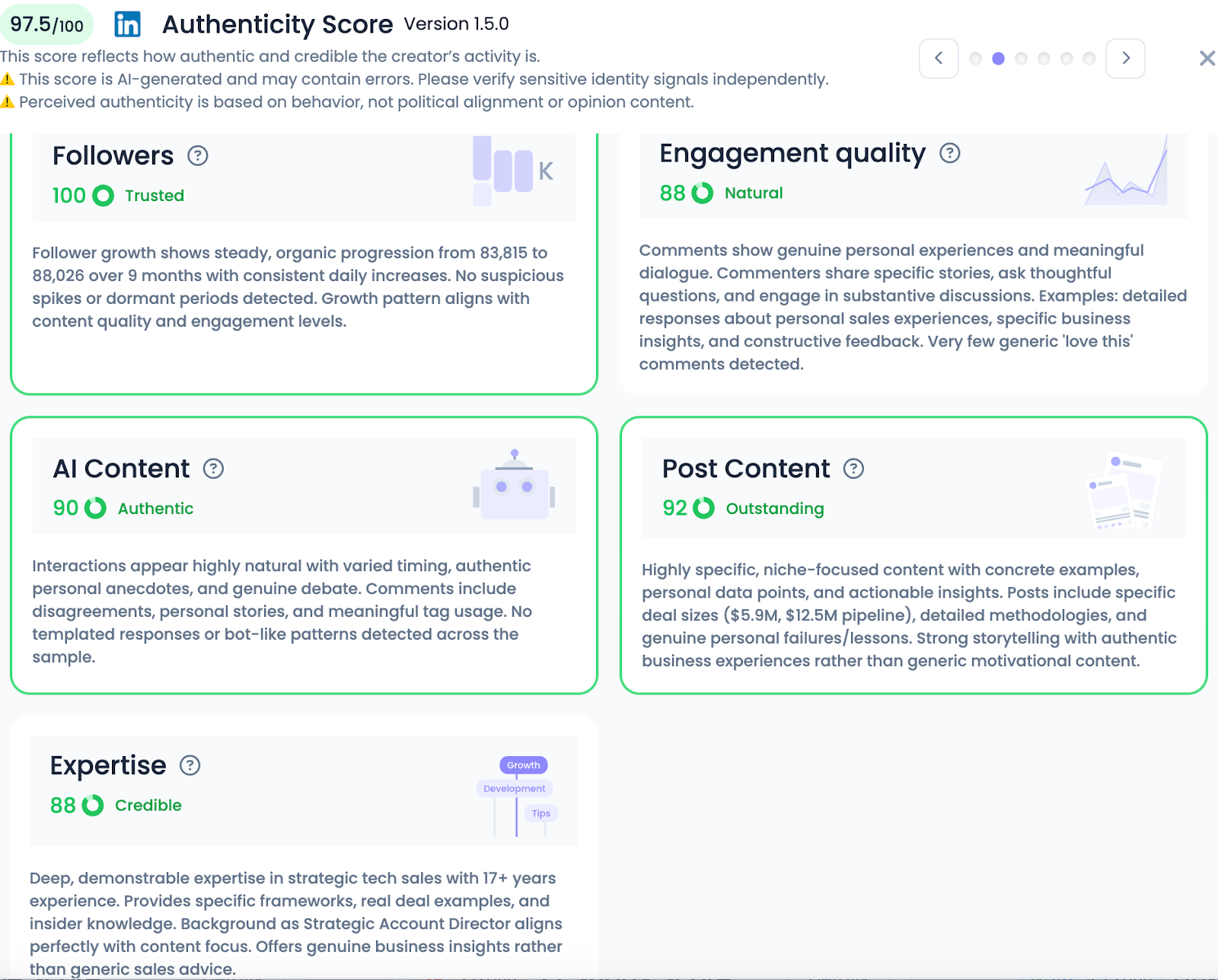
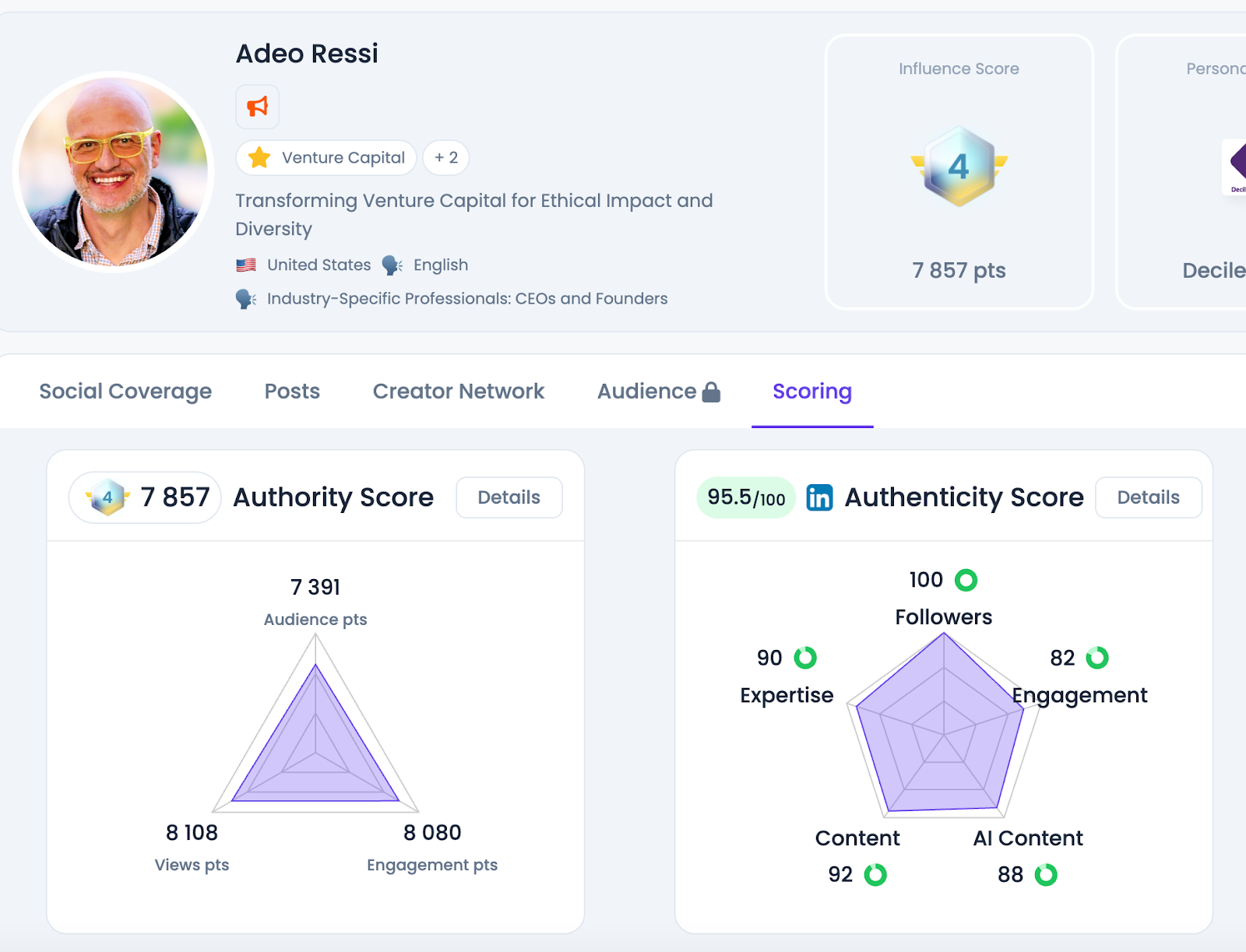
That's why we created the Authenticity Score.
It's a score that we calculate based on a variety of factors that often indicate the authority someone has in an industry.

Specifically, here are the factors we use to calculate the Authenticity Score:
Once you find a handful of influencers who match your criteria, you can save them to your CRM:

Favikon also makes it easy to email or DM creators directly from the CRM.
However, before you start reaching out to influencers, think carefully about the message you send.
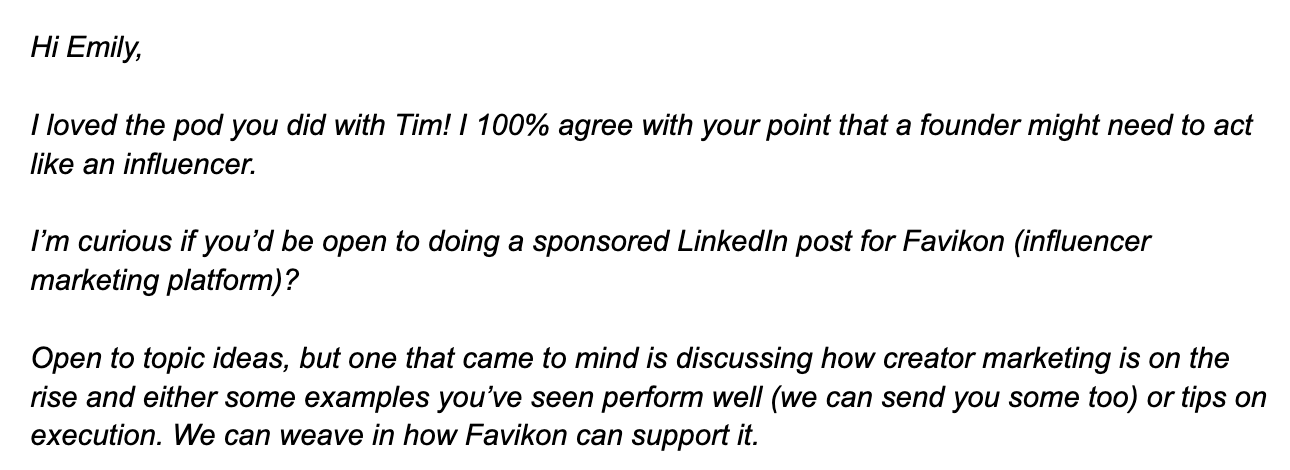
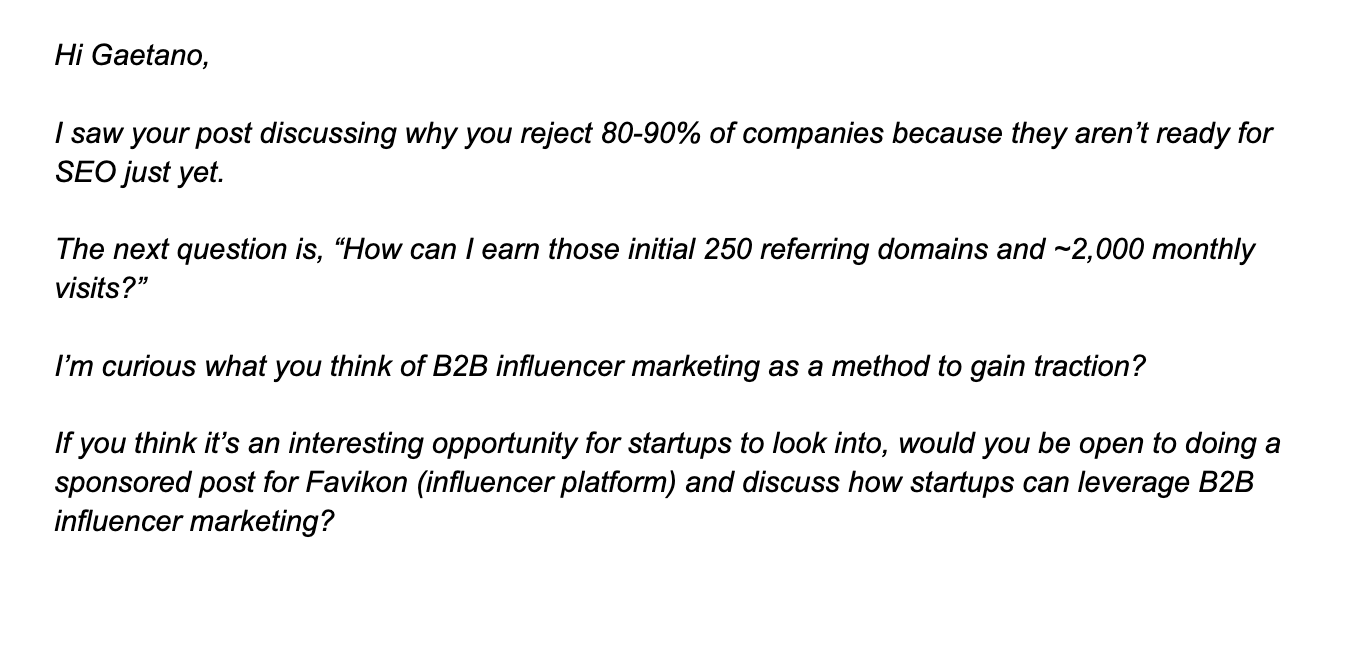
If you’re in a B2B industry, realize that there are only so many genuine industry authorities, so you can’t afford to send generic messages.
So if you only have about 15-30 ideal influencers, send personalized messages to each one and weave in exactly how your campaign can align with their content.
Bonus points if you also comment on their content beforehand.
When you do reach out, keep it just 3-4 sentences.
Here are some examples of messages we might send to influencers if we were to do an influencer campaign:
If you’re in more of a B2C market, you can afford to have a slightly more generic message.
If you're in a B2C market, you can afford to have a slightly more generic message.
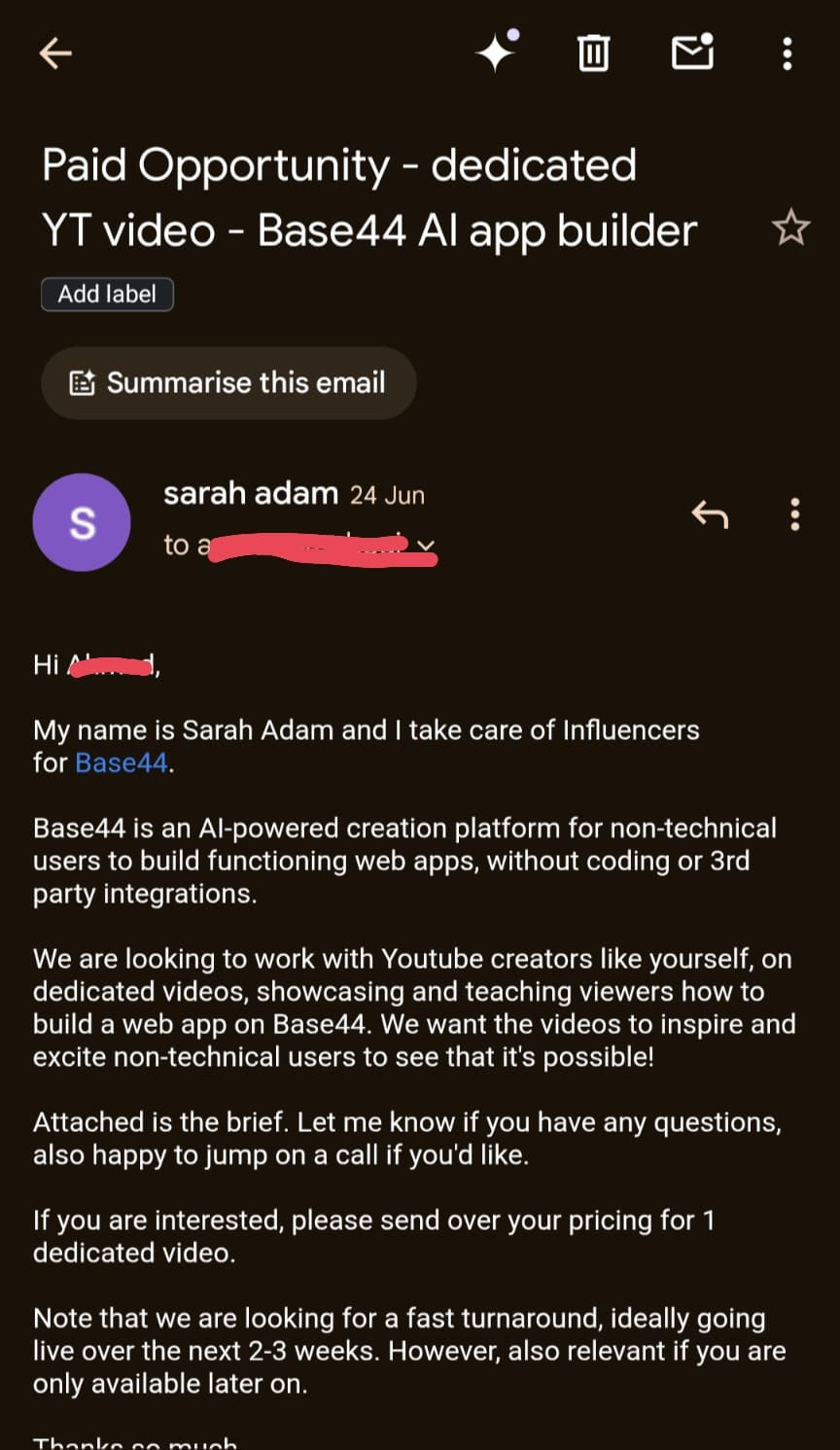
For example, here is the exact message that Sarah Adam of Wix sent to YouTubers for one of their latest campaigns:
Also, don’t be afraid to follow up with people. Most influencers are inundated with messages, so it might take a few tries to cut through the noise.
Step 5: How do you negotiate with influencers?
You don’t want to offend influencers before starting the partnership, but you also should pay them fairly.
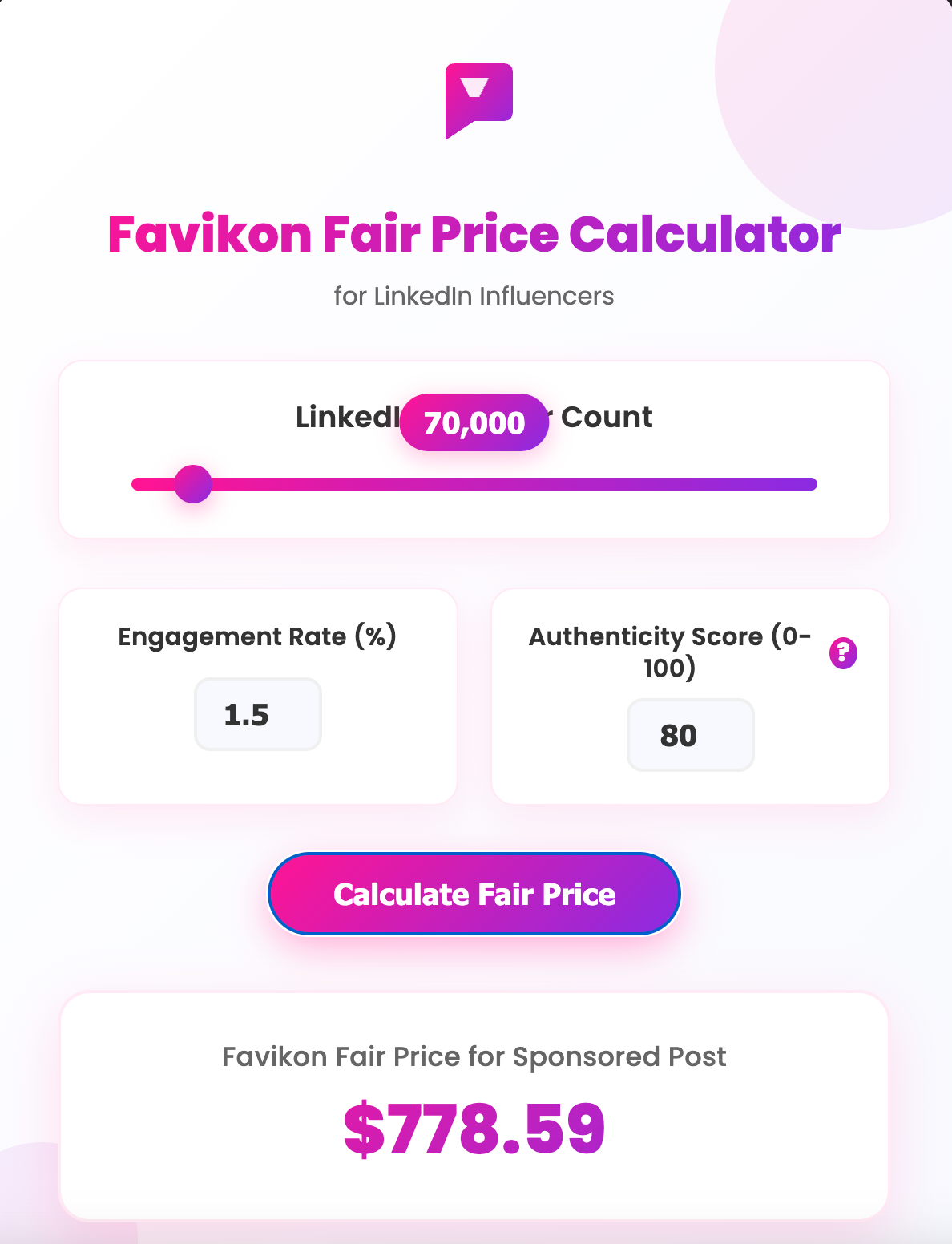
First, get a baseline of what a “reasonable” price is by using the Favikon LinkedIn pricing calculator.
Then, here are some negotiation tips from Ash Turner, the head of Influencer Marketing at Synthesia.
“Always go into a call with an expectation of, this is the max that we can realistically afford for this person… And then be transparent with creators and say, look, I totally appreciate this is where you're at. Unfortunately, our budget for this activation is around here.”
He also recommends offering additional incentives, like affiliate links or rights to use the content in ads.
“I'd say nine times out of ten, we can come to an agreement with a creator that works on both ends,” says Turner.
Adelė Grigūnaitė of Omnisend also has some influencer negotiation tips:
“Try not to say your price first. Let them go first. But always know your number beforehand. Another tip is when you have a basic deal in mind.
If the influencer wants more money, ask for more posts instead.
We usually try to get package deals rather than just one post because it's cheaper per post and we get more exposure.
If a creator asks for more than our budget, we'll say something like "what if we do 3 posts for that price instead of 1?" Most creators are fine with this because it's actually easier money for them once they know our product.”
Step 6: How do you measure success?
Measuring the ROI of influencer marketing is hard, especially if you have a long buying cycle (as is common in B2B or B2C products).
The best KPIs to measure really depend on the campaign as well.
If your goal was brand awareness, engagement and impressions is probably the best way to measure the success of that influencer campaign.
However, again, we asked real influencer marketers how they handle these situations.
Here’s what Ash Turner of Synthesia had to say:
“I would say nine times out of 10, influencers are seen as that top of funnel brand awareness piece for us… if we're promoting a new feature or product, there will be a LinkedIn live event talking about that feature release. So we'll look at the spike in engagement or signups for the LinkedIn event.
Typically our main goal that we're looking at is impressions and reach, seeing that kind of bigger brand awareness piece.”
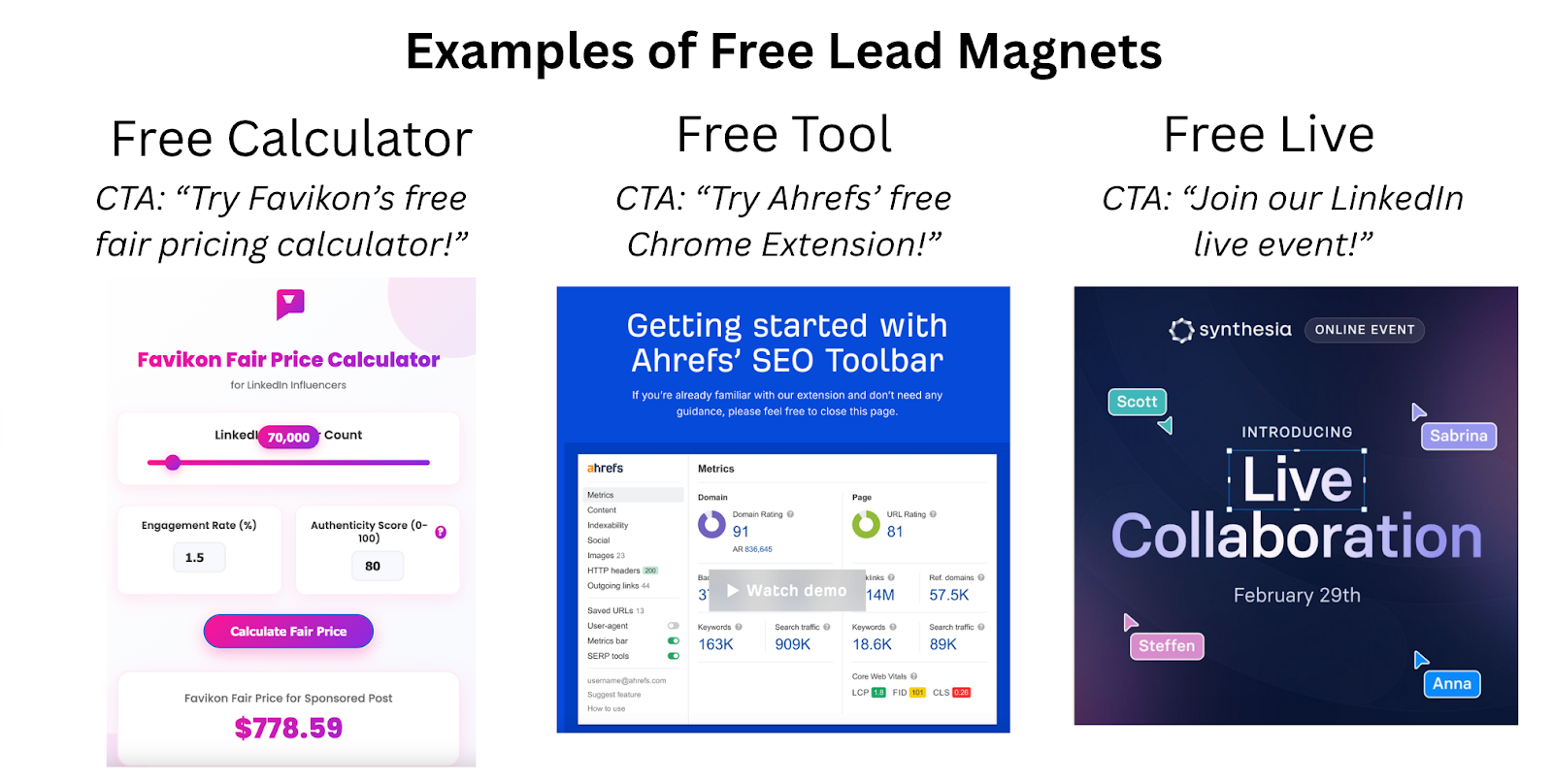
Another tip we learned from the team at Ahrefs is that it’s important to optimize the offer for a free tool, resource, or event.
If you immediately ask people to sign up for a high ticket platform, most will just keep scrolling by. Instead, use influencer marketing to get new people into your ecosystem and then nurture and convert them.
Step 7: How do you scale influencer campaigns?
Once you start scaling campaigns, how do you use budget effectively to keep the CPMs?
First, consider working with the same creators on more campaigns.
This is something the team at Omnisend does frequently:
“We prefer multiple posts. One post gets buried, but when someone mentions your product a few times over a couple weeks, people start noticing,” says Adelė Grigūnaitė.
The same was true for the team at Storylane:

If you’re worried about saturating the same creator’s audience, you can space out campaigns throughout the year.
Additionally, you could work on doing more varied types of campaigns with these influencers. This is how Synthesia expands partnerships:
“... so it's not just like a LinkedIn post here and there. Sometimes we invite them to a London studio, we'll create content with them,” says Ash Turner.
However, if you still have more budget to spend, the mistake most influencer marketers make is casting a wider net and sending more generic cold emails to less relevant influencers.
Instead, focus on developing deeper relationships with other authoritative, influential people in your industry.
From a tactical perspective, building deeper relationships could be doing podcasts, videos, and other content with industry leaders. Therefore, you may need to work side by side with your content team to profitably expand partnerships.
Additionally, as you work with more and more influencers, you’ll see your response rate from prospective influencers increase because they can see your brand is serious about running campaigns.
Get Help Building an Effective Influencer Marketing Campaign
Influencer marketing can be a powerful marketing channel for startups, though many don’t take advantage of the opportunity simply because it’s too time consuming to discover the right influencers, reach out to them, collaborate on the campaign, and then track the effectiveness of that campaign.
To solve these problems and make it easy to discover and manage influencer partnerships, we built Favikon.
Unlike most influencer platforms, Favikon offers advanced filtering for all common social media platforms, including LinkedIn and YouTube.
We also realize that a major pain point is identifying influencers with genuine trust versus those who simply have large audiences, so our authenticity score helps you quickly find people who are genuine experts.
And, guessing prices is also a major pain point, so we offer pricing estimates for influencers based on proprietary data.
Skip the manual research. Favikon's B2B Influencer Marketing Platform helps you find the right creators, check Authenticity Scores, and estimate fair pricing — all in one place.
→ Explore the B2B Influencer Marketing Platform
Also See 👀
🏆 HOW TO RUN INFLUENCER MARKETING IN-HOUSE
🏆 COMPARING THE TOP CHANNELS FOR B2B INFLUENCER MARKETING
HOW DOES FAVIKON RANK INFLUENCERS?
Others articles

.png)