17 Influencer Marketing Tips From Marketers Who Actually Run Campaigns
17 influencer marketing tips from the people who run creator programs at Wix, Lovable, Gamma, Semrush and Ahrefs. Almost none of these came from a framework. They were learned on somebody's budget, the expensive way.

17 Influencer Marketing Tips I Only Learned by Watching Other People Get It Wrong
Megan Mahoney, Founder, Scaled By Influence
I run Scaled By Influence, where I handle influencer campaigns end to end for B2B companies. Ideation, creator sourcing, execution, tracking. I am also a regular host on Favikon's YouTube channel, which means I have spent the last couple of years sitting across from the people who run creator programs at Lovable, Semrush, Synthesia, Wix, Gamma and a long list of smaller startups, asking them what actually happened.
For this piece I went further and worked through just about every podcast episode on influencer marketing I could find, on top of my own interviews.
What strikes me is how little of the good stuff is written down anywhere. The blog posts you find when you search for influencer marketing tips all say the same six things. Set clear goals. Pick the right creators. Track your ROI. Fine. Nobody argues with any of it, and nobody is better at their job after reading it.
So this is the other list. Almost none of these were learned from a framework. They were learned the expensive way, on somebody's budget, and then said out loud on a call.
A quick note before we start: most of the examples here are B2B or B2B adjacent, because that is where I spend my time. The mechanics translate to consumer brands almost everywhere. Where they do not, I say so.
Learn more in this video:
1. Separate Product Launch From Creator Launch
This one surprised me the first time I heard it, and then it made complete sense.
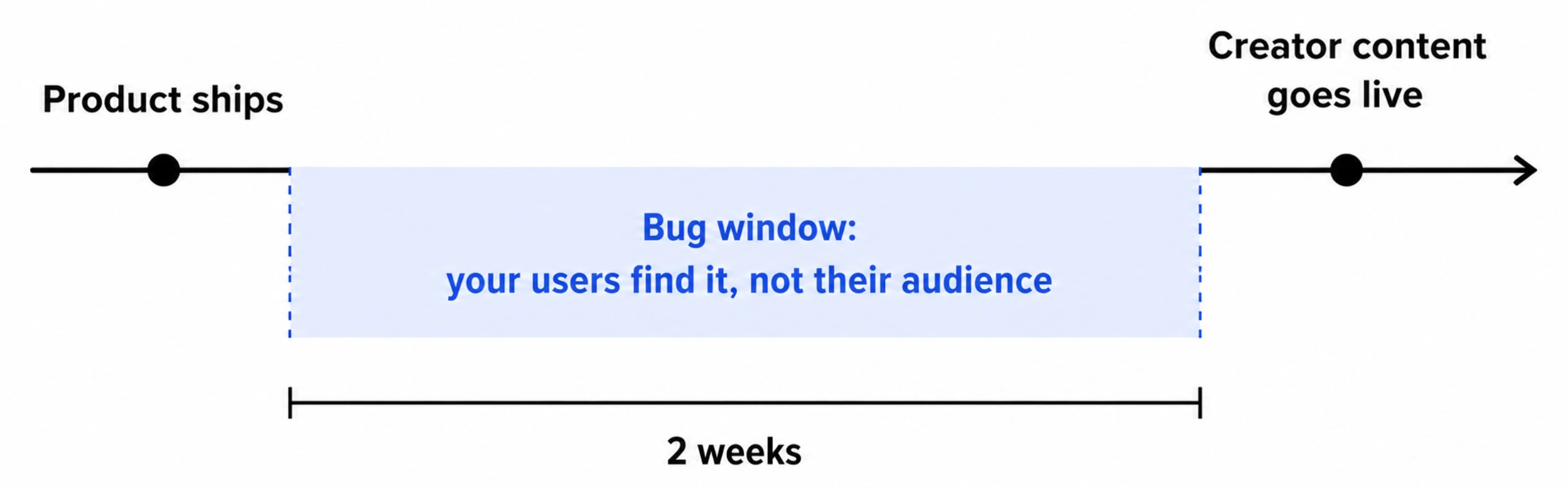
AJ Eckstein, founder and CEO of Creator Match, the agency that has built creator programs for Anthropic, HubSpot, Notion, Lovable and Wix, says that when a brand launches a creator campaign on the same day as the product or feature, the odds of it failing go up sharply. New releases have bugs. New releases have friction. That is normal and forgivable when it is your own users hitting it, because you can email them and fix it.
It is not forgivable when a creator hits it, because a creator has an audience and a camera.
Sarah Adam, Head of Partnerships, Social and AI at Wix, ran into exactly this. Wix shipped a feature that its web design users had been asking for, and she gave top web design creators early access so they could break the news on the same day as the PR push. The tool was buggy. One creator could not finish the demo video.
Nobody did anything unreasonable here. The timeline was just too tight.
What to do instead: put at least two weeks between the product launch and the creator campaign. Use those two weeks to let your own users find the sharp edges. If your PR calendar genuinely will not allow it, give creators access earlier and tell them exactly what is unfinished. Creators are far more forgiving of a known limitation than of a surprise one.
2. Reengage the Audience who engaged
Most teams watch the analytics after a campaign goes live. Marc Richard, CEO of OBVIOUS, the B2B influencer agency that works with Pipedrive and Lusha, runs an entire outbound motion off the back of it instead.
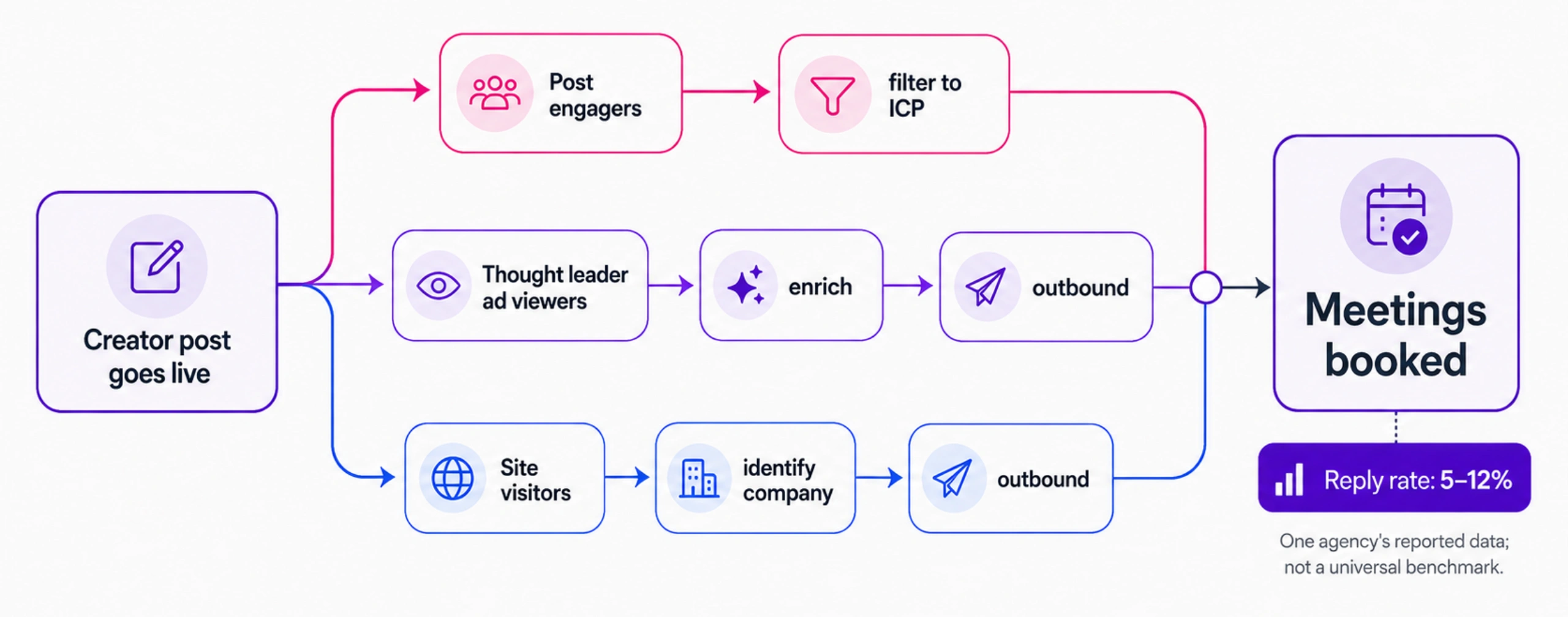
He described three plays:
Pull everyone who liked or commented on the creator's post, then filter down to ICP. In his experience roughly 25 to 30 percent of the people engaging are in the client's ICP.
Identify the accounts touched by the thought leader ads, enrich them in a tool like Clay to find the right persona inside the company, and run outbound to people who have already seen the ad. Reply rates are better because there has been a prior touch.
Identify the companies visiting the site through tools like RB2B or Snitcher, isolate the ones that arrived organically after the creator posts, then enrich and reach out.
Across those plays he reports 10 to 25 percent reply rates and roughly two to four percent conversion from contacted to meeting.
I would treat those numbers as directional rather than a benchmark, because they come from one agency's book of business. The structural point stands regardless: the engagement on a creator post is a list of people who raised their hand, and almost nobody treats it that way.
3. Onboard a creator the way you onboard a customer
Grant Lee, co-founder and CEO of Gamma, made a point that I keep coming back to. In the early days he onboarded every creator himself. A call with each one. Walking through the product. Answering questions. Brainstorming hooks together and giving early feedback without being prescriptive about it.
His framing was that you onboard an influencer the same way you onboard a customer, because you want them to function as an extension of your team. Too many people, in his words, discount that initial piece.
Most people skip this. They send a brief and a login and wait.
The cost of skipping it shows up in the content. A creator who has used your product for twenty minutes makes a video that sounds like a product page. A creator who has actually solved a problem with it makes a video that sounds like a recommendation.
ClickUp takes this further than anyone I have seen. Rather than paying a creator to talk about the product, they assign one of their best trainers to spend an hour with the creator, working through the creator's own business to find genuine use cases. If ClickUp adds value, they talk about a campaign. If it does not, they do not.
That is a slow way to run a program. It is also why those campaigns land.
What to do instead: book a proper onboarding call with every creator before any content is agreed. Walk them through the product against their actual workflow, not your demo script. Then ask what they think would work for their audience, and shut up while they answer. If you want the longer version of this, we covered how to build long term relationships with content creators separately.
4. Gather customer feedback
AJ Eckstein mentioned that Athletic Greens, one of Creator Match's partners, requires a minimum fifteen minute call with every creator they work with. Not a briefing call. A conversation about the product. What they like. What they would change.
I think most brands are leaving this on the table. You are paying someone who is a heavy user of tools in your category to spend time with your product. Their feedback is worth more than most of your survey data, and asking for it costs you fifteen minutes.
It also changes the relationship. A creator who has been asked for their opinion and seen something change because of it is a different kind of partner.
5. Send People To A Low Friction Offer
Ahrefs learned this one the hard way. Their cheapest tier is over one hundred dollars a month, and almost nobody watches a YouTube video and immediately signs up for a hundred dollar a month tool. So the attention their creator campaigns generated mostly evaporated.
They changed the call to action to their free Chrome extension. Now the campaign brings people into the ecosystem, gives them a taste of the product, and lets the conversion happen later when the person is actually in market.
What to do instead: point creator traffic at whatever your lowest commitment asset is. A free tool, a calculator, a template, a Chrome extension, a benchmark report. The gap between "watched a video" and "entered a credit card" is enormous, and a lead magnet is the bridge.
This matters more the higher your price point is. If you sell a fifteen dollar a month product, sending people to the signup page is fine.
6. Consider SEO and LLM Visibility
This is the tip I would prioritise above all the others if you only implement one.
Ahrefs noticed that the product they featured most heavily in creator partnerships, Ahrefs Webmaster Tools, was also the product that appeared most often in LLM answers. They were careful to say the correlation does not prove causation. But it points at something real.
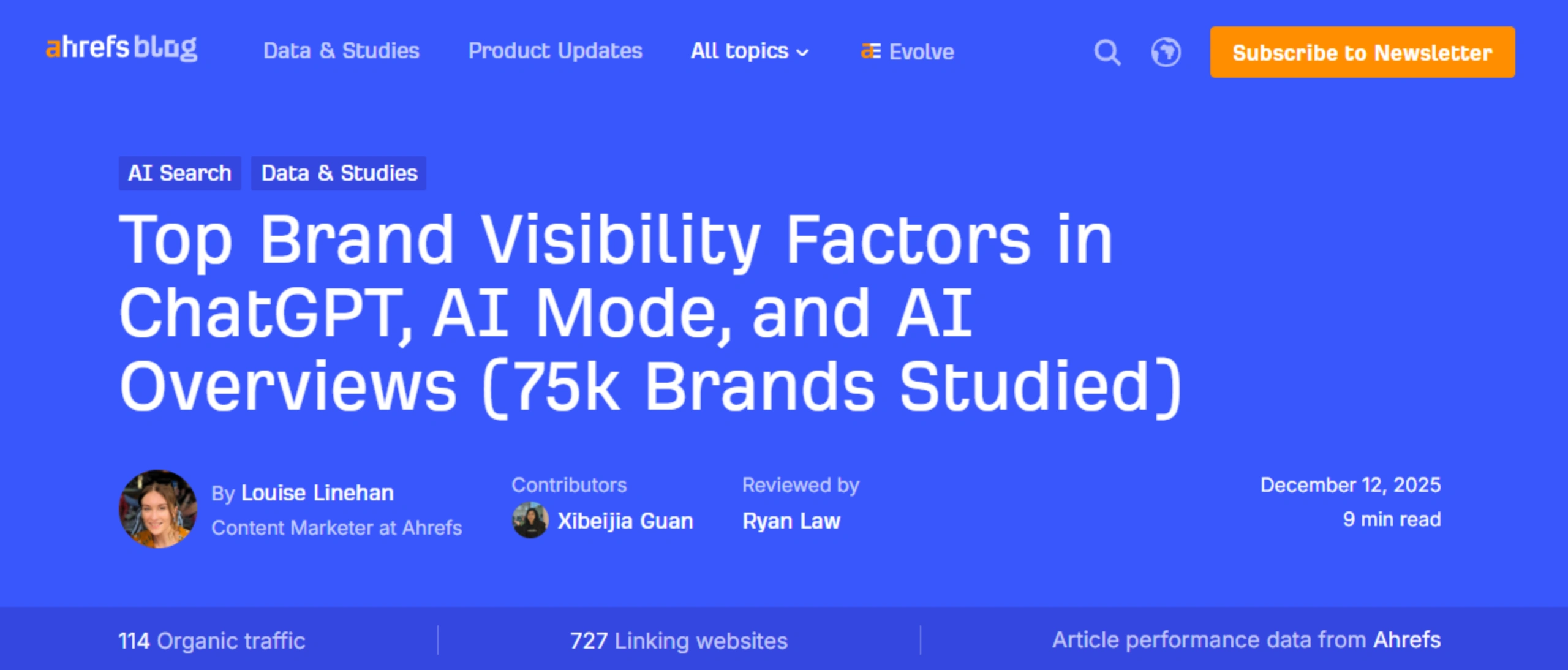
Ahrefs then went and measured it properly. Their study of 75,000 brands found that YouTube mentions are the strongest correlated signal for AI visibility across ChatGPT, Google AI Mode and AI Overviews, outperforming backlinks, domain authority and content volume. YouTube mentions came in at roughly 0.737 correlation, against 0.218 for backlinks. A YouTube mention here means the brand name appearing in a video title, transcript or description.
Worth saying out loud: correlation is not causation, and Ahrefs said so themselves. Brands that get talked about a lot on YouTube also tend to already have demand, PR and category authority. The operational conclusion lands the same way either way.
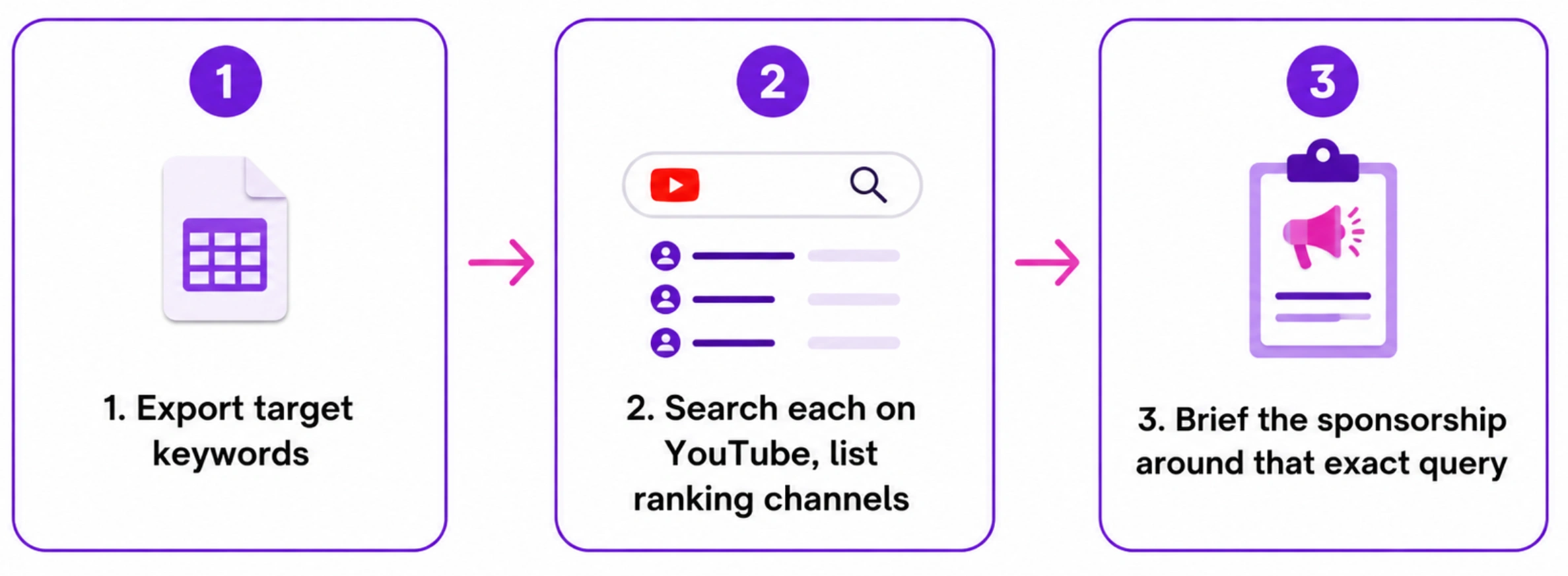
Sarah Adam has rebuilt Wix's approach around this. She has said that Wix is now working with roughly half as many YouTubers, on highly targeted dedicated videos built around the keywords their ICP is actually searching, on YouTube and in LLMs both. Their discovery process changed to match: they now reach out to YouTubers who are already ranking for the target keywords.
Gling AI is doing the same thing on a smaller budget. They sponsor Think Media on videos targeting queries like best video editing software, AI tools YouTubers use, and how to get more YouTube views. The sponsorship rides on a video that will keep ranking.
What to do instead: pull your target keyword list, search each one on YouTube, and note which channels own the results. That list is your outreach list. Then brief for the keyword, not just the theme. There is more detail in our YouTube influencer marketing guide and in the breakdown of how Wix, Semrush and Notion use YouTube creators to drive ROI.
7. Engage with the Influencers’ Content
Tom Boston's answer, when asked what he wished brands understood, was blunt and cost free. When a creator posts, engage from the brand page. Repost it. Tell your team it is live and get them in the comments.
The algorithm reads early engagement as a signal and shows the post to more people. That is the mechanical benefit.
The other benefit is that your team is now in a conversation with the creator's audience, in public, being useful. That connection between the audience and your brand is exactly what you paid for, and most brands leave it sitting there.
What to do instead: set up a Slack channel or an internal alert for when creator content goes live. Not a mandate, a heads up. Give people something specific to add rather than "great post".
8. Don't do Influencer Marketing if you don’t have PM kit
Elena Verna, Head of Growth at Lovable, has said that influencer marketing has worked for them from the beginning, and that it is roughly ten times bigger than paid social for them.
And then she said the thing that I think is the most useful sentence in this entire article. It is not why they are successful. It is amplifying their success and helping them reach new audiences.
That distinction matters. Influencer marketing is a multiplier, not an engine. If you have strong word of mouth, creators pour fuel on it. If you have high churn and you are buying every user, creator campaigns will not fix that, and neither will any other channel. You will just find out faster and more expensively.
The signal to look for is whether the creator's audience starts talking about your product to each other without being paid to. When that happens you have something. When it does not, the problem is upstream of marketing.
Lovable's own program is worth reading in full if you want the mechanics: we covered it in inside Lovable's B2B creator program, and Anthropic's program is a useful contrast because the motion is quite different.
9. Start with ICP match creators
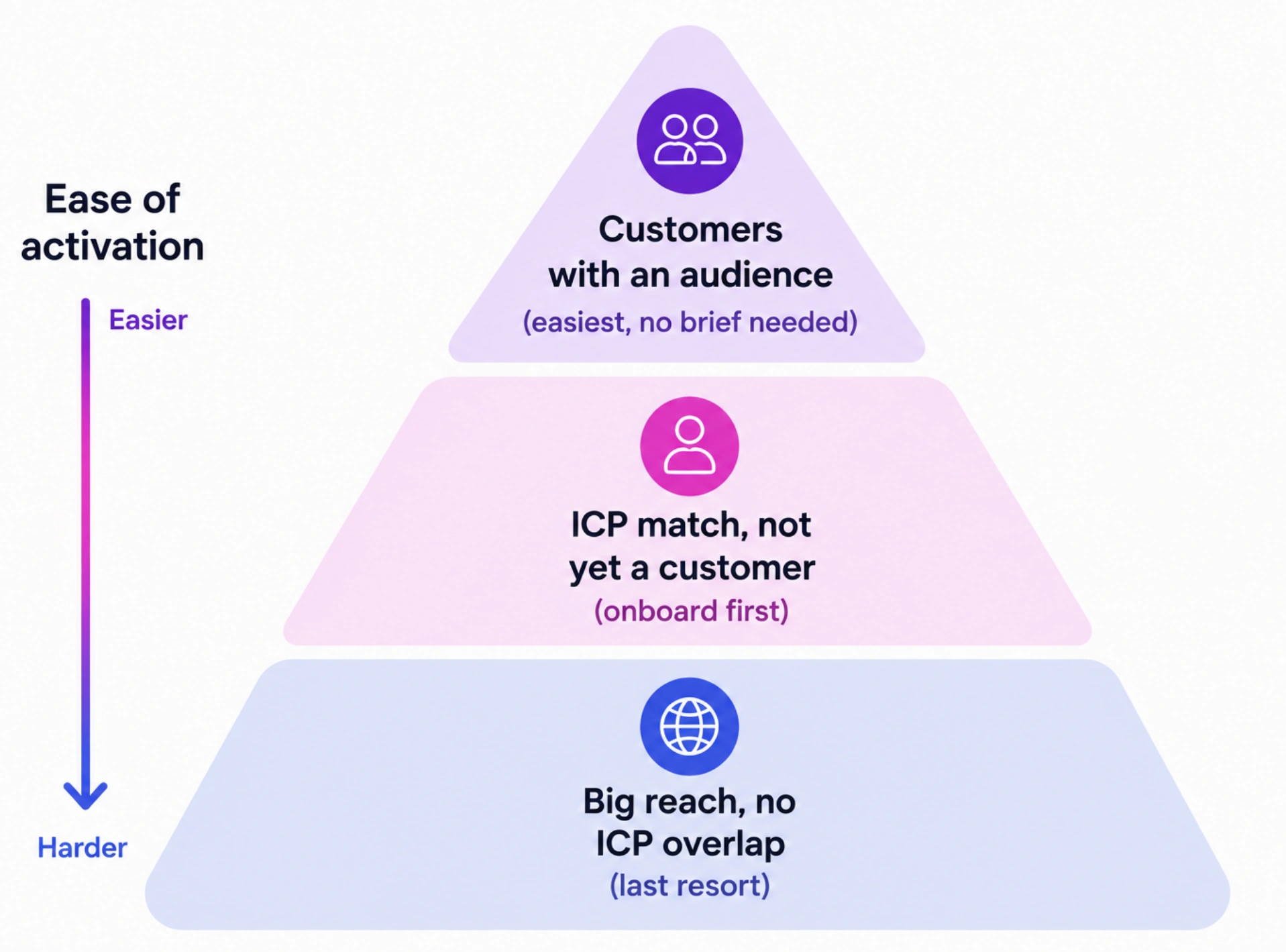
Alex Llull at Perspective, the funnel builder, gave the cleanest version of this argument I have heard. If you are building a program from scratch, start inside your own user base. Find users who already have an audience and already talk about your topic.
Two reasons. They are easier to convince, because they already like the thing. And you barely need to brief them, because they have real use cases and real numbers.
His example: a customer who went from a five percent conversion rate on their previous tool to twenty five percent with Perspective. That is not a talking point you can write into a brief. It either exists or it does not.
What to do instead: before you open a discovery tool, cross reference your customer list against social. Look for anyone with a LinkedIn, YouTube or newsletter audience. Start there. Then expand outward to creators who match your ICP but are not customers yet, and onboard those ones the ClickUp way.
When I run sourcing for a client, that first cohort feeds the next three. I look for lookalikes of the client's own top performing creators, lookalikes of whichever creators drove the competitor's best partnerships, and the top performing creators at parallel brands who sell to the same buyer without competing. I use Favikon's lookalike and discovery search for the first pass and then do the vetting manually, because the last mile of judgement is not something a filter does well.
Sarah Adam's team at Wix works from a written ideal influencer profile before any sourcing starts, which is worth copying whatever size your program is. If you need a starting point for the sourcing side, our guide to finding LinkedIn influencers and the LinkedIn creator directory both work as a first pass.
10. Know your Internal Business Economics
The most common question I get is some version of "is this price fair". It is the wrong question.
Alex Llull's answer was to work from internal numbers instead. His team starts from a target cost per signup. If they believe a creator can bring roughly ten signups, and their number is one hundred dollars per signup, then a thousand dollars is a defensible price. If the creator asks for three thousand, the answer is not "that is expensive", it is "that does not work for us at this volume".
Notice how much stronger a negotiating position that is. You are not haggling. You are describing a constraint.
Estimating the conversions is the hard part, obviously. Start with the creator's average impressions over the last two or three months rather than their follower count, which tells you very little. Follower counts and view counts have decoupled almost everywhere.
If you want the benchmark data rather than doing it from first principles, we keep the numbers in the B2B influencer price calculator, and the ROI calculation walkthrough covers the model side.
One caveat worth stating plainly. You are also buying the creator's credibility, and there is no clean way to price that. The point of walking in with a number is not that the number is correct. It is that you are anchored to something real.
11. Track beyond the UTM
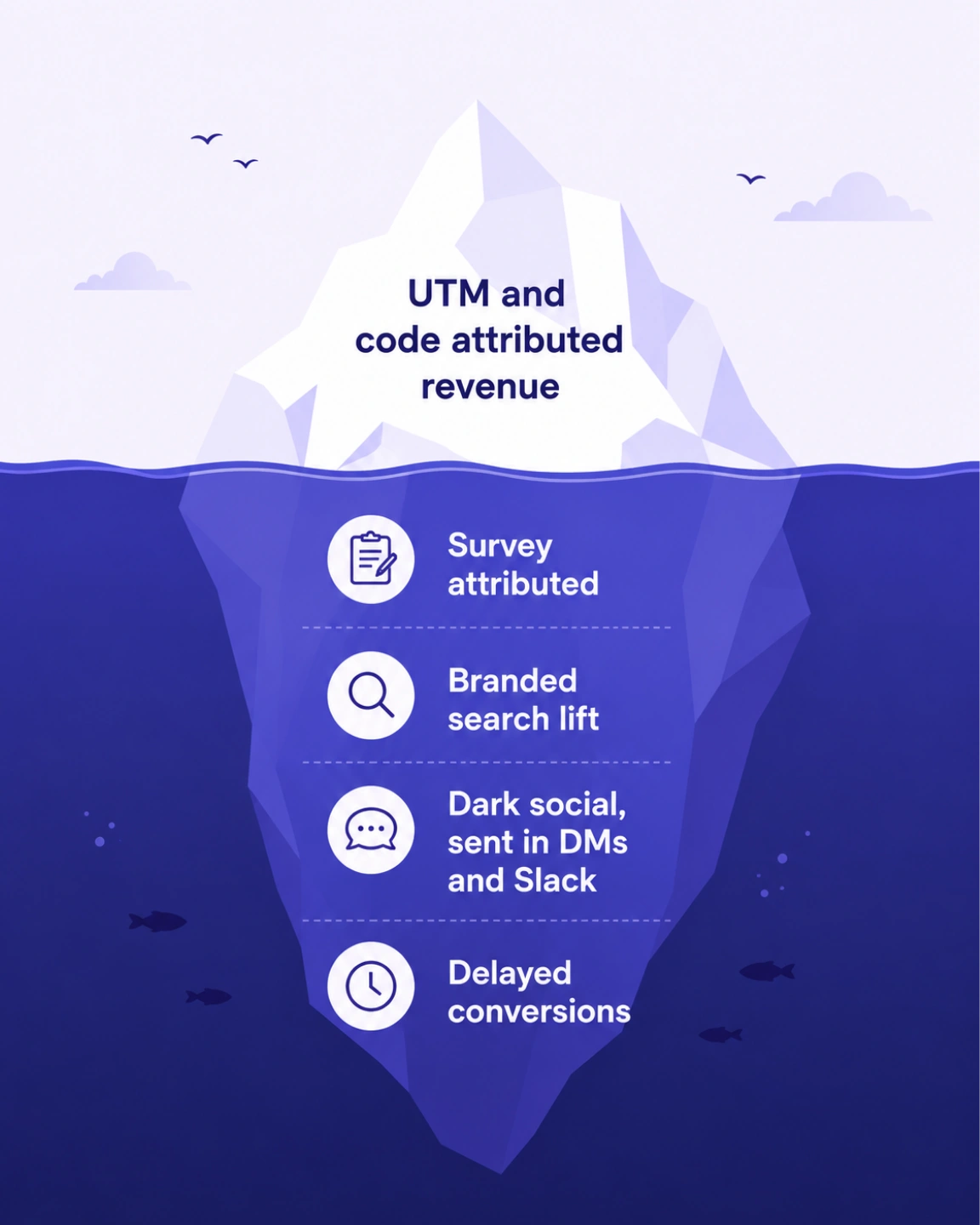
Every practitioner I have spoken to who has looked closely at this has come to the same conclusion. The link captures a fraction of the sales the campaign actually drove.
People see a video on their phone, do nothing, and search your brand name on a laptop four days later. That sale shows up as branded organic. Your creator gets zero credit and your CFO gets a number that makes the channel look bad.
What to do instead: layer your measurement. Keep the UTMs and unique codes as the floor. Add a post purchase or post signup survey with an open text field so people can name the creator. Watch branded search volume in Search Console before, during and after the campaign. None of that produces a single clean ROI figure, and that is fine. It produces a directionally honest one, which is what you need.
The layer I lean on hardest with clients is the blunt one. I look at total sales across the 30 and 60 day windows that overlap the creator campaign and compare them against the equivalent windows before it. It is crude, it does not isolate anything, and it catches the delayed and untracked conversions that every other method drops on the floor.
The full method, including which tools are worth paying for at what stage, is in how to measure influencer marketing attribution. If you are earlier than that, start with setting goals and KPIs for the campaign.
12. Boost Top Performing Creator Campaigns With Paid
Influencer performance is volatile. That is the honest version. Some posts do five times what you expected and some do a tenth, and the difference is often not something you could have predicted.
Brendan Gahan, co-founder and CEO of Creator Authority, the LinkedIn influencer agency, almost always recommends boosting creator posts with paid. He has reported thought leader ads coming in at 15 to 20 percent of the LinkedIn average CPM, and sometimes less.
The economics make sense. You already paid for the content. You already have organic performance data telling you which pieces resonated. Amplifying the proven winner is a much better bet than commissioning another post and hoping.
What to do instead: negotiate usage rights up front, not after the post performs. Retroactively buying whitelisting rights is where the leverage sits with the creator and the price reflects it. Bake a paid amplification clause into the contract from the start. Our influencer contract template has the relevant clauses.
13. Embrace Creative Campaigns
Product focused posts work. Creators sharing genuine use cases is still the most reliable format in B2B. But the campaigns that overperform tend to be the creative ones.
Storylane partnered with Tom Boston, the comedy sales creator who has worked with Salesforce, HubSpot and Salesloft, on a sponsored skit. Storylane's head of marketing was honest that there was no clean conversion data, and also noted that the month the campaign ran was their highest month of new MRR. Fiona at Gamma reports the same pattern from the campaign side: comedy and edutainment consistently outperform everything else her team runs.
Mindaugas Petrutis, who ran influencer marketing at Lovable, gave me the sharpest version of this when I asked how he would build a campaign for a genuinely boring B2B company. He said he would go and find a comedian, someone who can still show the product and still deliver the outcome, but who will find an angle that lands with an audience the standard demo video never reaches.
Here is the part people miss. When I looked at the skit campaigns that worked, almost all of them were built around the product's core differentiator.
Storylane's whole reason for existing is that traditional demo software forces prospects to book a call, which drags out the buying cycle for everyone. Every skit they run is about that. The content is genuinely funny and it is still communicating the exact pain point the product removes.
That is the difference between a funny video and a funny video that sells something.
What to do instead: do not start with the joke. Start with the one pain point only your ICP recognises, then build the sketch around it. If your competitors could run the same skit with their logo on it, you have written an ad, not a campaign. There are more formats in 9 influencer marketing campaign ideas that actually work in 2026.
14. Give Creators Freedom
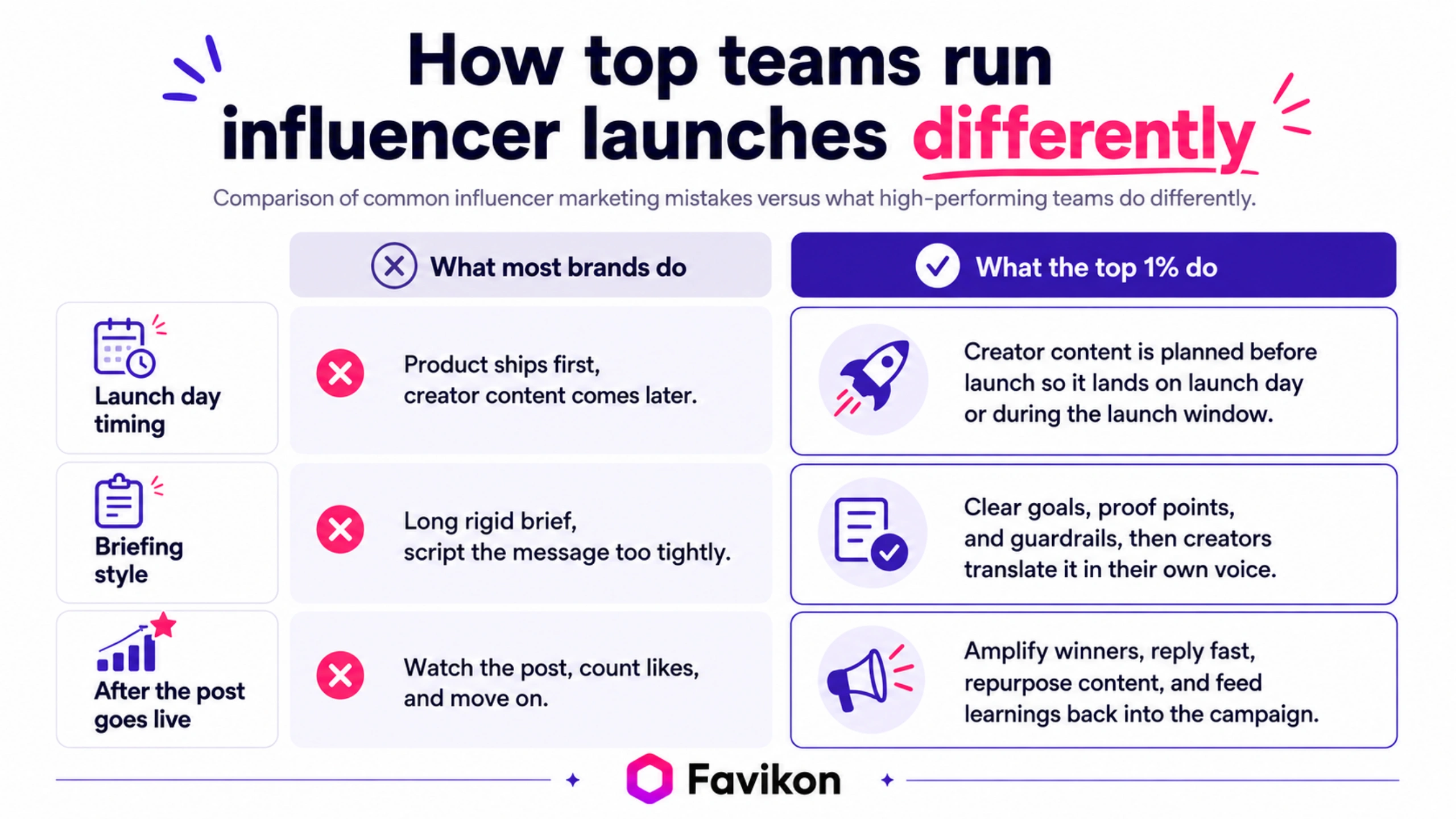
Almost every marketer I have listened to on this said the same thing, unprompted. Give creators full creative freedom. Sending a script is one of the most common mistakes brands make.
Sarah Adam has a good analogy for it. You get in the car with the influencer. They drive, you sit in the back. Before you set off, you agree on the destination. Then you stop talking.
Eileen Kwok, now at Mercury and previously social and influencer marketing strategist at Hootsuite, does the practical version of this. She gets on a call rather than sending a brief and hoping. She has had creators tell her that a video is not natural for them and they would rather do a text post or images, and her instinct is to lean into that. They know their platform. Fighting them on format is how you get flat content.
That said, Kwok is also clear that a good brief exists. It has an overview, the goals, how success is measured, the creative ask with an example, timelines and expectations. The brief sets the destination. It does not write the lines.
The Hootsuite campaigns she ran are worth studying for this reason alone, and we broke down the numbers on one of them in inside Hootsuite's influencer marketing campaign.
15. Long-term Partnerships
Nicole Ponce, who leads influencer marketing at Semrush, put it simply. Every time she works with a creator, the goal is to work with them again. Never a one off. The aim is to build them into advocates for the brand and for the product.
Sarah Adam's team runs the same shape from the commercial side. A smaller test agreement first, then a much larger long term deal with the same creator once trust and performance are established.
This changes how you behave in the first campaign. You brief differently. You pay on time. You send the performance data back to the creator afterwards, which almost nobody does and every creator remembers.
16. Ensure You Disclose Partnerships
I nearly cut this because it sounds obvious. It stays in because I still see brands quietly hoping the creator will forget.
AJ Eckstein laid out three reasons in a LinkedIn post that I thought were well ordered. FTC lawsuits can run into millions. Consumers who discover an undisclosed partnership stop trusting the brand. And good creators, the ones with actual reputations, will not work with you once they hear you play it that way.
The third one is the one that hurts long term and the one nobody plans for.
17. Comment first, Email second
Alex Llull's cold email response rate is around 30 percent, which is genuinely good against a general cold email benchmark closer to six percent.
His comment approach gets closer to 80 percent. The mechanic is not clever. He engages with the creator's content and leaves something like: love your content, would love to partner on a brand deal, where can I reach you.
That is it. It works because a comment is public, low pressure and lands in a place the creator is already paying attention to, whereas your email is in a folder with forty other pitches.
Two caveats. This will not work on very large creators, who have managers and inboxes and no reason to reply to a comment. And it works far better once you have a couple of campaigns behind you, because creators talk and a brand with a track record gets replies.
We put the full sequence, including what to send after they respond, in influencer outreach templates and tips that actually get replies.
What are the top 5 tips for implementing influencer marketing?
If you are starting from nothing and want the shortest possible version:
- Start with creators who are already your customers. They need no briefing and they have real results to talk about.
- Onboard every creator with a real call before any content is agreed, the same way you would onboard a customer.
- Price from your own cost per signup, not from the creator's quote, so you walk into the negotiation with a number.
- Send the traffic to a free tool or lead magnet, not to your pricing page.
- Work the engagement after the post goes live. The people who liked and commented are a warm list, and almost nobody uses it.
Everything else on this list is an optimisation on top of those five.
Where I would start this week
When I pick up a new program, I do three things before anything else.
Export the customer list and check which customers already have an audience. That is your first cohort and it costs nothing to find.
Pull the top ten keywords your ICP searches, look at who ranks for them on YouTube, and write those channels down. That is your second cohort and it is the one that compounds.
Then go back through the last campaign you ran, pull everyone who engaged with the posts, filter to ICP, and see how many of them you never followed up with. My guess is most of them.
If you want the longer strategic version rather than the tactical one, the complete guide to B2B influencer marketing is the pillar we keep updated, and the SaaS influencer marketing playbook covers the sequencing for software companies specifically. For campaign level examples with numbers attached, B2B influencer marketing campaign examples is the one to read next.
Others articles